Inspiration
The inspiration for FigPro stemmed from the need for a seamless and intuitive platform for collaborative design work. As a designer and developer, I’ve always appreciated how tools like Figma have transformed the way design teams collaborate, enabling real-time updates and efficient workflows. However, I saw an opportunity to build a platform with even more flexibility, offering both powerful design features and real-time collaboration capabilities. This project combines my passion for design and technology, aiming to create a tool that streamlines teamwork and boosts productivity in design projects.
What it does
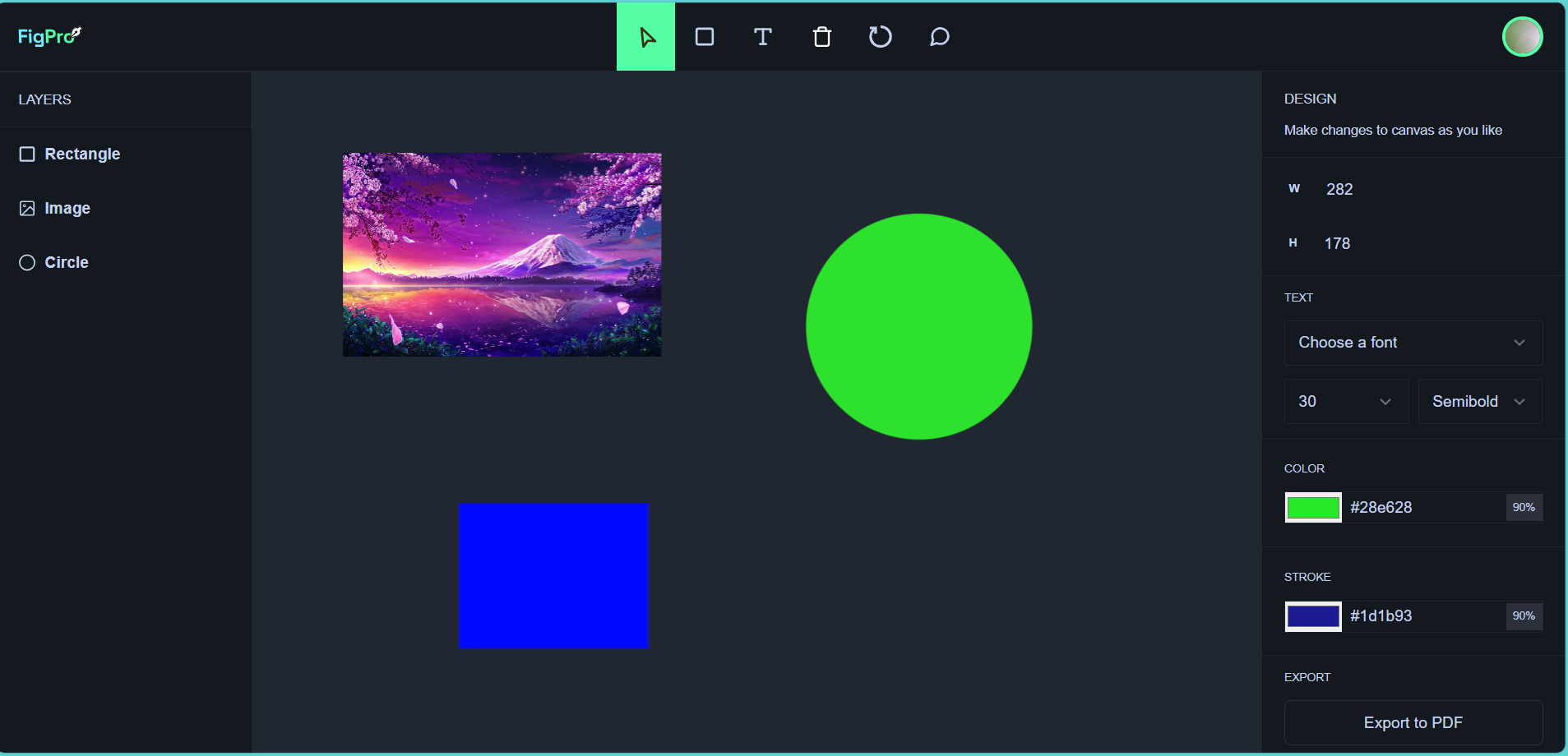
FigPro is a collaborative design platform that allows users to work together in real time on design projects. It mimics the key features of Figma, such as vector editing, layer management, and text formatting, while enabling multiple users to interact with the same design simultaneously. Users can see each other's actions in real-time, making collaboration smoother and more efficient. The platform also provides version control, user activity tracking, and instant feedback mechanisms, ensuring a fully synchronized and interactive experience for all participants.
How I built it
I built FigPro using Next.js for server-side rendering and fast, responsive UI development. The front-end is powered by React, providing an interactive, component-driven experience. To handle real-time collaboration, I integrated Liveblocks, which synchronizes user actions and design changes across multiple users instantly. For backend functionality. The design tools (like vector editing and shape manipulation) were implemented using React component.
Challenges I ran into
Real-Time Data Synchronization: One of the major challenges was ensuring that multiple users could edit designs simultaneously without conflicts or lag. Implementing smooth real-time collaboration required managing state efficiently across all users. Liveblocks helped address this issue, but integrating it with the UI components and ensuring data integrity was challenging.
User Experience and Interface Design: Building an intuitive UI that mirrored Figma’s complexity but was still user-friendly posed a design challenge. Ensuring that complex design tools were easily accessible and responsive across various screen sizes took considerable effort.
Performance Optimization: With real-time collaboration and complex design features, ensuring fast performance without delays was another challenge. I had to optimize rendering and minimize the latency in user actions, which required performance testing and optimizations in Next.js.
Accomplishments that I'm proud of
Real-Time Collaboration: Successfully implementing real-time synchronization of user actions across different clients without significant performance degradation. It’s amazing to see multiple users interact with the design in real time, with changes reflected immediately.
Feature Set: Building a feature set similar to Figma, including vector editing, text formatting, and version control, while ensuring a smooth and seamless user experience.
User Engagement: Designing and building a platform where users can not only create designs but also comment and collaborate on the same project in real time.
What I learned
Real-Time Data Management: Implementing real-time collaboration was a steep learning curve, especially managing data synchronization across multiple clients. I learned how to use Liveblocks effectively for this and how to integrate it with React for smooth updates.
Scalable Architecture: Building a platform that can scale to handle multiple users working simultaneously taught me a lot about optimizing both frontend and backend performance. I learned how to design systems that can handle high concurrency and data integrity.
UI/UX Design for Complex Applications: I learned a great deal about building user interfaces for complex applications. Balancing functionality with ease of use was crucial, and I spent time iterating on the design to make sure it was both powerful and user-friendly.
What's next for Figpro
Feature Expansion: I plan to implement advanced design features like prototyping, animation tools, and asset management to make FigPro an even more powerful tool for design teams.
Mobile Support: As the platform grows, I’d like to make FigPro available on mobile devices, enabling users to collaborate and work on their designs anywhere.
Integrations: FigPro could be enhanced by integrating with other design tools, cloud storage services (like Google Drive or Dropbox), and third-party plugins to make the platform even more versatile.
Feedback and Community Building: I aim to gather feedback from early users and the design community to understand their needs and continuously improve FigPro. Engaging with the community will help refine the platform to better serve its users.
Built With
- liveblocks
- nextjs

Log in or sign up for Devpost to join the conversation.