-
-
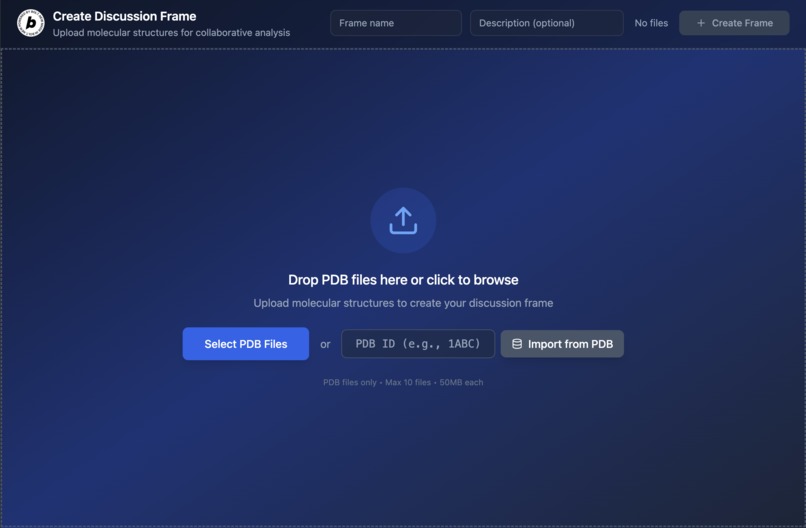
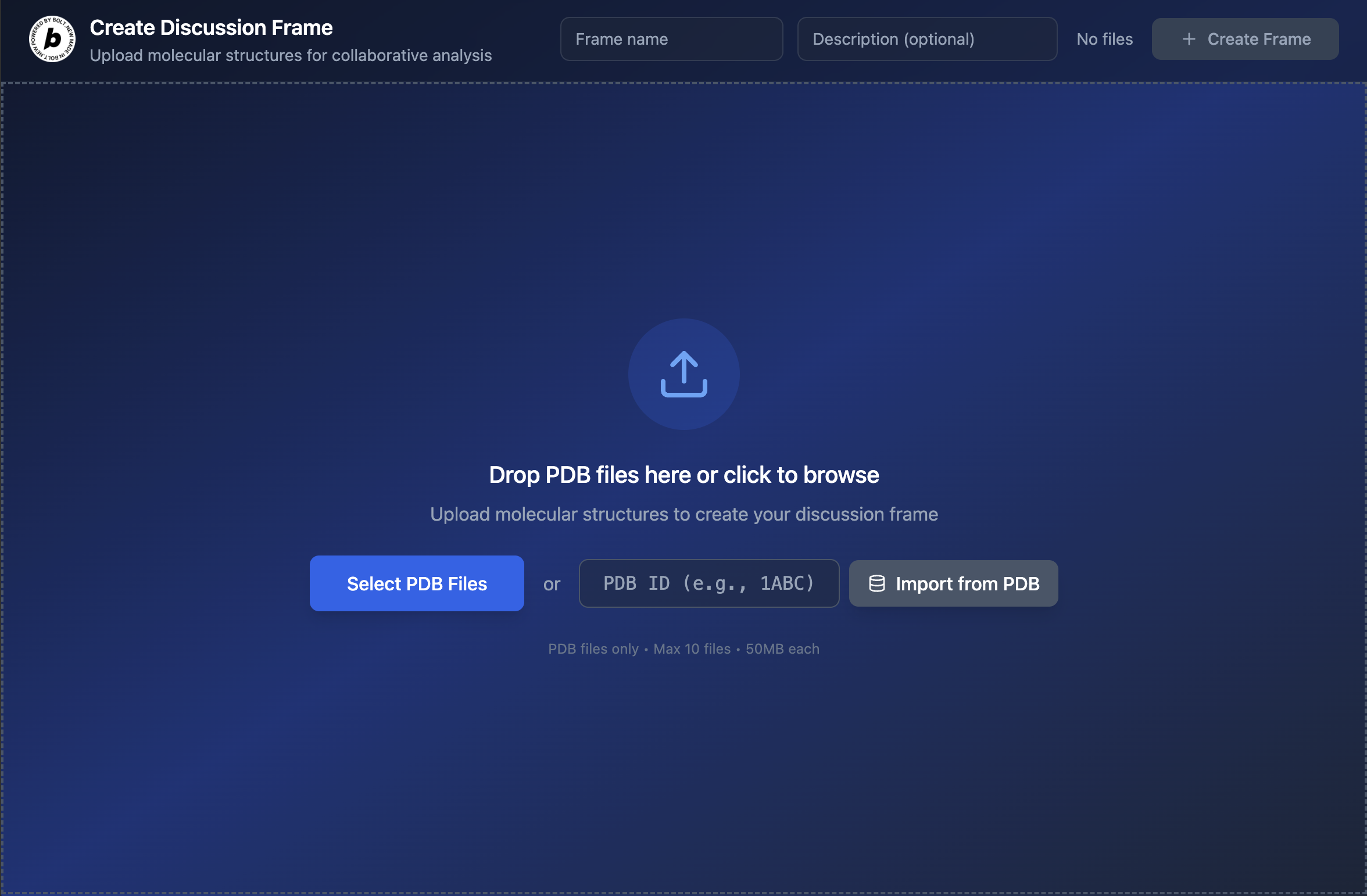
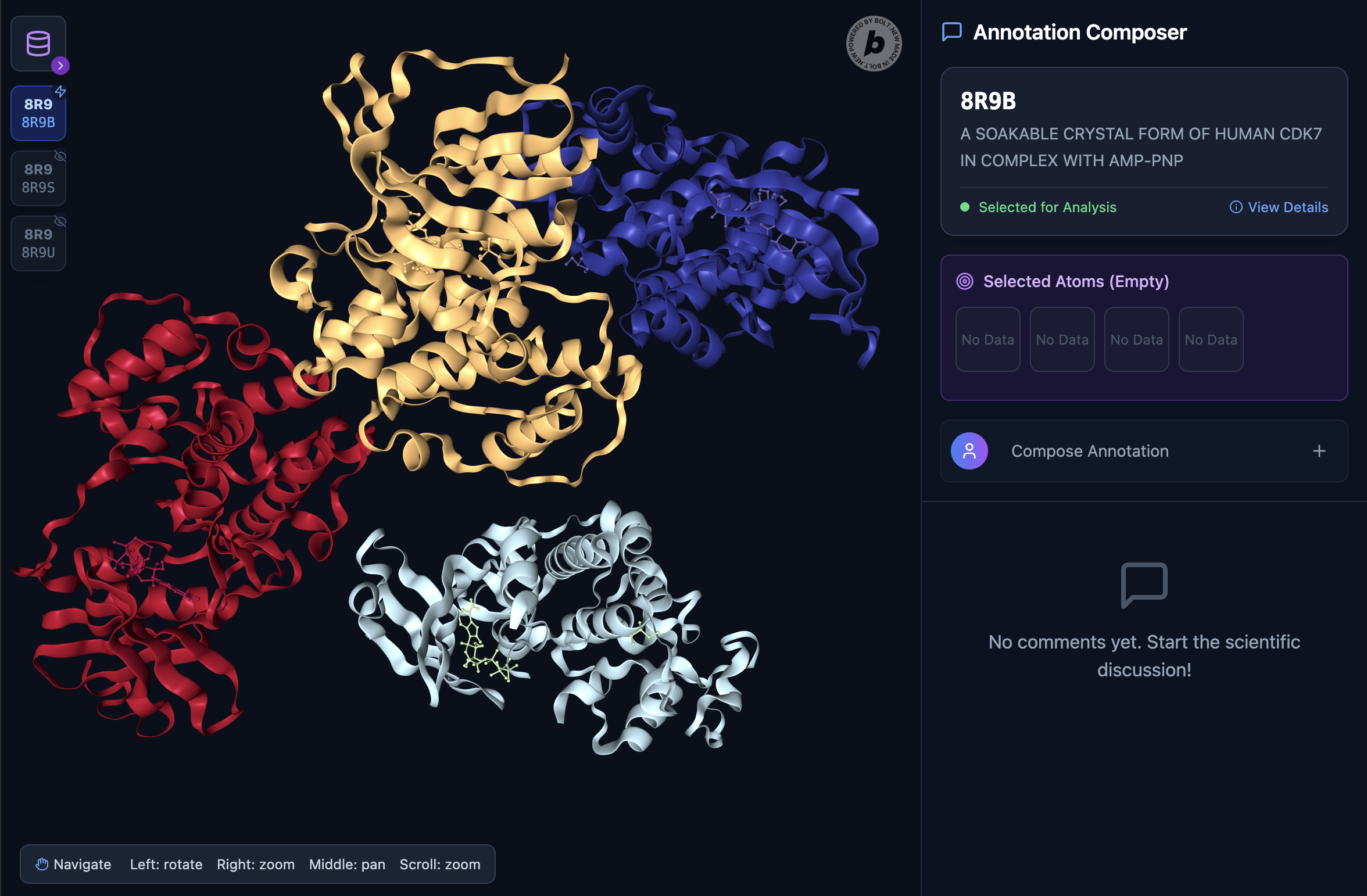
Upload your own PDB files or import from PDB Bank.
-
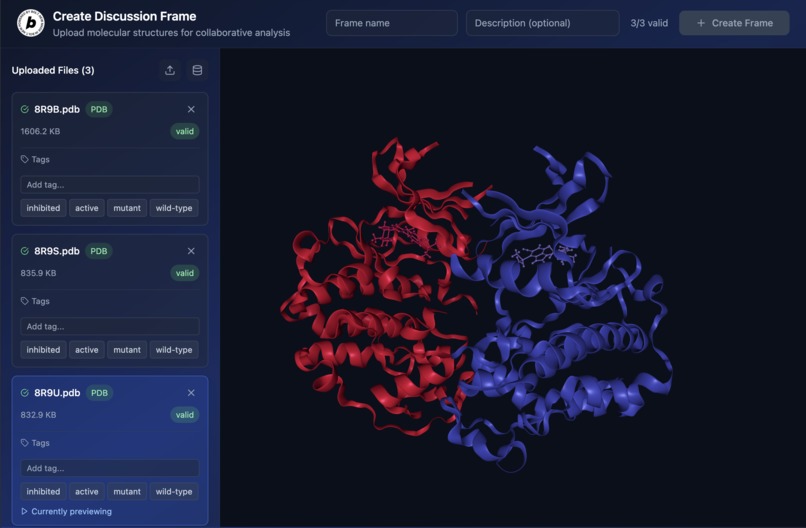
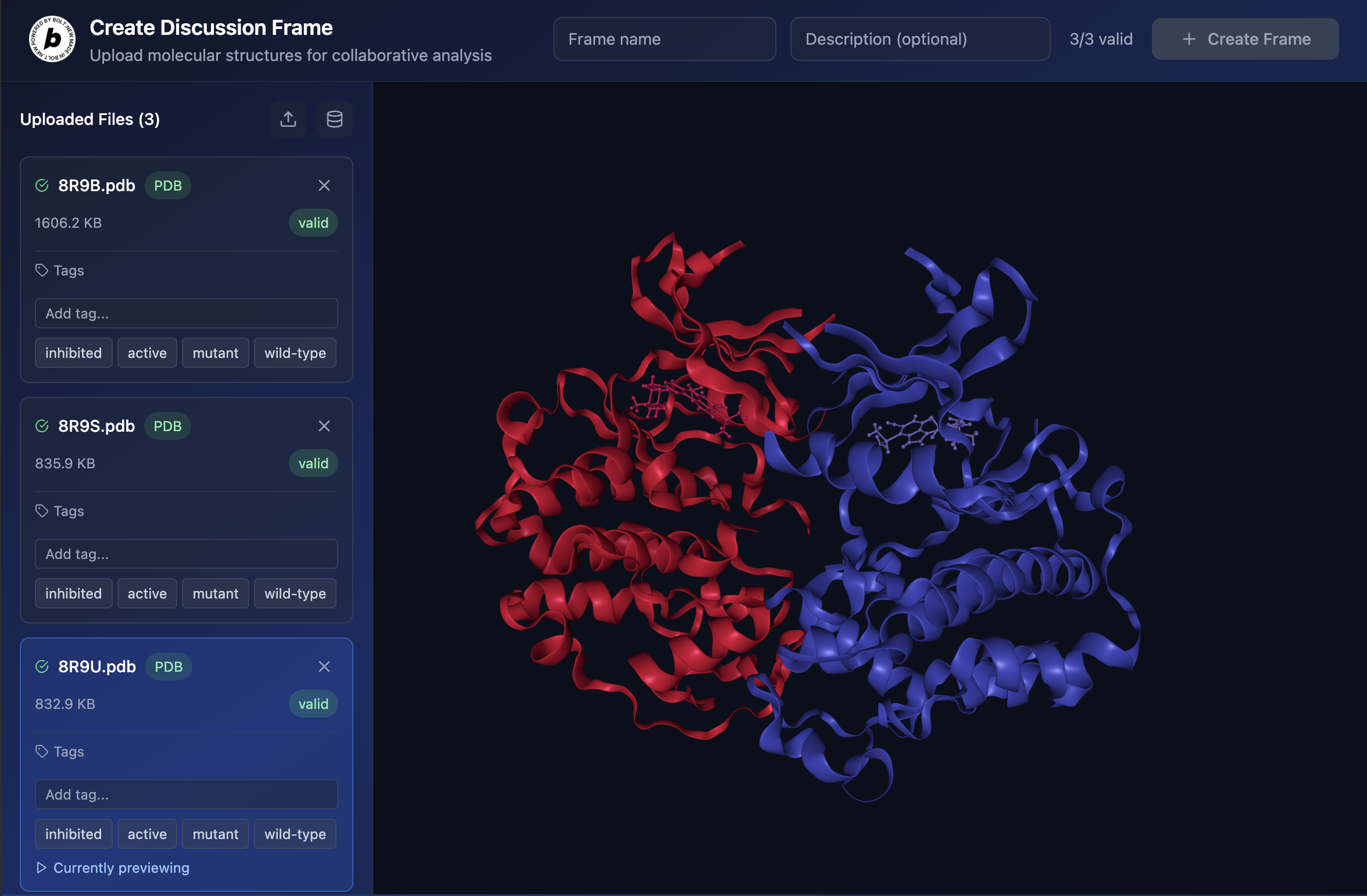
Preview your proteins before creating the new discussion.
-
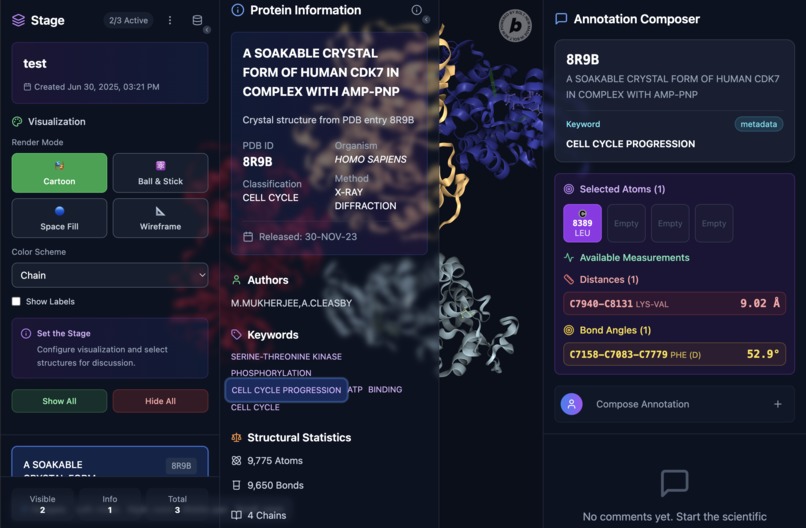
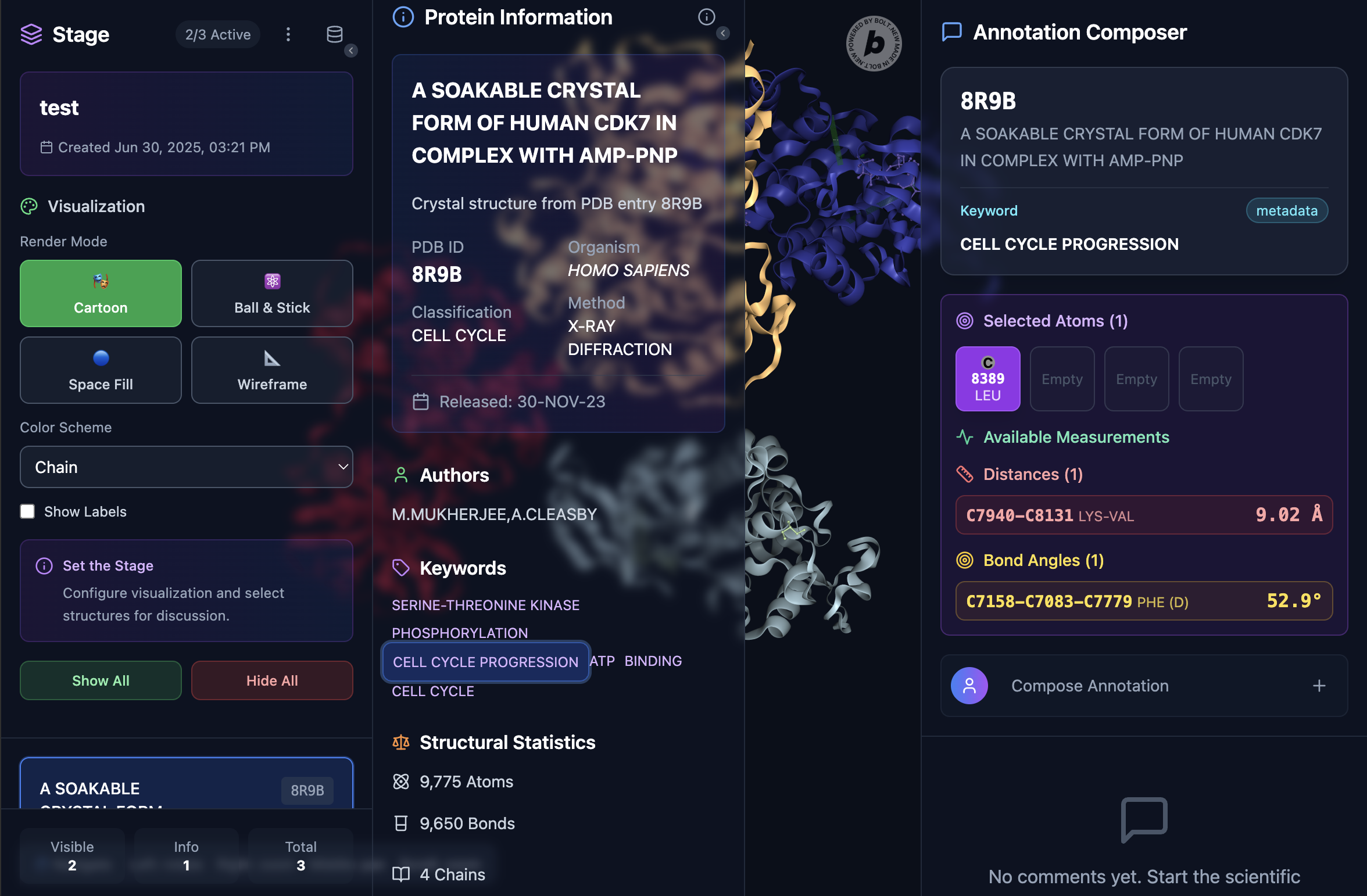
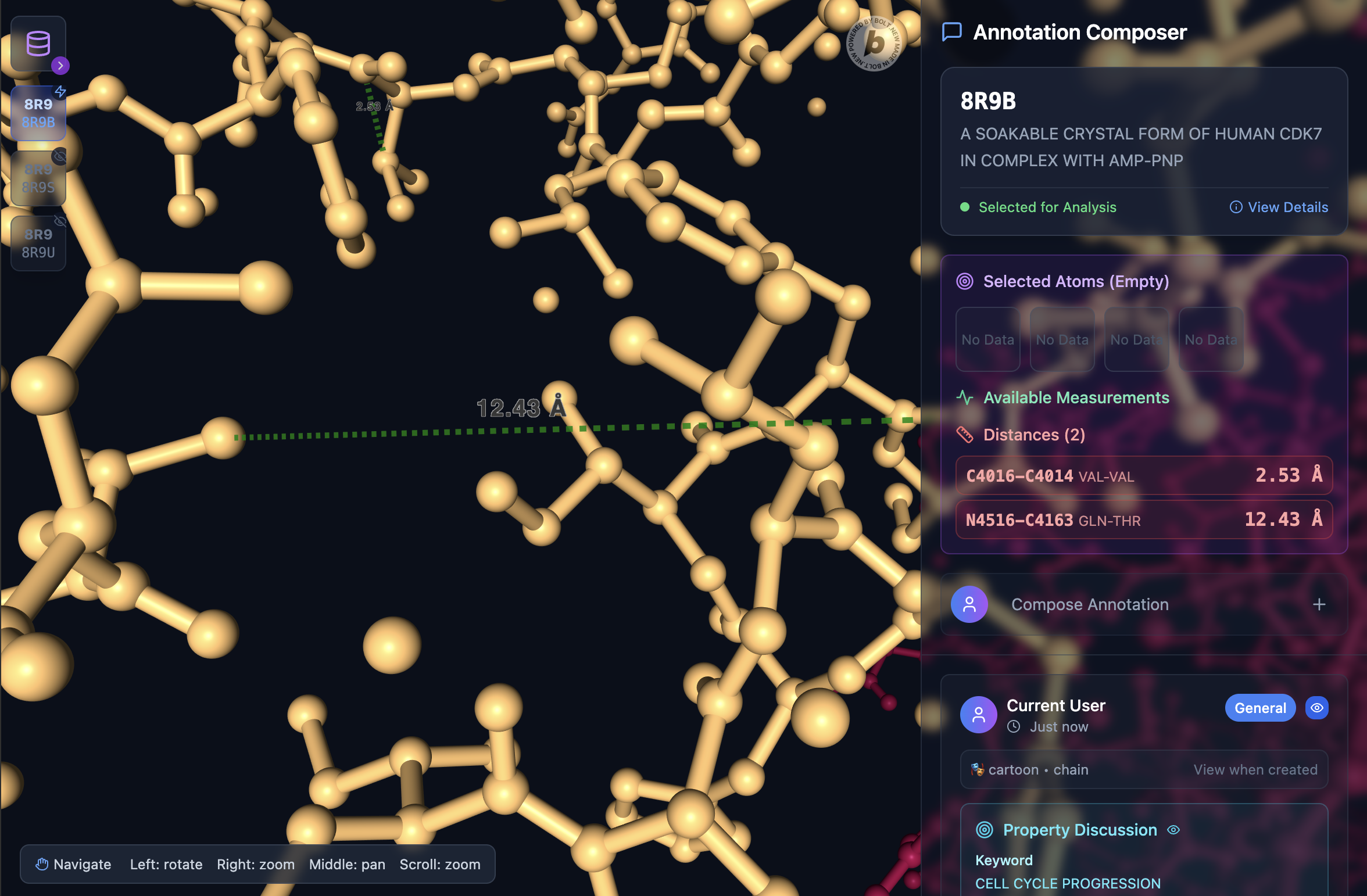
Protein information can also be selected and tied to a comment.
-
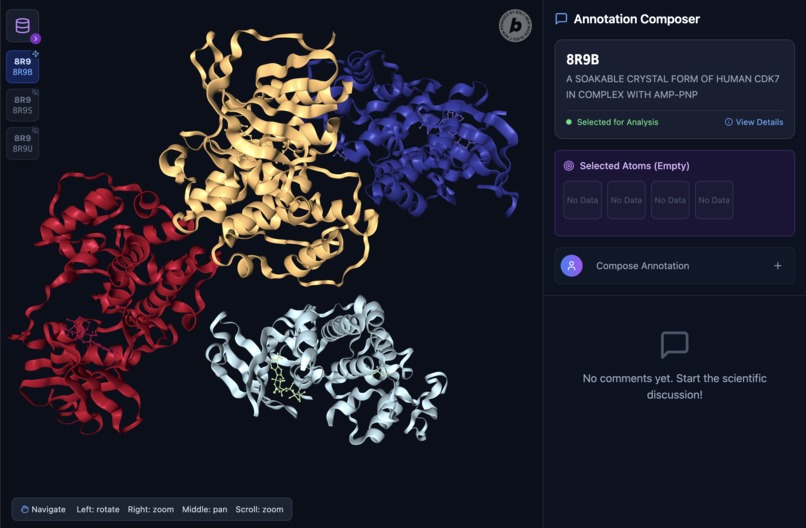
Protein can be manipulated in 3D space.
-
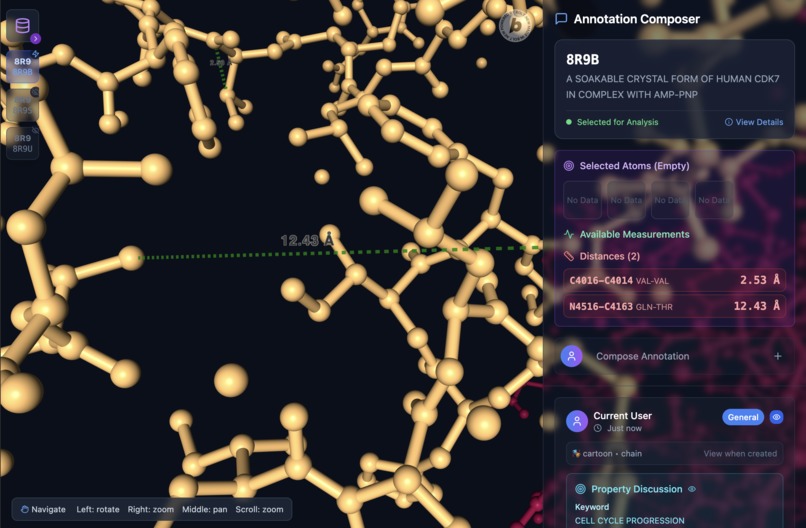
Bond angles and distances can be measured by right clicking to select the atom and right clicking again to create a measurement.
Inspiration
I work with a biotech that's created 303 drug candidates for various cancer indications, with one well on its way to become a new treatment for Leukemia.
Through this journey I realized that the ecosystem of tools on the market for drug discovery are entirely geared towards big pharma and not small biotechs like us. So, we had an idea to build our own.
As I started looking around, I noticed we're not alone. In 2020 55% of all FDA approved novel therapeutics came from small biotechs, not big pharma. In 2024, it's two-thirds of all novel therapeutics. Those companies are all just like us, and need modern tools geared for their needs, not these massive bloated enterprise modeling tools.
That's the inspiration for The Drug App, a CAD for novel drug design. This hackathon gave us the opportunity to begin that project. In this form, it's just an annotation tool. However, as we have aspirations to grow this into a modern CAD for drug design.
What it does
Binding affinity for drugs often comes down to how the protein moves around in the human body. Bond angles change, distances change, side chains move, etc. The movement of the protein is what allows for drugs to work the way they do.
So much time and energy is lost when scientists aren't talking about the same things. There are tens of thousands of atoms in any protein at any given time, and these things are all moving. It's hard for scientists to keep track of which atom, which residue, and which chain they're talking about when investigating a potential binding site. All of this gets even more complex when we throw things like trajectories of changing bond distances / angles into the mix.
This tool allows scientists working on novel small molecule drug to communicate bond angles, distances, and points of interest in a 3D protein structure. They can then share the link to their annotations directly to communicate those properties to their peers. Scientists can use this to discuss their findings directly on the protein they're analyzing instead of talking past each other.
To Test
Either upload your own .pdb files or import from PDB Bank by entering the four character code into the upload field.
If you don't know which one to choose, I suggest doing 8R9U and 8r99.
How we built it
We built it using bolt, but the core concept followed a pretty rigorous product design process. We interviewed chemists, crystallographers, computational chemists, biostatisticians, microbiologists, and everyone in between.
The simple design of the tool, solving that one focused problem of communication in 3D space, came from the long product design journey it took to get to that point where we realized this is what what they needed.
Challenges we ran into
Doing 3D rendering with Bolt is pretty tricky. I had to do a lot of coaxing to get Bolt to play nice with the render pipeline. Macromolecular visualization isn't something that's highly represented in any coding agent's training dataset, so there was a lot of focus spent on trying to get the rendering engine to work.
Then, the cross-talk between the rendering pipeline and the bond angle & distance measurements tool a lot of thought to wire up. I found myself prompting at a function level to get it to create a measureMap state object that can talk to the discussion thread.
Accomplishments that we're proud of
This tool is in use right now today and is helping the team at DNAseq work on new cancer therapeutics.
What we learned
Bolt is fantastic as a prototyping tool, but more earnest is put on the product design as a result. Bolt excels at simple tooling with a tight and limited scope of features, but to get to the point where you can articulate that small tool which cuts to the heart of your use case you have to invest way more time in early stage user interviews and design work.
The first version of this was originally going to be a notebook, but it turns out that scientists hate doing documentation (just like all of us). So, the design of this tool allows them to "document as they work" but visually showing the bond angles and distances they're talking about in 3D space.
By moving the conversation into the tool, you get documentation for free!
What's next for Fighting Cancer with Bolt
This is the first step in our mission to create a new CAD tool for drug design that we're calling The Drug App. The first goal is to start collecting training data to build dynamics simulation models, and the best way to collect training data is to center yourself at the discussion between the scientists and capture that data passively.
Between now and August, we want to build this into a true asset management and bio-annotation tool to facilitate conversations, then we will begin working towards creating better modeling and simulation tools from those conversations by leveraging them as training data.
Built With
- ngl
- react
- supabase


Log in or sign up for Devpost to join the conversation.