-
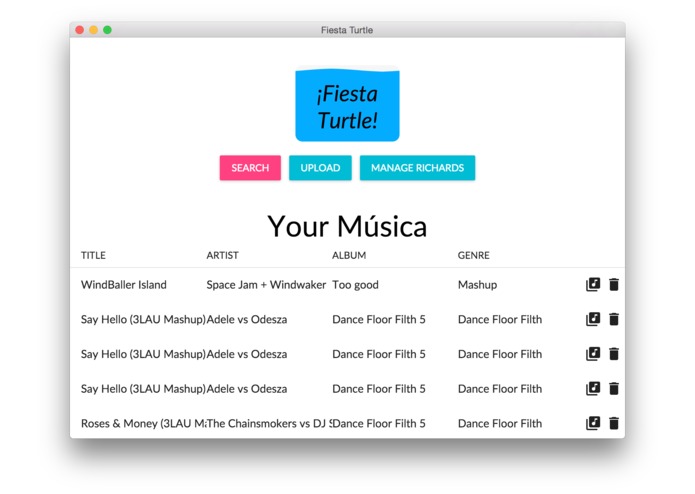
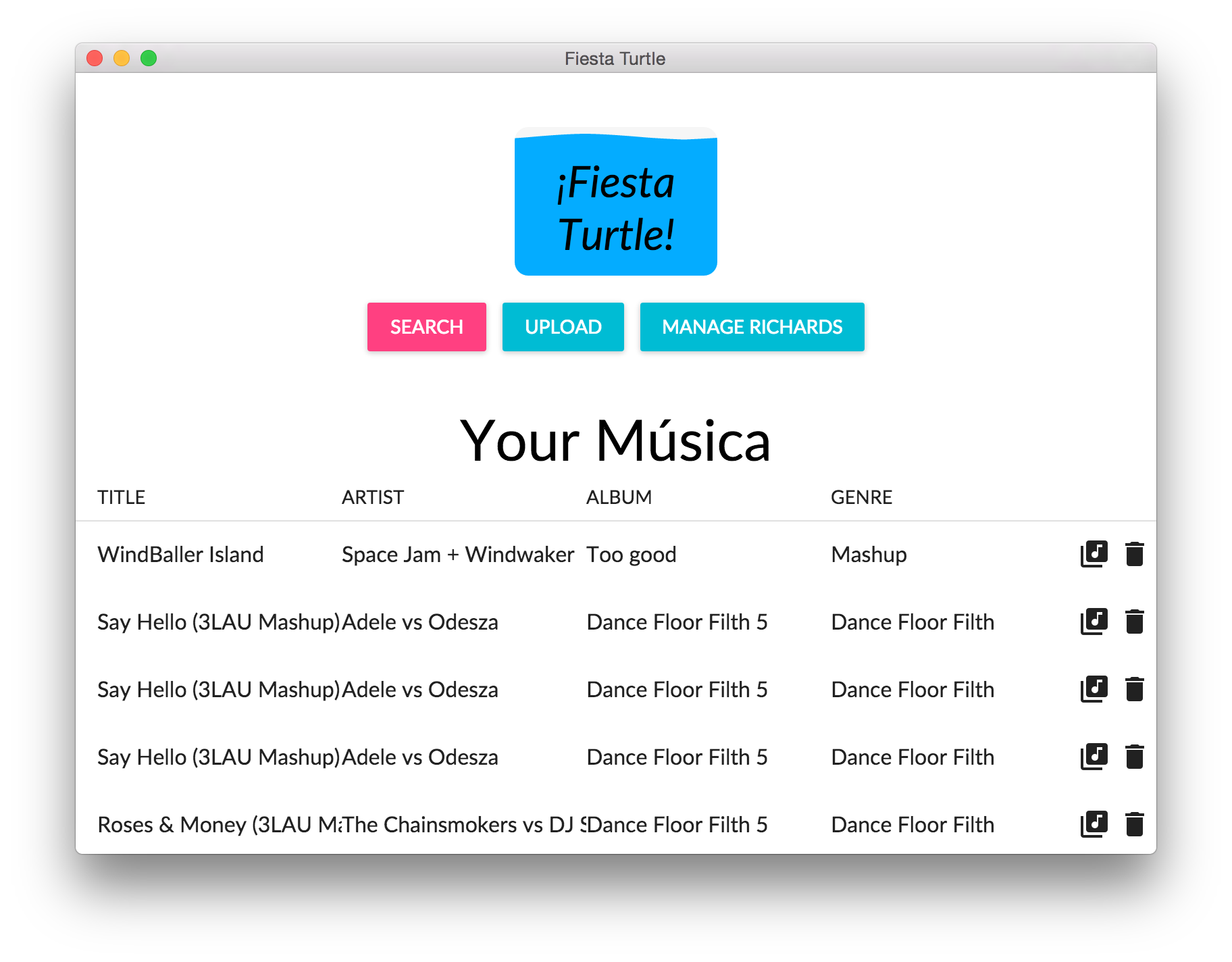
The main interface, a simple list of songs and playlists.
-
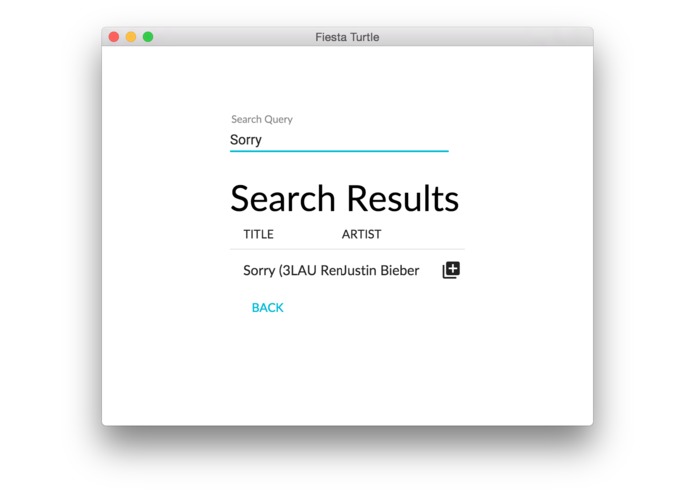
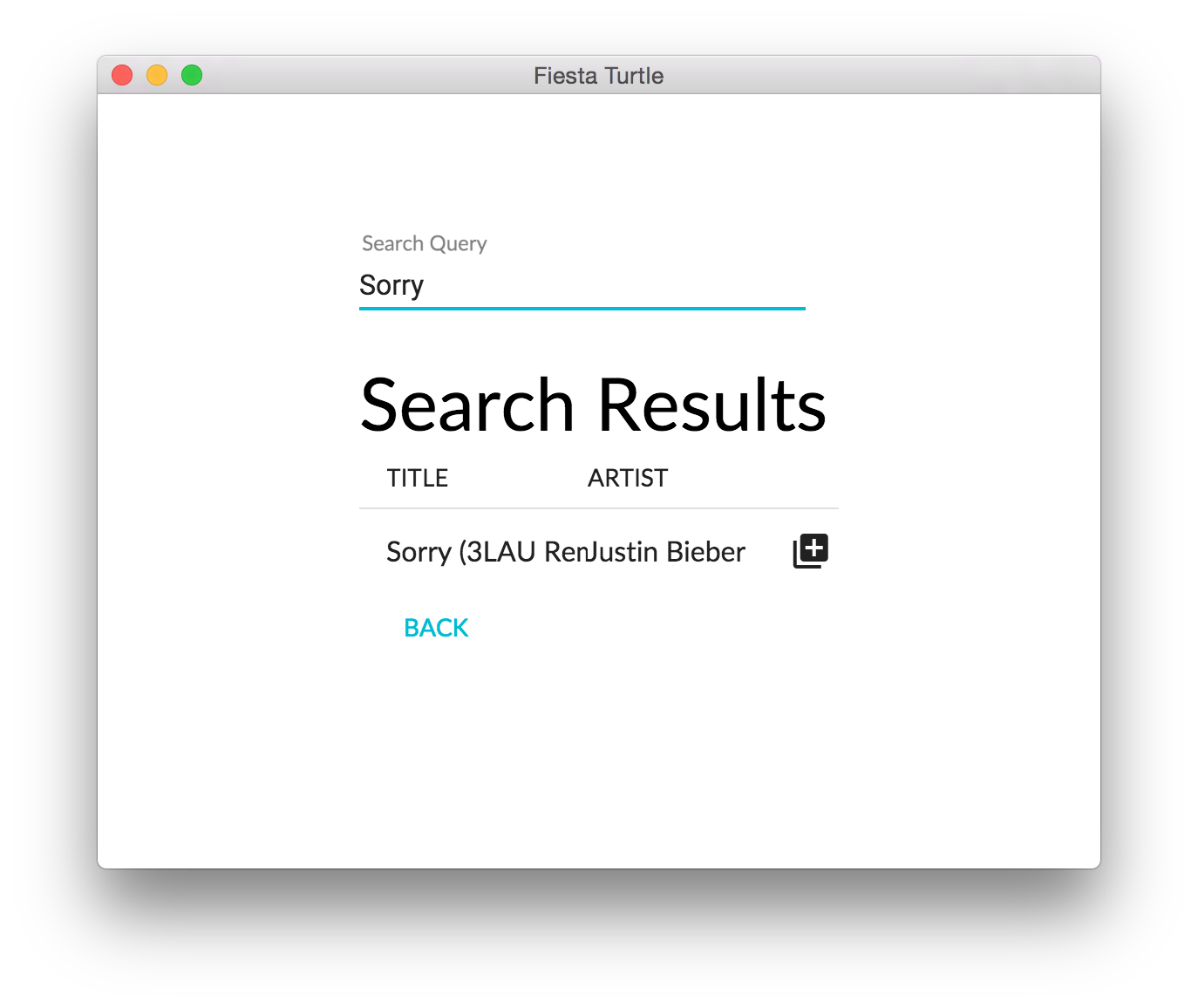
You can search other's index servers to find music too.
-
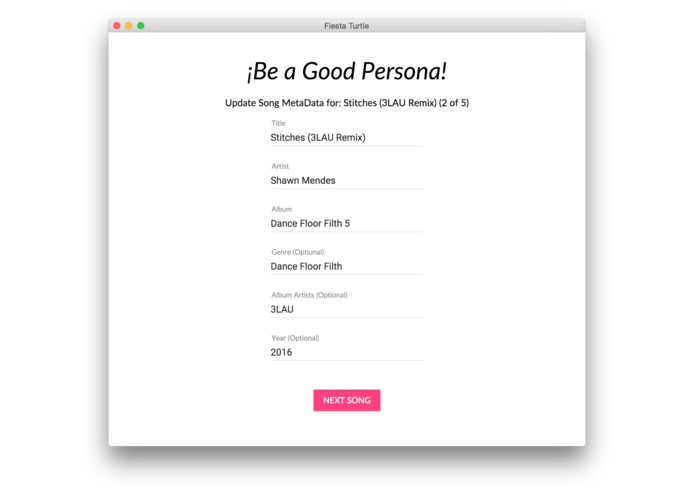
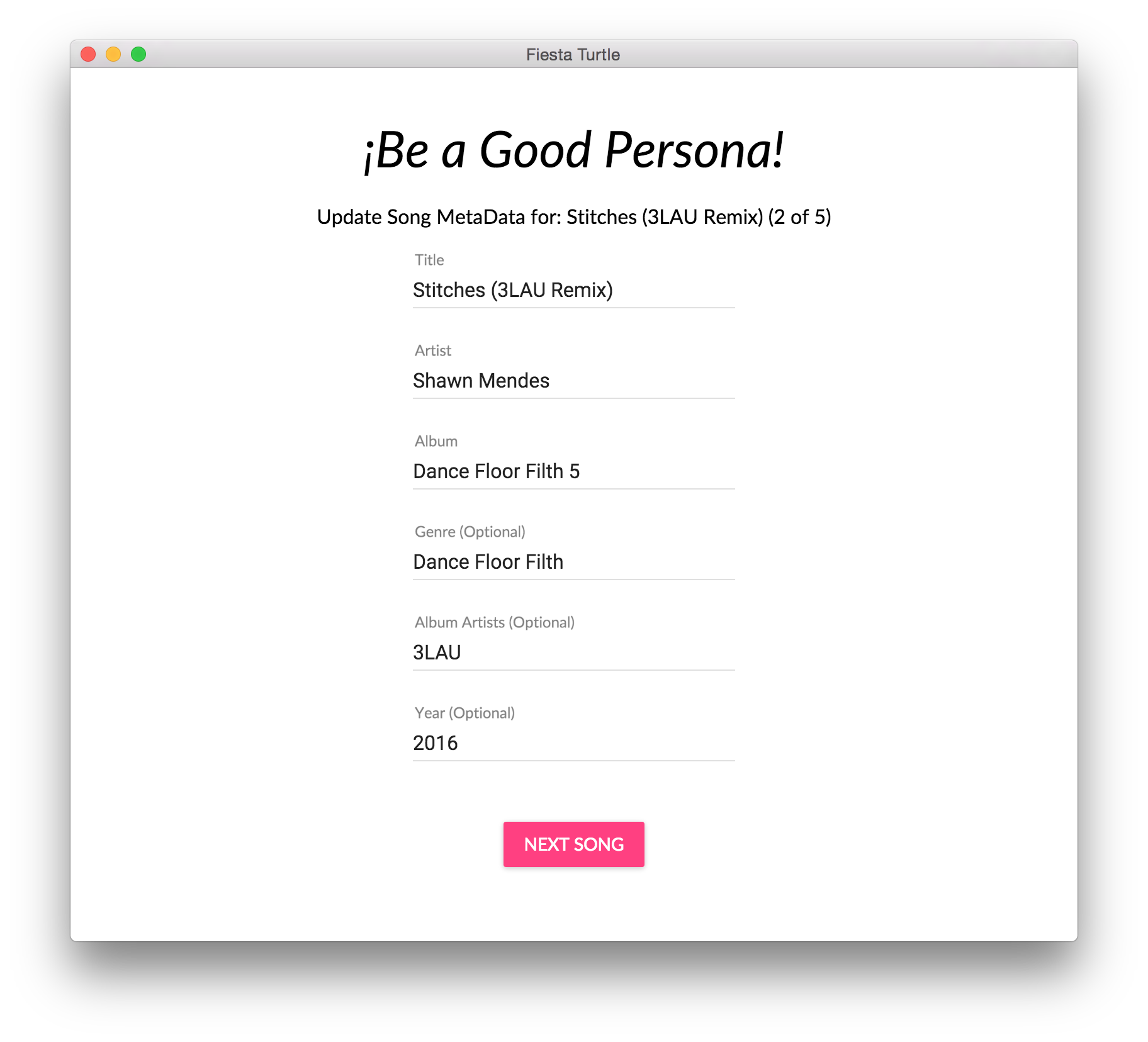
Upload music easily to the distributed web.
-
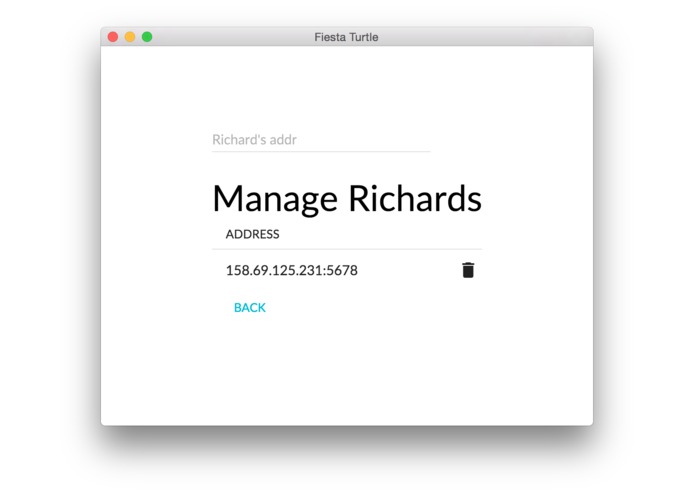
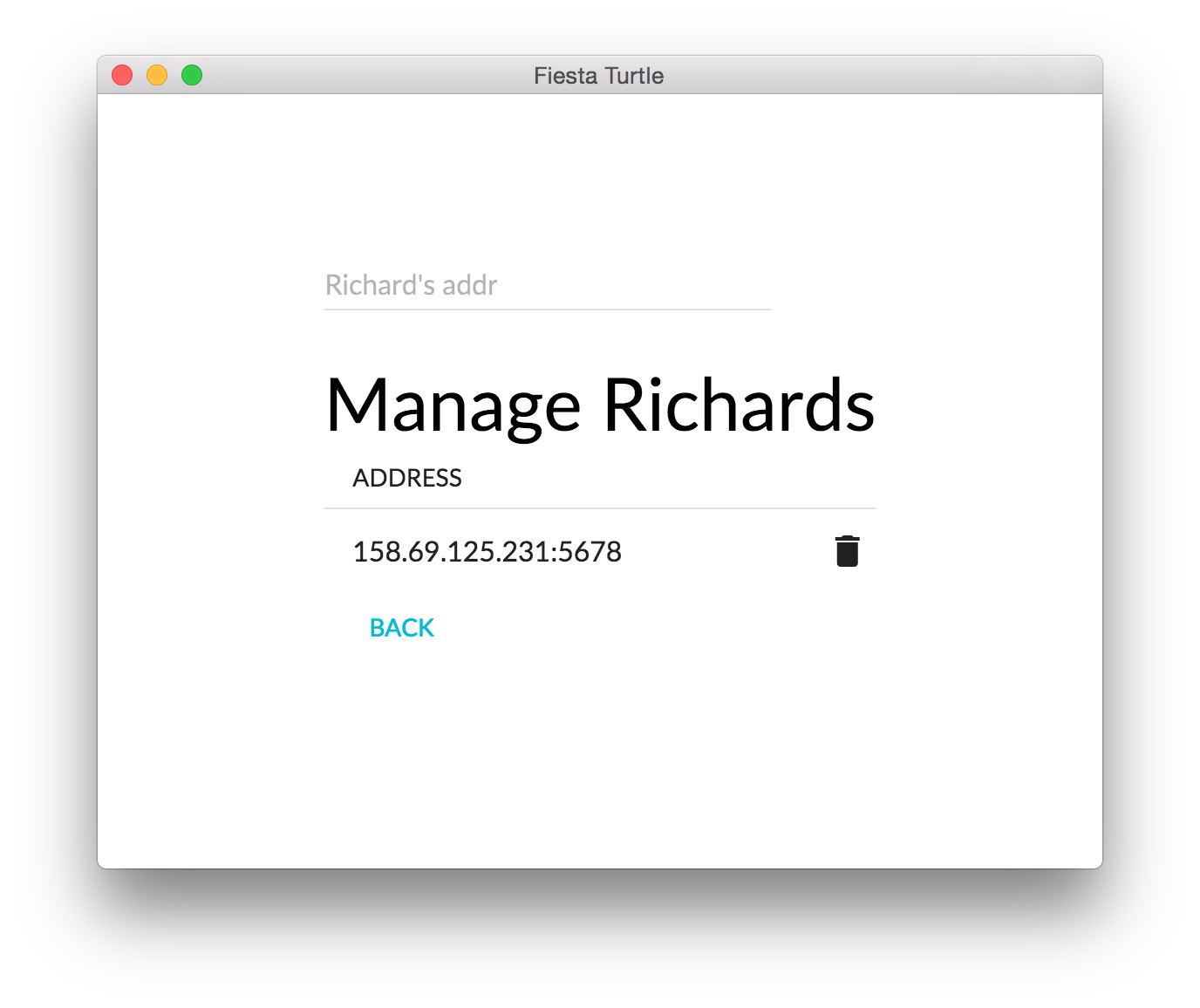
Richards are other's index servers, that index song information.
What it does
Fiesta turtles is a proof of conecept that put together to explore the idea of distributing apps and users' data associated with those apps across the internet in a truly distributed way. While this is obviously not a new idea, previous iterations of this have all relied on some kind of centralized component, whether it be the "cloud" (which is actually the opposite of decentralization) or using p2p in conjunction with some sort of central coordinating server.
Fiesta turtle, obstensibly, is a music app similar to spotify. But it's different in that it can operate completely independantly. There are no situations in which a server being brought down would render any functionality of it useless.
How I built it
Fiesta Turtle is built partially on top of ipfs, a global, p2p filesystem. ipfs is a separate open-source project which allows one computer to retrieve any file on the network, knowing only the file's identifier. Files are transferred using a torrent-style system, where multiple hosts host a single file.
We use ipfs to host files for our app, but ipfs does not handle discovery (i.e. searching for files not on your computer). We designed a distributed system to allow for this which is hosted by power-users. Each node in the search system finds others using a gossip-style protocol.
Challenges I ran into
IPFS is still an alpha software, so using it could be very challenging at times. Also the internet in the venue made testing with it rather difficult.
What's next for fiestaturtle
Currently our project lacks many of the features it would need to be trully viable for consumer use. These would include ranking the search servers that the apps sees, better search algorithms for viewing songs, lots of bug fixes for the UI, etc... Ultimately this is supposed to be proof-of-concept, and we showed that the concept is viable, which is what we set out to do.


Log in or sign up for Devpost to join the conversation.