-
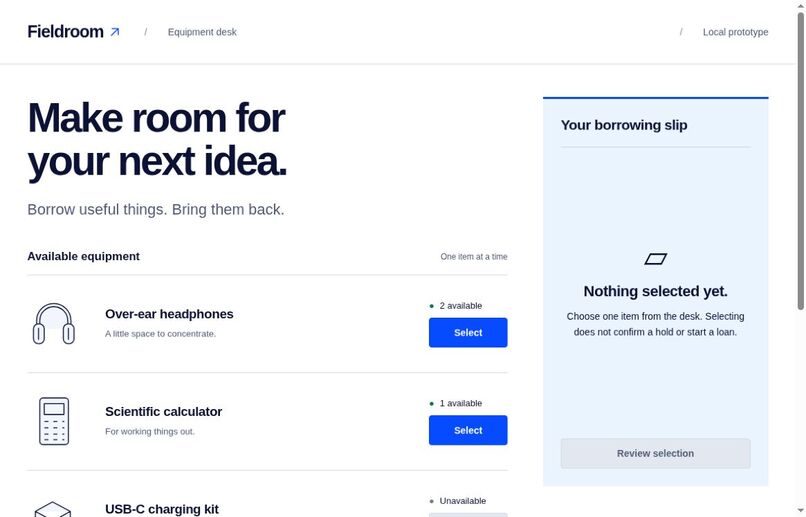
1. Browse fictional equipment. Selecting an item does not place a hold or start a loan.
-
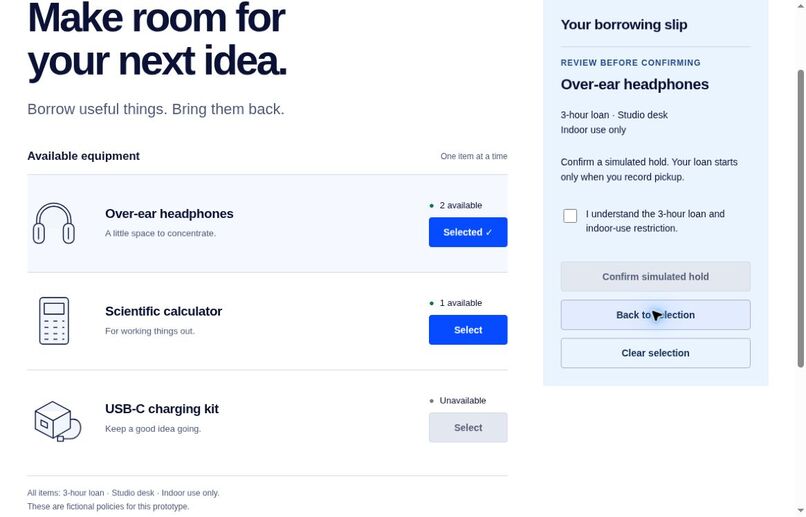
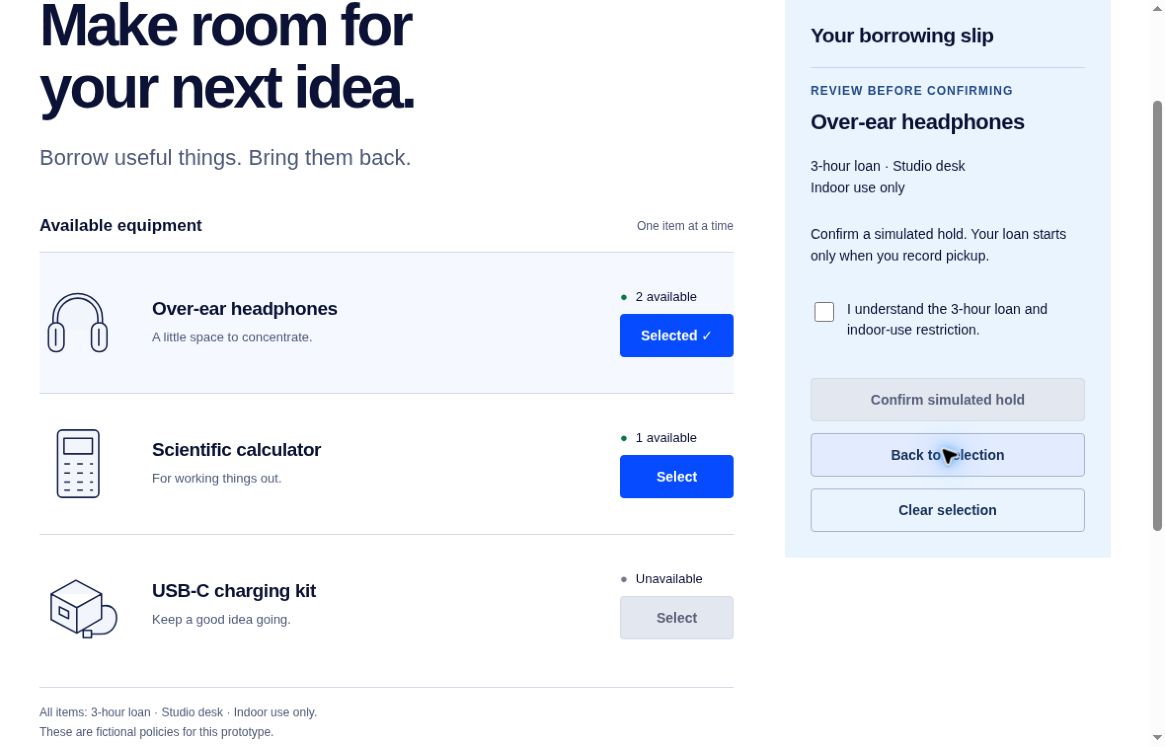
2. Review the three-hour indoor-use policy before confirming a simulated hold.
-
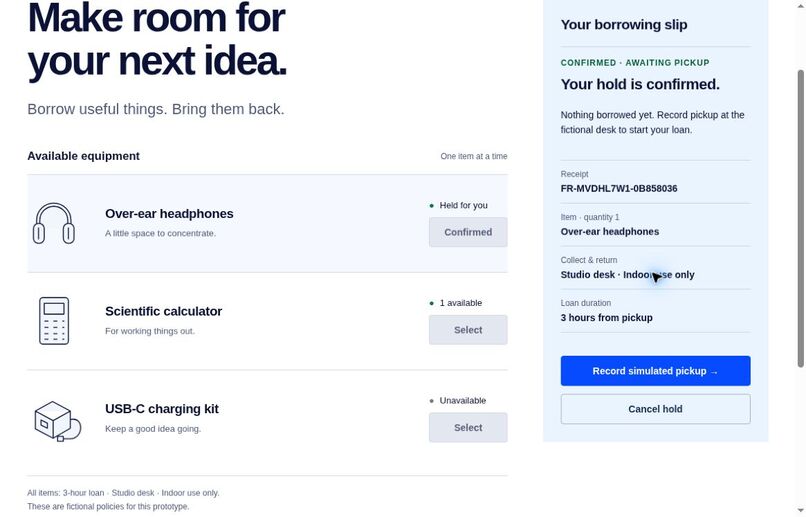
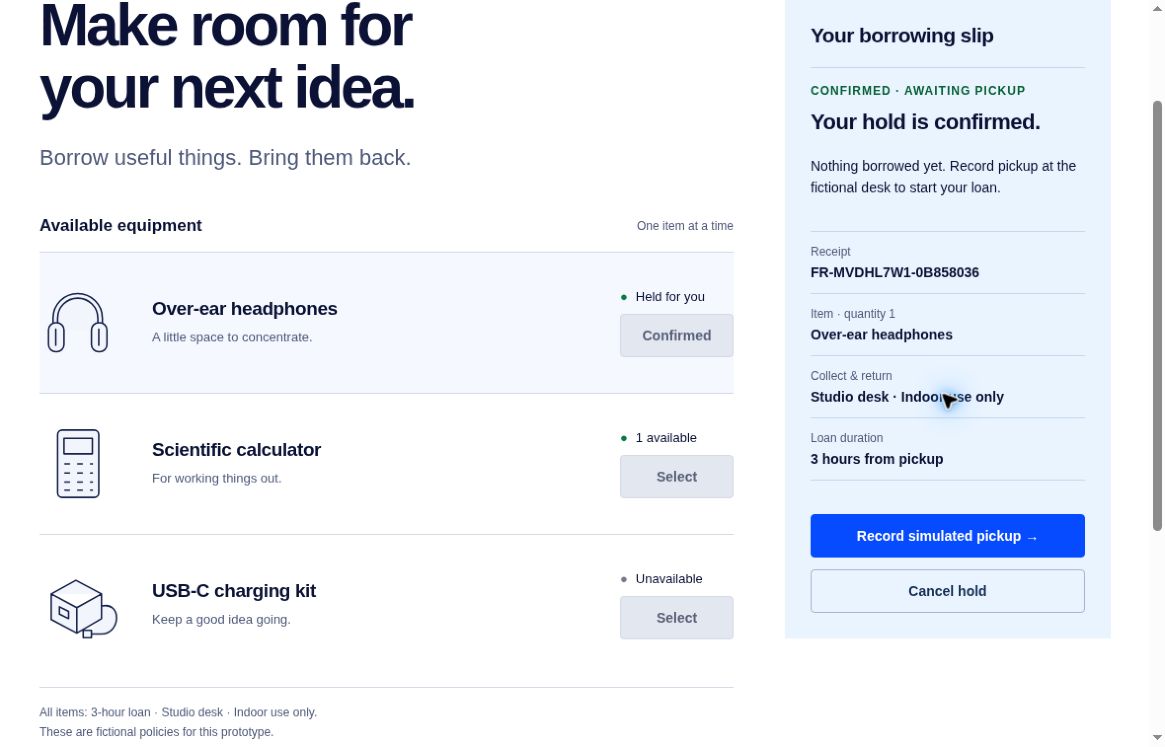
3. Confirmed hold and receipt. No loan starts until simulated pickup is recorded.
-
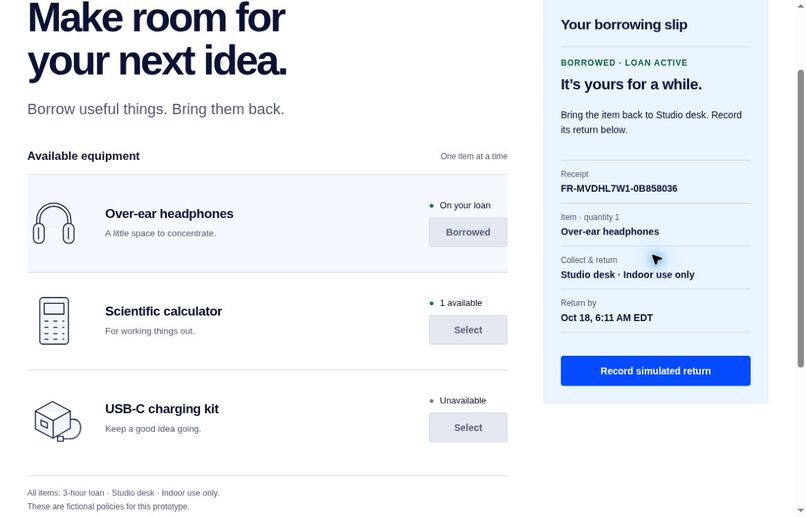
4. Pickup starts the three-hour loan and shows its return deadline.
-
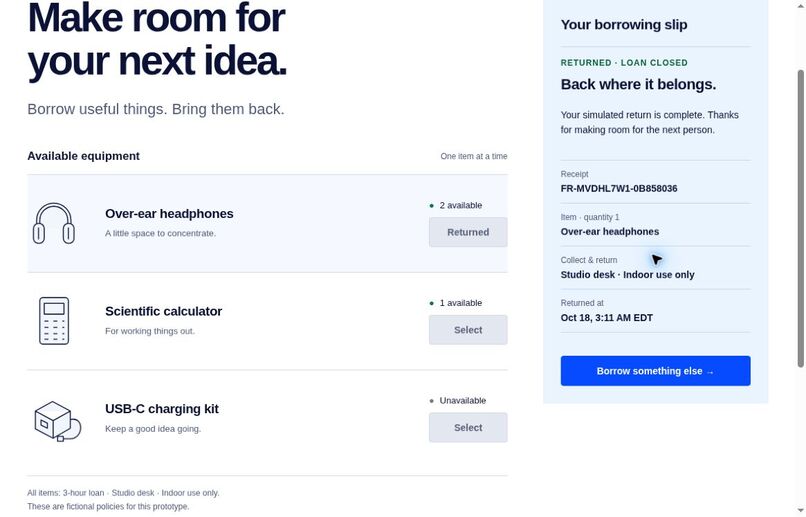
5. Simulated return closes the loan while preserving its receipt.
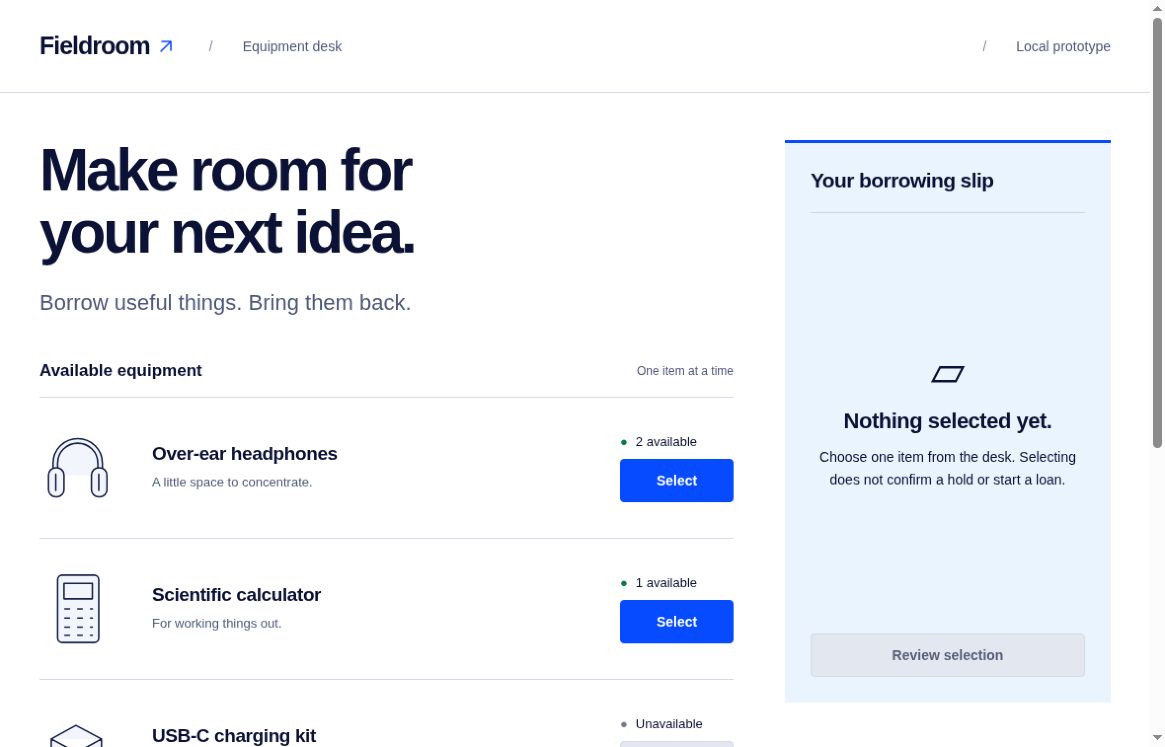
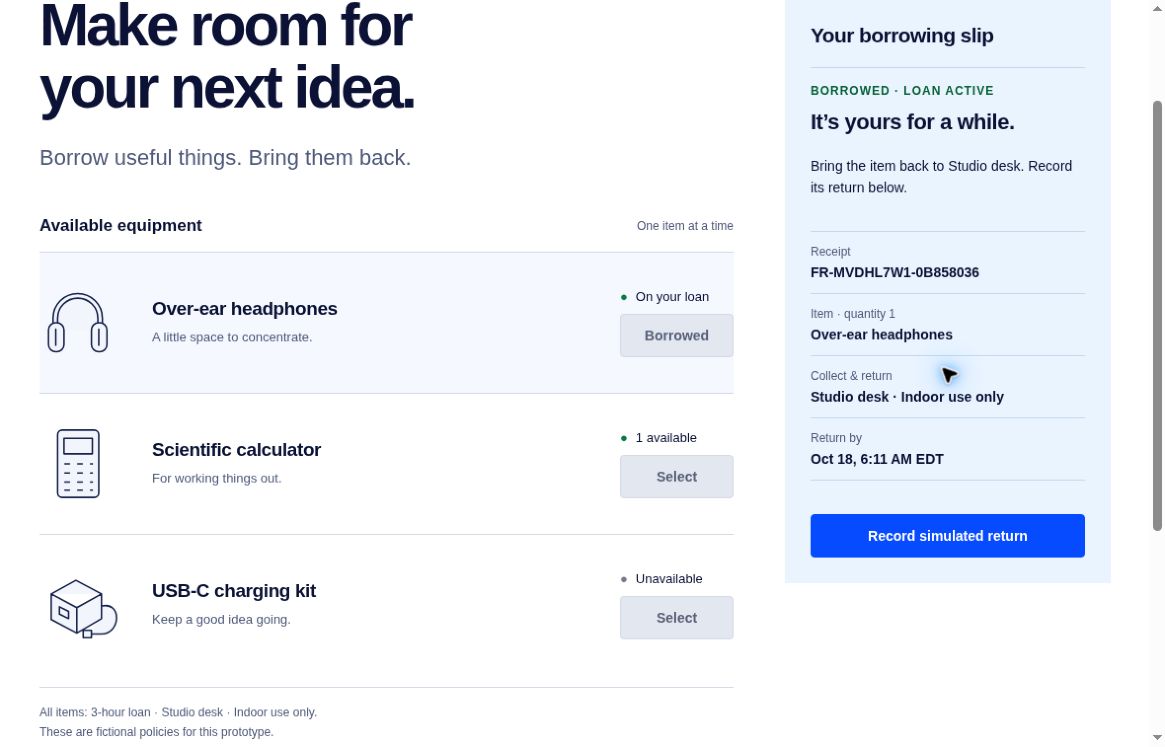
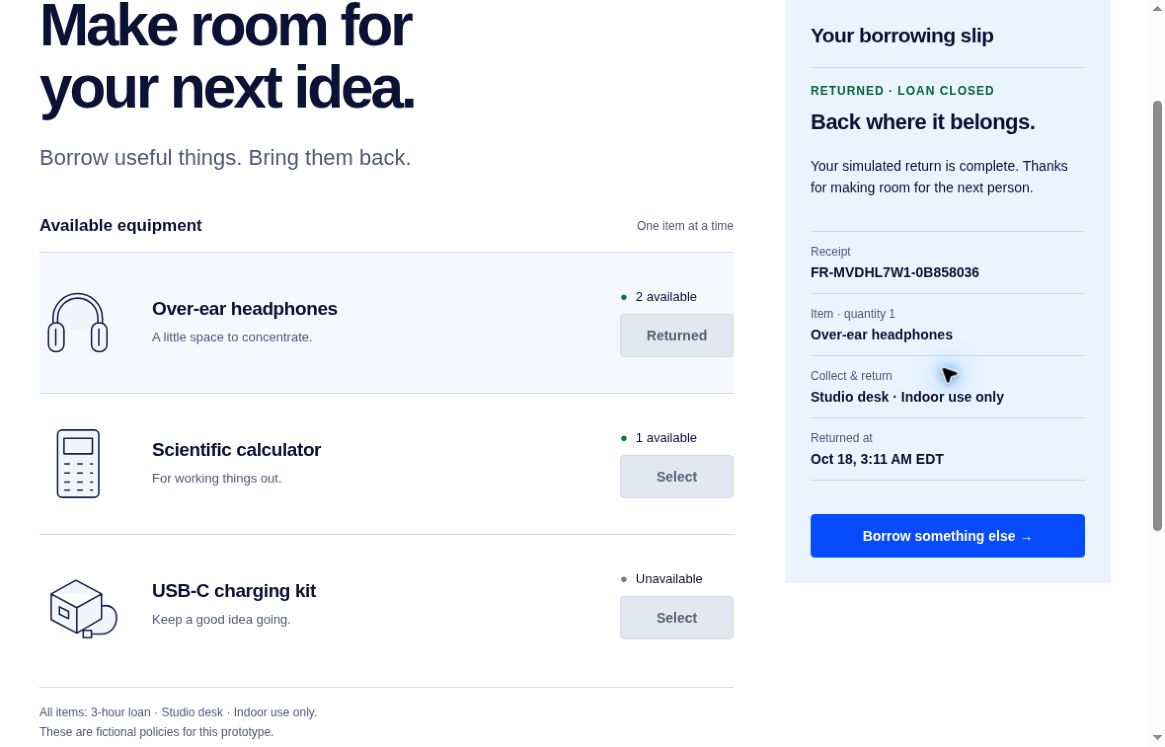
Fieldroom explores a small equipment-desk problem: selecting an item, confirming a hold and borrowing it are different commitments. The assumed user is a student who needs one item for a short work session. Clearer commitments are a design hypothesis, not a measured usability result; no interviews or user study were conducted.
The borrower selects an item, reviews a fictional three-hour indoor-use policy, acknowledges it and confirms a simulated hold. Review puts the restriction before the commitment. Confirmation creates a receipt but starts no loan. Recording pickup starts the three-hour clock and shows a return deadline. Recording return closes the loan while preserving its receipt. Unavailable items cannot be selected, and confirmation rechecks simulated availability. Cancellation is available before pickup; an active loan must be returned rather than reset.
An open equipment list and stable borrowing slip make each state explicit in words and controls. Native controls, a skip link, visible focus, live notices and 320px reflow support the journey. Focused slips remain in view after actions and saved-state recovery. A 220ms entrance animation provides secondary feedback; reduced-motion preference disables animations and transitions. Review acknowledgment resets on reload.
This fresh, solo, AI-assisted project uses HTML, CSS and JavaScript modules, original SVG drawings and system fonts, with no third-party runtime dependencies. A state model validates transitions and restored receipts. Browser-local saving, Web Locks and snapshot checks handle interrupted and cooperating-tab flows.
Verification update, 19 October 2026: Cross-tab updates now bring the borrowing-slip heading into view when the focused control disappears or becomes disabled, including with reduced motion. GitHub Actions runs the existing checks on pull requests to main and pushes to main. The passing main run recorded eight model/storage tests, eight static contrast pairs, 20 browser checks and 22 targeted risk checks; these suites overlap. The automated browser checks use unchanged local files through request interception and do not establish deployed-browser behavior. Separate deployed checks verified reload, cancellation and keyboard continuation.
All inventory, the Studio desk and its policy are fictional. There is no backend, campus account, live inventory, real reservation or cross-device synchronization. Dates use the device clock. No adoption, formal WCAG compliance, screen-reader certification, multi-browser coverage or real-device speed result is claimed. The next step is evaluation with borrowers and desk staff before considering real integration.
OpenAI Codex assisted design, implementation, testing and writing. An AI-generated exploratory concept is not shipped. No campus branding, borrower data or previously judged entry was reused. Node.js, Chrome and Playwright are development tools. No open-source license has been selected.
Demo: https://sharonbasovich.github.io/fieldroom/ Source: https://github.com/sharonbasovich/fieldroom


Log in or sign up for Devpost to join the conversation.