-
-
-
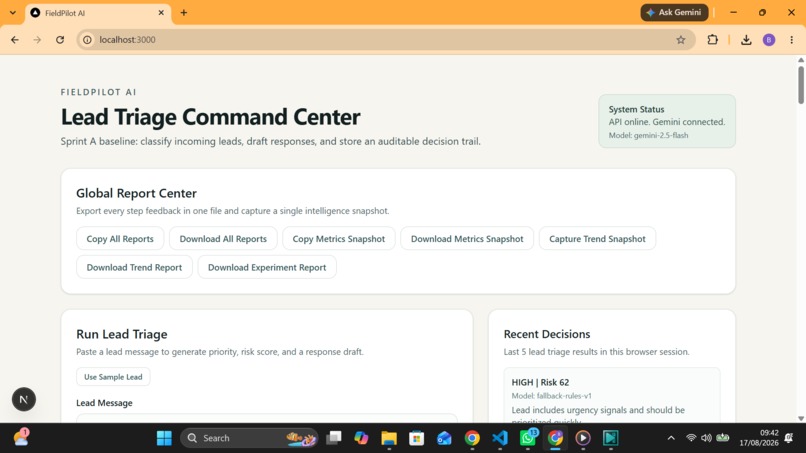
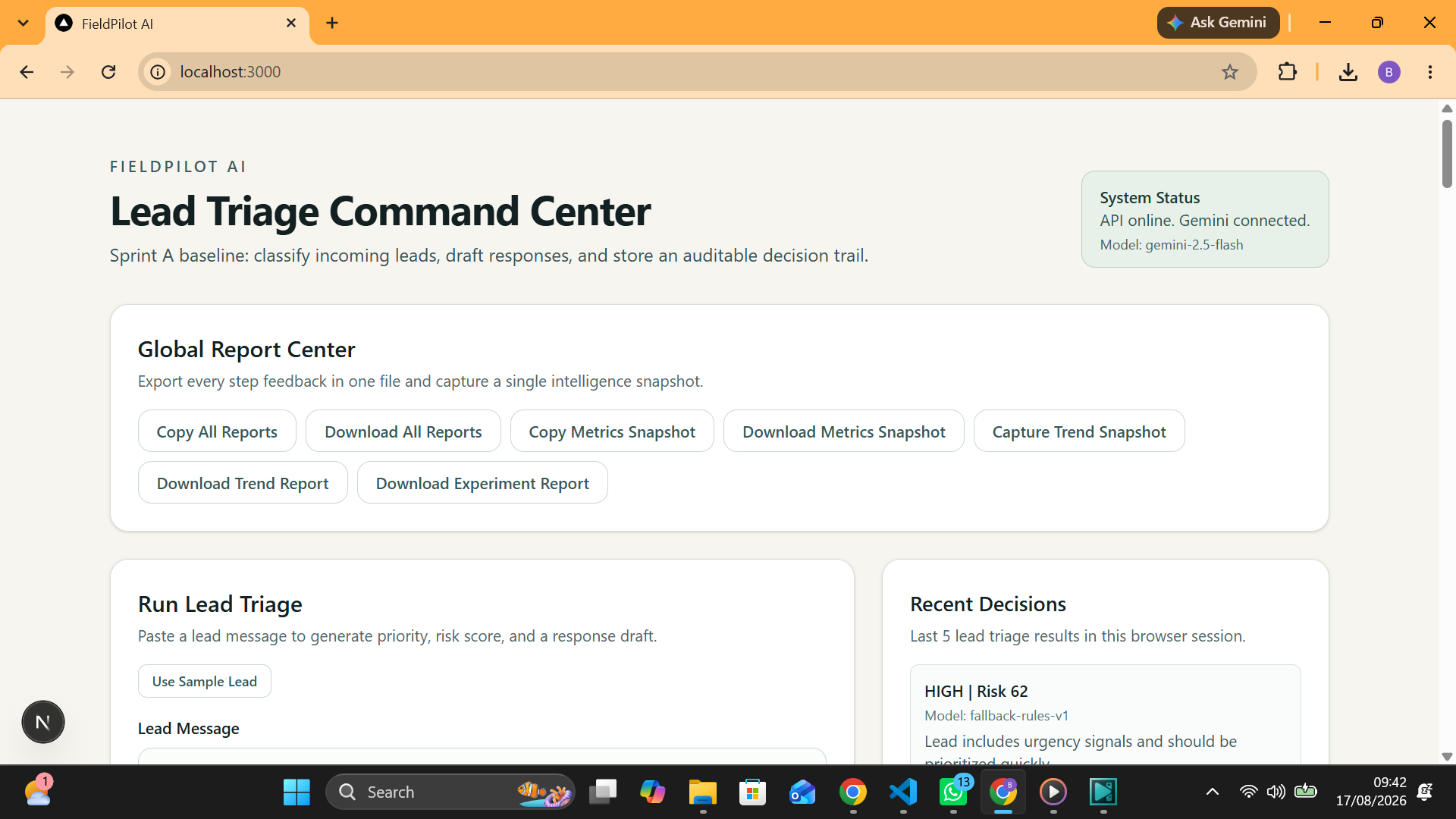
FieldPilot AI command center showing live operations status and workflow readiness across the business lifecycle.
-
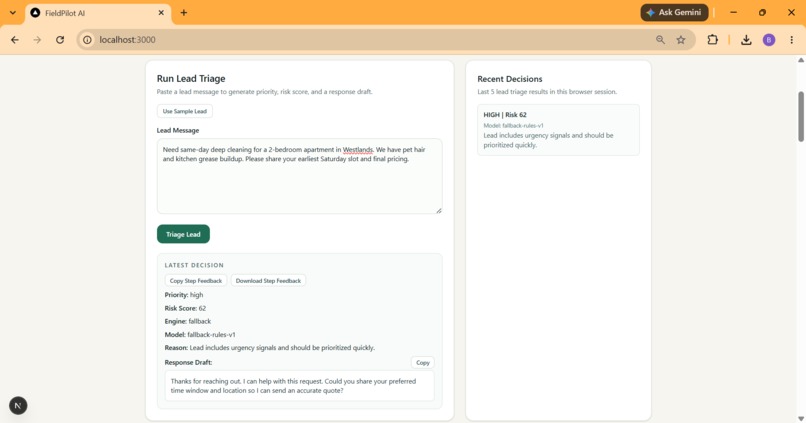
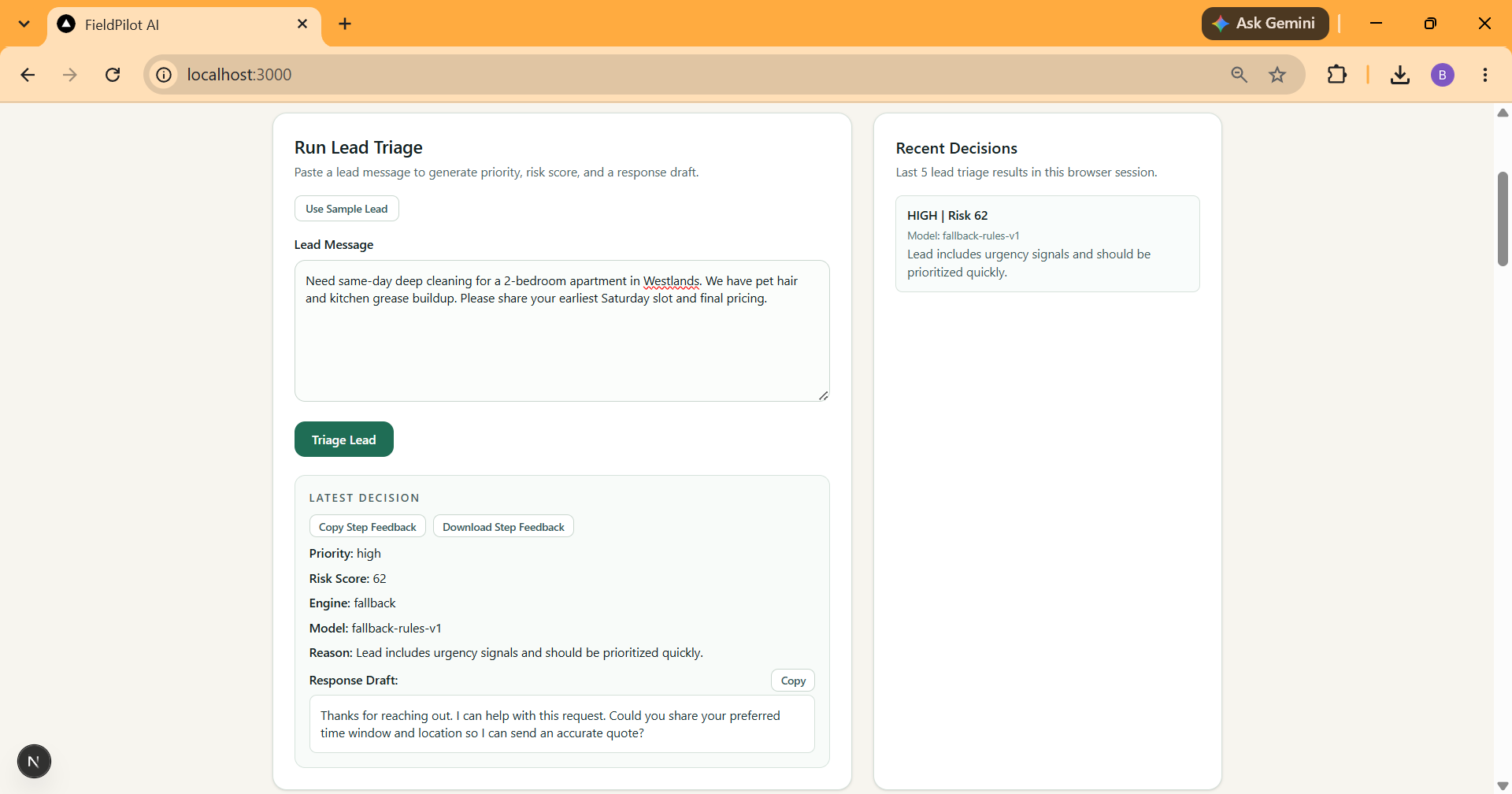
Gemini-powered lead triage ranks urgency and risk with explainable reasoning to improve first-response speed.
-
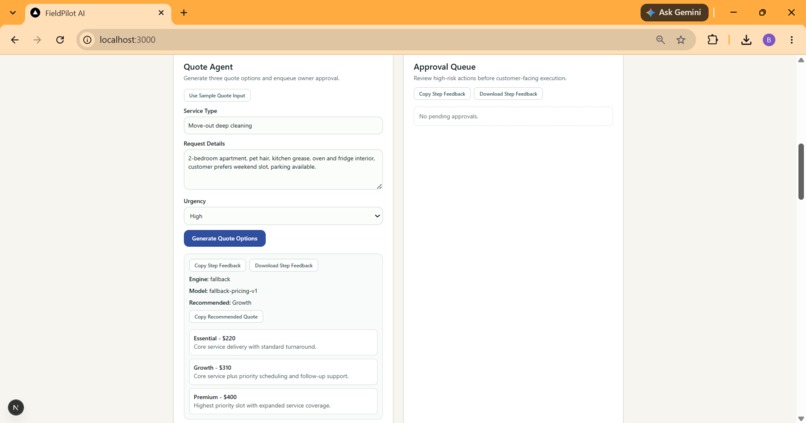
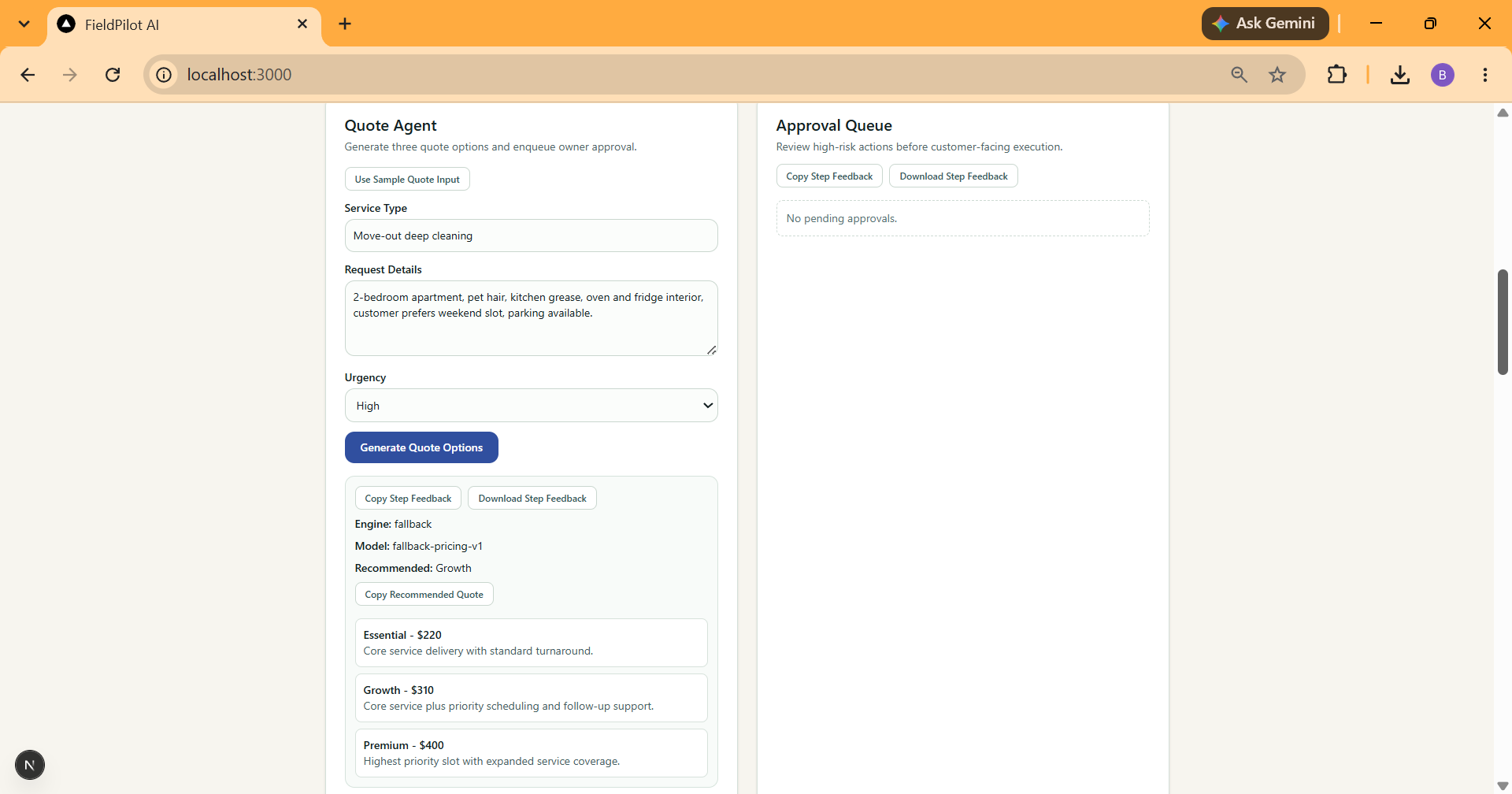
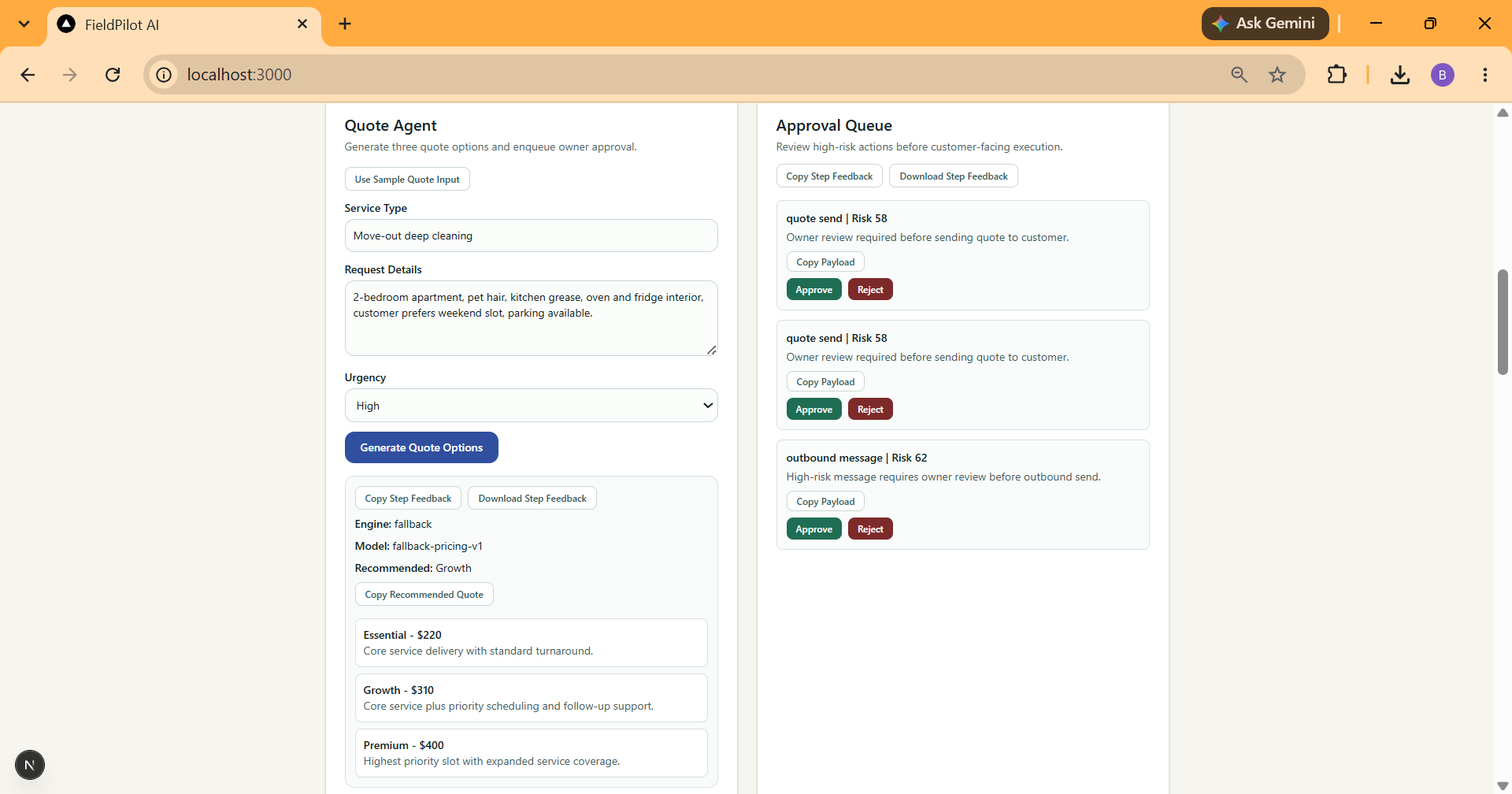
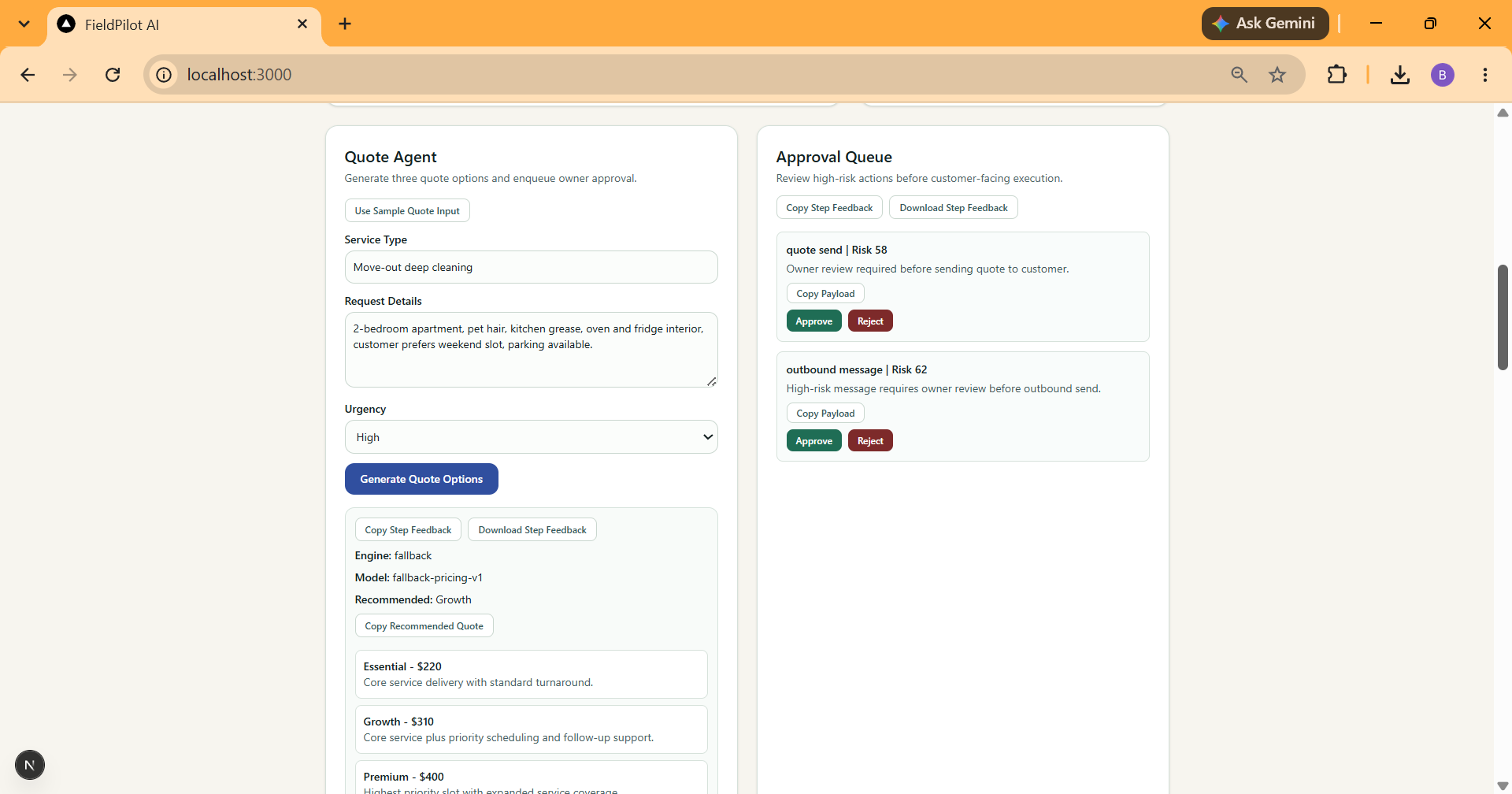
AI-generated quote options with a recommended path help teams respond faster and standardize pricing quality.
-
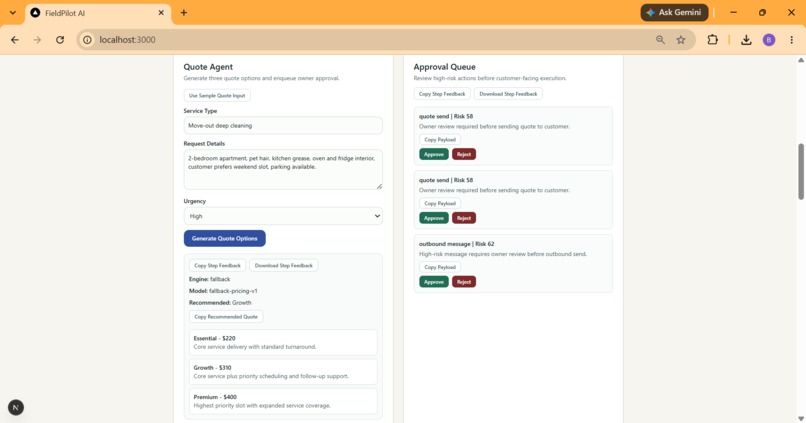
Human-in-the-loop approval queue adds governance for higher-risk actions before customer-facing execution.
-
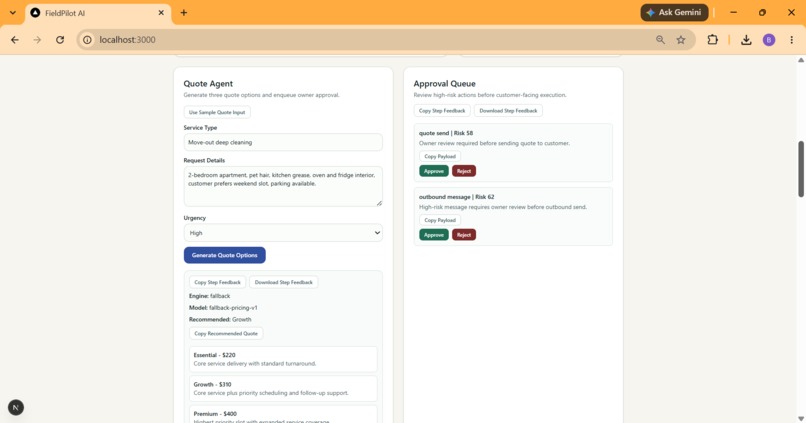
After approving one pening approvals. Approval actions are auditable and update workflow state in real time.
-
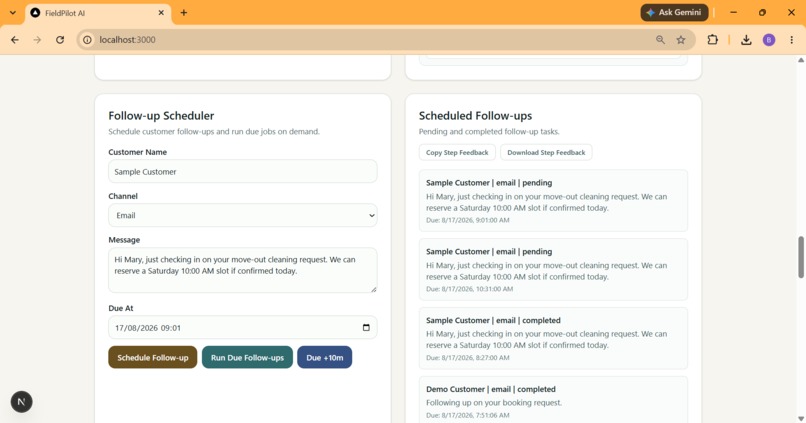
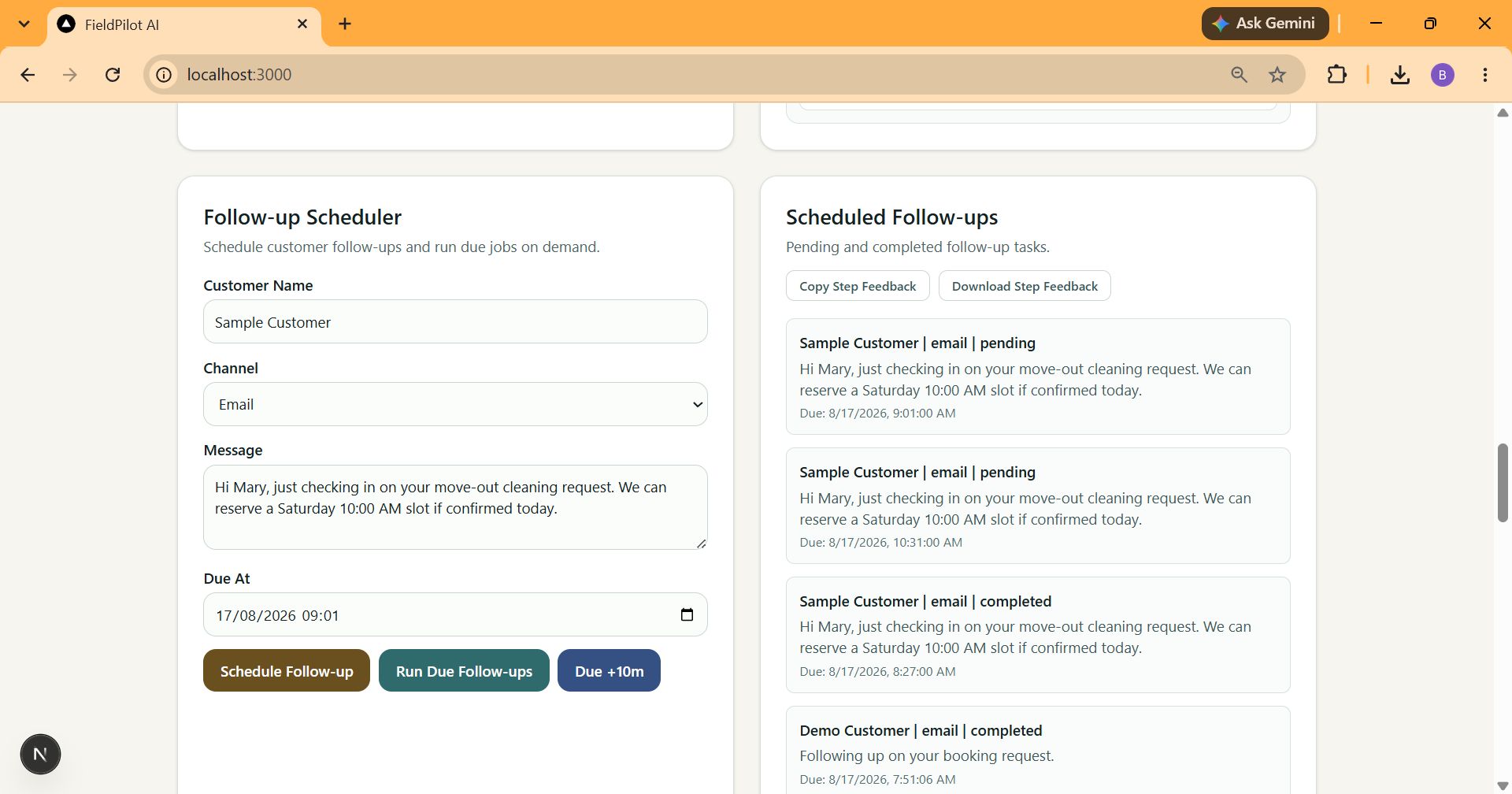
Automated follow-up execution reduces lead drop-off and improves conversion consistency across daily operations.
-
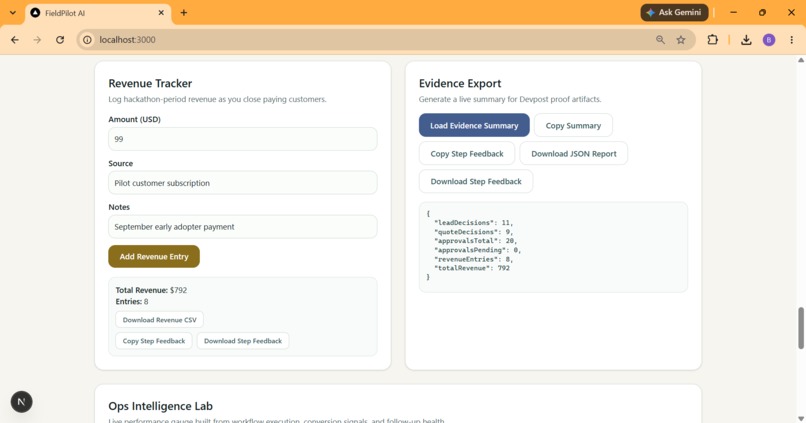
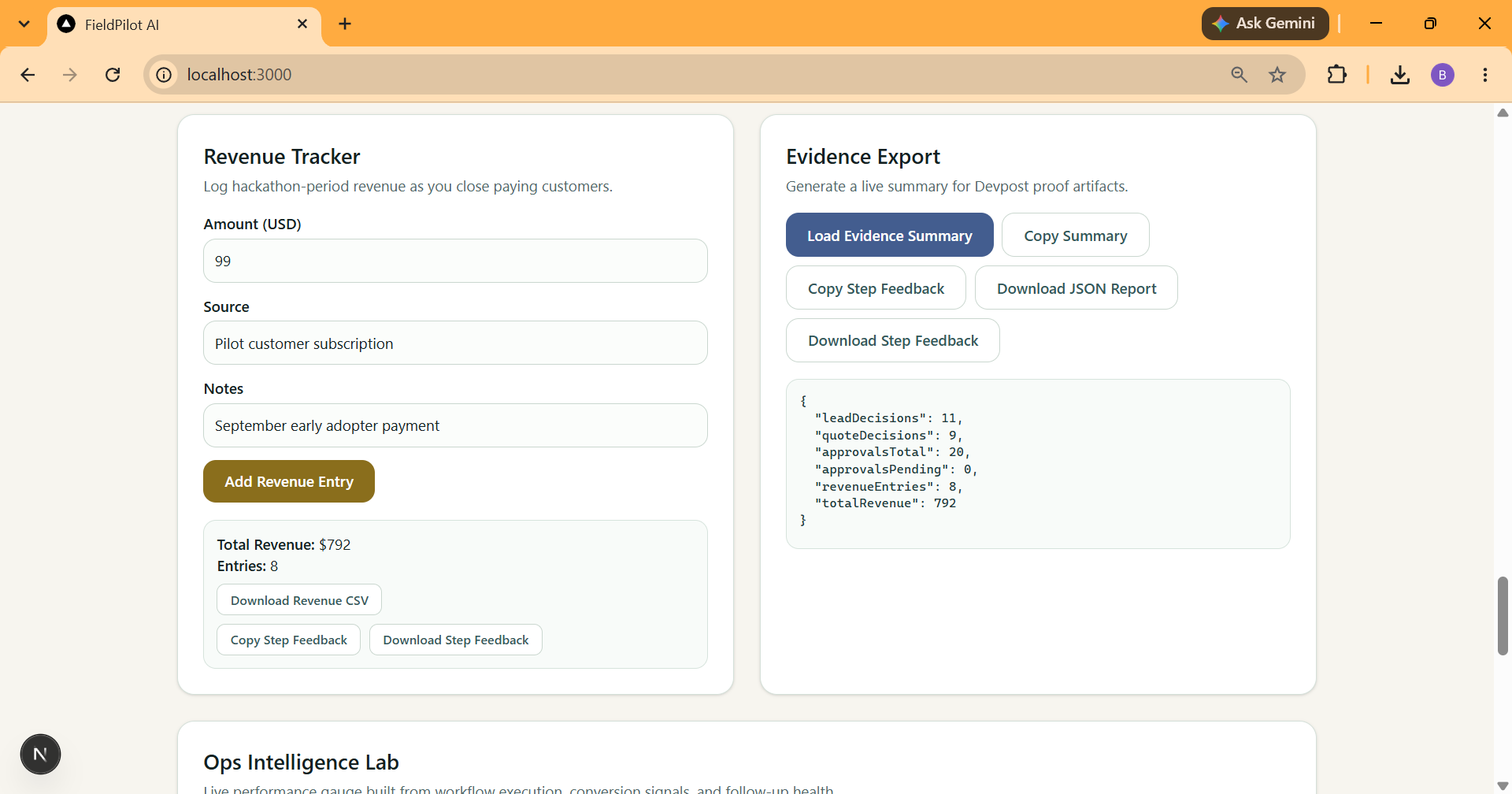
Revenue tracking connects operational execution to business outcomes and supports performance transparency.
-
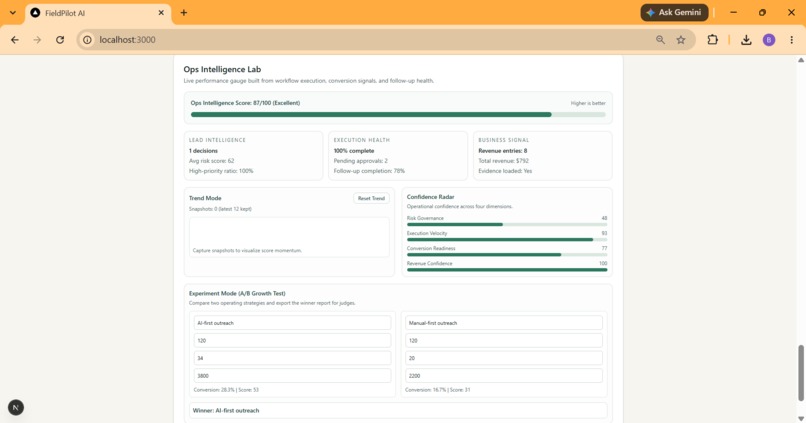
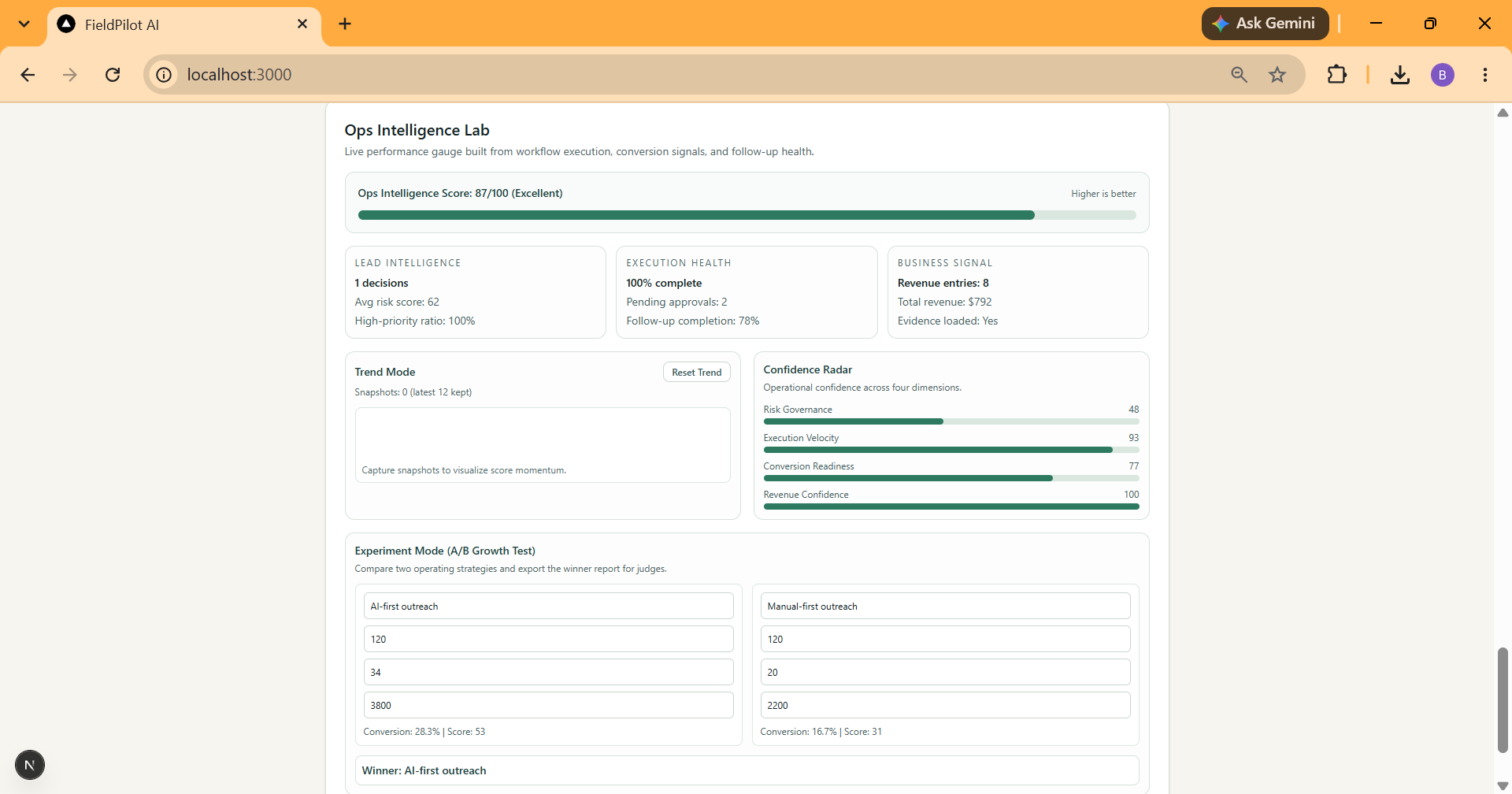
Ops Intelligence surfaces confidence and trend signals to guide continuous improvement of service operations.
-
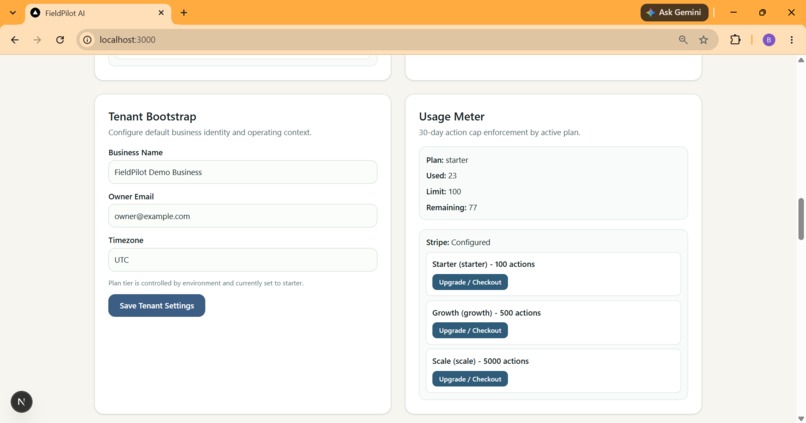
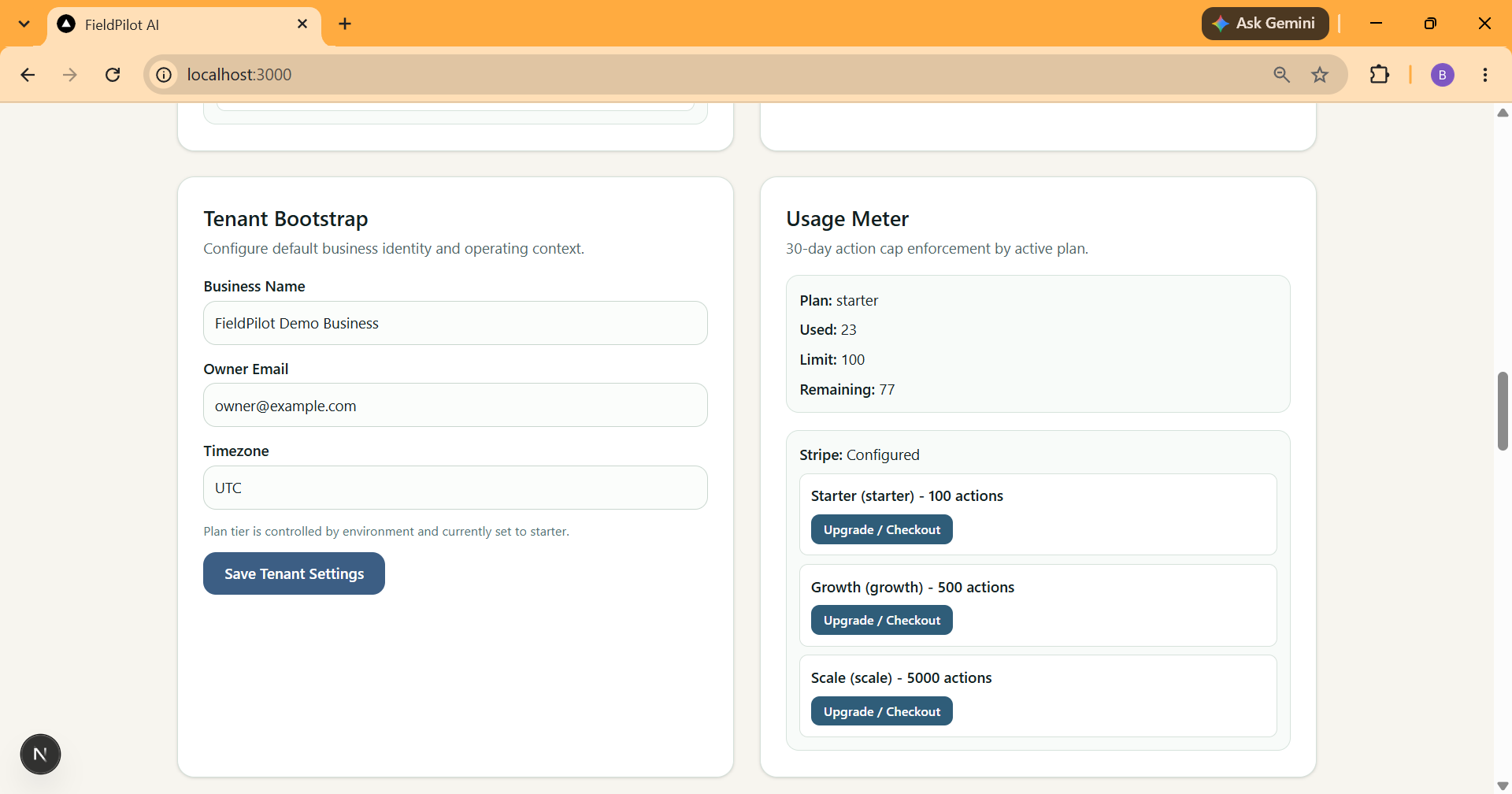
Client configuration
-
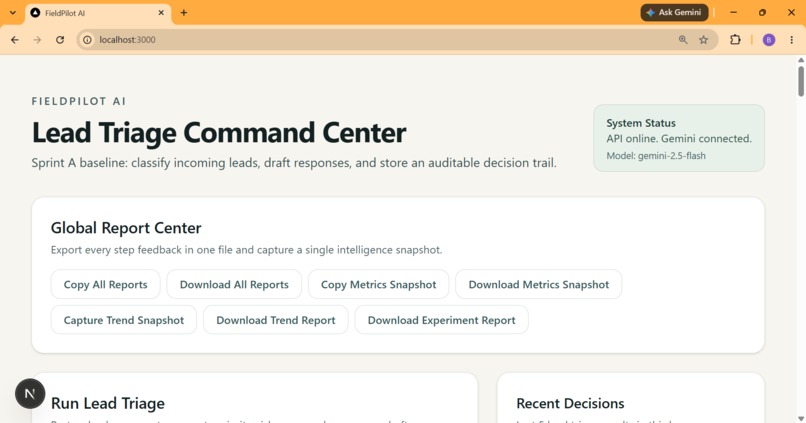
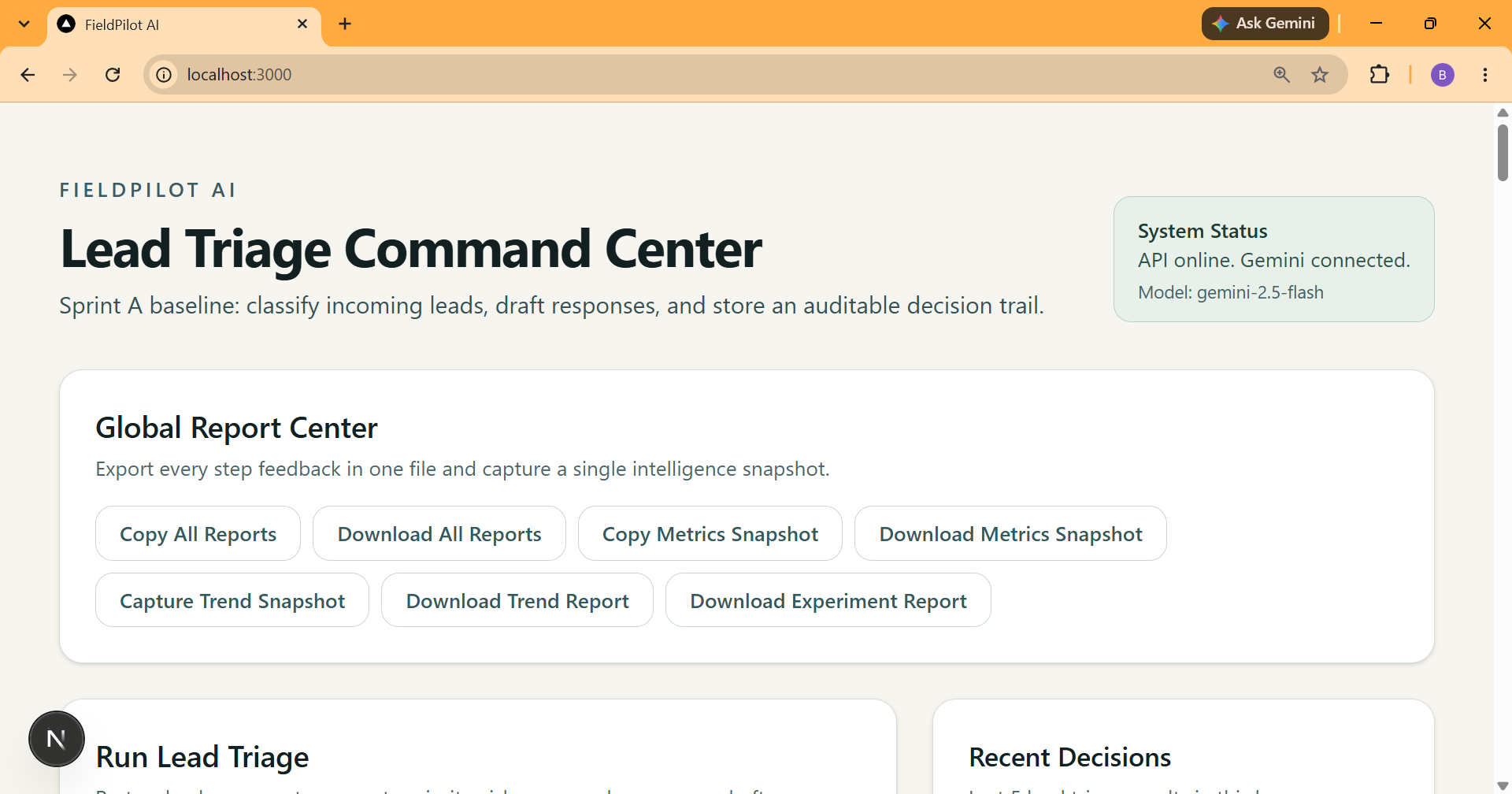
Metrics part where we download all our reports and feedback
-
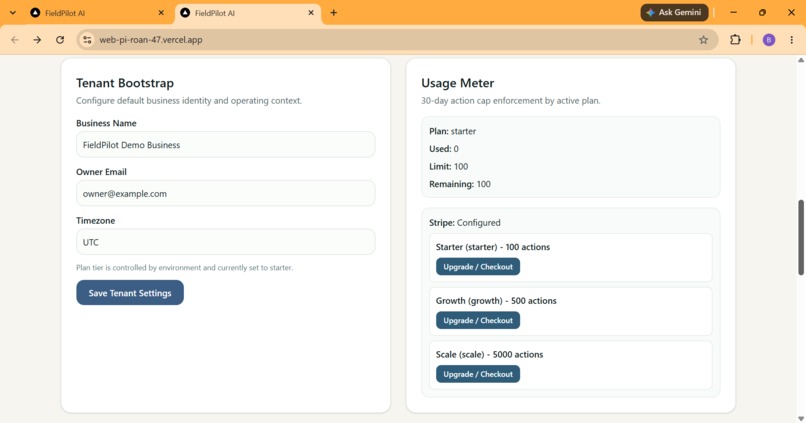
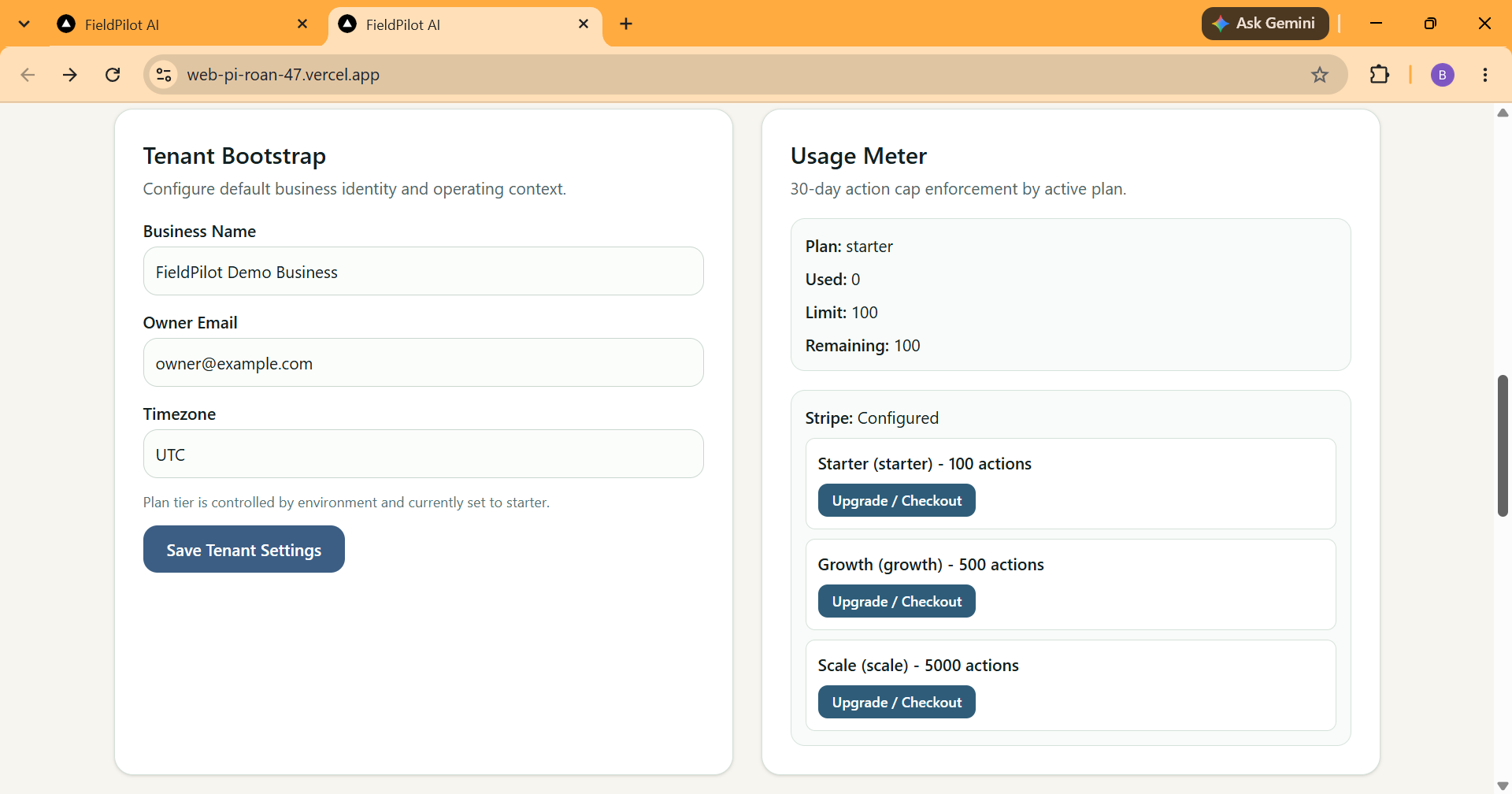
Subscription plans and checkout initiation demonstrate a practical monetization path, with billing infrastructure validated end to end
Project Story
About the project
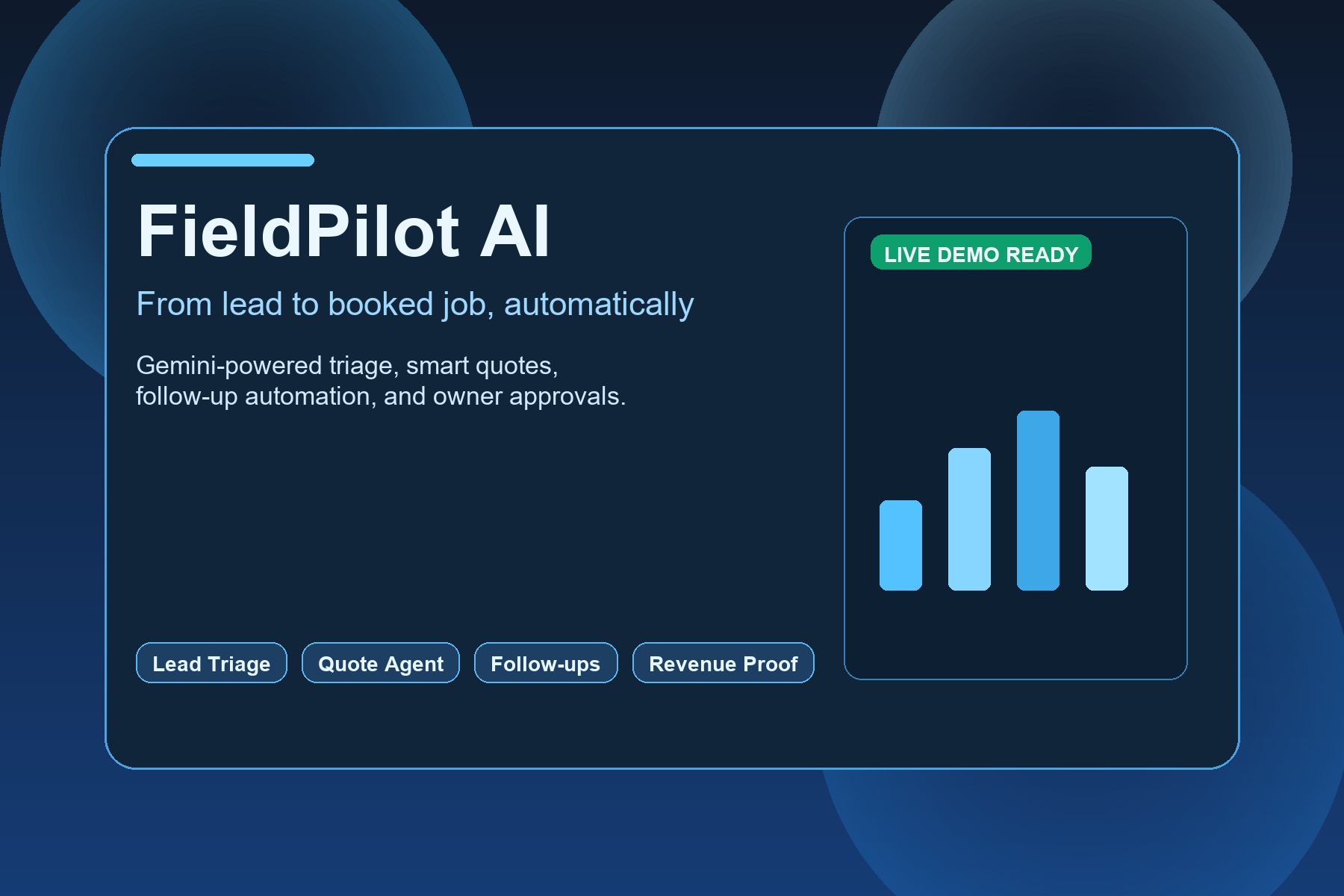
FieldPilot AI addresses a recurring operating gap in service SMBs: demand exists, but conversion drops between inbound leads and consistent execution.
In many markets, leads arrive through high-velocity channels such as calls and WhatsApp while owners are in transit or on-site. Combined with manual quoting and delayed follow-ups, this creates avoidable revenue leakage.
FieldPilot AI turns that chaos into a repeatable system. It orchestrates lead triage, quote generation, approval-gated outbound actions, follow-up automation, and revenue logging. Instead of relying on memory and manual hustle, operators get a clear command center with traceable decisions.
What inspired this project
As a builder working with local service teams in Africa, I repeatedly saw founders lose revenue not because demand was low, but because operations between "new lead" and "booked job" were fragmented.
The goal was to build something grounded in how these businesses actually run: mobile-first communication, lean teams, and high pressure on response time. This is why FieldPilot AI is designed as an execution system, not a standalone AI chat demo.
How we built it
FieldPilot AI is a full-stack web app with API-first workflow modules and production-oriented validation.
Core capabilities include:
- Lead triage with priority scoring, reasoning, response draft, and model traceability
- Quote generation with multiple options and recommendation output
- Human-in-the-loop approvals for sensitive outbound actions
- Follow-up scheduling and automated due-task execution
- Revenue tracking and evidence export for measurable proof
- Usage controls and Stripe-backed monetization paths
Technology stack:
- Next.js and React frontend
- TypeScript and Node.js backend routes
- Gemini API for language and decision tasks
- Firestore for persistence
- Stripe for checkout and plan configuration
To support submission reliability, we added automated readiness checks (lint, build, smoke APIs) and generated evidence artifacts for reproducible verification.
Challenges we faced
- Balancing automation speed with owner trust and control
- Ensuring runtime reliability across local and cloud-backed persistence modes
- Hardening API behavior for judge/demo scenarios
- Removing Firestore index-dependent failure paths for smoother setup
- Building repeatable validation instead of relying on manual checks
The most important product decision was enforcing human approval at higher risk thresholds. That preserved speed where safe while preventing low-confidence automation from creating customer-facing errors.
What we learned
- AI value comes from reliable workflows, not isolated prompts
- Human approval gates are key for business adoption and safety
- Evidence and observability are critical for credibility
- Automated readiness checks dramatically improve submission confidence
We also learned that trust is a feature. Business users adopt automation faster when every action has context, rationale, and an approval path.
Why this matters
FieldPilot AI helps local businesses respond faster, follow through consistently, and operate with less administrative overhead.
For many entrepreneurs in Africa, every missed follow-up can mean lost income and delayed growth. By making execution consistent and measurable, FieldPilot AI helps convert effort into outcomes.
Long term, we see this as an AI-native operating layer for service SMBs across emerging markets: one that compounds over time through better decision quality, tighter execution loops, and measurable revenue outcomes.
Built With
- firebase
- firebase-admin
- firestore
- gemini-api
- google-ai
- javascript
- next-js
- node.js
- react
- stripe
- tailwind-css
- typescript
- vercel
- zod


Log in or sign up for Devpost to join the conversation.