-
-
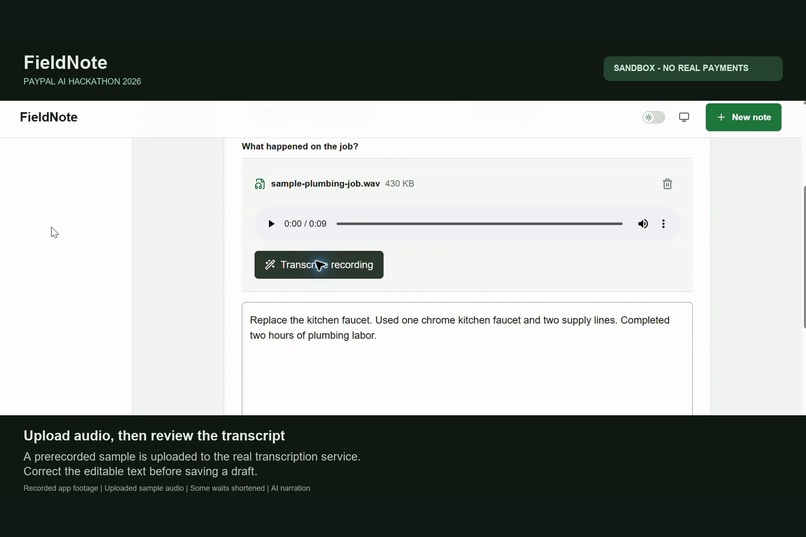
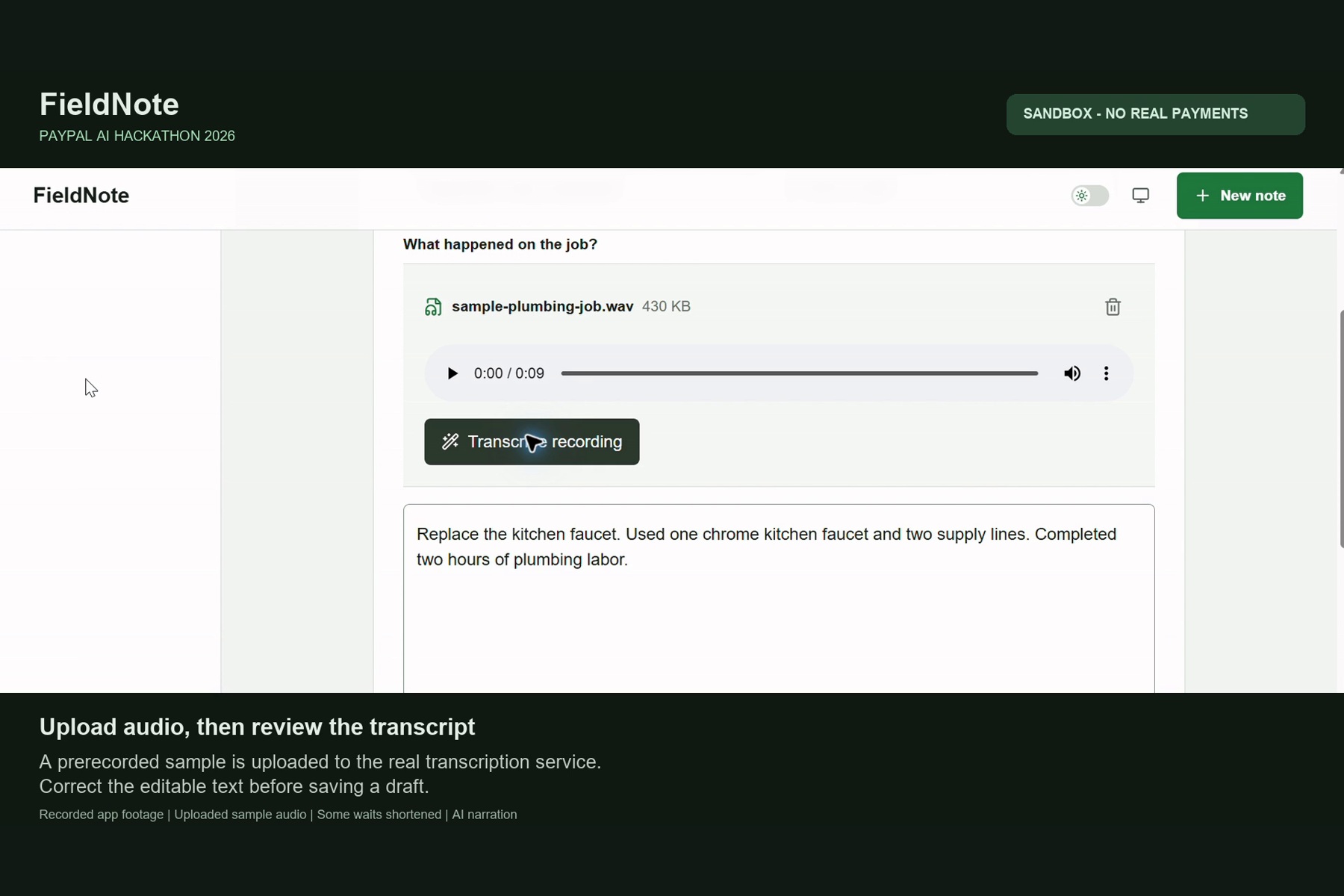
Upload a sample audio note, transcribe it with AI, and correct the editable text.
-
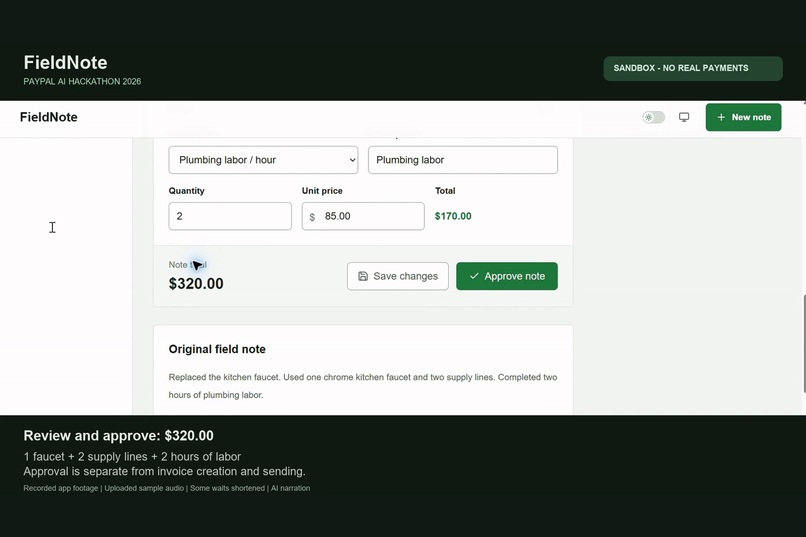
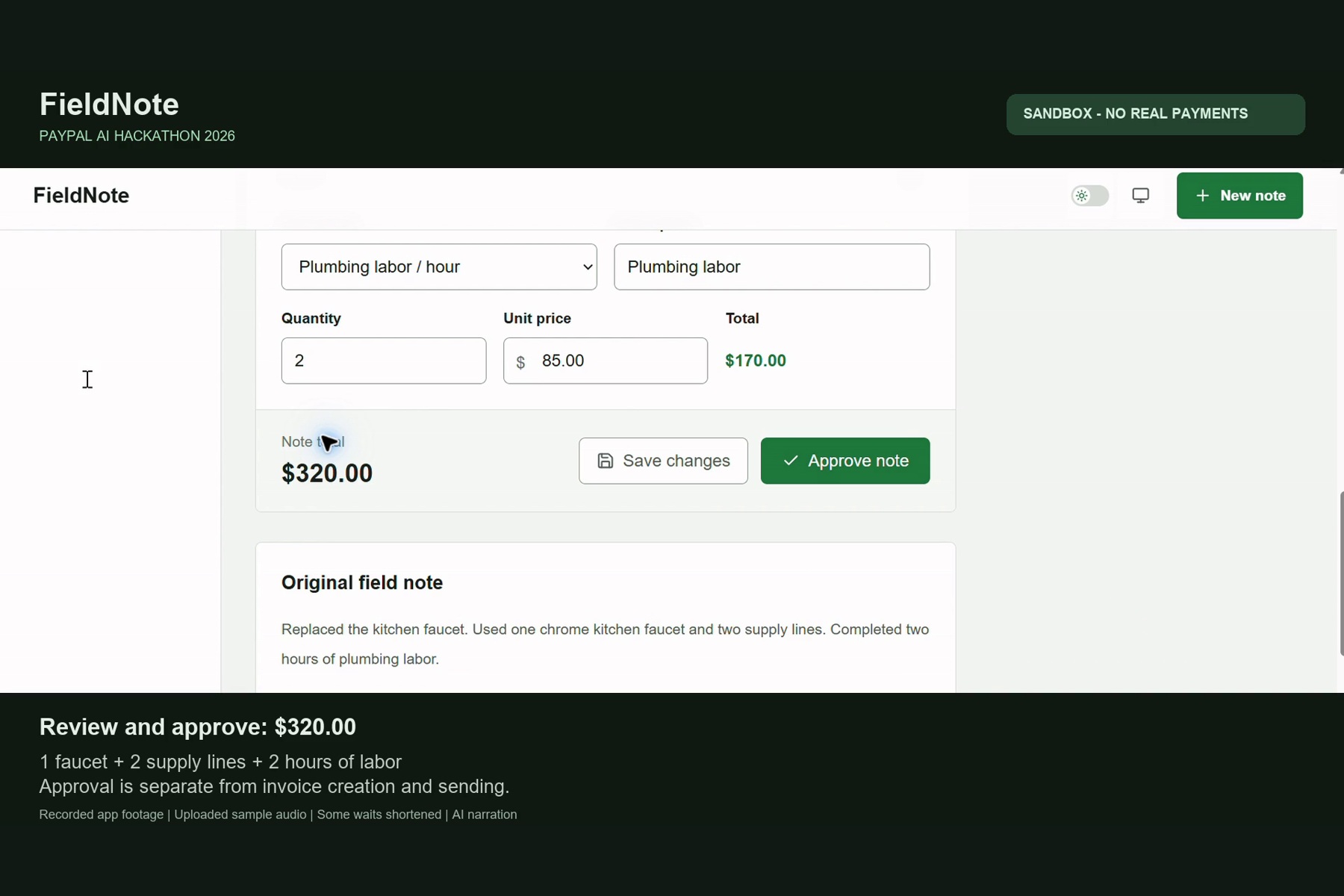
Review catalog matches, quantities, and prices before approving the $320 total.
-
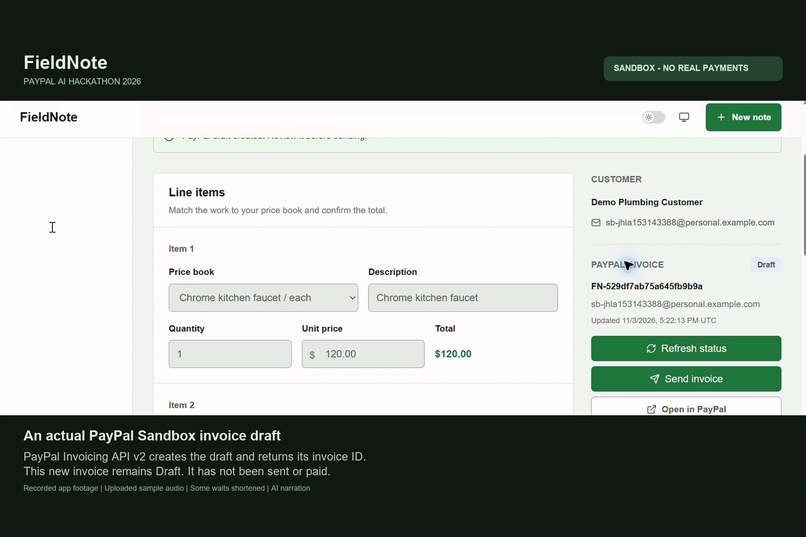
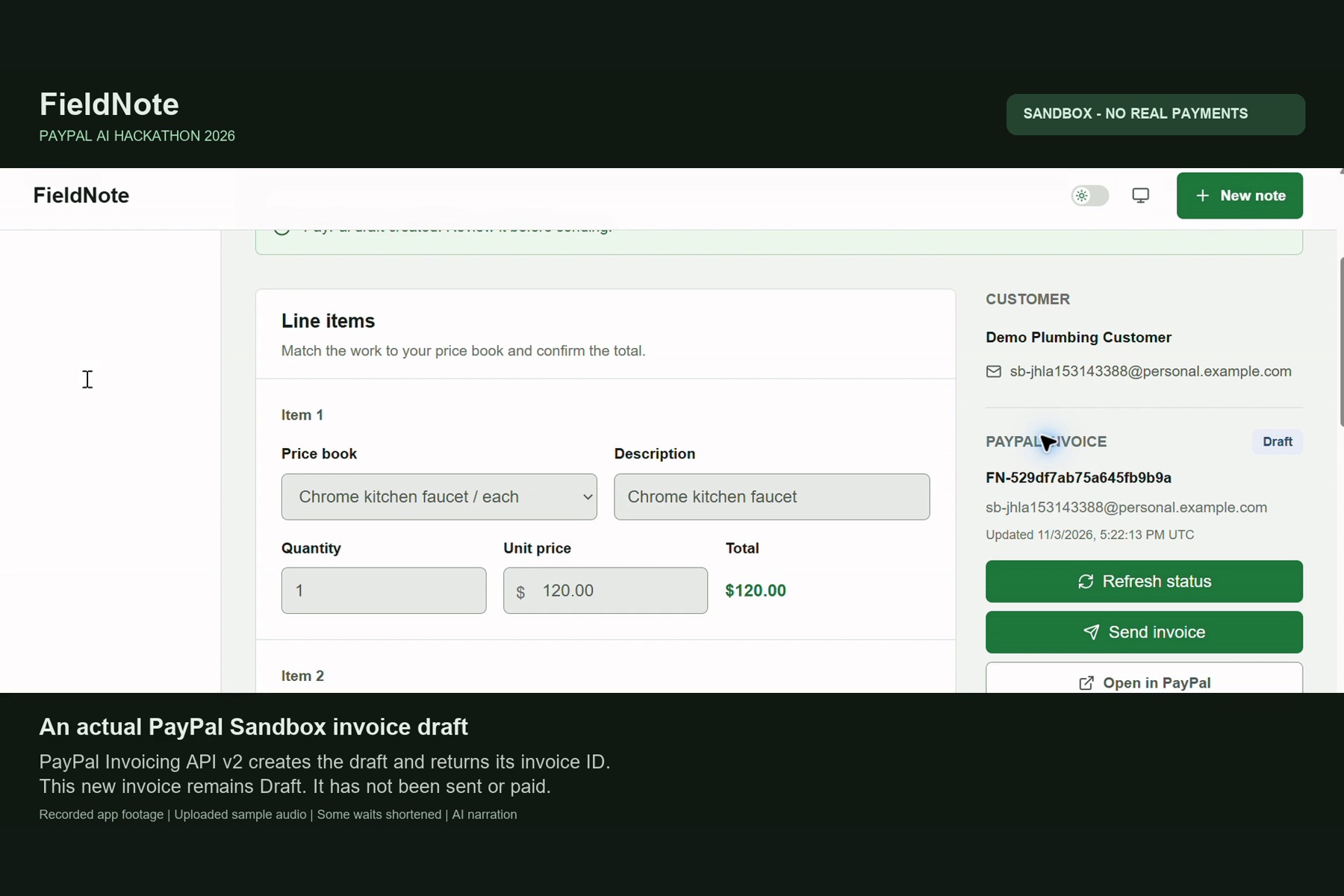
An actual PayPal Sandbox invoice draft. Creating a draft does not send it.
Inspiration
For a solo service professional, finishing the physical job is not the end of the work. Notes about materials and labor still need to become an invoice. FieldNote explores a simple question: can the contractor describe the job while it is fresh, then turn that description into a bill without surrendering control over prices, quantities, or the customer who receives it?
What It Does
FieldNote is a mobile-first web app for capturing work and preparing invoices. Users maintain their own customers and price book, then record, upload, or type a rough job note. Audio transcription produces text they can correct before saving. AI suggests line items and catalog matches for human review.
The user checks descriptions, quantities, and prices before approving the note. FieldNote then creates a PayPal Sandbox invoice draft. Sending requires a separate confirmation. Verified PayPal webhooks update invoice status, including paid status after a Sandbox buyer completes checkout.
Customer and service editors keep the workspace useful as a business changes. Services can be deactivated without changing saved line-item prices. An existing PayPal invoice retains its reserved data and recipient even if the customer or price book changes later. Each signed-in account has an isolated workspace.
How We Built It
The application uses Next.js App Router, React, TypeScript, and Tailwind CSS. Supabase provides Google sign-in, email-link authentication, and Postgres, with row-level security enforcing record ownership. Server-side application actions handle authenticated mutations and invoice operations.
Vercel AI Gateway connects the app to OpenAI transcription and structured extraction models. AI output is treated as a suggestion, not authorization to invoice. The user selects the customer and reviews the result against the business's own catalog.
PayPal Invoicing API v2 supplies Sandbox draft creation and sending. Stable request IDs and reserved invoice data support retries. The webhook endpoint verifies PayPal notifications before privileged status updates. Vercel hosts the web application and server-side routes.
Challenges
The difficult part was keeping a useful AI-assisted workflow predictable at the boundaries. A transcript may need correction; a catalog match may be uncertain; a payment request may have an ambiguous network result. We added explicit review and approval, stable invoice reservations, send reconciliation, and verified webhook processing rather than treating every request as an immediate success.
We also tested what happens when users change data later. Saved invoice details must not silently change when a customer email or catalog price is edited. Timestamp checks reject stale editor updates, and failed saves preserve input.
Accomplishments
We verified a hosted second-account workflow from audio upload through live transcription, AI extraction, human approval, PayPal Sandbox draft creation, owner-confirmed sending and payment, and automatic paid-status sync. A separate desktop microphone recording was transcribed and its text saved. Hosted editing checks preserved the original paid invoice while customer and catalog details were temporarily changed and restored.
Google sign-in and sign-out were verified on the hosted app with an existing second account outside Google's test-user list, preserving its workspace.
Regression and rollback-only database tests cover invoice safeguards, webhook handling, and ownership protection. Browser viewport checks cover narrow layouts; they are not a substitute for physical-phone testing.
What We Learned
AI is most useful here when it reduces interpretation work while leaving business decisions visible. Human review, clear invoice states, safe retries, and accurate recipient handling matter as much as generating the initial suggestions.
What's Next
Future work includes general email delivery, tax and discount support, additional currencies, and better draft recovery. FieldNote currently focuses on the reviewed USD Sandbox invoicing workflow shown in the demo. These are planned improvements, not current capabilities.
Built With
- next.js
- openai
- paypal
- postgresql
- react
- supabase
- tailwindcss
- typescript
- vercel
