-
-
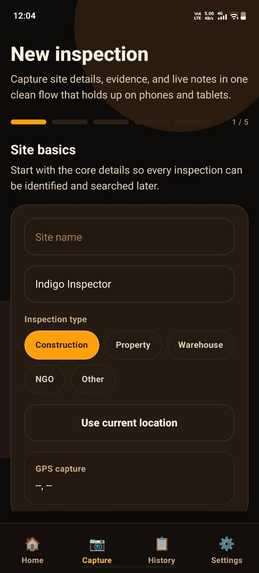
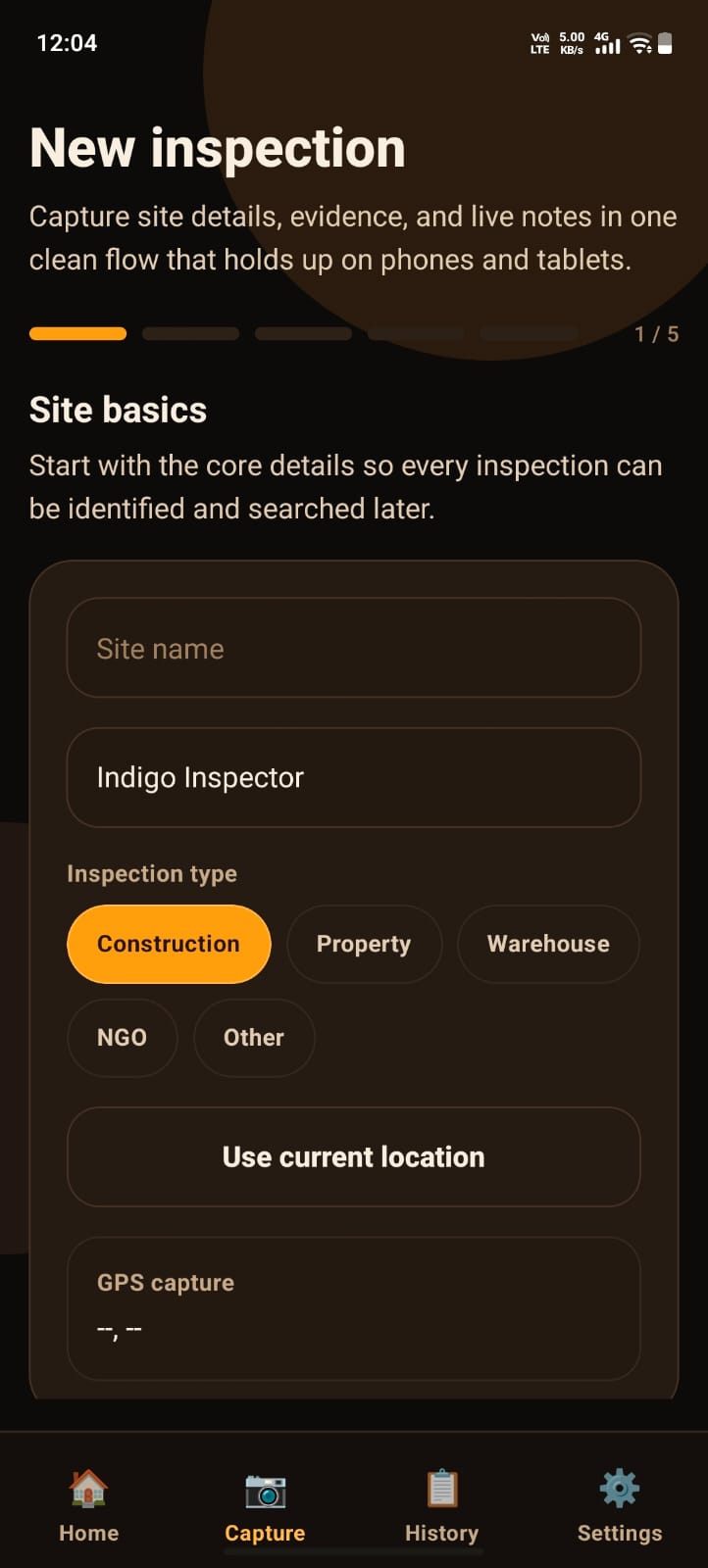
Mobile app - New Inspection
-
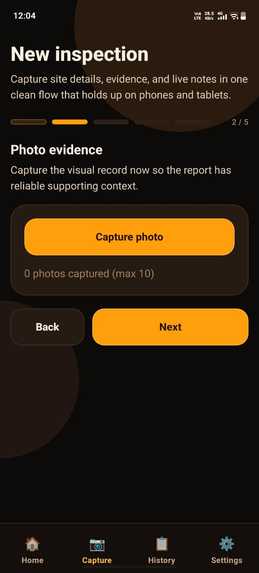
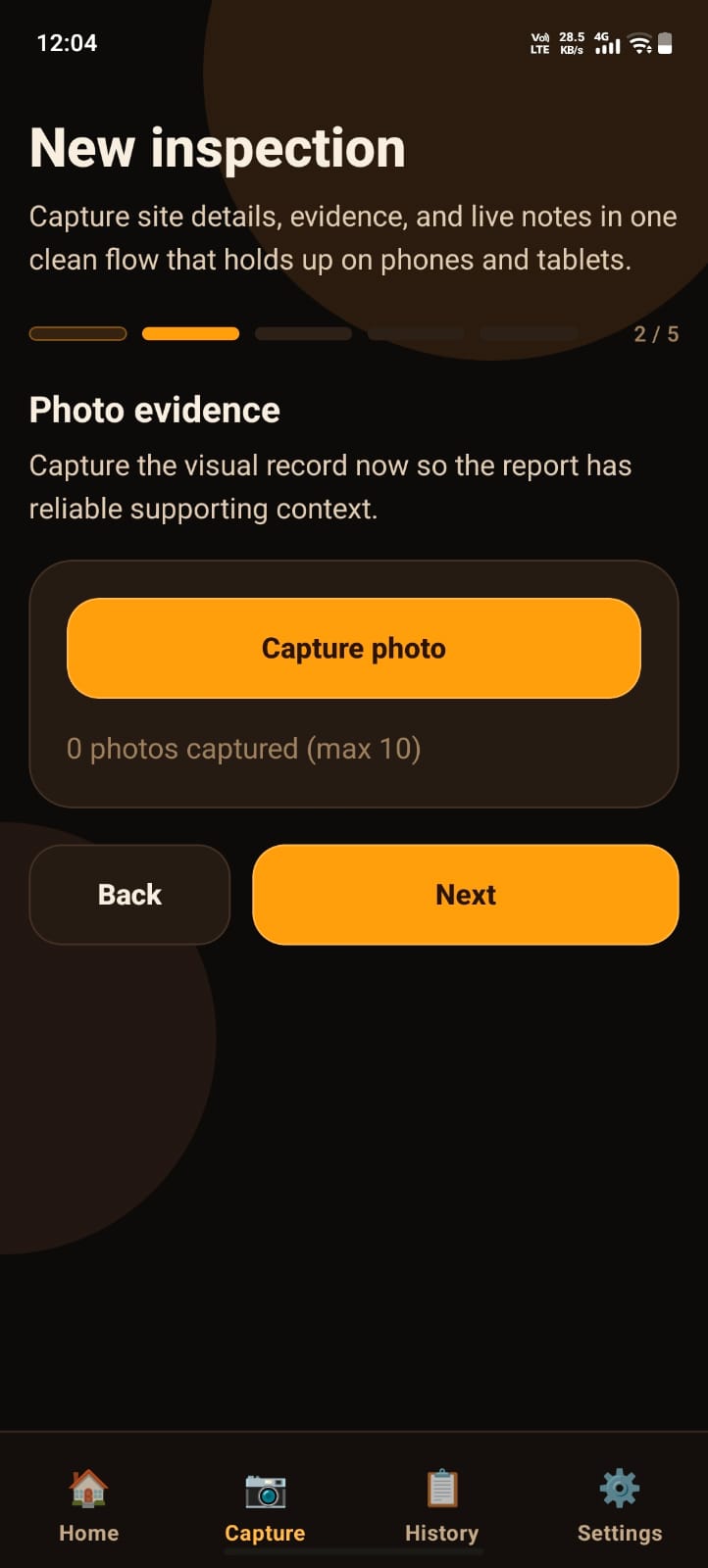
Photo Evidence
-
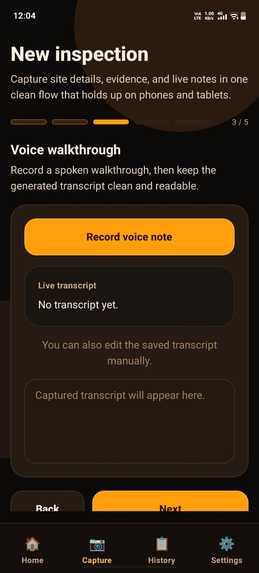
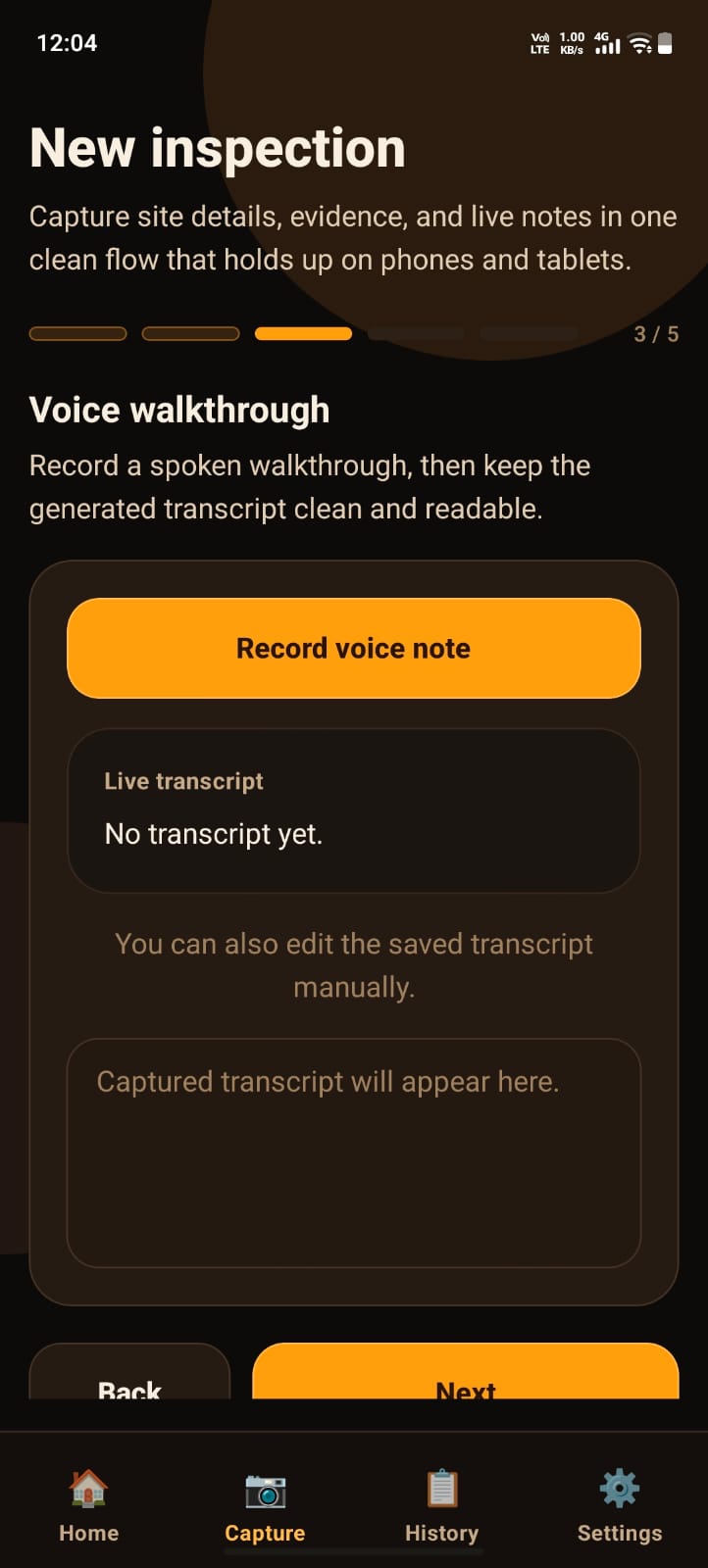
Record Voice note
-
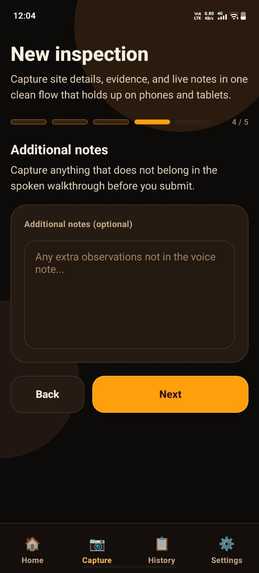
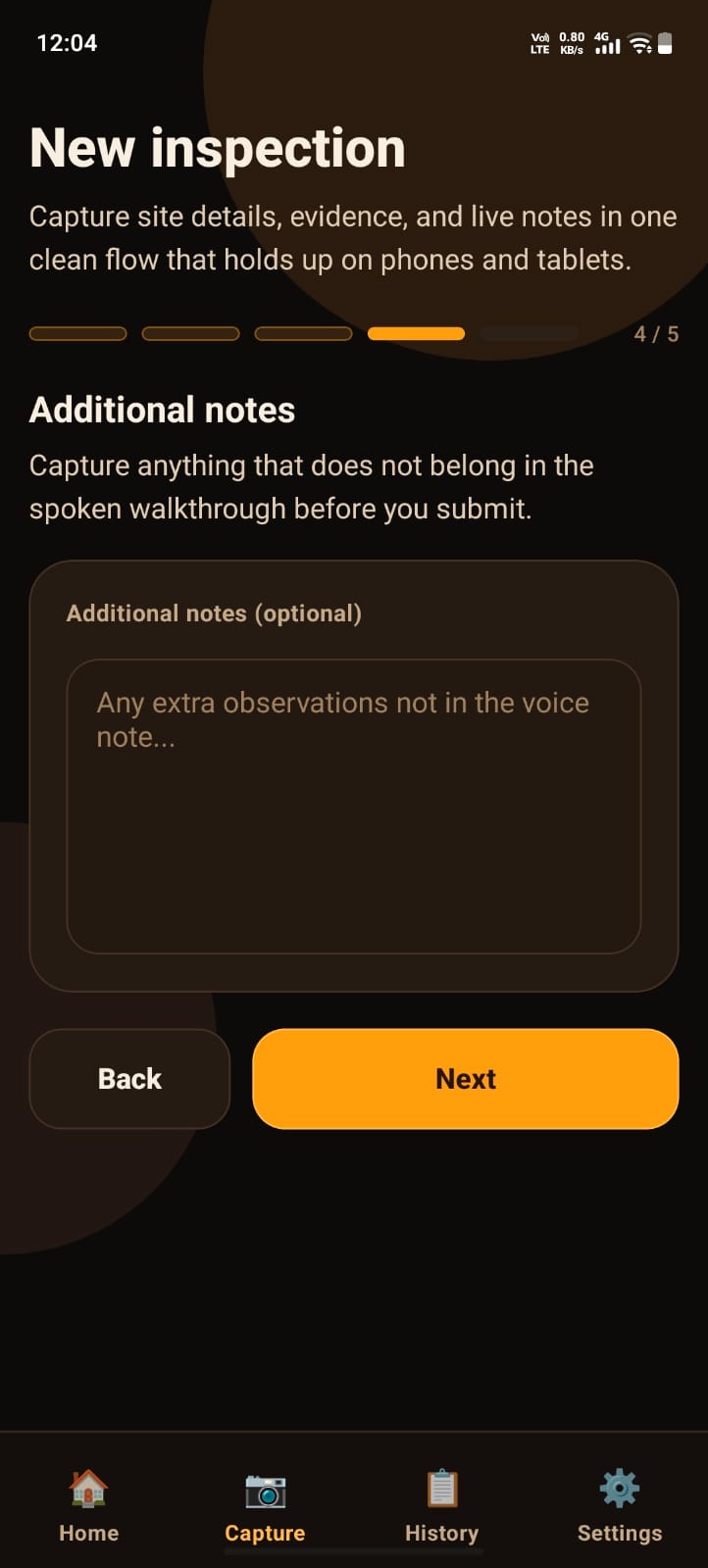
Additional Notes
-
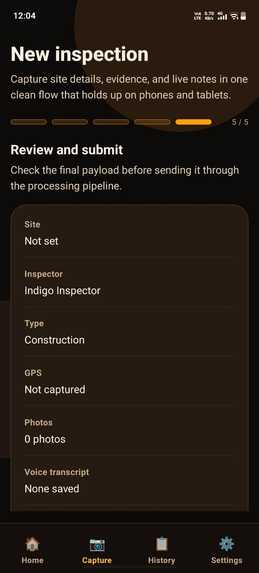
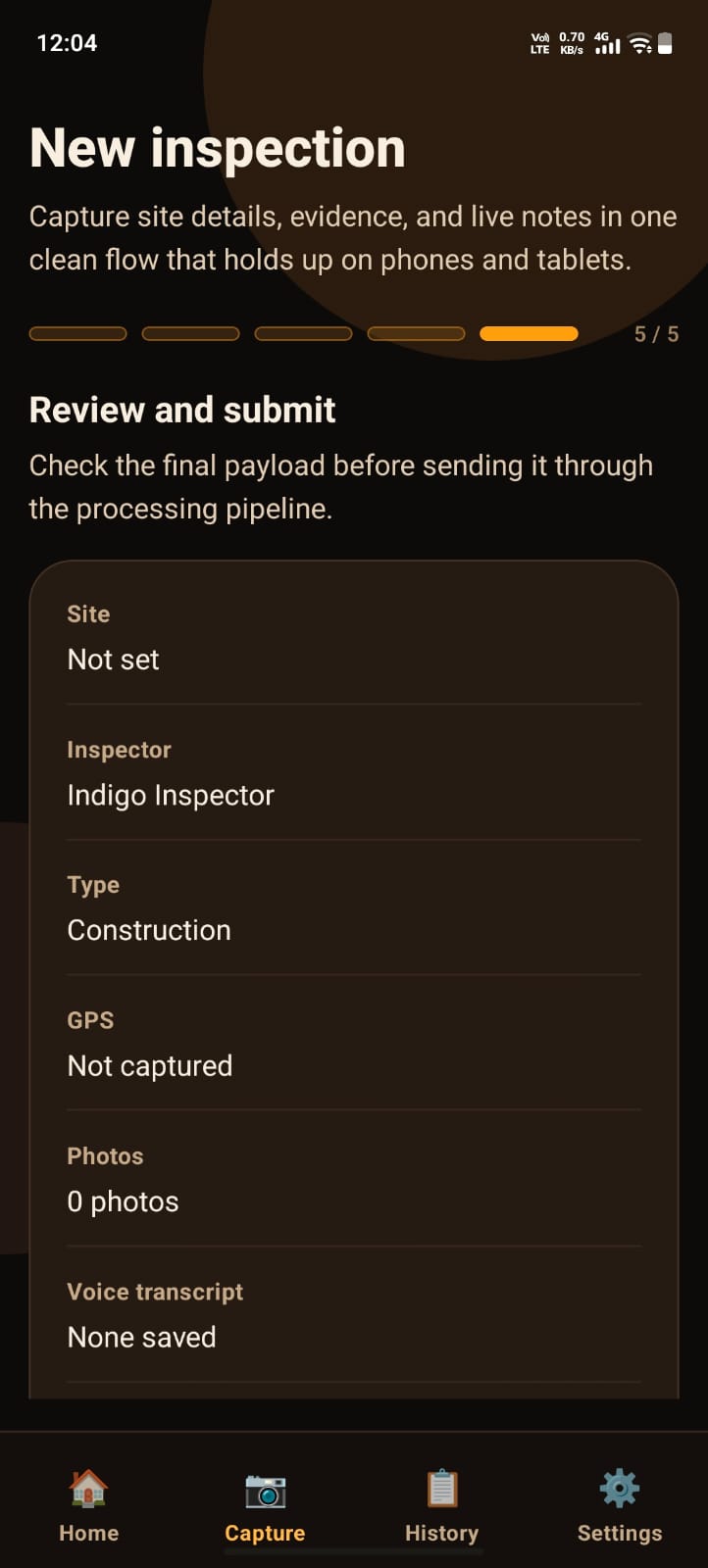
Review and Submit
-
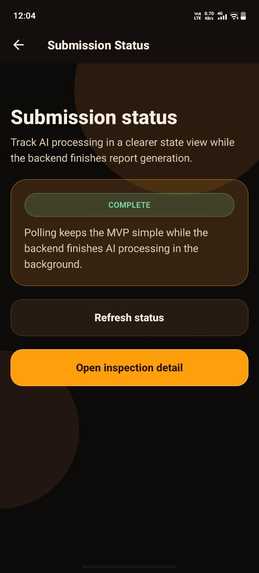
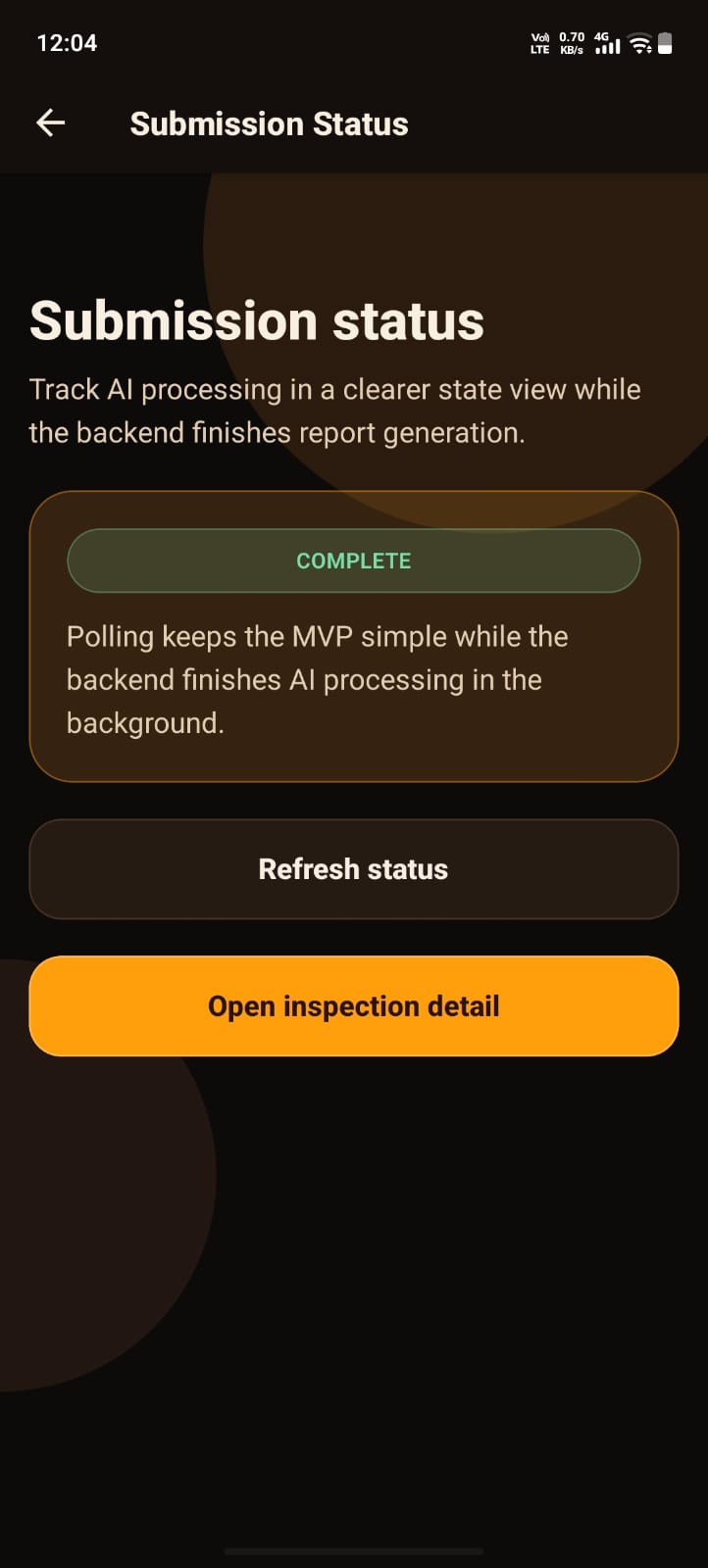
Submission
-
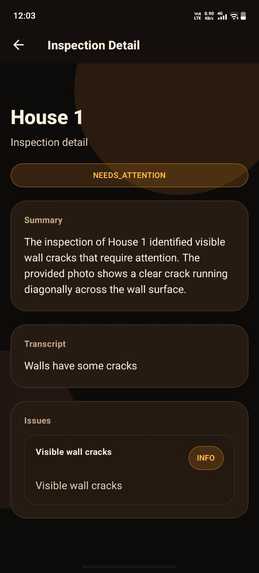
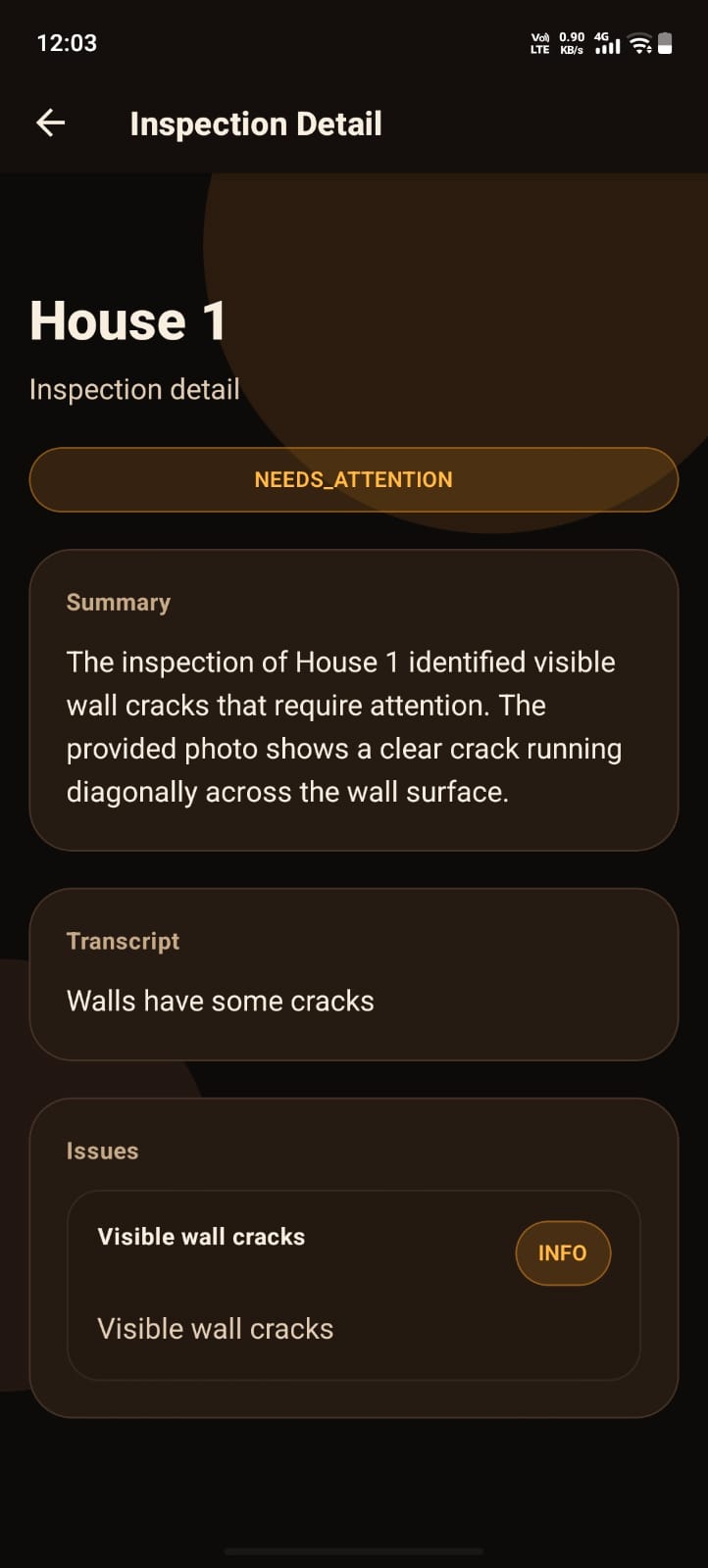
Inspection Details
-
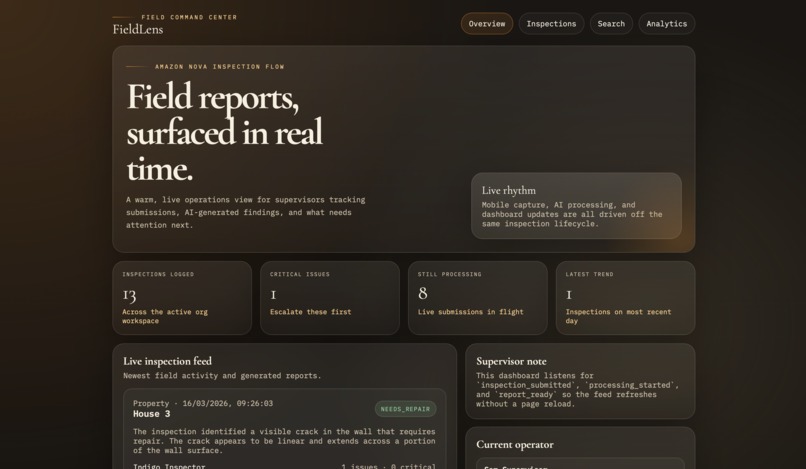
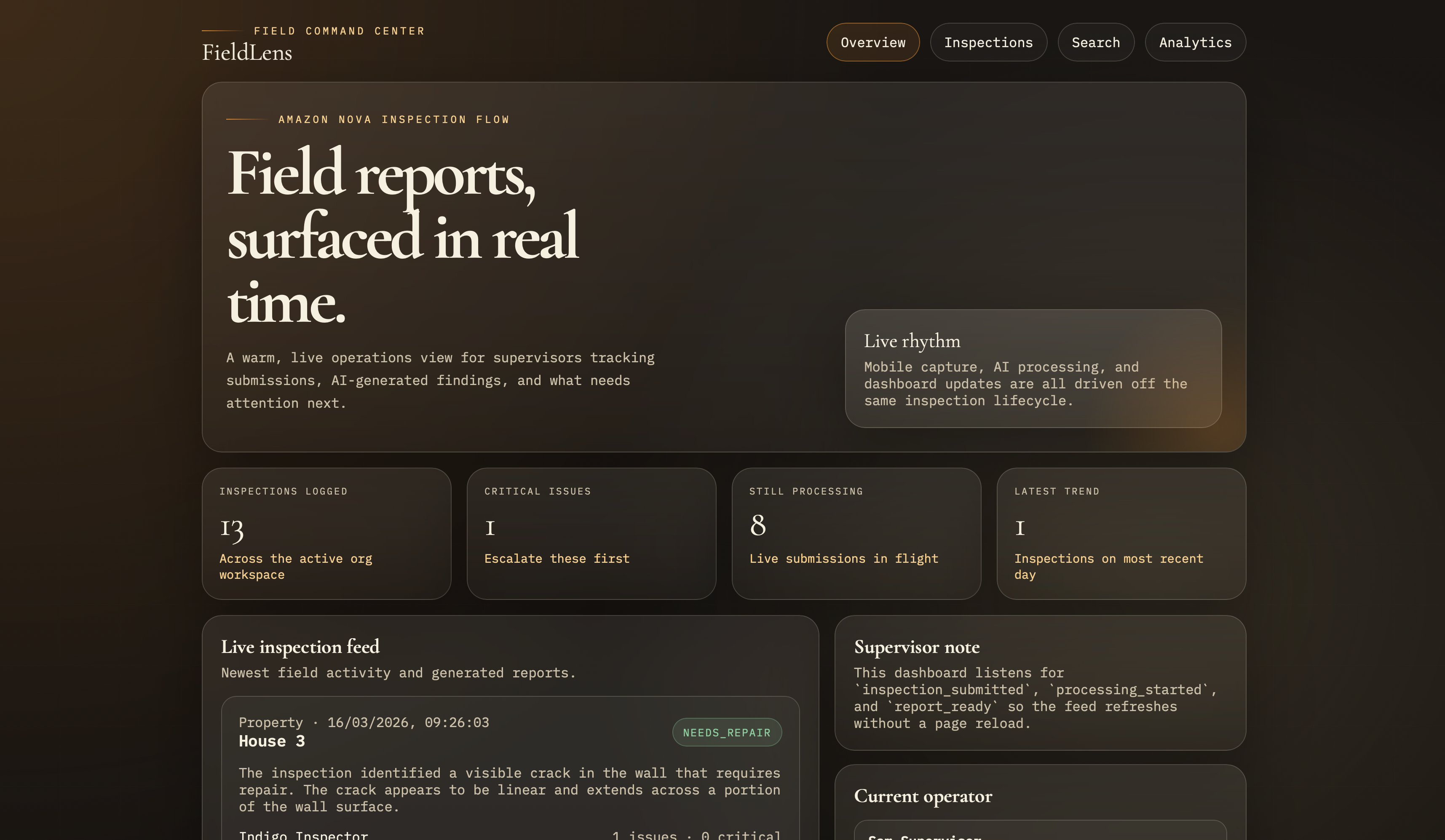
Web app - Dashboard
-
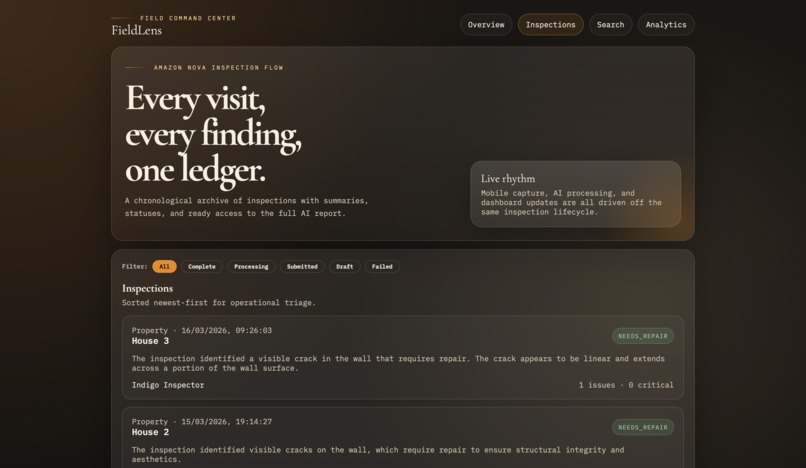
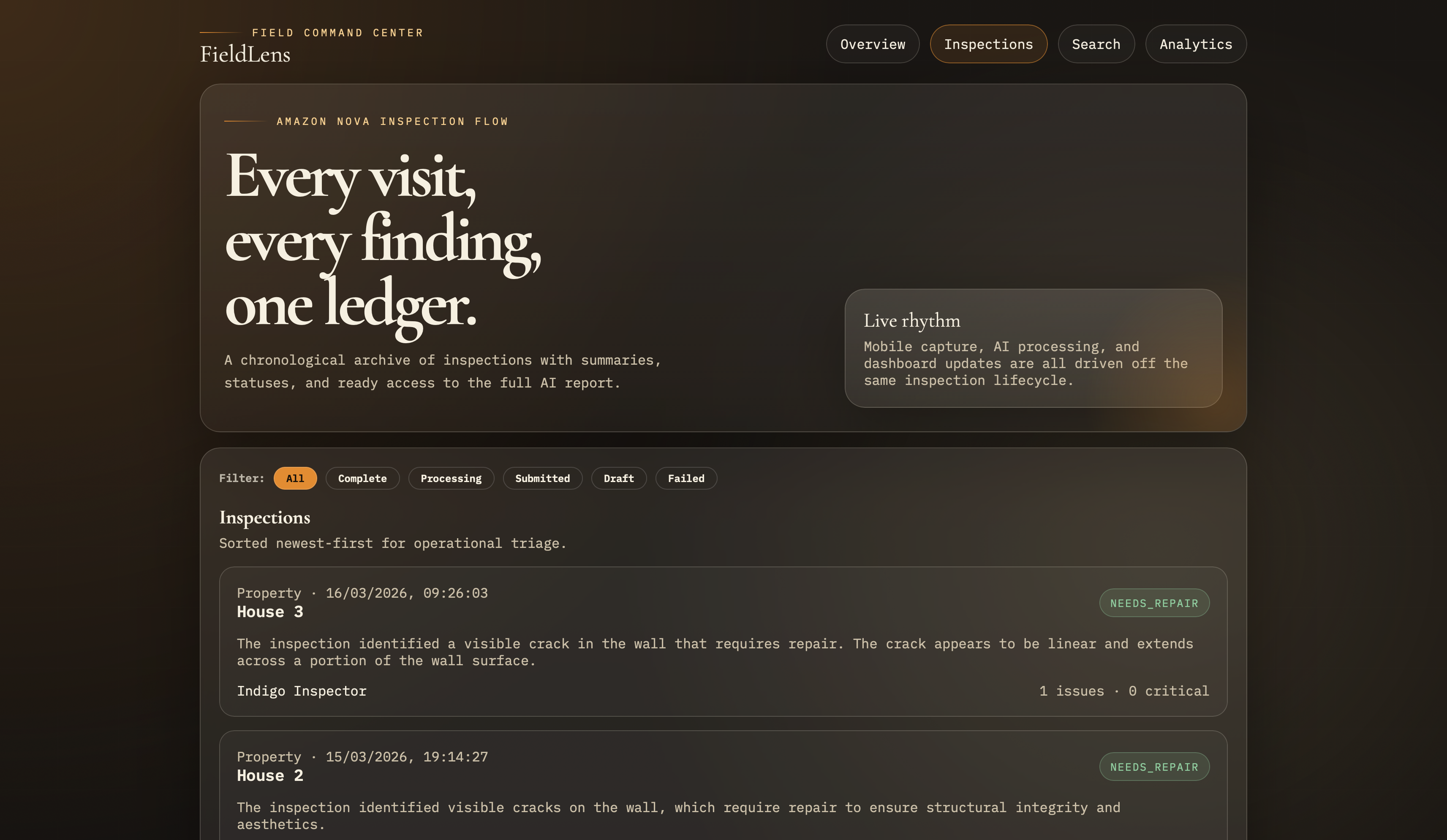
Inspection History and details
-
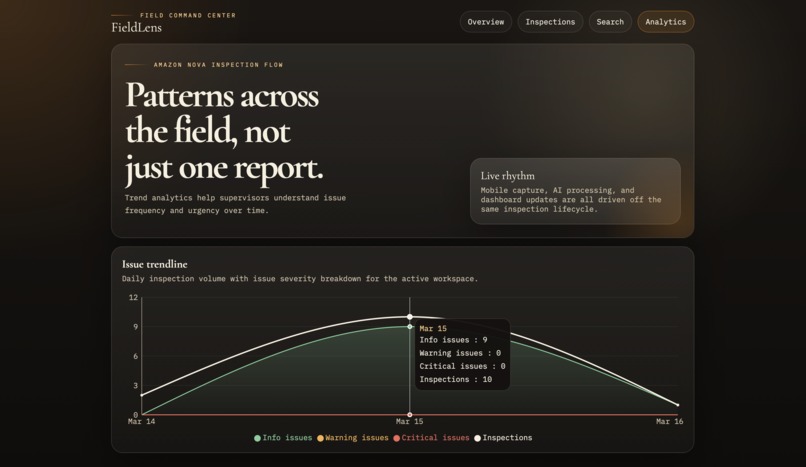
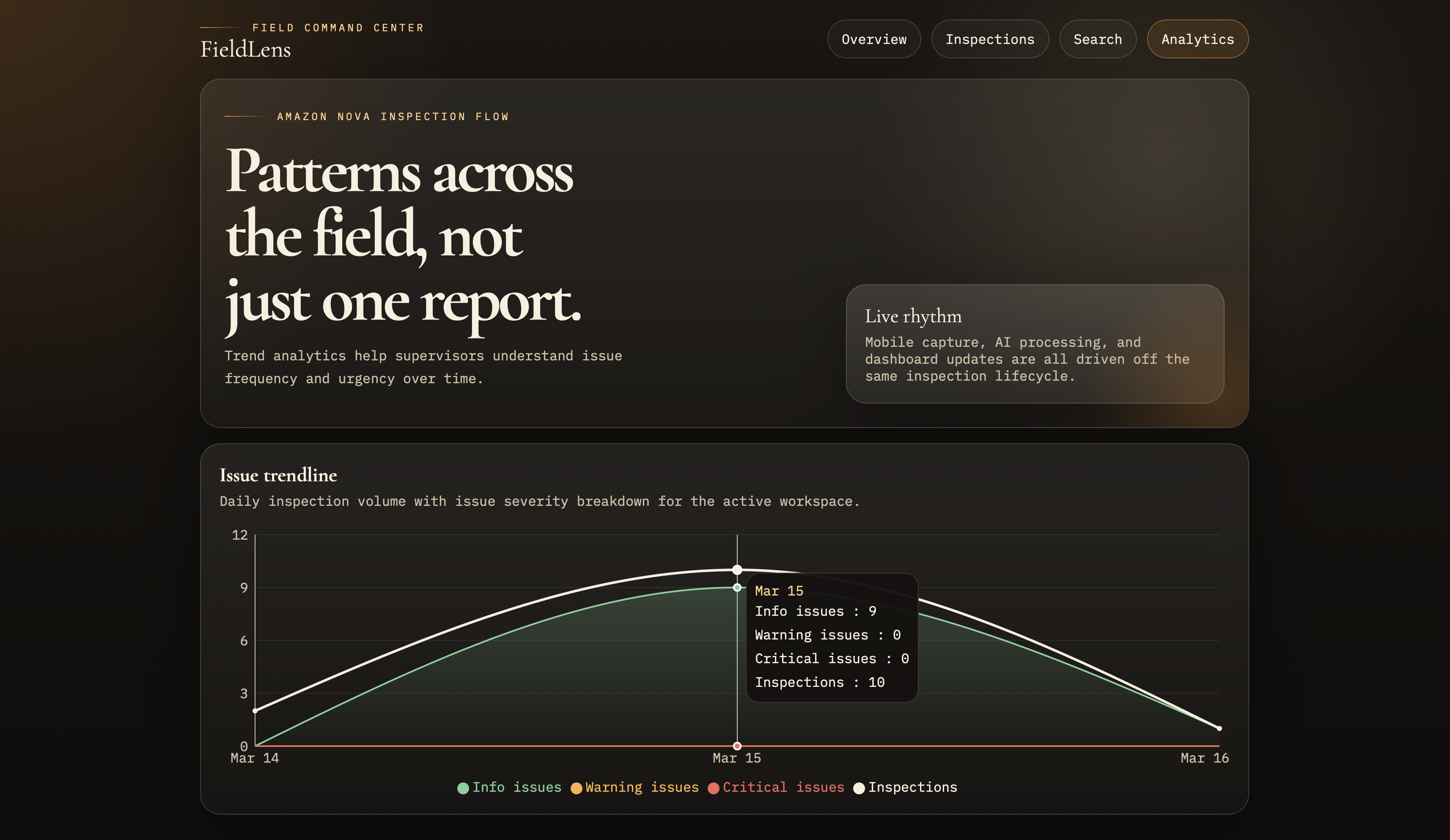
Analytics of each Inspections
Inspiration
Field inspectors are some of the most underserved workers when it comes to tooling. After talking to people in construction and property
management, a pattern was clear: inspectors spend 2–4 hours after a site visit manually writing up what they already observed. Details get
lost, reports are inconsistent, and supervisors are always waiting. The problem isn't the inspection — it's the paperwork that follows.
I wanted to build something that lets the field worker stay focused on the field, while AI handles the documentation in real time.
## What it does
FieldLens is an AI-powered field inspection platform with two parts:
Mobile app (for inspectors): Walk a site, capture photos, record voice notes in noisy environments, and add text observations. Hit submit — that's it.
Web dashboard (for supervisors): Receive fully structured inspection reports in real time, with AI-classified issues (Critical / Warning / Info), recommendations, and semantic search across all past inspections.
The AI pipeline processes multimodal input — images, transcribed voice, and text — and produces a structured, actionable report in under 5 minutes, compared to the industry standard of 2–4 hours of manual writing.
## How we built it
Mobile: React Native + Expo SDK 54, with a multi-step inspection wizard, real-time voice transcription via WebSocket, GPS auto-location, and offline queue support for poor connectivity.
Web: Next.js 14 dashboard with live inspection feeds, semantic search, PDF export, and analytics.
Backend: Python FastAPI with async SQLAlchemy, PostgreSQL + pgvector for embedding-based semantic search, and AWS S3 for media storage.
AI — exclusively Amazon Nova via Amazon Bedrock:
- Nova Lite — multimodal report generation, issue detection, and severity classification from photos + voice + text
- Nova Sonic — real-time streaming voice transcription optimized for noisy field environments
- Nova Multimodal Embeddings — vector embeddings powering semantic search across inspection history
Infrastructure: AWS EC2, Lambda, S3, RDS, Bedrock, CloudWatch.
## Challenges we ran into
- Nova Sonic WebSocket streaming was the hardest integration. The bidirectional audio streaming protocol required careful handling of connection lifecycle, audio chunking, and partial transcript merging — especially under flaky mobile network conditions.
- Multimodal prompt engineering for consistent structured output was non-trivial. Getting Nova Lite to reliably produce JSON-structured reports with correct severity classifications across wildly different inspection types (construction vs. NGO vs. warehouse) took significant iteration.
- Offline-first mobile UX — queuing submissions when connectivity drops and resuming them transparently, without losing any captured data, required careful state management.
- Building the full stack solo within the hackathon window while keeping the architecture production-quality.
## Accomplishments that we're proud of
- End-to-end multimodal pipeline: a field worker can walk a site, speak observations aloud, and receive a fully structured report — without typing a single word.
- Real-time voice transcription that actually works in noisy environments, using Nova Sonic's streaming WebSocket API.
- Semantic search that lets supervisors query "find inspections with water damage near electrical panels" and get relevant results — across photos and voice notes, not just text.
- A complete, deployable full-stack product built solo in a hackathon timeframe.
## What we learned
- Amazon Nova Sonic is genuinely impressive for real-world audio conditions — the noise robustness is a step above what I expected.
- pgvector + Nova Multimodal Embeddings is an underrated combination. Multimodal semantic search over inspection history opens up use cases (compliance auditing, recurring issue detection) that keyword search simply can't.
- The hardest part of AI product development isn't the model — it's the data pipeline: handling unreliable uploads, partial failures, and making sure the AI always has enough context to produce a useful output.
## What's next for FieldLens
- Recurring issue detection: automatically flag when the same issue appears across multiple inspections at a site over time
- Compliance report generation: map inspection findings to specific regulatory standards (OSHA, ISO, local building codes)
- Team collaboration: annotate and discuss findings directly within the report
- Native iOS/Android builds via EAS for App Store distribution
- Integrations: push critical findings to Slack, Jira, or project management tools automatically
Built With
- alembic
- amazon-bedrock
- amazon-nova-lite
- amazon-nova-multimodal-embeddings
- amazon-nova-sonic
- amazon-web-services
- aws-ec2
- aws-lambda
- aws-rds
- expo.io
- fastapi
- jwt
- next.js
- pgvector
- postgresql
- python
- react-native
- sqlalchemy
- typescript
- websockets

Log in or sign up for Devpost to join the conversation.