-
-
Field Scrubber and Caption Sanitizer
-
Dossier
-
Homepage
Inspiration
What it does
How we built it
Challenges we ran into
Accomplishments that we're proud of
What we learned
What's n## Inspiration
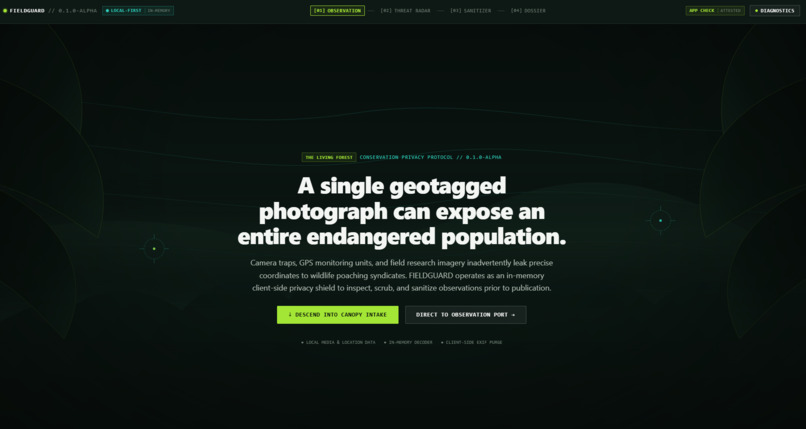
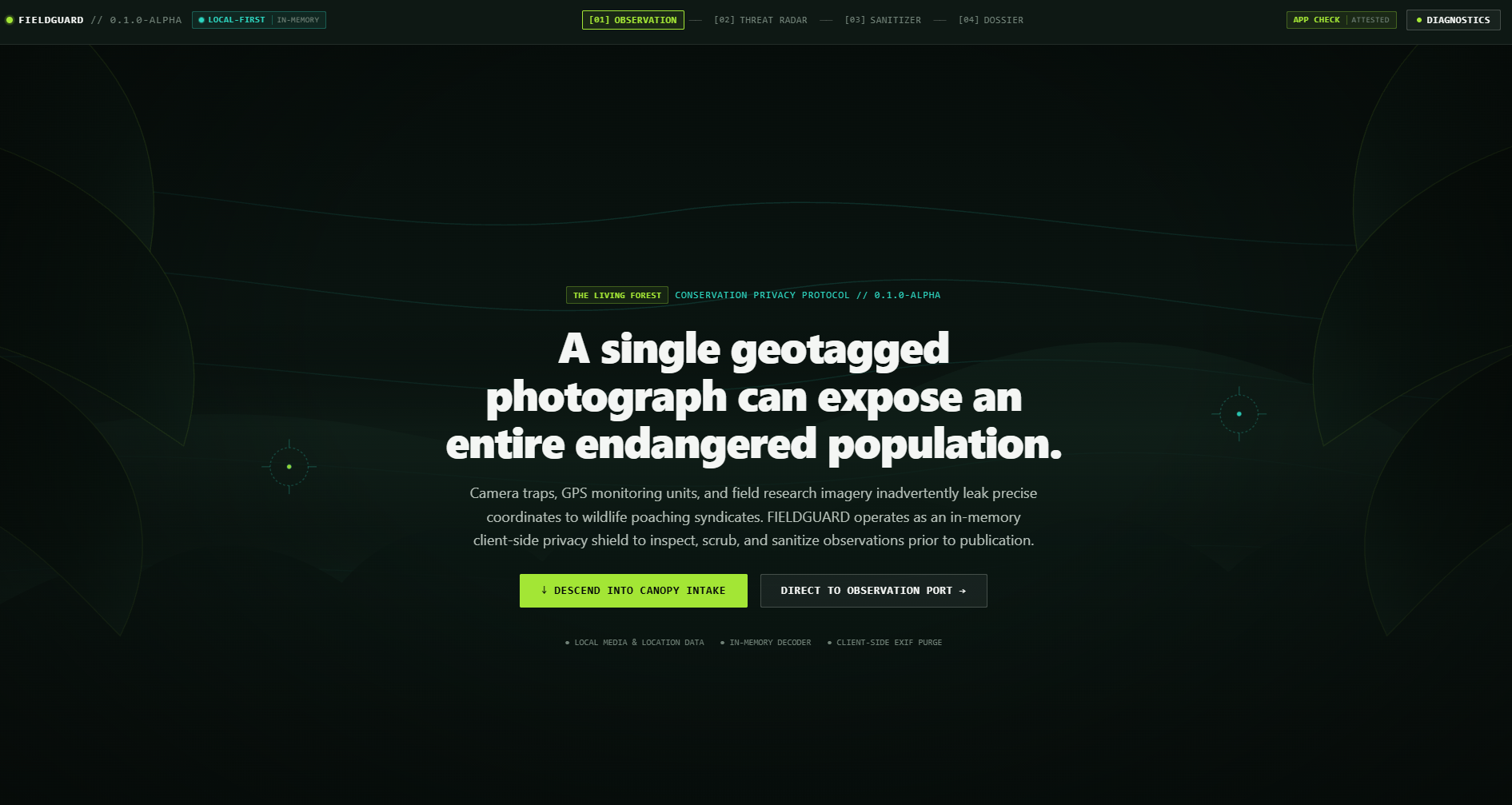
Wildlife photographs can reveal more than what is visible in the image. Hidden EXIF metadata may contain GPS coordinates, timestamps and camera information that expose sensitive wildlife observation locations.
We wanted to address a simple but important question: What if researchers could inspect and sanitize sensitive information before sharing wildlife observations?
That idea led to FIELDGUARD.
What it does
FIELDGUARD is a privacy-first wildlife observation protection platform that helps users identify and remove potentially sensitive information before publishing wildlife photographs.
Its key capabilities include:
- Threat Radar: Inspects image metadata locally and highlights GPS coordinates, timestamps and camera information.
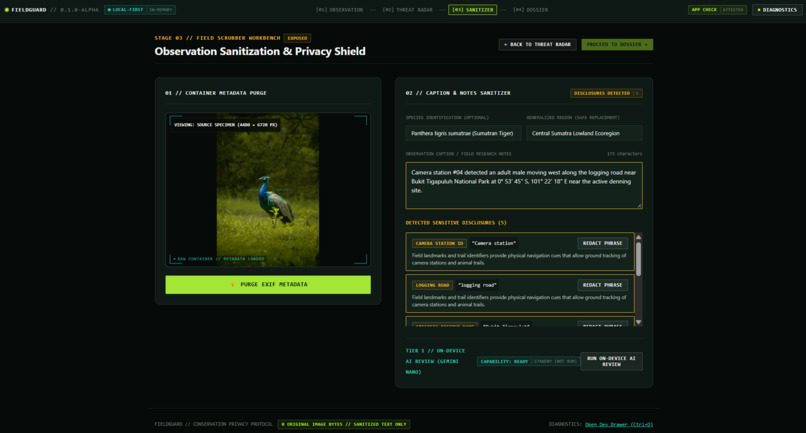
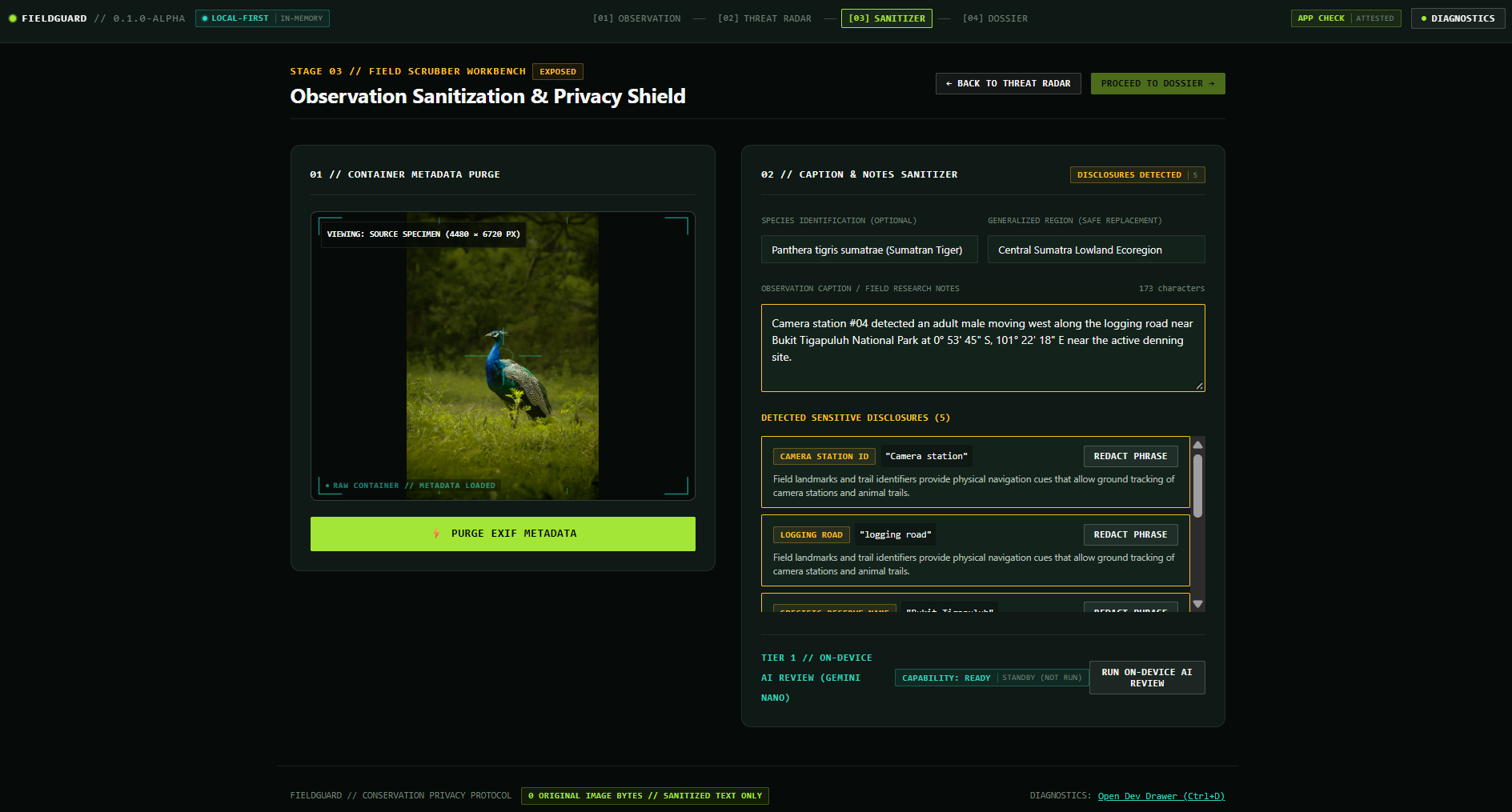
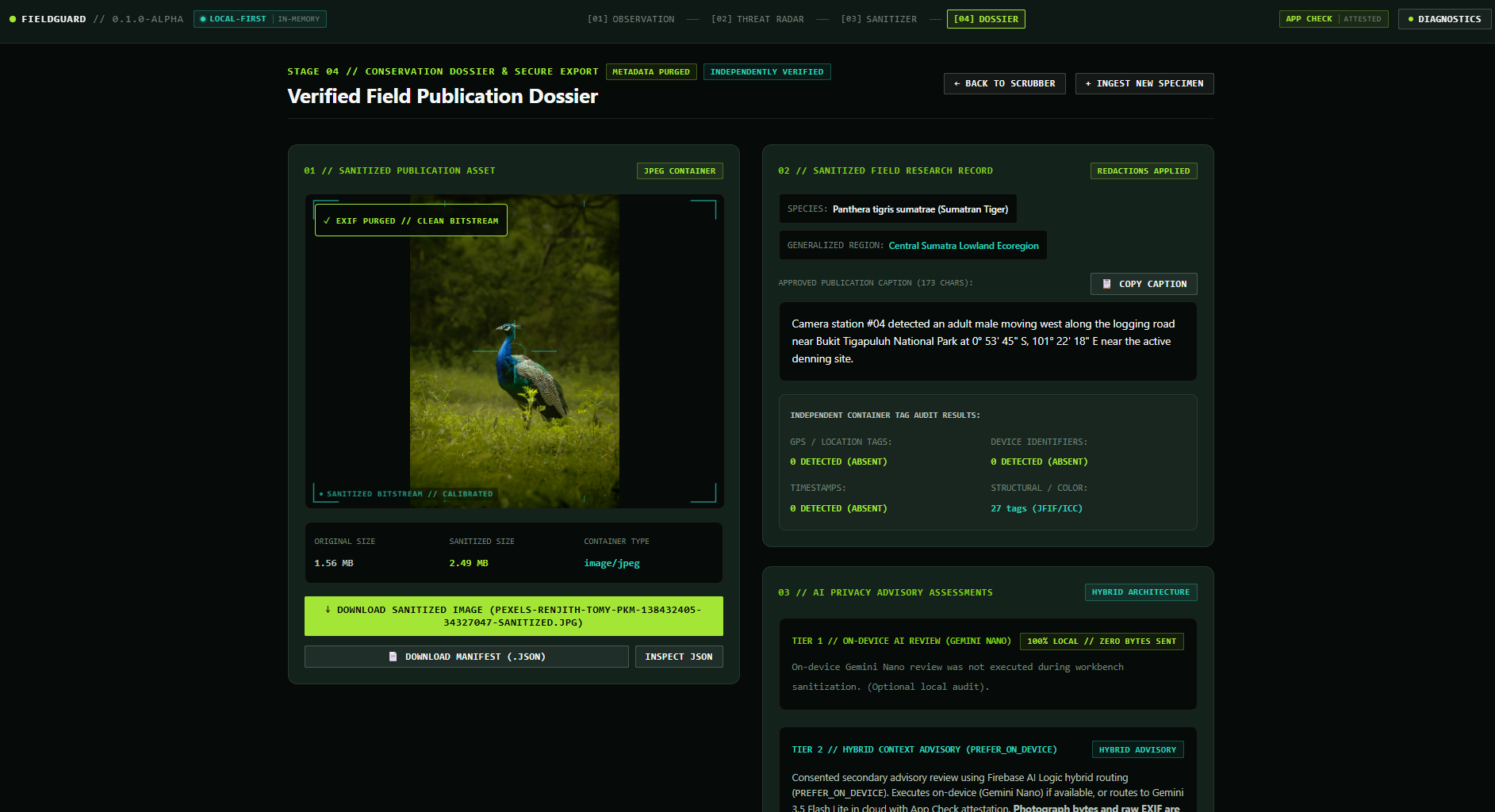
- Field Scrubber: Re-encodes images in the browser to remove recognized identifying metadata and verifies the resulting output using metadata parsing.
- Caption Sanitizer: Identifies potentially sensitive location references in observation notes and allows users to manually edit them.
- Hybrid AI Analysis: Uses on-device inference where supported, with an optional cloud fallback that requires explicit user approval.
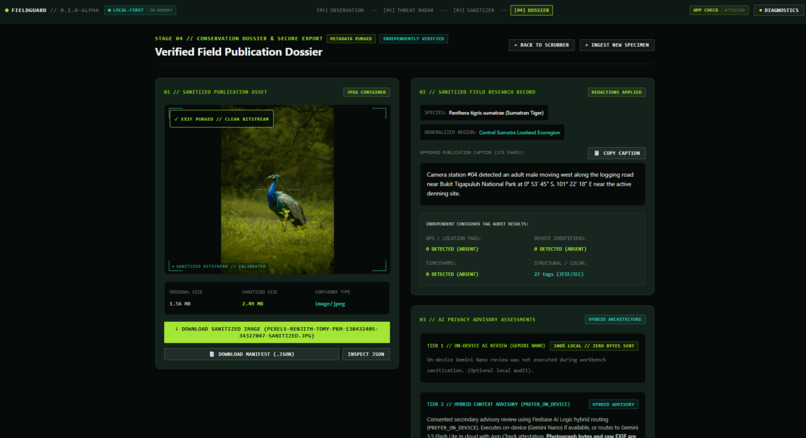
- Conservation Dossier: Provides sanitized image exports, cleaned captions, metadata audit information and a downloadable JSON manifest.
How we built it
We built FIELDGUARD using React, TypeScript and Vite.
The browser handles image inspection and sanitization using exifr and HTML5 Canvas. Original image processing and raw GPS inspection happen locally.
For AI, we integrated Firebase AI Logic with hybrid inference. The system prefers on-device inference when supported. If cloud fallback is needed, the user must explicitly approve it. Only the approved sanitized text is sent for cloud review—not the original image, original caption or raw GPS coordinates.
Firebase App Check is configured to provide application attestation.
We also developed a custom interface with GSAP-powered animations to make the observation-protection workflow intuitive.
Challenges we faced
One of our biggest challenges was designing a hybrid AI workflow without compromising the privacy model.
We had to distinguish between local processing and cloud inference, implement an explicit consent boundary, and ensure that sensitive original data was excluded from the cloud-review payload.
Another challenge was verifying image sanitization and presenting the findings honestly without claiming that parser-level verification guarantees complete forensic removal.
What we learned
We learned how to integrate Firebase AI Logic into a real application, implement hybrid inference, work with browser-based image processing, and design privacy-conscious data flows.
Most importantly, we learned that AI-powered applications should make their data boundaries and limitations transparent to users.
What's next
We envision extending FIELDGUARD with more advanced privacy analysis, stronger verification methods and additional tools for conservation researchers.
FIELDGUARD — Protect what should stay hidden.ext for FIELDGUARD
Built With
- css
- exifr
- firebase
- firebase-ai-logic
- firebase-app-check
- gemini
- google-ai
- gsap
- html5
- javascript
- react
- typescript
- vite
