-
-
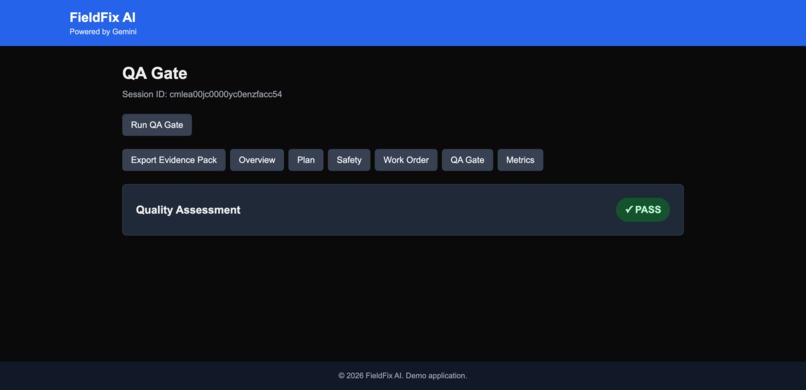
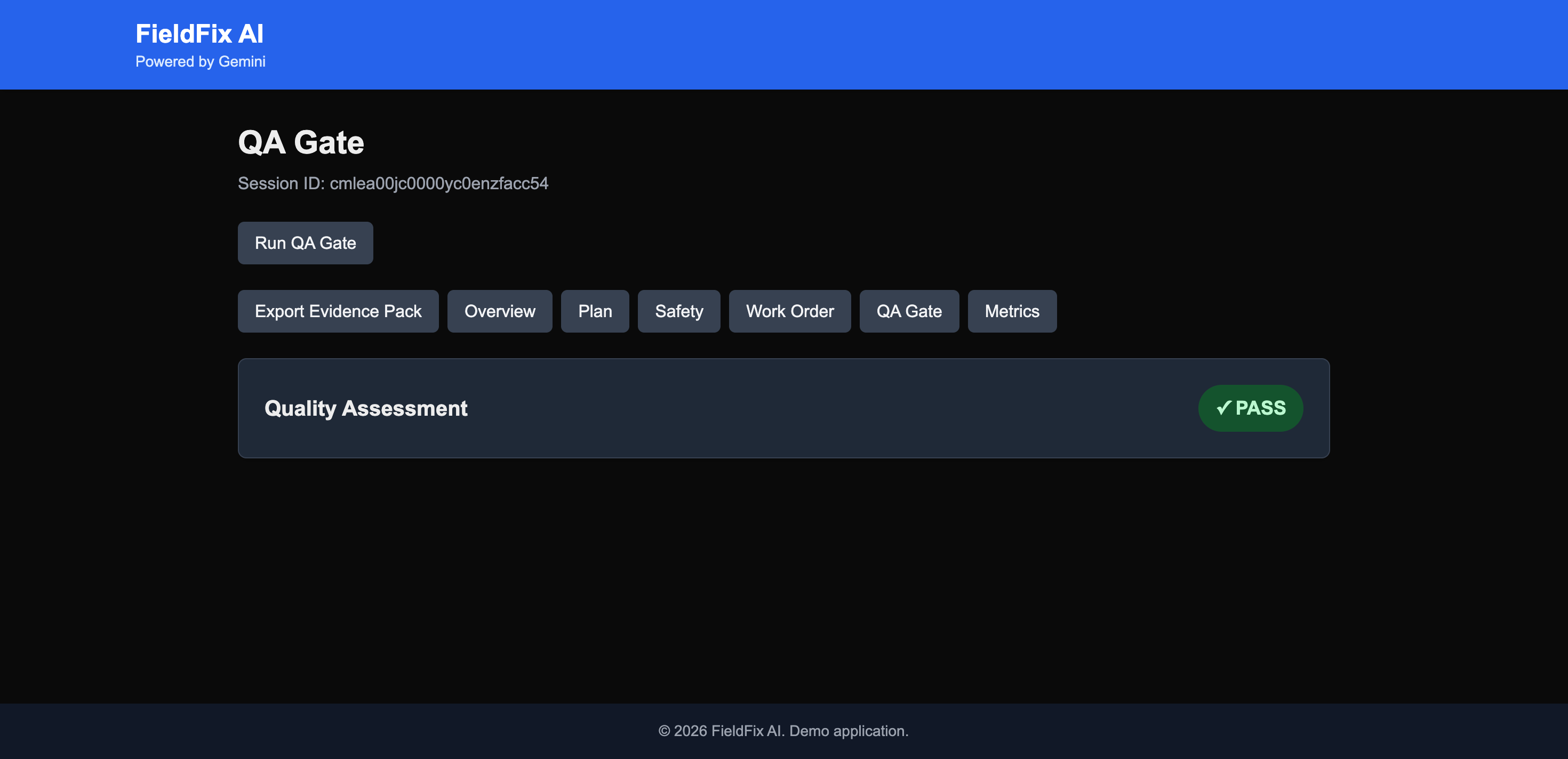
QA Gate
-
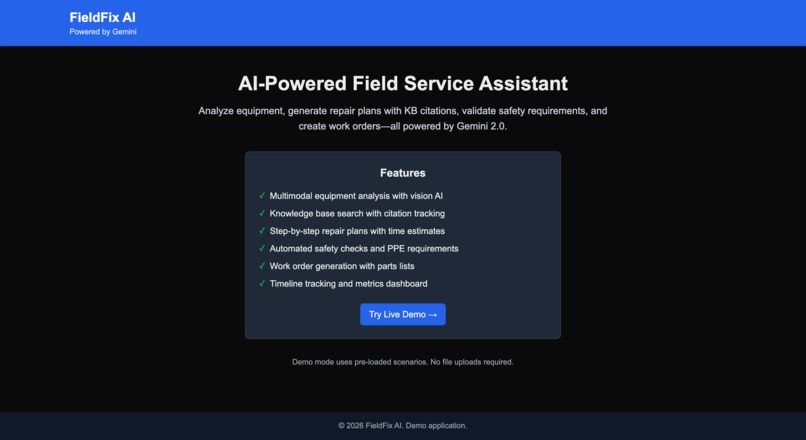
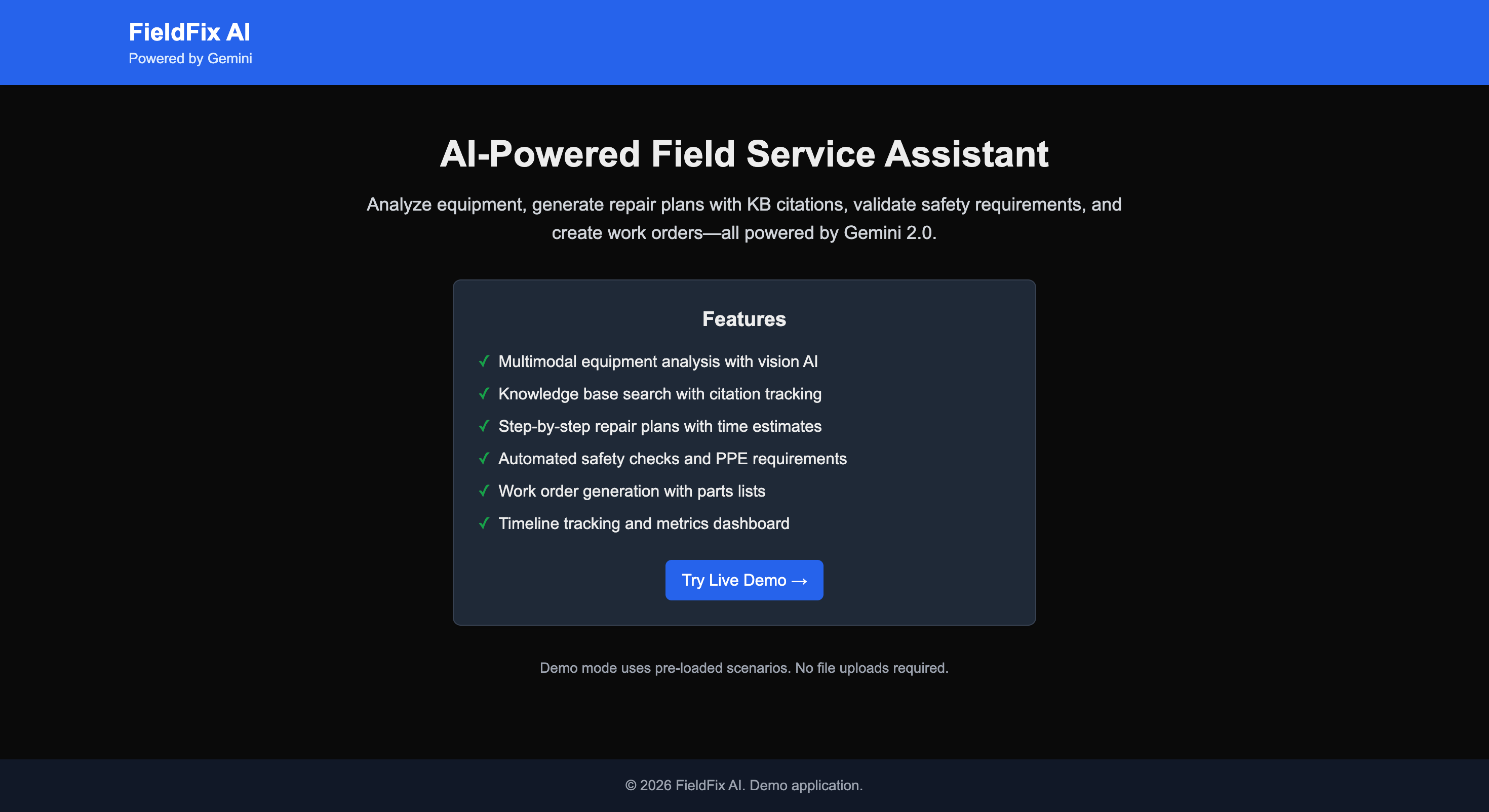
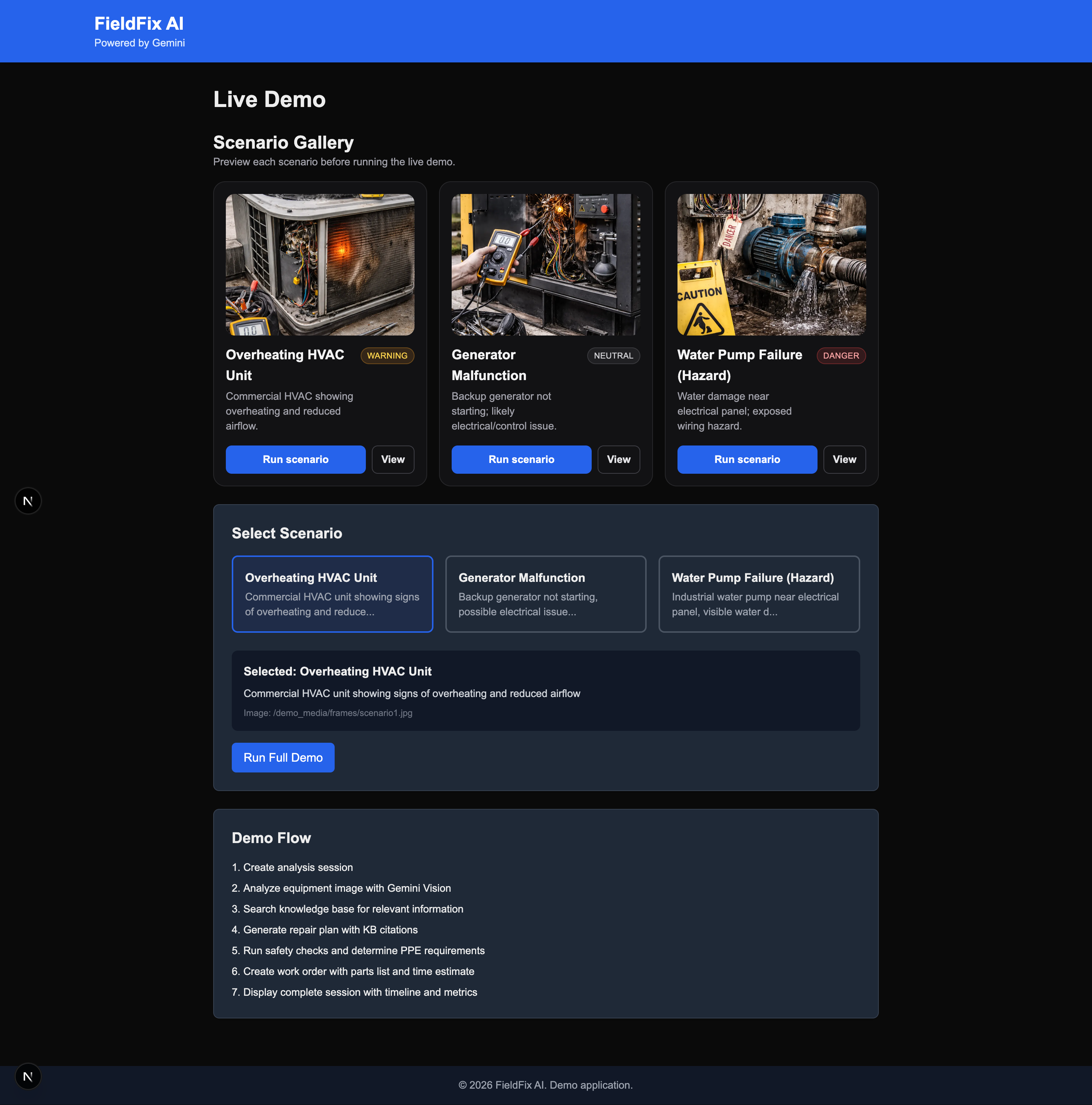
Entry screen
-
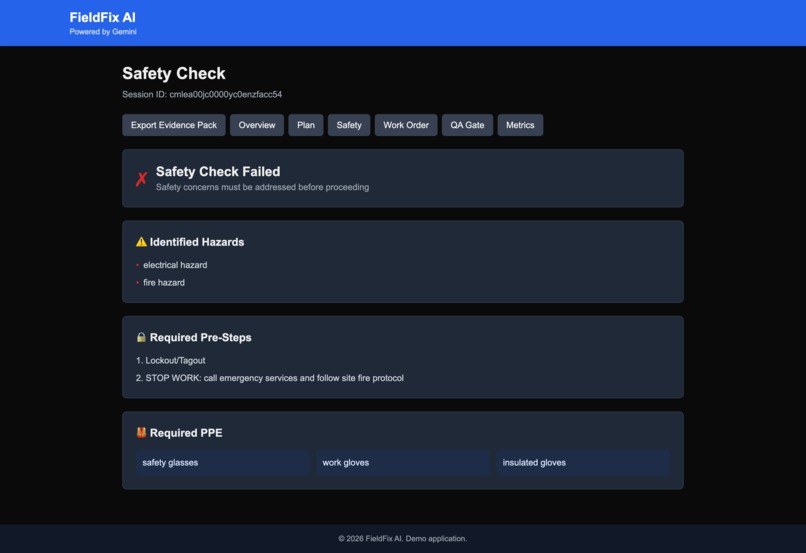
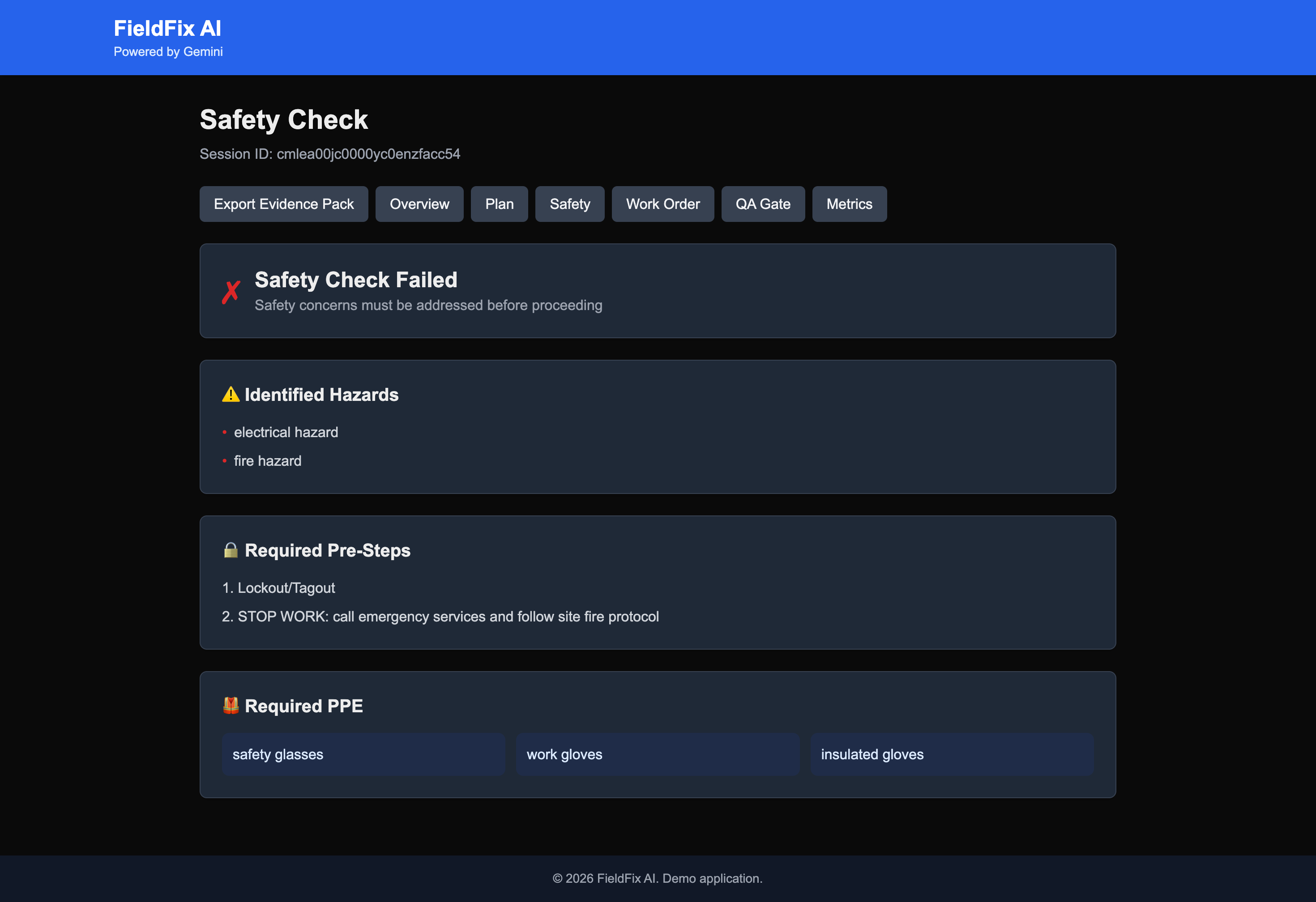
Safety Check
-
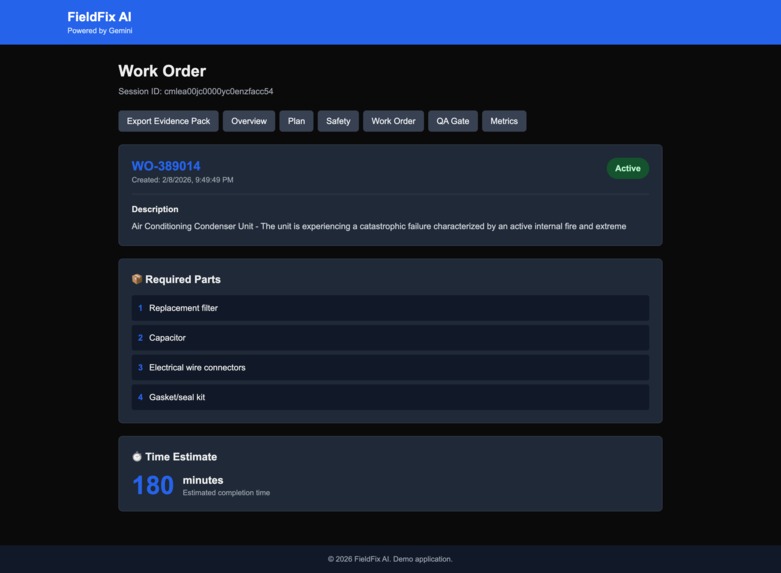
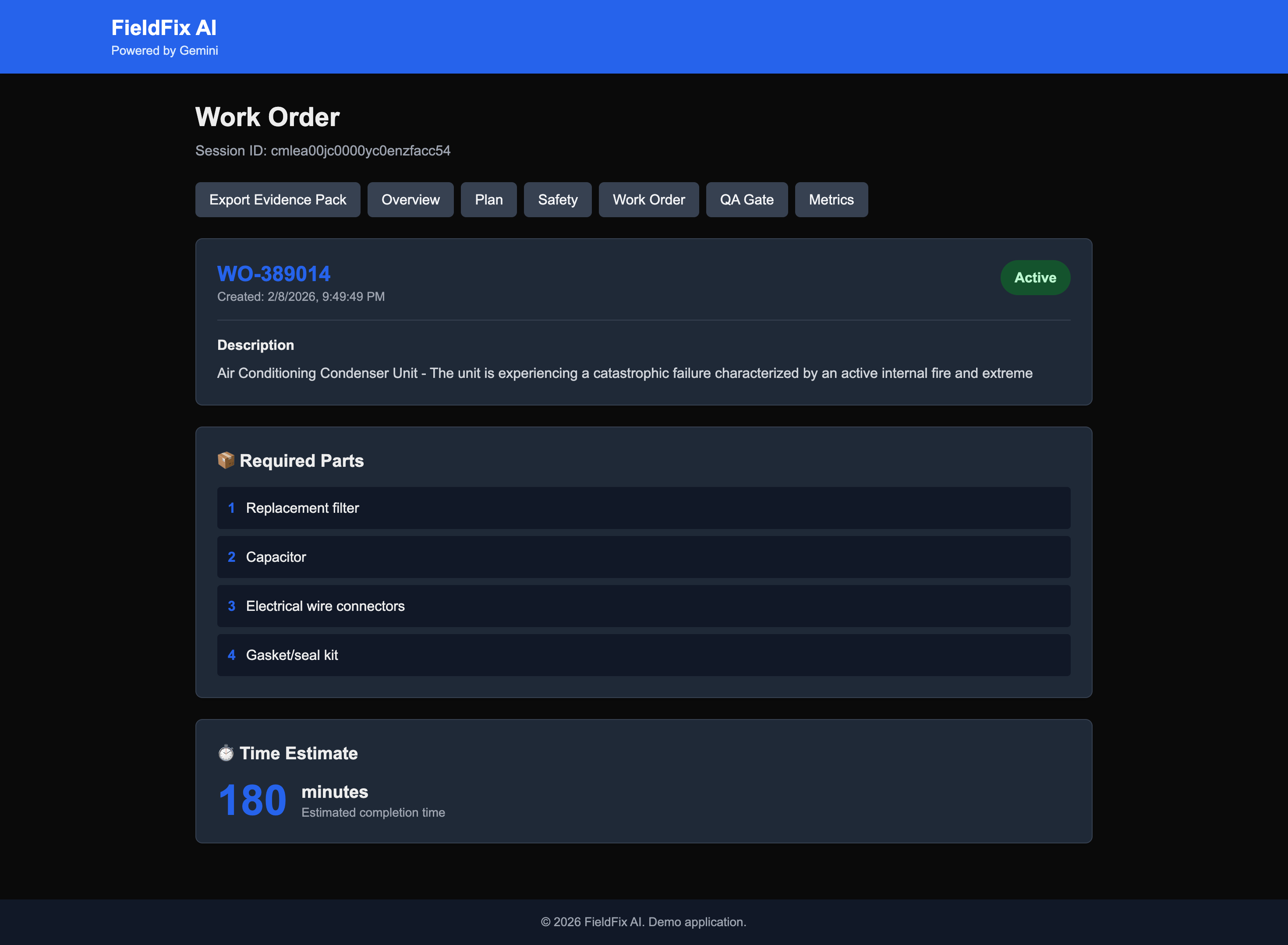
Work Order
-
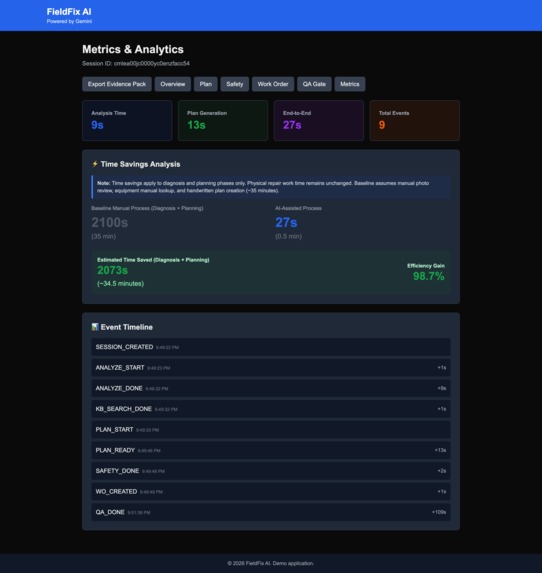
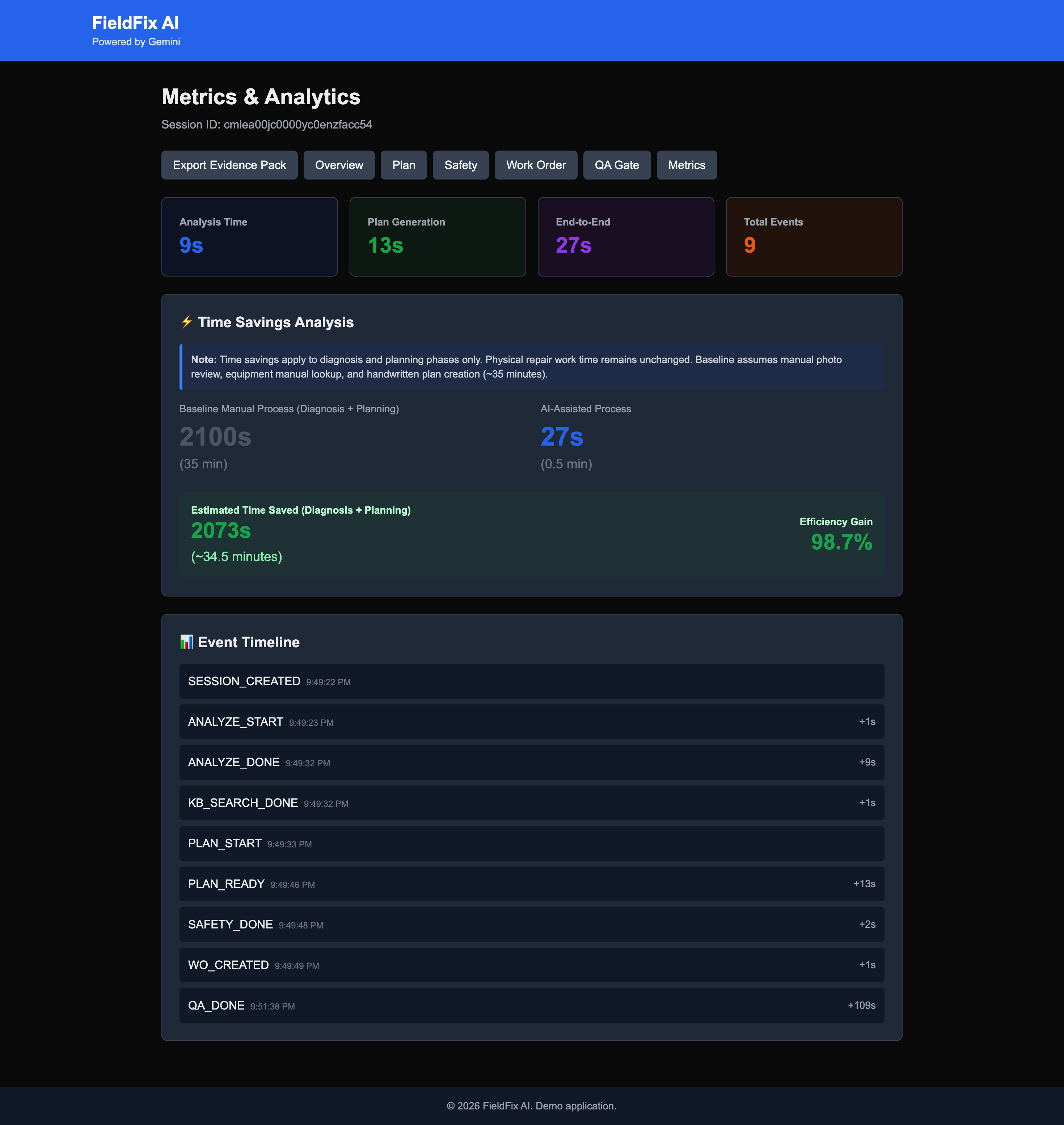
Metrics
-
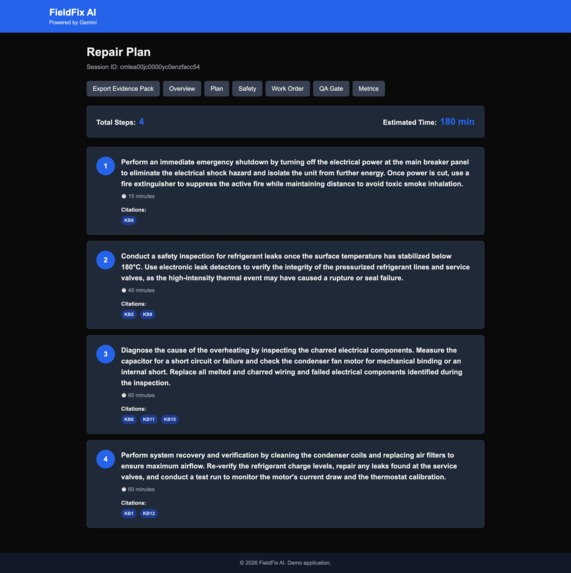
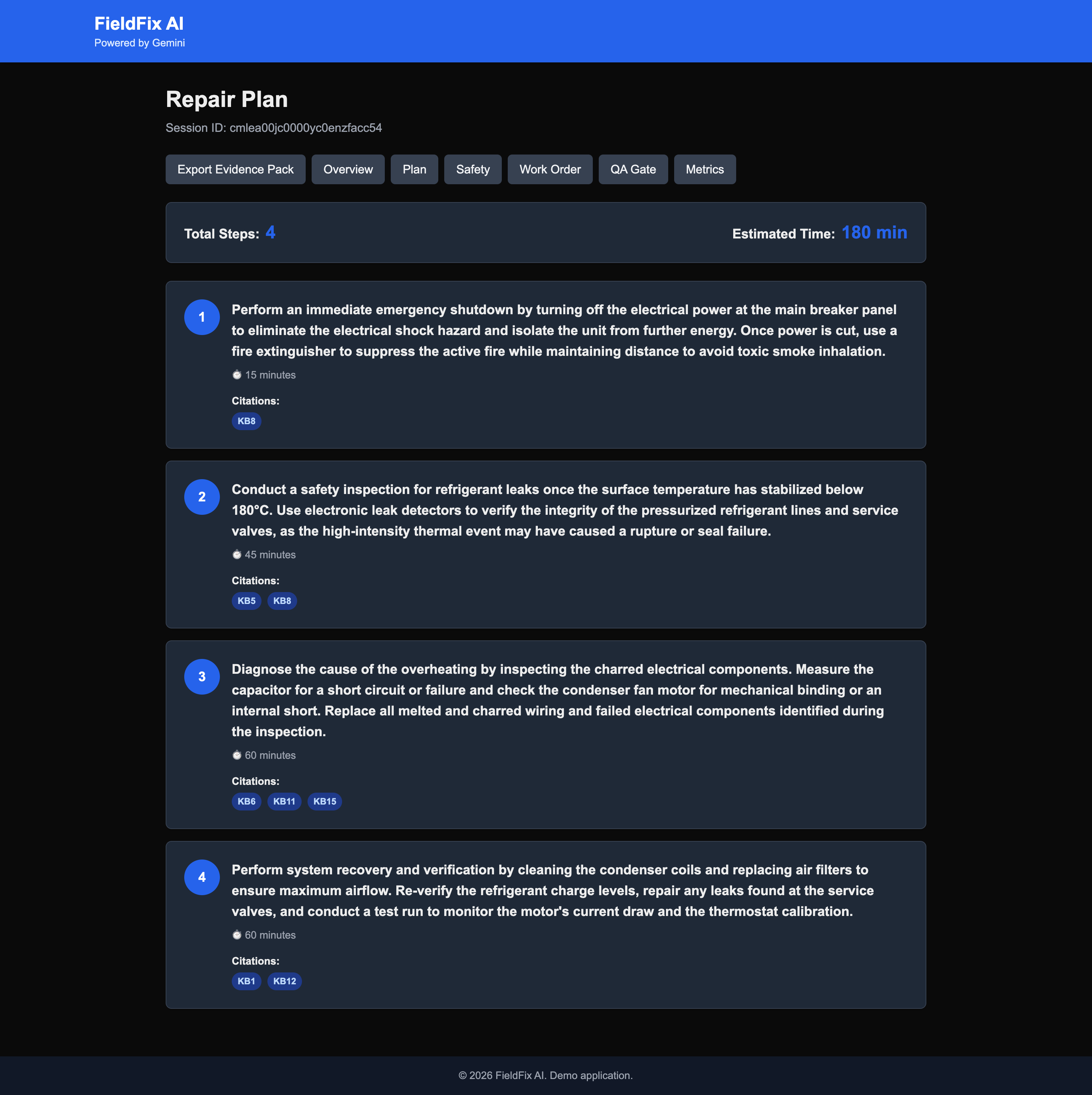
Plan
-
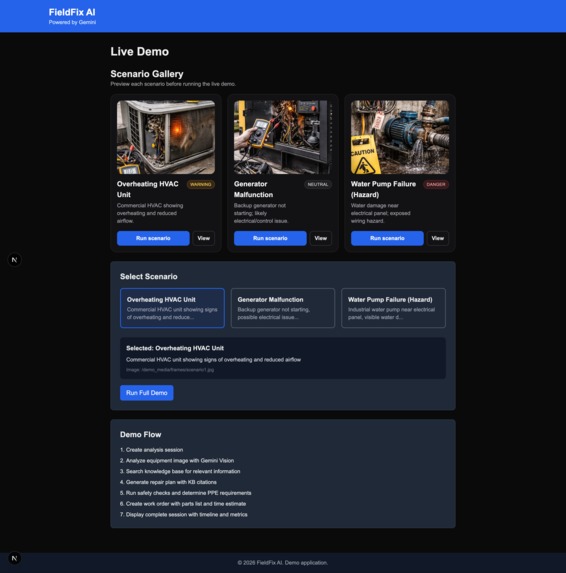
Home Screen
-
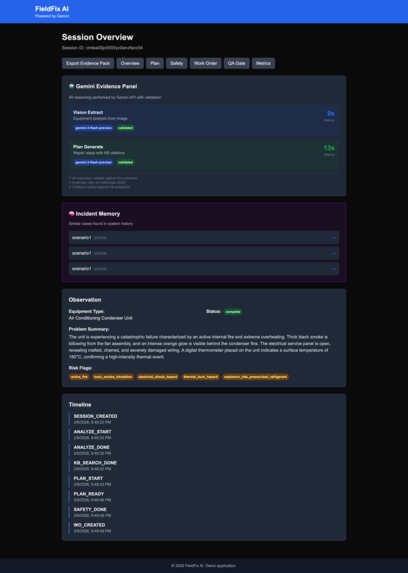
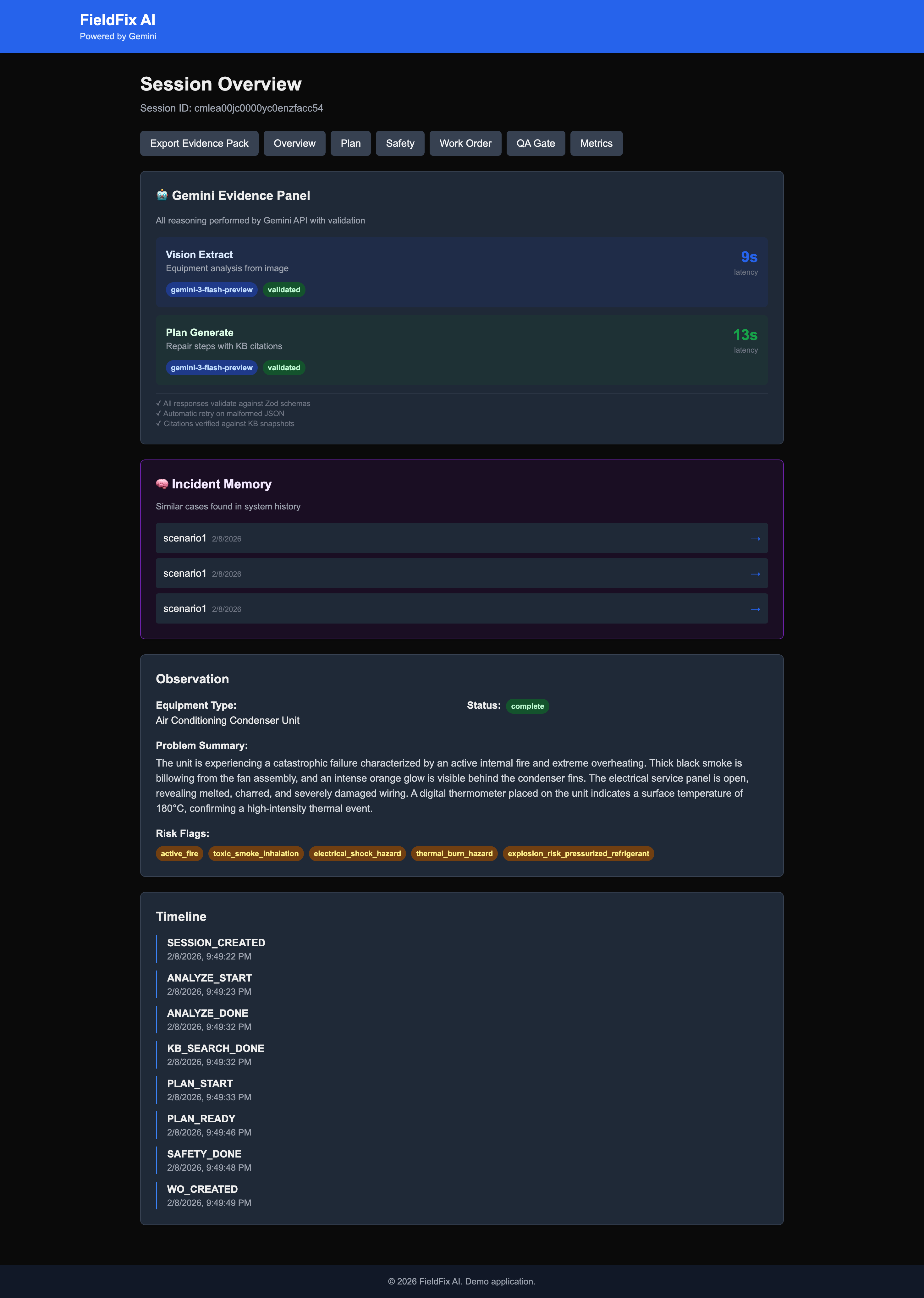
Overview
Inspiration
Industrial maintenance workflows are still heavily dependent on manual inspections, fragmented documentation, and individual experience. This often leads to delayed repairs, inconsistent quality, safety risks, and poor auditability.
We were inspired to build FieldFix AI after seeing how difficult it is for technicians to quickly diagnose complex failures while also meeting safety and compliance requirements. We wanted to create a system where AI does not just generate answers, but provides verified, traceable, and trustworthy guidance.
What it does
FieldFix AI is an AI-powered maintenance copilot that transforms equipment photos into fully validated repair workflows.
The system:
- Analyzes damaged equipment images using Gemini multimodal models
- Identifies hazards and failure modes
- Generates step-by-step repair plans with knowledge base citations
- Enforces safety and compliance checks
- Produces structured work orders
- Tracks operational performance metrics
- Exports a complete evidence pack for auditing and review
Every recommendation is backed by documented sources and validated against strict schemas before being presented to users.
How we built it
FieldFix AI is built as a full-stack, production-ready platform:
- Frontend: Next.js, React, TypeScript, Tailwind CSS
- Backend: Vercel Serverless Functions, REST APIs
- Database: PostgreSQL (Neon) with Prisma ORM
- AI Layer: Google Gemini API for vision and reasoning
- Validation: Zod and JSON schema enforcement
- Deployment: Vercel
We designed a multi-stage orchestration pipeline where Gemini performs vision analysis, reasoning, and planning. Each stage is validated before progressing, ensuring reliability and transparency.
All system outputs are logged and linked to their evidence sources to support auditability.
Challenges we ran into
Some of the major challenges included:
- Handling Gemini rate limits and fallback strategies
- Migrating from local SQLite to cloud PostgreSQL for stable persistence
- Enforcing strict citation and validation rules
- Managing serverless session persistence
- Designing workflows that match real field operations
- Preventing hallucinated or unverifiable outputs
Balancing performance, reliability, and explainability in a production-style system was one of our biggest technical challenges.
Accomplishments that we're proud of
We are especially proud of:
- Building a fully auditable AI workflow with evidence tracking
- Achieving end-to-end repair planning in under 25 seconds
- Implementing a hard QA gate that blocks unsafe plans
- Creating a working exportable audit bundle
- Delivering a polished, enterprise-grade UI
- Demonstrating measurable time savings of over 98%
Most importantly, we built a system that demonstrates how AI can be used responsibly in high-risk environments.
What we learned
Through this project, we learned that:
- Multimodal AI requires strong validation to be trustworthy
- Explainability is essential for enterprise adoption
- Infrastructure matters as much as model quality
- Auditing and compliance cannot be an afterthought
- Small latency improvements dramatically impact workflows
We also gained valuable experience in deploying scalable AI systems in real-world environments.
What's next for FieldFix AI — Audited Multimodal Repair Intelligence
Next, we plan to expand FieldFix AI with:
- Real-time sensor and IoT data integration
- Mobile-first technician interfaces
- Automated parts procurement
- Predictive maintenance analytics
- Enterprise compliance dashboards
- Multi-site fleet management
Our long-term vision is to make FieldFix AI a trusted operating system for industrial maintenance, combining speed, safety, and accountability through explainable AI.
Built With
- google-gemini-api-(vision-+-reasoning)
- next.js-15
- postgresql-(neon)
- prisma
- react
- rest
- tailwind-css
- typescript
- vercel-serverless-functions
- zod

Log in or sign up for Devpost to join the conversation.