-
-
-
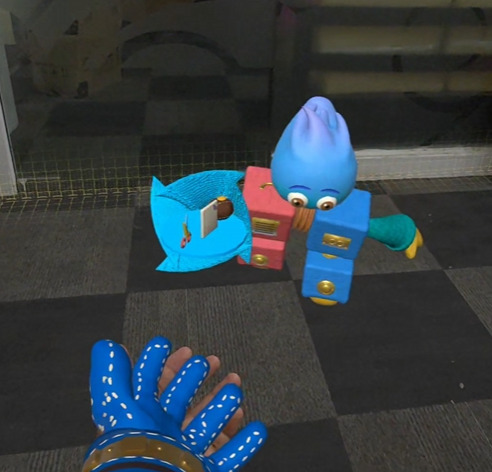
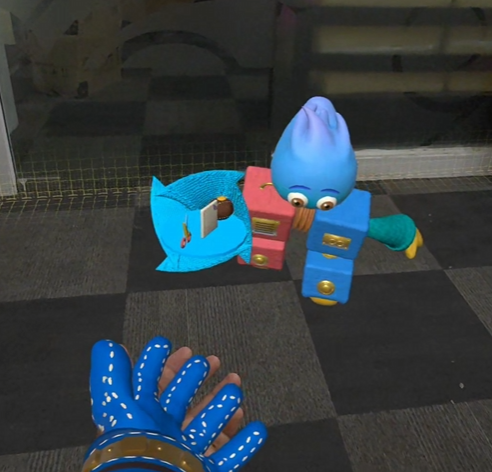
Beckon, he loves walking to you
-
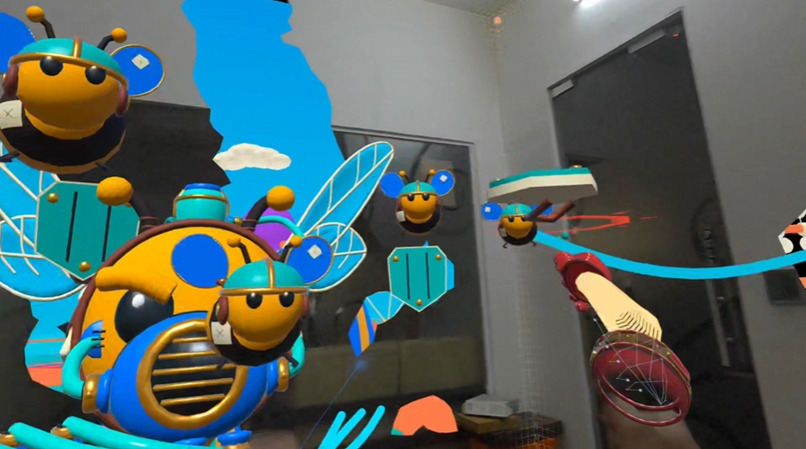
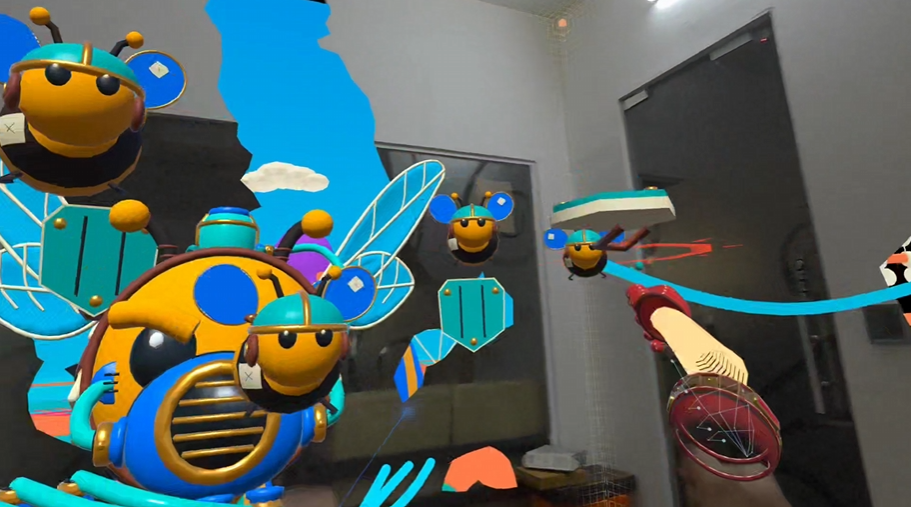
Bee attack! Punch time
-
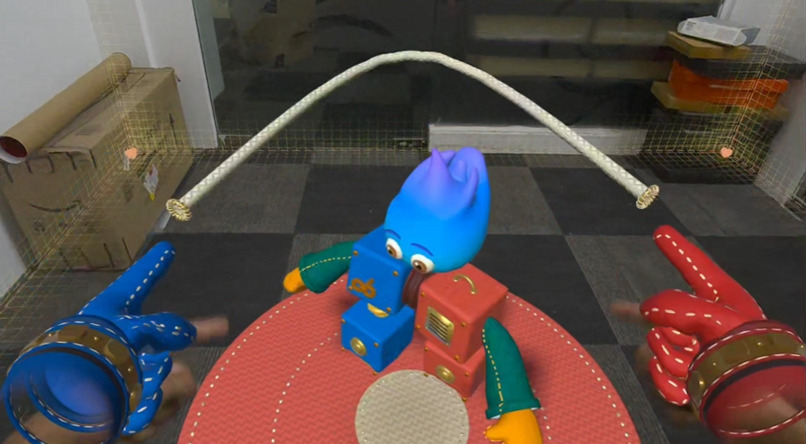
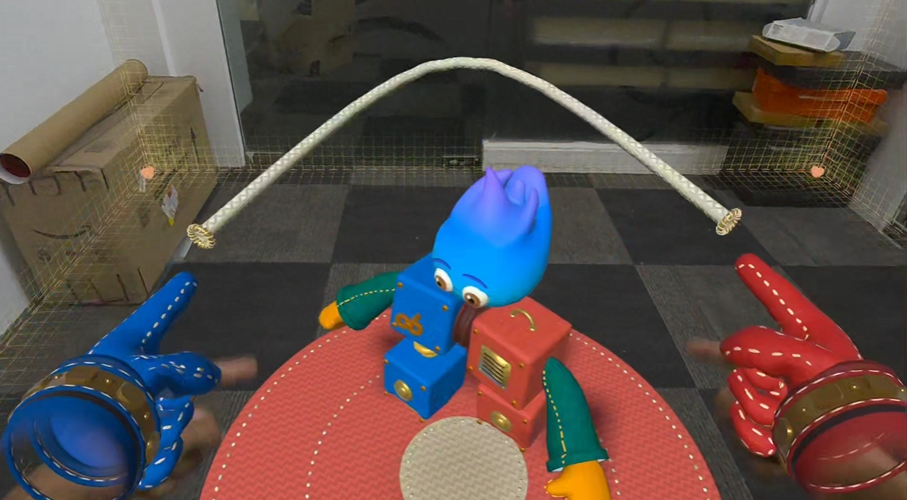
How long before a tiny skip
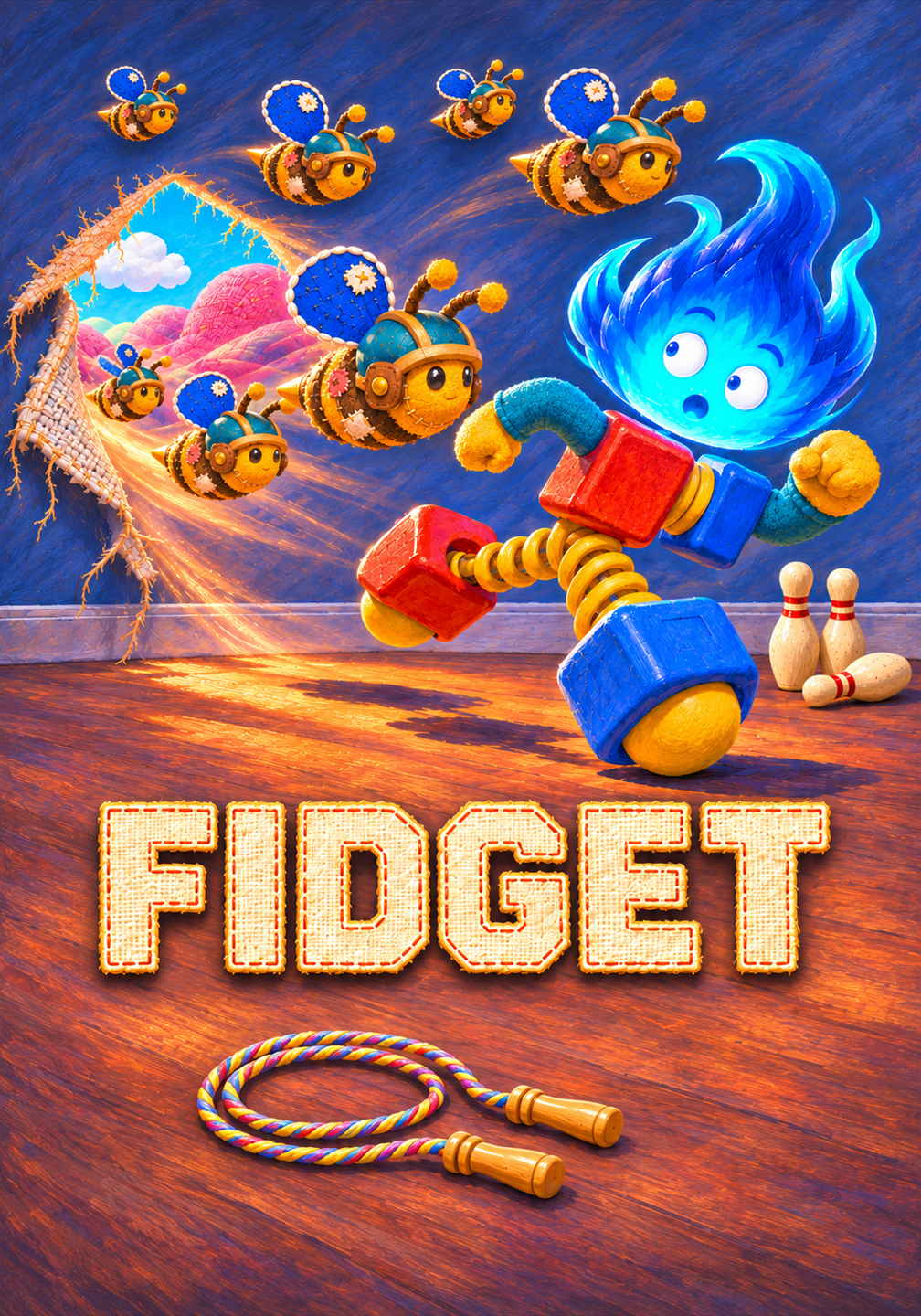
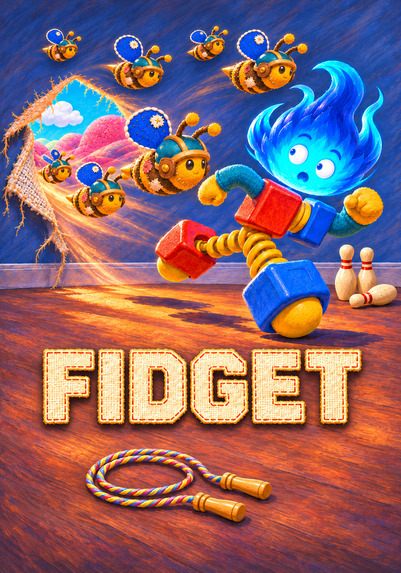
Remember when a toy could keep you busy for an entire afternoon? You made it jump across the sofa, gave it a funny walk, and invented increasingly unlikely adventures. Somewhere along the way, a handful of wood, cloth, or plastic became a friend.
That’s Fidget.
Meet your toy, a mischievous little character who arrives in your room and invites you to play. Made of painted wood, stitched fabric, and springy joints, he looks like something from a toymaker’s workbench and absolutely cannot sit still. At first, you’re just getting to know each other. Pick him up, throw his limbs, or turn a skipping rope with your fingertips and watch him jump.
As he gets bolder, so does the play. Launch a spring-loaded glove across the room to catch things and pull them back, deal with some uninvited bees, and catch glimpses of the handmade world he came from. Your room becomes the setting for an increasingly unlikely afternoon. Note: he makes the rules.
We’re building Fidget in Unity using Meta’s hand tracking and mixed reality tools, with characters and environments made in Blender. Our focus is on the small exchanges that make a toy feel alive: how he responds to your touch, invites your attention, and surprises you when you think you know what comes next. His body is a physics ragdoll with springy joints, so he reacts to your hands instead of playing canned animations. The glove hands are our own Blender models, re-bound onto Meta’s hand skeleton so they follow your real fingers.
Making a floppy toy feel alive without looking broken was harder than we expected. When we studied his poses, rotation turned out to be the main problem: a stretch only reads well when the whole body follows the point being pulled. Hand tracking also had to be reliable enough to tell a pinch from a grab, a throw from a yank, and rock from paper or scissors. Fidget really does feel like he’s reacting to you. You can pick him up, wiggle his limbs and tickle him, and his response feels physical and a little cheeky. The spring-loaded glove has become a favourite: you aim it, launch it, and yank things back across your real room- an extention to Fidget. We’re also proud that all the moments, from the first meeting through bowling, rock, paper, scissors and the bees to the finale, now play as one continuous scene.
We learnt that small things matter most, in toy-specific play. A head tilt, a delay before he reacts, the way a limb swings after you let go: these did more to make him feel alive than any big feature. We learned to judge each moment by how it feels, not just whether it works. Play-testing in the headset often overturned what looked fine on a monitor. We want more simulated play, like hide and seek, where he makes the rules and reacts to how you play. We’ll polish the finale and the glimpses of the handmade world he came from, smooth the pacing across the whole afternoon, and then get it into more people’s hands to see where they laugh, linger, or get lost.
The hope is simple: you put on a headset, pick up a toy, and lose track of your afternoon again.
