-
-
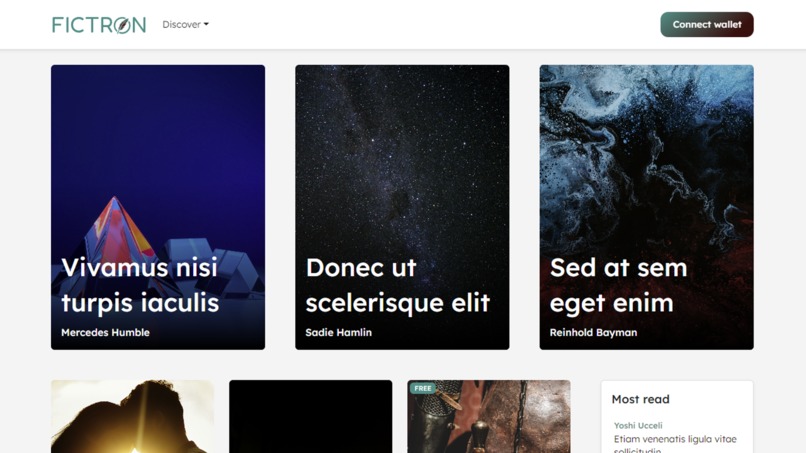
home
-
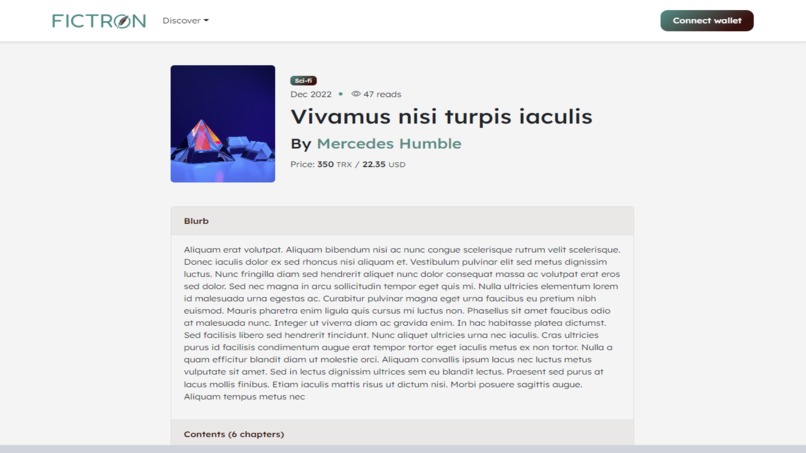
book (overview)
-
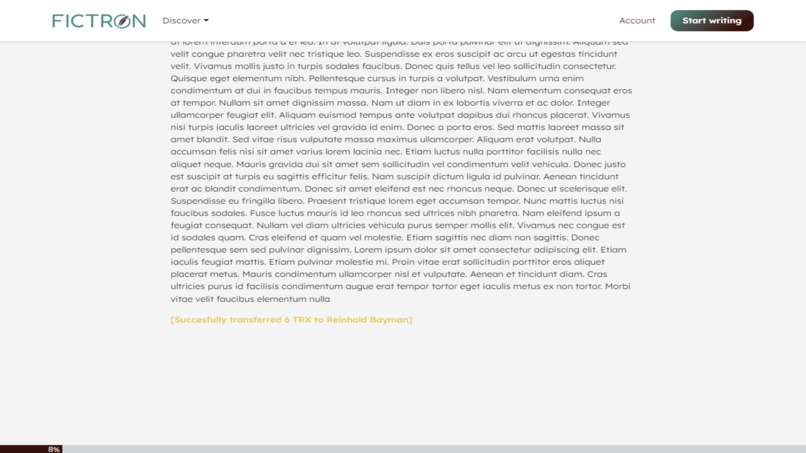
book (reading)
-
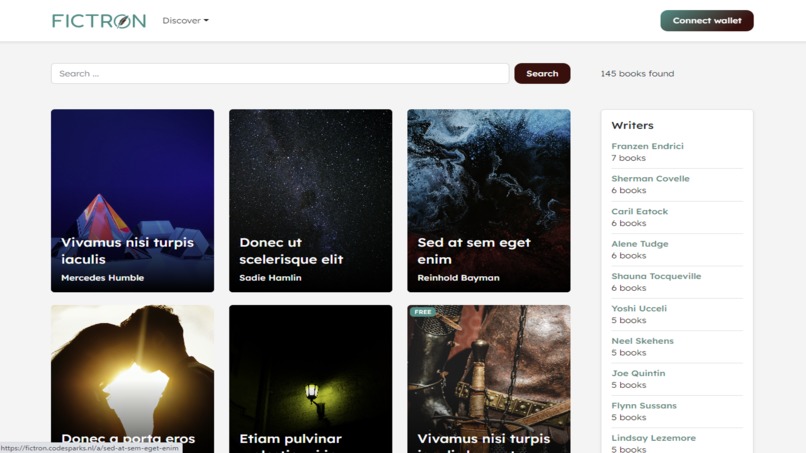
search
-
account
Inspiration
Web3 already offers a lot of new opportunities for creatives. Artists like graphic designers and painters can now sell their NFTs on almost every crypto network. However, such web3-opportunities do not yet exist for other creatives like fiction writers. When I was younger I wanted to be writer, but I soon realized that finding a publisher can be quite difficult and that they could also force you to rewrite huge parts of your book. And even when a publisher decides to publish your book, it still can be difficult to convince potential readers to spend their money on a new book from a new writer they do not know. Fictron solves these problems using smart contract technology.
What it does
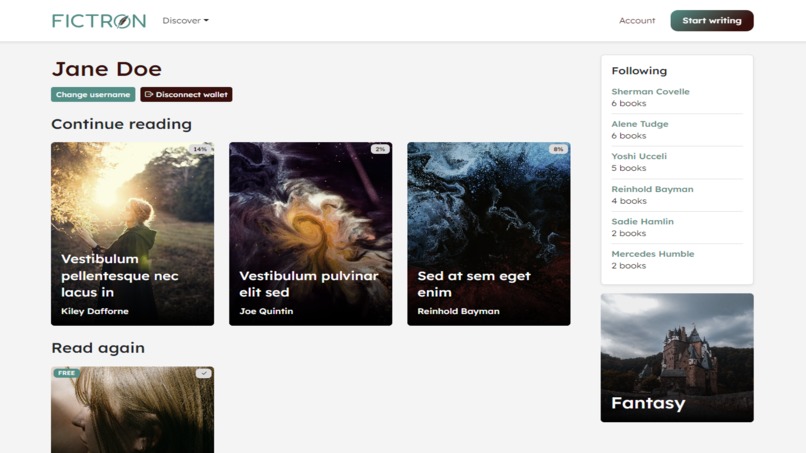
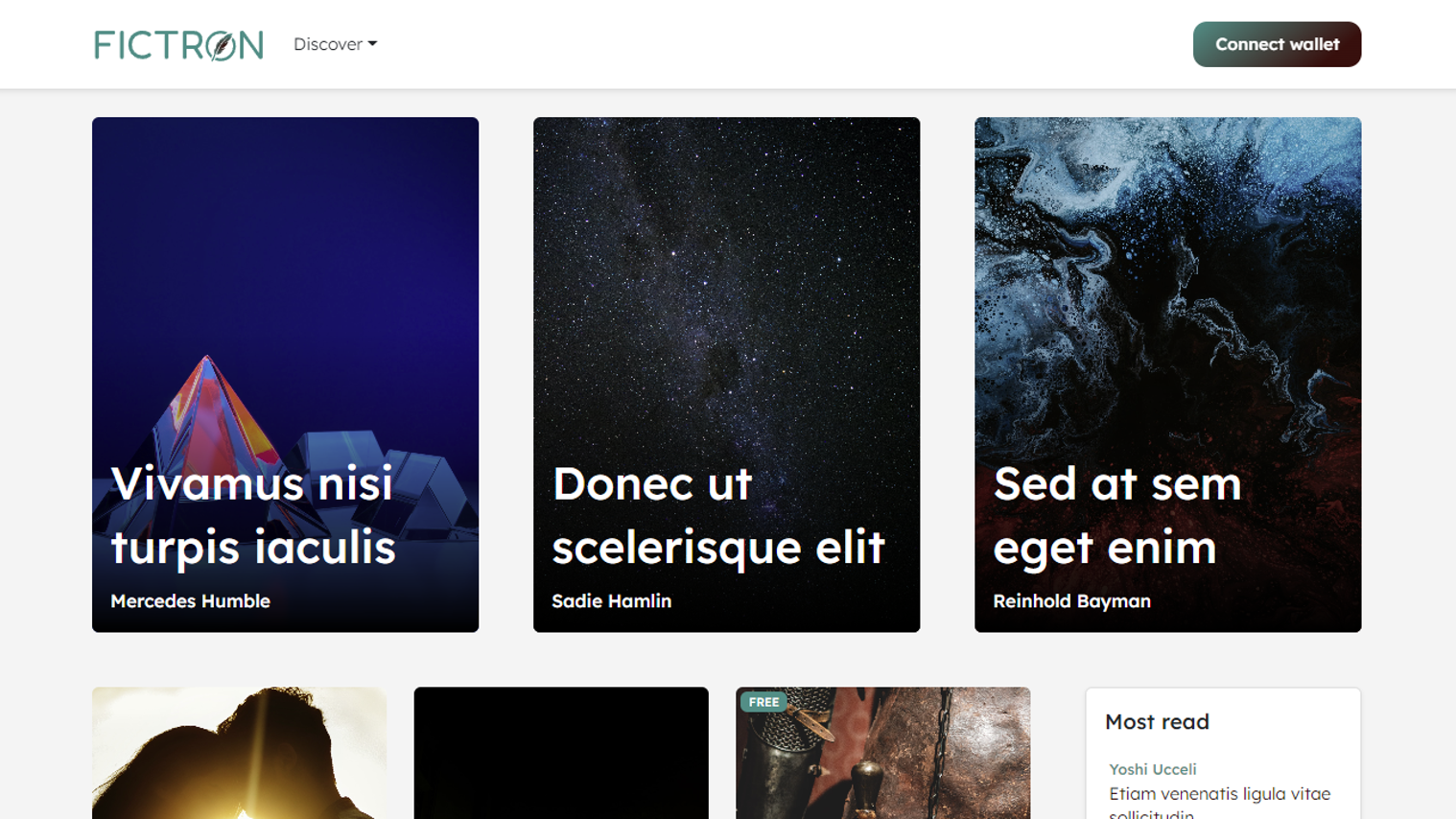
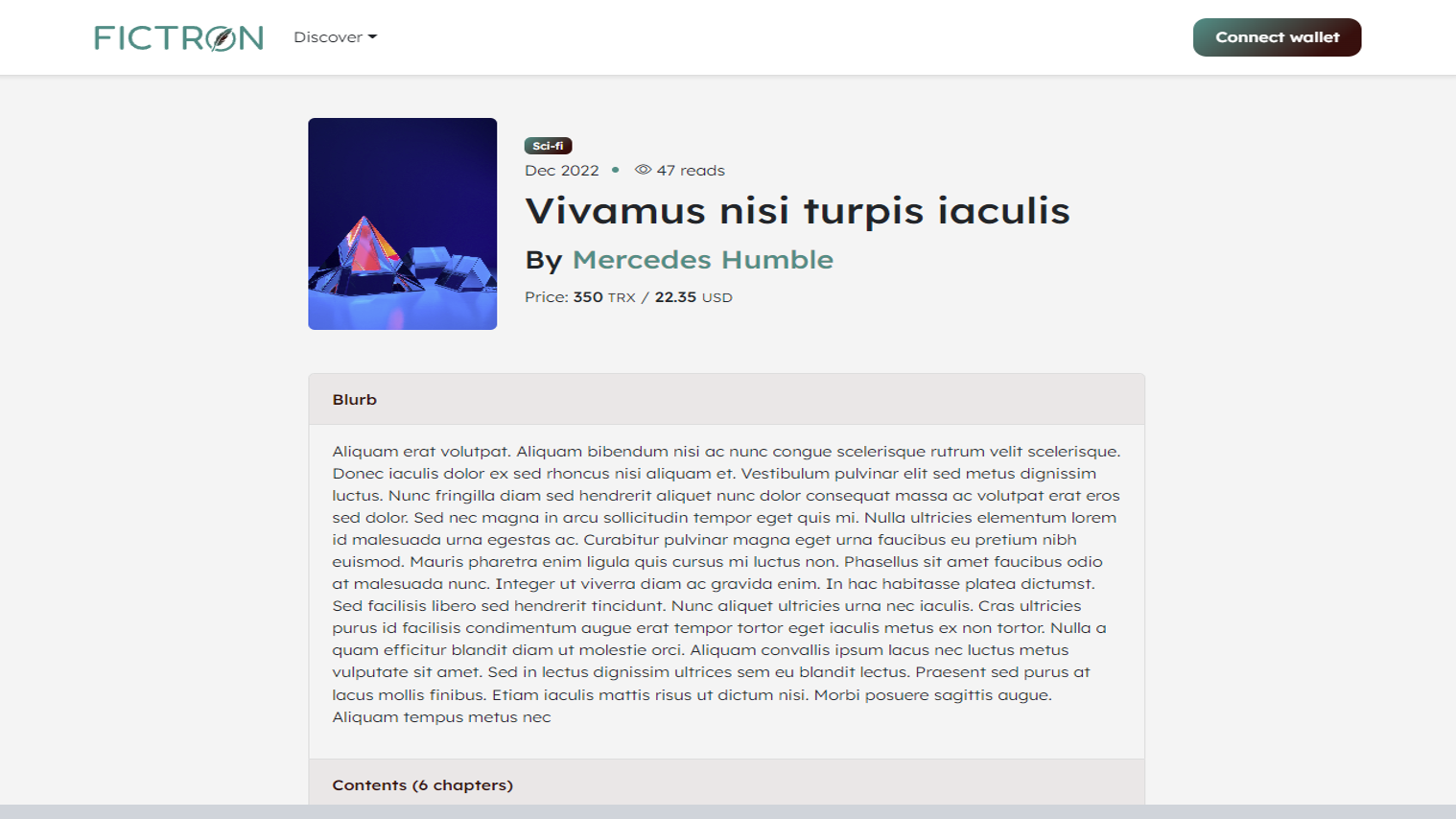
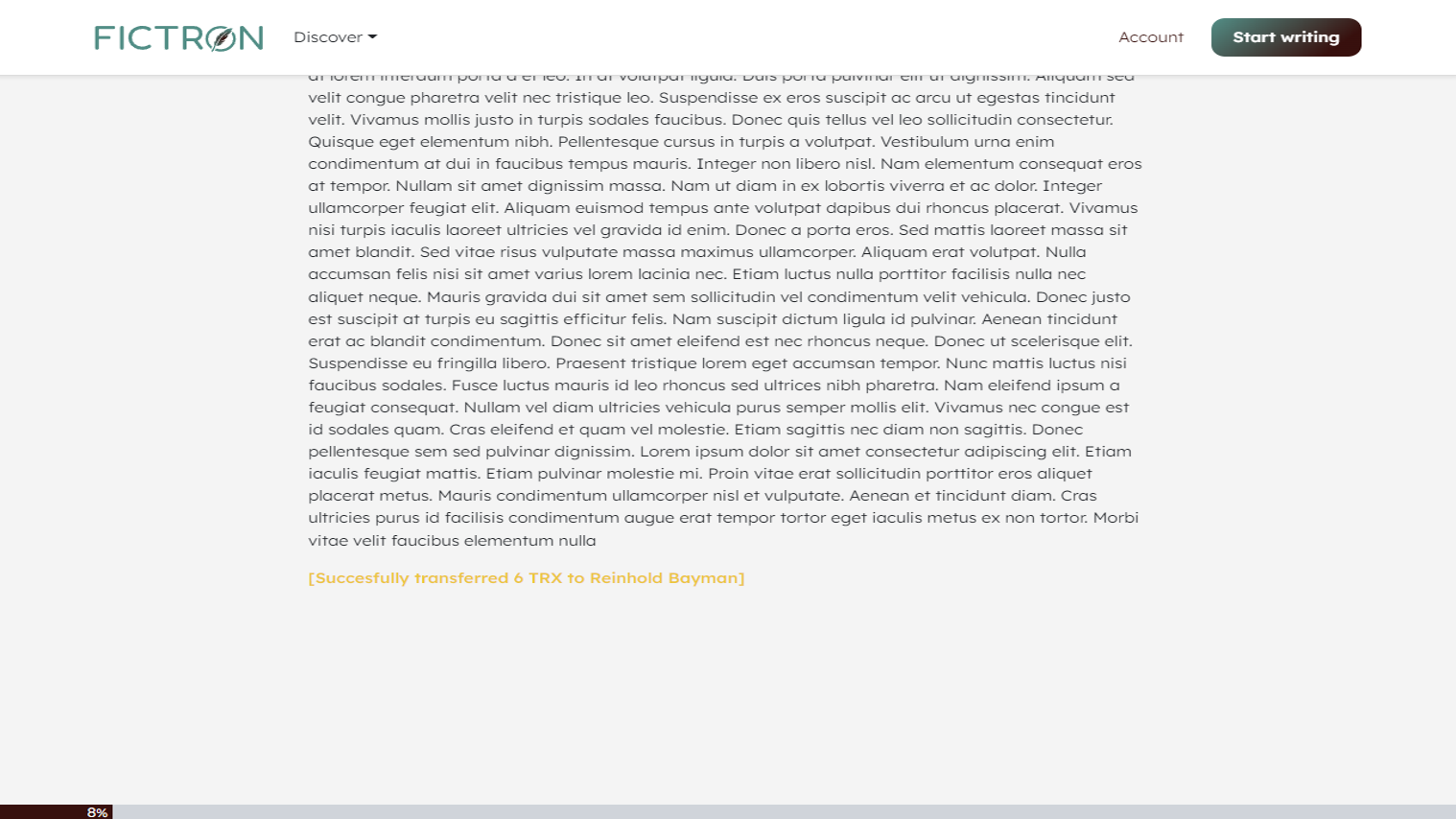
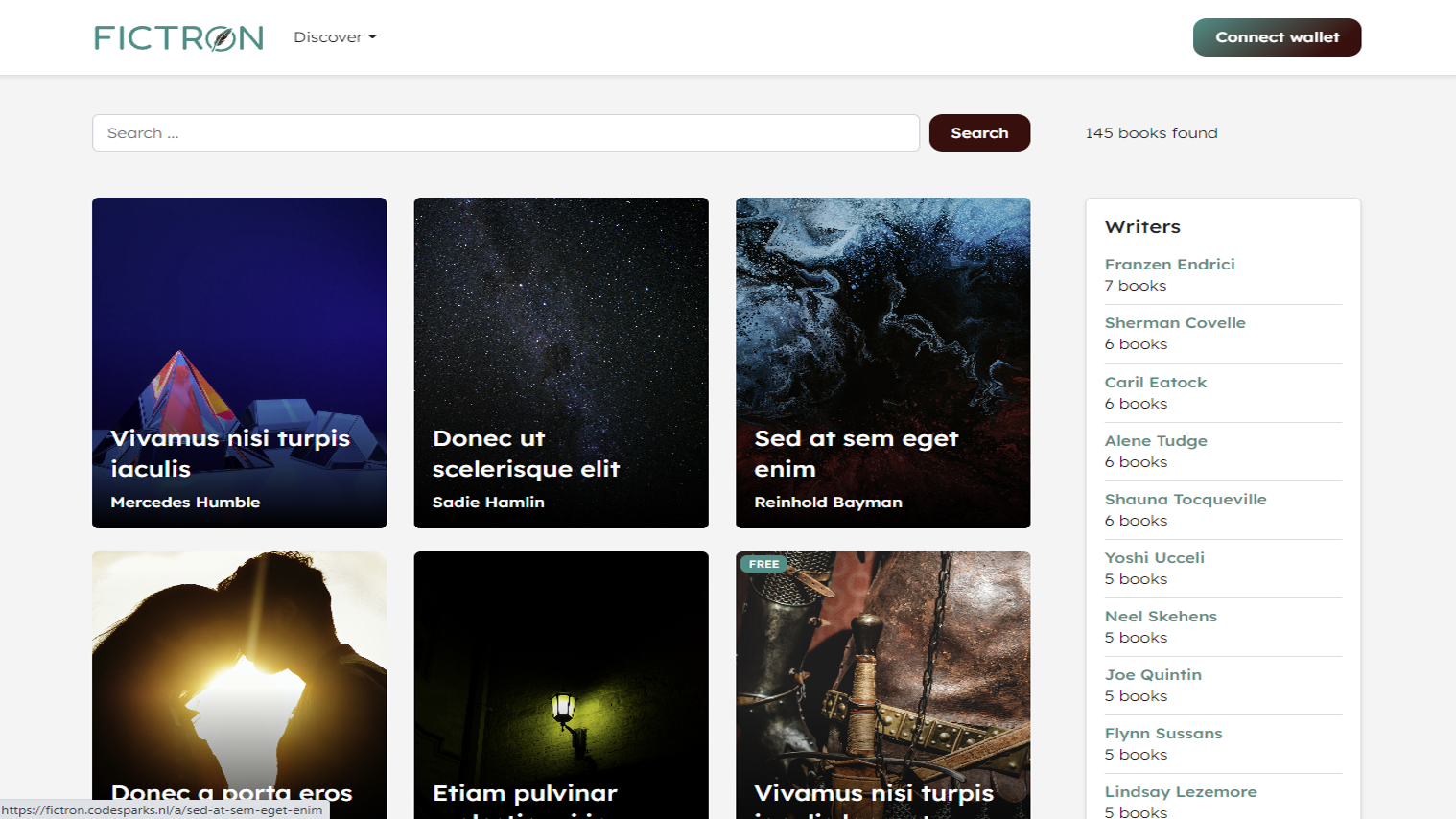
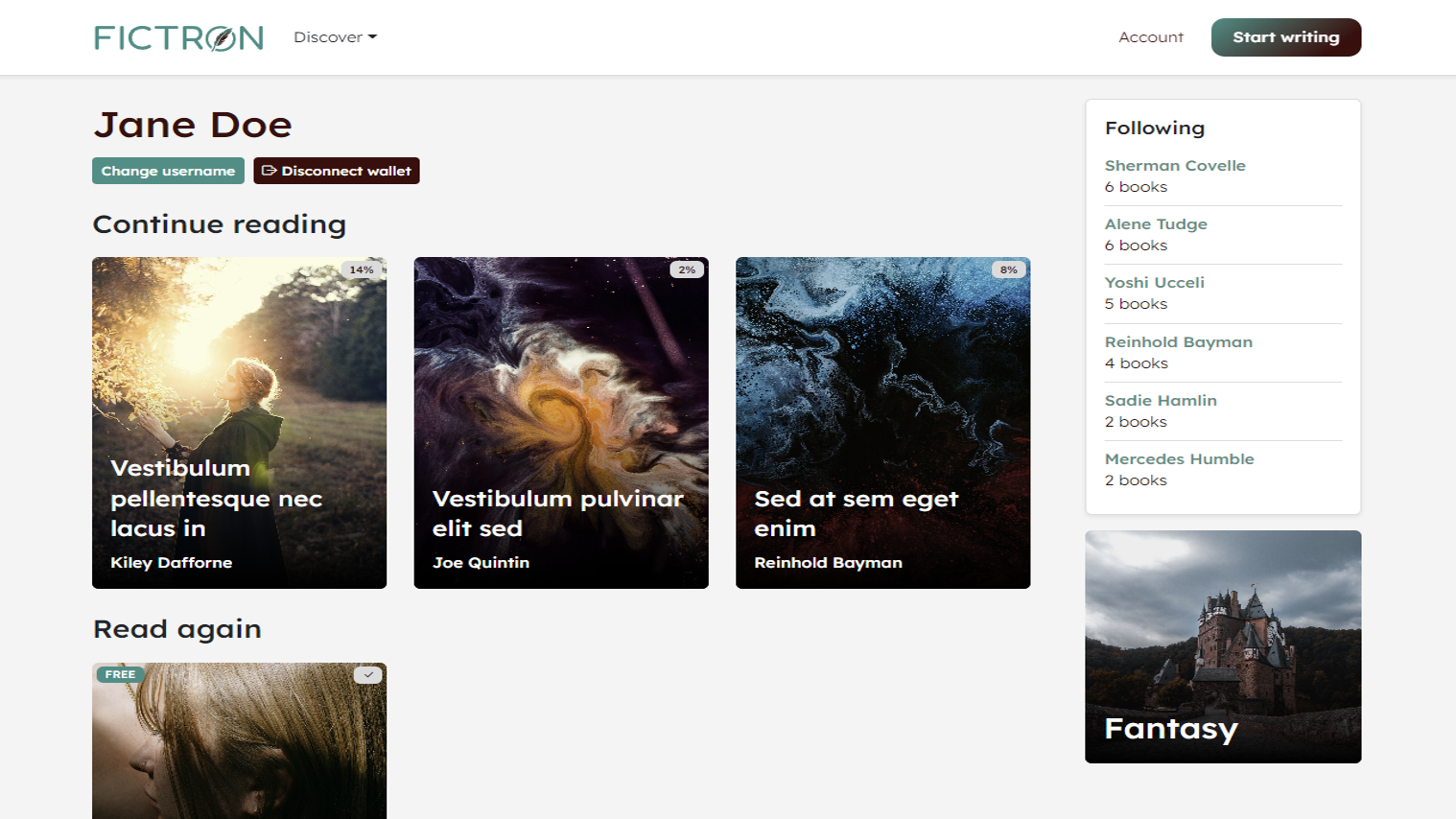
On Fictron you can start reading as many books as you like and only pay for the pages you read using micro-transactions implemented on the TRON network. This makes it easier to discover new writers and might save you a lot of money. It’s smooth user interface, which is also optimized for usage on tablets or mobile devices, makes it easy to discover books and to publish books.
How I built it
The front-end is build with vue and nuxt. The smart contract is written in Solidity and is deployed on the Nile testnet as well as the Shasta testnet. TronWeb is used to integrate the smart contract into the dApp and the TronLink browser extension can be used to connect your TRON wallet to Fictron.
Challenges I ran into
The main challenge I ran into was storing data on the TRON network. Initially I developed very complex contracts that stored a lot of data on the network, but after deploying them on TRON I realized that I needed to simplify the contracts in order to be able to keep the smart contract interactions as fast as possible and to reduce the transaction fees.
What I’ve learned and what I’m proud of
During this hackathon I learned to use the TronWeb and I got a deeper understanding of blockchain technologies. I also learned a lot about Solidity whilst writing the complex smart contracts mentioned earlier. I’m proud also that I could extend my UX and front-end skills and was able to create a clean user interface for the dApp. Without this hackathon I definitely wouldn’t have been able to learn all these things in such a short amount of time.
What's next for Fictron
- Making the app fully production-ready by developing a solid back-end.
- Developing a good marketing strategy in order to attract writers and readers.
Built With
- blockchain
- bootstrap
- git
- node.js
- nuxt
- solidity
- tronweb
- vue


Log in or sign up for Devpost to join the conversation.