-
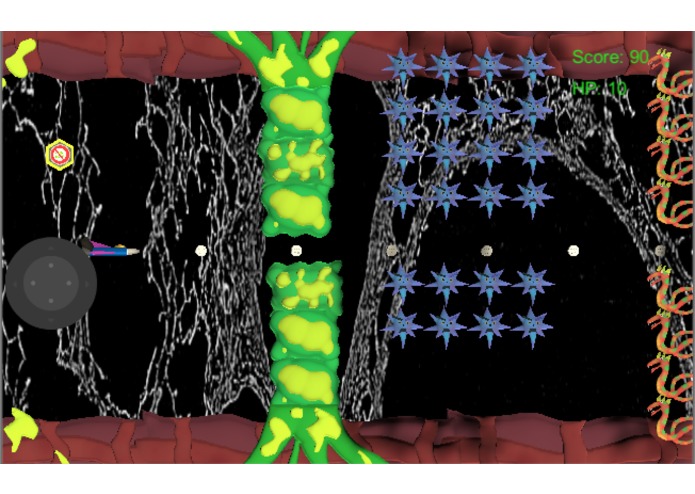
Cystic FiBlaster Screenshot
-
Cystic FiBlaster Logo
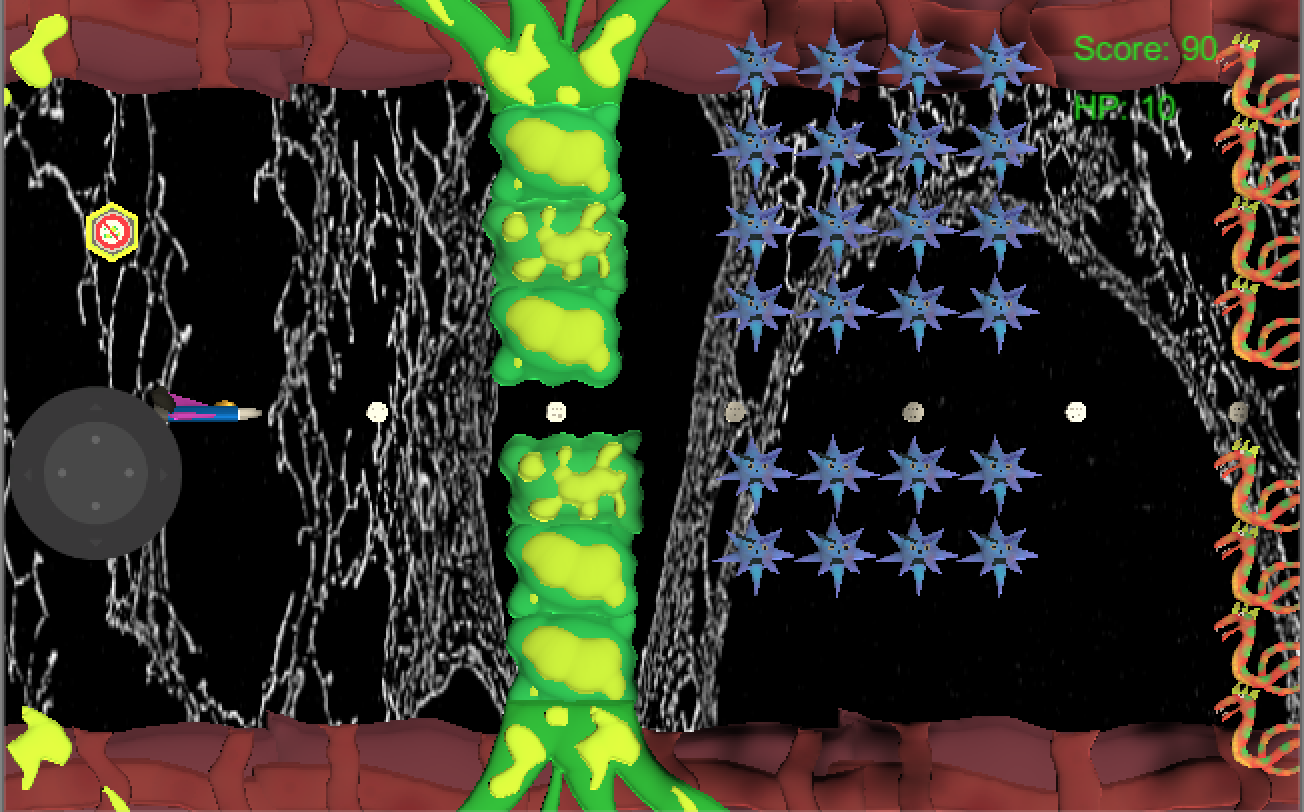

Cystic FiBlaster
A mobile game designed to help adolescents living with cystic fibrosis learn more about their condition in the context of their body and encourage adherence of their complex medication regimen.
From the in-game Captain Doctor:
Welcome! We chose you to be a part of the Cystic FiBlaster squadron! We challenge you to fight waves of enemies infecting our system while taking care of yourself to become the best Super-Pilot you can be! Your orders are to improve your defenses by taking medication, fight bacteria, learn about your system and about your enemy, and have fun! If you can make it through the swarms of bacteria and mucus, you have a shot at defeating Staphylococcusaurus!
CF Background
- Cystic Fibrosis (CF) is one of the most common life shortening and fatal inherited diseases in the U.S. (1, 2)
- CF is multi-system disease that primarily affects the respiratory and digestive systems. (3)
- CF is a chronic and progressive condition that is caused by defective genes, which produce thick mucus in organs such as the lungs, small intestine, liver, and pancreas. (4)
- This thick mucus makes people living with CF more susceptible to lung infections, decreased pulmonary function, and inability to digest food and absorb nutrients. (4)
- Approximately 30,000 people in the U.S. are living with CF and the median predicted age of survival is about 40 years old. (5)
- There is no cure for CF; therefore, the treatment regimen for people living with CF is complex and time consuming where they take about 10 medications a day. (6, 7)
- These challenges lead to poor medication adherence which results in increased healthcare costs, exacerbations, depression, anxiety, and hospitalizations. (7-10)
- Adolescents living with CF in particular have low adherence rates at about 50%. (8-10)
- This is a problem because adolescents gain more independence and responsibility for medication self-management. (8-10)
- Additionally, adolescents have limited medication knowledge as shown by an average score of 50% on a CF management knowledge survey. (11)
Rationale
- Adolescents are technology users and expressed interest in learning about their condition and medications through interactive technology; therefore, we developed an educational game tailored to adolescents with CF to improve their medication knowledge, facilitate conversations with their CF care team, and ultimately increase adherence.
Goals of Game
- Educate adolescent living with CF (player of game) about condition using in-game mechanics and quizzes to earn power-ups: what is happening in their body, how to properly manage their condition, what do the medications do.
- Increase medication adherence (time factor/medication schedule): if player takes their medications in the game, they earn in-game rewards.
- There is a market for adherence games but they are still early in development. Despite significant awareness of the problem of medication adherence, there is a disconnect between funding, activity, and commercial adoption in the space.
Outcomes
- Increase in quiz scores over time.
- Increase in positive behaviors in the game by the players.
- Increase in players’ self-management for their condition.
- Increase in medication adherence: measured by pulmonary function tests at clinic appointments, refill history, pill counts.
Future Game Features
- Doctor or parent could have an app that would access data from the game, particularly adherence data: if patient is being compliant, he/she gets a power-up in the game or another level of the game is unlocked.
- More questions for the quizzes: could talk with doctors/care team about what questions to add to the game and when to ask them. Game updates can then include new questions.
References
- Zeitlin PL. Emerging drug treatments for cystic fibrosis. Expert Opin Emerg Drugs. 2007; 12(2):329-336.
- Sawicki GS, Tiddens H. Managing treatment complexity in cystic fibrosis: challenges and opportunities. Pediatr Pulmonol. 2012; 47(6):523-533.
- Cystic Fibrosis Foundation. Basics of lung care. https://www.cff.org/Life-With-CF/Treatments-and-Therapies/Airway-Clearance/Basics-of-Lung-Care/. Accessed December 2, 2015
- Quittner AL, Saez-Flores E, Barton JD. The psychological burden of cystic fibrosis. Curr Opin Pulm Med. 2016; 22(2):187-191.
- Cystic Fibrosis Foundation. Patient registry annual data report 2013. https://www.cff.org/2013_CFF_Patient_Registry_ Annual_Data_Report.pdf. Accessed November 3, 2015.
- Jamieson N, Fitzgerald D, Singh-Grewal D, Hanson CS, Craig JC, Tong A. Children’s experiences of cystic fibrosis: a systematic review of qualitative studies. Pediatrics. 2014; 133(6):e1683-e1697.
- Quittner AL, Zhang J, Marynchenko M, et al. Pulmonary medication adherence and health-care use in cystic fibrosis. Chest. 2014; 146(1):142-151.
- Conway SP, Pond MN, Hamnett T, Watson A. Compliance with treatment in adult patients with cystic fibrosis. Thorax. 1996; 51(1):29-33.
- Goodfellow NA, Hawwa AF, Reid AJM, Horne R, Shields MD, McElnay JC. Adherence to treatment in children and adolescents with cystic fibrosis: a cross-sectional, multi-method study investigating the influence of beliefs about treatment and parental depressive symptoms. BMC Pulm Med. 2015; 15:43.
- Shakkottai A, Kidwell KM, Townsend M, Nasr SZ. A five-year retrospective analysis of adherence in cystic fibrosis. Pediatr Pulmonol. 2015; 50(12):1224-1229.
- Modi AC, Quittner AL. Barriers to treatment adherence for children with cystic fibrosis and asthma: what gets in the way? J Pediatr Psychol. 2006; 31(8):846-858.


Log in or sign up for Devpost to join the conversation.