-
-
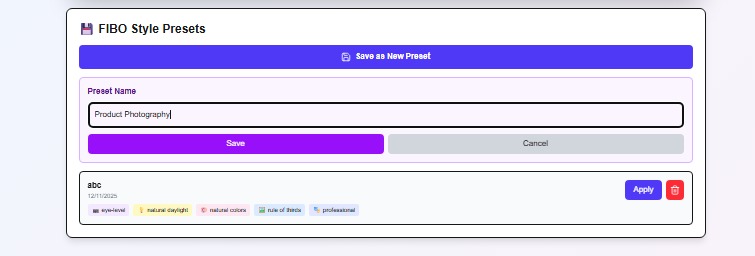
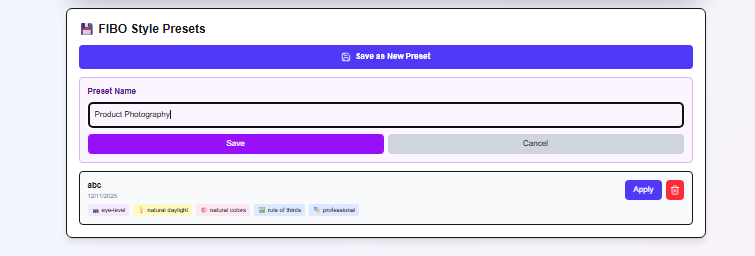
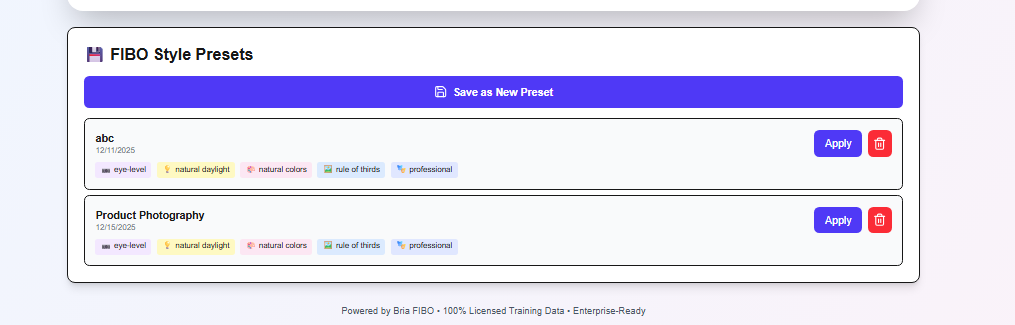
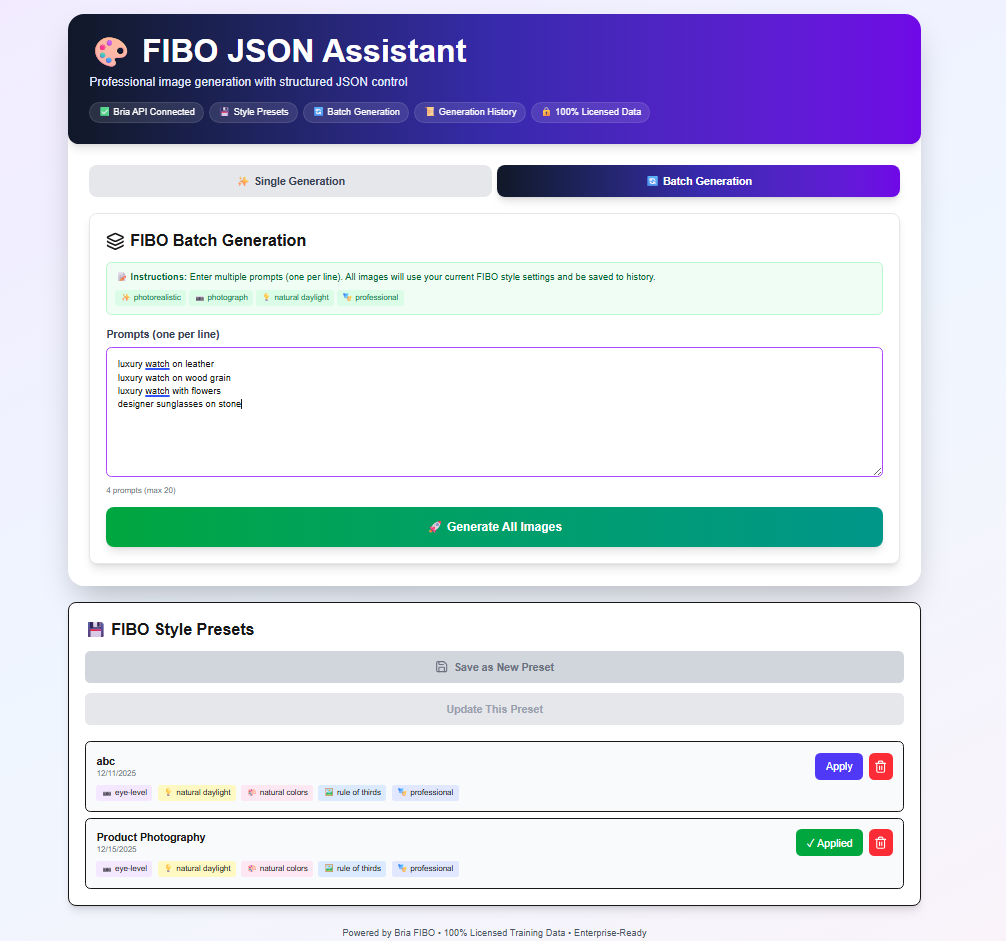
Preset saving
-
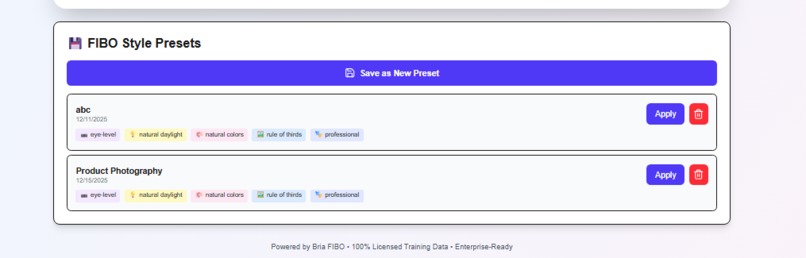
Presets list
-
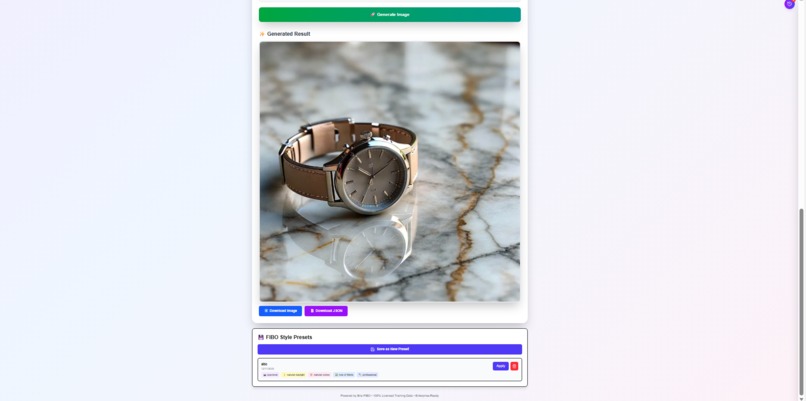
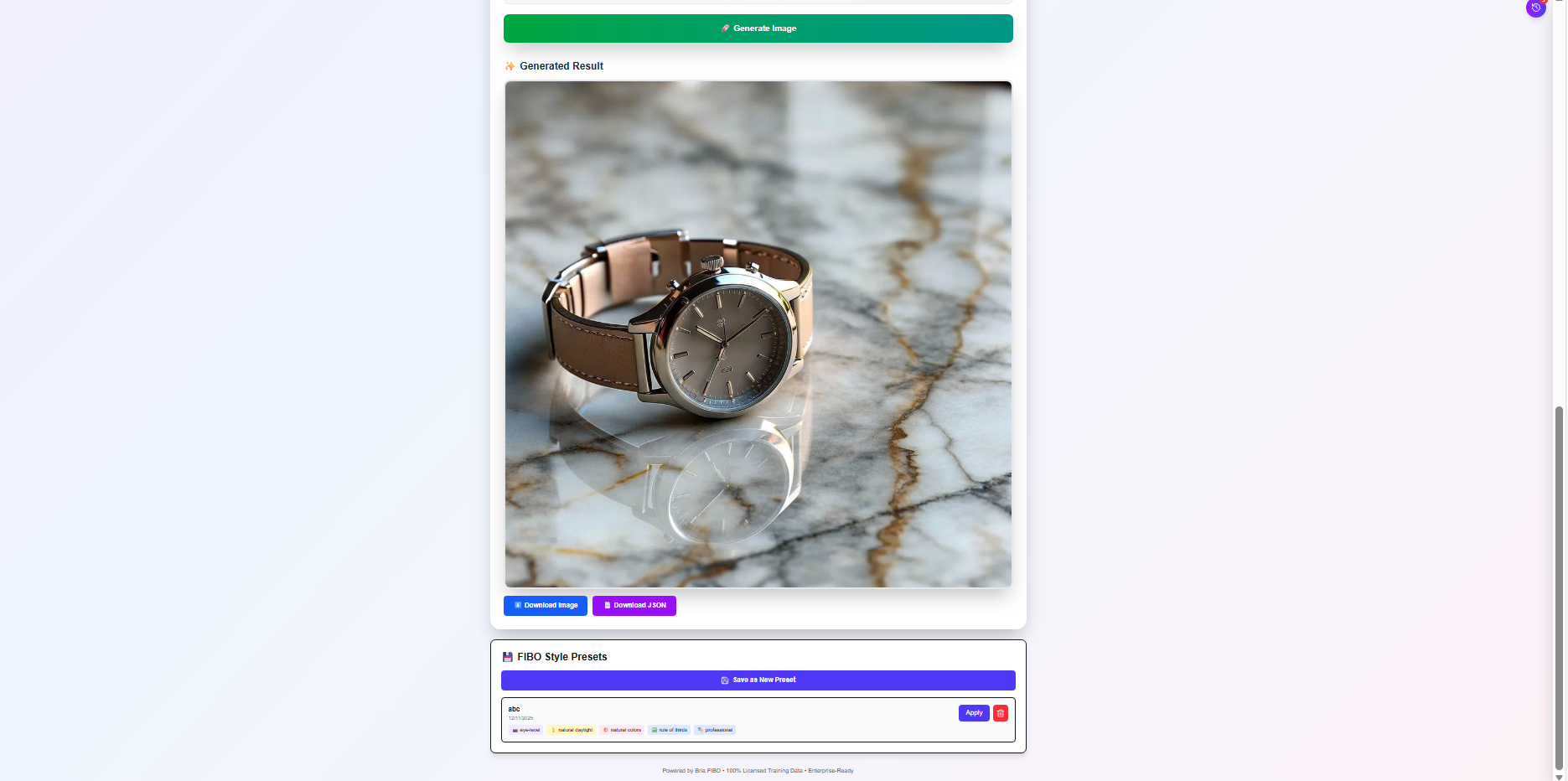
generated image with download json and image button
-
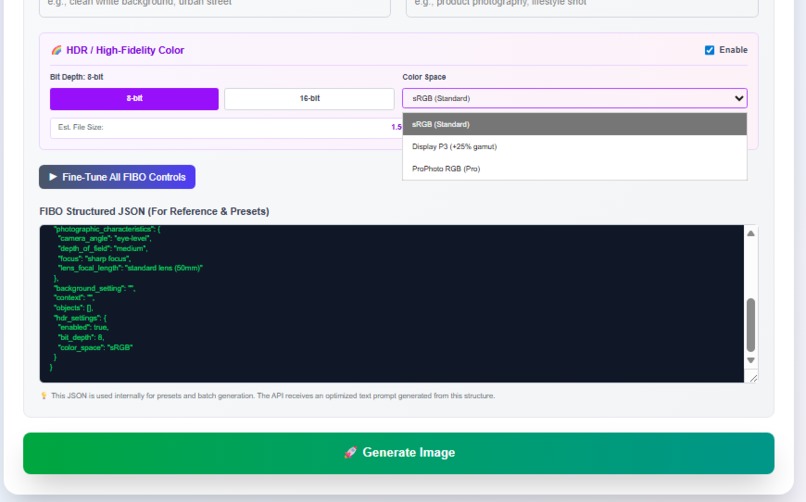
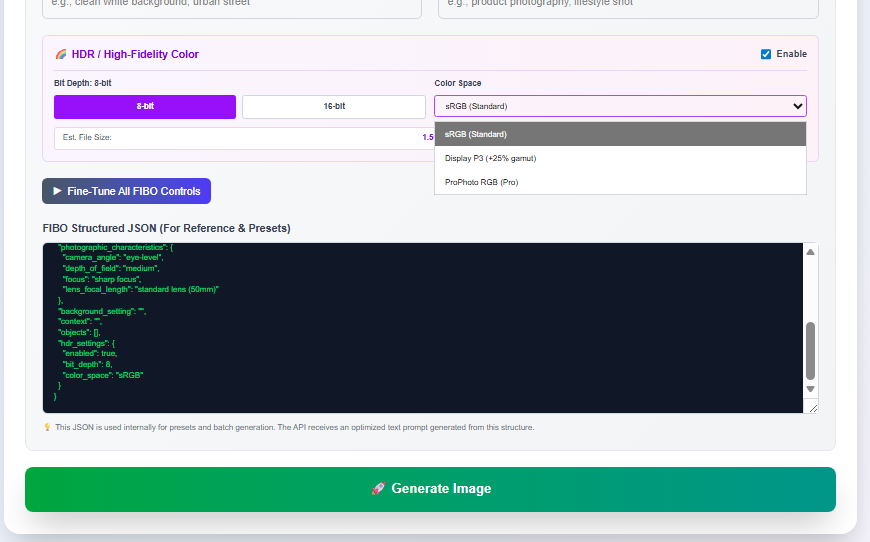
json structure change and addition of HDR enabled section
-
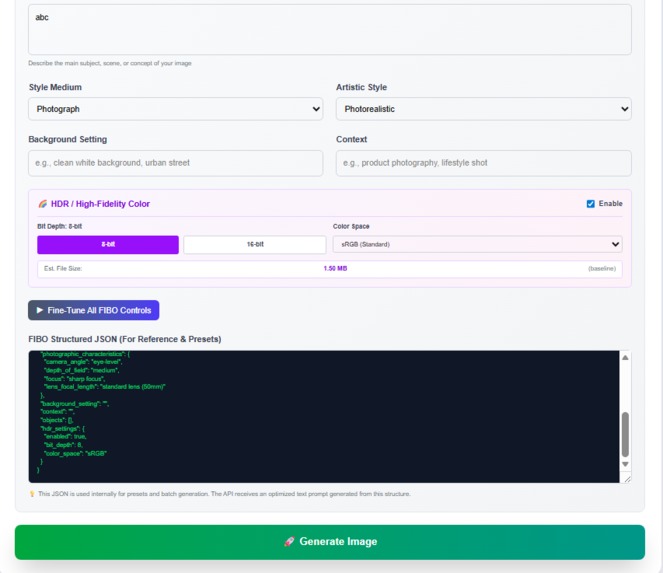
HDR capability can be enabled by checking the check box, with 8 bit and 16 bit all the options are shown
-
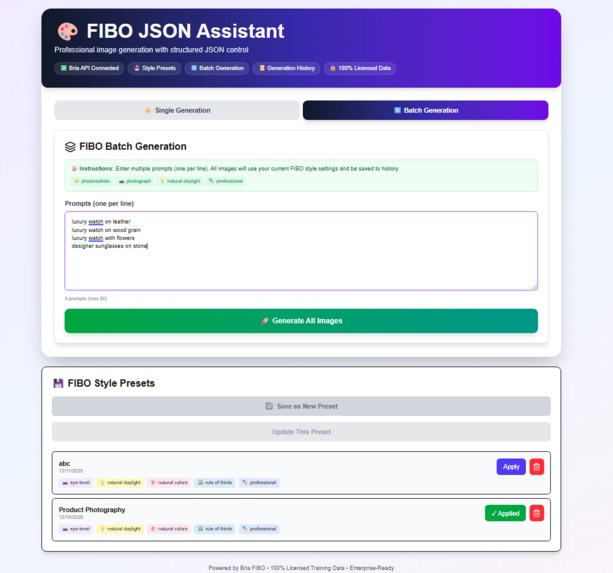
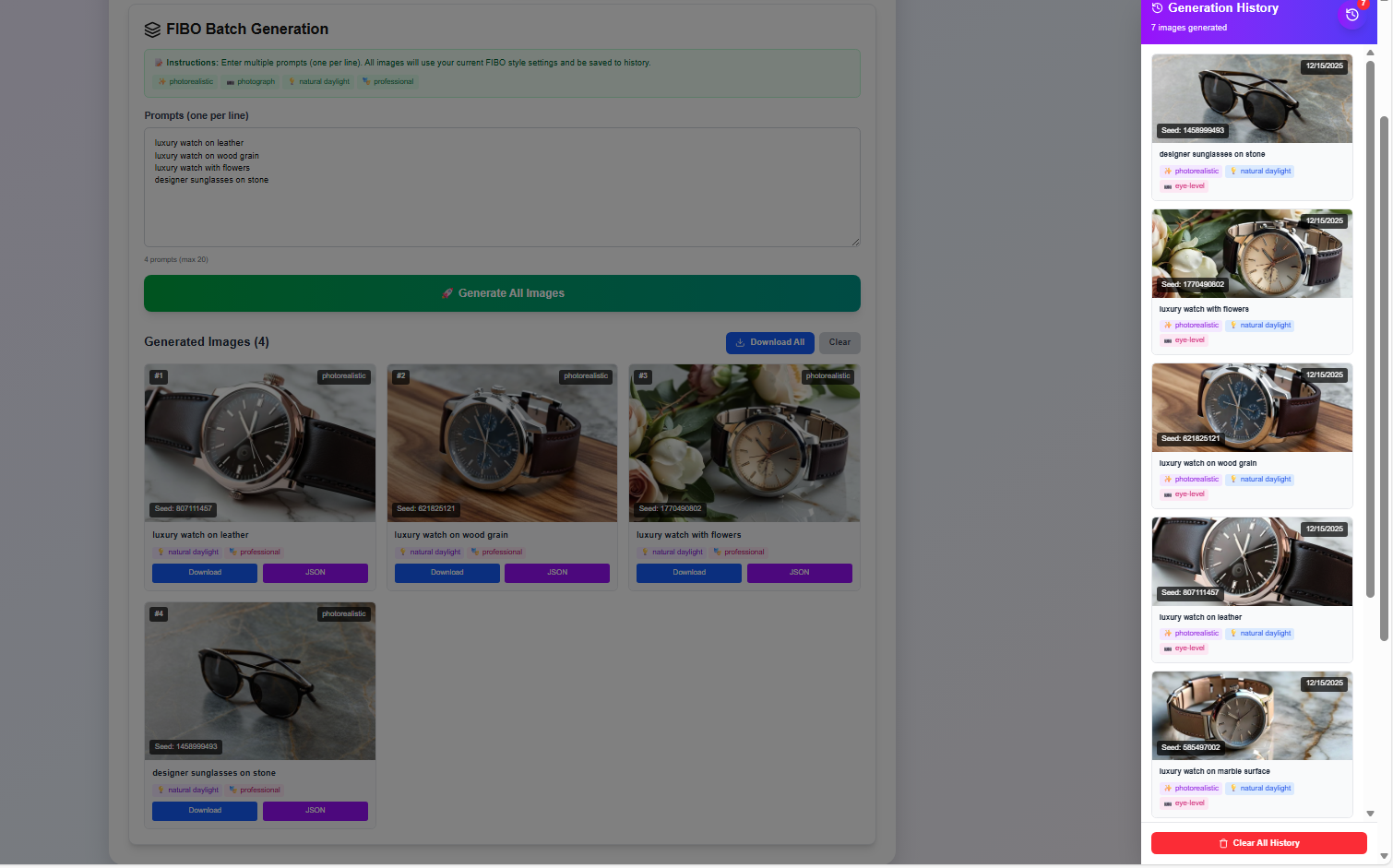
Batch image section with upto 20 prompt capability
-
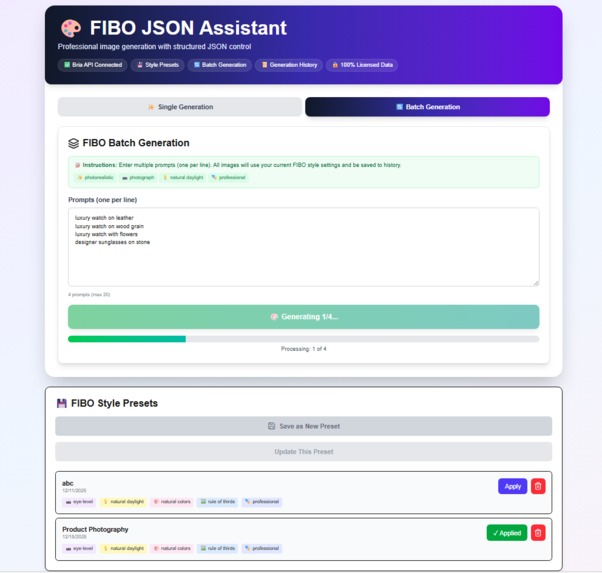
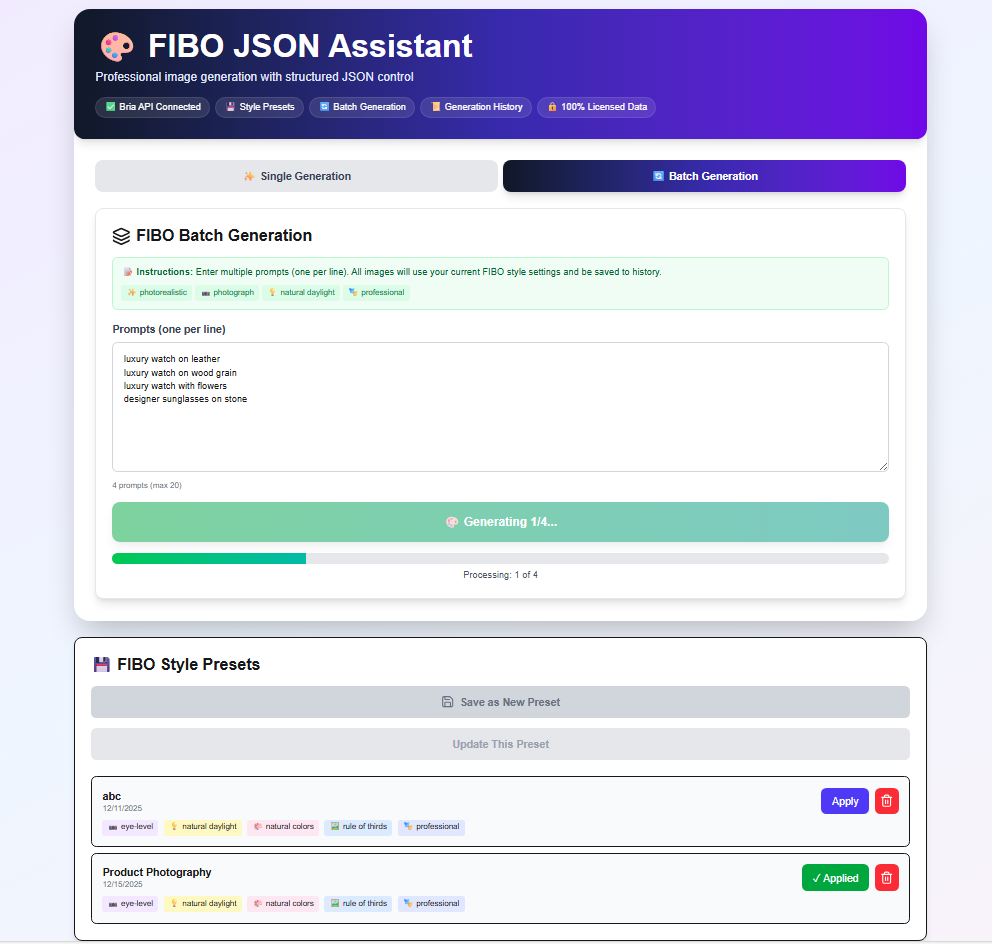
progress bar showing image generation progress
-
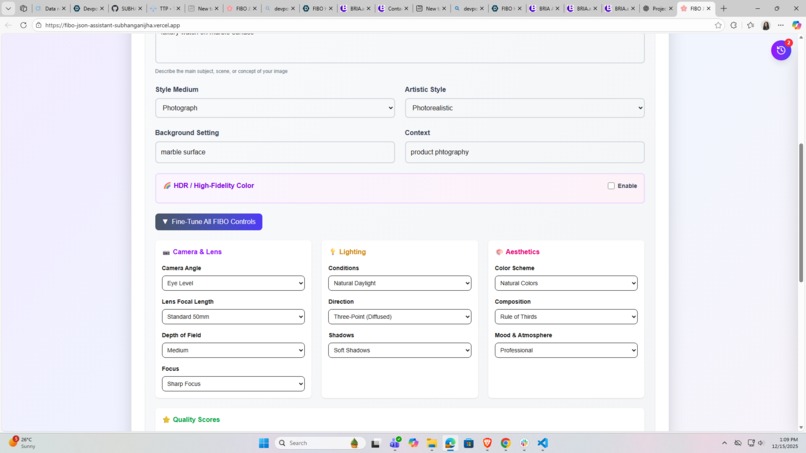
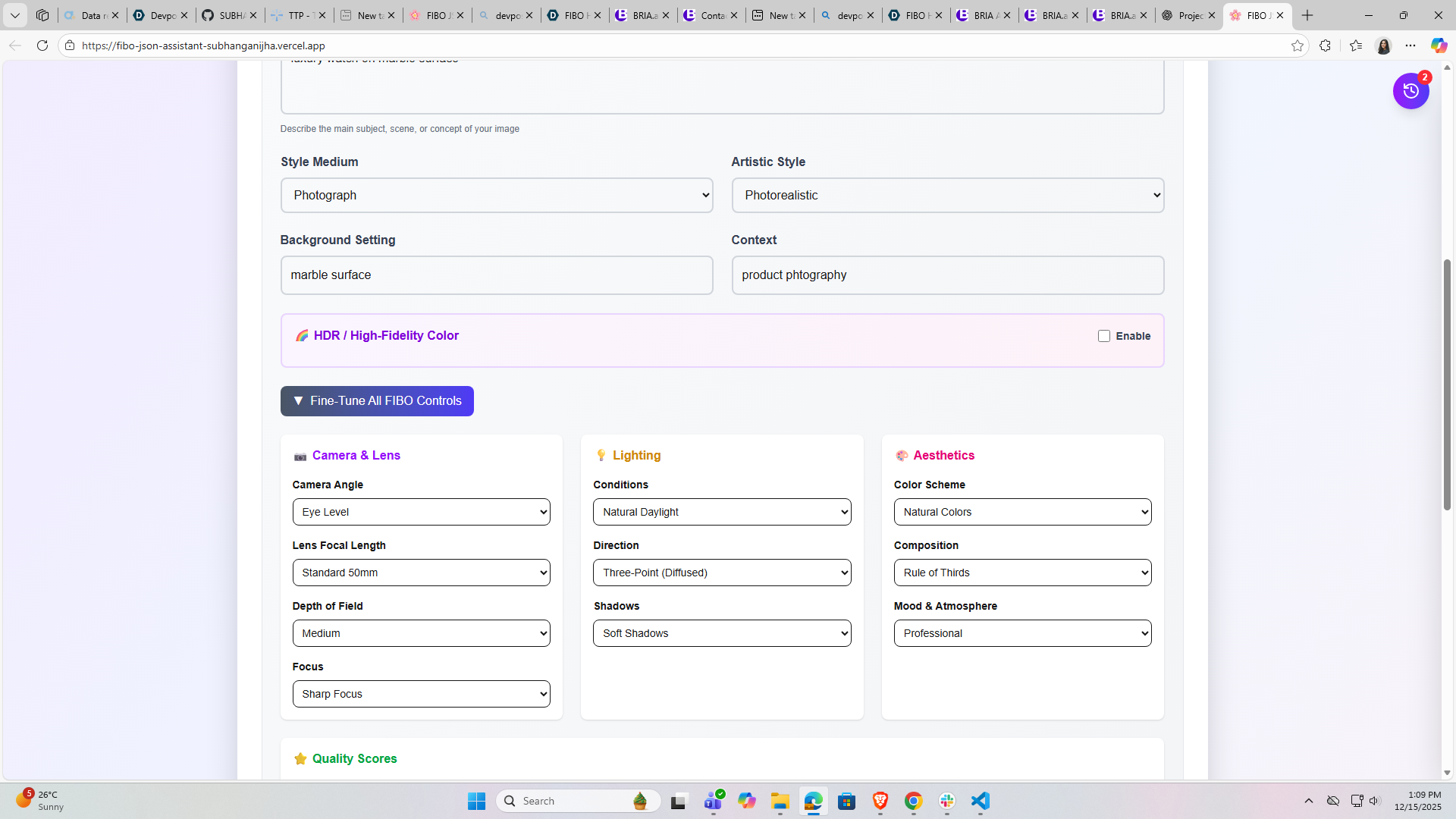
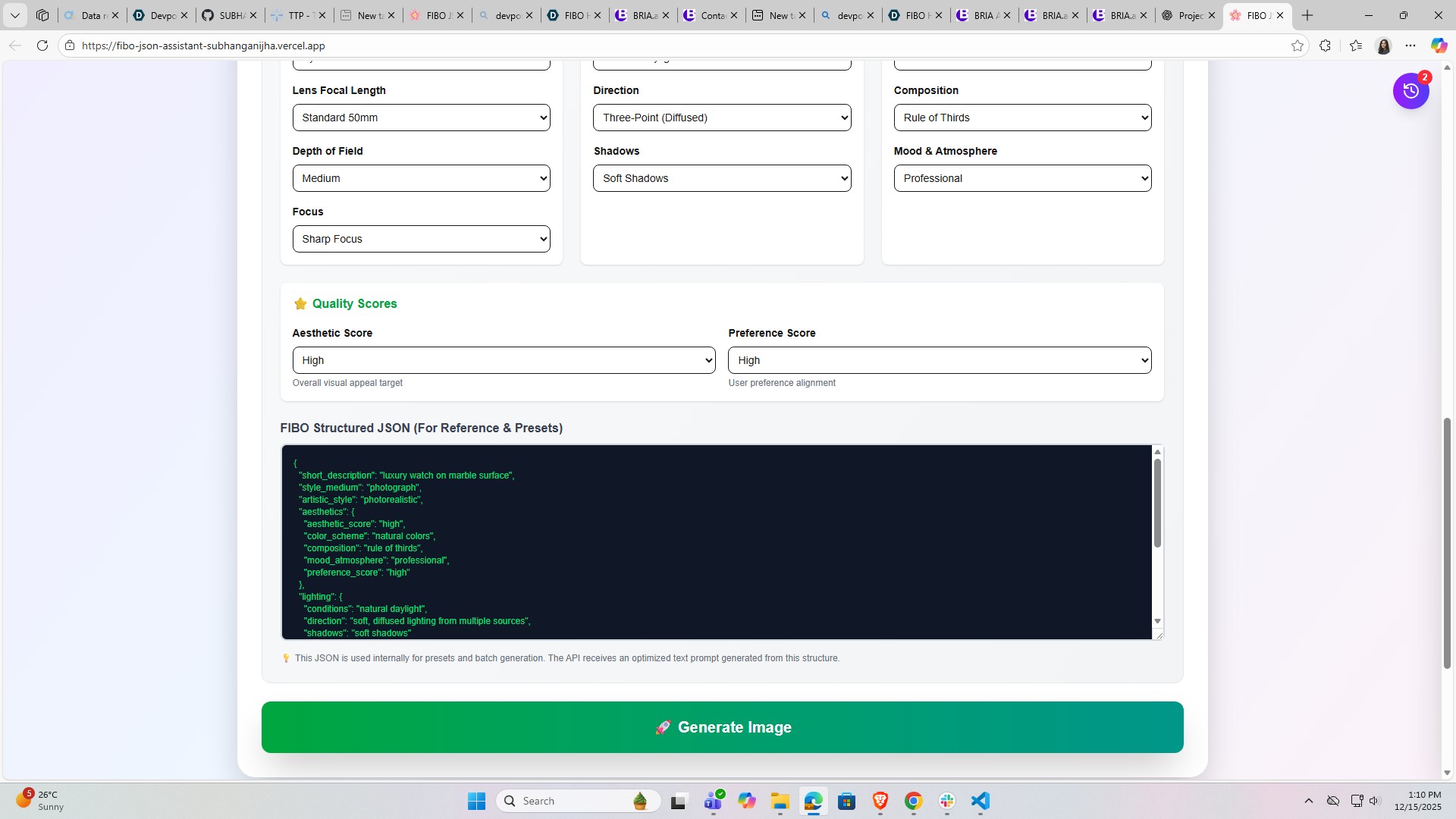
parameters editable section
-
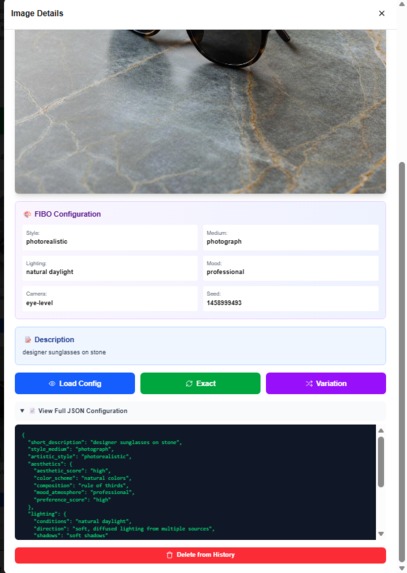
json structure of the image for viewing
-
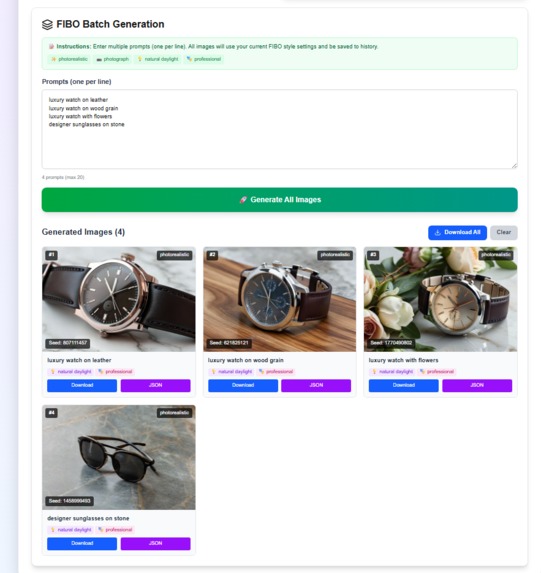
Image generated with the tags
-
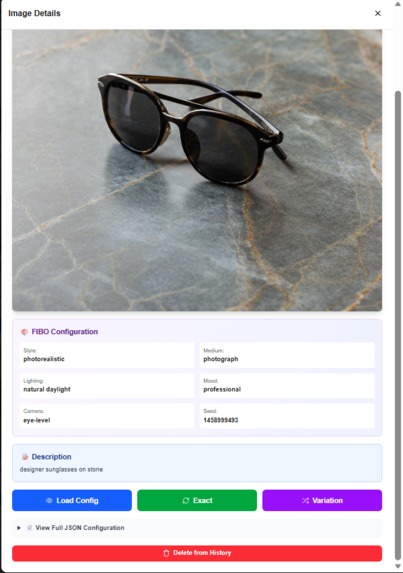
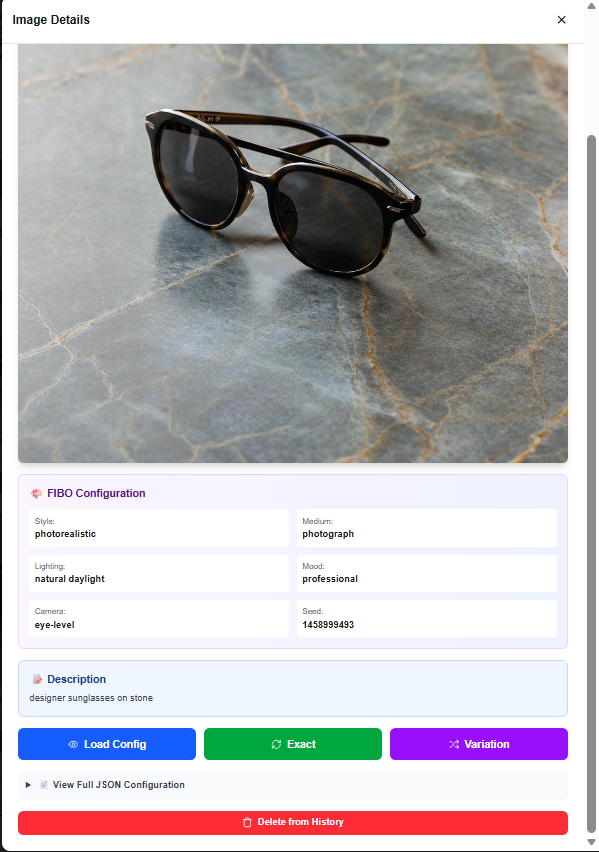
load config to map all the configuration Exact button to for exact image,Variation button for generating same mood image with difference
-
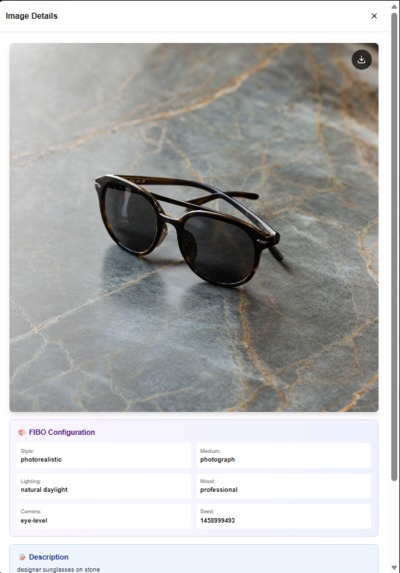
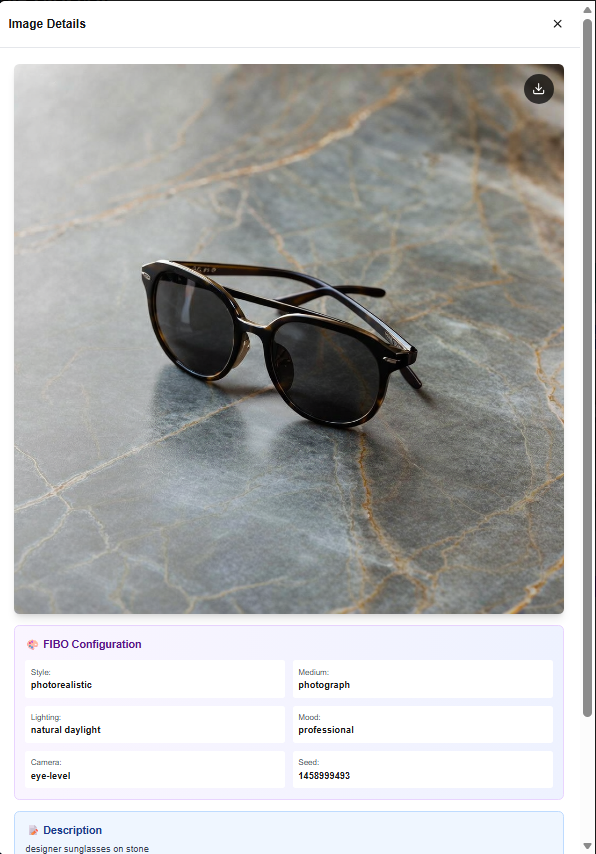
Image taken from history section by clicking modal opens showing parameters of the image
-
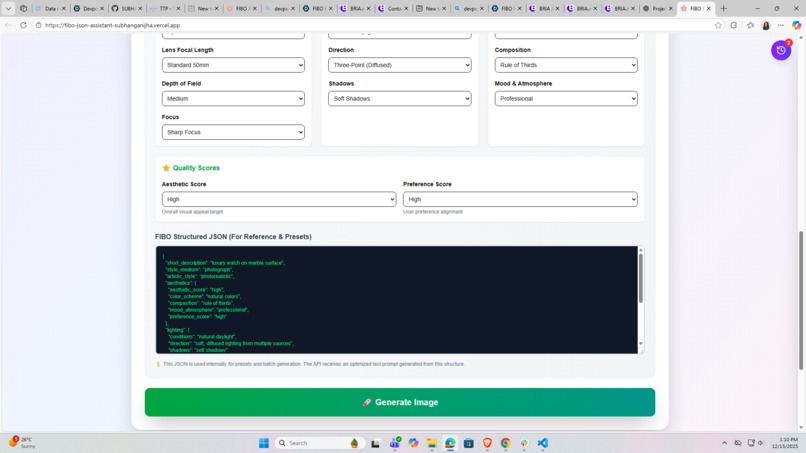
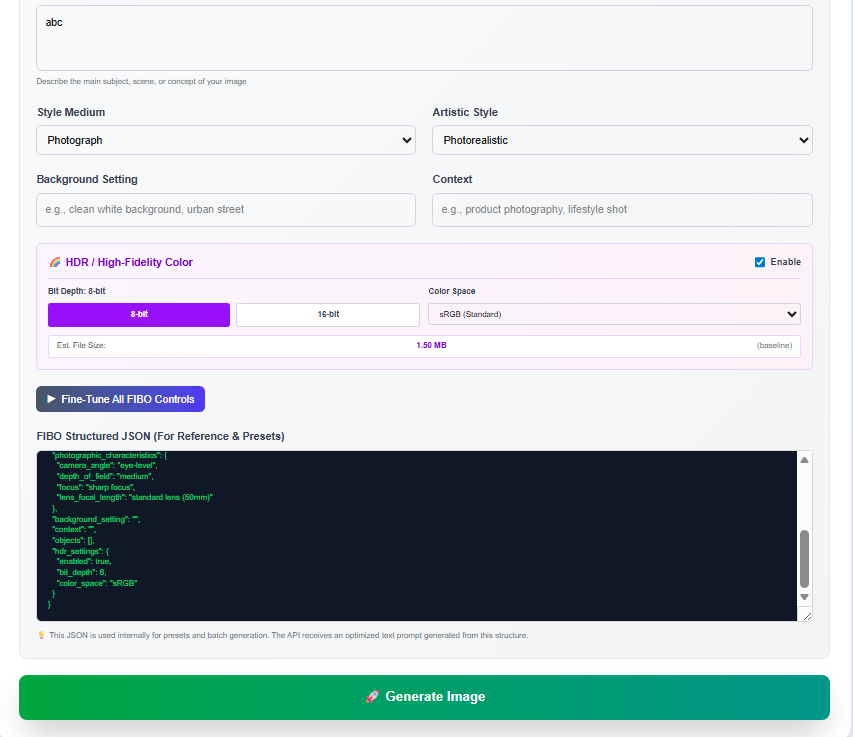
Json section made up from the user prompt and the selected parameters
-
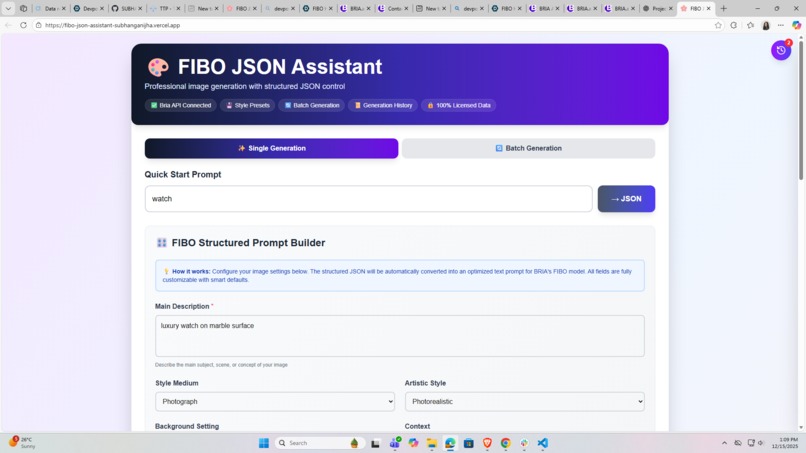
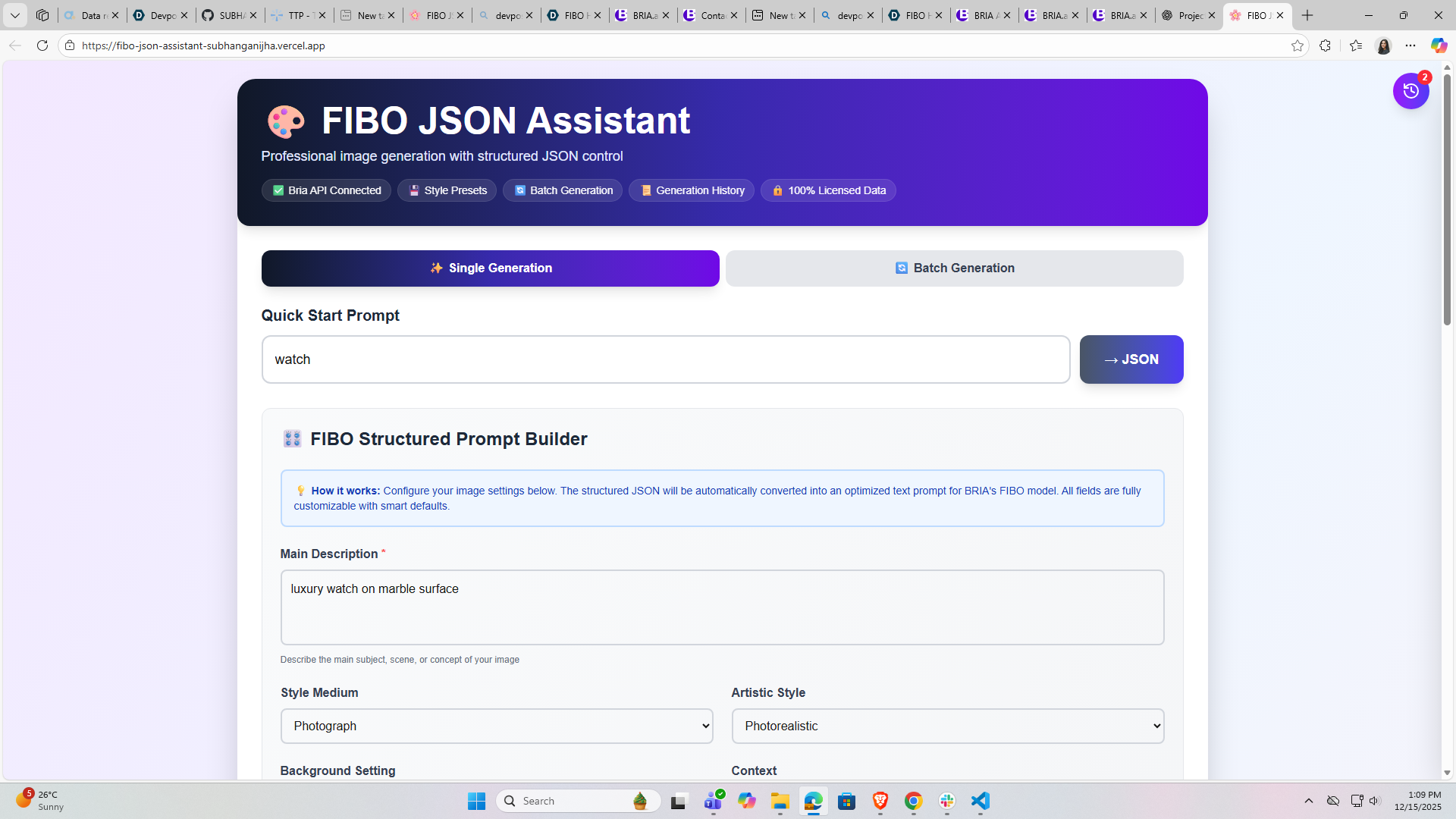
Prompt section with json generator button
-
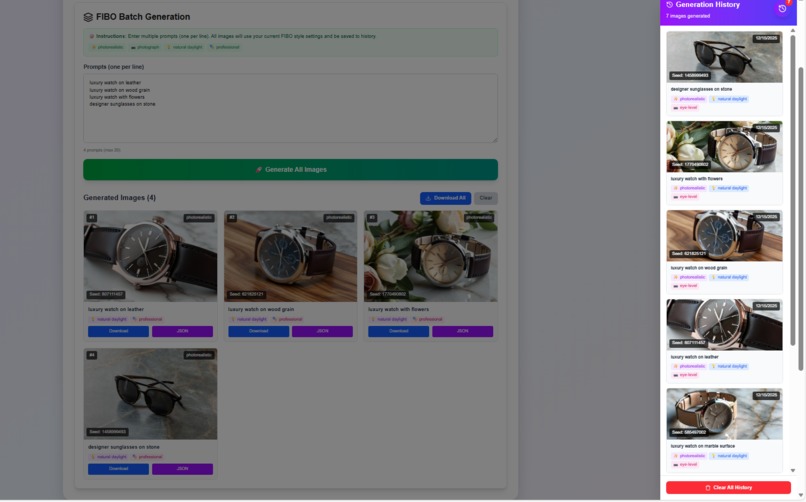
History of image generation


Inspiration
Creative teams and small businesses increasingly rely on AI for visual content, yet most tools still rely on fragile prompt engineering that breaks down at scale. Friends working in e-commerce and marketing repeatedly shared the same problem: generating one good image was easy, but producing dozens of consistent, on-brand images was slow, expensive, and unreliable.
FIBO’s structured JSON approach revealed a way forward. By treating image styles as reusable, programmable assets rather than one-off prompts, this project aims to make professional-quality visual production accessible, scalable, and predictable — even for teams without deep design or AI expertise.
What it does
FIBO JSON Assistant is a production-ready, JSON-native image generation workflow designed for consistent, brand-aligned visual creation.
Users define a complete “brand style” using FIBO’s structured parameters — including camera settings, lighting, composition, color palette, HDR mode, bit depth, and color space. These configurations can be saved as reusable style presets and applied across single or batch image generation.
The system supports batch generation of up to 20 images at once, ensuring identical styling across all outputs while varying only the subject. Every generation is stored with its exact JSON configuration and seed, enabling exact regeneration, controlled variations, or instant configuration reloads. Images and JSON files can be exported together for reproducible, automation-ready workflows.
How we built it
The project is built using Next.js 14 with TypeScript and a fully client-driven UI. The interface provides a visual editor for FIBO’s JSON schema, allowing users to modify professional parameters without writing raw JSON, while still retaining full access to structured configuration.
A conversion layer transforms structured FIBO JSON into optimized prompts for the FIBO text-to-image model. Image generation is handled asynchronously using polling with real-time progress updates, which is especially important for batch workflows.
While the demo video showcases live generation using the official BRIA FIBO API, the system is intentionally designed to be model-agnostic. The same JSON-first architecture supports local FIBO inference via Hugging Face checkpoints or ComfyUI workflows without changing the workflow logic or UI.
Challenges we ran into
One challenge was ensuring deterministic reproducibility through seed management. Early implementations used timestamp-based seeds, which exceeded the model’s supported numeric limits and caused generation failures. This was resolved by validating and constraining seed values within the supported range.
Another challenge involved managing UI state across asynchronous operations, particularly ensuring generation history updated correctly after each image completed. This required careful coordination between components using React refs to avoid lifecycle-related race conditions.
We also encountered practical API constraints during development, such as rate limits and subscription limits near the end of the hackathon. To ensure a reliable judging experience, we captured a full demo video showing live generation and preserved example outputs and JSON configurations in the repository. The architecture itself remains compatible with both API-based and local FIBO execution.
Accomplishments that we're proud of
-Built a fully JSON-native workflow that demonstrates why structured generation is superior to prompt-only approaches
-Implemented reusable style presets for scalable brand consistency
-Achieved deterministic, seed-based reproducibility
-Added HDR and 16-bit color support for professional-grade outputs
Designed a fault-tolerant batch generation system with real-time progress feedback
What we learned
This project reinforced how powerful structured data is for AI workflows. JSON-based generation makes outputs reproducible, debuggable, and scalable in ways free-form prompts cannot.
We also learned the importance of designing UX around long-running creative processes, where progress visibility and partial success matter. From a domain perspective, understanding photography fundamentals — lighting, camera angles, depth of field, and color science — had a measurable impact on generation quality.
Most importantly, we learned that treating visual styles as programmable templates unlocks entirely new production workflows for creative teams.
What's next for Fibo-json-Assistant
Short-term Enhancements (Next 2-4 weeks)
Cloud Storage Integration
- AWS S3 for professional image hosting
- PostgreSQL for preset sharing across teams
- User accounts for multi-device sync
Advanced Batch Operations
- CSV import for 100+ prompts at once
- Conditional logic: "If product = 'watch' then use close-up angle"
- Scheduled batch generation
API Webhook Support
- Replace polling with real-time callbacks
- 40% faster for large batch jobs
- Better resource utilization
Medium-term Features (1-3 months)
Preset Marketplace
- Share style presets with the community
- "Download 'E-commerce Hero' preset" → instant brand consistency
- Monetization for premium presets
- Rating and review system
A/B Testing Dashboard
- Generate style variations automatically
- Track which styles perform best in real campaigns
- ML-powered style recommendations based on industry
Team Collaboration Features
- Shared preset libraries
- Role-based access control
- Approval workflows for generated images
- Usage analytics and reporting
Long-term Vision (3-6 months)
Full HDR Rendering Pipeline
- 32-bit float EXR export for cinema workflows
- ACEScg color space support
- LUT-based brand color calibration
- Advanced tone-mapping algorithms (Reinhard, Hable, Filmic)
AI-Powered Style Suggestions
- Analyze uploaded reference images
- Automatically suggest optimal FIBO configurations
- "Match this style" feature using computer vision
Enterprise Features
- API access for programmatic generation
- Webhooks for workflow integration
- Custom branding and white-labeling
- SSO and enterprise security compliance
Mobile App
- iOS and Android native applications
- On-the-go preset management
- Push notifications for batch completion
- Offline mode for viewing history
🔎 Judge clarity note
The demo video shows live image generation using the Bria FIBO API. Due to API usage limits near submission time, the deployed demo may temporarily disable live generation. Example images and their exact JSON configurations are included in the repository to demonstrate reproducibility and workflow completeness.
Built With
- api
- bria
- fibo
- nextjs
- react
- tailwind
- typescript

Log in or sign up for Devpost to join the conversation.