Inspiration
Controlling AI image generation has always been unpredictable. FIBO introduces structured JSON control, but creators still lack a clear way to see how each parameter actually affects the image. We built this tool to make FIBO’s controllability visible, predictable, and easy to understand for real production workflows.
What it does
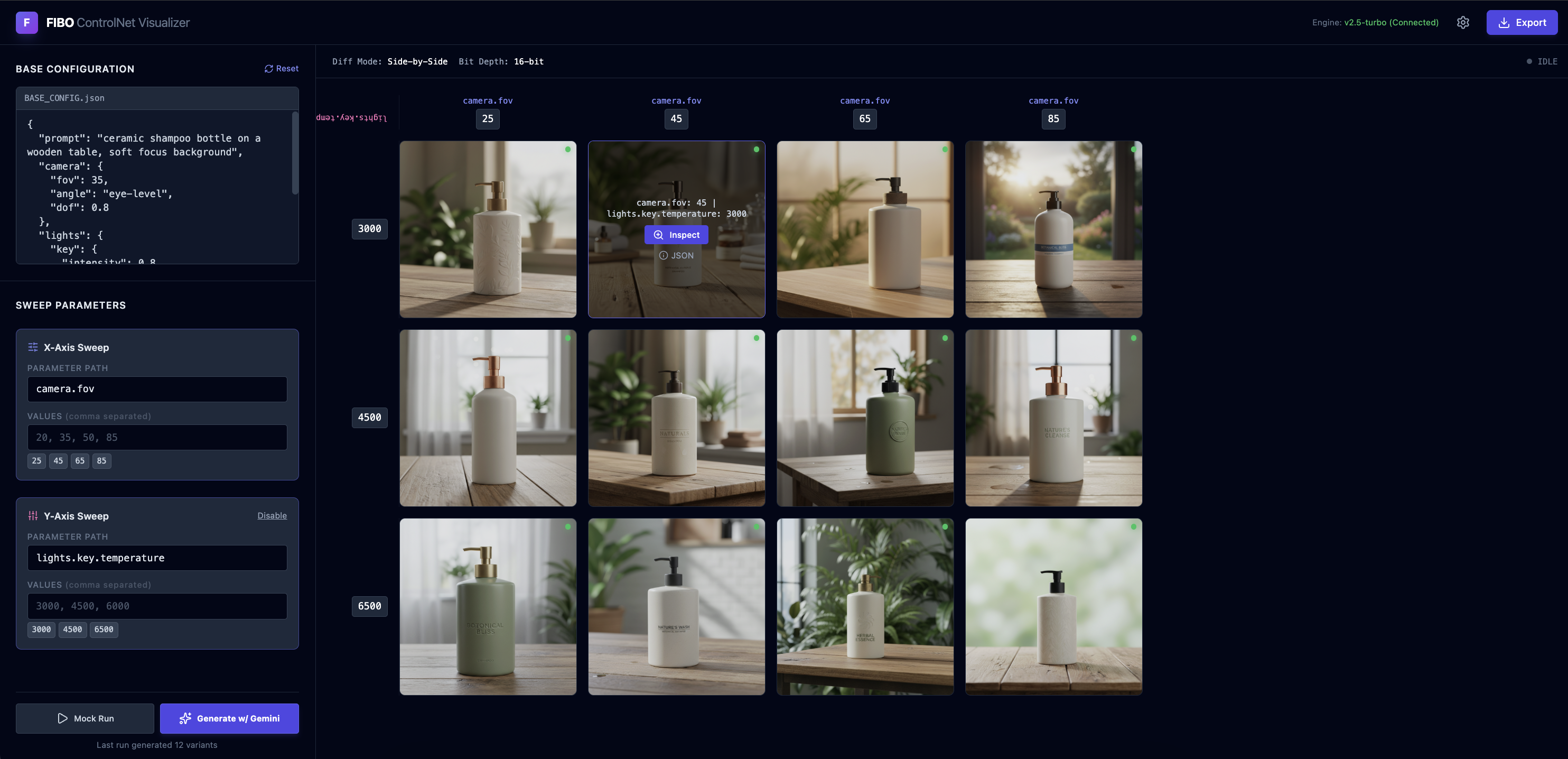
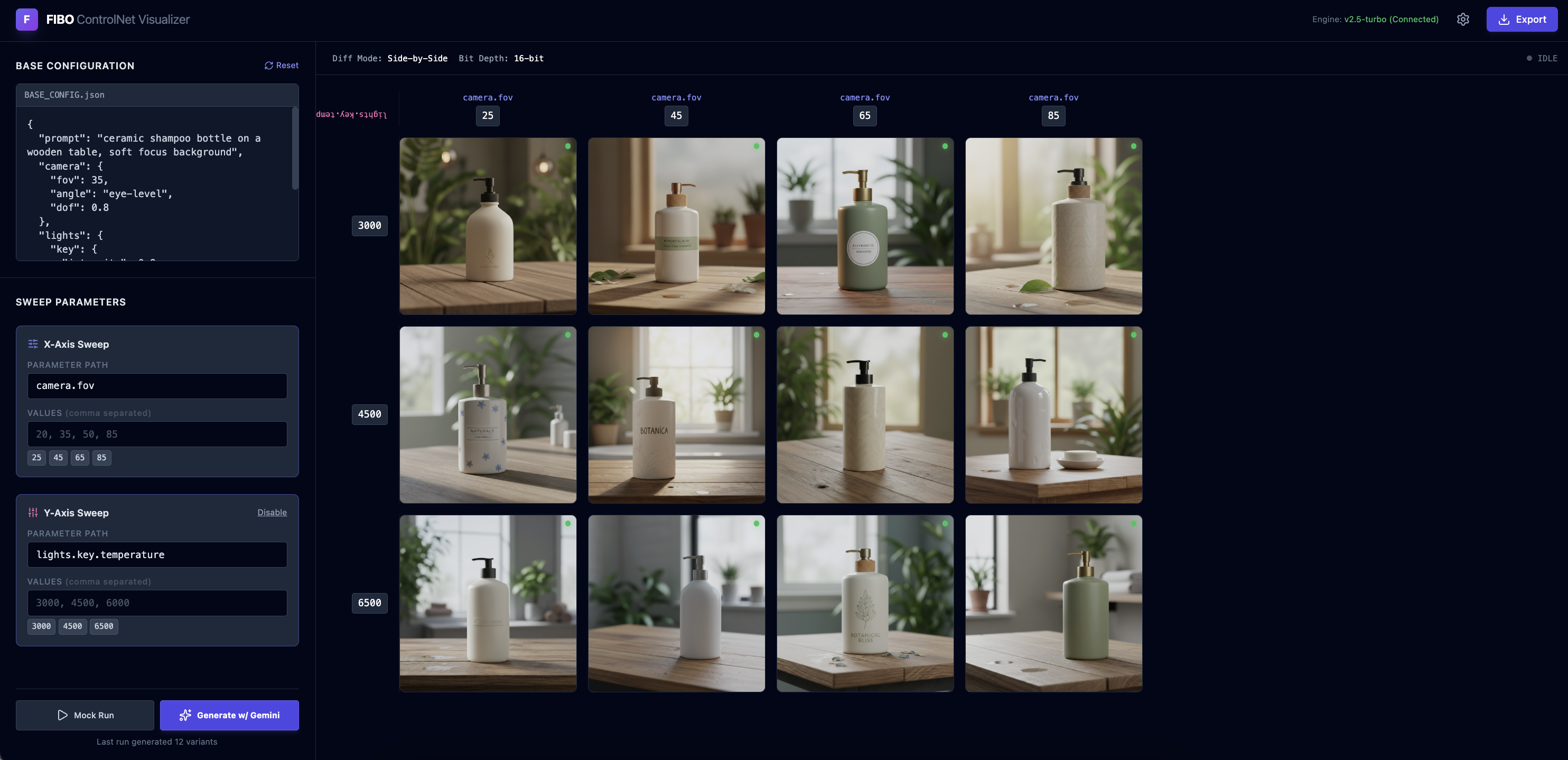
FIBO ControlNet Visualizer lets users vary camera, lighting, palette, and composition parameters through structured sweeps and instantly view the resulting grid of outputs. It shows JSON deltas, enables A/B comparison, and highlights how changes in professional parameters influence the final render, proving FIBO’s deterministic and disentangled behavior.
How we built it
We designed a Next.js web interface for parameter selection and JSON editing, backed by a Redis and BullMQ queue system. A Node/Python worker calls the FIBO model, stores renders, and returns results through a caching layer. The app generates sweep matrices, diffs JSON parameters, and displays results in real time.
Challenges we ran into
We had to design a clean UX for complex multi-parameter sweeps, ensure JSON validity against the FIBO schema, optimize render batching to avoid high GPU load, and build deterministic caching so identical JSON inputs always return identical outputs. Balancing simplicity with professional-grade controls was also challenging.
Accomplishments that we're proud of
We created a visual playground that demonstrates FIBO’s core promise: controllable, predictable image generation. The sweep grid, JSON diff viewer, deterministic caching, and preview pipeline make it useful for both creative professionals and technical teams. It is simple to use yet powerful enough for real production exploration.
What we learned
Structured generation unlocks a completely different creative workflow compared to text prompts. FIBO’s JSON-native approach makes shot-to-shot consistency and targeted parameter control possible. We also learned how important UX is when exposing professional controls to non-technical users.
What's next for FIBO ControlNet Visualizer
We plan to add HDR/16-bit exports, multi-axis sweeps, advanced lighting rigs, metadata heatmaps, a ComfyUI node, brand look-pack saving, and collaborative features for teams. The long-term goal is to turn this into a full visual analysis and controllability lab for all FIBO-based workflows.
Built with
Next.js, React, TypeScript, Node.js, BullMQ, Redis, Docker, MinIO/S3-compatible storage, Python/Node FIBO integration, Vercel/Cloud Run deployment, and FIBO’s JSON-native generation API.
Built With
- bullmq
- docker
- fibo?s
- minio/s3-compatible-storage
- next.js
- node.js
- python/node-fibo-integration
- react
- redis
- typescript
- vercel/cloud-run-deployment


Log in or sign up for Devpost to join the conversation.