-
-
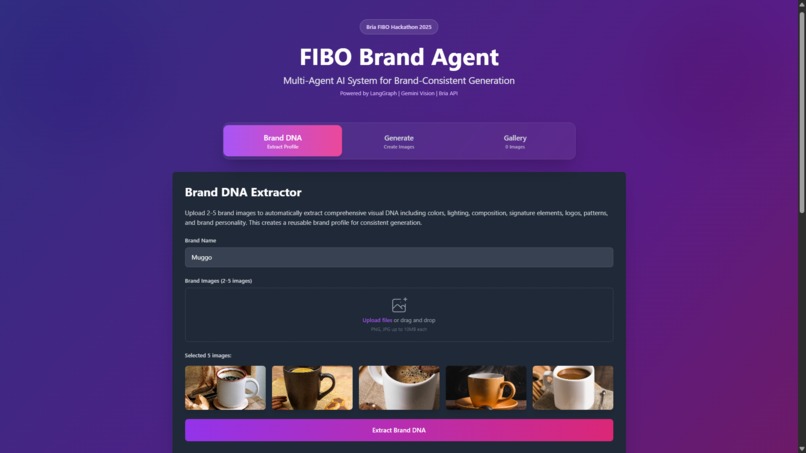
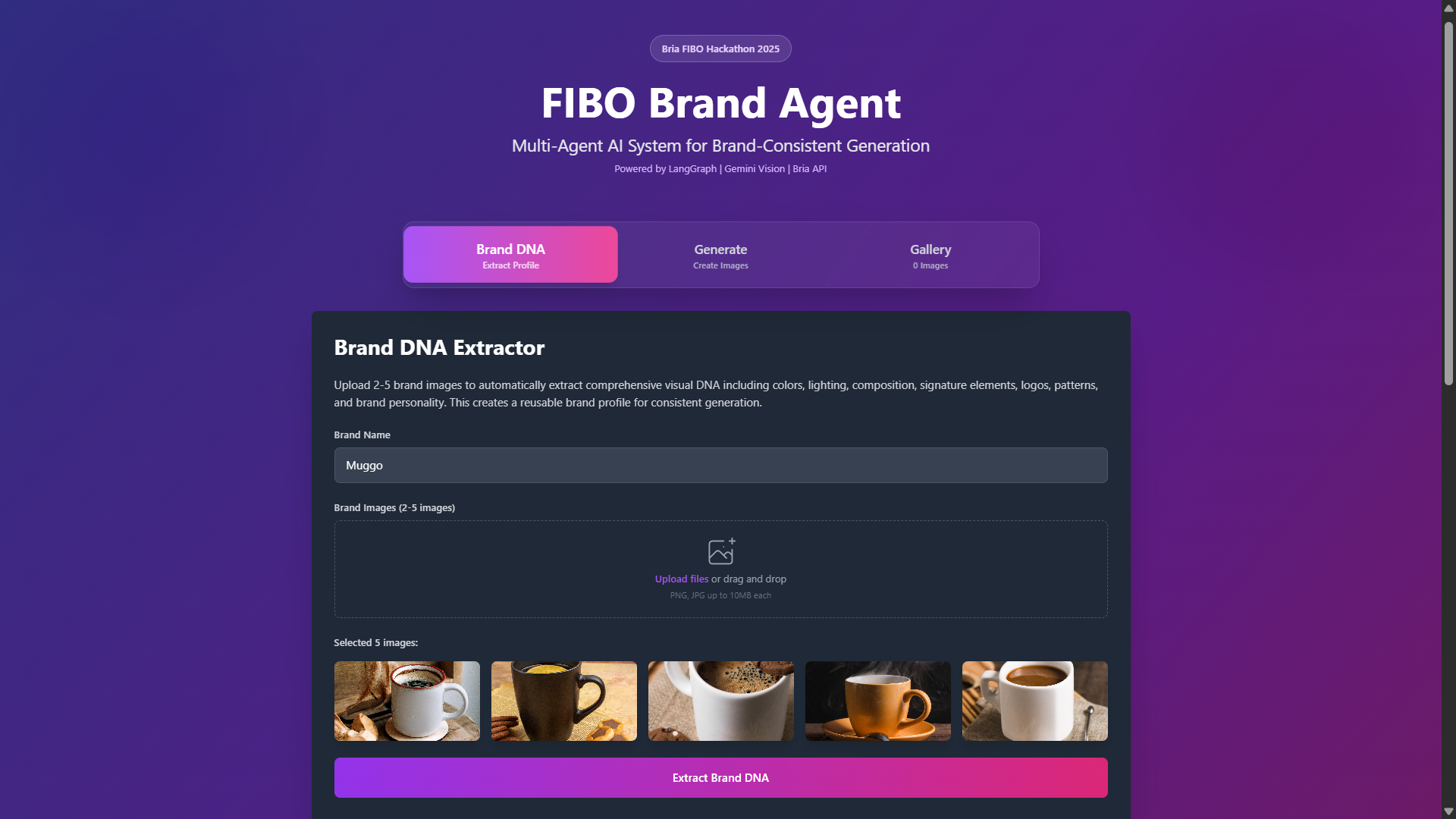
1. DNA Extraction:
-
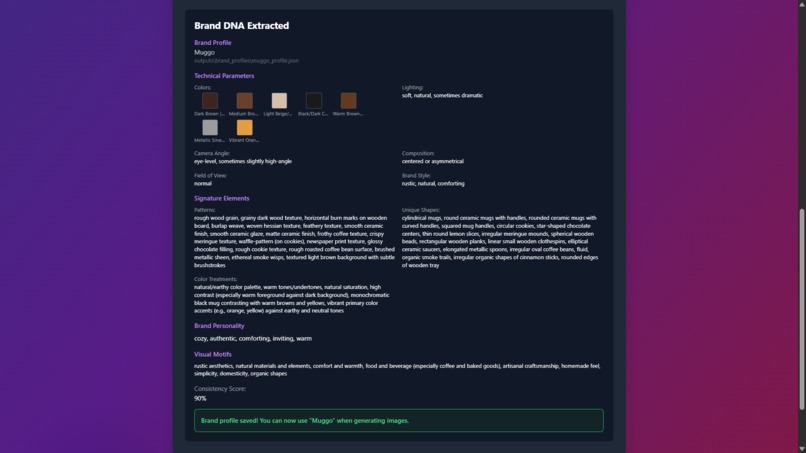
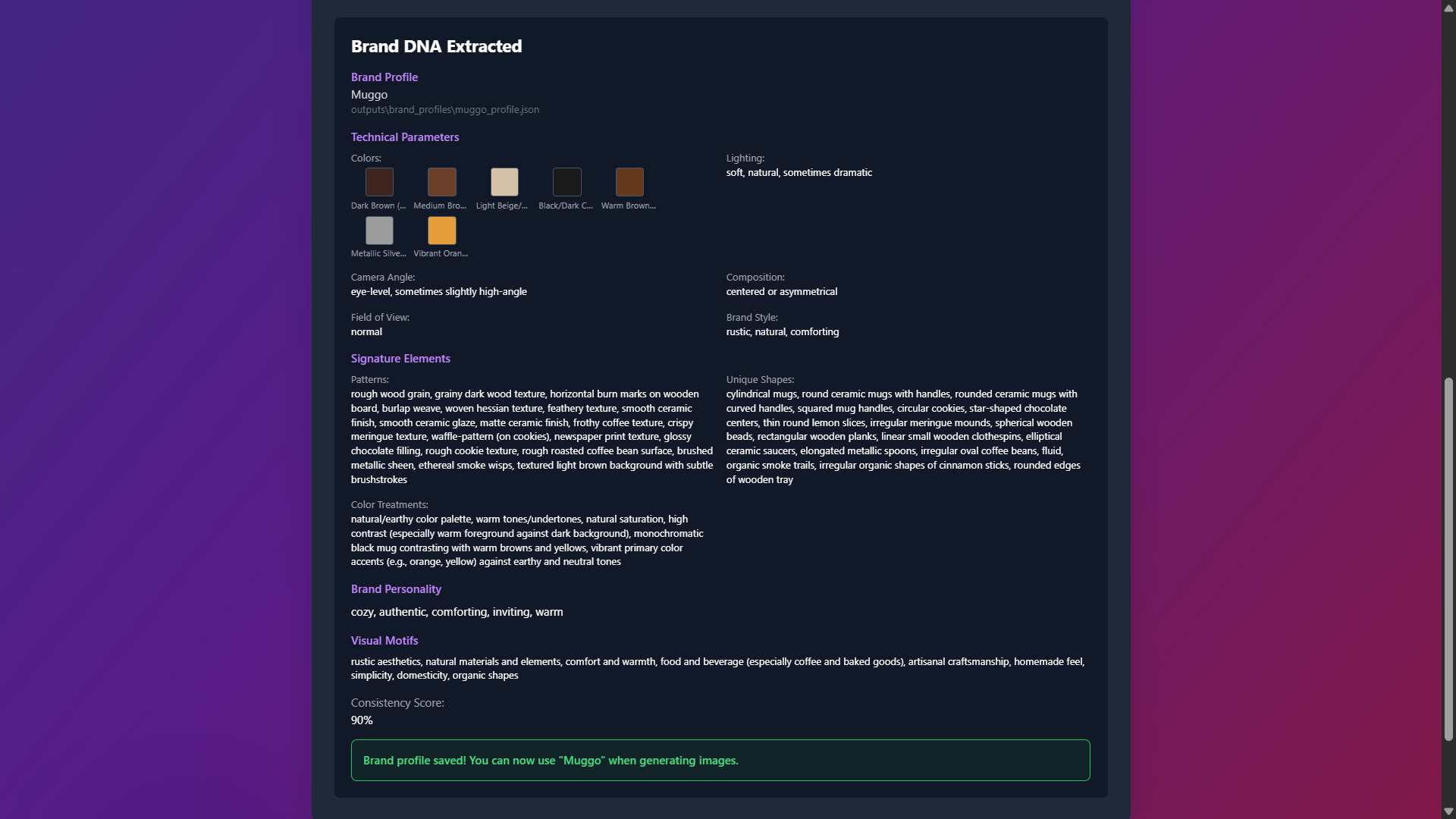
2. Extraction Result:
-
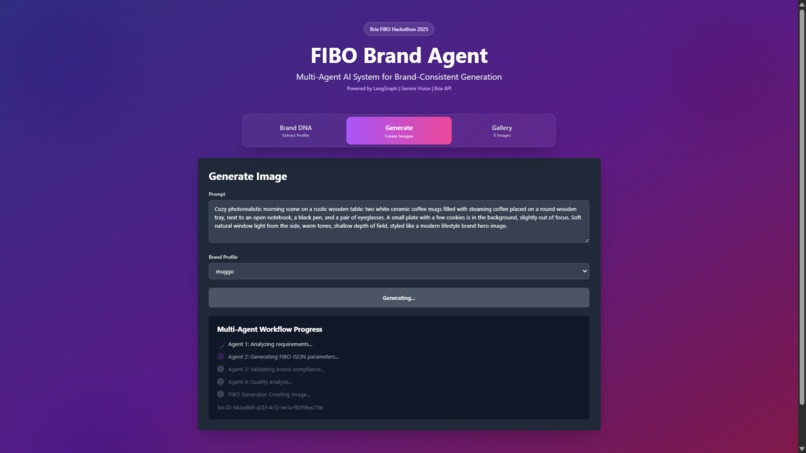
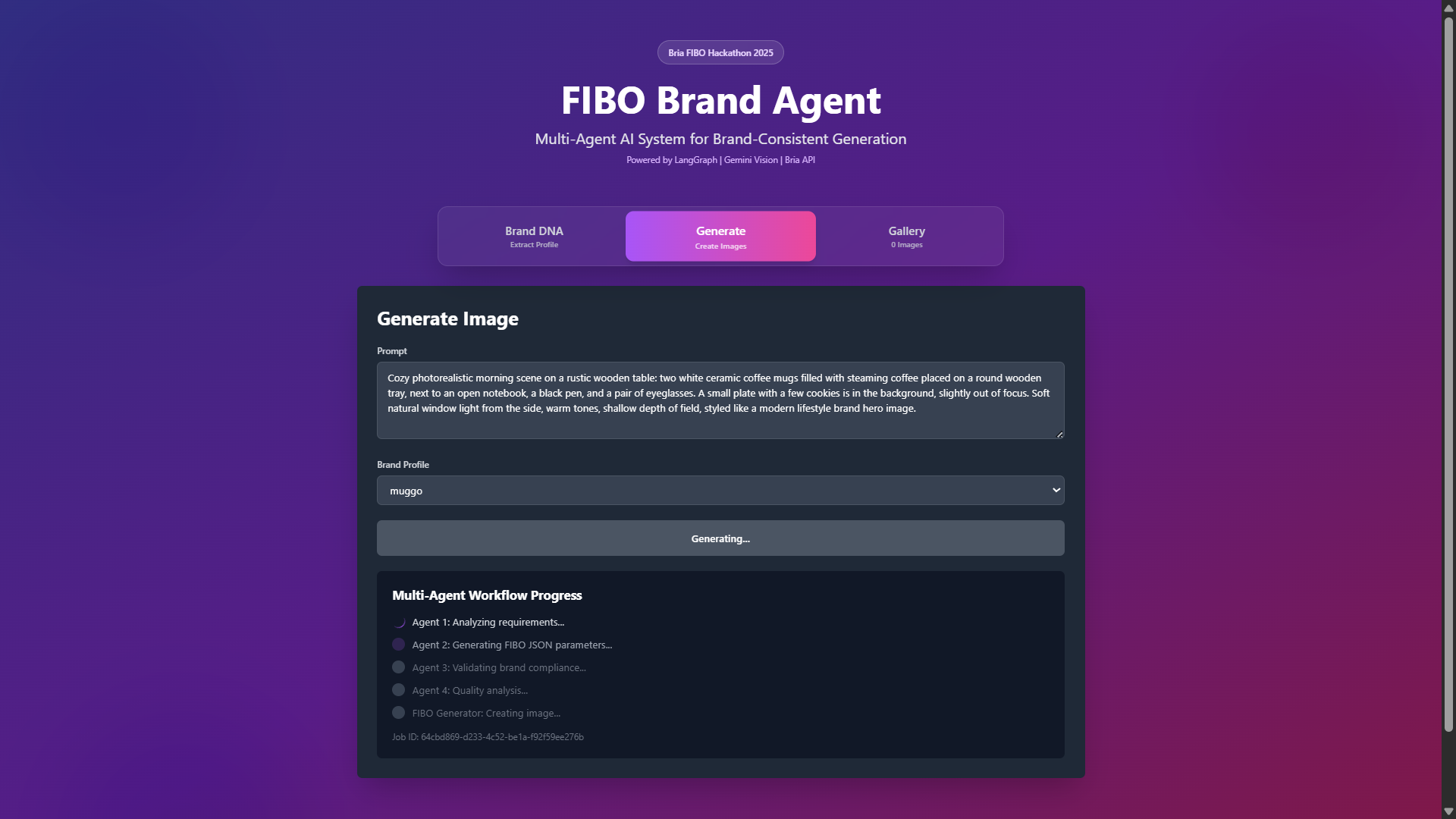
3. Image Generation:
-
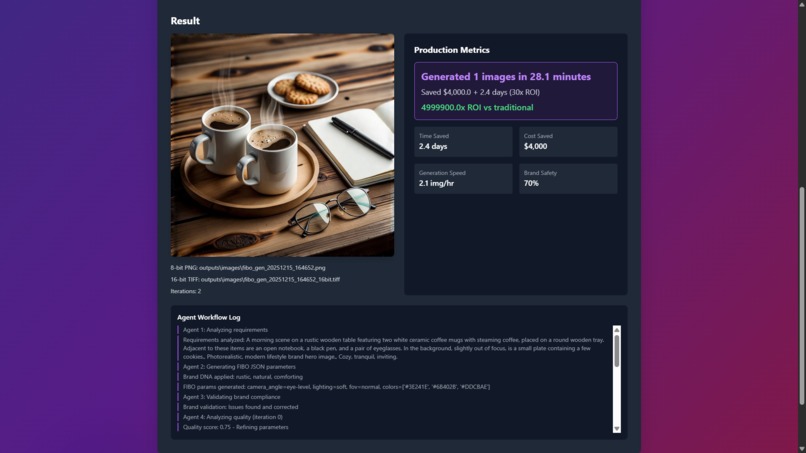
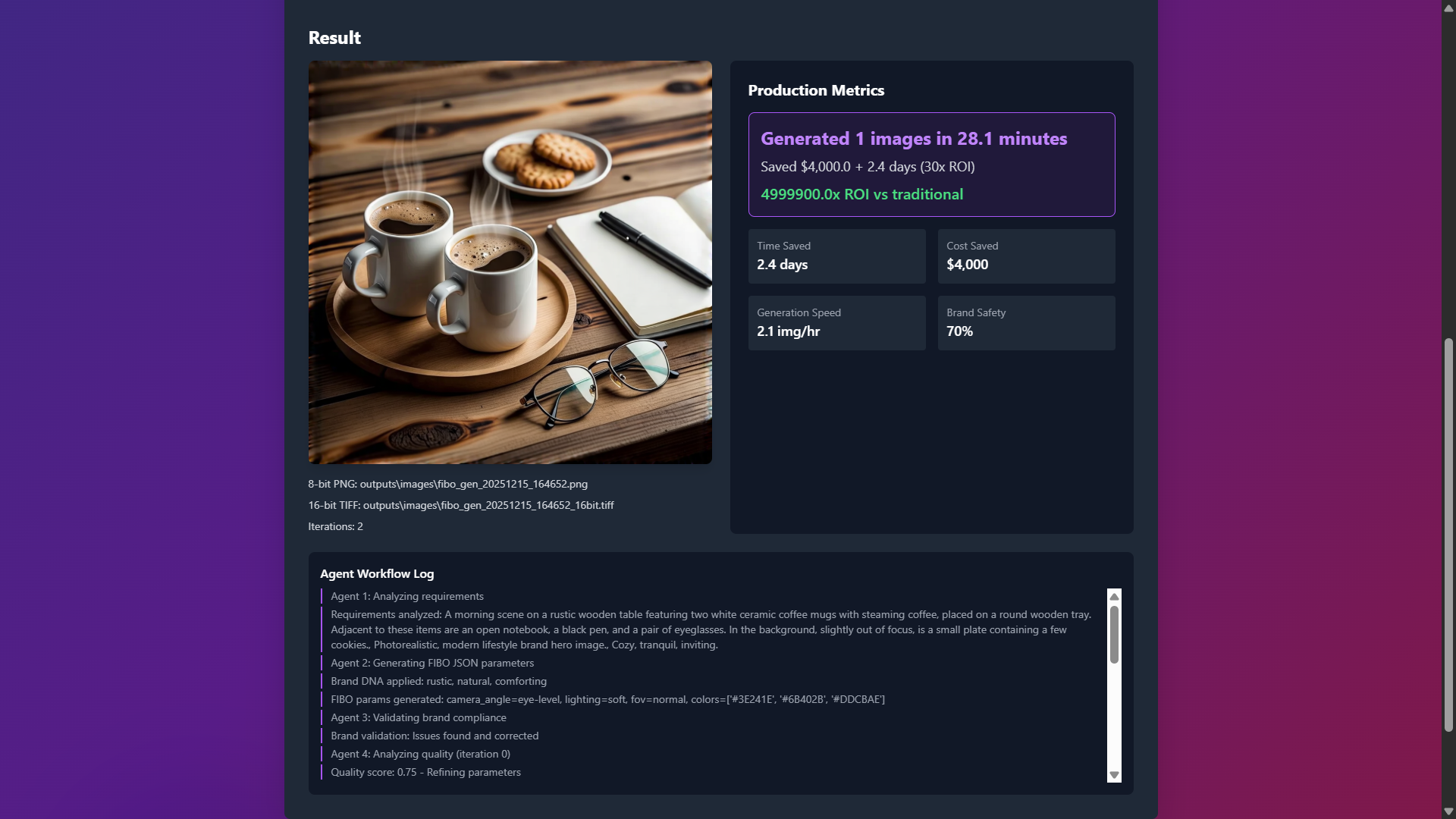
4. Generation Result considering execution on local machine with 4GB VRAM GPU:
Inspiration
Enterprise brands struggle with a fundamental tension in AI-generated imagery: they need creative velocity but can't sacrifice visual consistency. Traditional text-to-image models force teams into endless prompt engineering, where a single word change produces wildly different outputs. We saw Bria FIBO's JSON-native architecture as the missing foundation for deterministic brand control—where creative parameters could be extracted once and reused infinitely, transforming unpredictable generation into a scalable production pipeline.
What it does
Fibo-brand-agent-orchestrator converts 2–5 brand reference images into reusable "Brand DNA" profiles that generate visually consistent assets on demand. Users upload example images (like product photography or campaign visuals), and the system automatically extracts color palettes, lighting style, camera angles, composition rules, field of view, visual motifs, and brand personality descriptors. These parameters compile into JSON configurations that drive Bria FIBO's 100+ controllable attributes. The React interface displays live previews, color swatches, and human-readable technical parameters, while the FastAPI backend orchestrates vision analysis, JSON prompt construction, brand validation, and quality refinement agents before generating standard web assets or 16-bit print-ready outputs.
How we built it
The frontend uses React to create an intuitive upload-and-preview experience with visual color palettes rendered from extracted hex codes. The FastAPI backend coordinates four specialized agents: a vision agent analyzes uploaded images to identify visual patterns, a prompt-construction agent translates those insights into FIBO-compatible JSON structures, a brand-consistency validator ensures outputs match the extracted DNA, and a quality-refinement agent optimizes parameters before generation. We leverage Bria FIBO's deterministic model for actual image synthesis, using its JSON-native API to map Brand DNA profiles directly to generation parameters. The pipeline supports both rapid web outputs and high-fidelity 16-bit images for professional print workflows.
Challenges we ran into
Translating subjective visual concepts like "brand personality" into machine-readable JSON parameters required extensive experimentation with FIBO's attribute space. We initially struggled to balance automation with user control—too much automation hid useful parameters, while exposing everything overwhelmed non-technical users. Building reliable brand consistency validation proved difficult when references showed natural variation (lighting changes, seasonal campaigns). We also had to architect efficient image analysis that worked with as few as 2 reference images while remaining robust enough to handle 5+ diverse examples without diluting the extracted Brand DNA.
Accomplishments that we're proud of
We successfully eliminated trial-and-error prompting for brand work—users now achieve consistent results on first generation rather than iteration 20. The automatic color palette extraction with visual swatch rendering makes technical parameters accessible to brand managers who've never written JSON. Our multi-agent validation architecture catches brand drift before it reaches end users, maintaining consistency across hundreds of generated assets. The 16-bit output option positions the system for professional creative workflows, not just social media content. Most importantly, we proved that JSON-native control can scale enterprise visual generation while respecting both brand guidelines and content licensing requirements through FIBO's commercially trained foundation.
What we learned
Deterministic generation fundamentally changes creative workflows—when outputs become predictable, brands shift from "generate and pray" to systematic asset production. We discovered that extracting Brand DNA from minimal examples requires understanding implicit rules (composition conventions, color relationships) rather than just explicit features. The multi-agent architecture taught us that specialized validation agents catch edge cases better than monolithic systems. We also learned that production-ready AI tools need multiple output formats (web-optimized, print-ready, various bit depths) from day one—enterprises won't adopt systems that only serve one distribution channel.
What's next for Fibo-brand-agent-orchestrator
We're expanding Brand DNA profiles to support multi-modal inputs (brand guidelines PDFs, Pantone specifications, competitive analysis). The next version will include A/B testing capabilities where marketers generate controlled variations within brand parameters to optimize campaign performance. We plan to add collaborative features for teams to share and version Brand DNA profiles across departments. Integration with digital asset management (DAM) systems will enable automatic tagging and organization of generated assets. Finally, we're building analytics to track which Brand DNA parameters drive engagement, creating a feedback loop where successful campaigns inform future generation strategies—turning FIBO from a creative tool into a learning brand intelligence platform.

Log in or sign up for Devpost to join the conversation.