-
-
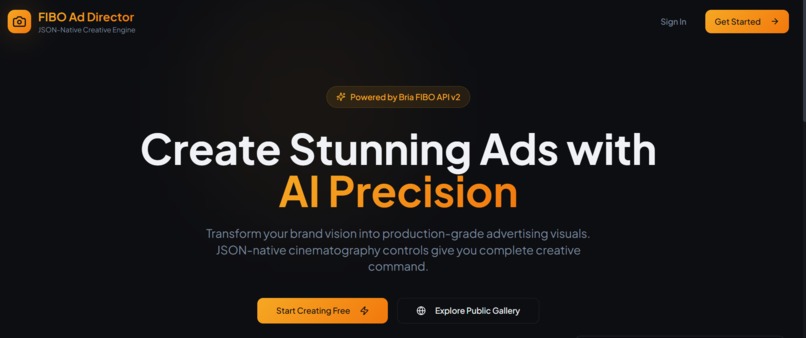
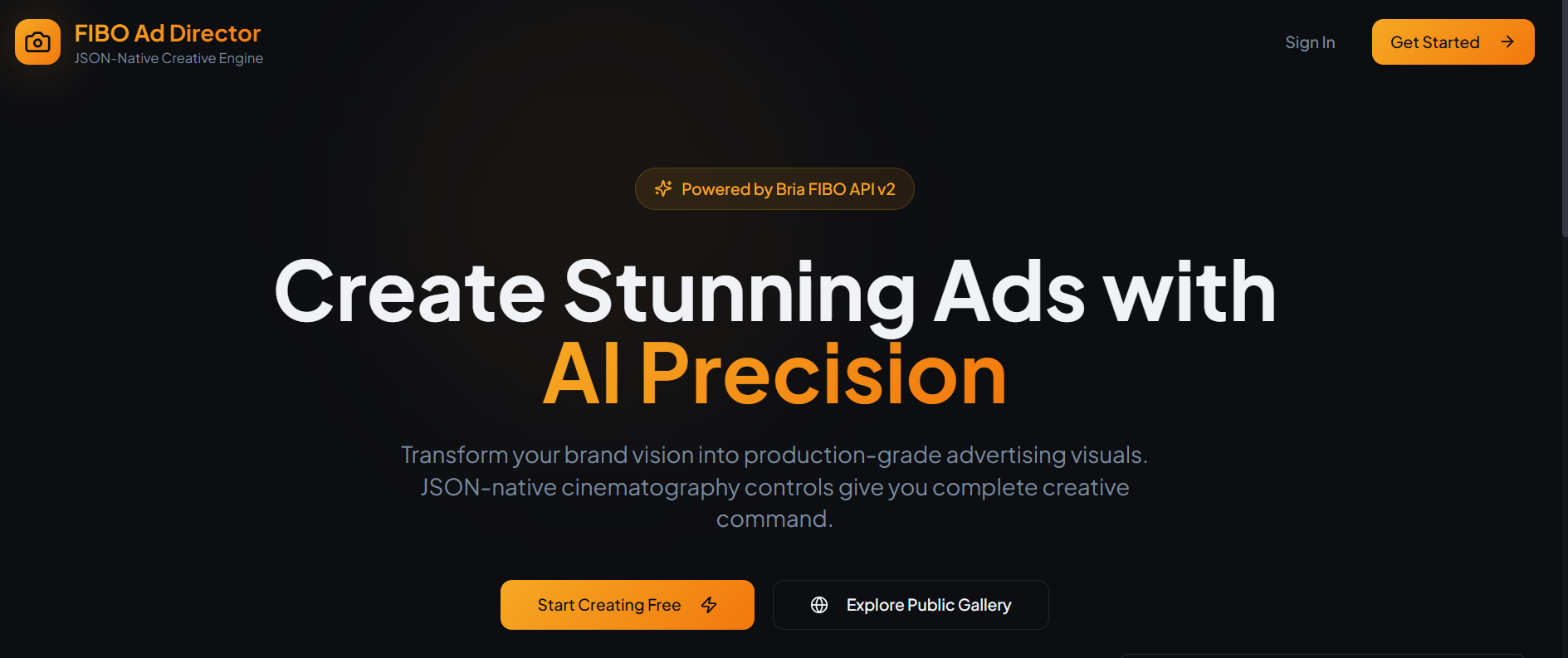
Landing page
-
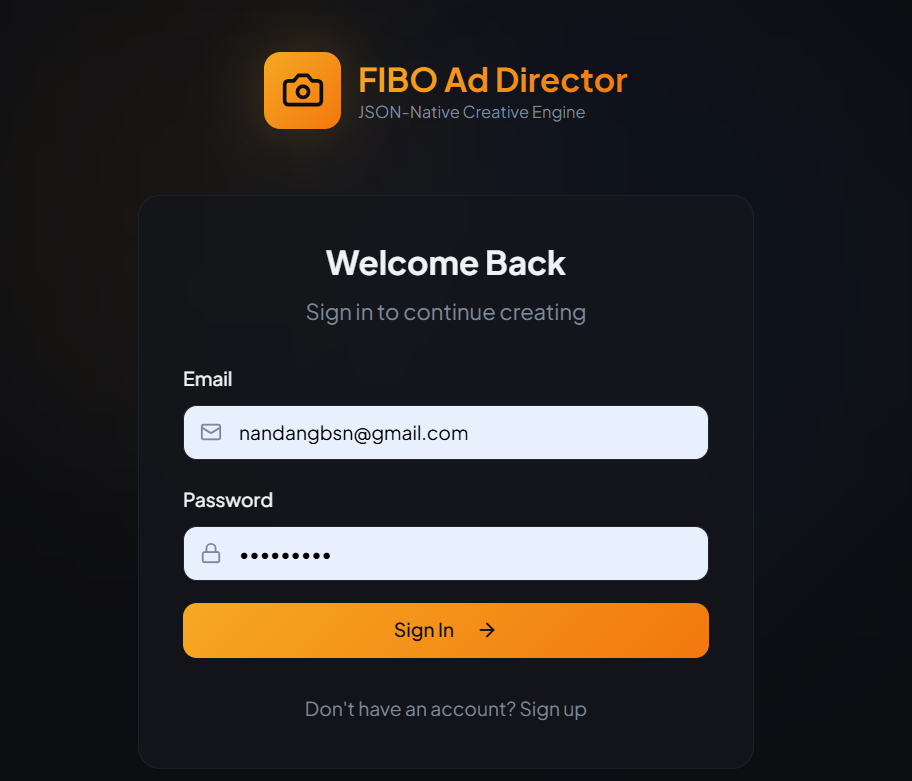
Sign-in page
-
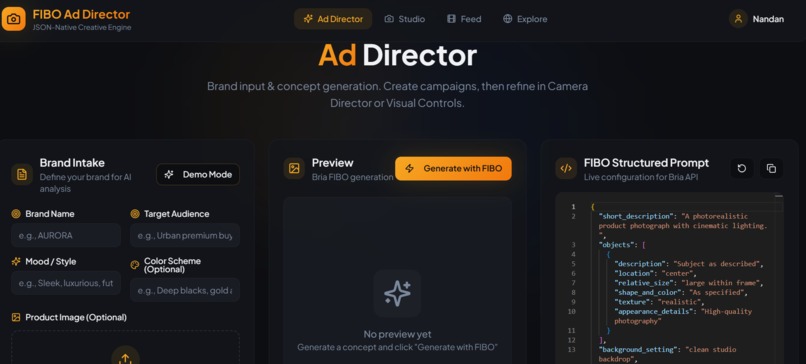
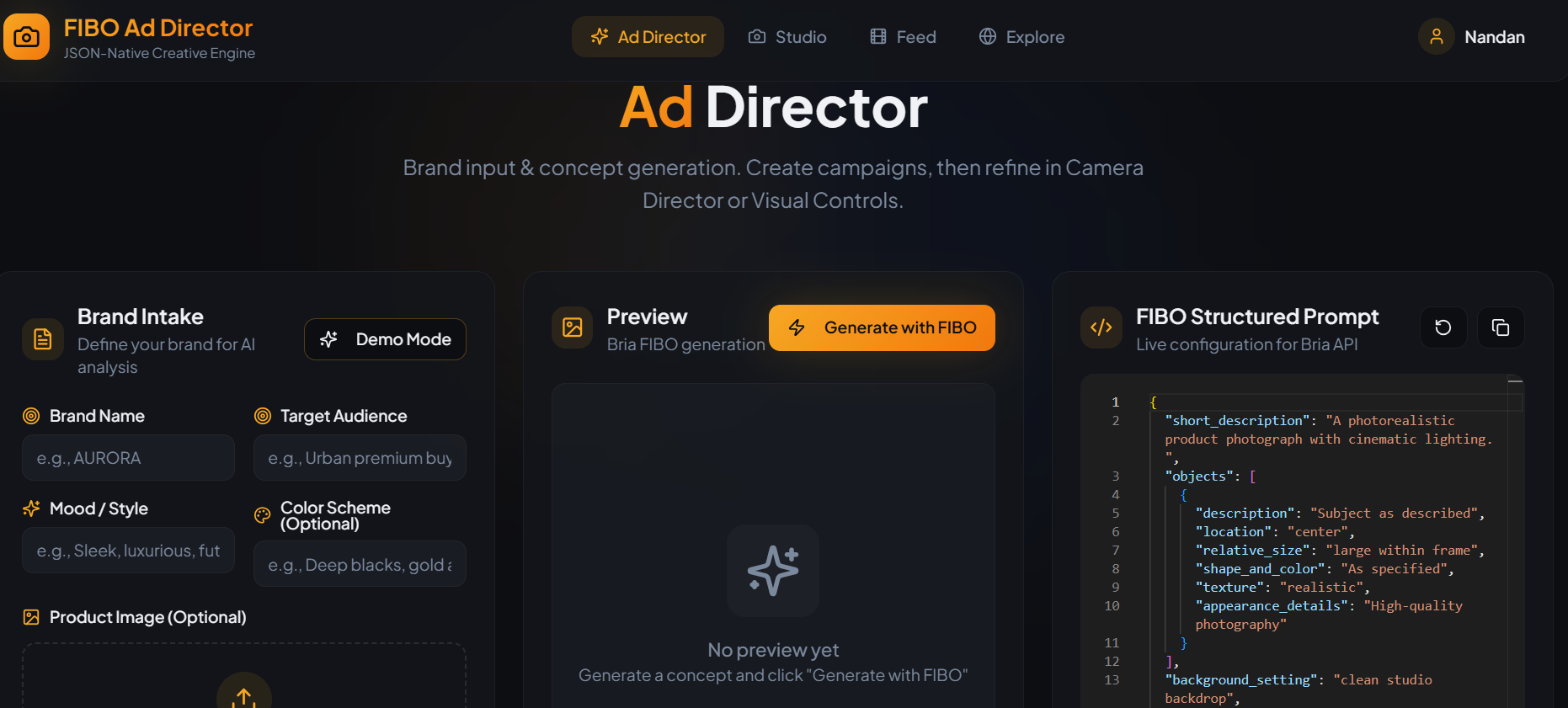
Ad director- Concepts powered by gpt-o4-mini, Has product mode featuring a brand's own product
-
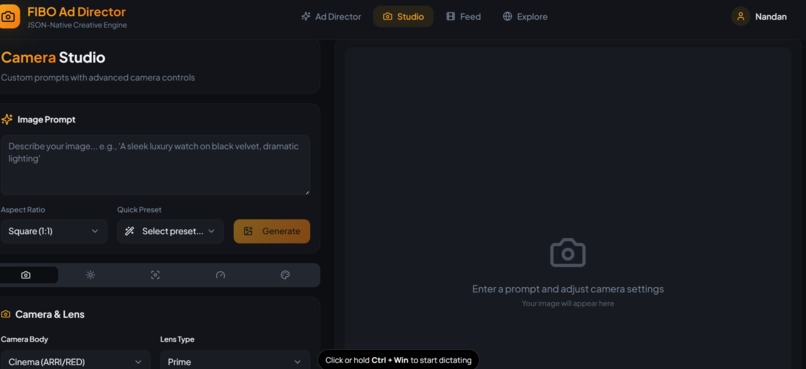
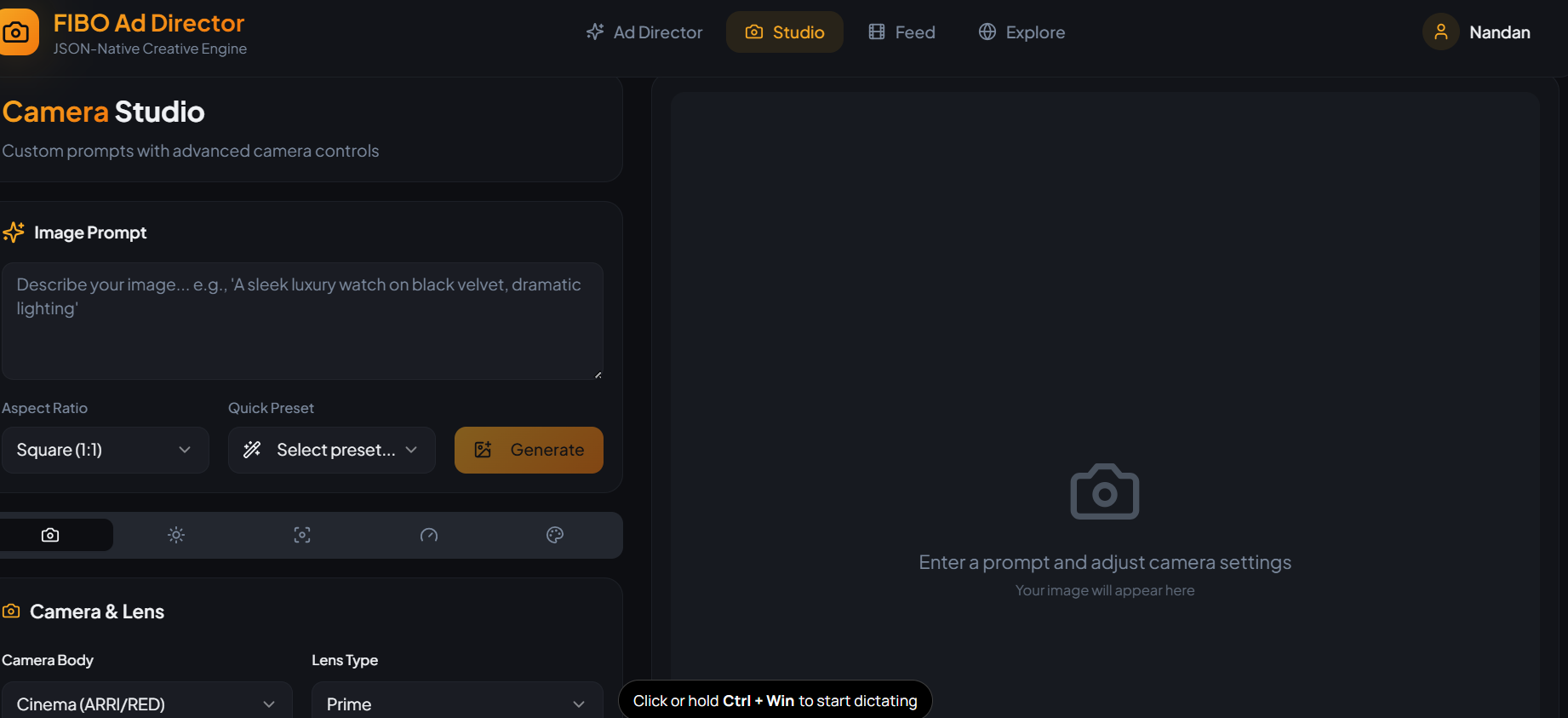
Camera studio- You can customize through 5 segments (includes color wheel, HDR and 16 bit)
-
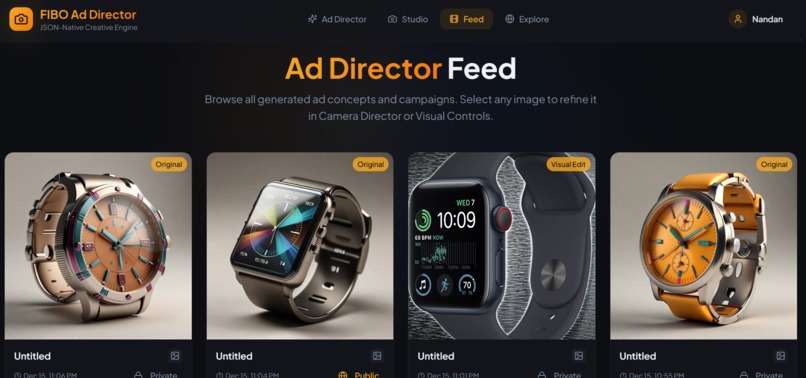
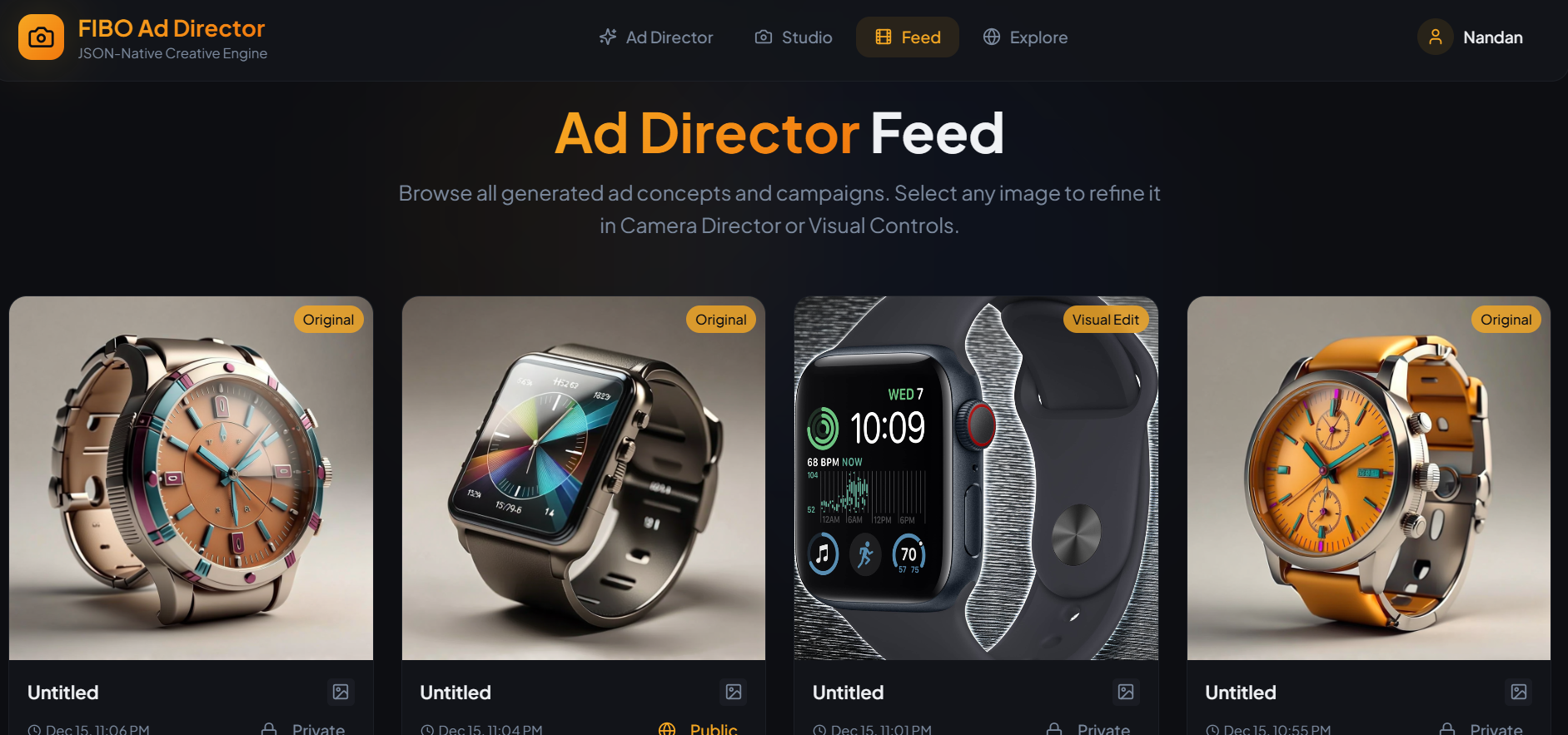
Personal feed that autosaves all your media- You can make videos, posts or edit using studio out of the generated content
-
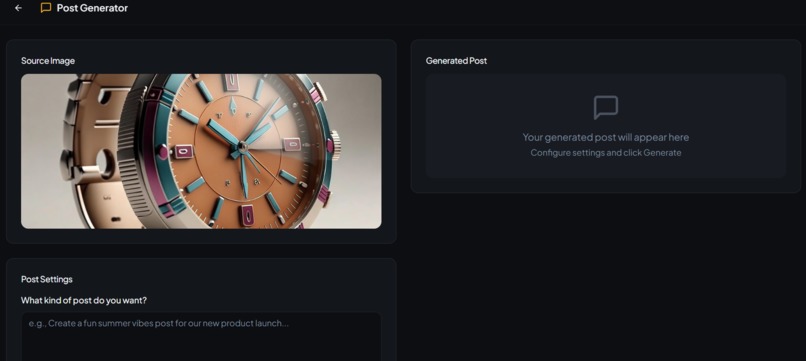
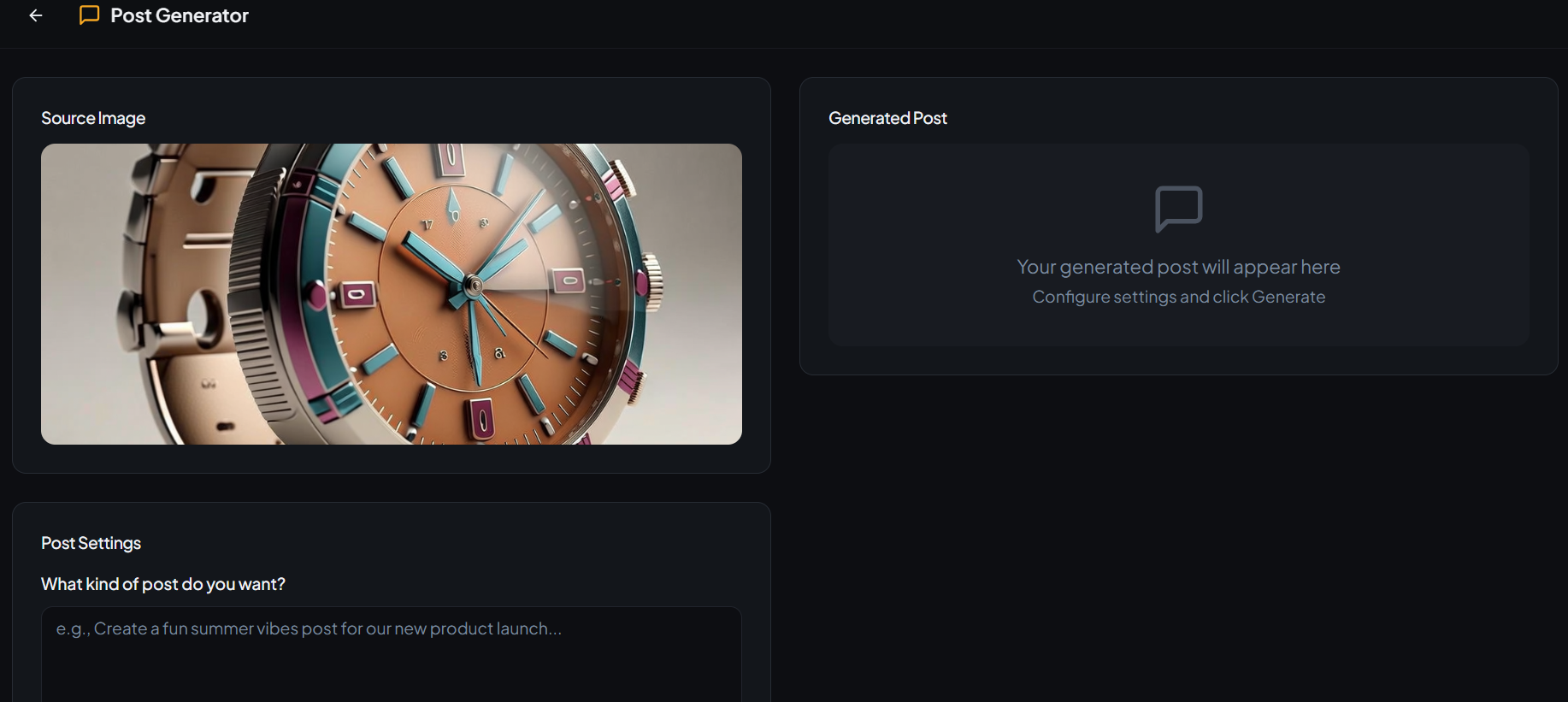
Post making page that provides posts, alternative posts and tips
-
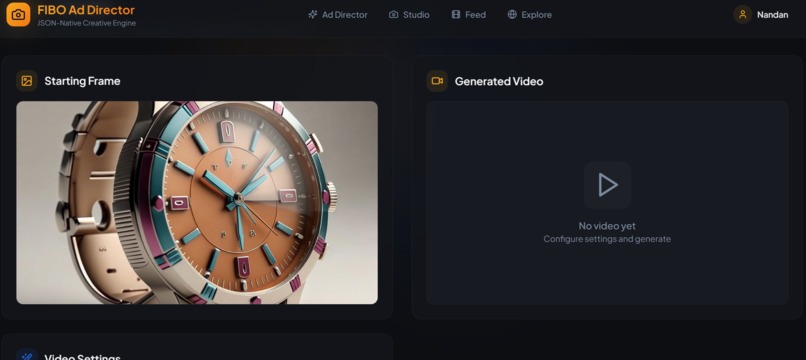
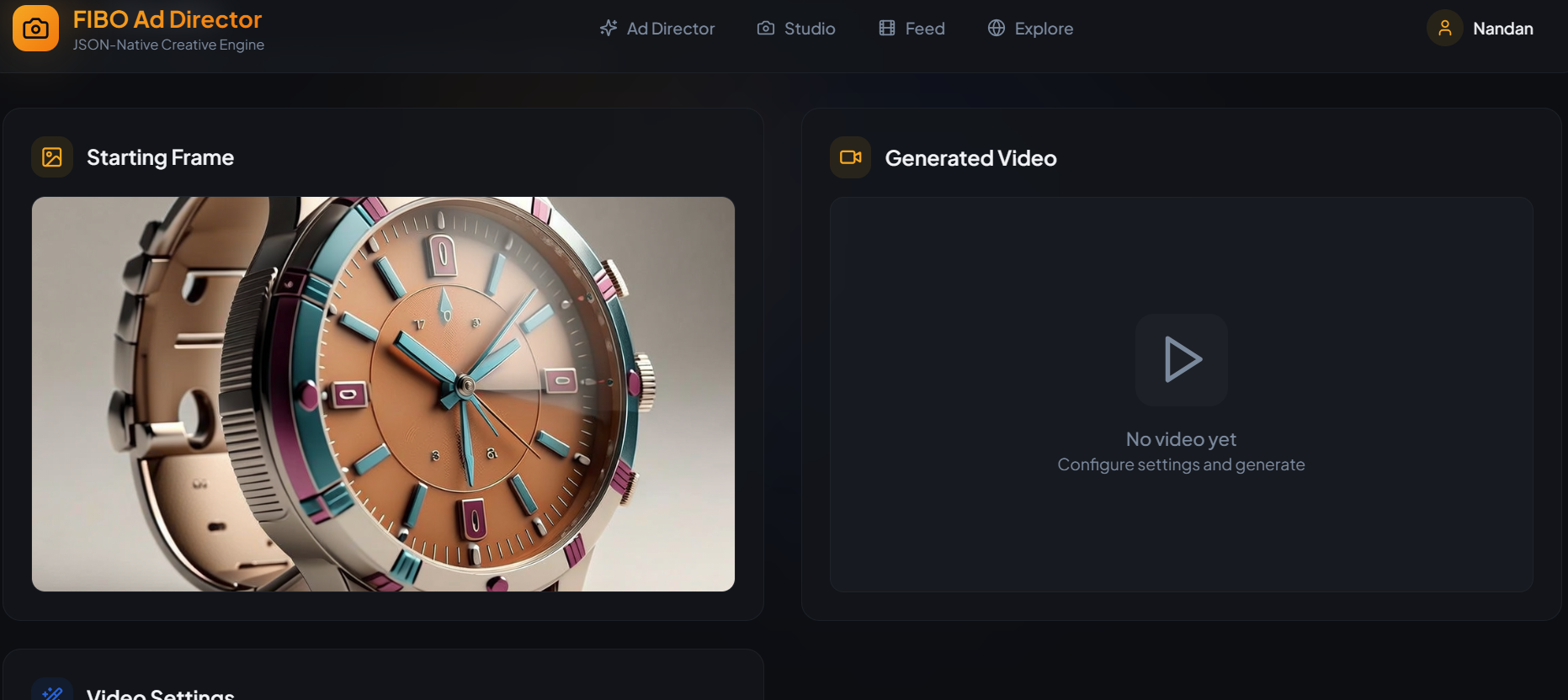
Video maker powered by Veo 3.1. Videos can be made out of existing images made by FIBO
-
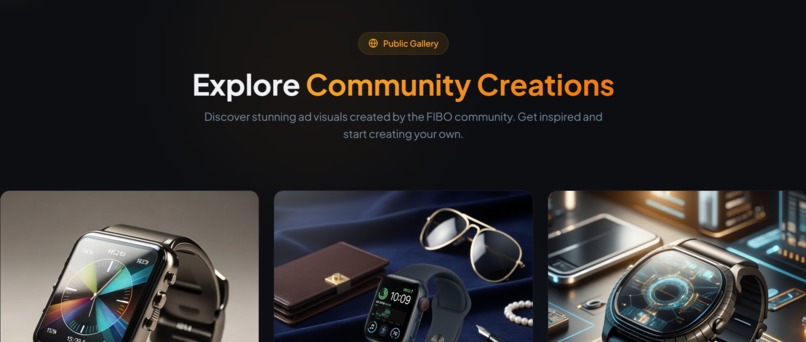
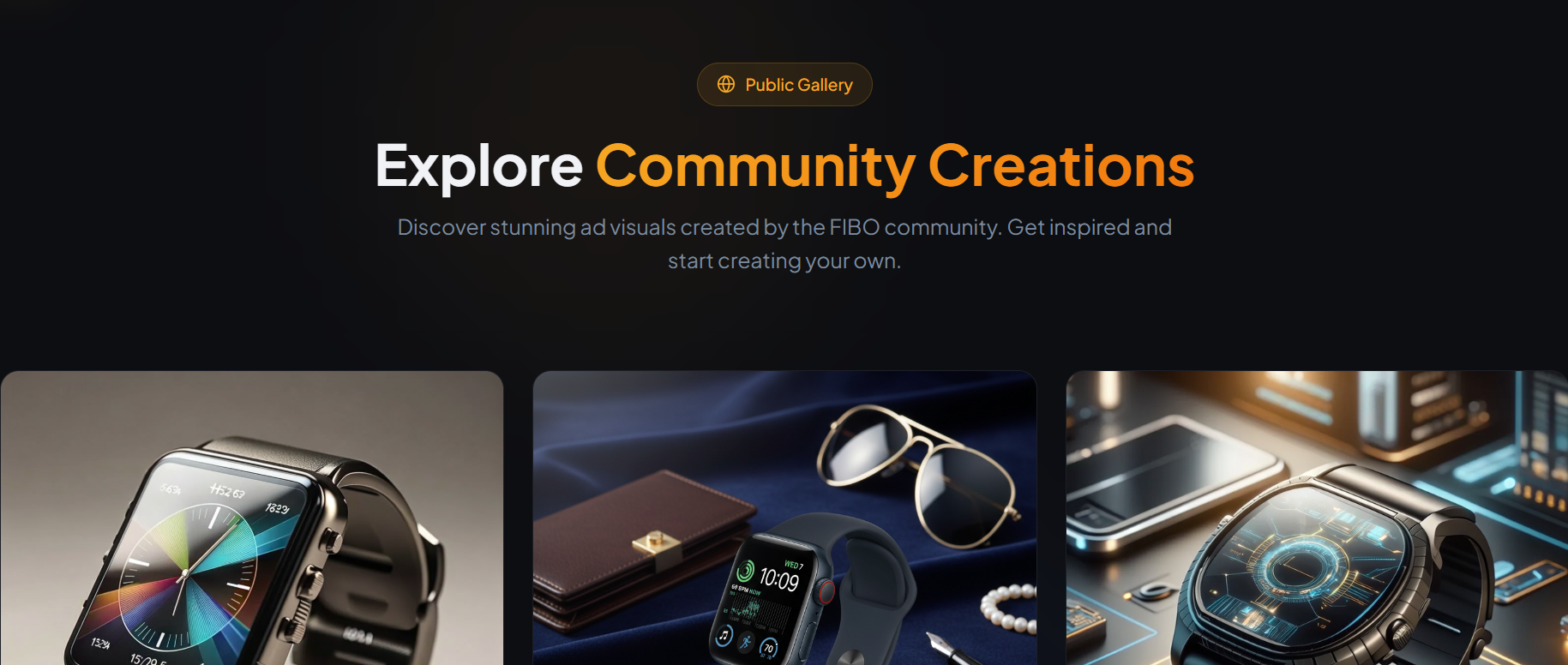
Can explore and publish your creations
FIBO Ad Director
Inspiration
Creating high-quality advertising visuals traditionally requires professional photographers, designers, studio setups, and multiple rounds of iteration. This process is expensive, time-consuming, and often inaccessible to startups, indie creators, and small businesses.
I was inspired by the idea of giving brands the same level of creative control as a film director — not through vague text prompts, but through structured, precise instructions. By combining cinematic controls with AI, I wanted to make ad creation faster, more controllable, and production-ready.
What it does
FIBO Ad Director is an AI-powered advertising creation platform that allows users to generate, refine, and repurpose ad visuals using structured, JSON-based creative control.
The platform uses the FIBO image generation model to produce high-quality, photorealistic advertising images. Instead of relying on free-form prompts, I designed the system so users define their creative intent through a structured JSON schema, enabling consistent and repeatable results.
Key capabilities
- Brand-based ad generation using structured inputs
- JSON-native prompt generation for the FIBO image model
- Studio-style refinement with cinematic camera controls
- Community feed of generated ads
- Image-to-video generation (8-second clips) using Veo 3.1
- Automated social media post generation for multiple platforms
How I built it
Coding
I used an AI agentic website builder called Lovable to design and implement the user experience. All API integrations, ideating and the product architecture as implemented by me.
Image generation
- I used the FIBO Image Model for all ad image generation
- I designed JSON-structured prompts that define:
- Object placement
- Background context
- Lighting and realism
- Camera body, lens type, focal length, and aperture
- Object placement
- This approach ensures deterministic, production-grade outputs rather than random generations
AD concepts were handled by chatgpt-o4-mini and post making is done by lovable AI
Video generation
- I integrated Veo 3.1 to convert generated images into short, cinematic 8-second videos using prompt-based motion instructions
Backend
- I used Supabase Edge Functions to handle:
- Secure API requests
- Prompt transformation
- Asynchronous generation workflows
- Error handling and retries
- Secure API requests
Frontend
- I designed a director-style UI inspired by professional creative tools
- The application is organized into:
- Ad Director (brand intake and concept creation)
- Studio (manual refinement and camera control)
- Feed (community gallery and iteration)
- Explore (inspiration and discovery)
- Ad Director (brand intake and concept creation)
Feed interactions
When hovering over an image in the Ad Director Feed, users can perform four key actions:
- Open the image in Studio and refine it further
- Open Visual Controls to adjust camera and scene parameters
- Generate an 8-second video from the image using Veo 3.1 with a custom prompt
- Generate customized social media posts for platforms like Instagram, Twitter (X), and LinkedIn, including alternate captions and actionable marketing suggestions
Challenges I ran into
API errors
- I initially ran into incorrect or unsupported endpoints during integration
- Handling 404 and 500 errors from external AI services required careful debugging
- I had to prevent blank UI states when generation failed
Model limitations
- Image and video models require different pipelines
- Not all models support the same feature sets
- Managing latency and asynchronous job completion was challenging
Accomplishments that I’m proud of
- Successfully integrating the FIBO image generation model with a JSON-native prompting system
- Building a director-style workflow instead of a simple prompt-based tool
- Enabling image-to-video conversion without requiring manual video editing
- Automating multi-platform marketing content from a single visual asset
- Delivering a complete end-to-end creative pipeline within hackathon constraints
What I learned
- Structured prompts consistently outperform free-form prompts for professional use cases
- Creative constraints significantly improve AI output quality
- Robust error handling is critical for AI-driven applications
- Ad creation is not just about visuals, but also about distribution and messaging
What's next for FIBO Ad Director
- Adding multi-scene and storyboard-based video ads
- Introducing brand style locking for visual consistency
- Enabling A/B testing for generated ad creatives
- Supporting one-click publishing to advertising and social platforms
- Building team collaboration and approval workflows
- Expanding support for additional AI video and image models
Built With
- chatgpt
- fibo
- lovable
- node.js
- supabase
- tailwindcss
- typescript
- veo


Log in or sign up for Devpost to join the conversation.