Inspiration
We wanted to help people understand what their clothes are actually made of and how textile choices can affect the environment. Many people cannot easily identify fabric composition or understand microplastic shedding.
What it does
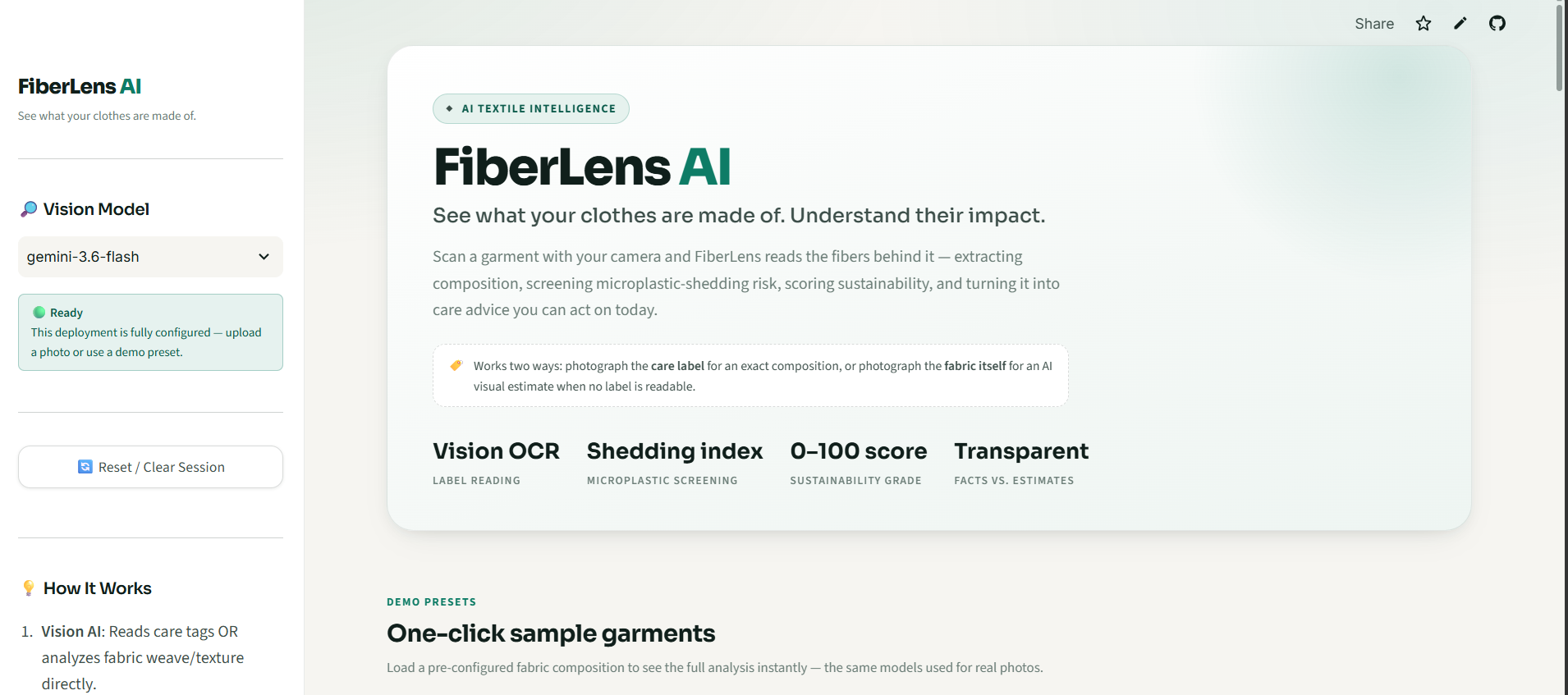
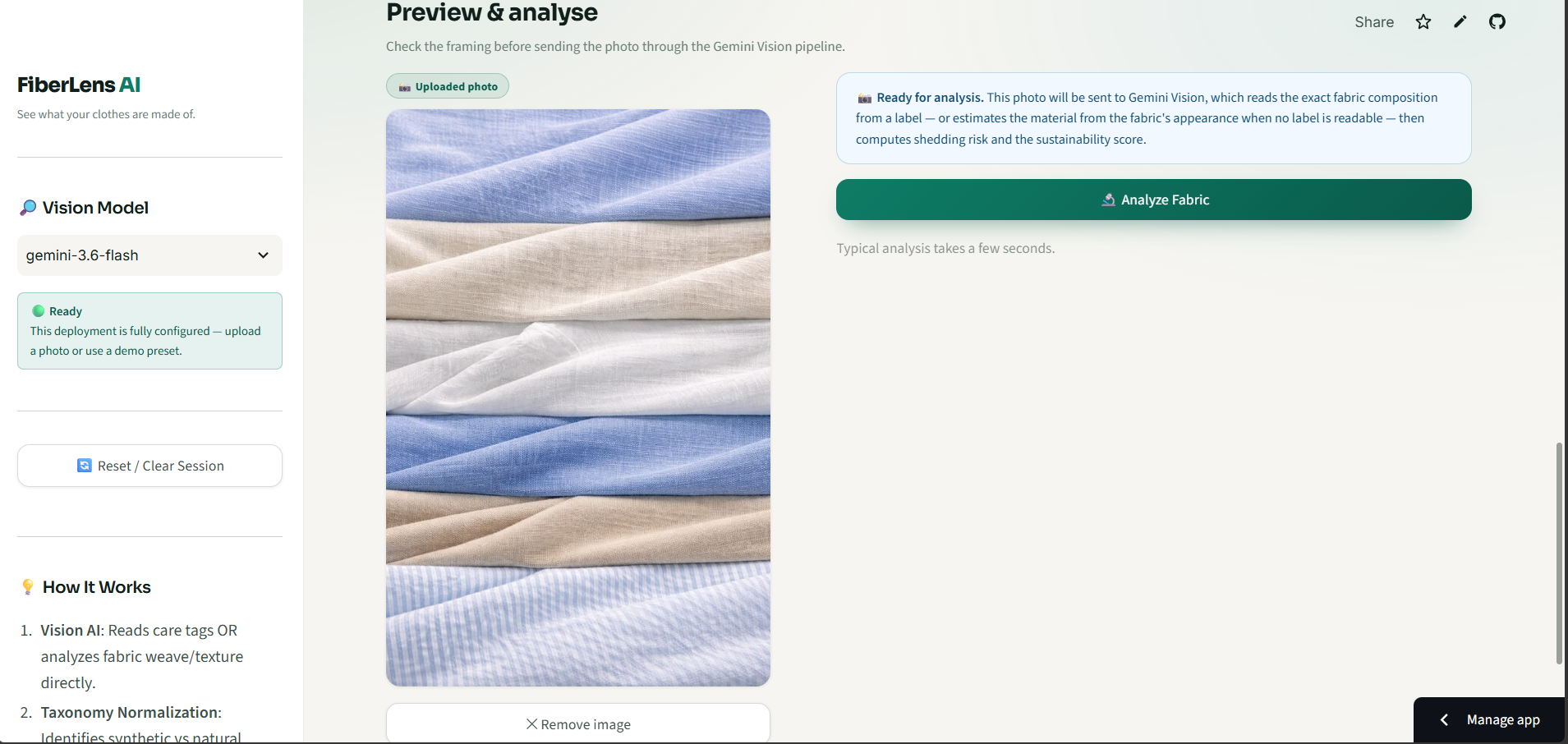
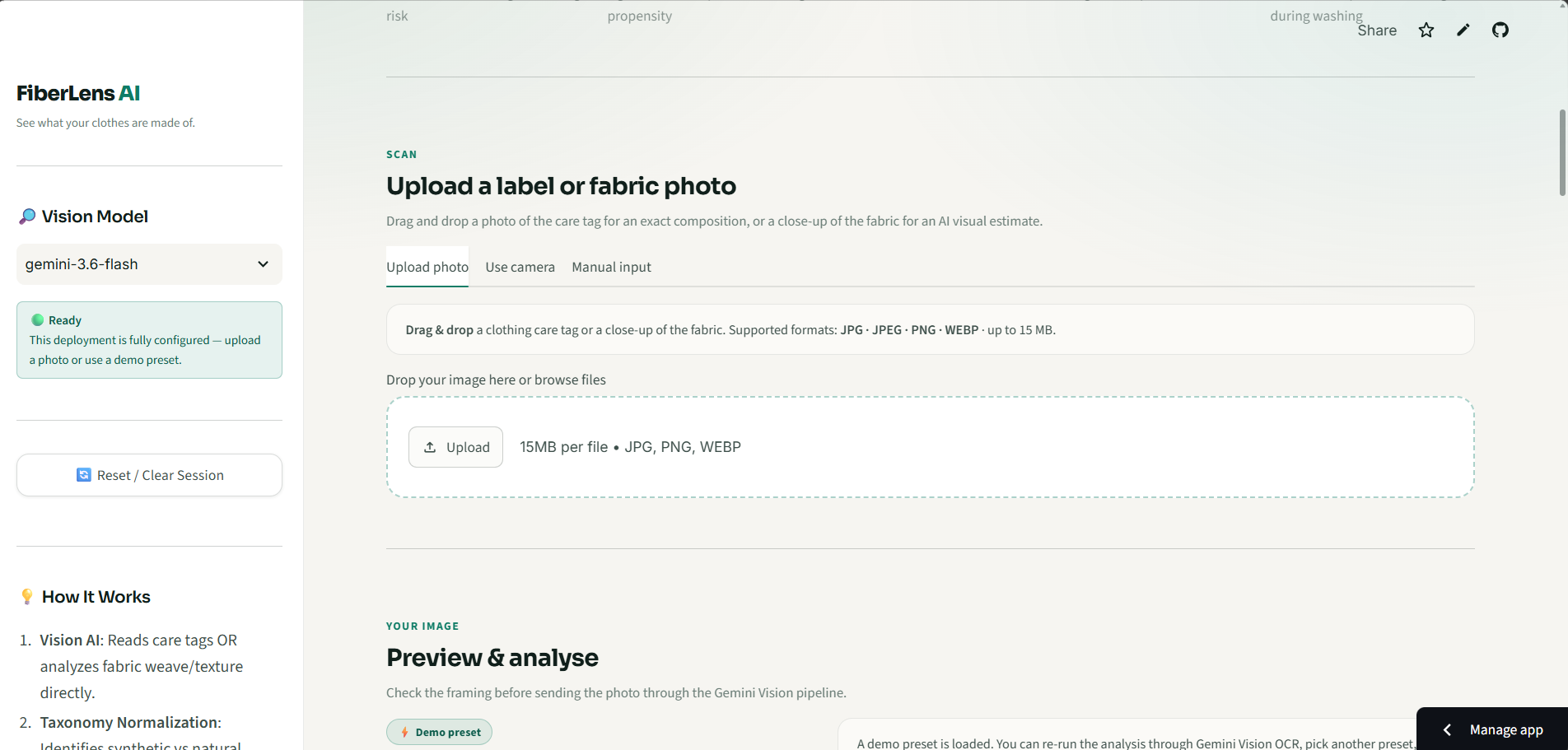
FiberLens AI analyzes a clothing label or fabric image to identify likely materials, estimate microplastic shedding risk, and provide sustainable clothing-care recommendations.
How we built it
We built FiberLens AI with Python and Streamlit, using Gemini Vision through the Google AI Studio API for image analysis. The app also includes material classification, risk scoring, sustainability insights, and an interactive user interface.
Challenges we ran into
The main challenges were getting reliable material predictions from fabric images, handling API limits securely, and creating useful sustainability recommendations while clearly communicating that visual estimates are not laboratory measurements.
Accomplishments that we're proud of
We created a working AI-powered prototype that can analyze real fabric images and turn the results into practical sustainability and care insights through a simple interface.
What we learned
We learned how to integrate vision AI into a real application, securely manage API keys, build and deploy a Streamlit application, and design AI results responsibly when predictions are estimates.
What's next for FiberLens AI
We plan to improve material recognition accuracy, support more textile types, add better sustainability comparisons, and provide more personalized recommendations for reducing textile waste and microplastic pollution.
