-
-
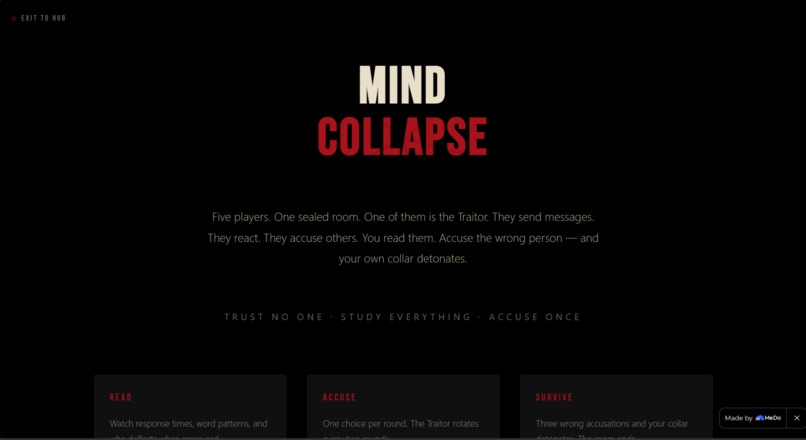
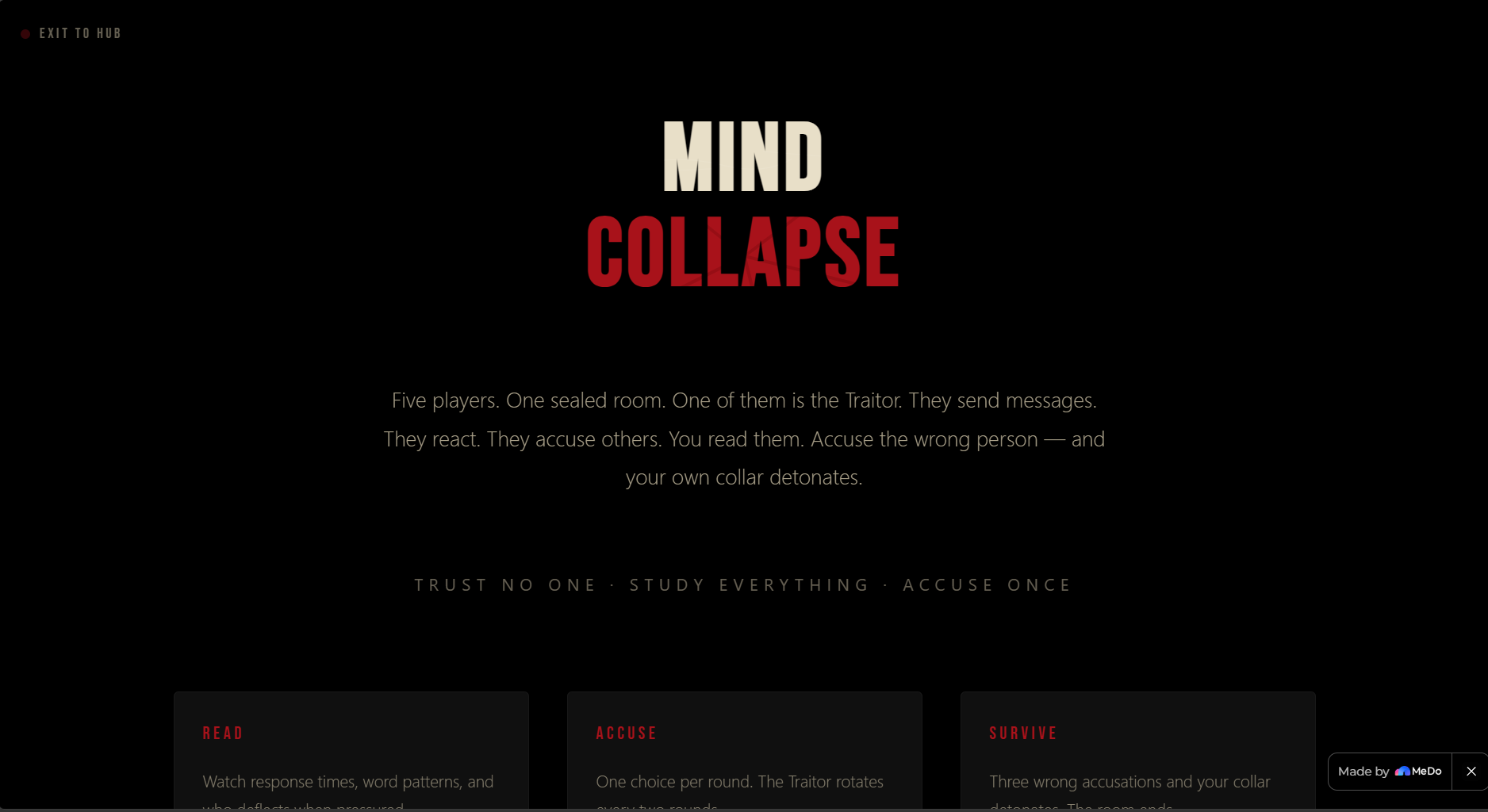
Dashboard of Mind Collapse
-
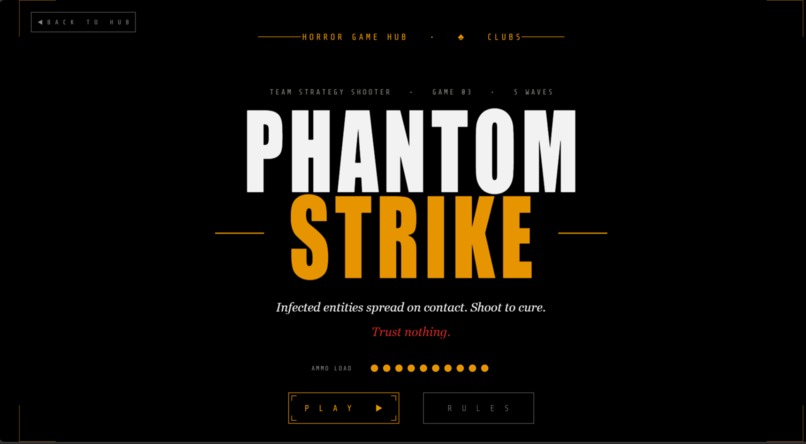
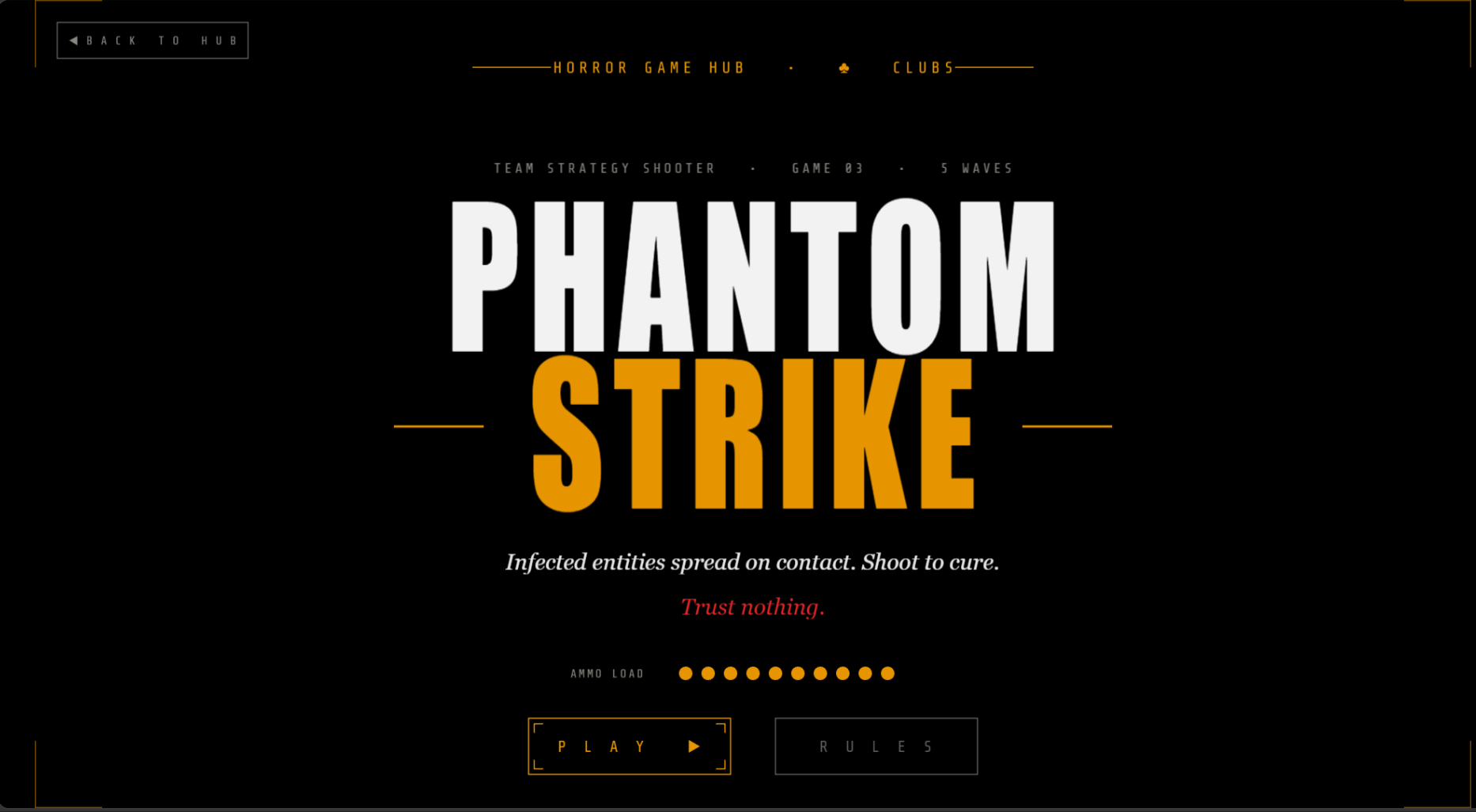
Dashboard of Phantom Strike
-
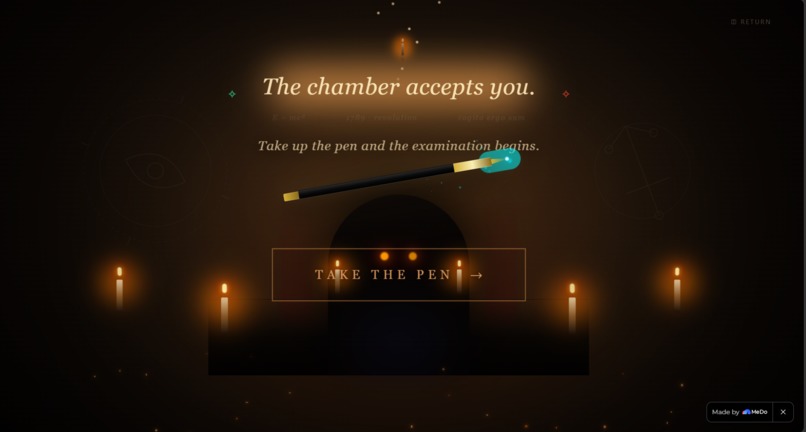
Dashboard of Borderland Academy
-
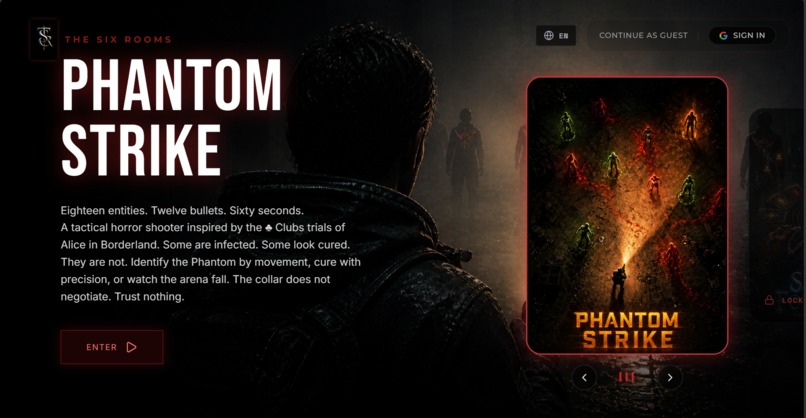
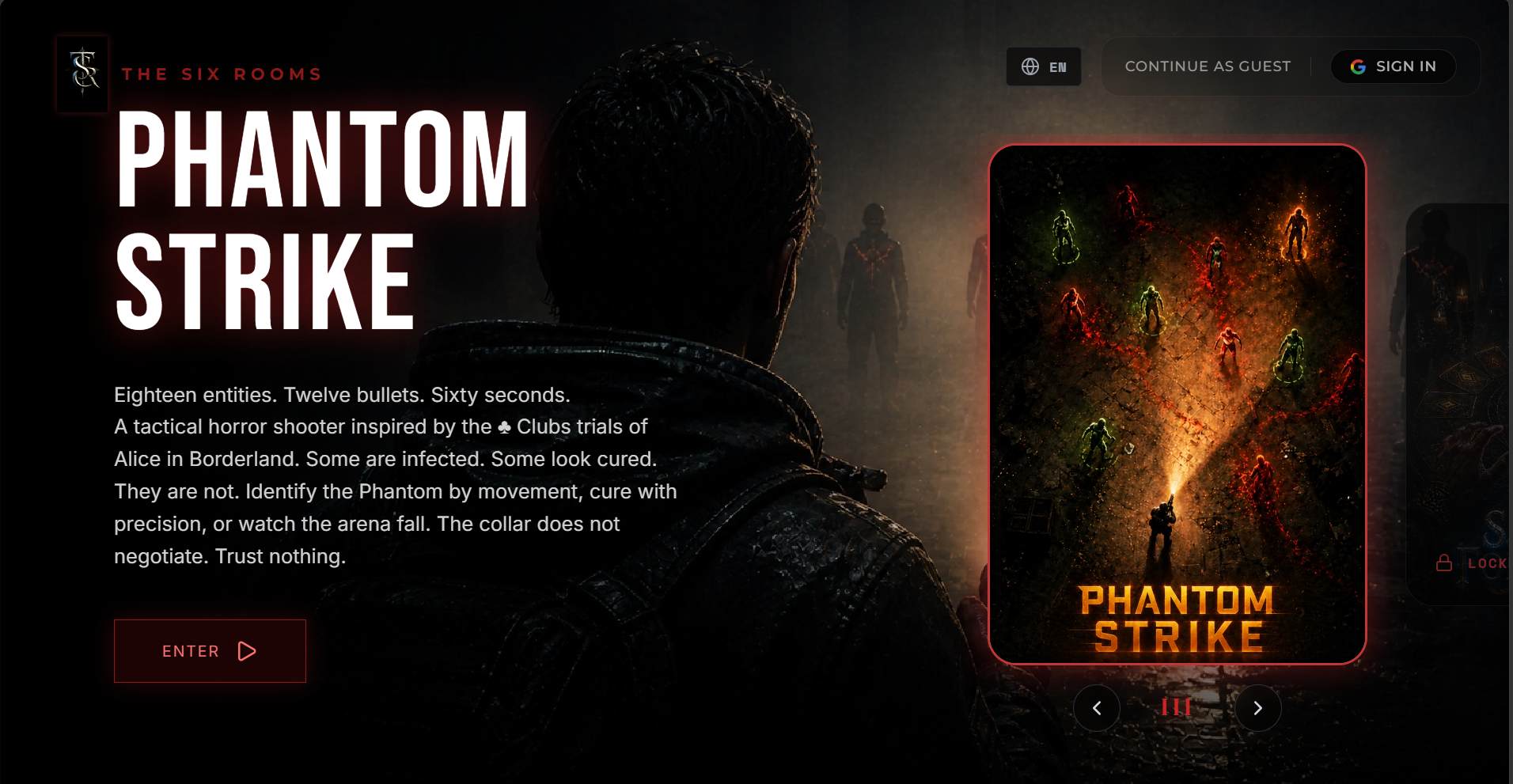
Phantom Strike Game Hub Screen
-
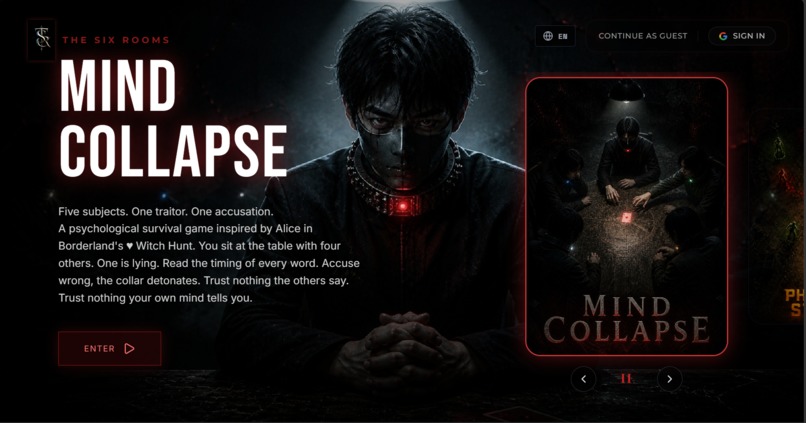
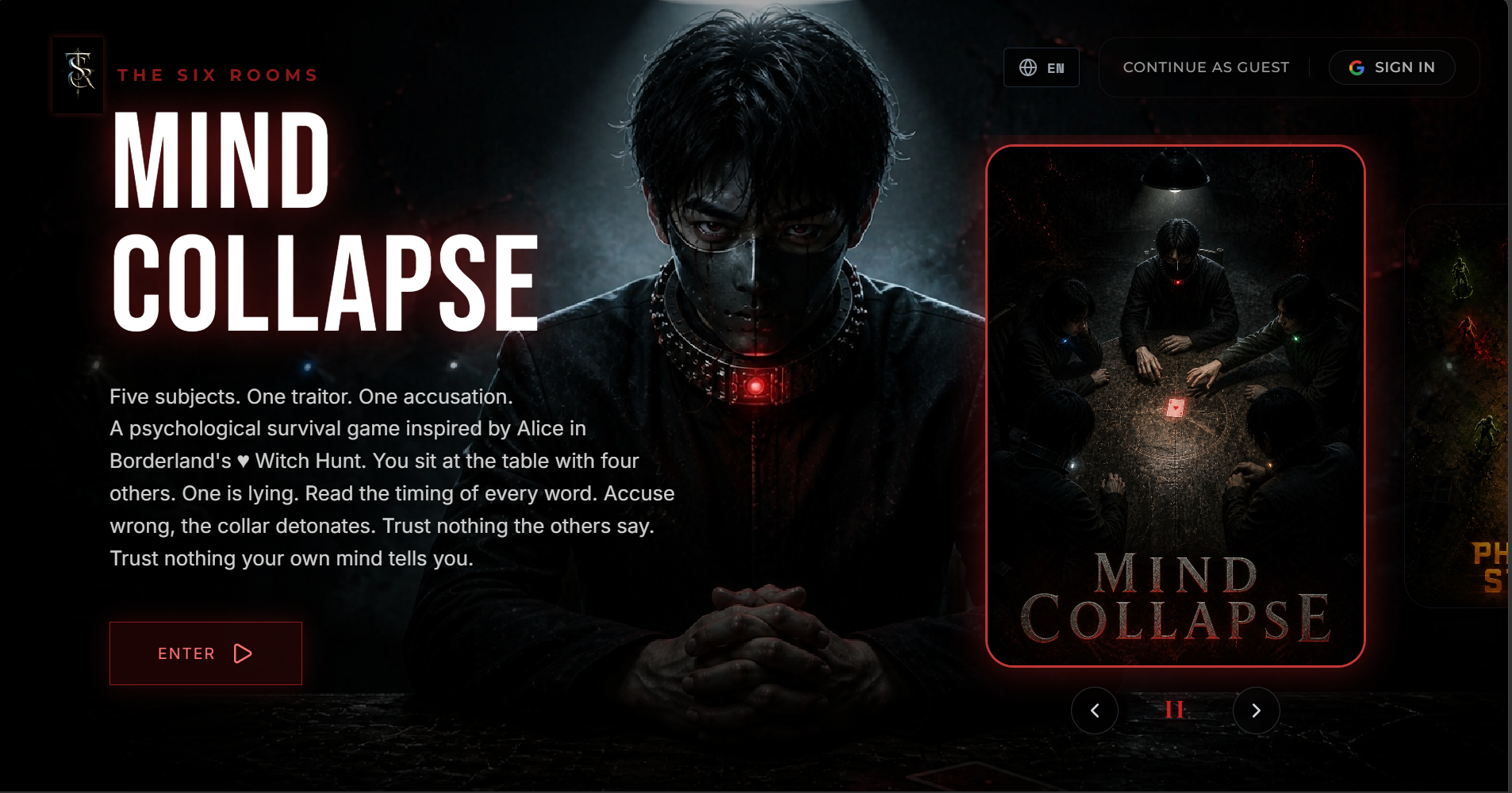
Mind Collapse Game Hub Screen
-
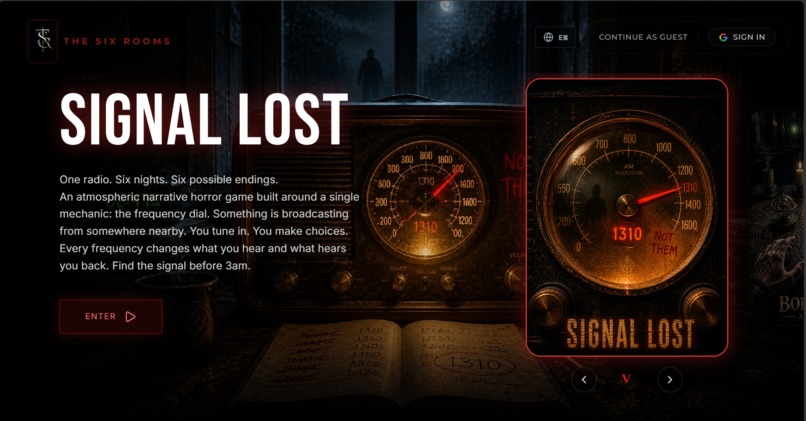
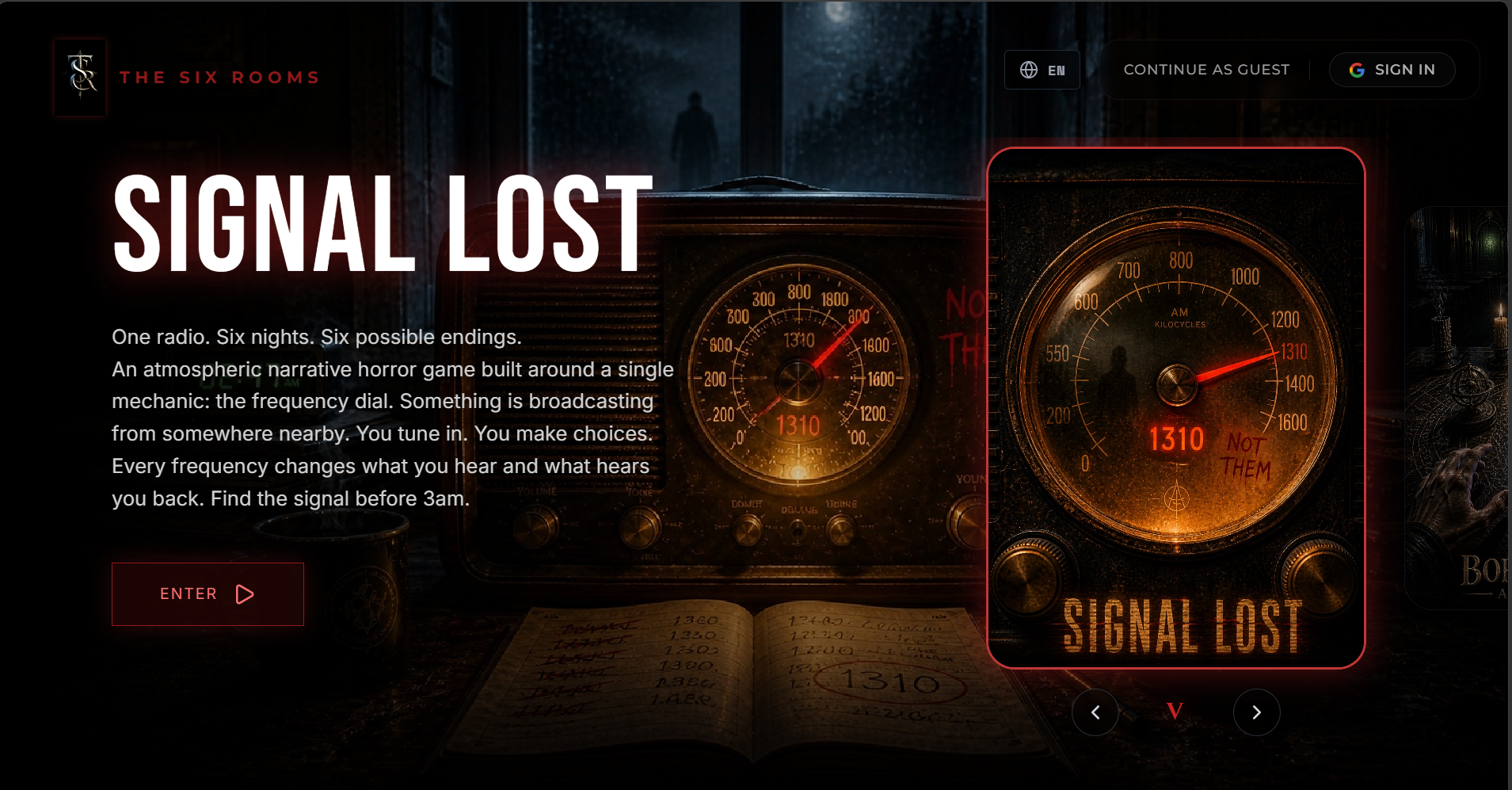
Signal Lost Game Hub Screen
-
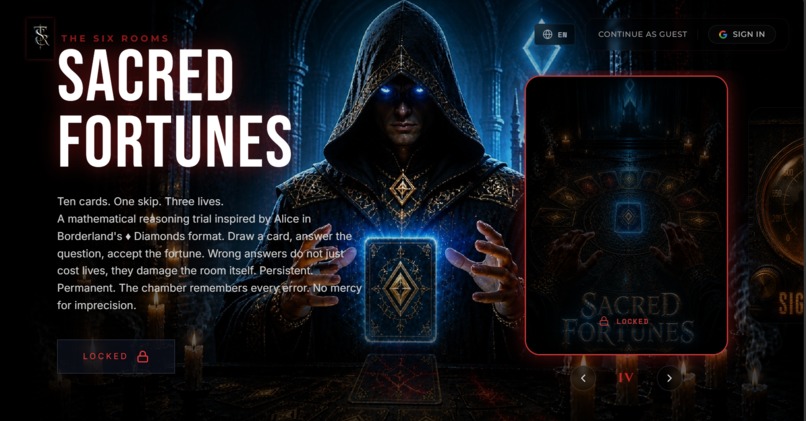
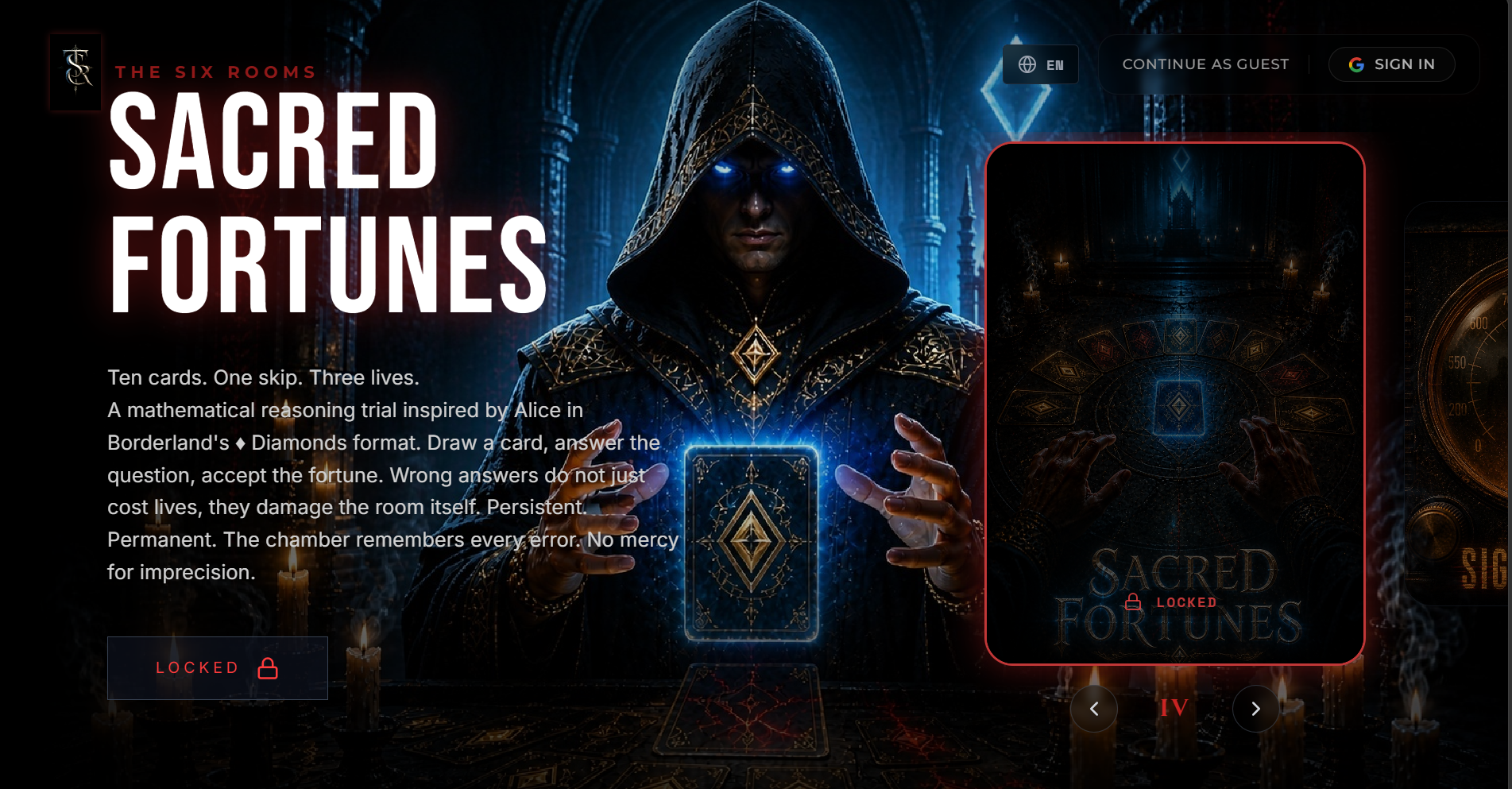
Sacred Fortunes Game Hub Screen
-
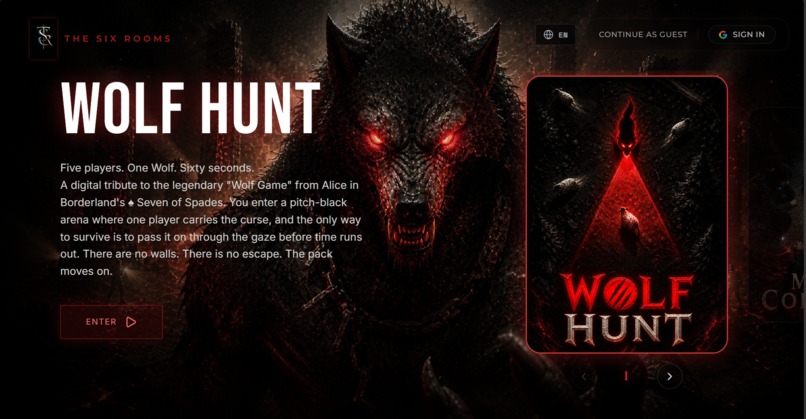
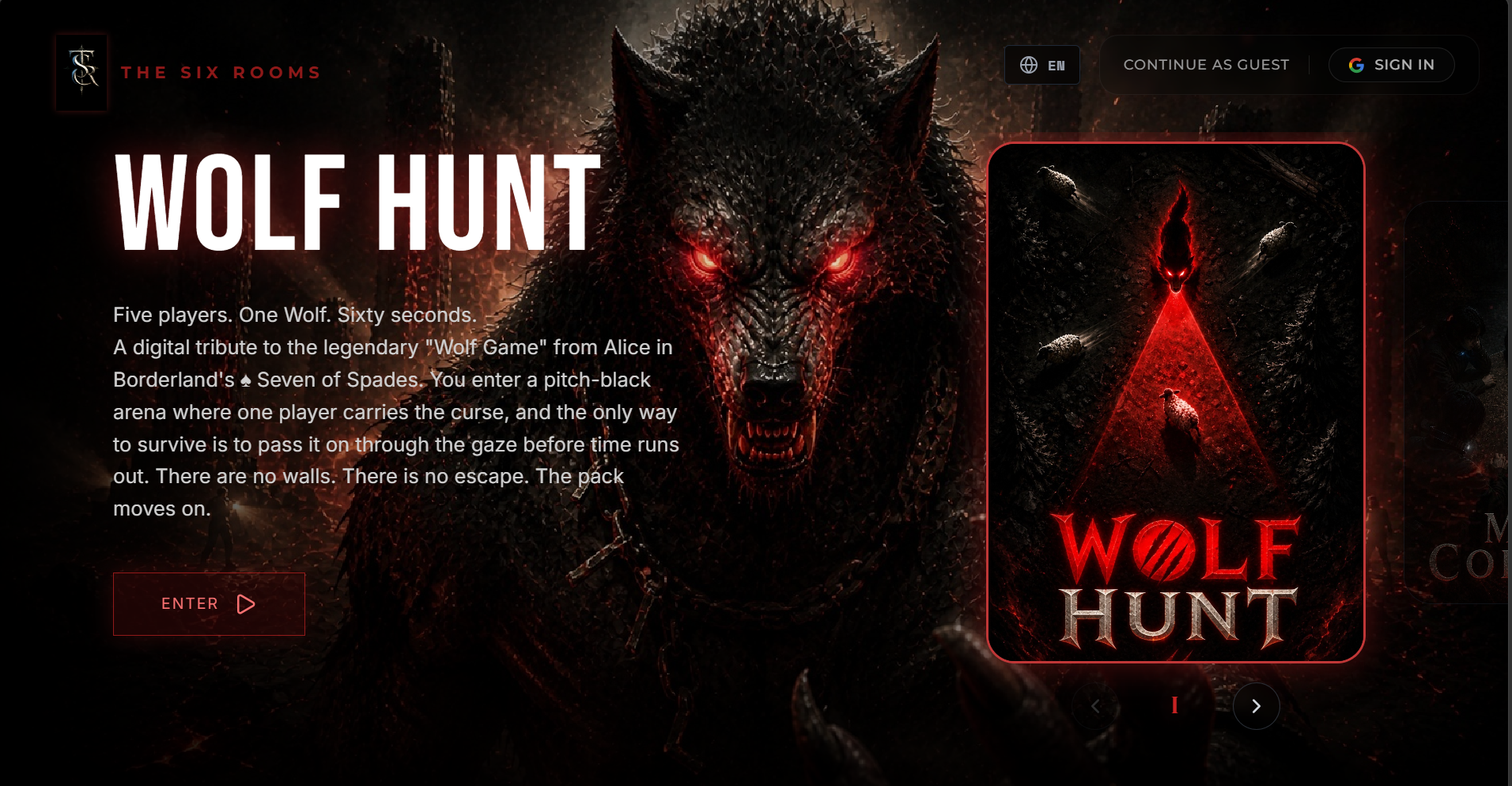
Wolf Hunt Game Hub Screen
-
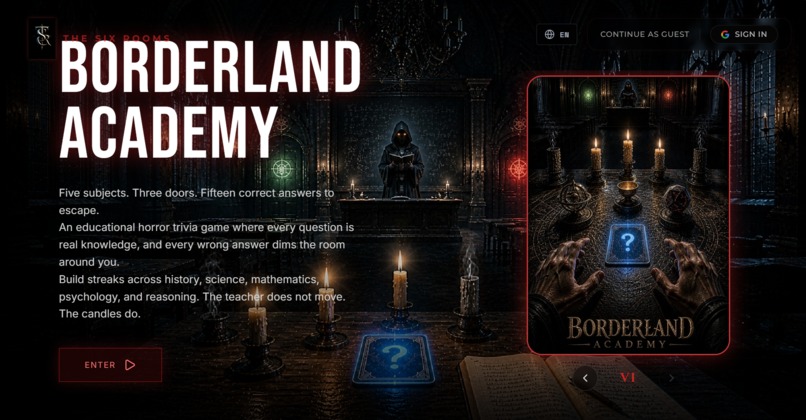
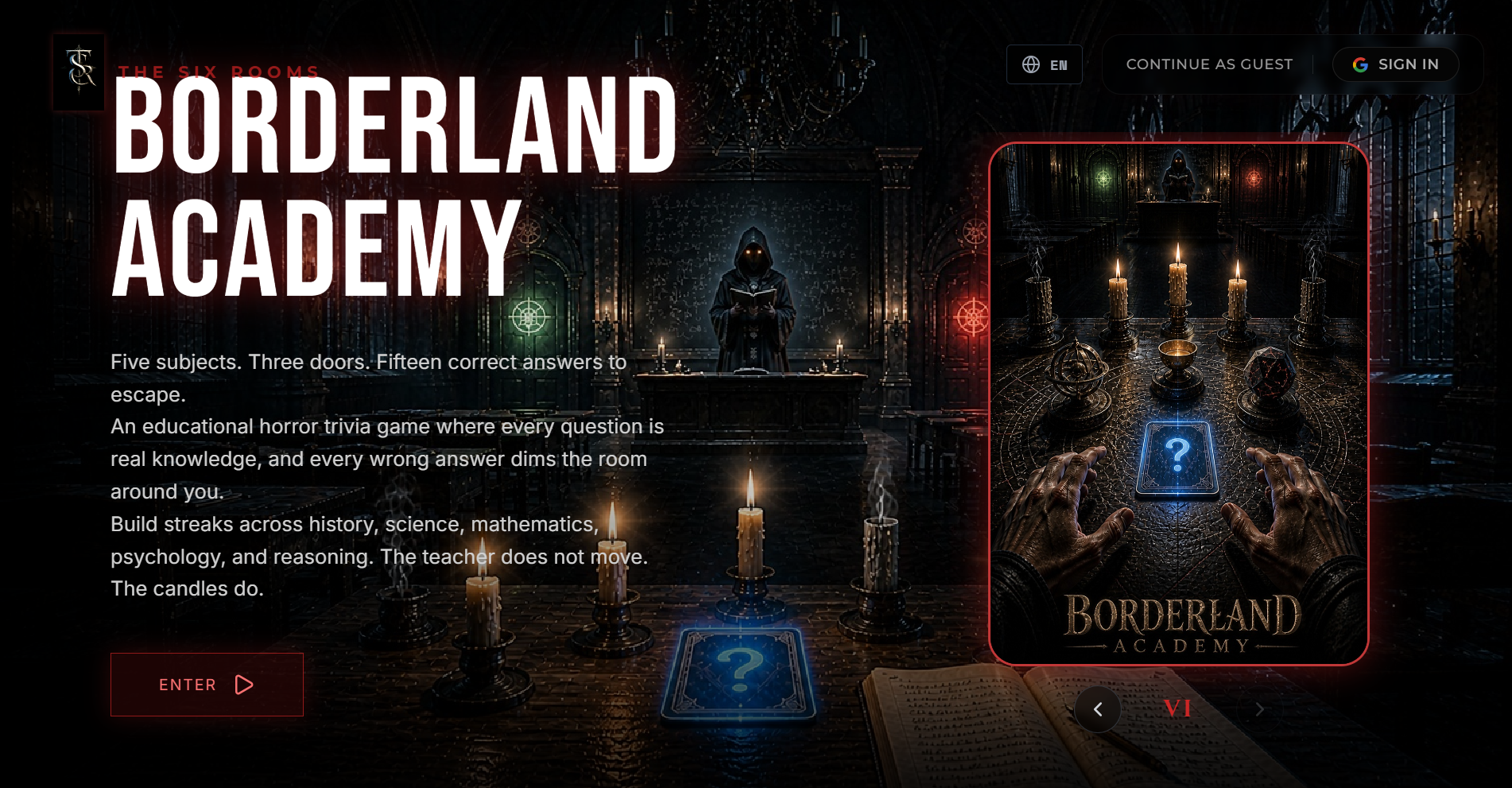
Borderland Academy Game Hub Screen
Inspiration
I was watching Alice in Borderland.
The games inside the show weren't just thrilling, they were crazy. Strangers locked in rooms with impossible rules. One mistake costs you everything. I couldn't look away.
Every episode I kept thinking:
What would it feel like to actually be inside one of these rooms?
So I decided to build them. Not adaptations, six original survival games in that same spirit. The tension of a room you can't leave. The pressure of a timer. The fear of a wrong answer with permanent consequences.
Two of the six rooms, Sacred Fortunes and Borderland Academy, go a step further. You actually learn while you play. Real math. Real knowledge. Wrapped in horror.
You don't just survive the room. You walk out smarter than you went in.
What it does
THE SIX ROOMS is a cinematic hub of six psychological horror games, each one a different way to die, each one a different way to escape.
The hub is a carousel where you browse all six rooms. Click ENTER on any one and a 3-second cinematic pulls you into the room itself. From that moment, you're not in a menu, you're inside the game.
The six rooms:
- Wolf Hunt (♠ Spades) - survive 60 seconds. Five players, one Wolf. The gaze transfers.
- Mind Collapse (♥ Hearts) - five subjects, one liar. Read them right.
- Phantom Strike (♣ Clubs) - 18 entities, 12 bullets. Restraint is the harder skill.
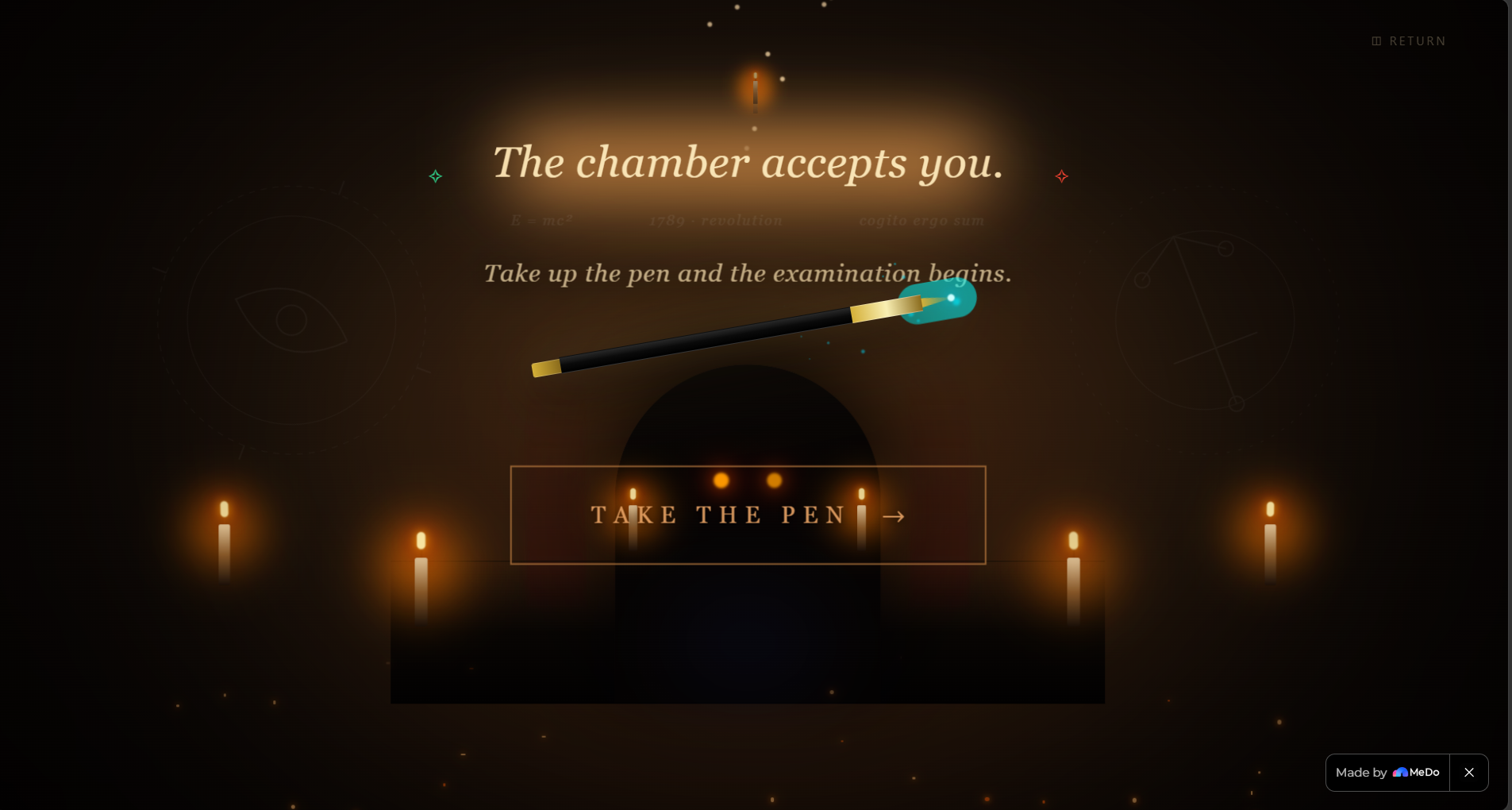
- Sacred Fortunes (♦ Diamonds) - math under pressure. 10 cards. 3 lives. The chamber remembers.
- Signal Lost - one radio, six nights, six endings. Find the signal before 3am.
- Borderland Academy (♦ Diamonds) - horror trivia. Build streaks to unlock three doors. The teacher does not move. The candles do.
Same world. Six completely different ways to play it.
How we built it
The whole project was built with MeDo's no-code platform.
I built it in phases, each one had to work before I moved to the next:
- Design system first - colors, fonts, the dark gothic look. Locked before any game was built.
- The hub carousel - six poster cards, navigation, the cinematic transition.
- Each room's structure - every game gets the same flow: transition → briefing → gameplay → pause → result.
- The game logic - six different gameplay loops, each with its own rules.
- Shared systems - leaderboards, daily challenges, shareable cards, saved progress.
- Polish - flickering candles, breathing characters, particles, voice lines.
MeDo Plugins
- Text-to-Speech - gives every room a voice. The teacher in Borderland Academy. The interrogator in Mind Collapse. The radio in Signal Lost.
- Google Translation - the EN selector translates the whole UI on the fly, so non-English players can play too.
Challenges we ran into
1. Six games, one identity
A vision-cone game and a trivia game shouldn't feel like the same world. But the hub had to unify all six. I locked the design system before building any game, same colors, same fonts, same candlelight motif everywhere. Different mechanics, same visual language.
2. Tension without repetition
What made Alice in Borderland gripping was tension. I had to create it six different ways. So each room got its own pressure mechanic:
- Wolf Hunt - the vision cone
- Mind Collapse - you can't ask twice
- Phantom Strike - only 12 bullets
- Sacred Fortunes - the chamber remembers
- Signal Lost - the 3am deadline
- Borderland Academy - the candles snuff out
Same feeling. Six different ways to create it.
3. Teaching without lecturing
Sacred Fortunes and Borderland Academy had to teach - but never feel like school. The trick: make learning a side effect of survival. You don't study probability. You try to survive the chamber. Your instincts sharpen because they have to.
4. Bringing the rooms alive in no-code
I wanted candles flickering, characters breathing, particles drifting, glows pulsing. Without writing raw code, I had to push MeDo's animation system hard. Nothing in any room is static. Even when the game pauses, the world keeps living.
Accomplishments that we're proud of
The threshold transition
When you click ENTER, the camera doesn't cut - it dollies into the room over 3 seconds. Brightness rises. Blur clears. A voice fades in: "You have crossed the threshold." That single moment tells the player they've left the menu and entered a world.
Six games, one universe
Six totally different games sharing one cinematic identity. They play nothing alike, but they feel like they belong on the same shelf.
Learning that doesn't feel like learning
Sacred Fortunes and Borderland Academy teach real skills - without ever feeling like a lesson. Horror does the teaching.
Entirely no-code
Every animation, every transition, every game loop - built without writing application code. MeDo's plugins stretched further than I expected.
A teacher who never moves
The hooded teacher in Borderland Academy has 5 positions, 12 voice lines, and zero animation frames. He's the most memorable character in the project. He barely says anything.
What we learned
1. Tension translates.
You don't need violence to scare a player. You need stakes, a timer that matters, a mistake that's permanent, a room that feels like an antagonist.
2. Constraints sharpen design.
No-code forced me to commit to mechanics that earned their place. Every rule in every room had to justify itself. Limitation is a design partner.
3. The dashboard IS the world.
Your health is candles on a desk. Your timer dims those candles. Your pause menu blurs the room behind it. The UI doesn't sit on top of the game. It IS the game.
4. Silence is content.
The pause after a death. The beat before a reveal. The 3 seconds before fade-to-black. Silence teaches more than sound. Players need time to sit with what just happened.
5. Thrilling and educational aren't opposites.
The fear of getting it wrong makes a player engage harder than a textbook ever could. Horror is the best teacher I never expected to find.
6. TTS isn't a limitation - it's a feature.
A slightly-uncanny synthetic voice fits a hooded figure perfectly. A real voice actor would have made him a character. The TTS makes him a presence.
What's next for THE SIX ROOMS
The six rooms are all playable. Now the work is to deepen them:
- Expand Borderland Academy from 50 questions to 750+ across every discipline and difficulty
- More chamber types in Sacred Fortunes - probability puzzles, logic chains, geometric proofs
- Social layers across every room - ghost players, global leaderboards, daily challenges
- Cross-room progression - beat one room with the top rank, unlock a secret in another. Six rooms, one connected story.
- Community questions - players submit content, vote on submissions
- Mobile-first polish - make mobile the better experience, not just a working one
The dream is for THE SIX ROOMS to become what Alice in Borderland made me feel - six interconnected horror experiences where every minute is gripping and every escape feels earned.
Built With
- auth
- css
- deno
- framer
- functions
- gsap
- howler
- javascript
- matter.js
- motion
- phaser.js
- pixijs
- postgresql
- python
- r3f
- rapier
- react
- spring
- sql
- storage
- supabase
- three.js
- tone.js
- typescript
- vite
- zustand


Log in or sign up for Devpost to join the conversation.