Inspiration
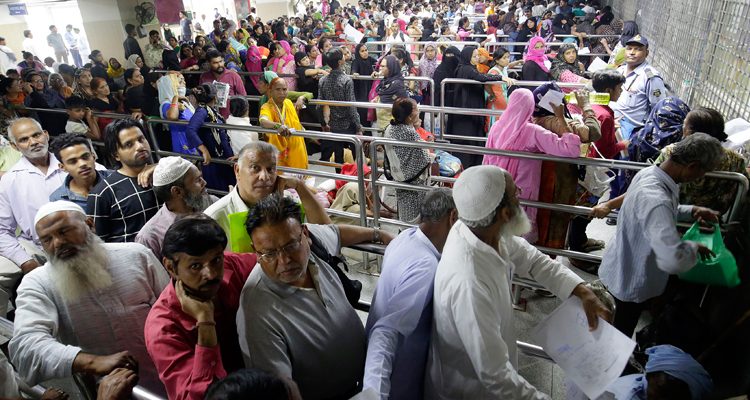
Last year, due to medical reasons, I had to visit hospitals frequently. Even in some of the best hospitals in India, my appointments were rarely on time. There were always long delays, and I ended up wasting hours waiting. When I looked deeper, I realized this is a common problem across hospitals in India and many high-footfall businesses worldwide. This experience inspired me to build a solution to manage crowds better and reduce waiting time.
What it does
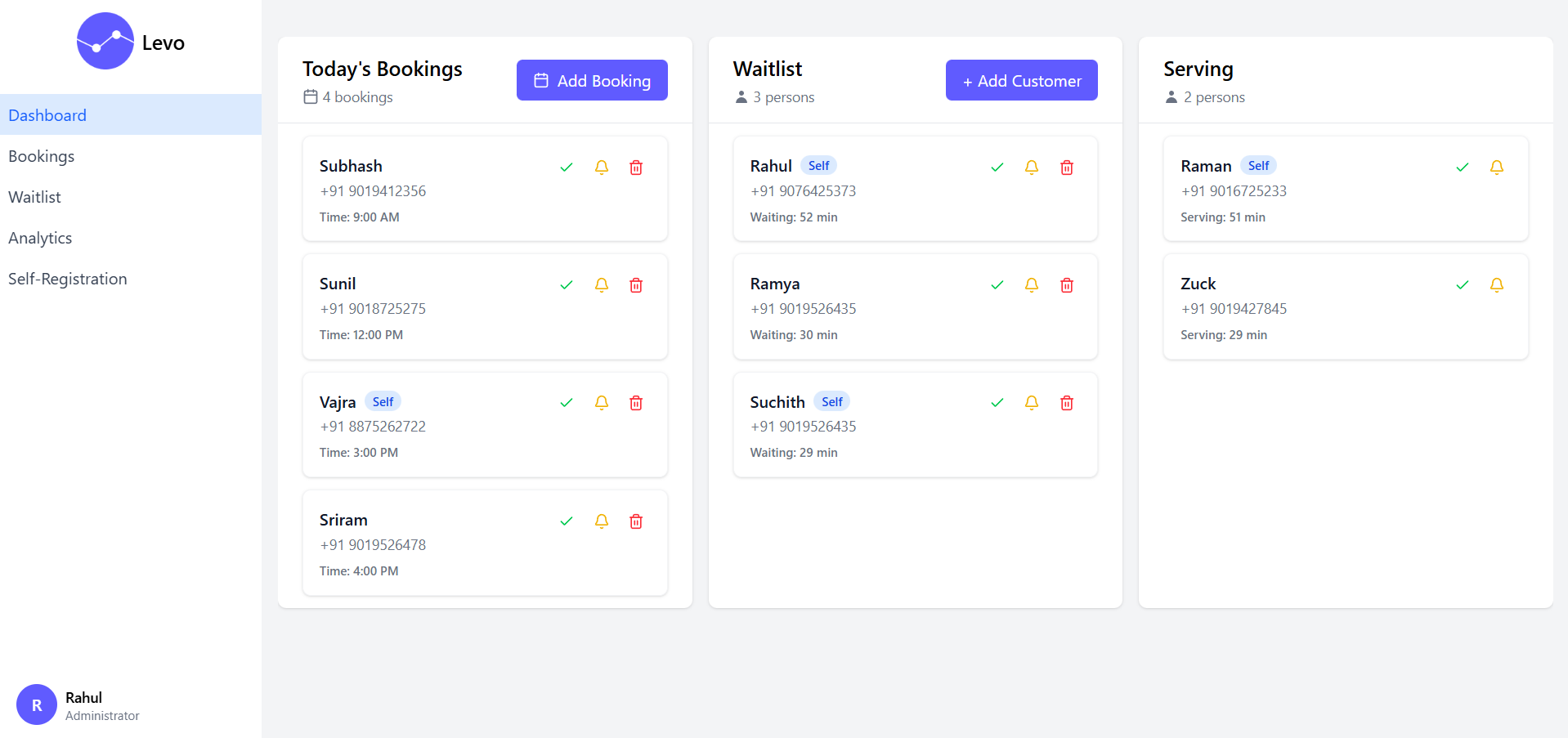
The project helps hospitals and other high-footfall businesses manage crowds and reduce waiting time. Customers can join a digital queue, get real-time updates on their position, and wait remotely instead of standing in long lines. Businesses get insights and predictions to manage customer flow better and deliver a smoother experience.
How I built it
I used React to build both the customer interface for self-registration and live queue updates, along with a business-side dashboard that helps teams monitor and manage crowd flow. On the backend, I used Node.js with Express for APIs and integrated Kafka using Confluent for event-driven processing, ensuring real-time updates across all components.
For wait-time prediction, I trained an XGBoost model in Python and deployed it to Google Cloud Vertex AI for production use. MongoDB stores customer history and analytics data, enabling better insights into crowd patterns and operational performance.
Challenges I ran into
I had never built a machine learning model before, so training one was a major challenge. Creating realistic training data was especially difficult, since I had to generate synthetic data that closely matched real-world queue behavior.
Accomplishments that I’m proud of
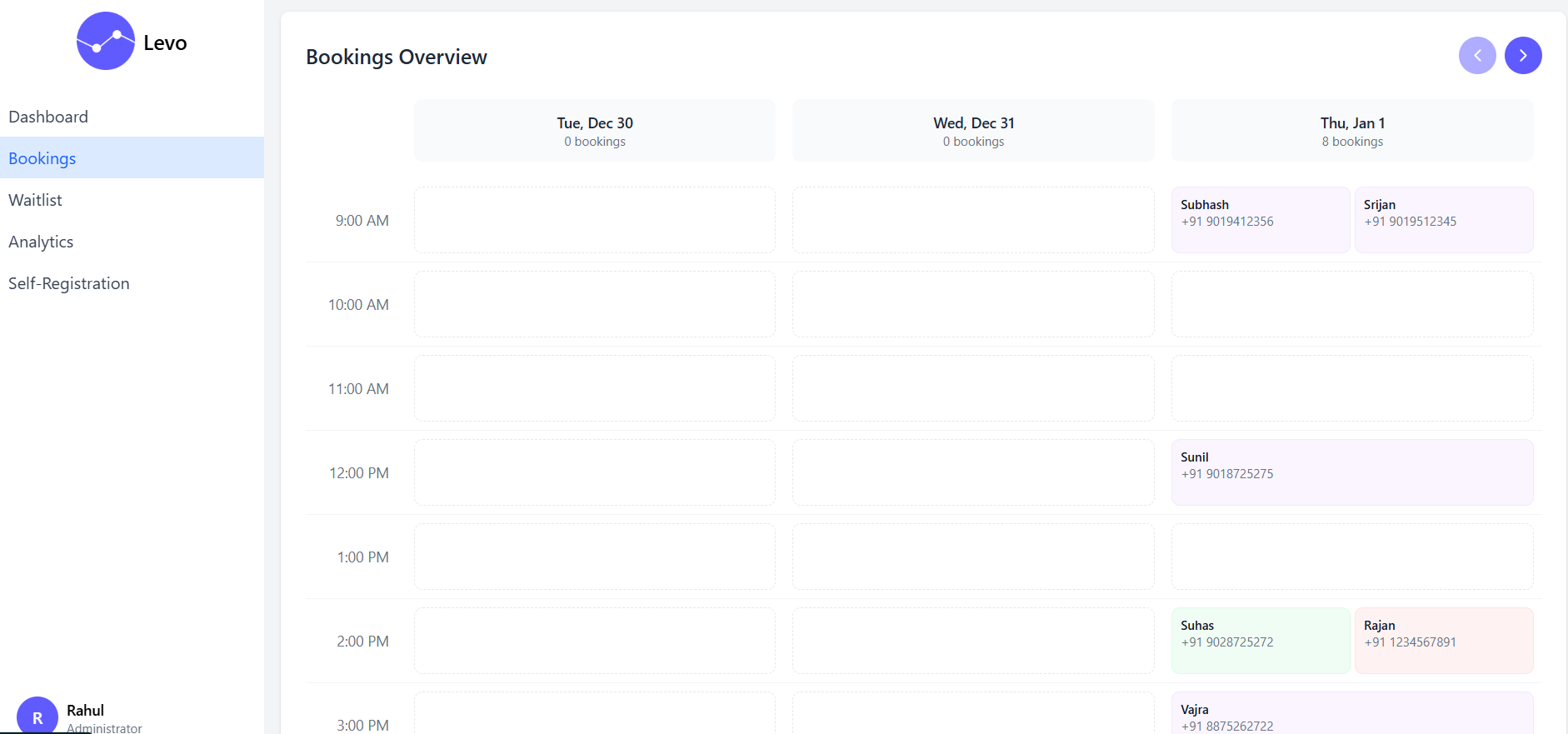
I spent significant time designing the UI to keep it minimal and easy for anyone to use. What started as a simple dashboard gradually evolved into a complete system with features like waitlist history, a well-designed bookings page, and analytics. Seeing everything come together into a smooth and polished experience is something I’m really proud of.
What I learned
This project taught me a lot about event-driven architectures and how Kafka can decouple different parts of a system. I also learned the full machine learning lifecycle, from training models to deploying them on the cloud and integrating predictions into a production application.
What's next for levo
The next features are already in the pipeline. I plan to integrate Gemini to handle customer queries using application context, so businesses can focus more on operations instead of support. I also want to improve the wait-time prediction model with better datasets and training.
Thank you for reading this!
Cheers,
Suchith
Built With
- confluent
- express.js
- gcp
- mongodb
- node.js
- python
- react

Log in or sign up for Devpost to join the conversation.