-
-
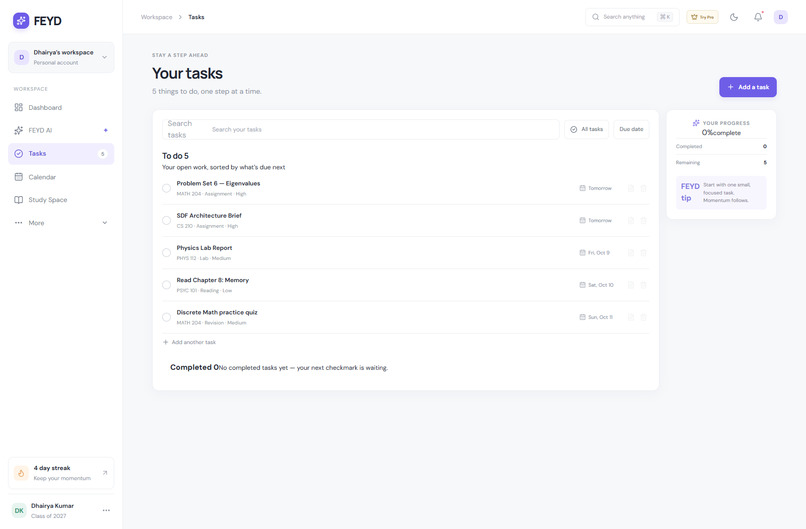
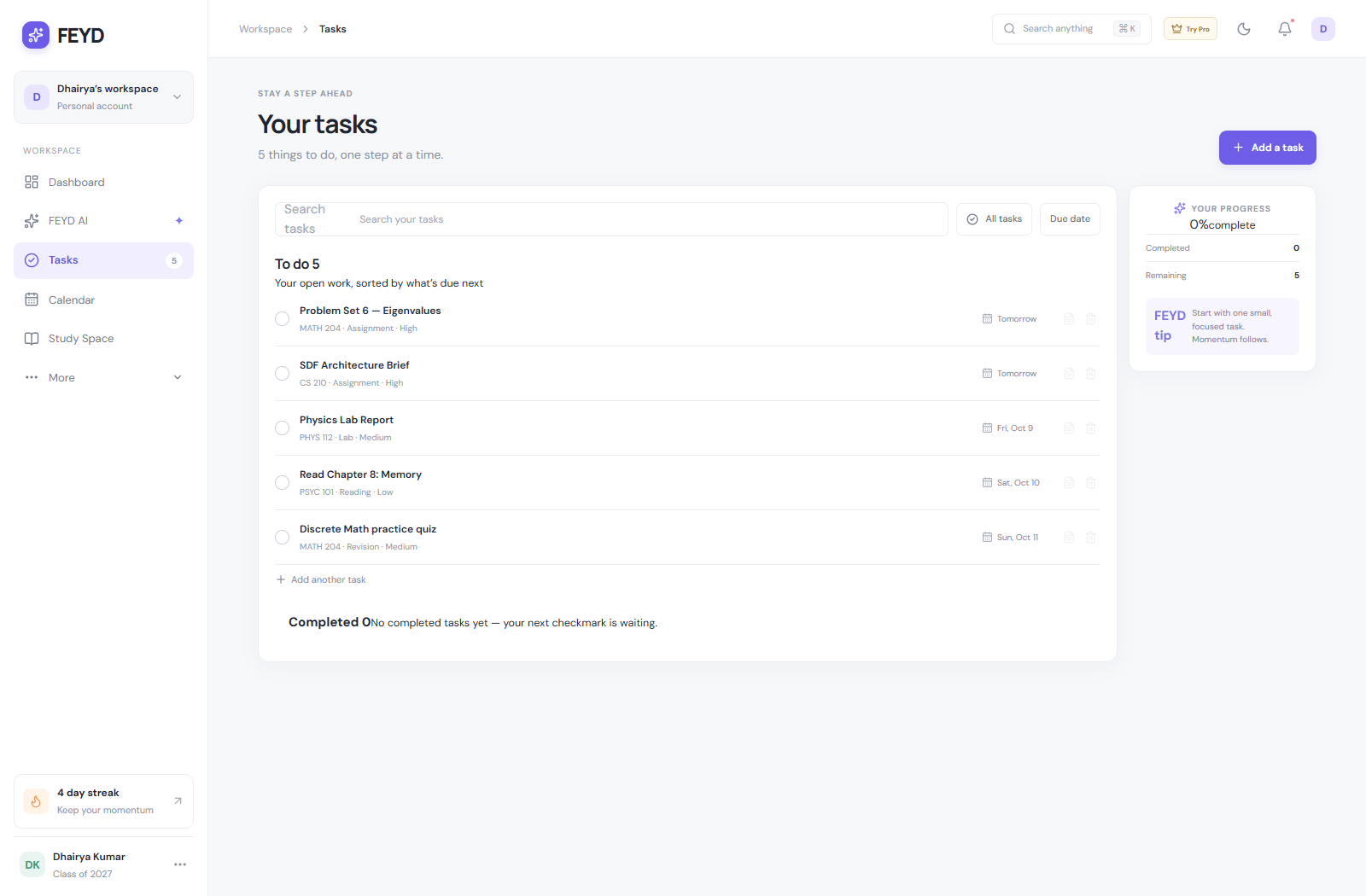
Manage classes and upcoming assignments
-
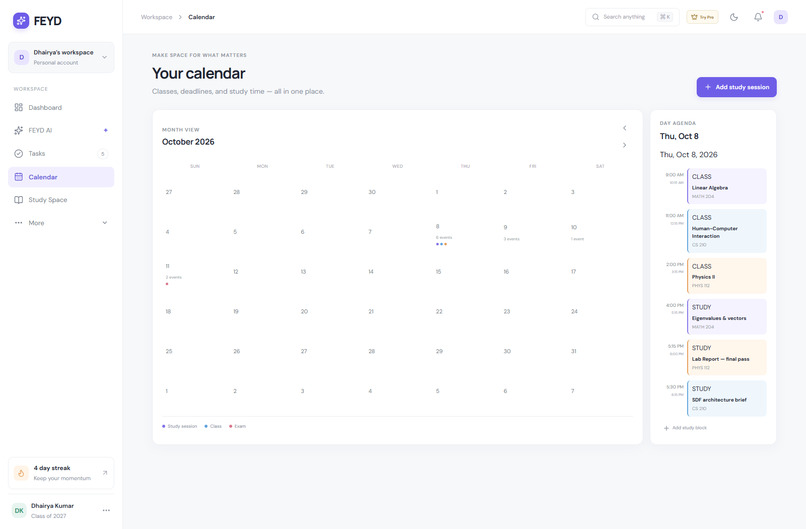
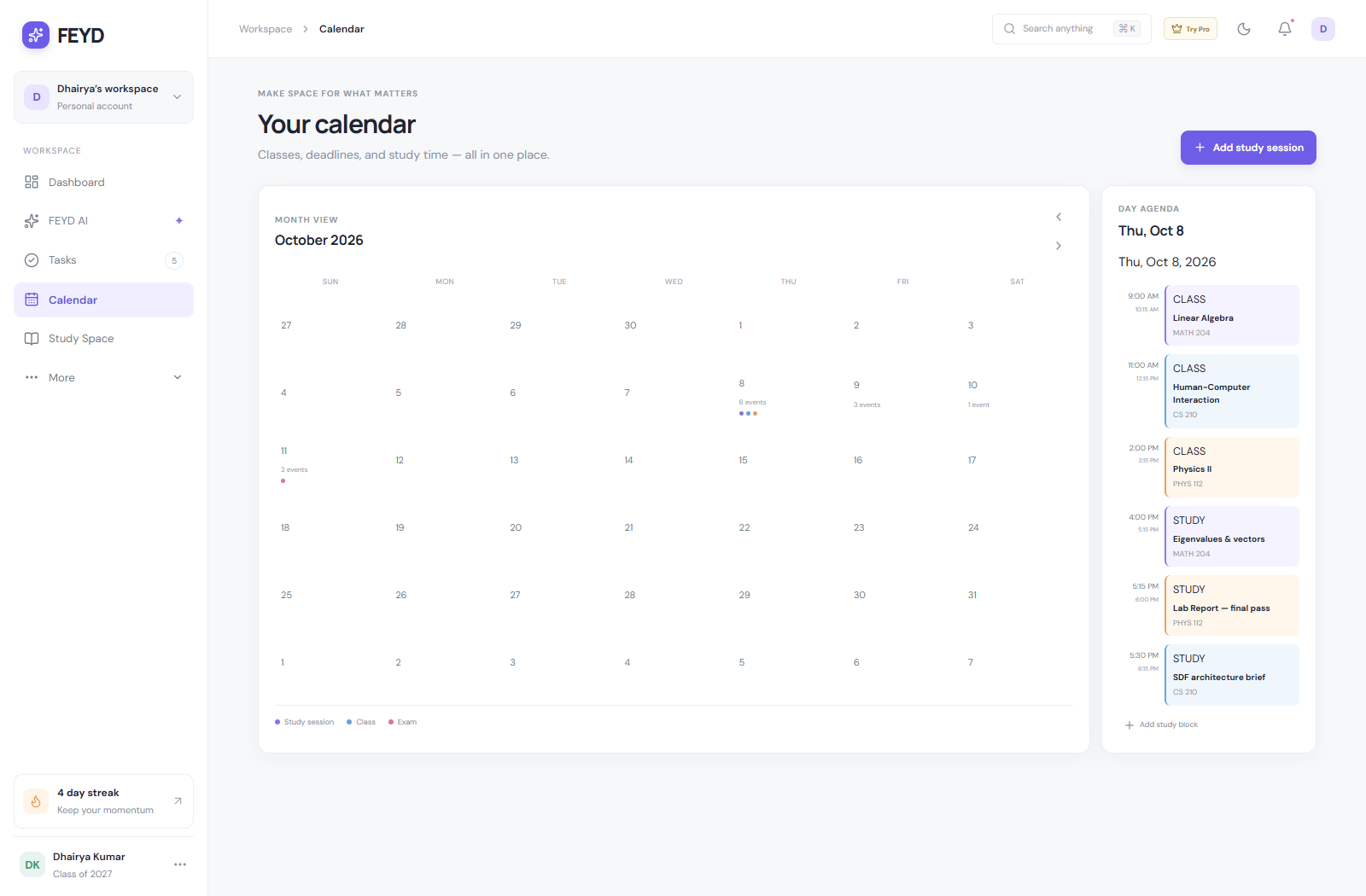
Academic calendar and study schedule
-
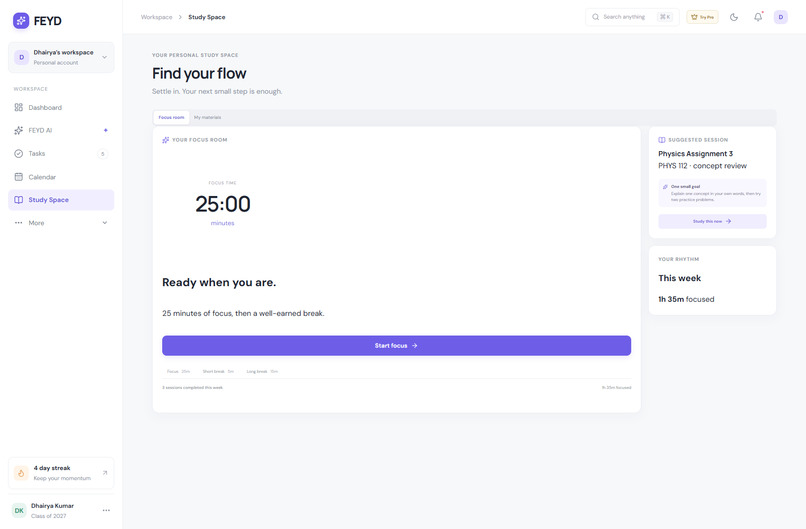
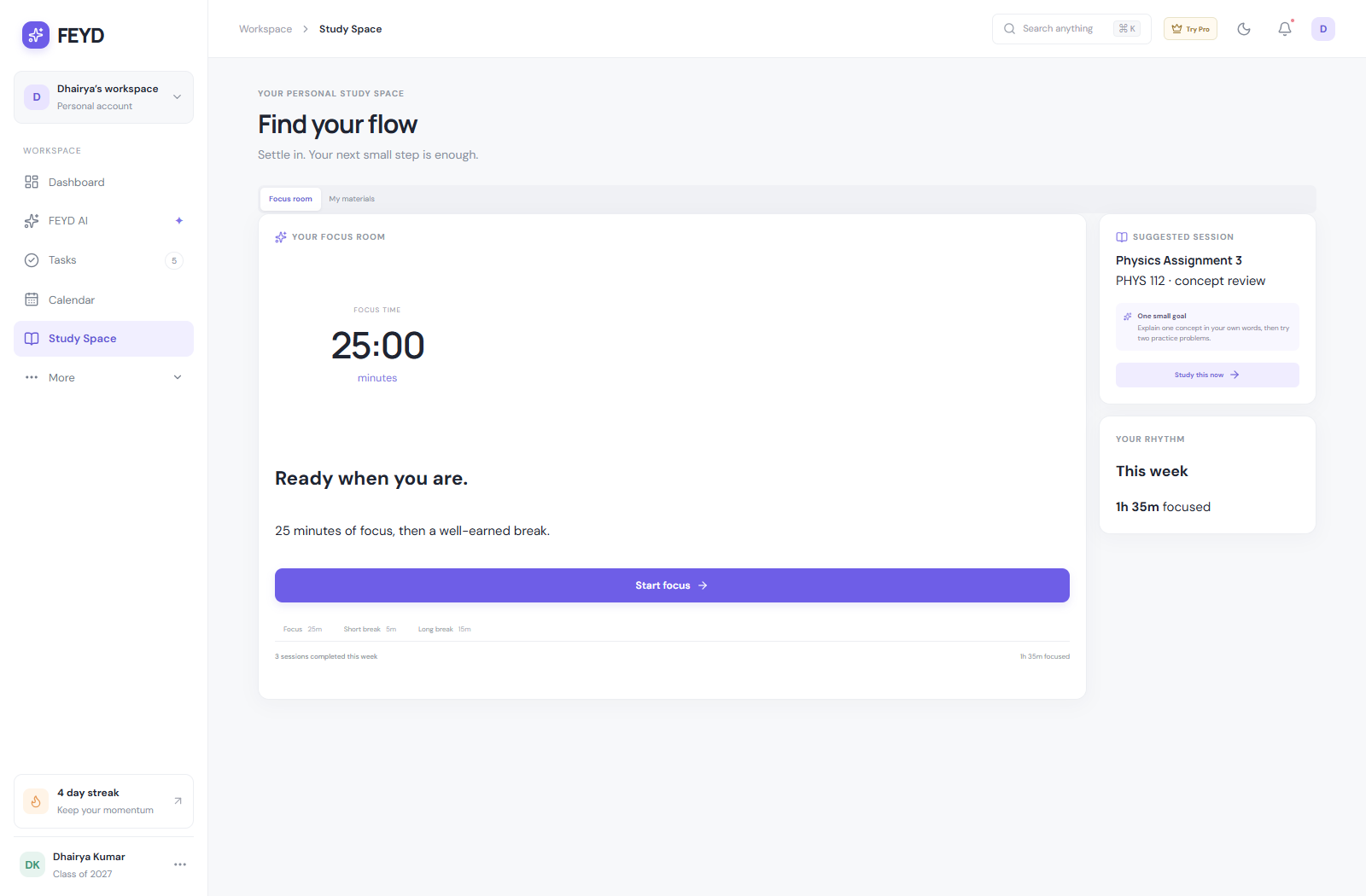
Study Space focus session
-
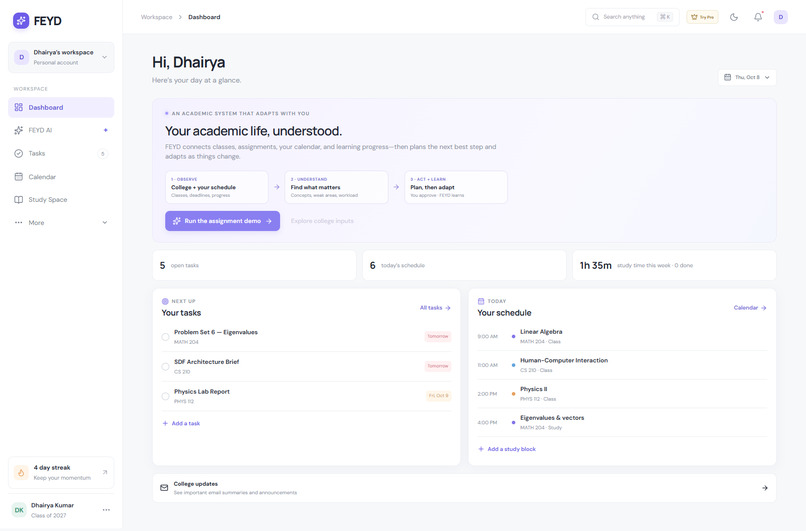
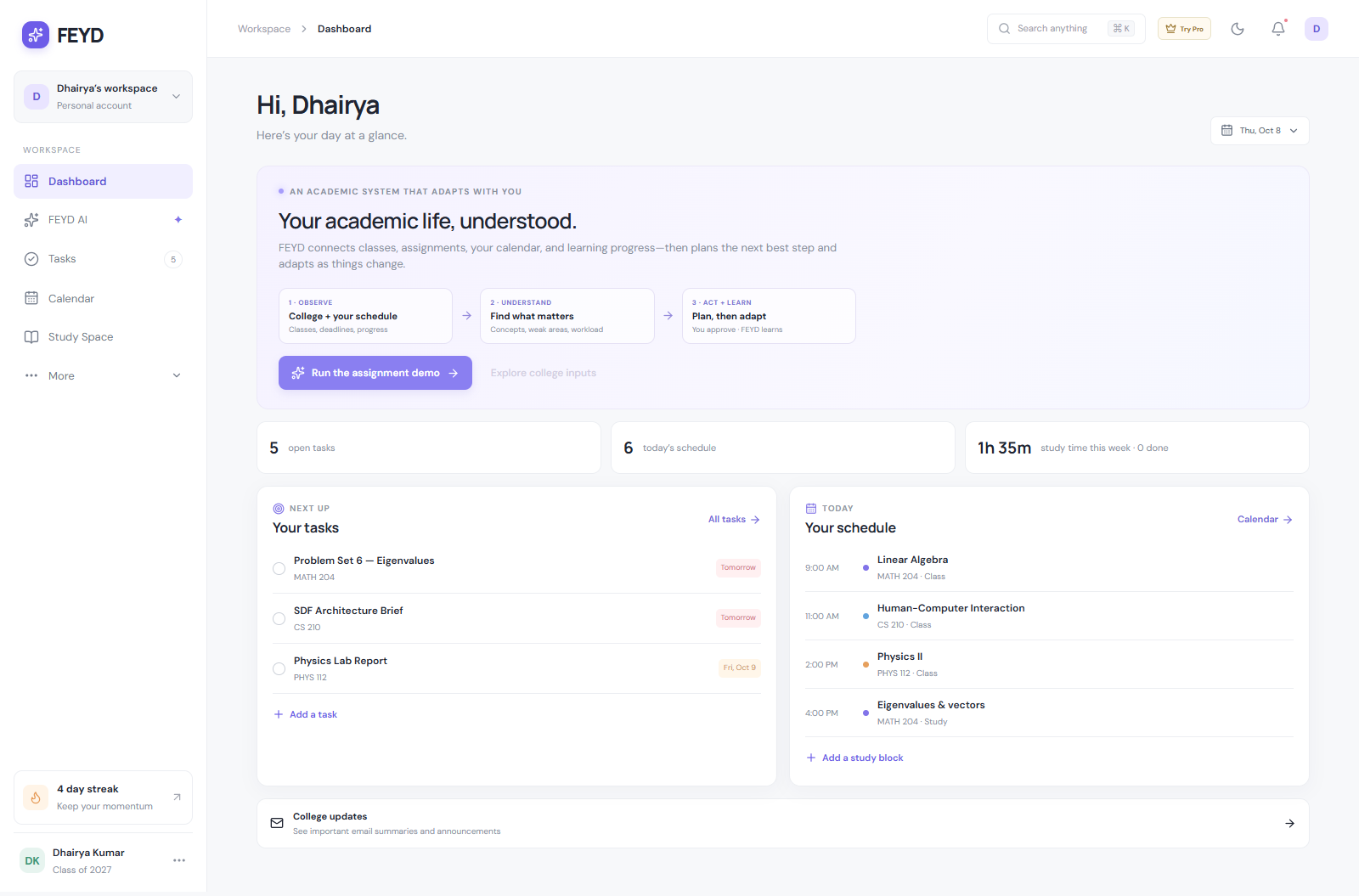
FEYD dashboard
Inspiration
College work is spread across classes, assignments, calendars, and important emails. Generic AI chat can answer a question without accounting for a student's course context, deadlines, or available study time. FEYD explores a different idea: an academic agent should help a student understand their workload, make a practical plan, take reviewable actions, measure progress, and adapt when things change—while keeping the student in control.
What it does
FEYD brings classes, tasks, a schedule, study time, and college updates into one student workspace. The Student Digital Twin is the product concept for keeping academic context together. The current browser prototype includes a dashboard, task and calendar views, a study-space timer, sample college connection and email-summary screens, and an assignment-planning demo.
In the demo, a sample Physics assignment is broken into five concepts, estimated at 2 hours 20 minutes, compared with the student's stated availability, and turned into a three-day study plan. The student can review the plan before applying it to the calendar. This illustrates FEYD's intended observe → understand → plan → act → measure → learn → replan loop; it is a prototype workflow rather than a live integration.
How we built it
The current web prototype uses React, TypeScript, and Vite. Its planning engine is deterministic demo logic, and its college connection data comes from local mock adapters. The interface is designed to make proposed actions reviewable before they change a student's plan.
To run the prototype from its source folder: install Node.js, run npm install, then npm run dev and open the local URL printed by Vite. A production build can be created with npm run build. Source code is not linked publicly in this submission.
Challenges we ran into
The central challenge was making the idea feel like an academic agent rather than a chatbot or static dashboard. A useful plan must account for deadlines, estimated effort, and available time, while keeping important actions reviewable. We also had to communicate institute-aware context without implying the prototype already connects to real college accounts.
Accomplishments that we're proud of
We are proud of the assignment-planning demo: it turns a sample assignment into a schedule-aware plan and lets the student review it before applying it. The dashboard brings together tasks, classes, study time, and college updates, making the larger FEYD vision tangible.
What we learned
An academic agent needs more than a good answer: it needs relevant context, a practical next step, feedback, and a way to adapt when circumstances change. We also learned to make the boundary between a working prototype and a longer-term product vision clear.
Limitations and what's next
The demo uses sample campus data. Google sign-in is not active, and the Google Classroom and Gmail screens are mock connection flows; FEYD does not access a student's real accounts. Planning is deterministic demo logic rather than a live AI model, and the prototype does not yet learn from real student outcomes. The assignment and email examples illustrate intended workflows, not verified results from live integrations. Next, we want to build reliable integrations, improve syllabus-grounded learning and workload estimates, and evaluate adaptive planning with students.
Pre-existing work and AI assistance
The FEYD browser prototype and demo existed before this Taskforge submission. AI coding assistance was used to help build and refine the prototype and to polish submission wording; the team reviewed the resulting work.
Built With
- education
- planning
- productivity
- react
- typescript
- vite

