Inspiration
FeverSense was inspired by a simple problem I kept seeing around me: whenever someone developed a fever, people were unsure what to do next. Most online information felt generic, and real medical advice often came only after a long wait. During seasonal outbreaks, this confusion becomes even worse. I wanted to build something small, approachable, and reliable that could give quick clarity to anyone dealing with a fever.
What it does
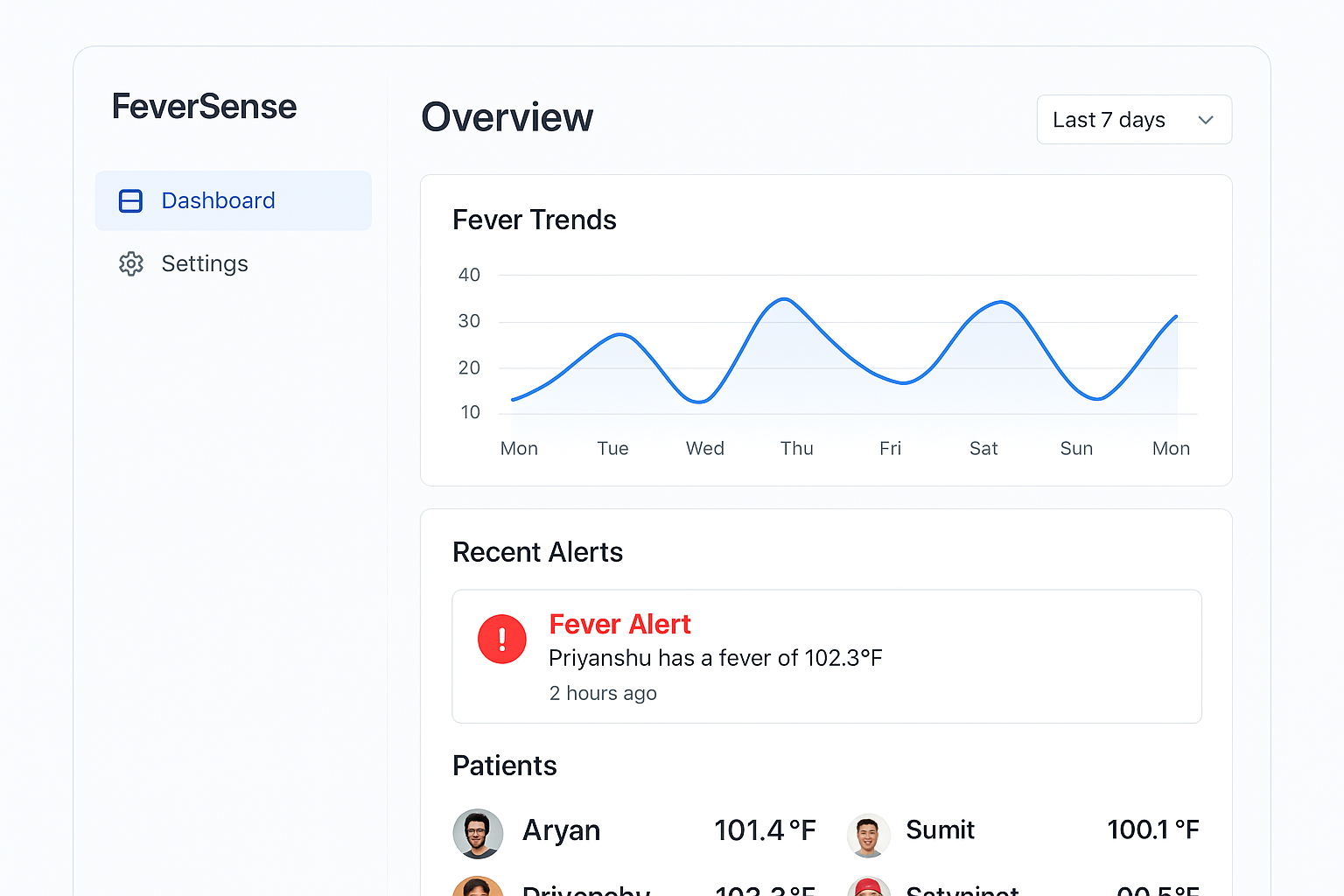
FeverSense offers a short symptom-check flow, evaluates the severity, and gives practical next steps. It uses a mix of rule-based checks and a small machine-learning component to sort cases into low, medium, or high risk. The tool avoids medical claims and instead focuses on guiding users toward safe decisions. A simple dashboard also tracks incoming cases and shows basic trends.
How we built it
I divided the system into three focused pieces:
- Input layer
A short questionnaire collects temperature, duration, and key symptoms. The risk can be roughly expressed as R = f(T, S, D) where T is temperature, S is symptom set, and D is duration.
Triage logic A lightweight model produces probability scores, and a rule engine checks for red flags like persistent vomiting, neck stiffness, or rashes. This hybrid method keeps the system explainable.
Dashboard A minimal interface displays all cases, categories, and small trend cues for quick review.
Challenges we ran into
Handling messy symptom descriptions was the toughest part. People type symptoms in unpredictable ways, sometimes mixing multiple issues into one line. Designing a calm, clear tone for the guidance was another challenge. I also had to find a balance between caution and practicality so the system didn’t classify everything as high risk. Data privacy and minimal data collection were important constraints during development.
Accomplishments that we're proud of
I am proud that FeverSense feels simple to use while still being careful and informative. The hybrid decision system works smoothly, and the dashboard gives a clean view of incoming cases. Most of all, the project turned a vague idea into something functional that could actually help someone understand their fever instead of panicking.
What we learned
I learned how difficult it is to design health-related tools that stay safe, clear, and useful. The project improved my understanding of building explainable ML systems, normalizing messy user input, and creating UX that works well during stressful situations. It also taught me how important tone, phrasing, and trust are in health tech.
What's next for FeverSense
Future versions could add optional teleconsultation links, better trend analysis, and more personalized tracking. I want to refine the rules with clinical feedback and explore a small time-series model to detect unusual fever spikes. The long-term goal is to keep FeverSense simple but make it increasingly reliable and supportive for users dealing with fever symptoms.

Log in or sign up for Devpost to join the conversation.