-
-
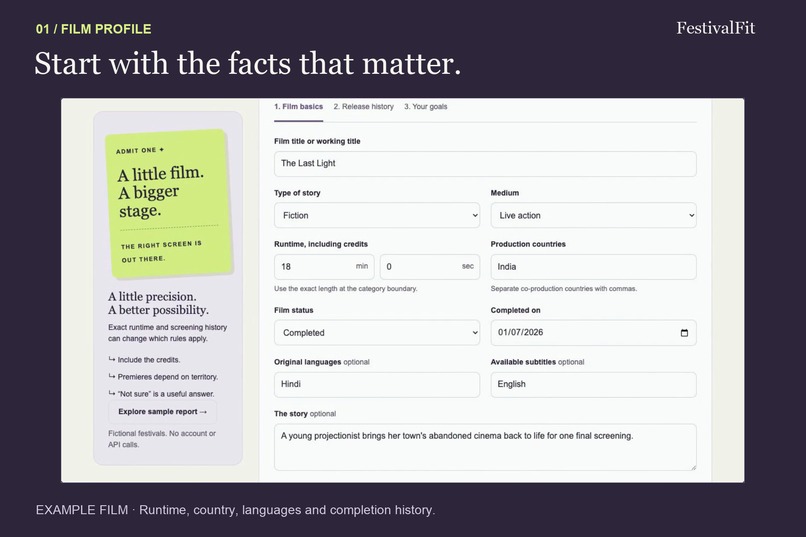
Film profile
-
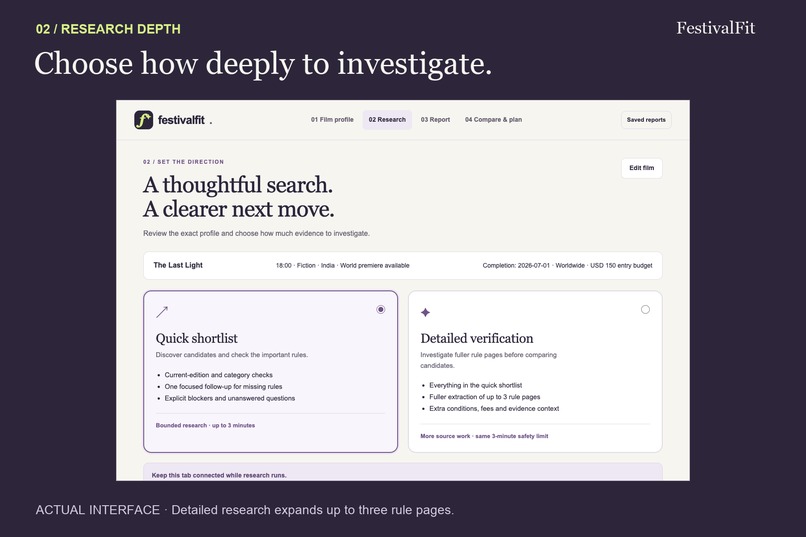
Research depth
-
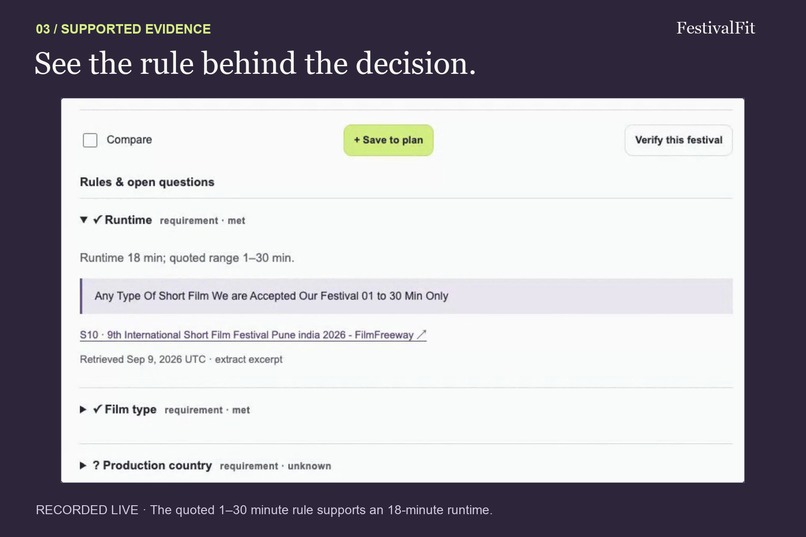
Runtime evidence
-
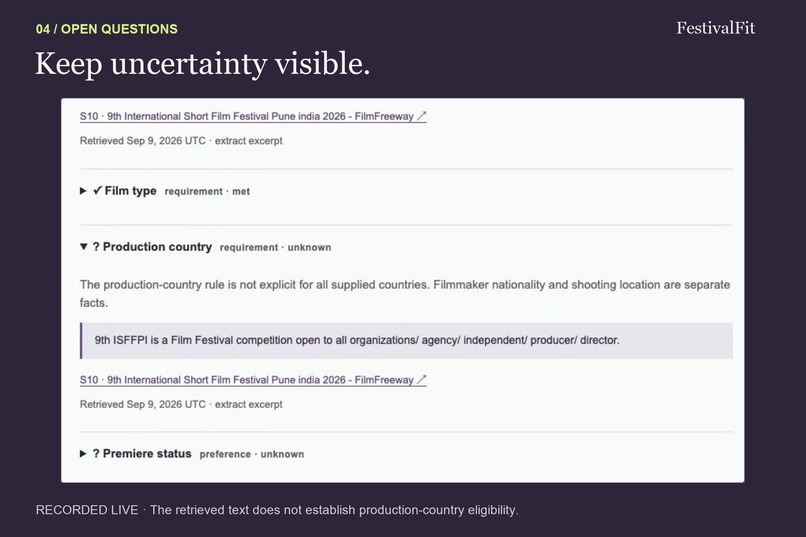
Visible uncertainty
-
Compare and plan
-
Export report
-
Agent architecture
Inspiration
Finishing a film is only the beginning. The next decision—where to send it—can affect its budget, premiere opportunities and path to an audience.
An 18-minute short may fit one festival category and exceed another's runtime limit. A previous screening may change premiere eligibility. A promising deadline means little if the rules belong to a different edition.
FestivalFit was built around a practical question: can a filmmaker understand the evidence behind a festival recommendation before spending money?
What it does
FestivalFit turns a film profile into a researched festival shortlist and a practical submission plan.
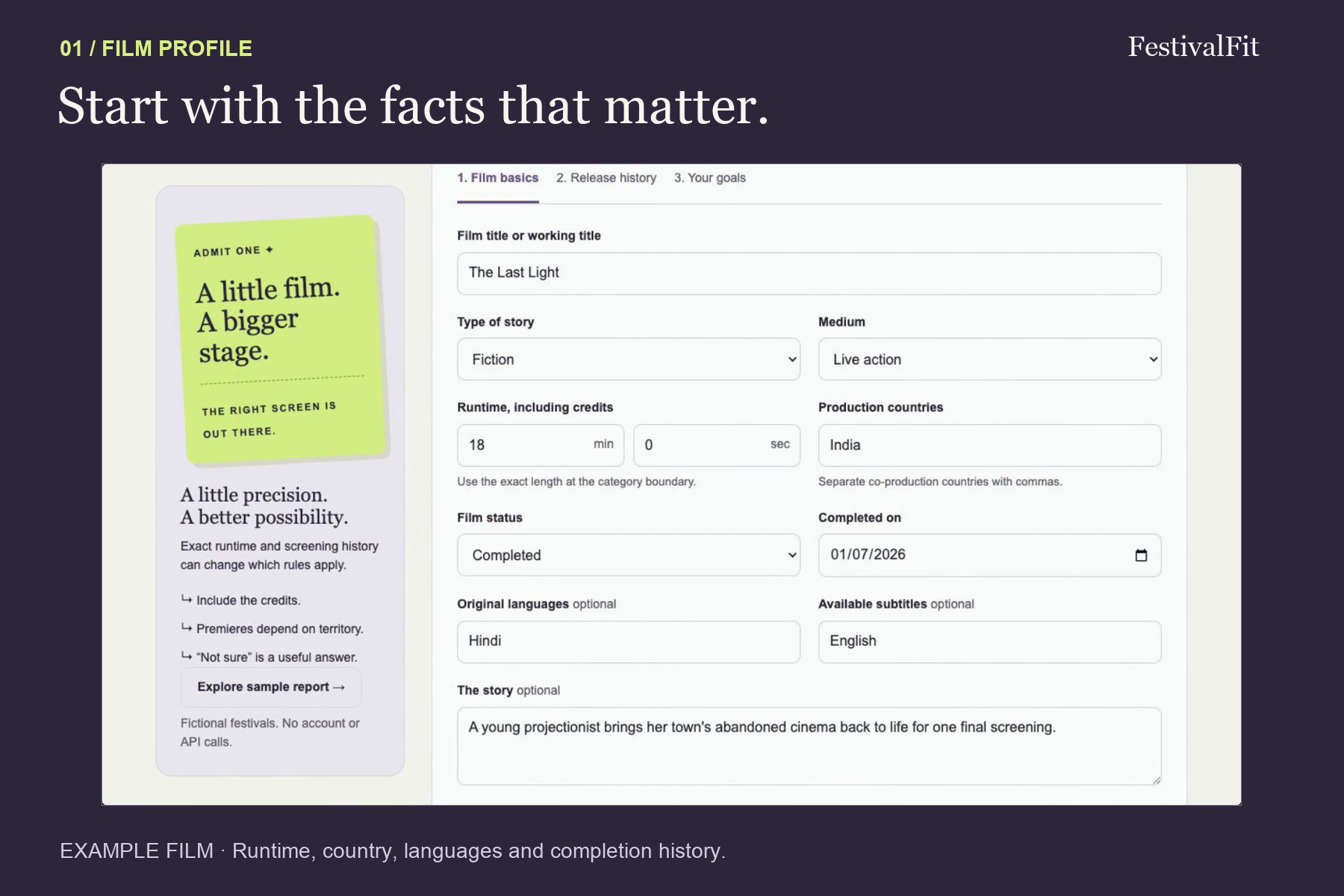
- Describe the film: runtime, production countries, languages, subtitles, completion date, screening history, premiere status, campaign goals and budget.
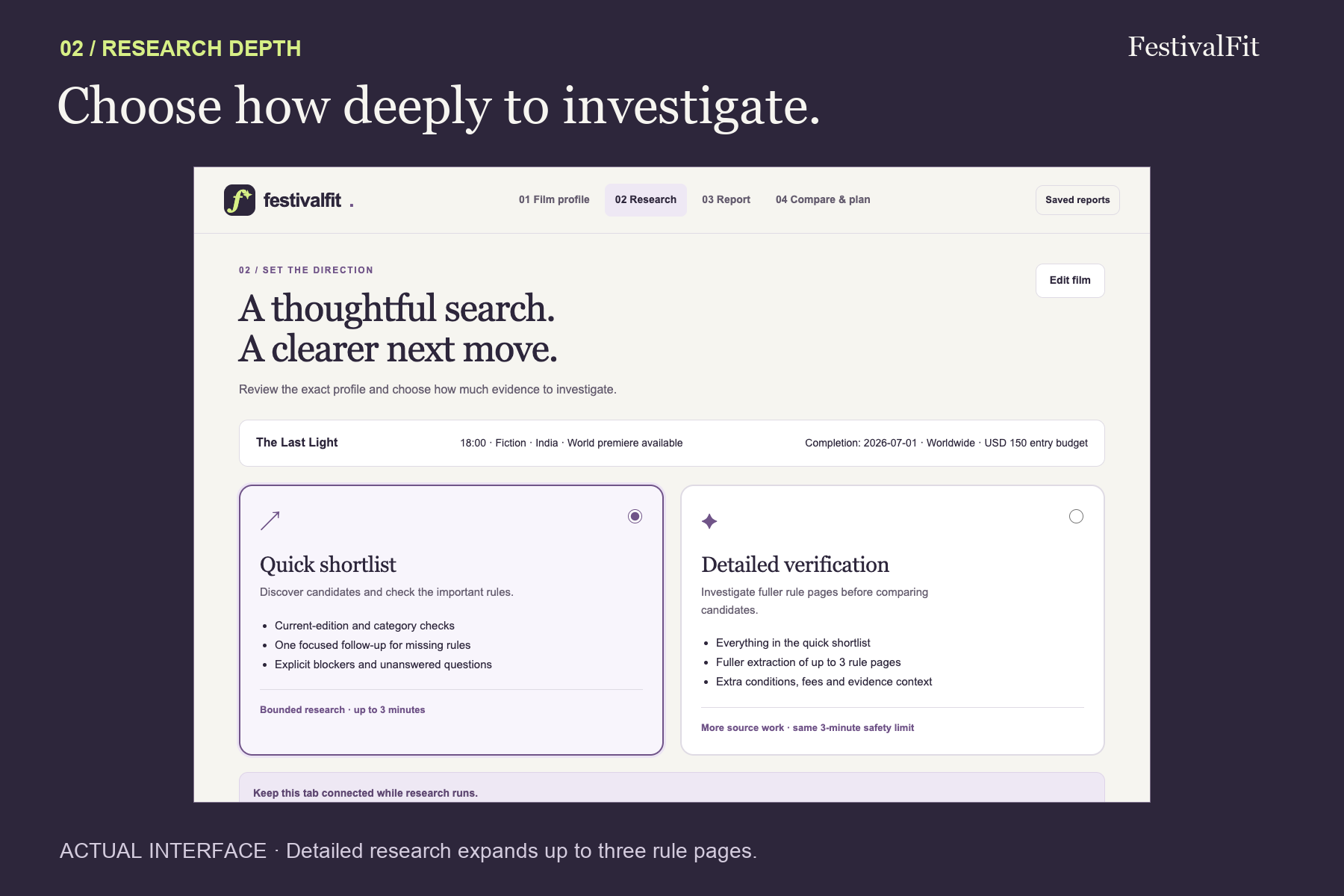
- Choose the research depth: Quick builds a shortlist; Detailed investigates fuller rule pages. A focused recheck can revisit an individual festival.
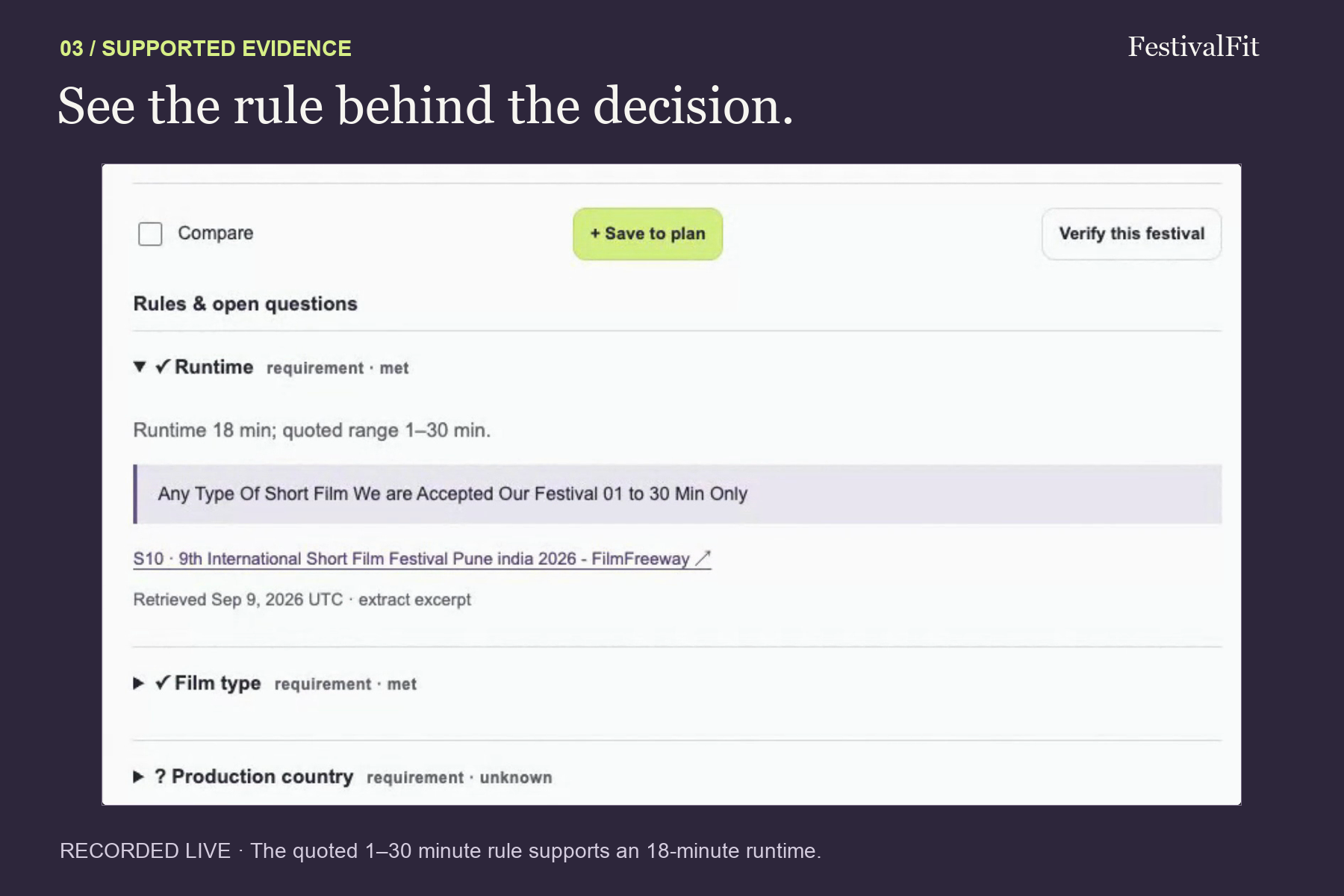
- Inspect the decision: each candidate shows its edition and category, quoted rules, sources, supported checks and unresolved questions. Decisions are labeled Potential match, Needs review or Excluded.
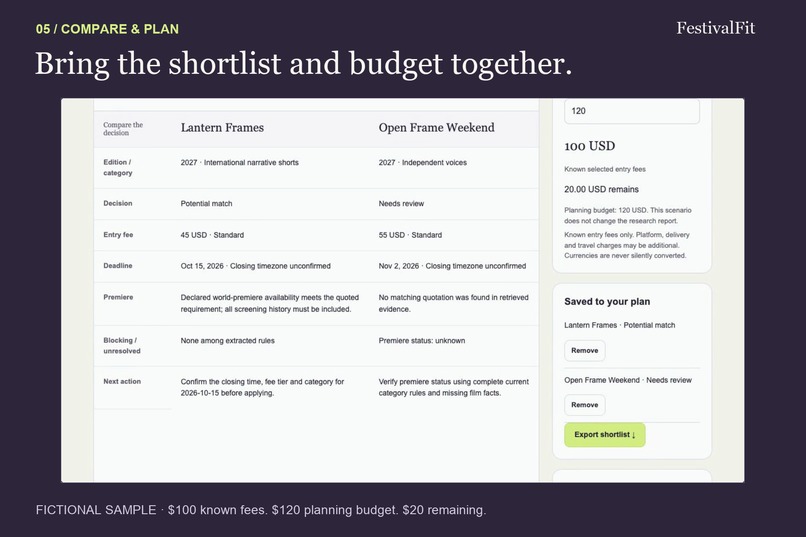
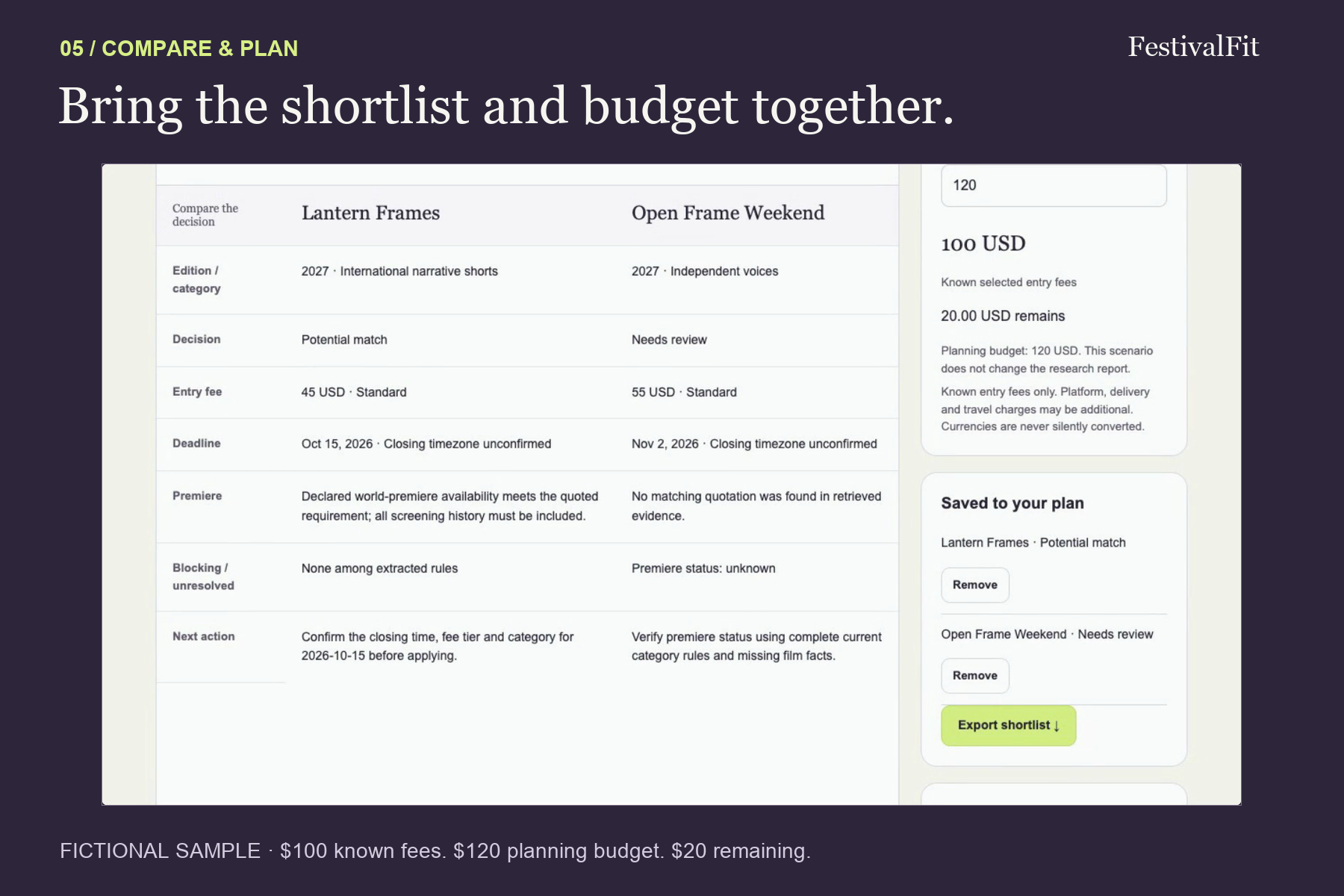
- Build a plan: compare up to four candidates, save a shortlist and inspect fees, deadlines and open questions together. Known entry fees are totaled by currency; unknown costs stay visible.
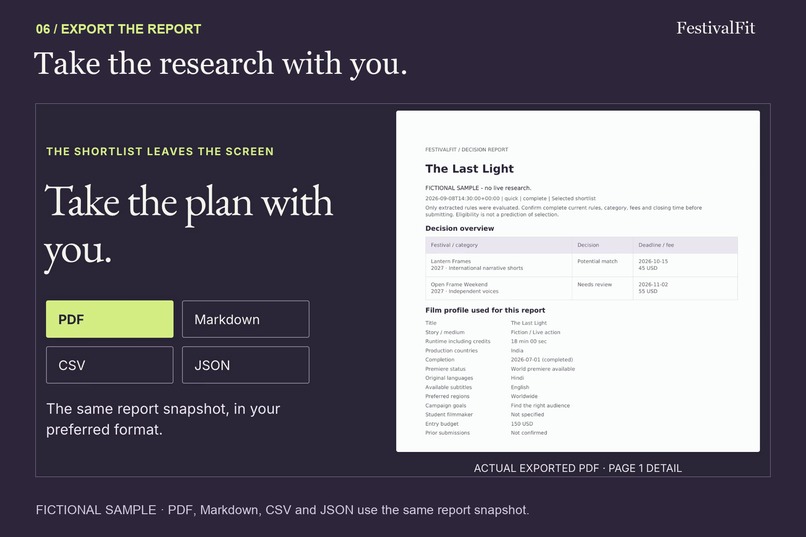
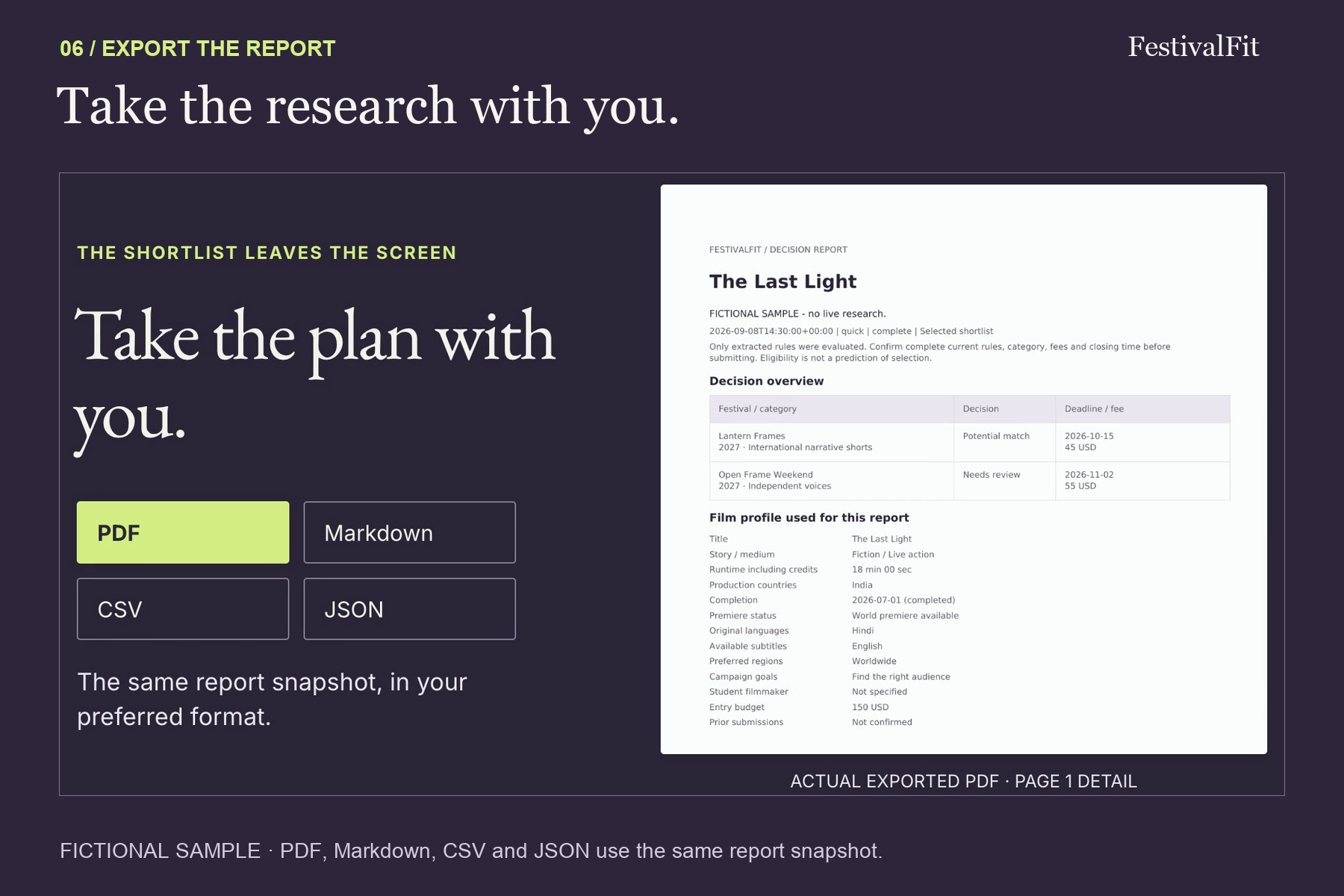
- Take the research with you: export PDF, Markdown, CSV or JSON from the same report snapshot, including just the saved shortlist when needed.
A potential match describes what the retrieved evidence supports. Filmmakers can inspect the complete official rules before making their final decision.
How we built it
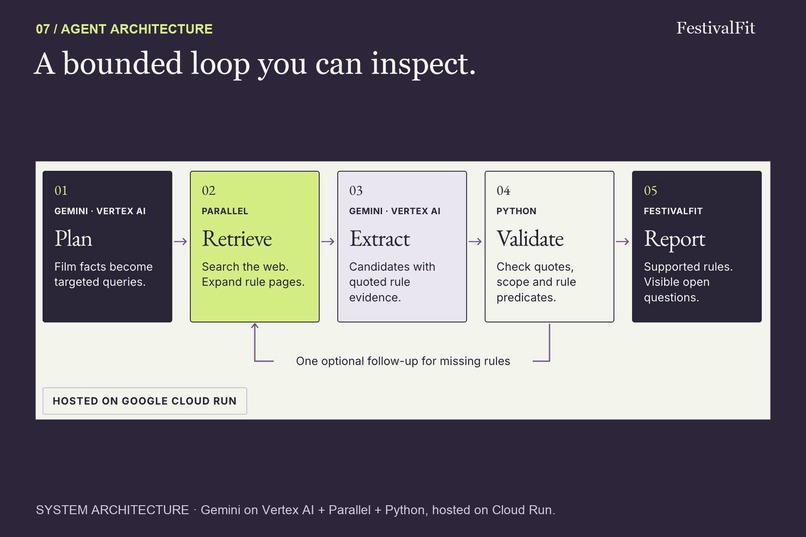
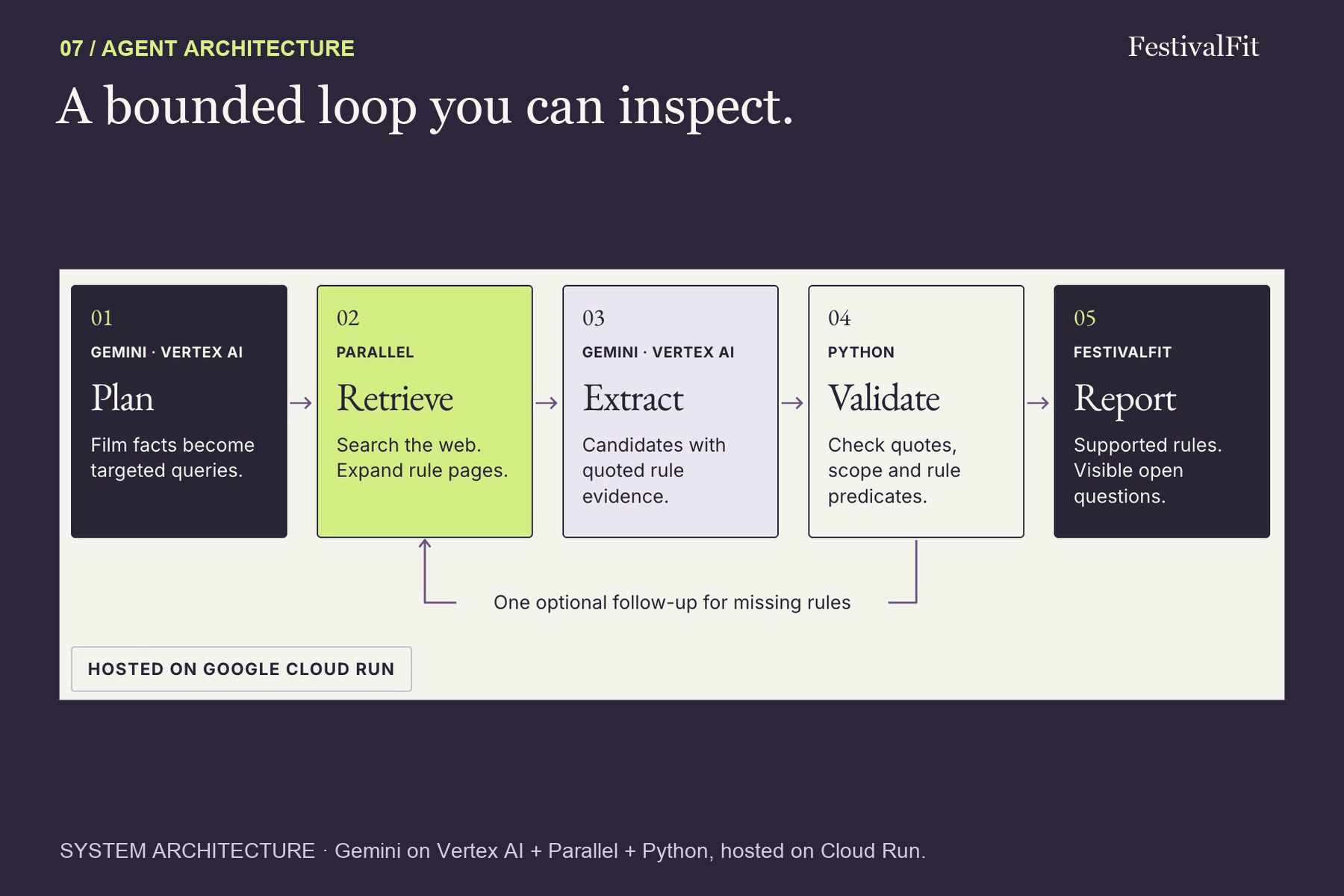
The interface uses HTML, CSS and JavaScript. A Python/FastAPI backend runs on Google Cloud Run, with Gemini on Vertex AI and Parallel Search and Extract powering the research workflow.
- Plan: Gemini turns the film's facts into targeted research queries.
- Retrieve: Parallel Search finds source pages and excerpts. Detailed mode uses Parallel Extract to expand up to three rule pages.
- Assess: Gemini extracts festival candidates and interprets the available requirements.
- Validate: Python checks quotation presence, rule scope and supported conditions before deriving the displayed decisions.
- Follow up: the workflow can make one bounded follow-up for missing evidence or alternatives, then deliver the final report.
The interface streams progress and partial findings. The method-and-sources view exposes the research stages, queries and retained sources. Google Cloud Secret Manager supplies deployment secrets, and a service identity authenticates to Vertex AI.
Challenges we ran into
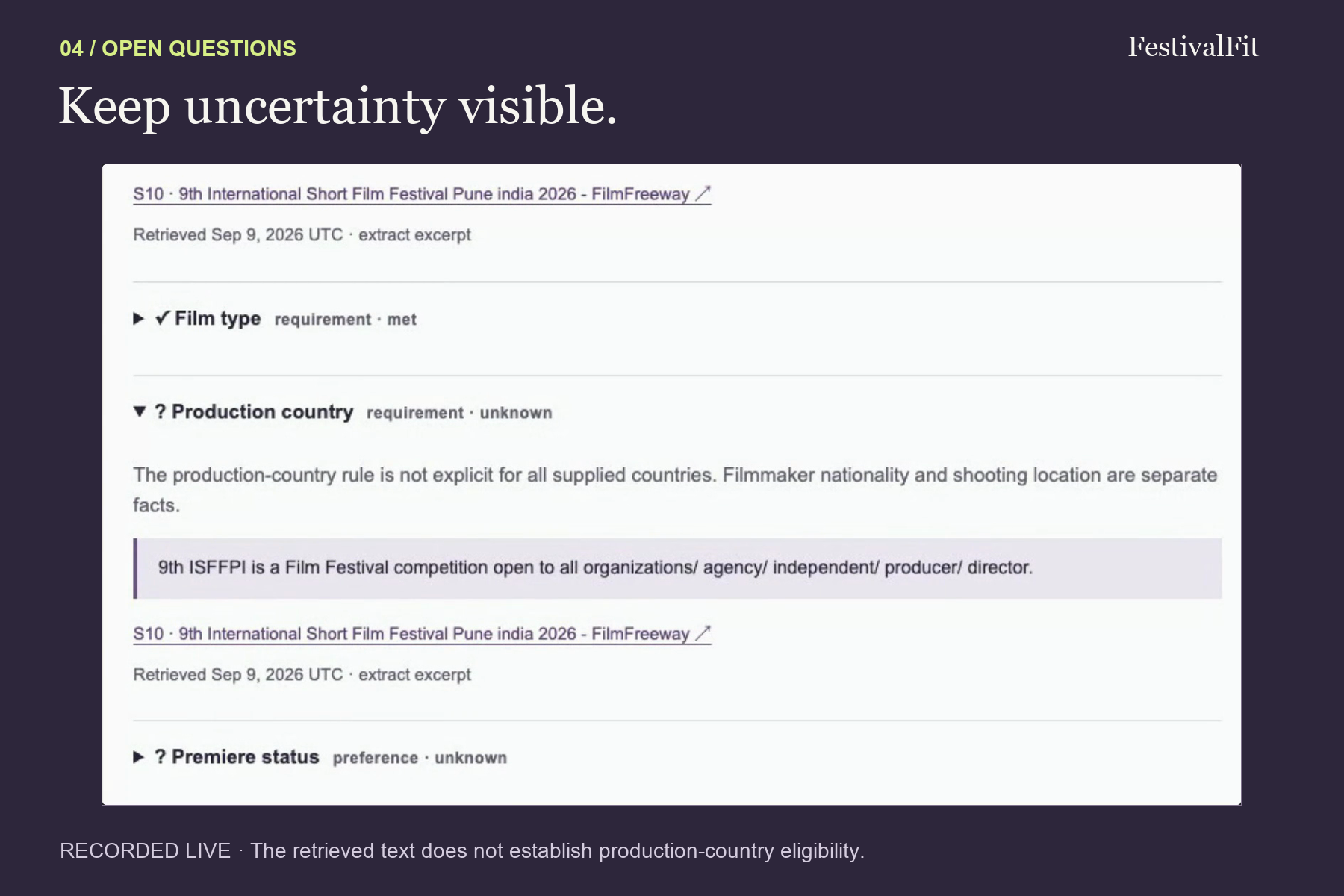
Rule scope was the hardest part. A quotation can be real and still belong to the wrong edition or category. A statement about eligible organizations may say nothing about a film's production country. FestivalFit keeps these distinctions visible and leaves unsupported conditions unresolved.
Research also needed limits. Both modes have a 180-second request limit, and the follow-up is bounded. Progress, partial results and cancellation help users understand and control a run.
Reports needed to stay consistent. Comparison, saved plans and all four exports use the same report snapshot so a decision can be inspected alongside the evidence that produced it.
Accomplishments we're proud of
The recorded demo follows a fictional 18-minute Indian short through real research calls. That Detailed run retained 18 sources, expanded three pages and returned two candidates needing review.
For the Pune candidate, a quoted 1–30-minute rule supports the runtime check. Production-country eligibility remains unresolved because the available quotation does not establish it. Both outcomes are visible in the report.
A separate, clearly labeled fictional sample demonstrates a runtime exclusion, comparison, budget planning and an actual PDF export. The recorded release checks also include 126 automated tests, live provider integration, all four export formats and selected Chrome/Firefox layouts.
What we learned
Useful festival research depends on preserving the relationship between a film, a rule, its scope and its source. An explicit unanswered question can be the most useful result when it tells a filmmaker what to verify next.
The interface matters just as much: evidence needs to remain close to the decision, and costs need to remain close to the plan.
What's next for FestivalFit
Next steps include resumable background research, deadline reminders, change detection for previously checked rules and broader validation across festival categories and languages. Organizer-confirmed information could further strengthen the evidence behind each decision.
The aim remains simple: help independent films find their next screen with a plan their filmmakers can inspect.
Try it
Open the live app and choose Explore sample report to inspect rules, compare candidates and export a shortlist without credentials. Sample festivals and rules are fictional. Live research requires a private demo code.

Log in or sign up for Devpost to join the conversation.