-
FentSafe Transit Opening Screen
-
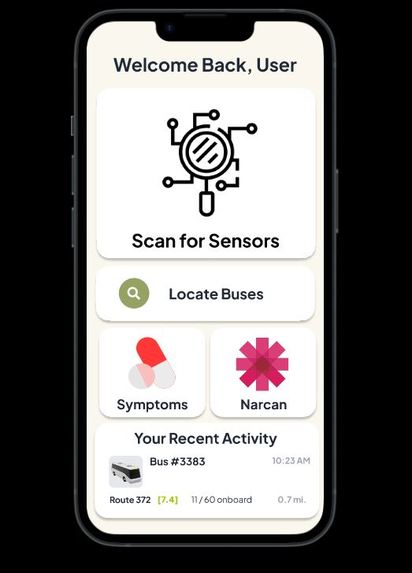
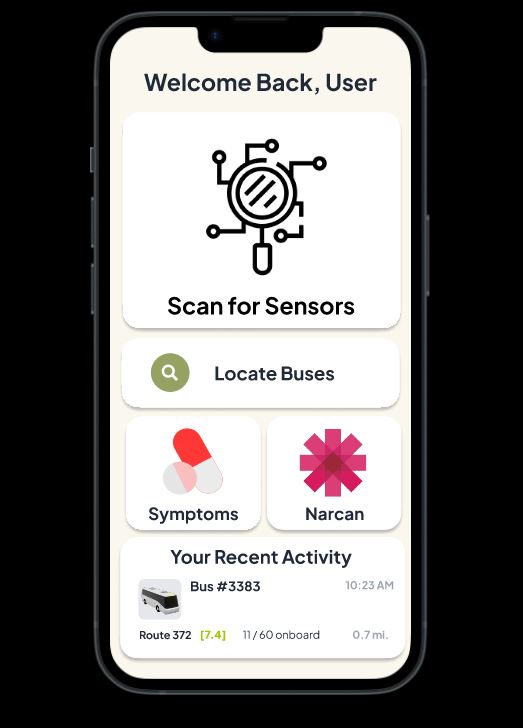
Landing Page
-
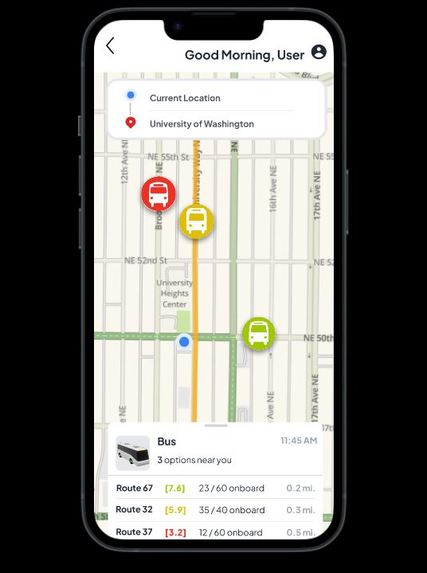
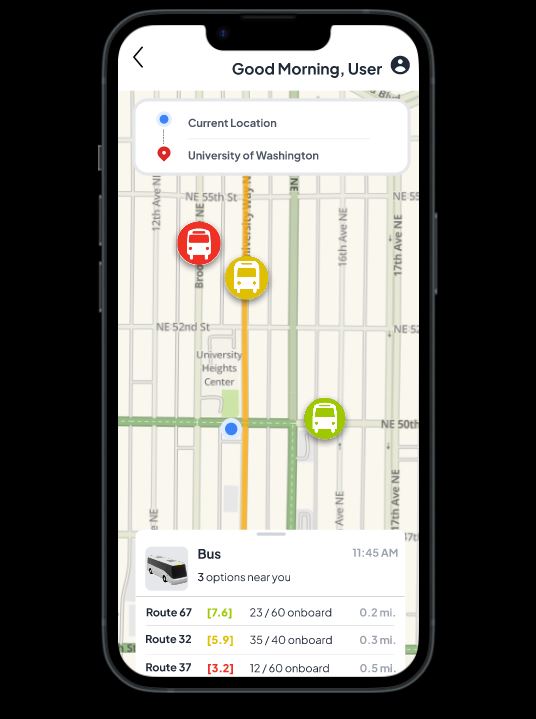
"Nearby Buses" Screen
-
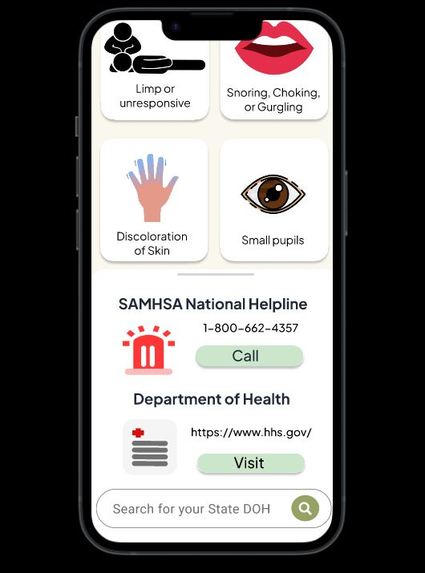
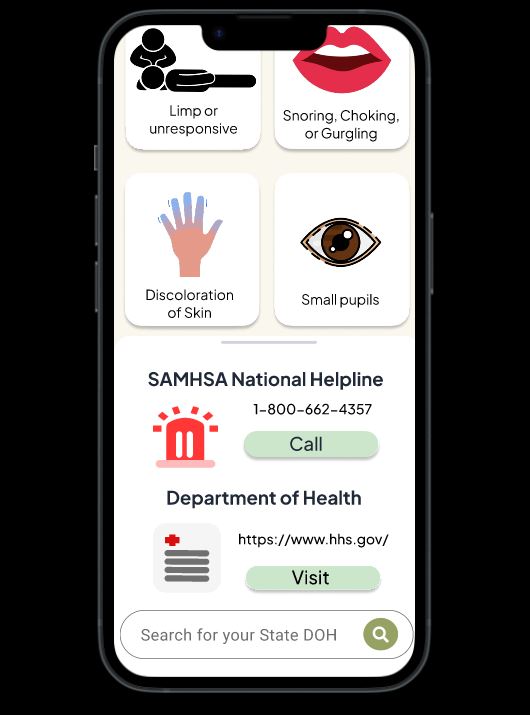
"Emergency Calling" Options
-
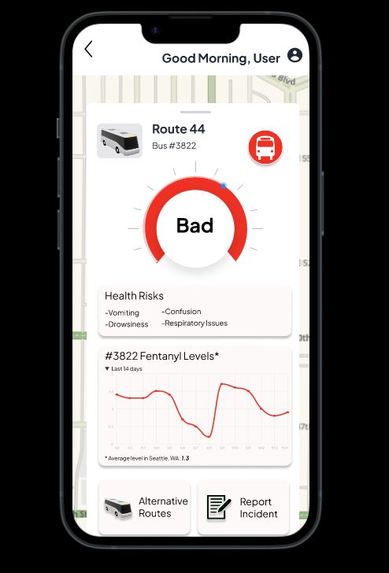
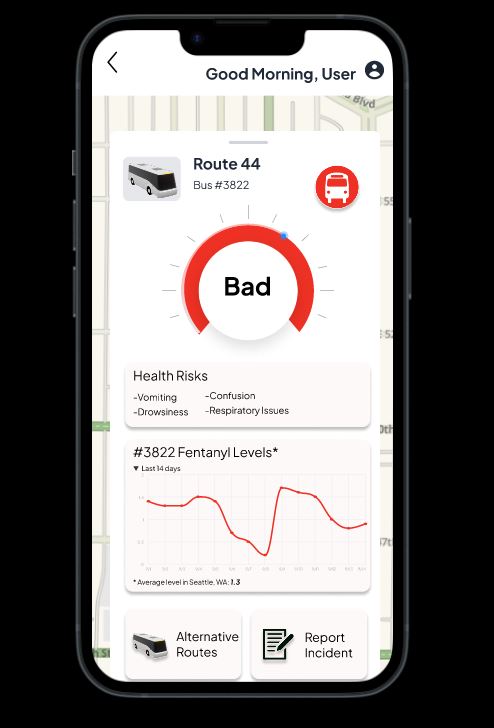
"Bad Air Quality" Example
-
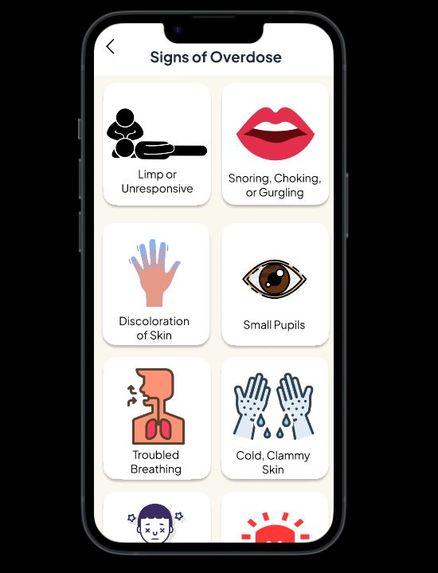
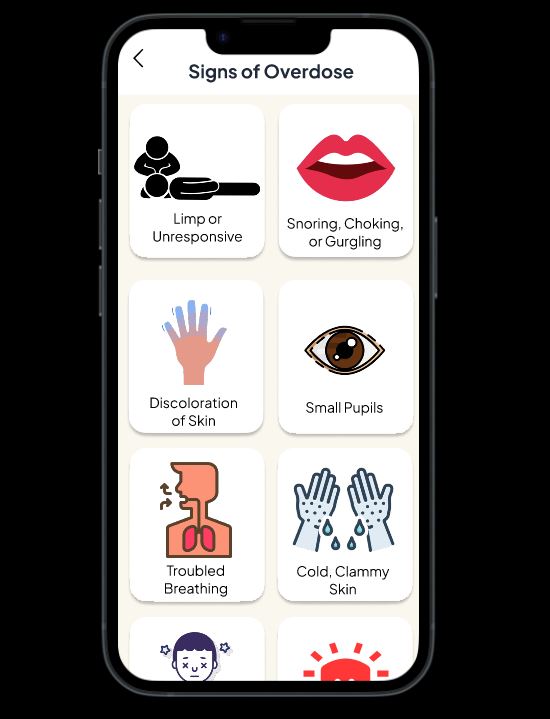
"Overdose Symptoms" Screen
-
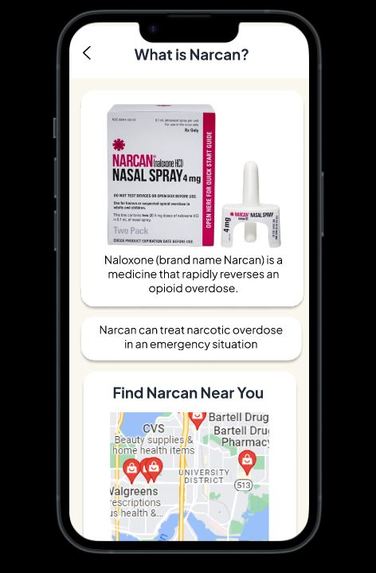
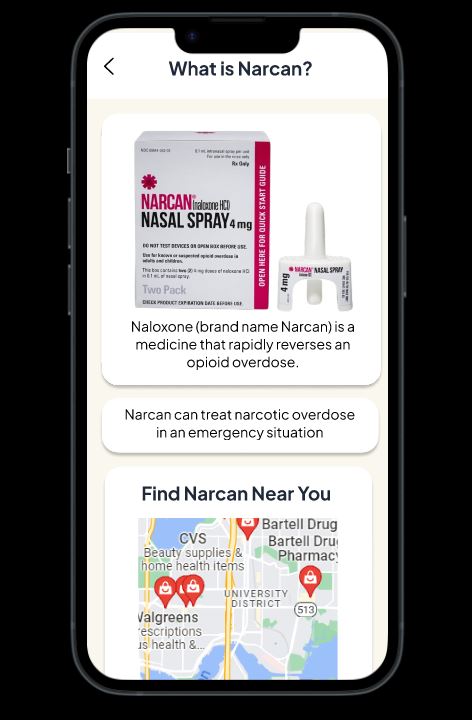
"Narcan Basics" Screen
-
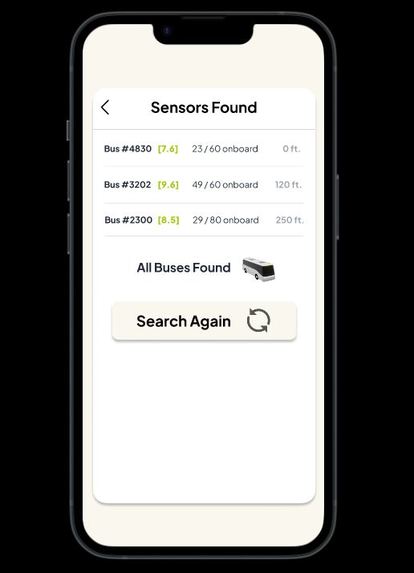
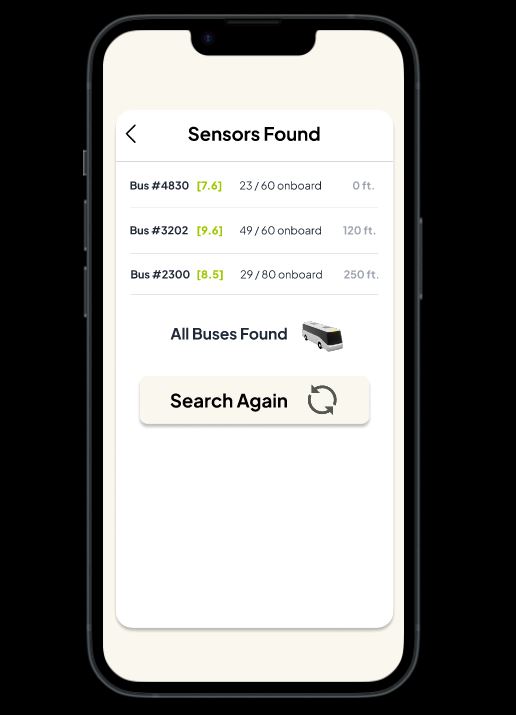
"Nearby Sensors" Screen
-
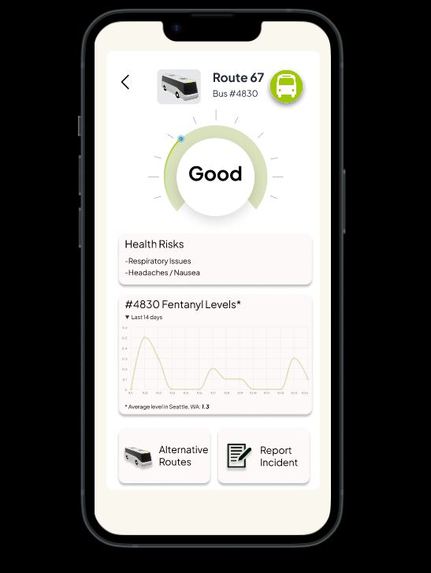
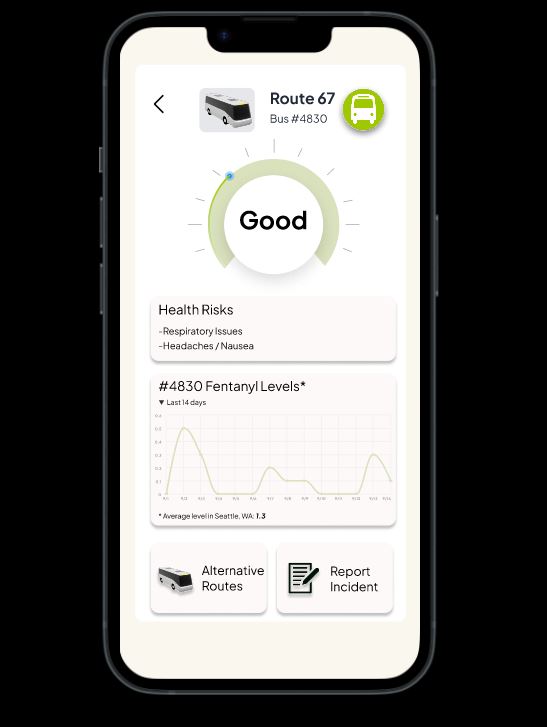
"Good Air Quality" Example
-
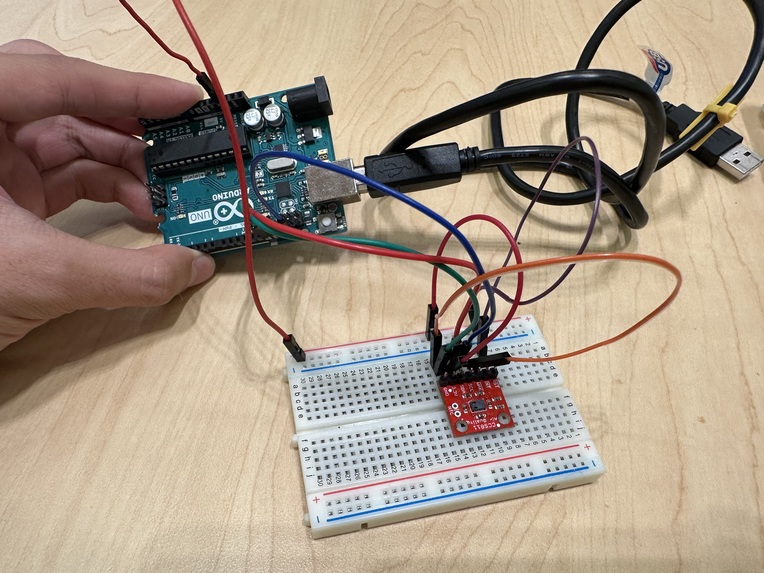
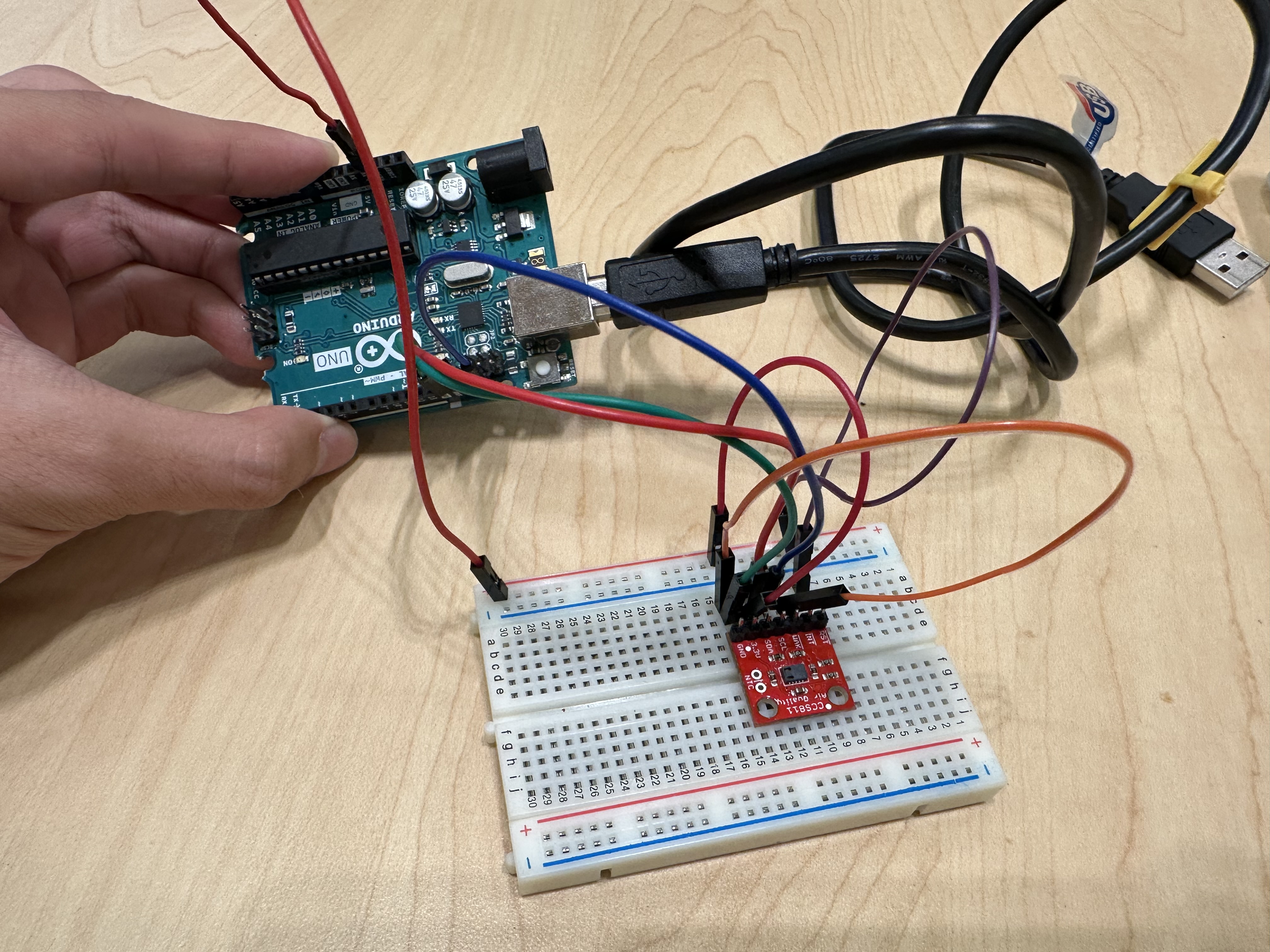
Air Quality Sensor Setup
-
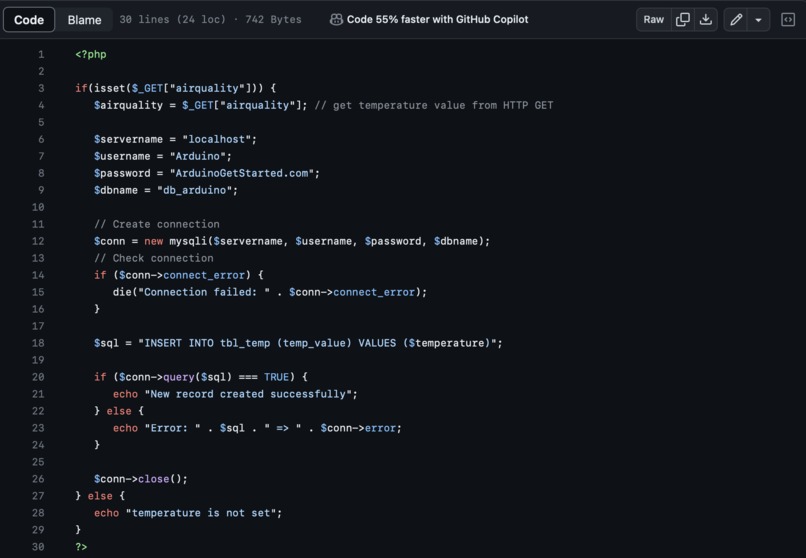
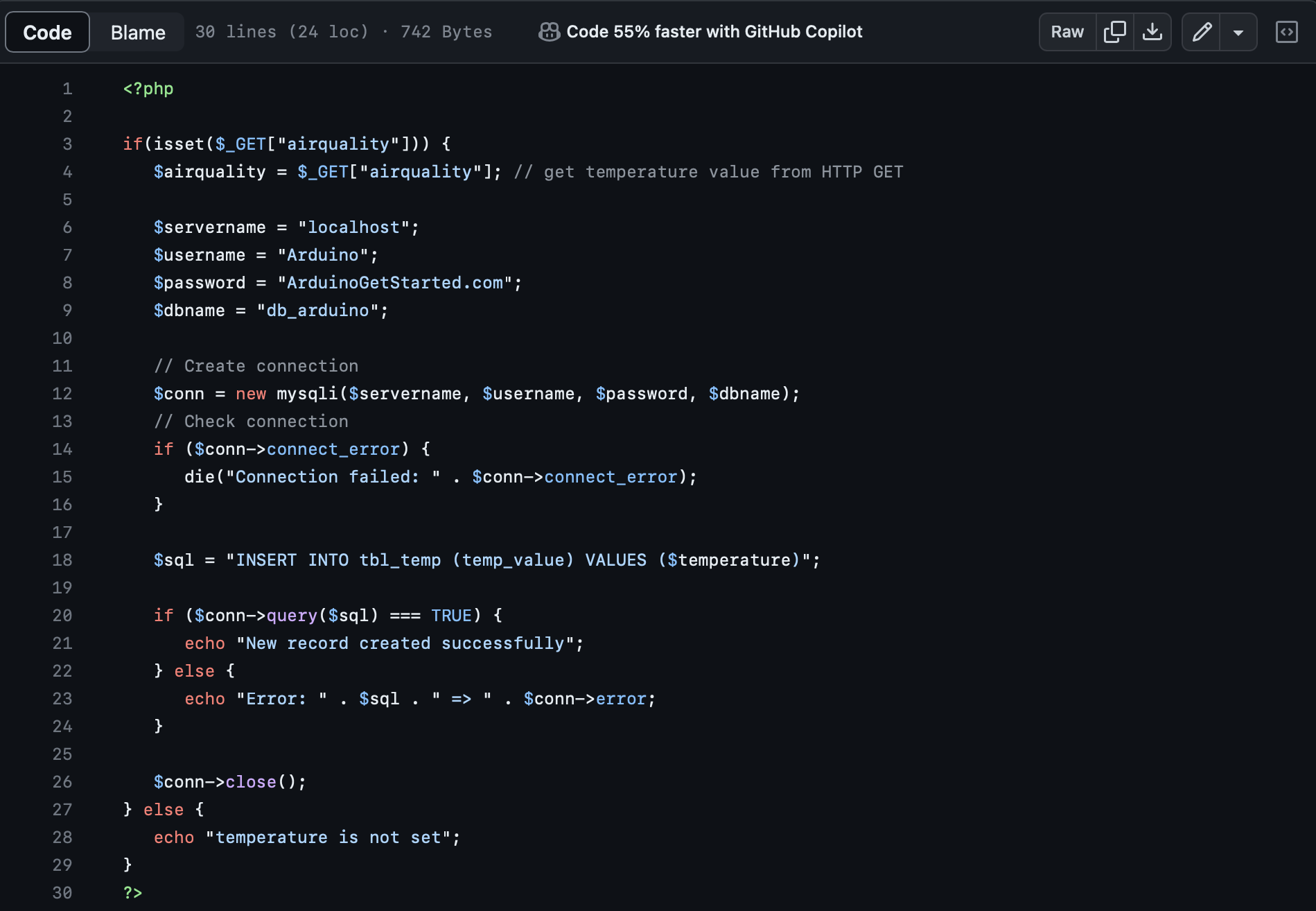
Php file from the web dev
-
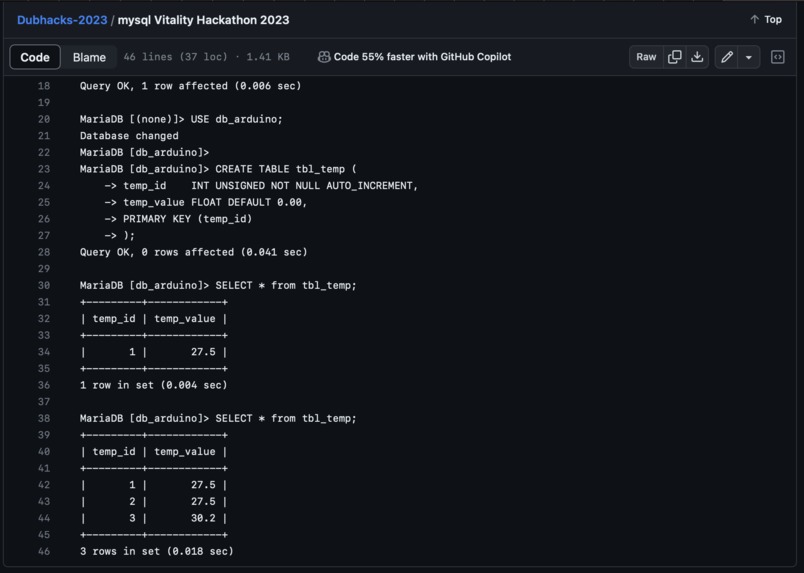
SQL visual

Inspiration
After recent UW reports found that traces of fentanyl were detected in almost all of Seattle's public transportation vehicles, our group wanted to create an application that could detect whether the air quality in a given bus or Link Light Rail cart was toxic. The decriminalization of drugs has been a heavy and relevant topic so to tackle this with technology we found an intersectionality with public health and the advancements of tech.
What it does
We would, first, implement particle detection sensors (PM2.5) in all public transit vehicles. These devices would be able to detect fentanyl particles in the air and store the concentrations of it onto a server. Next, with the help of our mobile application, users can either scan, via Bluetooth, the sensor in their vehicle, or they can search for nearby sensors, to access its data. Various insights can be read through the application, including the ratings of specific buses, past levels of fentanyl, and how to detect an overdose.
How we built it
Back-End Development: To detect the fentanyl levels in the air, we connected an air quality detector onto a breadboard, which we connected to our computer, which is then connected to a php script in order to access the SQL code. We, then, used SQL to manage and store the fentanyl data into servers and create the tables with the id and values for our application to access.
Front-End Development: We used Figma to build our wireframes and mobile prototype.
Challenges we ran into
Troubleshooting our hardware was the most difficult challenge we encountered. When we thought our program was coded correctly, we still experienced errors in actually detecting the air condition. We eventually found out that our hardware was actually broken, and the errors we were encountering were due to a hardware issue, rather than a programming one.
Accomplishments that we're proud of
We are proud of creating an application that solves a prominent, real-life issue, especially in the city of Seattle. With all of our group being heavy public transit users, we believed that it is important that issues relating to public safety are promptly addressed and are willing to offer any efforts we could provide.
What we learned
We were able to have more hands-on experience with hardware, as well as being able to utilize multiple programming languages to build our application (C, SQL, PHP, HTTP). Working on the UX/UI of the project also built onto our accessibility and design skills, allowing us to think carefully of making specific decisions for our application.
What's next for FentSafe Transit
We would like to work with city officials and public transportation offices to successfully install PM2.5 devices into the buses, train and Light Rail carts of Seattle, at first, to ensure that the fentanyl issues are being actively addressed. This technology would hopefully help reform public policy in not decriminalizing the drug but restricting the usage and the sources of it to create a controlled environment of public safety. Upon completion of this, we can push out our application and make it accessible to the general public, being most helpful to daily commuters. With the success garnered in Seattle, it would be advantageous to promote national action and have the United States public transportation system implement similar systems to ensure public safety for all citizens.


Log in or sign up for Devpost to join the conversation.