Inspiration
Real-time financial research, token safety checks, wallet analysis, market sentiment, is usually locked behind expensive subscriptions built for institutions. Retail traders, especially in underserved and emerging markets, are left checking things by hand or trusting whatever shows up on their timeline. We wanted to build something different: financial intelligence priced the way it's actually consumed, one question at a time, for cents, not a monthly fee.
What it does
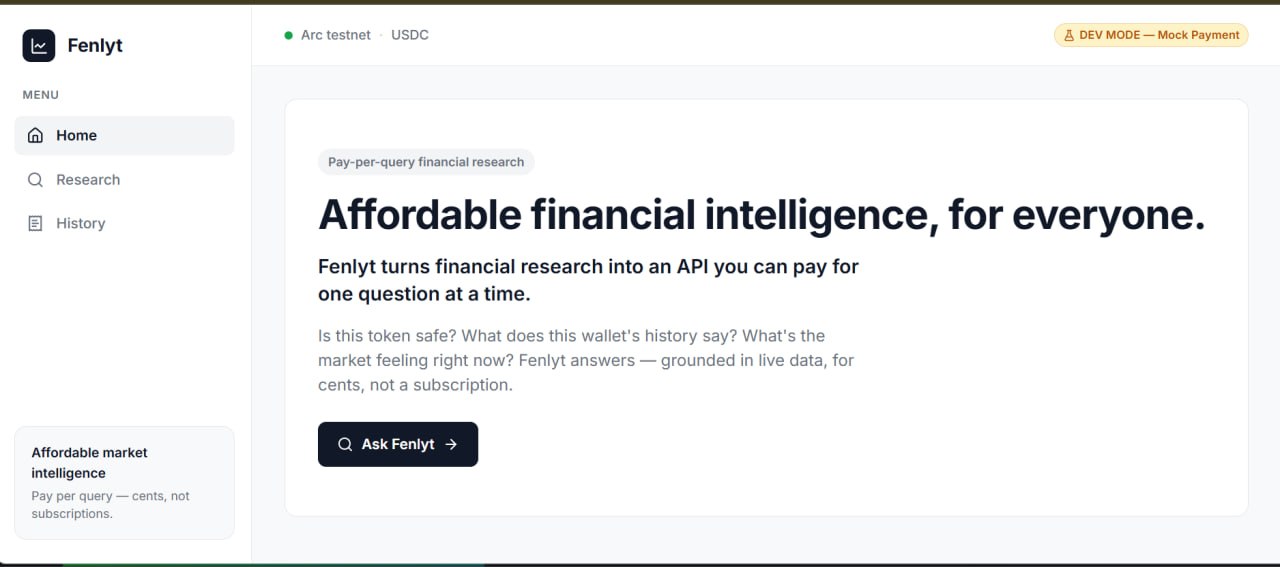
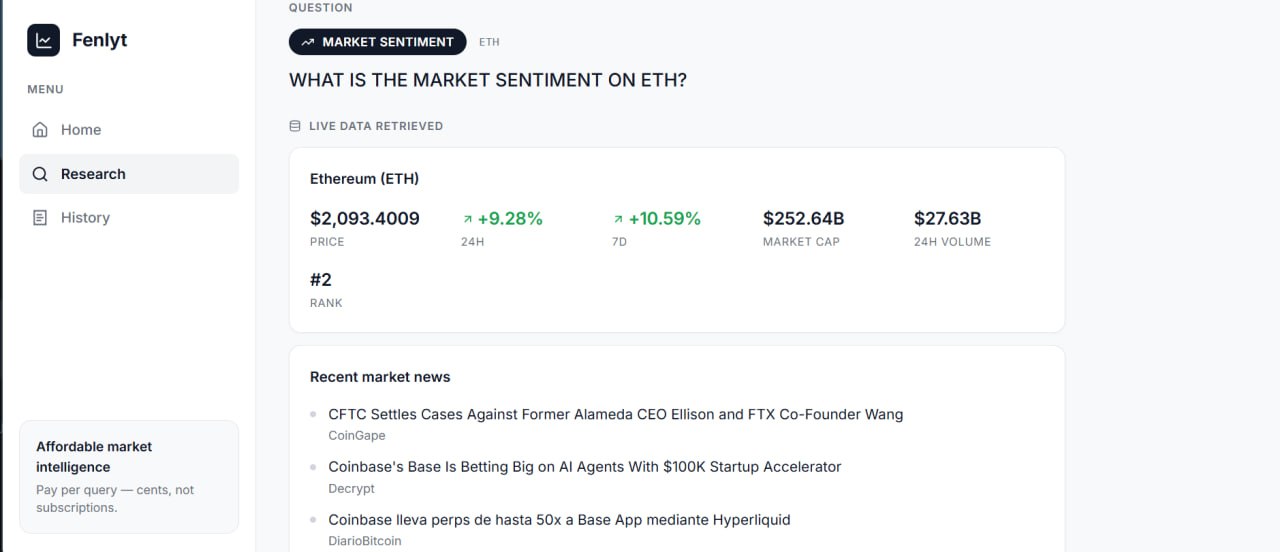
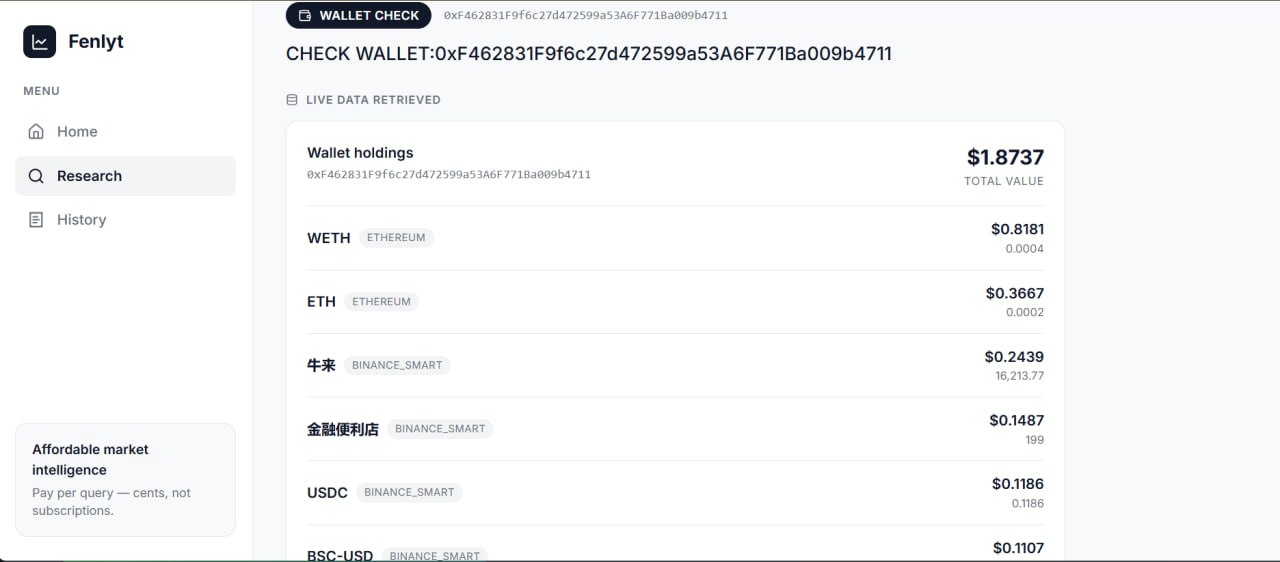
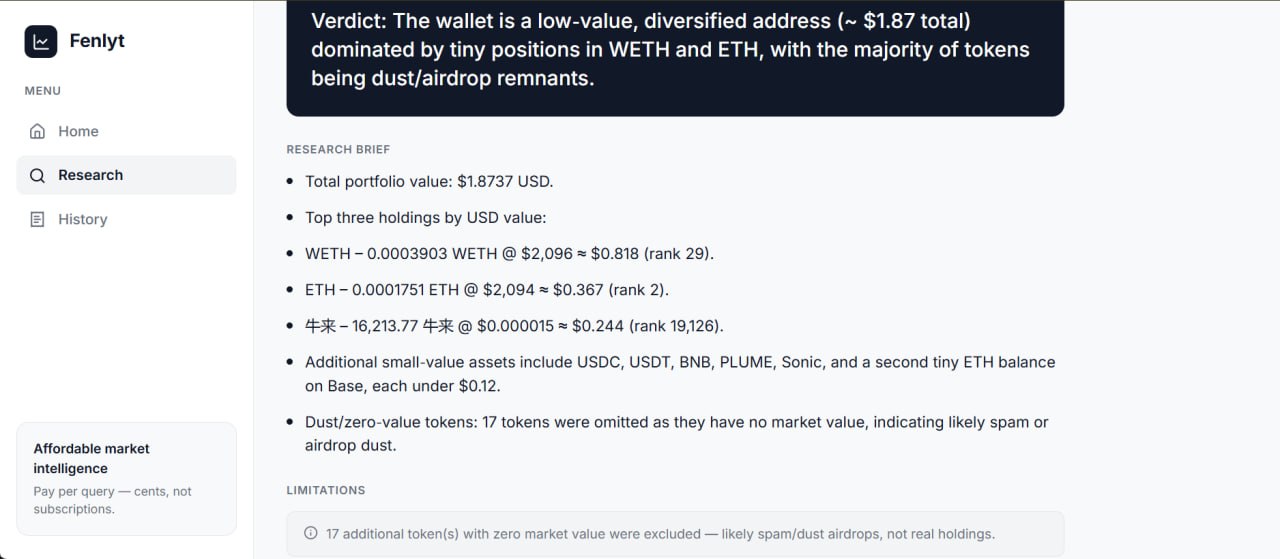
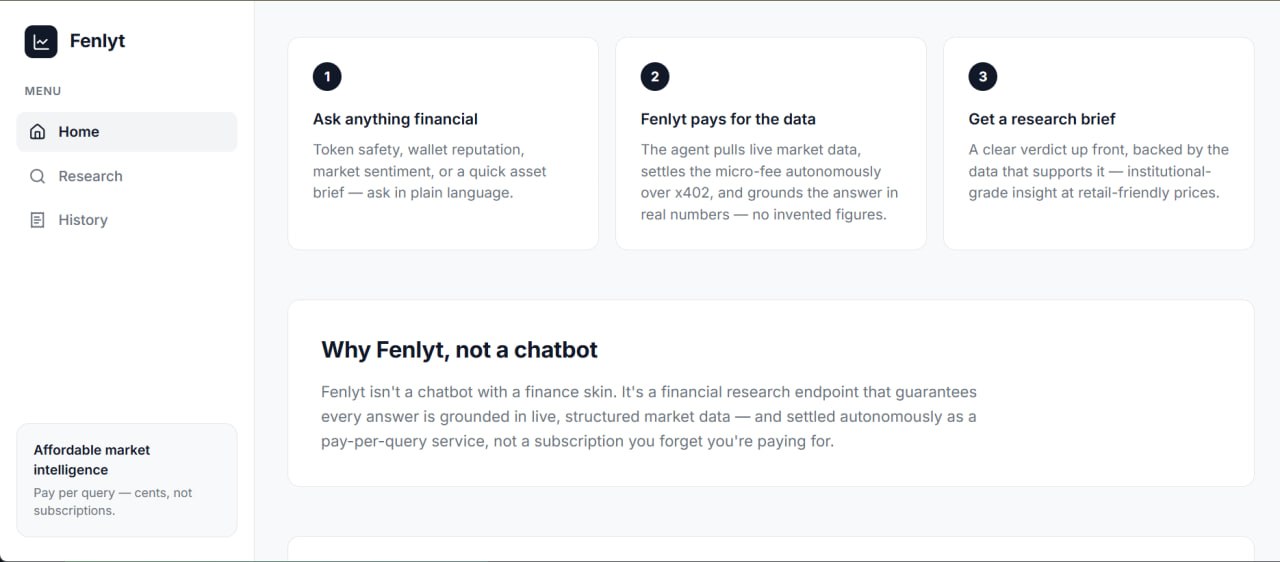
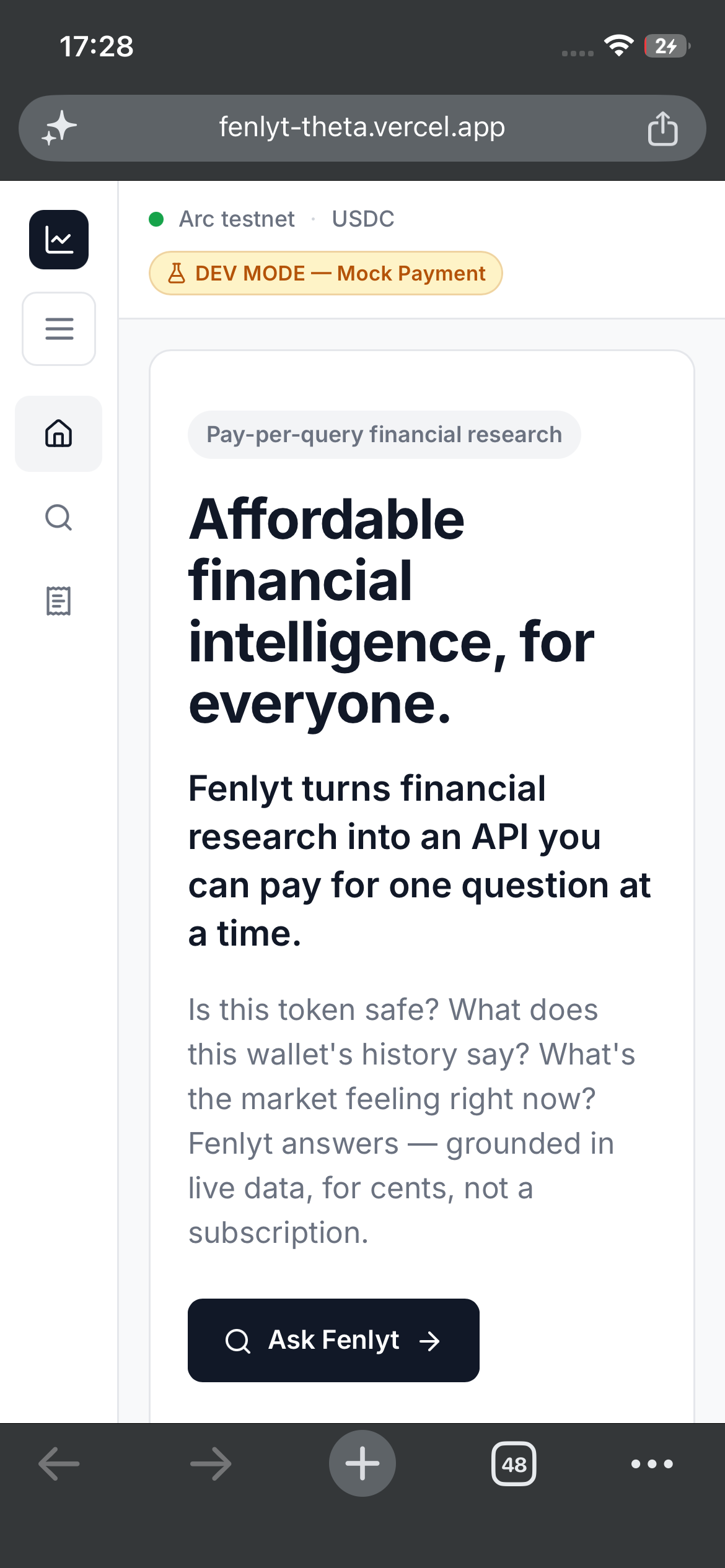
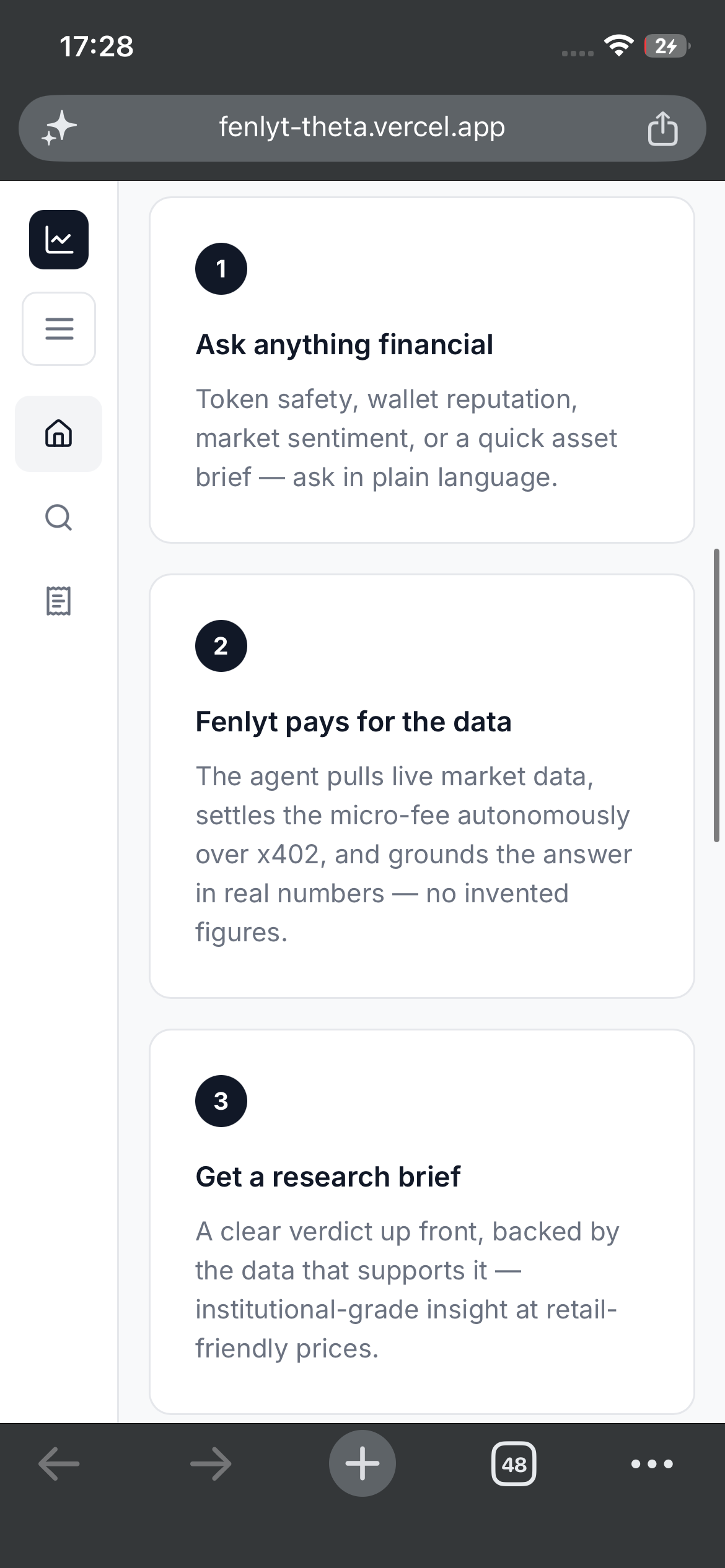
Fenlyt turns financial research into an API you can pay for one question at a time. Ask a plain-language question — "Is this token safe?", "What's this wallet's history?", "What's the sentiment on ETH?", "Give me a brief on SOL" — and Fenlyt:
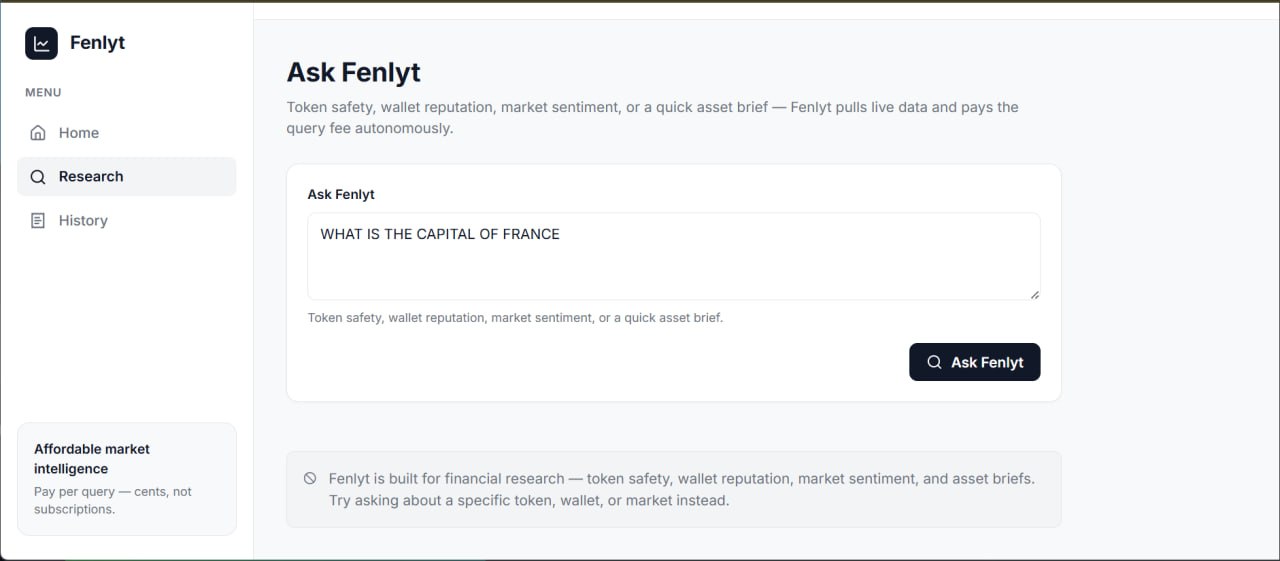
- Classifies the question into one of four categories: Token Safety, Wallet Check, Market Sentiment, or Asset Brief (or declines politely if it's outside financial research)
- Pulls live, structured market data from the CoinStats API
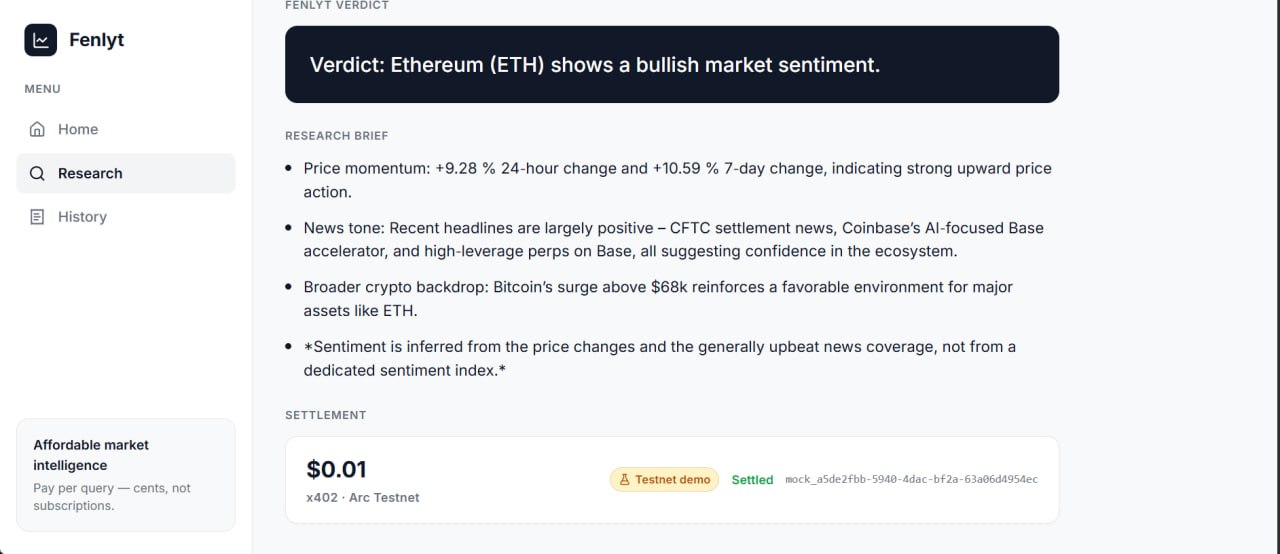
- Synthesizes a grounded research brief with an LLM — instructed never to invent numbers
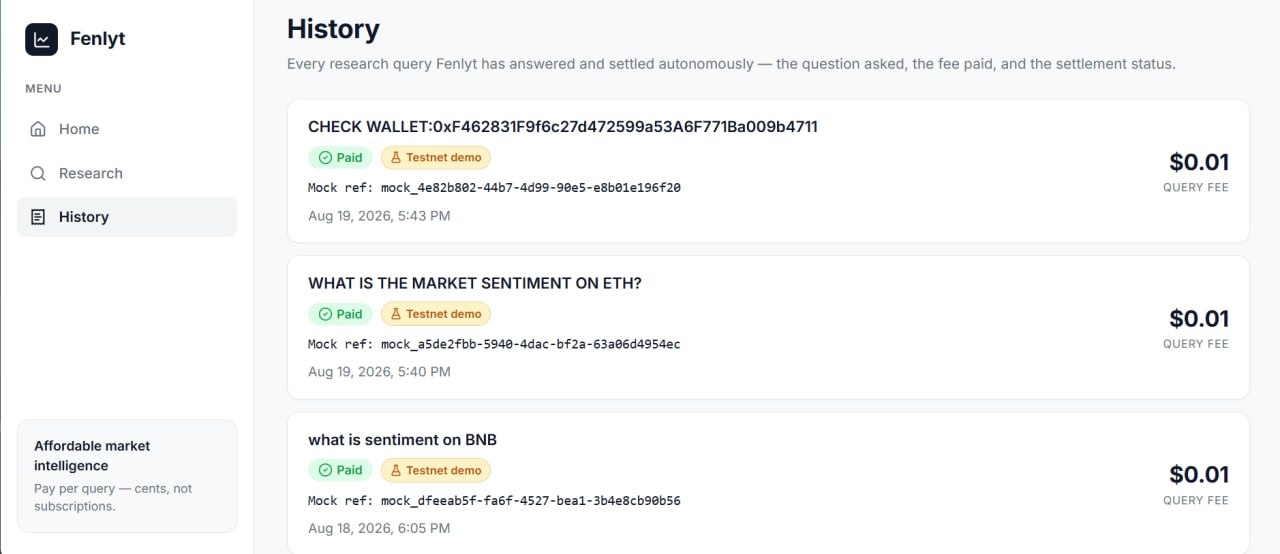
- Settles a small query fee autonomously over the x402 payment protocol on Arc testnet — no manual payment approval
- Logs the question and its settlement to a full history
Every result surfaces the actual live data it's grounded in, states its own limitations honestly (e.g. "this is a coin-level signal, not a full contract audit"), and answers in whatever language the question was asked in.
How we built it
Next.js 15 App Router with TypeScript, CSS Modules, react-hook-form + Zod for validation. Groq's LLM handles both question classification and answer synthesis. CoinStats provides live market, wallet, and news data. Prisma + PostgreSQL (Neon) persist queries and payment receipts. Payments settle over the x402 protocol on Arc testnet, currently running through a mock settlement layer clearly labeled as a testnet demo, with a real Circle/Arc provider wired and ready.
Challenges we ran into
Several real integration bugs surfaced during development: CoinStats' actual API shapes didn't match initial assumptions (a wallet-balances endpoint that returned a raw top-level array instead of the documented wrapper object, an expensive fallback lookup that tripped a rate limit), and partway through the build Groq deprecated the model we'd built against, requiring a live model swap. Each was root-caused against real API responses rather than guessed at, and fixed without disrupting the working parts of the pipeline.
Accomplishments we're proud of
A fully working, end-to-end pipeline — not a mockup, where every piece is real: real live market data, real LLM synthesis grounded in that data, and a real autonomous payment settlement mechanism. The product is also honest by design: it states plainly when data is limited rather than overclaiming, and clearly labels its testnet/demo status rather than implying something it isn't.
What we learned
That "grounded, not generative-guessing" is a genuinely defensible product position — and that being transparent about a prototype's real limitations (mock payments, coin-level risk signals) builds more credibility than dressing them up.
What's next for Fenlyt
Wiring the already-implemented real Circle/Arc payment provider into production use with actual user-funded spending accounts, and going deeper into the Solana ecosystem.
Fenlyt already covers established assets like SOL, but the next step is wiring in Solana-native data sources (like Birdeye or DexScreener) to cover freshly launched, low-cap meme coins that general market aggregators don't index fast enough for. That's exactly the moment our target users need Fenlyt most, the seconds before aping into a brand-new token, when a fast, honest safety read matters.
Built With
- arc
- coinstats-api
- css-modules
- groq
- llama
- neon
- nextjs
- postgresql
- prisma
- react
- react-hook-form
- typescript
- vercel
- x402
- zod


Log in or sign up for Devpost to join the conversation.