💡 Inspiration
During long remote-work days, we realized that clutter, lighting, and orientation drastically affected how focused and energized we felt. Feng Shui, an ancient Chinese philosophy of spatial harmony, teaches that the arrangement and balance of one’s environment influence energy, focus, and well-being. Inspired by this, we asked: What if AI could translate those timeless principles of harmonious design into data-driven, actionable insights for the modern workspace - helping people design not just where they work, but how they feel while working?
🛋️ What it does
FengShui.fy takes a photo of your room and generates:
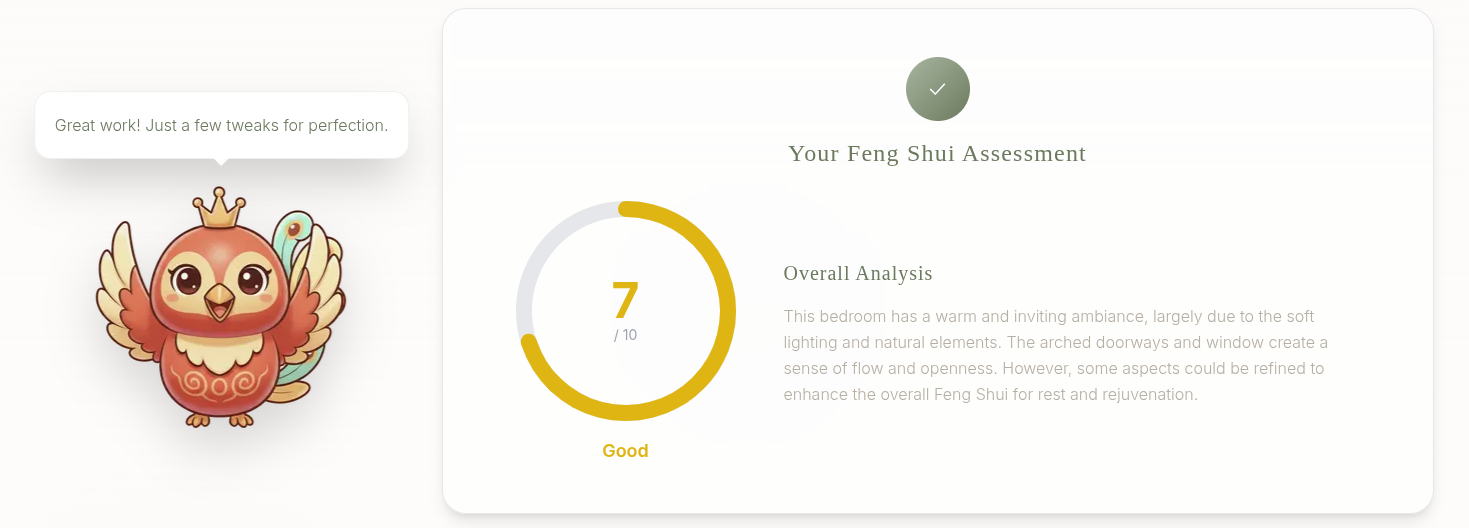
- A Feng Shui Score - evaluating layout, color, light, and flow.
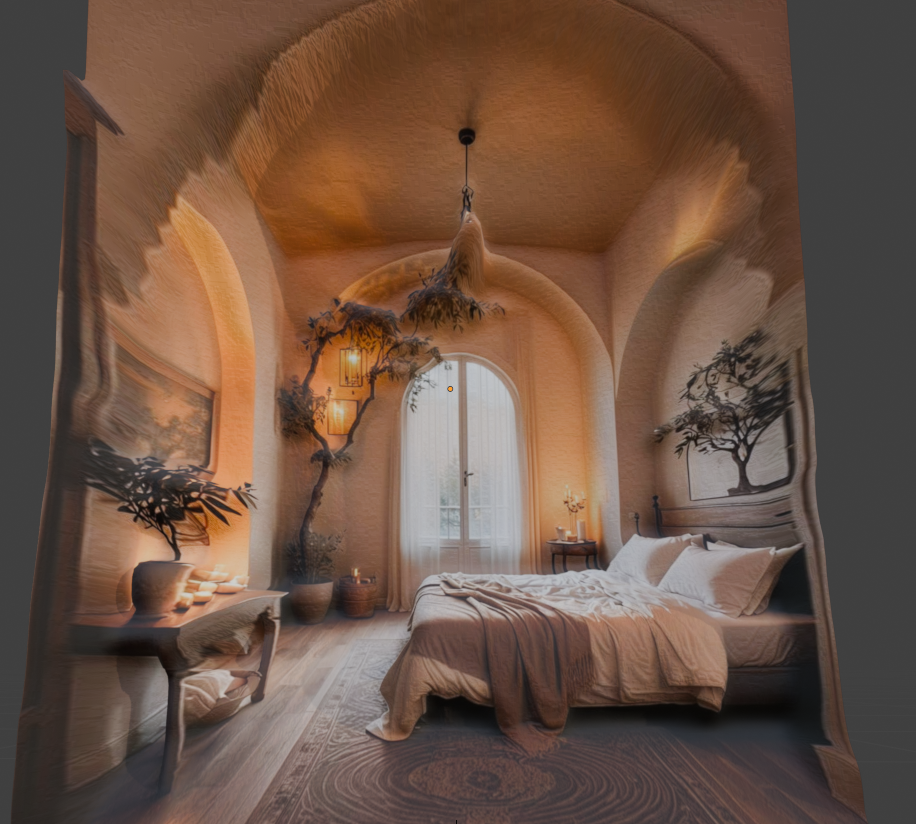
- A 3D reconstruction of your space using Three.js.
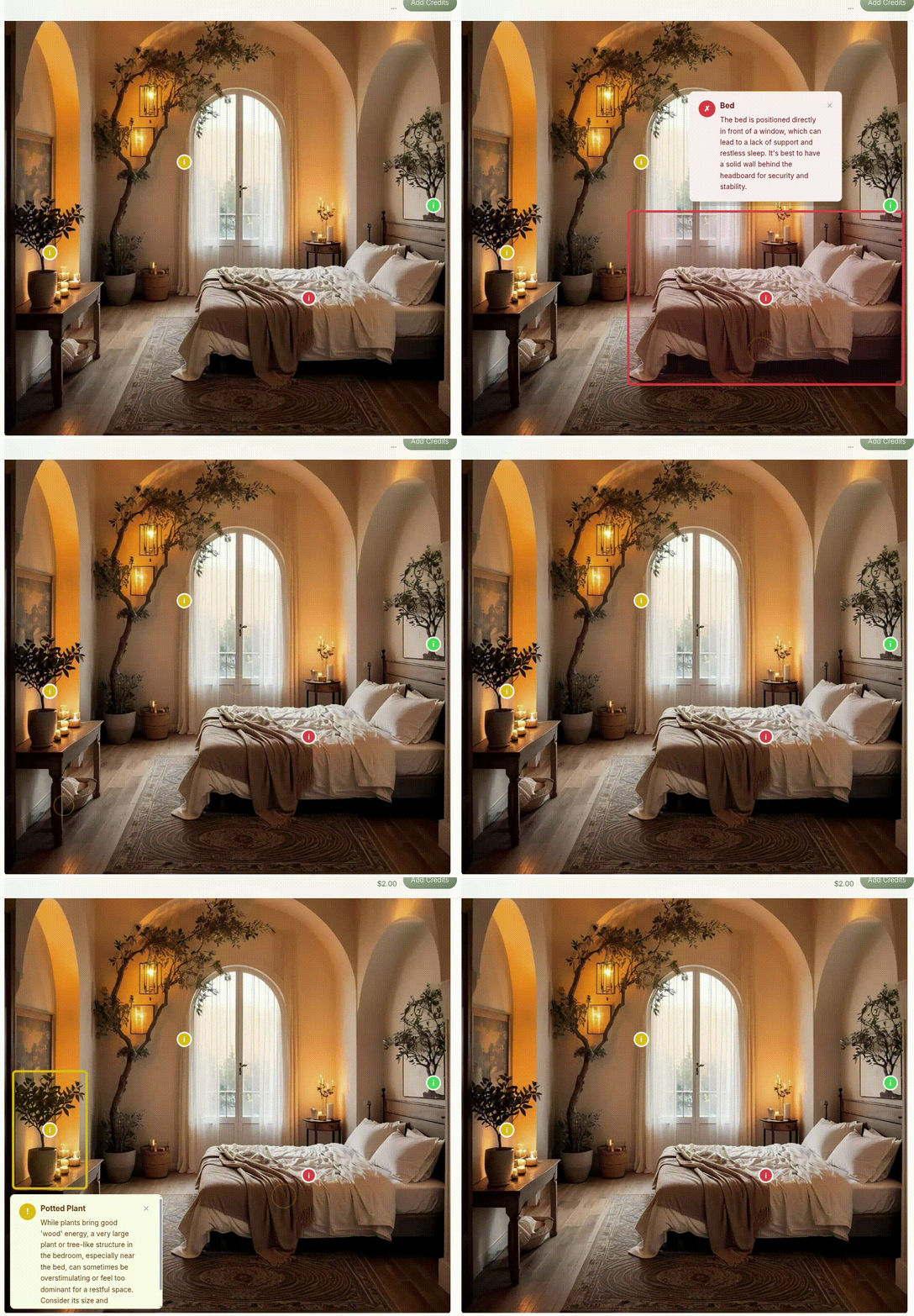
- AI-powered recommendations to improve harmony, such as repositioning your desk, adding natural elements, or decluttering.
⚙️ How we built it
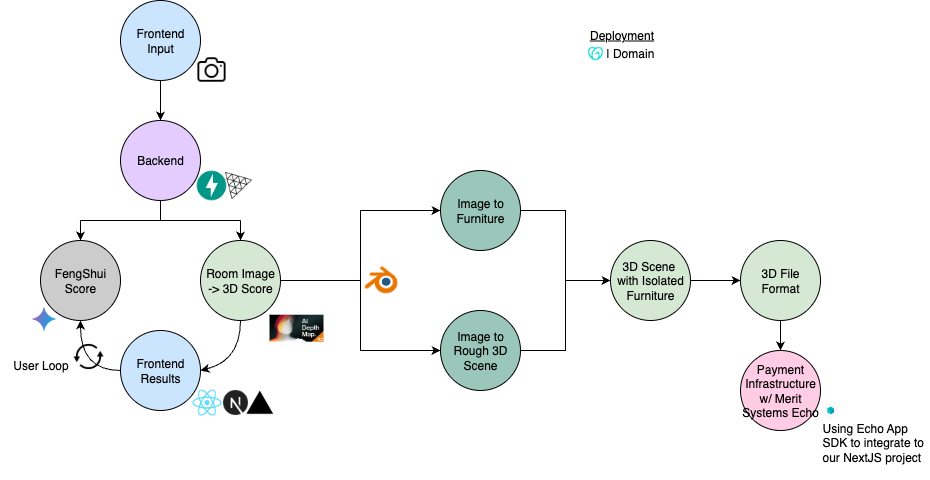
- Frontend: Built with Next.js, React, and Three.js to render interactive 3D spaces where users can upload a room photo, visualize layouts. Integrated Auth0 for single sign on and the Echo App SDK for live scoring and feedback directly in the UI. Deployed on Vercel with DNS via GoDaddy.
- Backend: Developed a FastAPI service in Python to handle uploads, inference, and file generation. As well as a custom Blender plugin system to serve advanced 3D rendering endpoints externally. The pipeline processes images, reconstructs 3D layouts, exports .glb models, and streams them back to the frontend for rendering and scoring updates.
- CV Models: Used TrueDepthV2 for spatial depth capture and Blender for mesh cleanup and scene export. Combined object detection and segmentation to identify key room elements for reconstruction.
- Scoring Engine: Built a hybrid Feng Shui scoring model utilizing Gemini API that evaluates lighting, symmetry, and spatial balance to compute a 0-10 harmony score, updating dynamically as the user rearranges the room.
- AI Insights: Integrated Gemini to generate contextual explanations behind each score, translating spatial data into natural-language insights about energy, balance, and focus.
⏳ Challenges we ran into
One major challenge was bridging the technical and philosophical gap between Feng Shui principles and computational modeling - quantifying “energy flow” in a way that made sense both to users and to the AI model. From an engineering perspective, integrating 3D rendering (Three.js) with real-time inference results from FastAPI required careful synchronization of API calls and scene updates to avoid visual lag or scoring mismatches. We also faced hurdles in generating clean 3D object placements from segmented images, which required iterative geometry corrections in Blender and fine-tuning how our Python backend translated bounding boxes into spatial coordinates. Finally, integrating Gemini’s natural-language insights with structured data outputs required prompt optimization to ensure the model provided concise, context-aware feedback rather than generic responses.
🪴 Accomplishments that we're proud of
- End-to-end working demo in 24 hours.
- First-of-its-kind real-time “Feng Shui Score” for any photo.
- Custom built Blender addon to external python service server.
- Seamless drag-and-drop 3D adjustments reflecting dynamic scoring.
- Zen-inspired UI that reflects the app’s mission.
🧠 What we learned
We learned how to combine AI, computer vision, and web-based 3D graphics into a cohesive real-time product - bridging multiple layers of technology to deliver a smooth, intuitive experience. From a technical standpoint, we deepened our understanding of cross-stack integration, building pipelines that connect model inference → geometry reconstruction → front-end interactivity seamlessly using Next.js, FastAPI, and Echo App SDK. We also discovered the power of using Gemini for contextual intelligence, transforming raw scene data into personalized insights that made the experience feel human and mindful - not just technical. Ultimately, we learned how design harmony and technical precision can work together: by letting AI guide spatial organization, we can make productivity tools that feel not only smart, but serene.
🚶 What's next for FengShui.fy
- Smart lighting & plant placement suggestions.
- Personalized “productivity modes” like Focus, Calm, and Creativity.
- Integrations with Notion or smart home devices.
💭 Team Reflection
FengShui.fy reminded us that productivity isn’t about doing more: it’s about feeling balanced enough to want to do more.


Log in or sign up for Devpost to join the conversation.