-
-
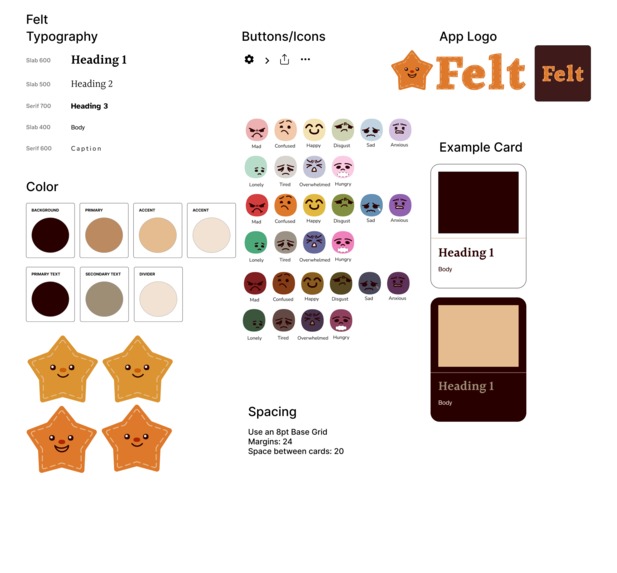
Felt Design System
-
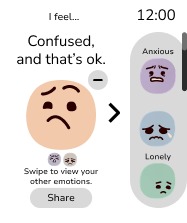
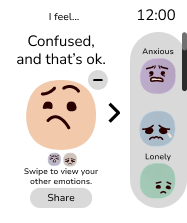
Lo-Fi Mockup of the Watch Experience
-
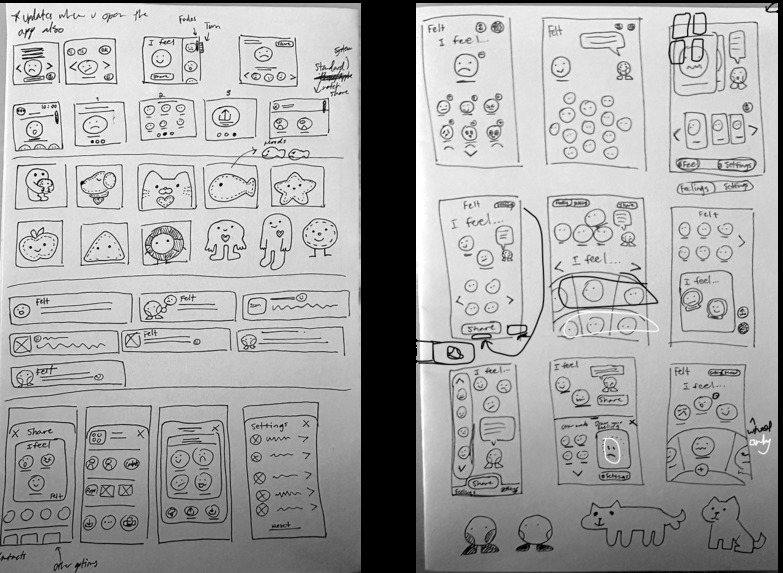
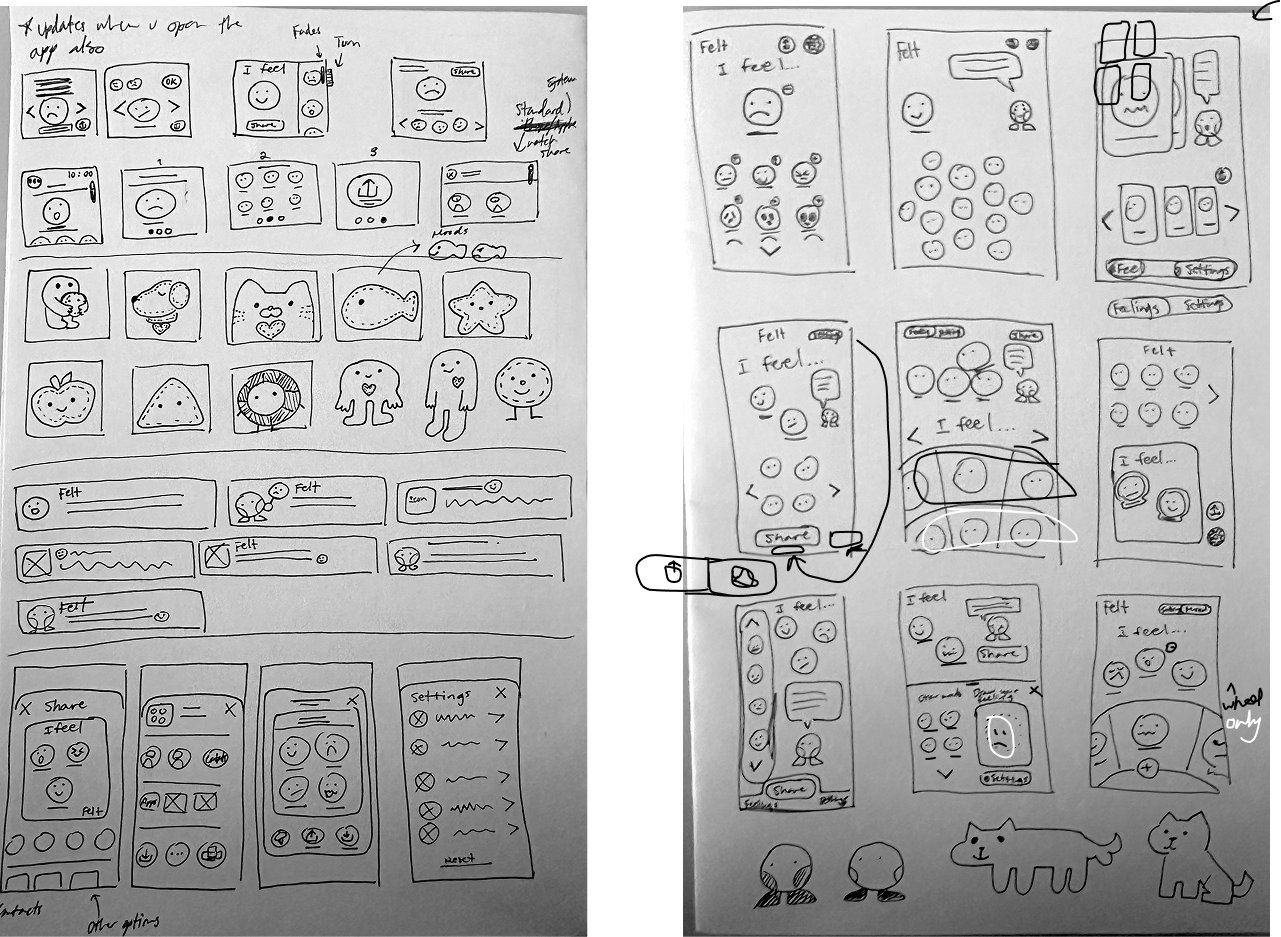
Original Sketches
Inspiration
Felt is inspired by the communication cards that some people with autism may use when they become non-verbal. When thinking of a sensory experience that people could resonate with, one that stood out was our ability to understand how our bodies, emotions, and emotional expression are all connected. There are times when people feel guilty because they don't cry when they grieve. There are times when people feel frustrated because no one understands that they're overwhelmed. There have been plenty of times people don't even know how they feel. The most common lie is, "I'm fine," because it's the easiest thing to say. Inspired by these experiences, we hoped that Felt could open people up to themselves and to others.
What it does
Felt trains users to understand their emotions and the physical signs they bring. The app tracks the user's physiological signs (heart rate, perspiration, hunger, thirst, exhaustion, etc.) to detect specific emotions.
In the events of signal spikes, the user is immediately notified. The app also updates the mood when the user opens it. Notifying users in the moment allows them an opportunity to pause and reflect, which can ground them in distressing moments.
By presenting users the emotion it detects, along with influential factors like hunger, thirst, and exhaustion levels, Felt guides users to observe their physical state and connect that to an emotion, building within them a pattern recognition for their emotions.
However, since different people have different physical reactions with their emotions, Felt offers the ability the adjust the result if the user is deeply put-off by their result. This respects the user's agency, encourages them to think deeply about their emotions, and allows Felt's pattern-recognition system to adapt to the user.
To prevent misuse and visual overload, Felt only allows the user to select up to four concurring emotions, mitigating confusion.
Lastly, users can share their Felt results simply by showing their screen or sending it online. We included a button that directly sends the user's result to a trusted contact (which is set up within the app's onboarding process and settings), such as a parent or caregiver, so that users in particularly distressing or unsafe situations can immediately notify someone they trust, and quickly receive aid.
As a safeguard against data leaks, users can choose to wipe their data from the app.
How we built it
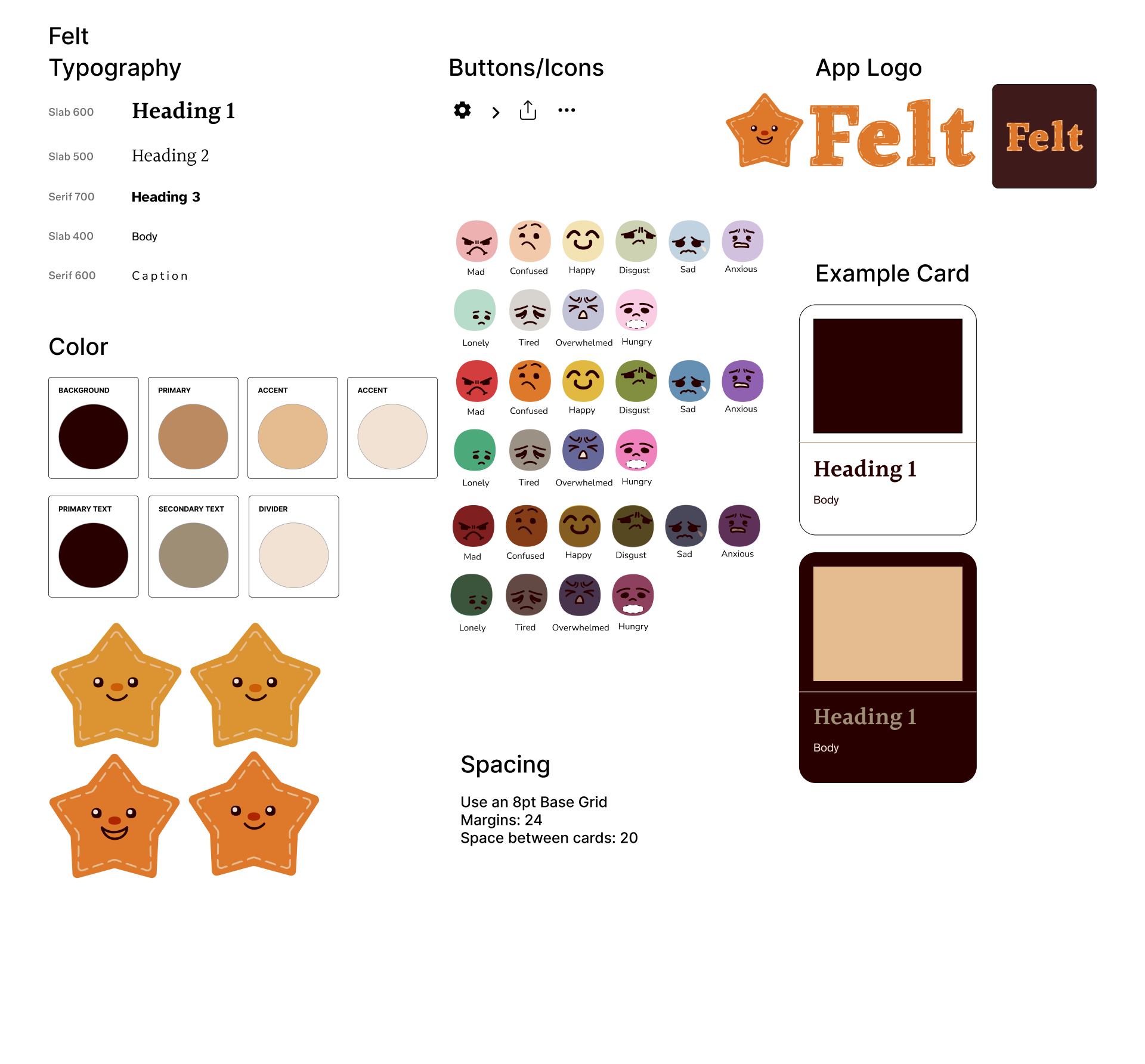
We started with sketches. In total, we sketched 39 ideas ranging from screens to branding. After choosing our favorite sketches, we build a design system, including me designing the mood icons in Figma. Afterward, we described our ideal layout to Figma Make. For the Watch Experience, we had to build a lo-fi screen mockup so that Figma Make could build it according to what we envisioned. From that point forward, we edited the prototype through Figma Make to ensure the layouts were clean, the interactivity was smooth, and that all the necessary features were included.
Challenges we ran into
Our biggest challenge was coming up with an idea that satisfied the hackathon specifications. For much of Friday, we spent hours ideating, brainstorming, and pitching ideas to people outside of the hackathon to see what sticks. Ultimately, with positive reception, we landed on the idea for Felt. Another challenge was working in tandem with Figma Make and its capabilities. When the AI struggled to understand the layout we wanted for the Watch Experience, we had to create a low-fidelity screen as a reference. This process, along with detailed prompts that included references to our frames, helped us learn how to efficiently use Figma Make.
Accomplishments that we're proud of
We're very happy with how the app can be applied to a variety of users, since the issue it tackles can help anyone who struggles with emotional or social difficulties. Finding data to back up the need for Felt emboldened us in our storytelling. We're especially proud of the cleanliness of the UI and design system. We had to look into what color schemes may best suit our users, and we're happy with Felt's warm, inviting, and modern look.
What we learned
This hackathon taught us how to work with Figma Make, a tool we've never used before. We learned to adapt to the capabilities of our tools and found this challenge to be overall creatively invigorating. Additionally, this was a project where we learned to apply real data to our design decisions, all the way down to the concept of the product.
What's next for Felt
The next updates to Felt should include visibility settings (such as differing color modes) to improve Felt's accessibility, especially since the product may be highly suitable for users with certain disabilities. A useful and/or profitable addition would be short lessons on emotional intelligence and expression. Lastly, we're considering a feature where users get to draw a mood for themselves, in the event that none of the listed moods fit them, which also allows them a healthy creative form of emotional expression.
Built With
- figma


Log in or sign up for Devpost to join the conversation.