-
-
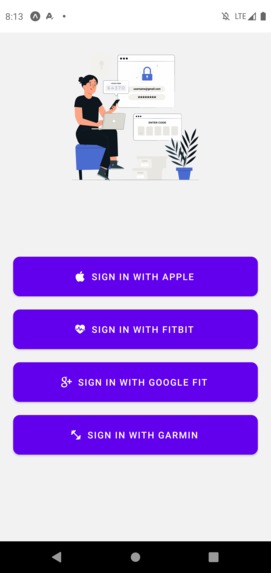
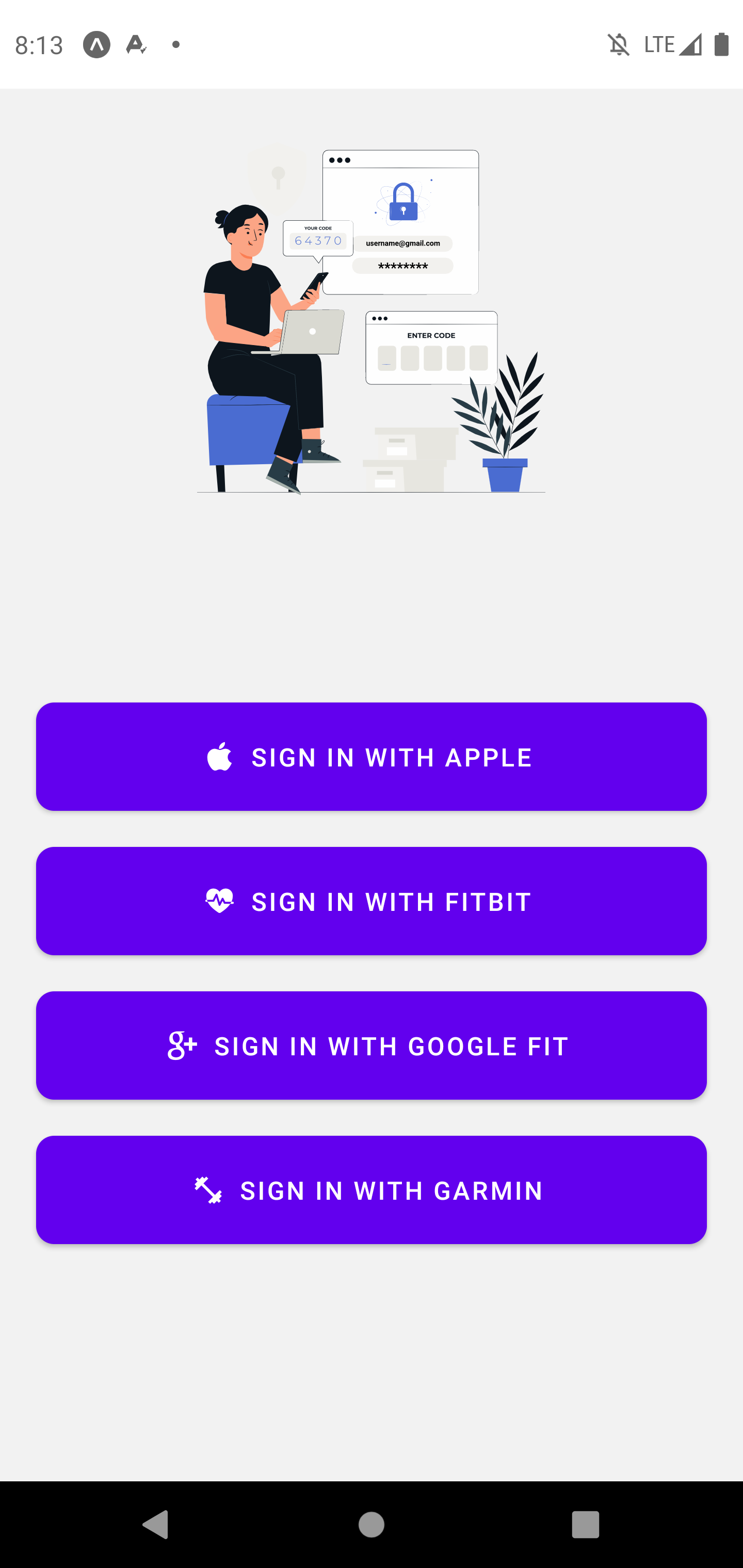
Login screen
-
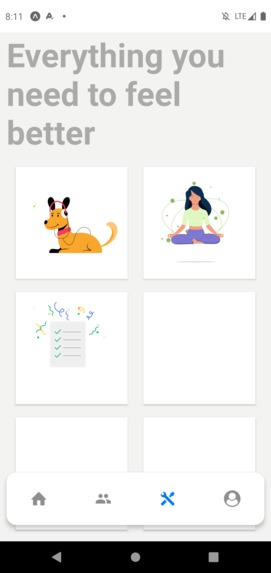
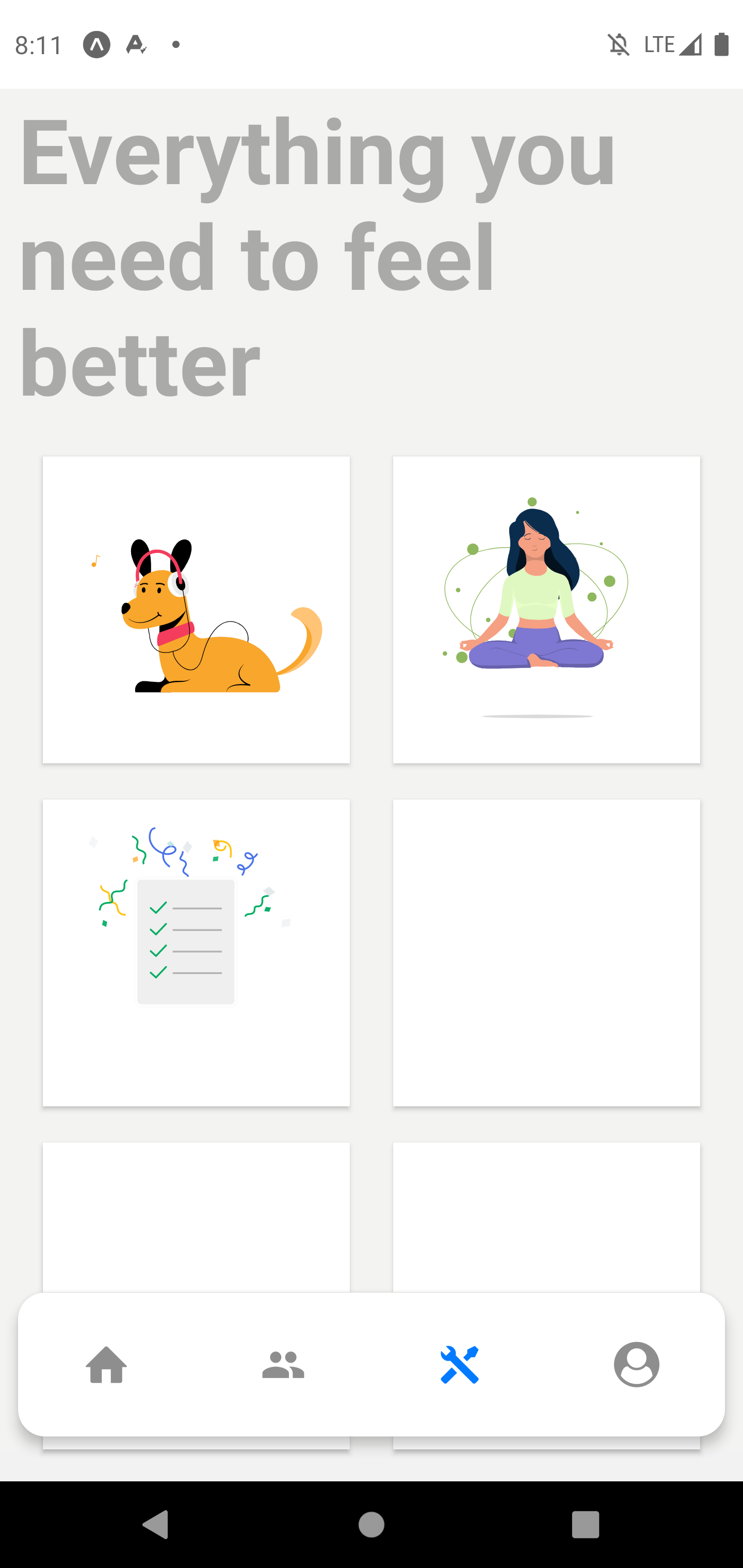
Tools such as Journal, guided meditation or music
-
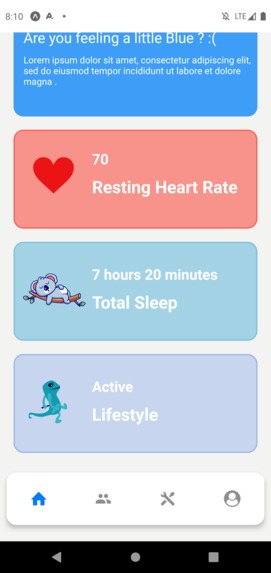
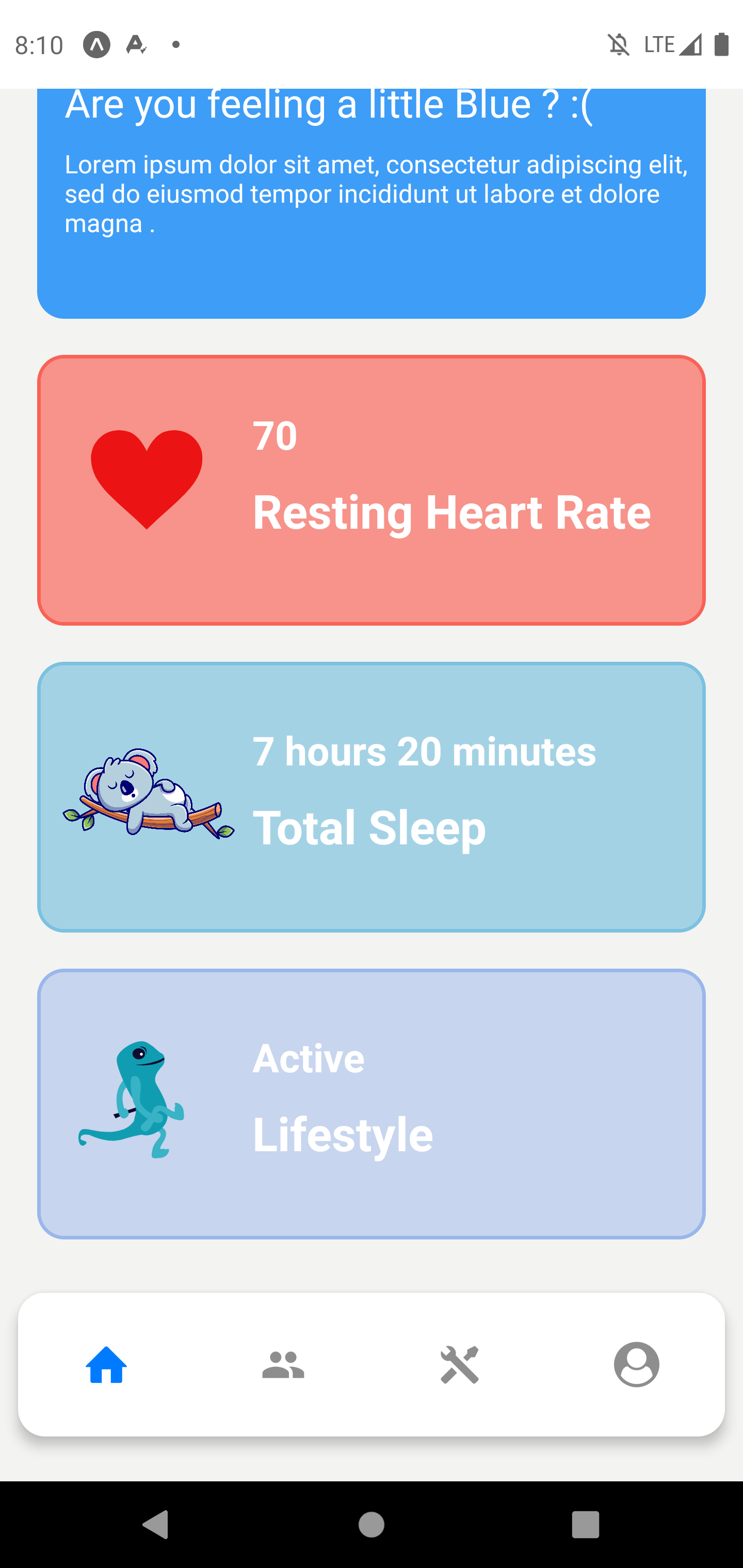
Health metrics
-
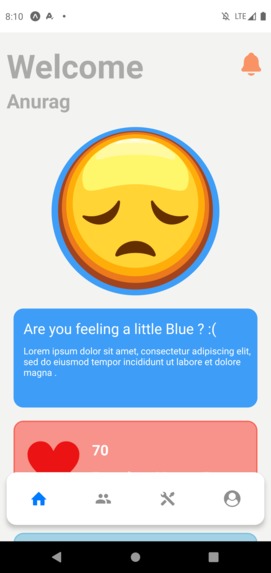
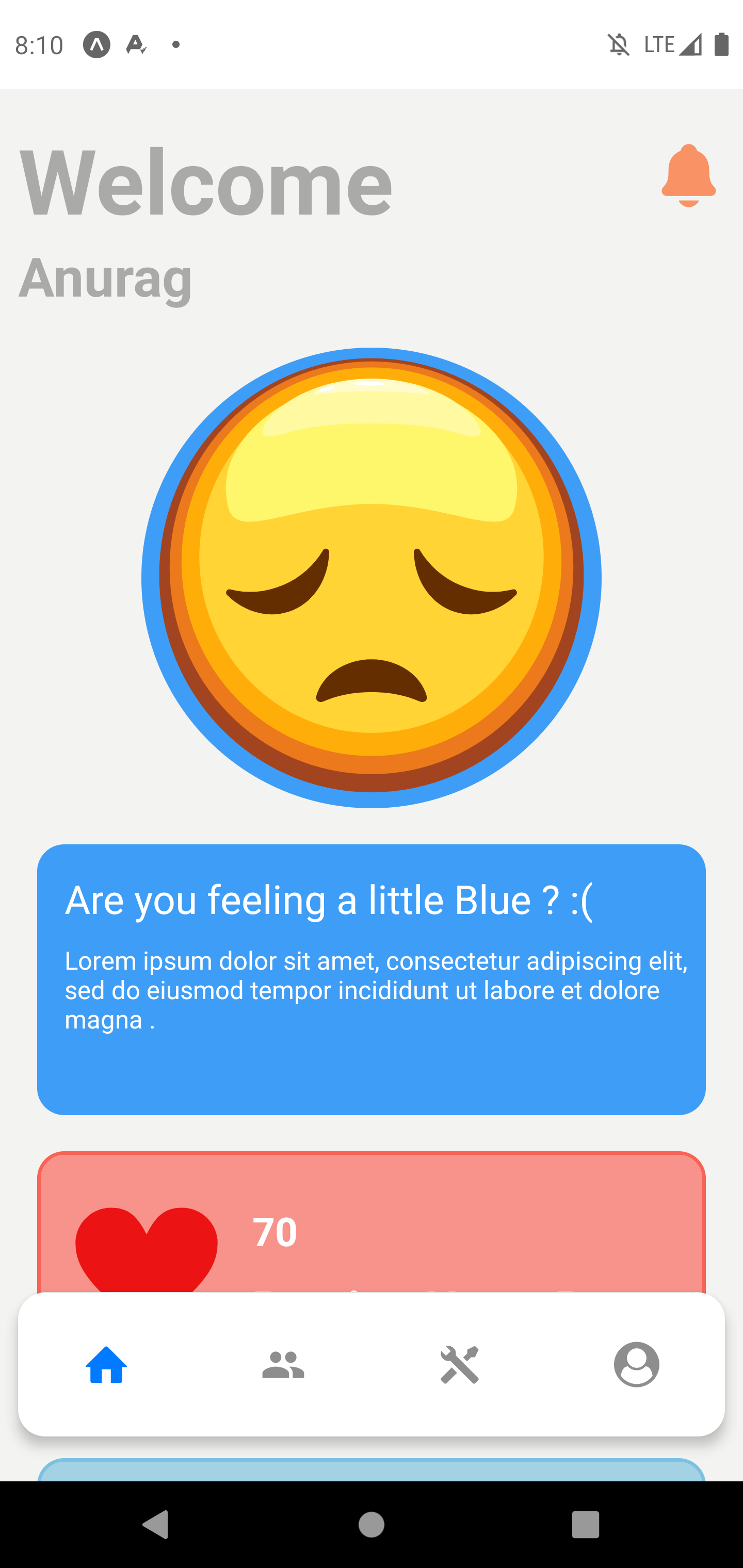
AI model prediction of stress/Depression
-
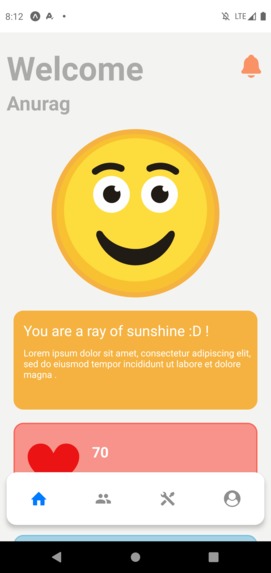
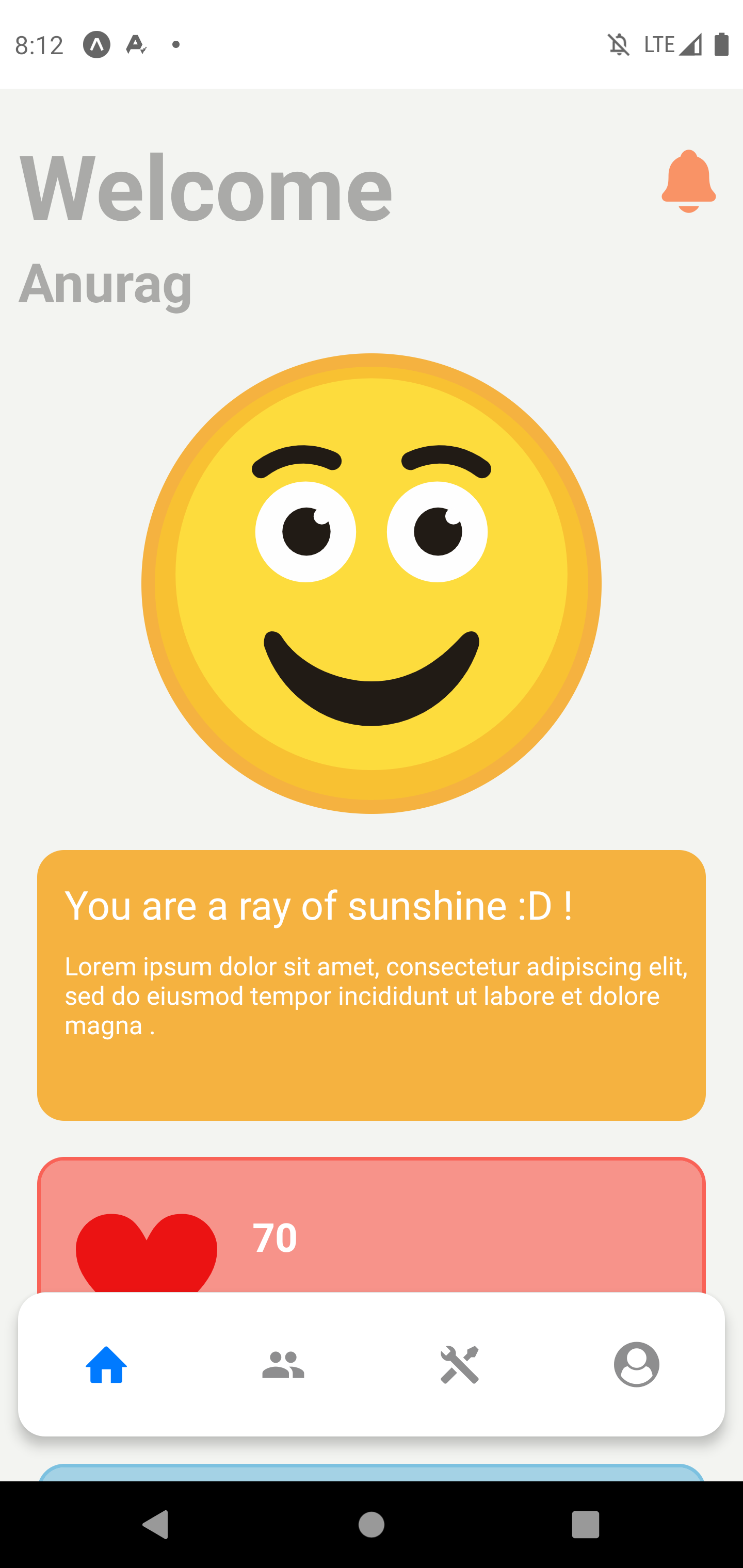
AI model prediction that user is happy !
Inspiration
It is estimated that in the U.S., around two-thirds of all cases of depression are undiagnosed (Wamala et al., 1999) and the diagnosed cases amount to about 9.5% or 18.8 million of adults in the US. When left unchecked, major depressive disorder greatly increases the risk of suicide. Some early indicators of depression include chronic stress, altered sleep, and activity patterns.
30% of Americans use wearable health devices - This is according to a survey conducted by the Journal of Internet Medical Research and this number is only going to go higher in the next few years. Since the most basic health tracker records the user's heart rate, activity trends, and sleep patterns, we try to use that data to predict the probability of depression in real time with the help of a smartphone application.
What it does 😲
We can divide this project into two parts:-
The AI
- We built three different models that analyze Heart Rate Variability, Sleep Patterns, and Activity patterns.
- The models are trained on the following datasets:-
- Activity dataset - https://www.kaggle.com/datasets/arashnic/the-depression-dataset
- Heart Rate - https://www.kaggle.com/datasets/qiriro/swell-heart-rate-variability-hrv
- Sleep - https://www.kaggle.com/datasets/danagerous/sleep-data (This is not a reliable dataset for analysis but was used for this hackathon. The sleep pattern was considered to be normal and the ML model was trained to detect patterns that differ from the above.)
The Smartphone Application and the Backend
- Allows the user to authenticate using Fitbit, Garmin, Apple Health, or Google Fit.
- Once authenticated, the application creates a subscription with the device such that it receives the data from the respective servers whenever the user syncs their device.
- Whenever the backend receives data from the devices, it is fed to the ML models.
- The inference is used to provide relevant information to the user using the smartphone application.
- The UI is designed to be minimalistic with bright colors to try to elevate the mood of the user. The palate was chosen referring to Color Psychology.
How we built it 😁
Tech Stack
- React Native :- to build our cross-platform front end application
- Firestore database :- for storing data collected from the different wearable devices
- Firebase Functions :- for running the AI models on demand when new data is available from the devices. We opted for a serverless architecture because we do not need to run our backend 24-7
- Scikit learn :- to create simple classification models
- Tensorflow JS :- to convert and host the sci-kit models in a node js environment (firebase functions)
Challenges we ran into 😳
The major challenge was finding a properly labeled publicly available dataset that will allow us to create our prototype. The datasets we found required pre-processing and analysis before we could train our models with it. Due to the time crunch we could not try out complex models or deep learning algorithms on the datasets and ended up using simple classification algorithms. The project also had multiple parts such as OAuth with different providers (Garmin,Fitbit,Apple and Google) , standardizing the health data returned by each of them so that we can feed them to the models, which added to the complexity of the project.
Accomplishments that we're proud of 😄
Technical aspects aside we had to deep dive into a lot of psychology-related aspects and how physiological attributes can give an estimate of one's mental health. We are proud of the fact that we could do the required study that was needed to successfully create a prototype. Technically we had to quickly understand the API documentation of different providers and that was a great learning experience. We are proud of the fact that we could successfully collect data from different providers.
What we learned 👏
How to efficiently work on different parts of the project without causing a merge conflict :P
What's next for Vybez 👍
The possibilities are endless. According to a study that we came across while doing our research, it is possible to detect bipolar disorders and ADHD from the activity trends of an individual. We started our project with stress and depression in mind but now we are convinced that by analyzing the data from smart watches it is possible to detect a spectrum of disorders in real-time. This open up the possibility of proactively treating disorders before they get to a point where it starts interfering with one's life. With a smartphone application, we would be able to provide options such as guided meditation for relaxing an individual to deal with stress, breathing exercises, a digital journal, and even an online community that can help each other and provide the required support. Depression or other mental disorders are often linked with a loss of motivation, a gamified interface that motivates the user to complete daily challenges and chores with a reward-based system would be able to help people push through periods of demotivation.

Log in or sign up for Devpost to join the conversation.