-
-
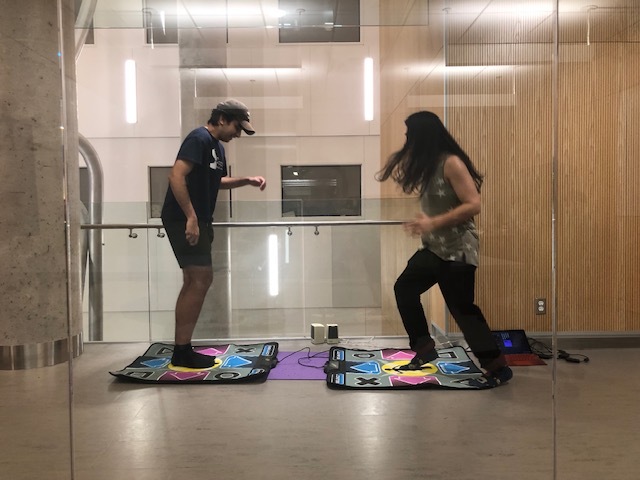
In the heat of a Dance Battle
-
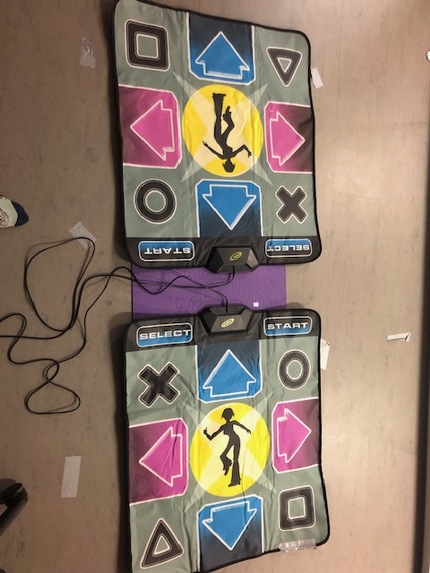
The tools that enabled our wonderful game
Inspiration
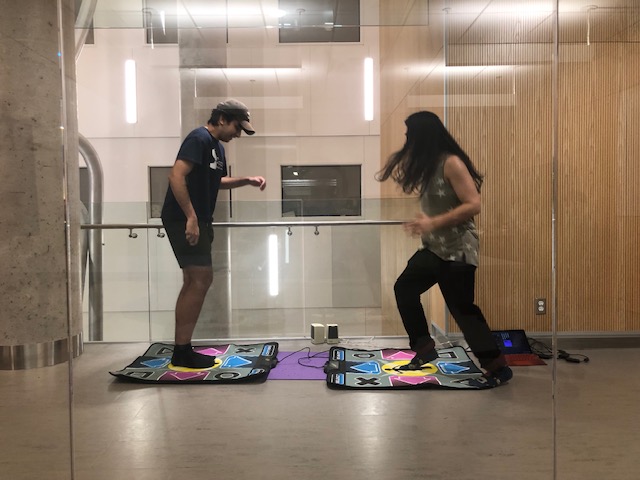
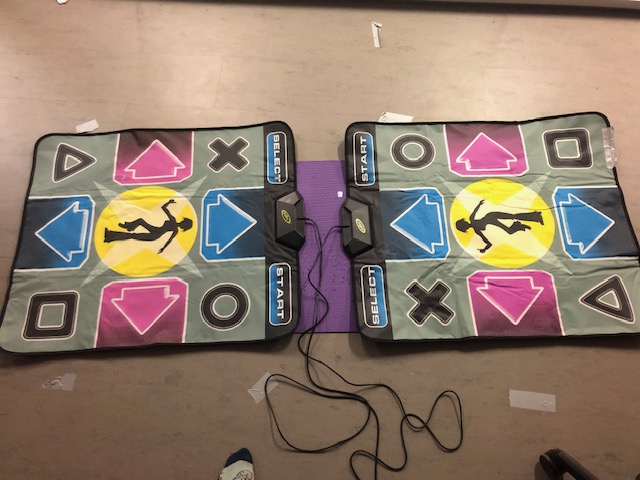
The moment Kidane slid the Dance Dance Revolution (DDR) pads out of his bag, our entire team knew what we had to do. After playing a few adrenaline-inducing rounds, we set out to create a hack that captured both the tension and tactility of the original game; and the fact we had two meant we could make something multiplayer. We brainstormed many ideas: a cooperative puzzle game, competitive pinball soccer, or a challenge of navigating an OS using the pads as controls. Then it dawned on us: the back and forth rhythm of a fighting game was a perfect complement to a musical base. And so Feet Fighter was born.
What it does
Feet Fighter is a fast-paced dance fighting game that uses two DDR pads as its controls. Since there is no digital screen, your entire focus is on matching your opponent's rhythm and stepping to the beat. Watch their movement and listen to their moves to push them to slip up before you do.
TODO add stuff here
How we built it
We started by collaboratively mapping out our project's architecture, and creating a team to-do list to manage tasks between us. By leveraging the power of friendship, focus, and frequent dance breaks, we were able to get a minimum viable product finished very quickly, which we spent the rest of our time polishing. The entire project was built from scratch in Python. We used Pygame to read the input of the DDR pads, manage audio, and create visuals (used for debugging only); and we used Git for source control.
Challenges we ran into
Honestly things went pretty smoothly for our team. We of course had a million bugs to deal with constantly but we were always able to deal with them and get our code to a working state. Figuring out our project architecture right off the bat definitely helped with this since we already had an idea of how the different parts of the code were going to fit together. One issue our team faced was the fact that only one person on our team could test the project at a time due to only having one set of DDR pads. This ended up with a lot of broken code on the GitHub main branch but we were always to deal with it, bringing the branch back to a functioning state before pushing anything else.
Accomplishments that we're proud of
We are very proud of our discipline and focus during this hackathon. We started off by choosing a project with a very reasonable scope and we kept ourselves on track of what needed to be done to make sure other parts of the project could get made. We prioritized parts of the project and even removed adding another game mode to it near the end to prioritize polishing what we had. We also set ----- of what our code should be and we stuck with it. We have done a few hackathons in the past but this is the first year where we set ourselves a code structure and plan and actually followed through with it. We spent a lot of time thinking about the good way to structure our code so it stayed modular and easy to add things on to it. Everytime we realised we wanted to add something or change something we were please by how easy it was due to the standards we set for ourselves.
What we learned
We have learned a lot about how to work together as a team. We have done hackathons before but this is the first one where we actually determined our code architecture and actually stuck with it, and actually had it work. TODO change/replace/add to this
What's next for Feet Fighter: Deadly Dancing - Reloaded
This honestly is a really fun game. We will be bringing the DDR pads and laptop to future game nights and playing this with friends. We can totally imagine this becoming an arcade game or a product on its own. It would be really easy to just have a raspberry pi with a speaker embedded into a DDR pad that would just run this game. If we cared about starting a company and doing business things, we could totally sell this.


Log in or sign up for Devpost to join the conversation.