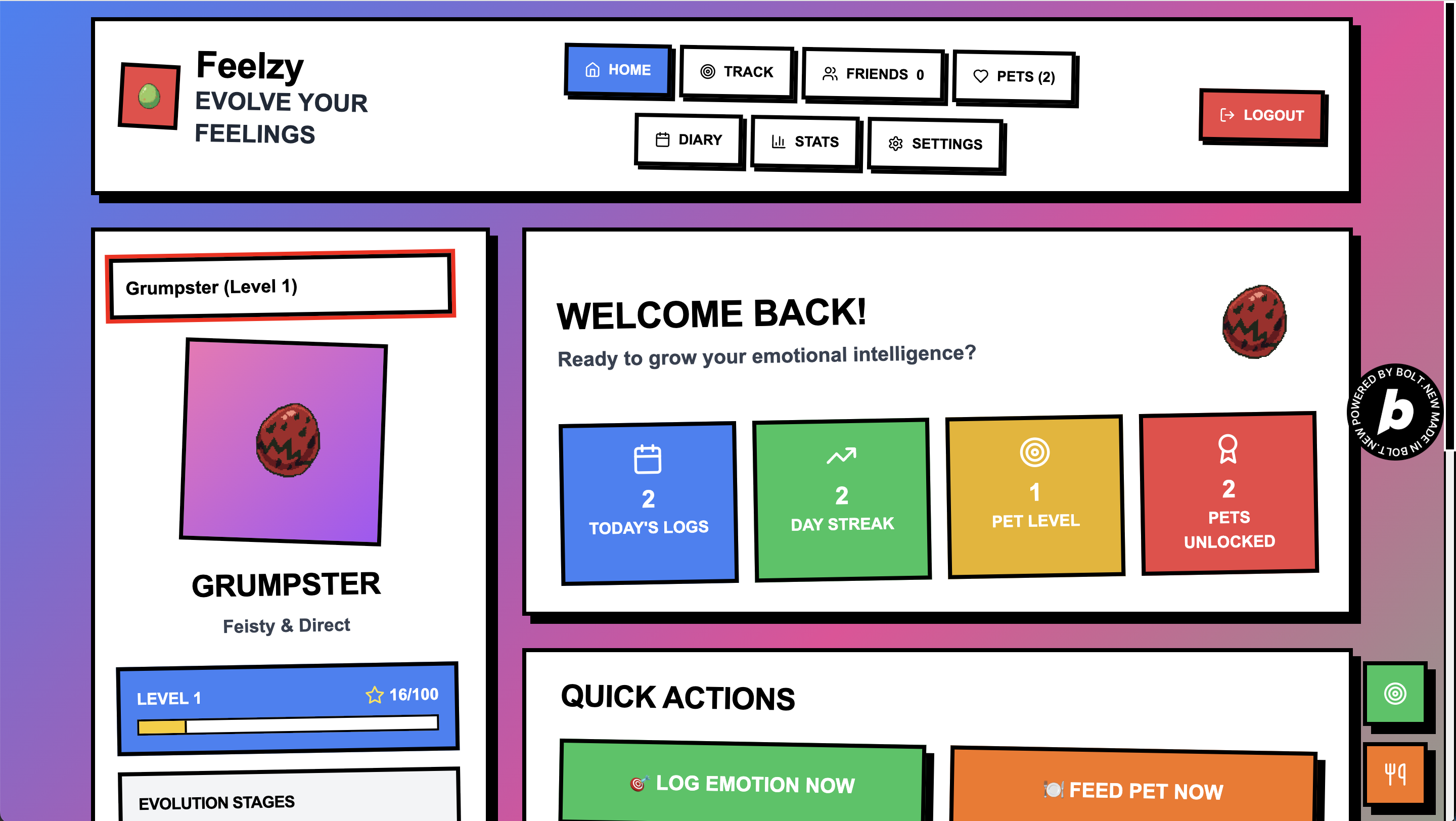
Project Story: Feelzy - Your Emotional Intelligence Companion
Inspiration & The Problem I Saw
As an independent web designer working with no-code tools, I'm constantly seeking ways to address real-world challenges through intuitive digital solutions. My journey with Feelzy began from a deep personal observation, amplified by what I saw in my own generation: millennials, the kids of the 2000s. We're a generation navigating immense pressure, constant digital noise, and often, a profound struggle to understand and manage our own emotions. Traditional journaling can feel tedious, and many wellness apps lack sustained engagement, or worse, they impose judgmental labels on feelings, which is the exact opposite of what emotional intelligence is about.
I realized there was a critical need for a tool that was not just effective, but genuinely engaging and non-judgmental – something that could truly resonate with our desire for self-improvement in a gamified, accessible way. This became the driving force behind Feelzy.
How I Built Feelzy
Building Feelzy was a labor of passion, leveraging the power and flexibility of modern no-code and web technologies.
Rapid Prototyping with Bolt.new: The initial concept for Feelzy was brought to life incredibly fast during a Bolt.new hackathon. This allowed me to quickly validate core theories about gamification, emotional tracking, and user engagement, proving the viability of the idea long before committing extensive resources.
Robust Backend with Supabase: For the backend infrastructure, I chose Supabase. Its robust, scalable, and developer-friendly platform has been instrumental in building a reliable foundation, ready to support rapid growth and future features.
Handcrafted Art & Animation: A core differentiator for Feelzy is its unique aesthetic. Every single illustration and animation in the app was meticulously created by hand. This wasn't just a design choice; it was a conscious decision to imbue Feelzy with warmth, personality, and a genuine, relatable feel that stands apart from generic stock imagery or templated designs. This artistic dedication is what truly brings the emotional pets and the user journey to life.
PWA for Accessibility: Feelzy is built as a Progressive Web App (PWA). This ensures broad accessibility across all devices and platforms, removing barriers to entry and making emotional well-being tools available to everyone, regardless of their device.
The Journey So Far & Challenges Faced
Feelzy is currently in its alpha stage, and the journey has been incredibly rewarding, though not without its challenges.
Balancing Engagement with Core Purpose: One of the main challenges was to truly strike the right balance between "gamified fun" and the serious, yet sensitive, purpose of emotional intelligence development. It was crucial that the gamification enhanced, rather than detracted from, the core goal of self-understanding.
Ensuring Non-Judgmental Experience: Designing an interface and a system that genuinely avoids assigning "good" or "bad" labels to emotions was paramount. This required careful thought in UI/UX and data representation to empower users to interpret their feelings, rather than be told how to feel.
Resource Management as an Indie Dev: As an independent developer, managing all aspects – from concept and design to development and future strategy – required immense dedication and careful prioritization. The no-code approach and tools like Bolt.new and Supabase were instrumental in overcoming these limitations and bringing my vision to life efficiently.
Despite these challenges, the positive feedback from early testers confirms the profound need for Feelzy. I believe this project has the potential to empower millions, especially my fellow millennials, to build a stronger emotional foundation and live more fulfilling lives.
Built With
- bolt.new
- react
- supabase


Log in or sign up for Devpost to join the conversation.