-
-
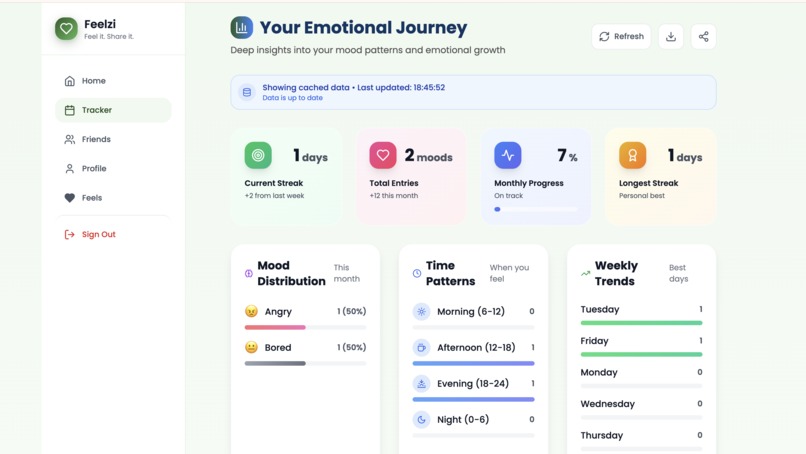
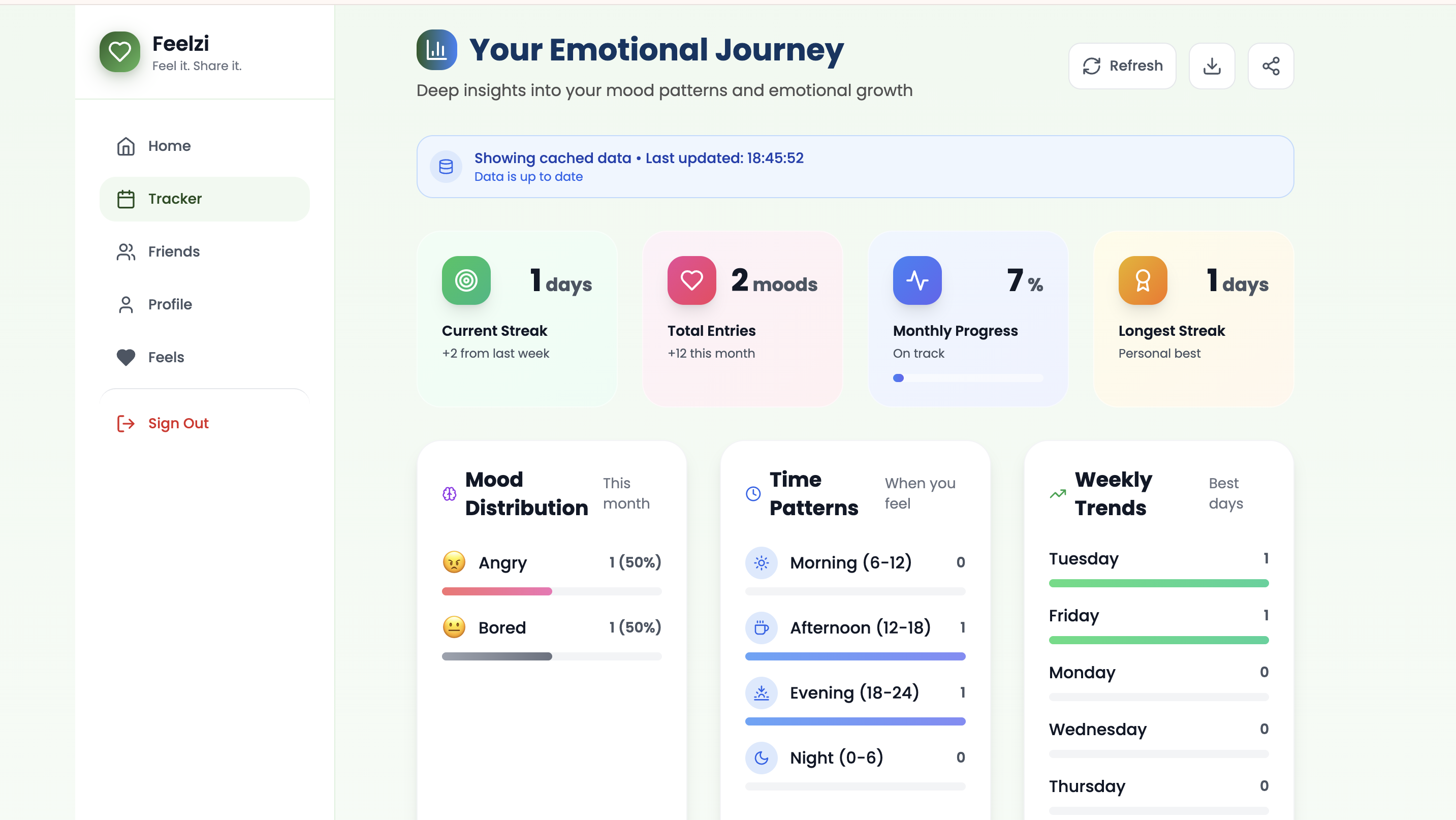
View your mood history and improve your mental health by setting emotional goals
-
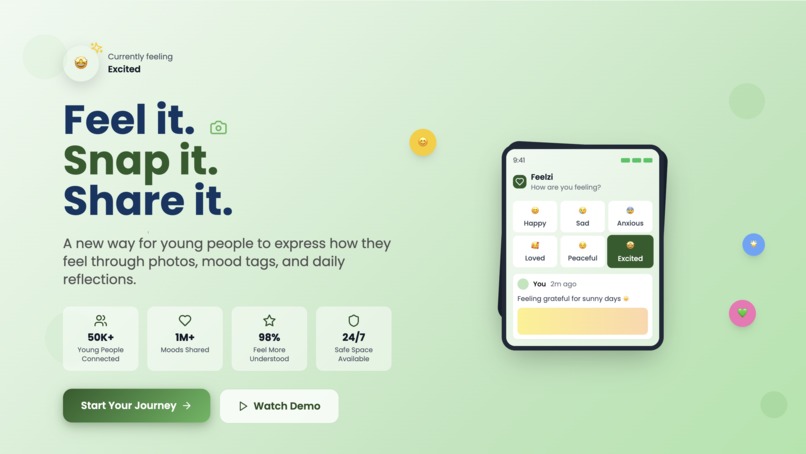
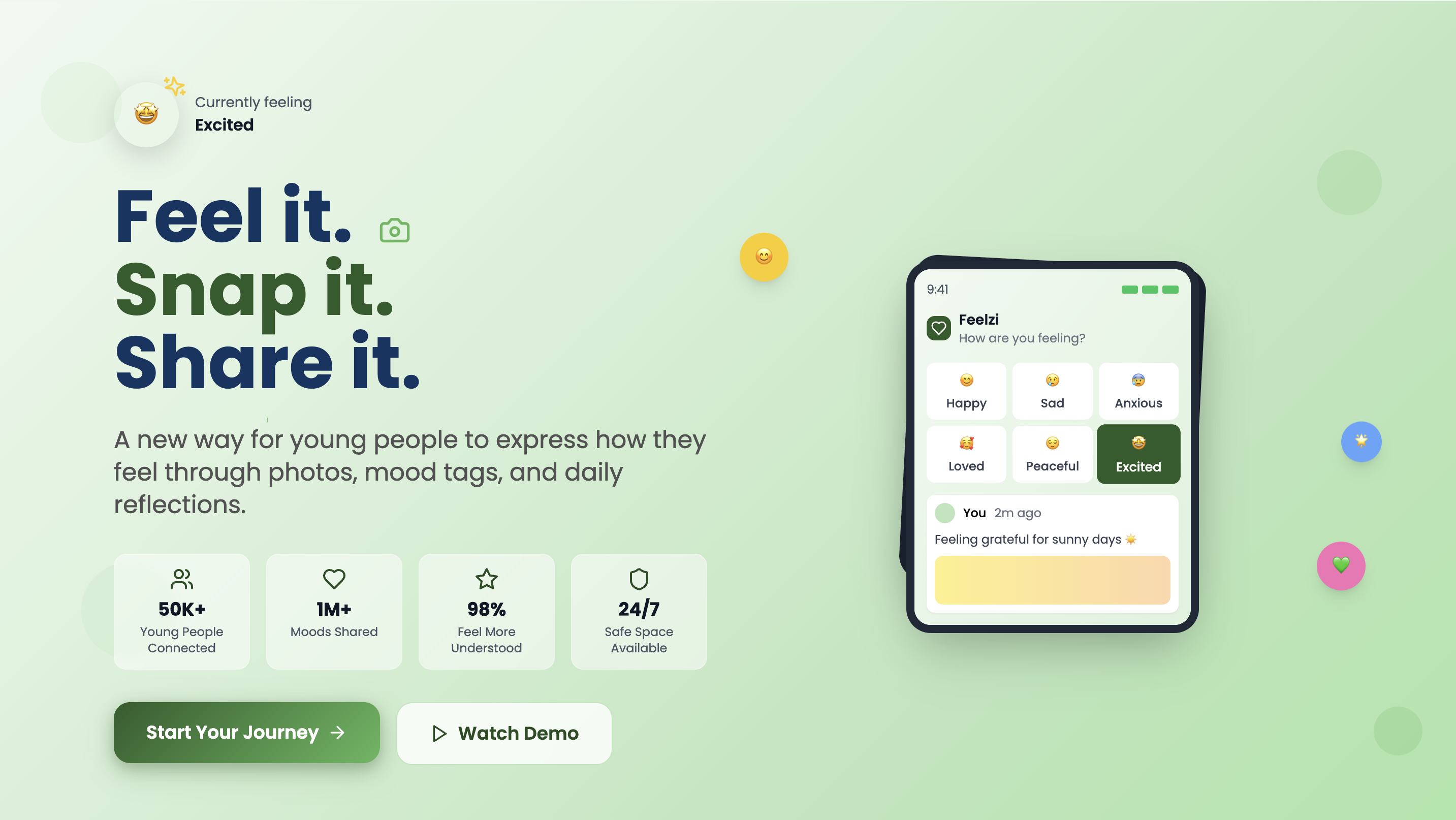
Feel It, Snap It, Share it
-
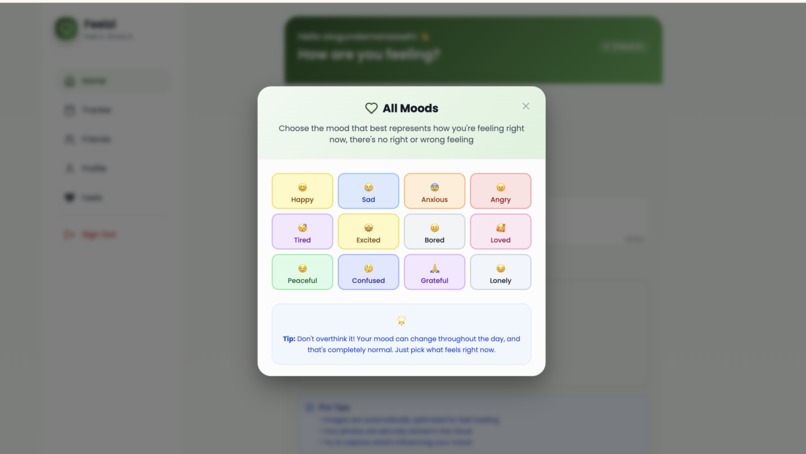
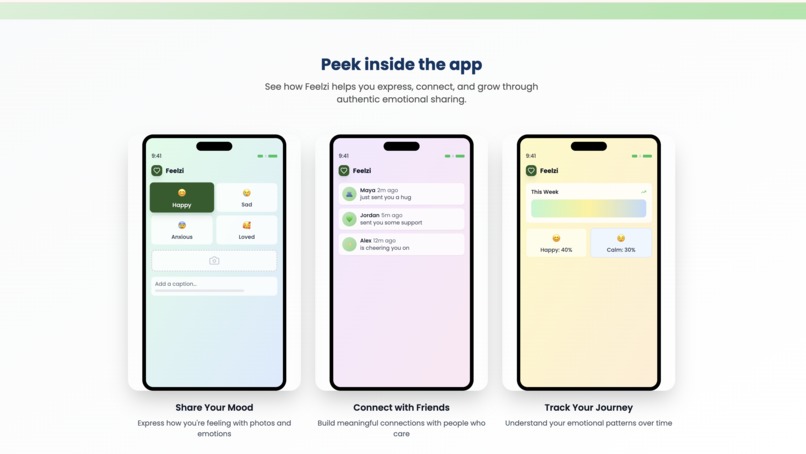
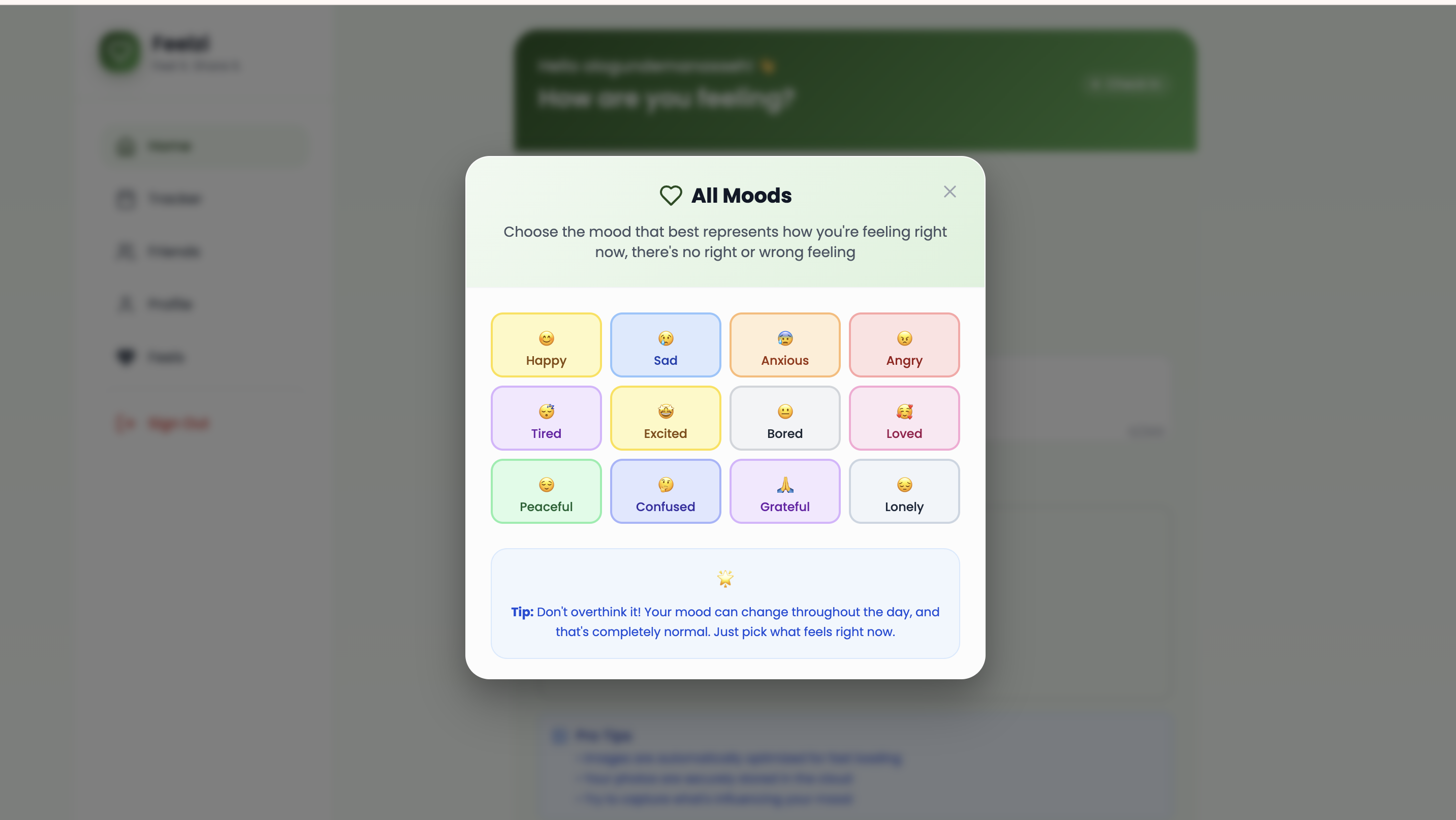
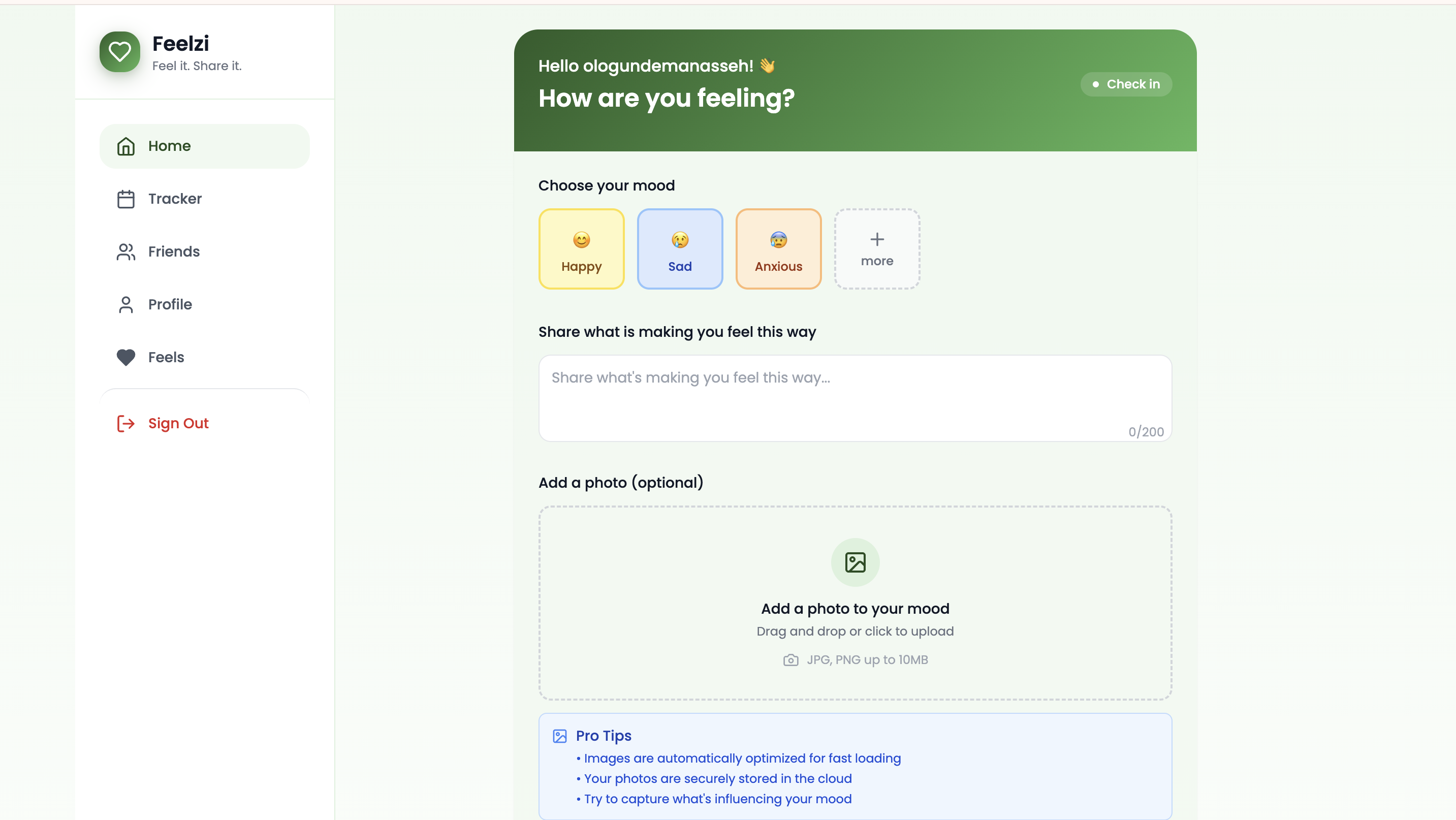
Choose how you are feeling
-
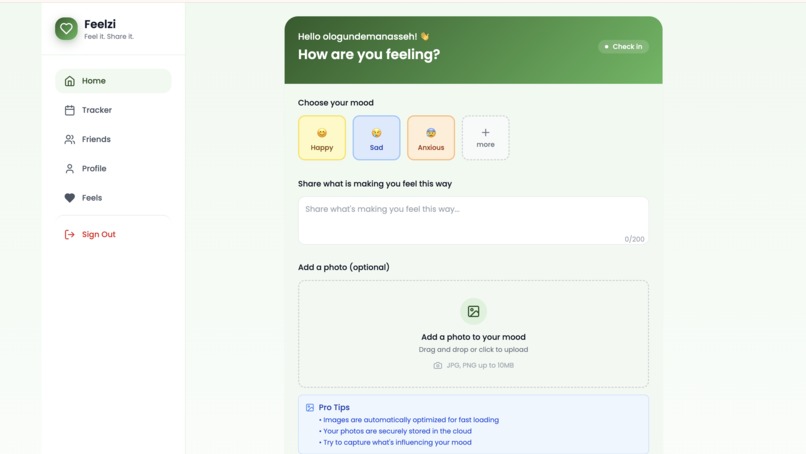
Express how you feel with a caption and image, away from the noise
-
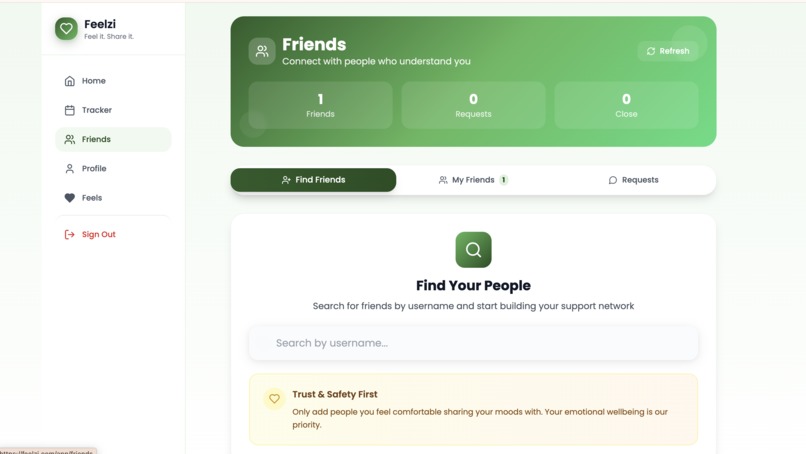
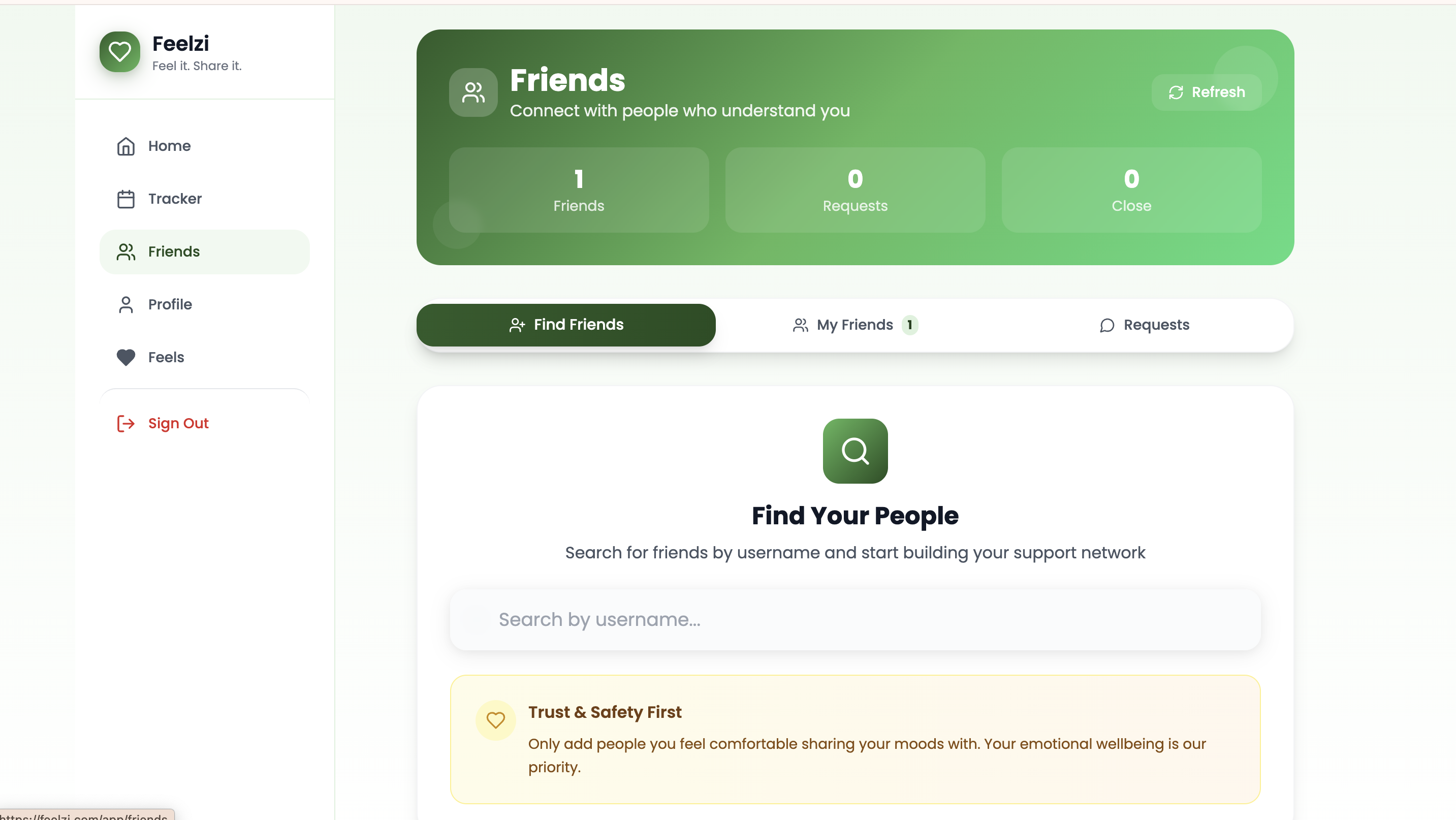
Add trusted friends
-
Feelzi is for you.
Inspiration
We are living in a mental health epidemic but not the loud kind. It is silent, subtle, and wearing a smile. Today’s young people are more connected than ever before; yet they are lonelier, more anxious, and emotionally exhausted. According to the World Health Organization, 1 in 7 adolescents worldwide lives with a mental disorder. Depression, anxiety, and behavioral issues are rising fast, with many cases going undiagnosed and untreated. In fact, studies show that emotional distress often manifests not in obvious breakdowns, but in silence; in young people not knowing how to name, explain, or share what they are feeling. Same as in adults. Social media has not helped. It has become a stage where performance often replaces presence. You show your best angles, but not your true emotions. You post updates, but rarely open up. And while mental health apps exist, many feel cold, clinical, or overwhelming - like checklists for a crisis, not companions for everyday humanity. That is where Feelzi was born. My partner, as an adolescent health expert and researcher working closely with Gen Z, she shared how she keeps seeing the same thing: a generation desperate to feel seen, but afraid to overshare; tired of filters, but afraid to be vulnerable. And we asked ourselves - how might we make emotional expression as easy as taking a snap? How might we design a space that does not demand perfection, just presence? What if “I feel off today” could be said with a photo, not a 500-word caption? Feelzi is that space. It is where emotions are visual, sharing is soft, and empathy is just one gentle reaction away. A moment of honesty away from the noise. A mood in motion. A generation finally allowed to feel - not perform.
What it does
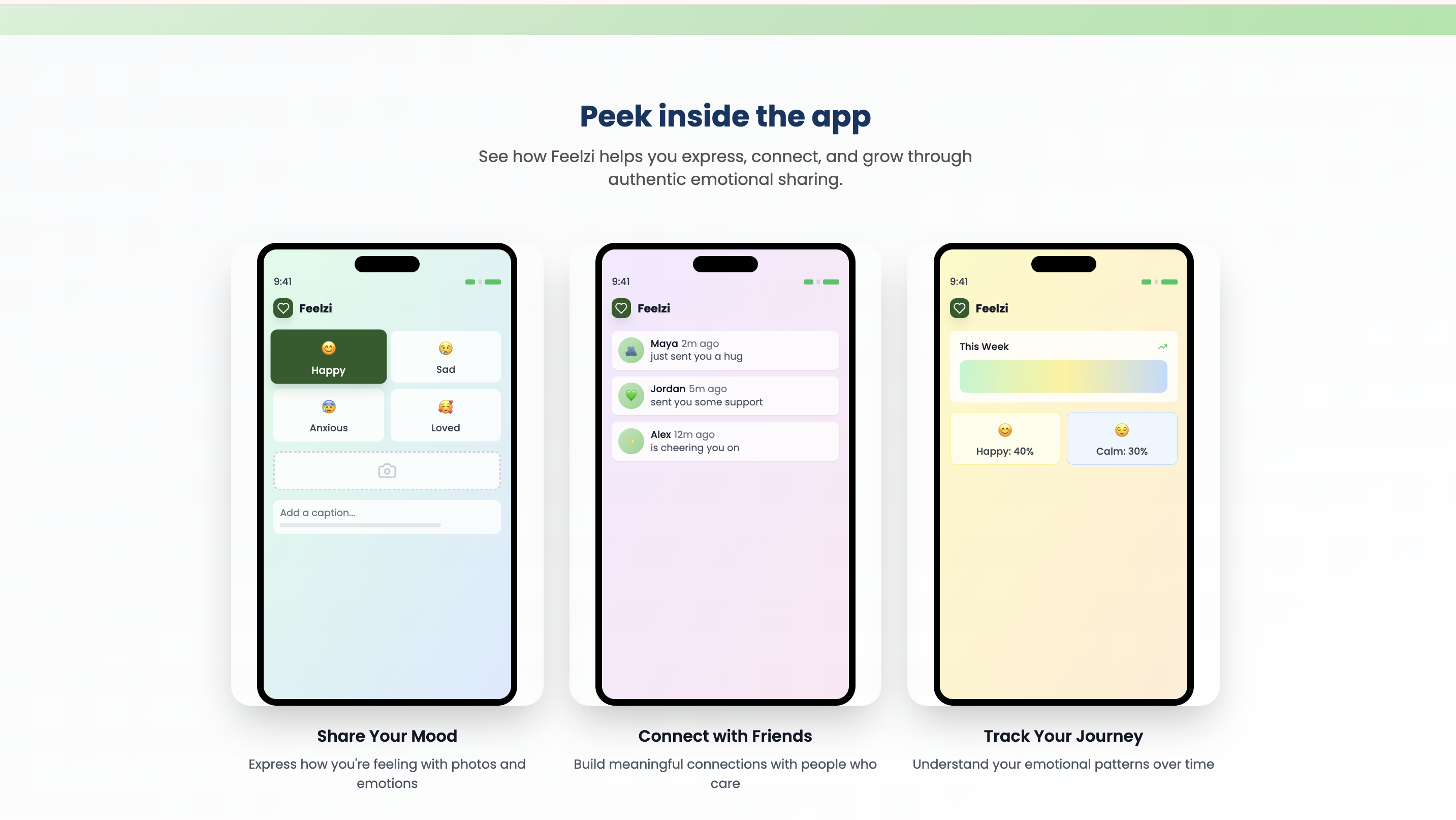
Feelzi is a mood-sharing app that invites users to: Check in every few hours with a mood prompt; Snap a photo of what is influencing that mood (we call this a Feel); Share that visual emotion with close friends, who can respond with empathetic reactions. We designed Feelzi to be minimal, visual-first, and non-performative - combining the intuitiveness of social apps with the gentleness and empathy of emotional check-ins. Every Feel becomes part of a personal mood story that would help users recognize patterns and connect more meaningfully.
How we built it
We were initially building a platform where young people can find resources for help and also connect to professionals for counselling, mentorship and access to other related services. While we were drafting that out and discussing we found a gap, the pressure of social media being a major contribution to the negative health of young people. We found out about bolt.new and decided to try it. A simple prompt got us started, we first focused on the design, an intuitive design that is appealing and feels safe, then we decided which features we want to roll out first. We went ahead to prompt bolt to make the platform functional with authentication, and database connections. Bolt made this easy. It also guided us on how to go about certain things like creating superbase accounts, deployment and fixing bugs. Ultimately we were able to navigate our way and get to this point.
Challenges we ran into
We had issues communicating our queries to bolt in a way that it does just exactly what it is required to do. We got a hang of that as we kept going. We currently are working on improving the loading time of queries. It's slower than we expected. We also had challenges managing tokens. But we have a hang now. Overall, getting to this point has not been smooth, but it has been worth it.
Accomplishments that we're proud of
First is that we arrived at a name and identity that resonates. After multiple deliberations, we landed on Feelzi a name that captures both the lightness and emotional depth of the product. This gives the brand a strong, recognizable identity with a distinct visual tone and emotionally intelligent voice. We also designed our logo and visual assets that now define the emotional look and feel of Feelzi.
Secondly, we have built the web-based version of Feelzi and tested with real users, starting with core features including Mood prompts every few hours: Posting a Feel; Private reactions; Deleting or archiving Feels; Tracking mood history; Adding and removing close friends
What we learned
- Emotional honesty is easier when it is visual. Asking young people to "talk" about how they feel is harder than asking them to show it through a simple photo.
- When it comes to young people, Simplicity builds trust. Less is more and simplicity build trust. A simple mood prompt, an unfiltered photo and a soft response system can go farther than over-engineered features.
- Young people do not want more mental health tools, rather they want better emotional experiences. Feelzi sits in that in-between space: it is not a wellness app, not a social media feed, but a human moment.
- The way you ask a question, the color of a background, the reaction options, all contributes to whether a user feels safe enough to share.
What's next for Feelzi
- We will pilot the web based version of Feelzi with a small group of young people (ages 15–24), gathering feedback on UX, emotional engagement, and safety features.
- We will build the mobile version of Feelzi and scale it to reach more people, helping them to become more aware of their emotions and understand their mood patterns leading them to make better decisions that help their mental and emotional health.
Built With
- cloudinary
- html5
- lucide
- netlify
- postgresql
- react
- superbase
- tailwind
- vite

Log in or sign up for Devpost to join the conversation.