
Inspiration
The idea for FeelTrip came from something simple we noticed. When people talk about travel, they usually don’t know exactly where they want to go, they just know how they want to feel. They say things like "I need something calm", "I want to feel inspired", or "I just want to escape for a bit." It is always about a feeling first, not a destination. At the same time, who can describe a place better than someone who has already experienced it? Real traveler stories capture the light, the atmosphere, the silence, and the energy in a way filters never can. But most travel platforms ask for a city, dates, and budget, forcing users into a completely different mindset. That disconnect is what inspired us to build FeelTrip.
What it does
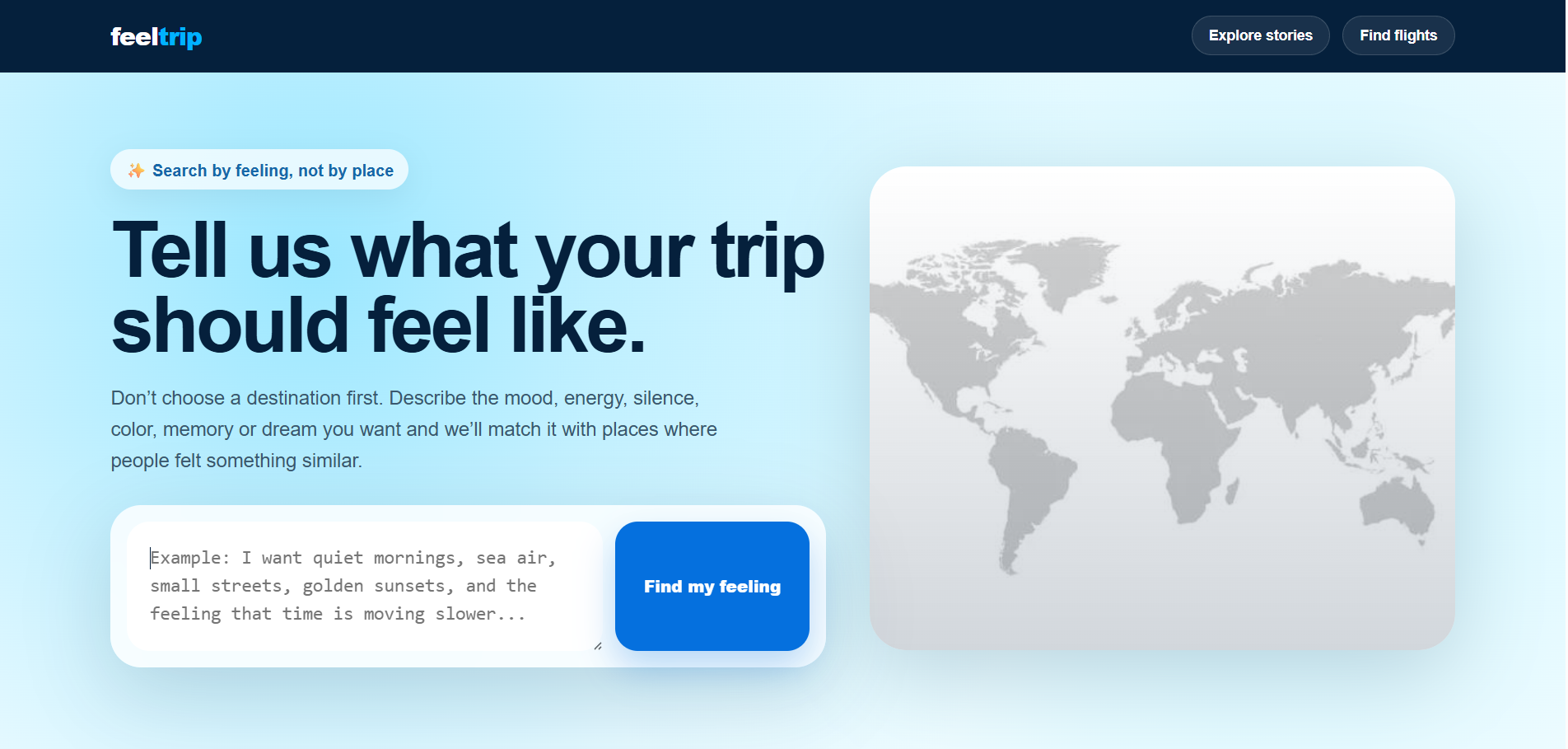
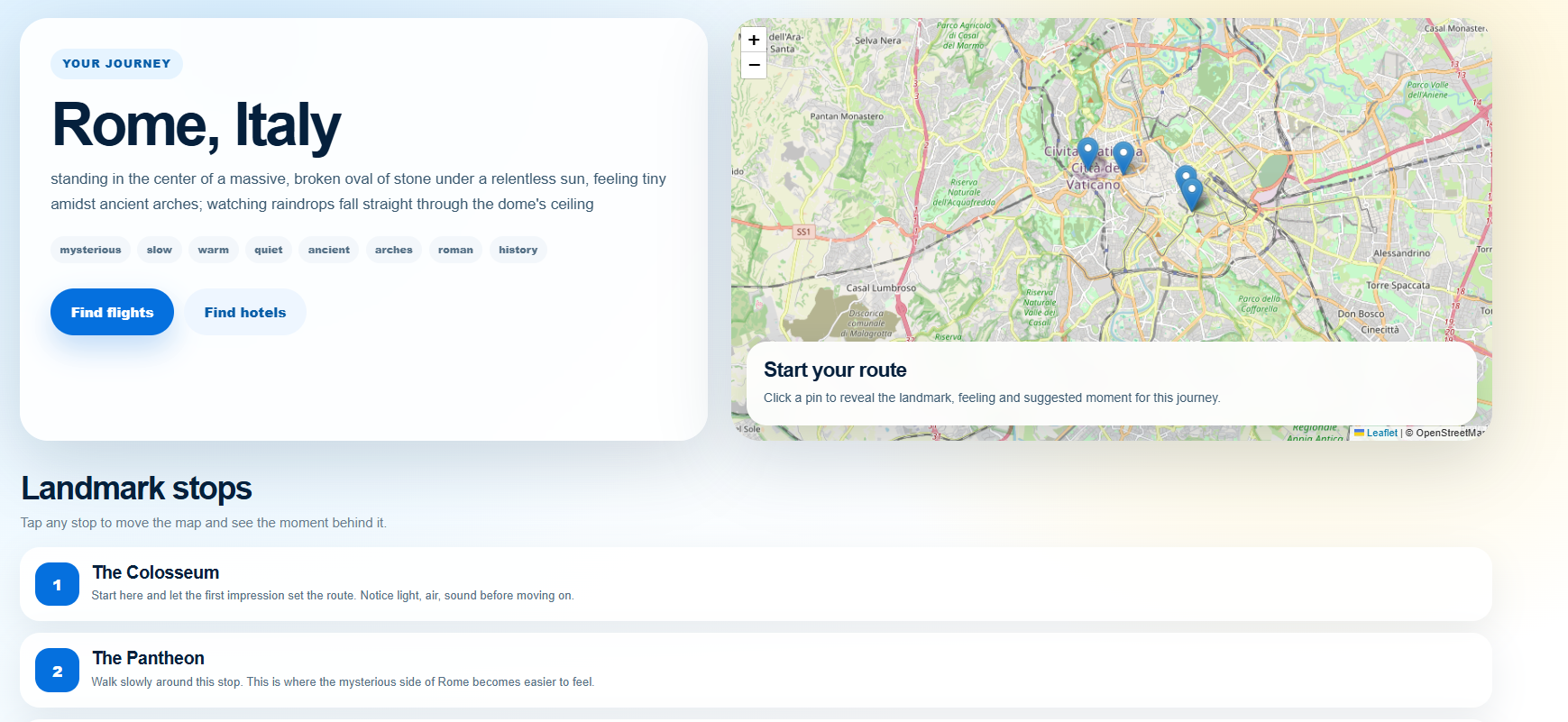
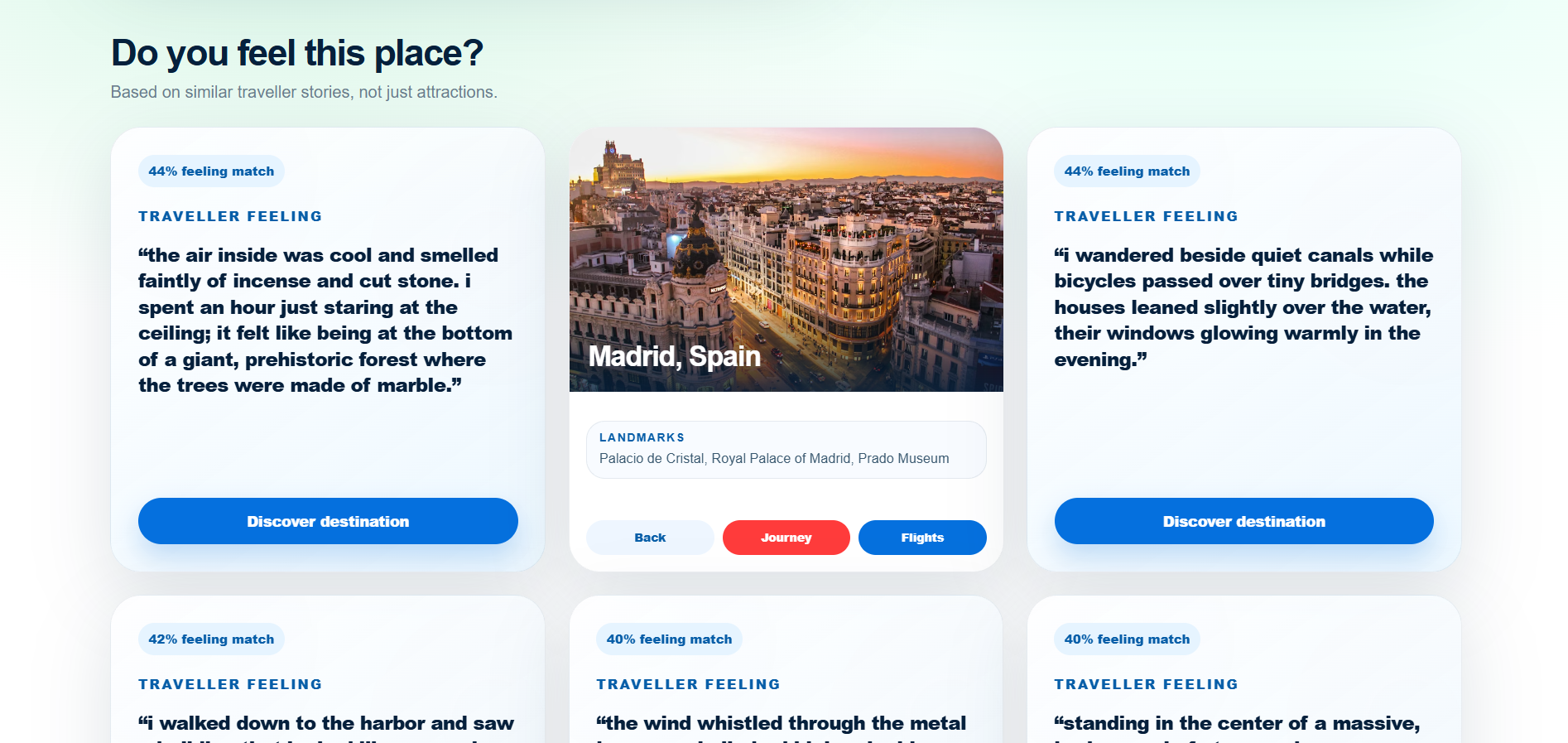
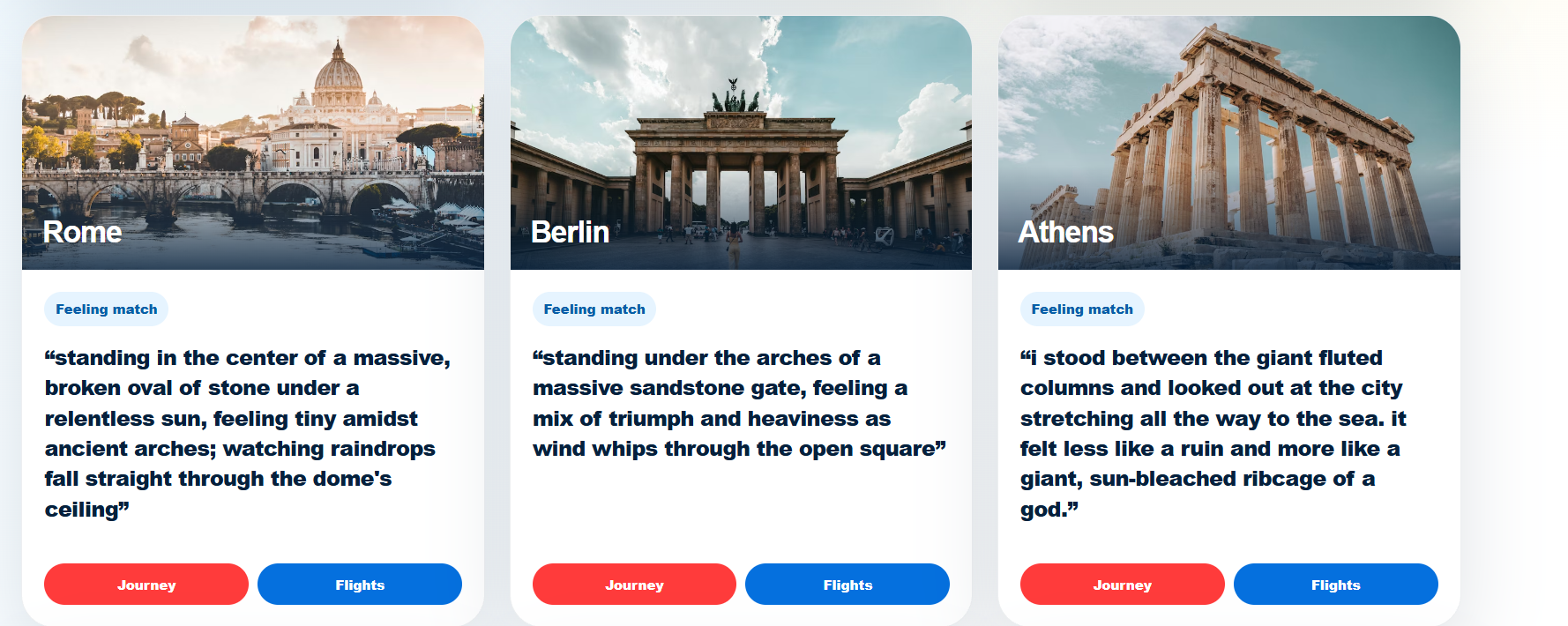
FeelTrip allows users to search for destinations based on how they want to feel, instead of where they want to go. Users describe a mood, a vibe, or an experience, and the system matches it with destinations that reflect similar emotional experiences. Each recommendation is powered by real travel stories and enriched with mood, pace, climate, and sensory details. Users can explore destinations, view landmarks on a map, and continue planning their journey.
How we built it
We built FeelTrip using HTML, CSS, and JavaScript for the frontend and FastAPI for the backend. We processed a dataset of traveler stories and used AI to transform them into structured profiles with tags such as mood, activities, and sensory details. To keep the system fast, we replaced real-time AI calls with a lightweight matching system based on keywords, synonyms, and scoring logic.
Challenges we ran into
One of the biggest challenges was balancing intelligence and speed. Using AI for every request gave good results but was too slow, so we redesigned the system to pre-process data and simulate intelligence with fast matching logic.
Another challenge was extracting emotional meaning from raw text and converting it into structured data. We also had to design a UI that communicates feelings, not just information.
Accomplishments that we're proud of
We built a system that changes how users discover travel, from destination-first to feeling-first. We successfully transformed raw stories into meaningful recommendations and created a smooth experience with interactive cards, journeys, and maps. The full flow works from user input to personalized results.
What we learned
We learned that people think emotionally, not logically, and systems should reflect that. We also learned how to balance AI with performance and when simpler solutions can be more effective. Additionally, we improved our skills in combining backend logic, frontend design, and data processing into one product.
What's next for FeelTrip
We want to improve personalization by expanding data and refining the matching system. Next steps include integrating real APIs for flights, hotels, and maps, and enhancing the journey experience with richer storytelling and interaction.
Our goal is to make FeelTrip a platform where users discover not just where to go, but how they want to feel.
Built With
- css
- fastapi
- html
- javascript
- json
- ollama-(llama-3.2)
- python
- rest


Log in or sign up for Devpost to join the conversation.