-
-
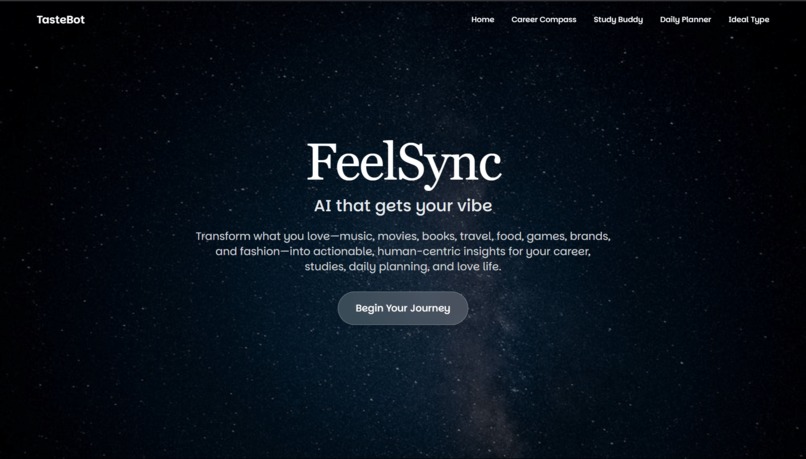
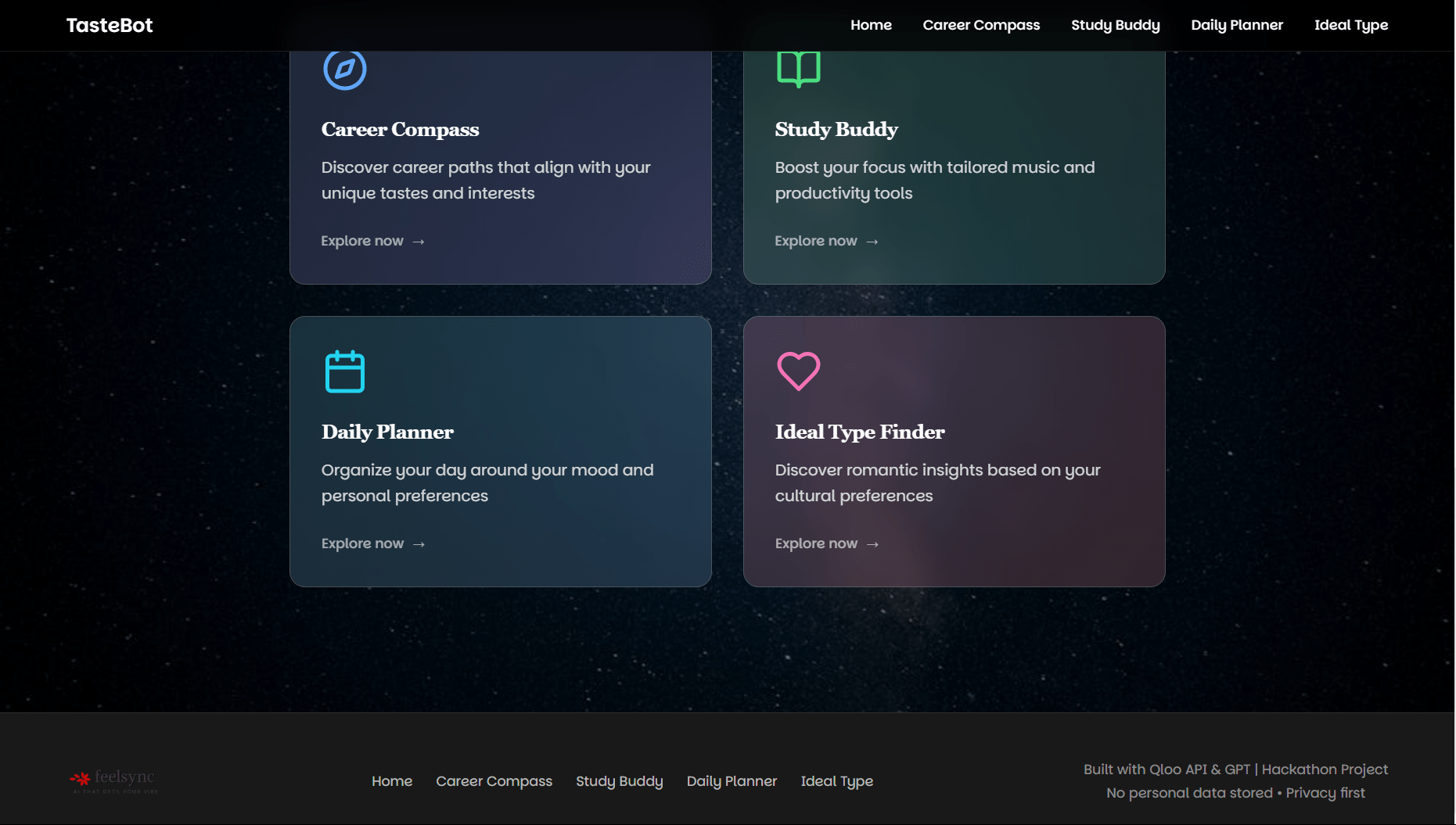
Homepage
-
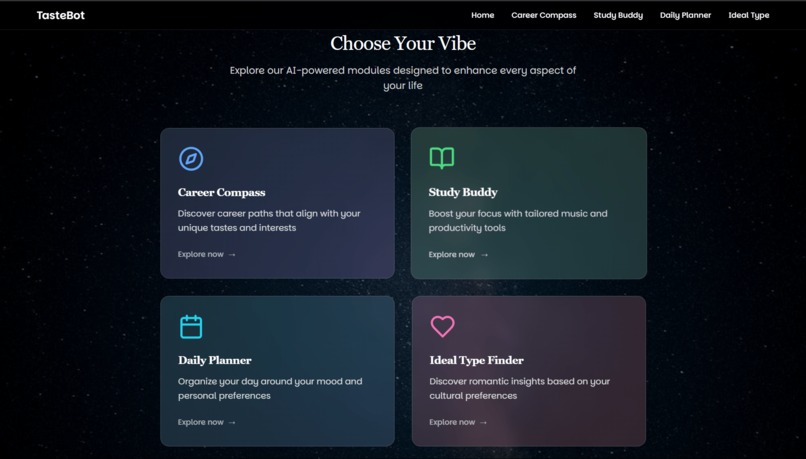
homepage
-
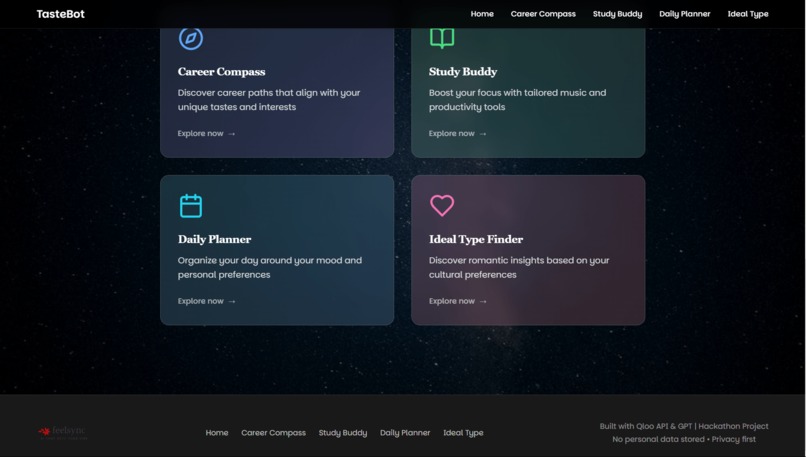
homepage
-

Career compass landing page
-
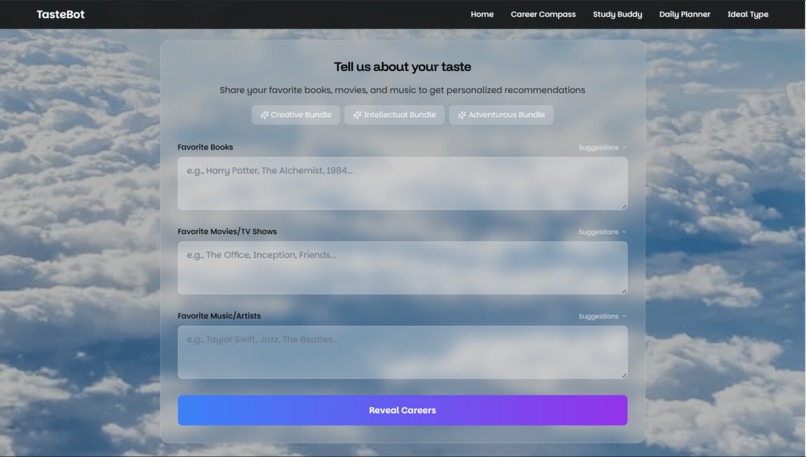
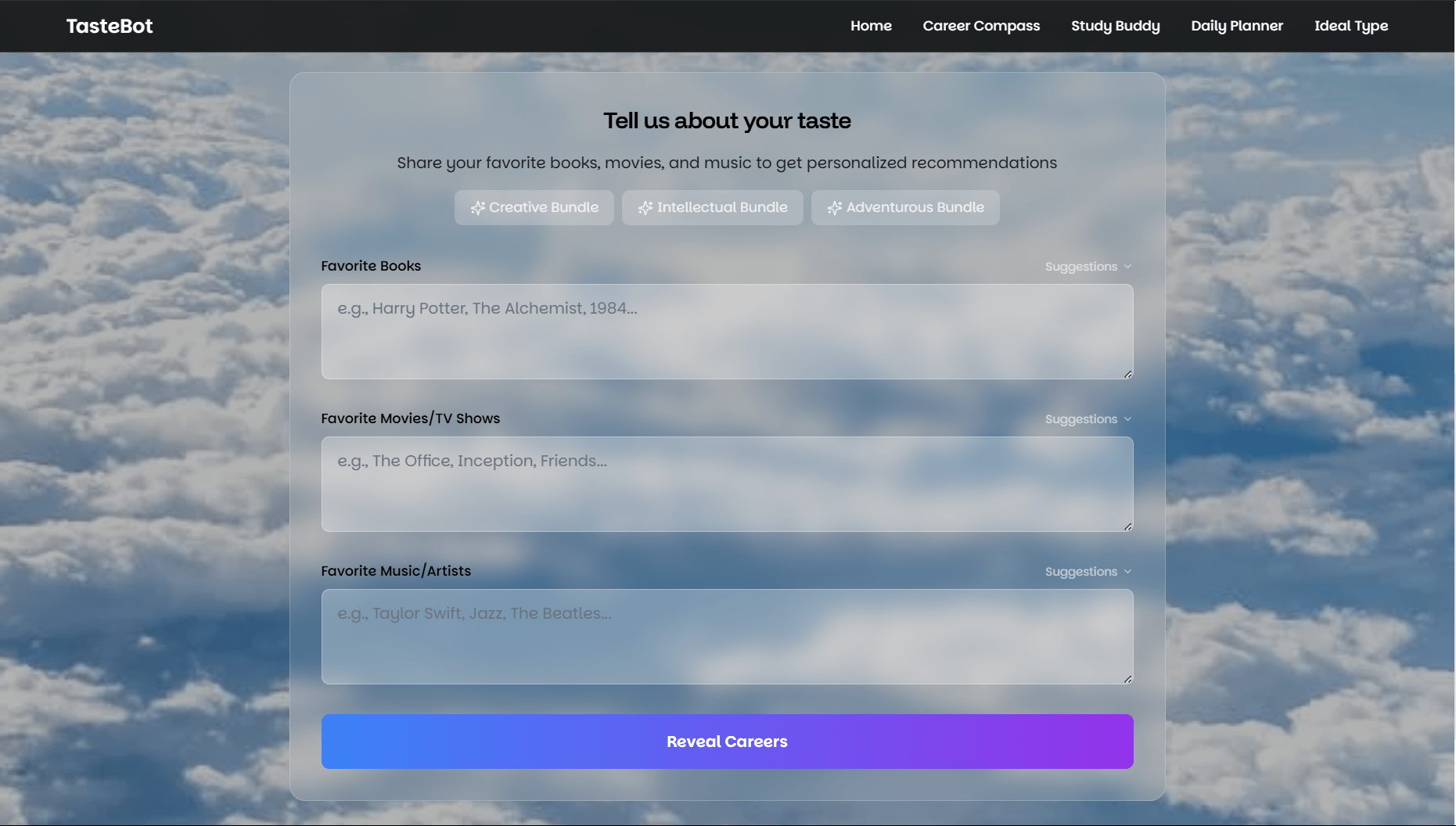
Career compass input section
-
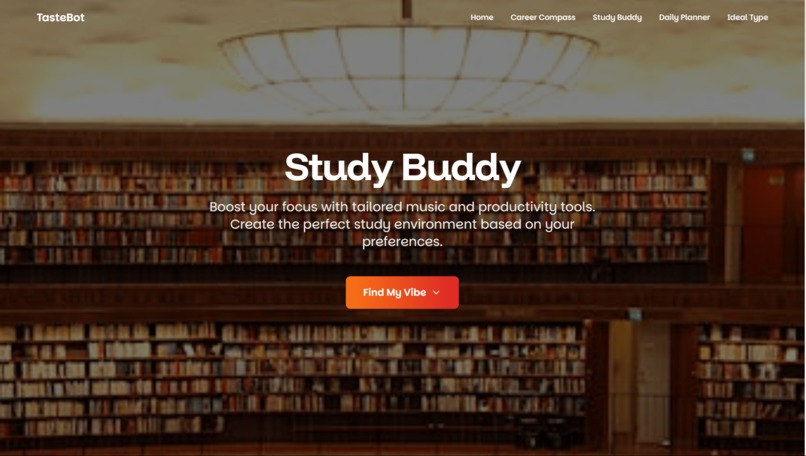
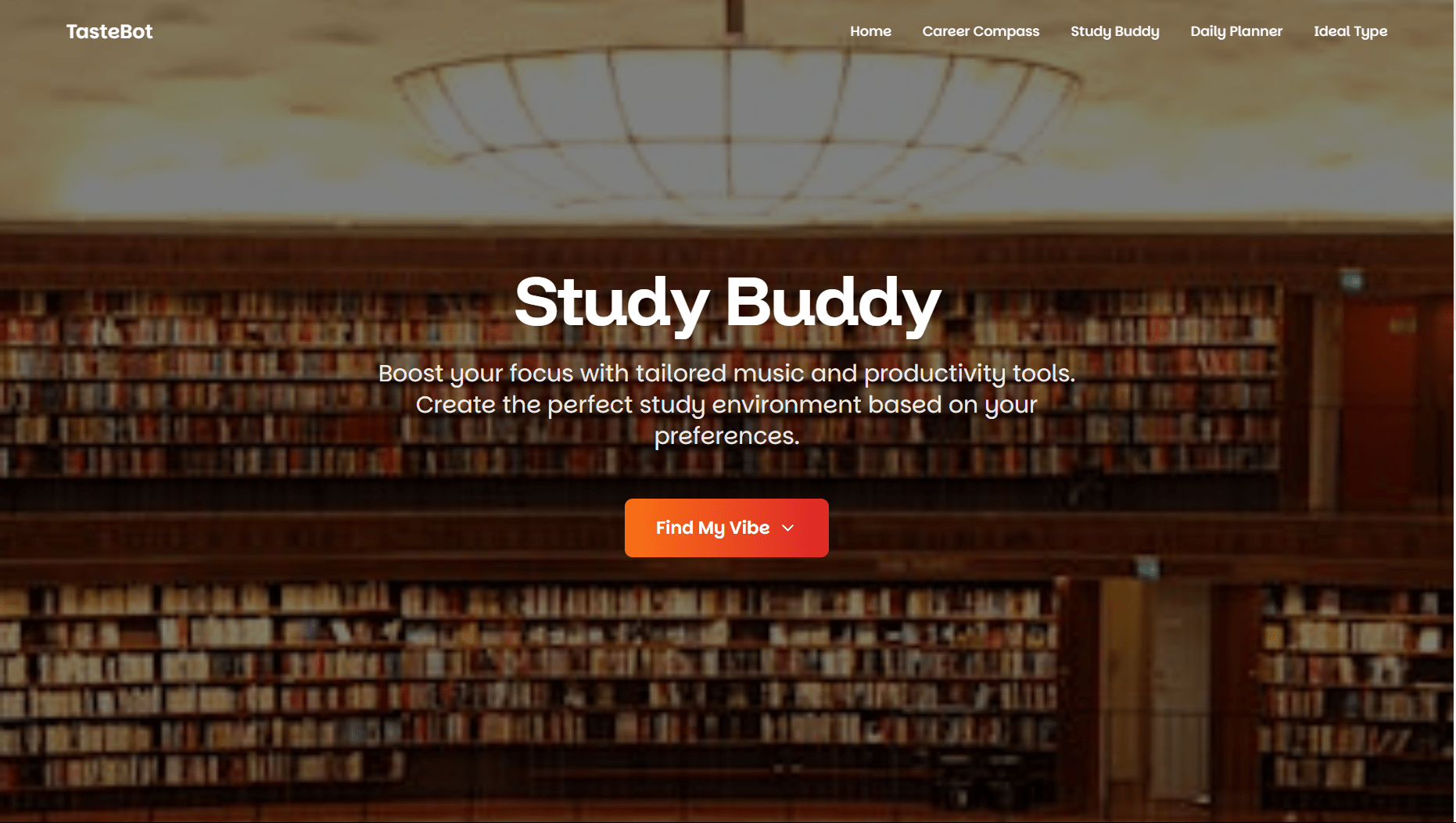
Study Buddy landing page
-
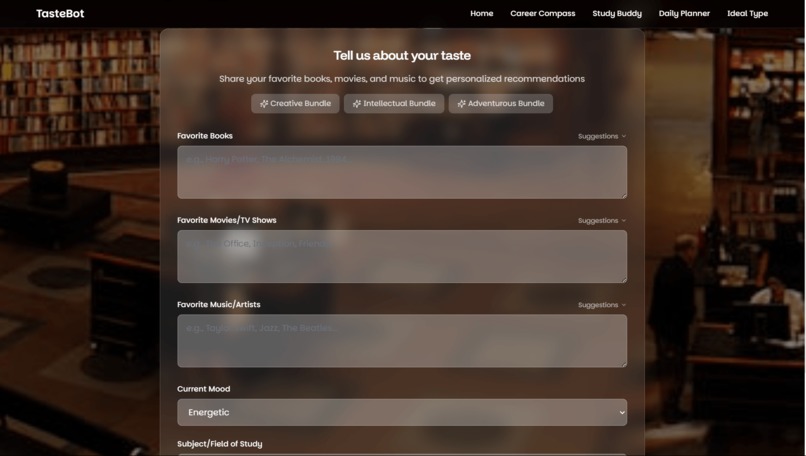
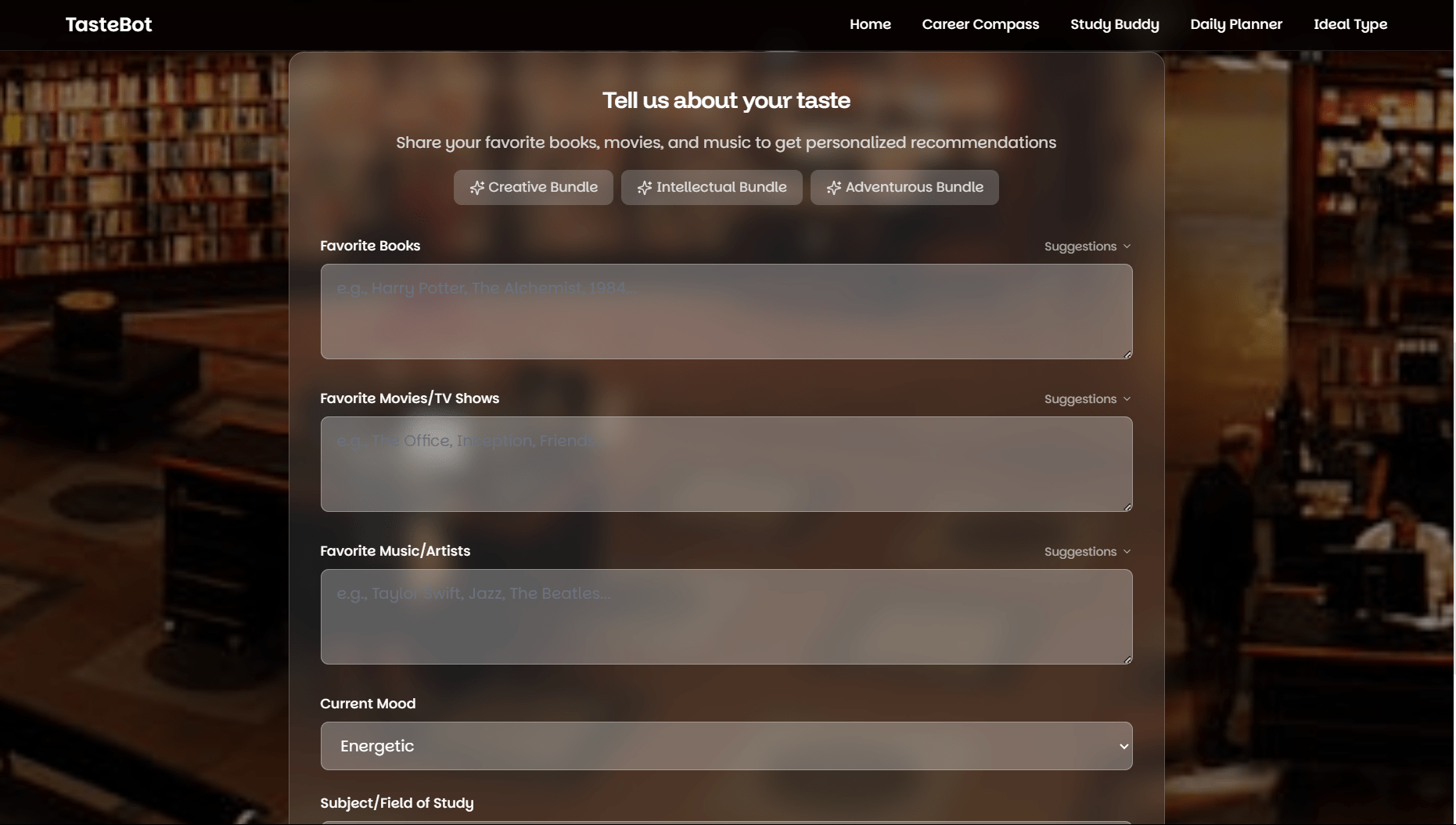
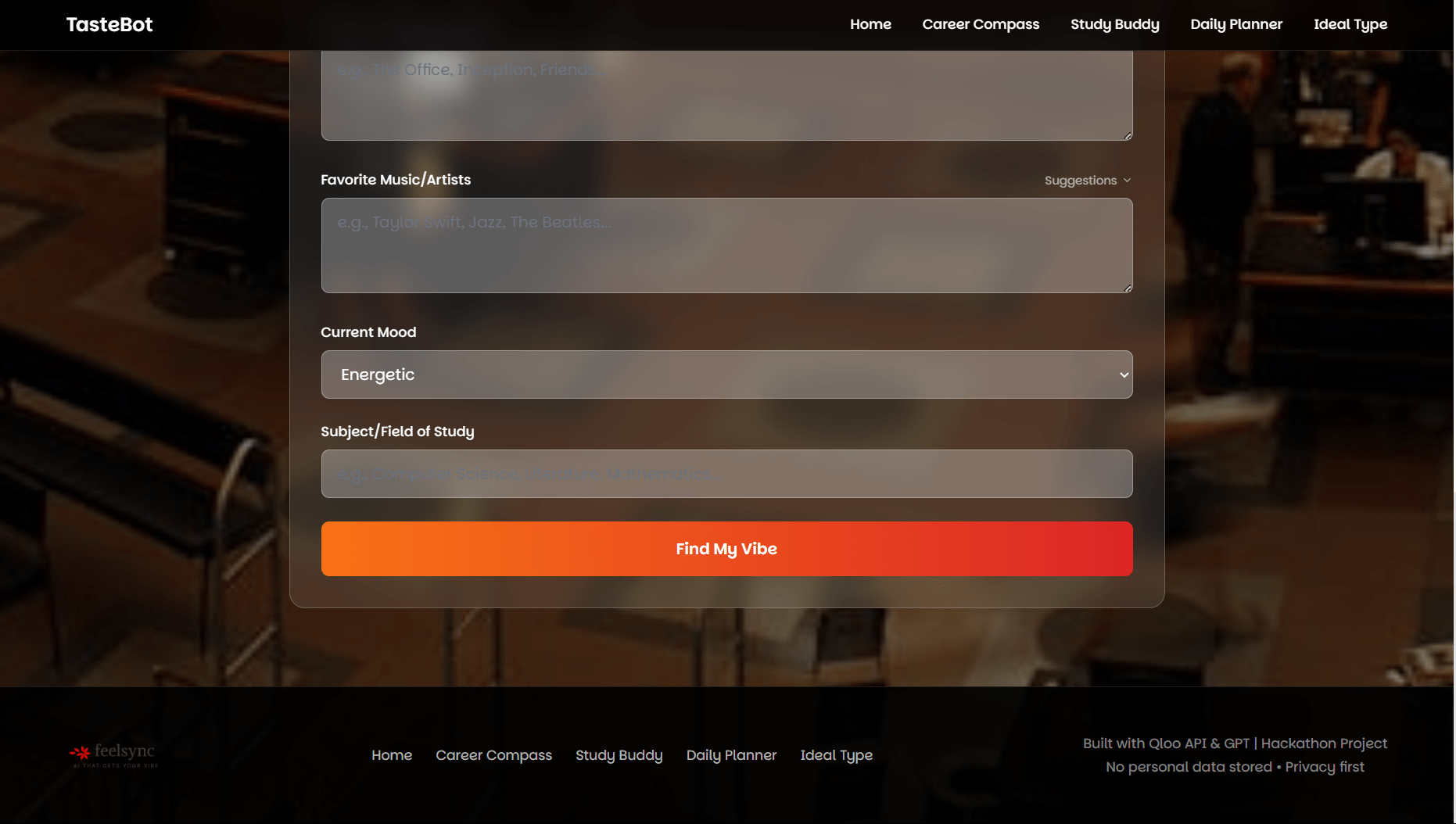
Study Buddy input section
-
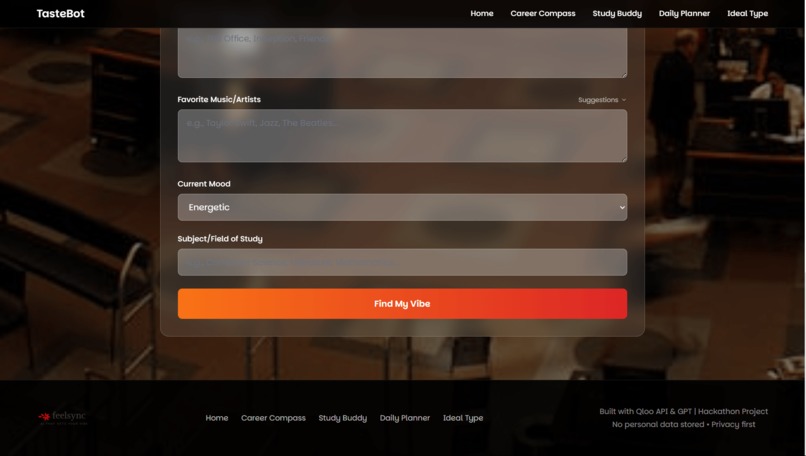
Study Buddy input section
-

Daily planner landing page
-
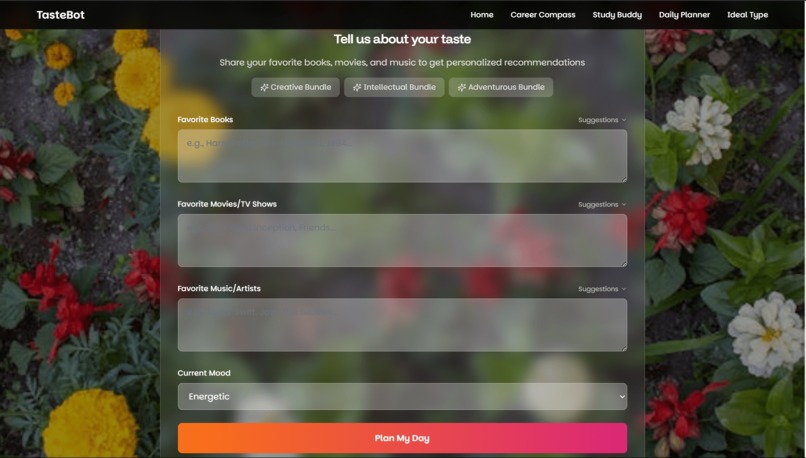
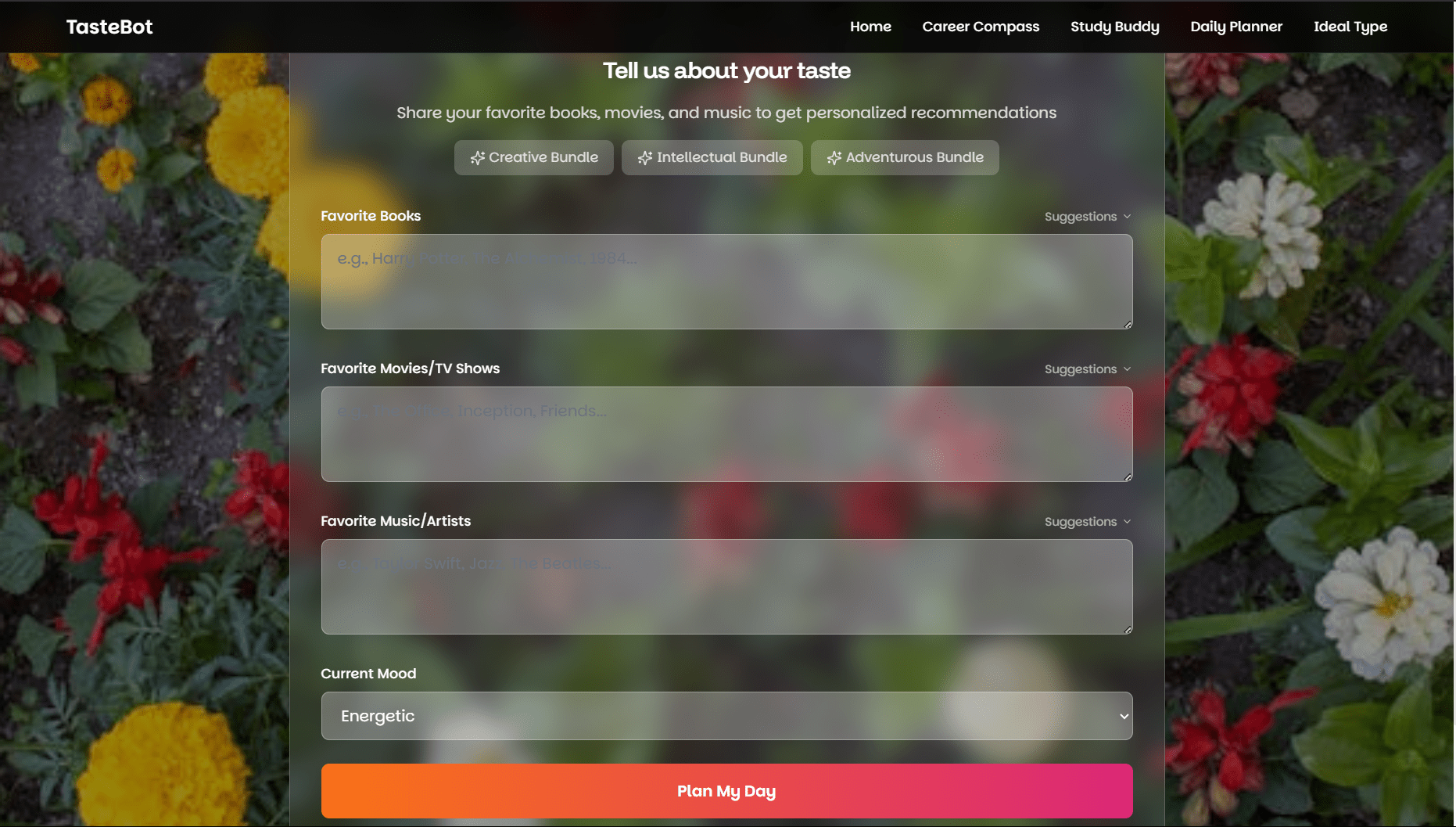
Daily planner input section
-
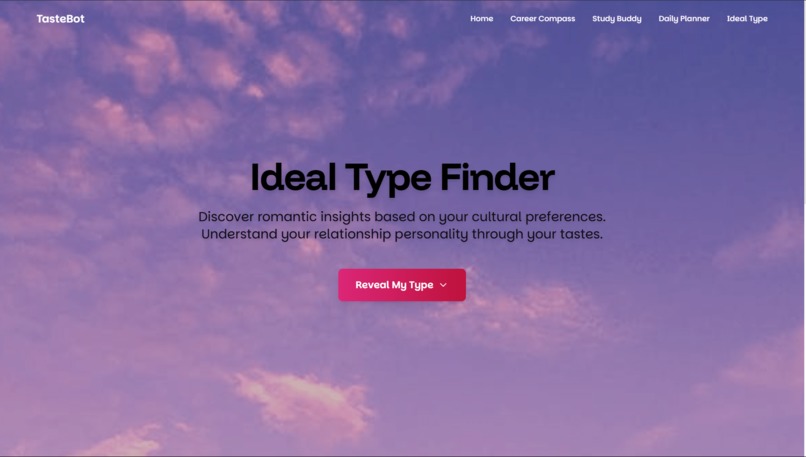
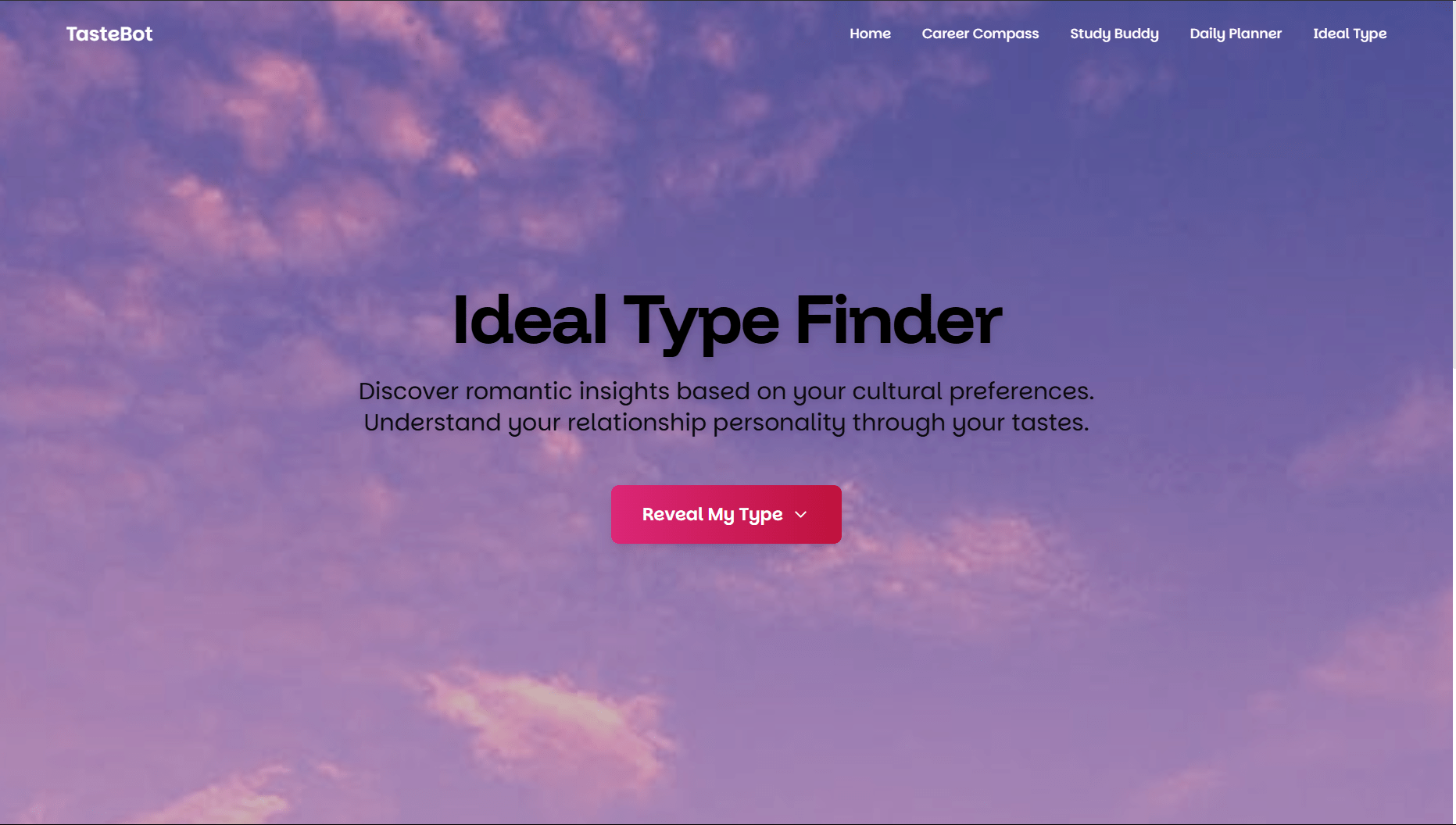
Ideal type finder landing page
-
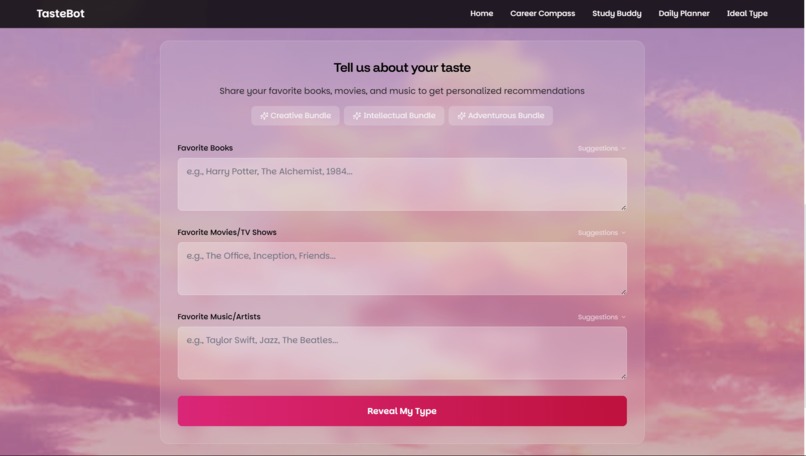
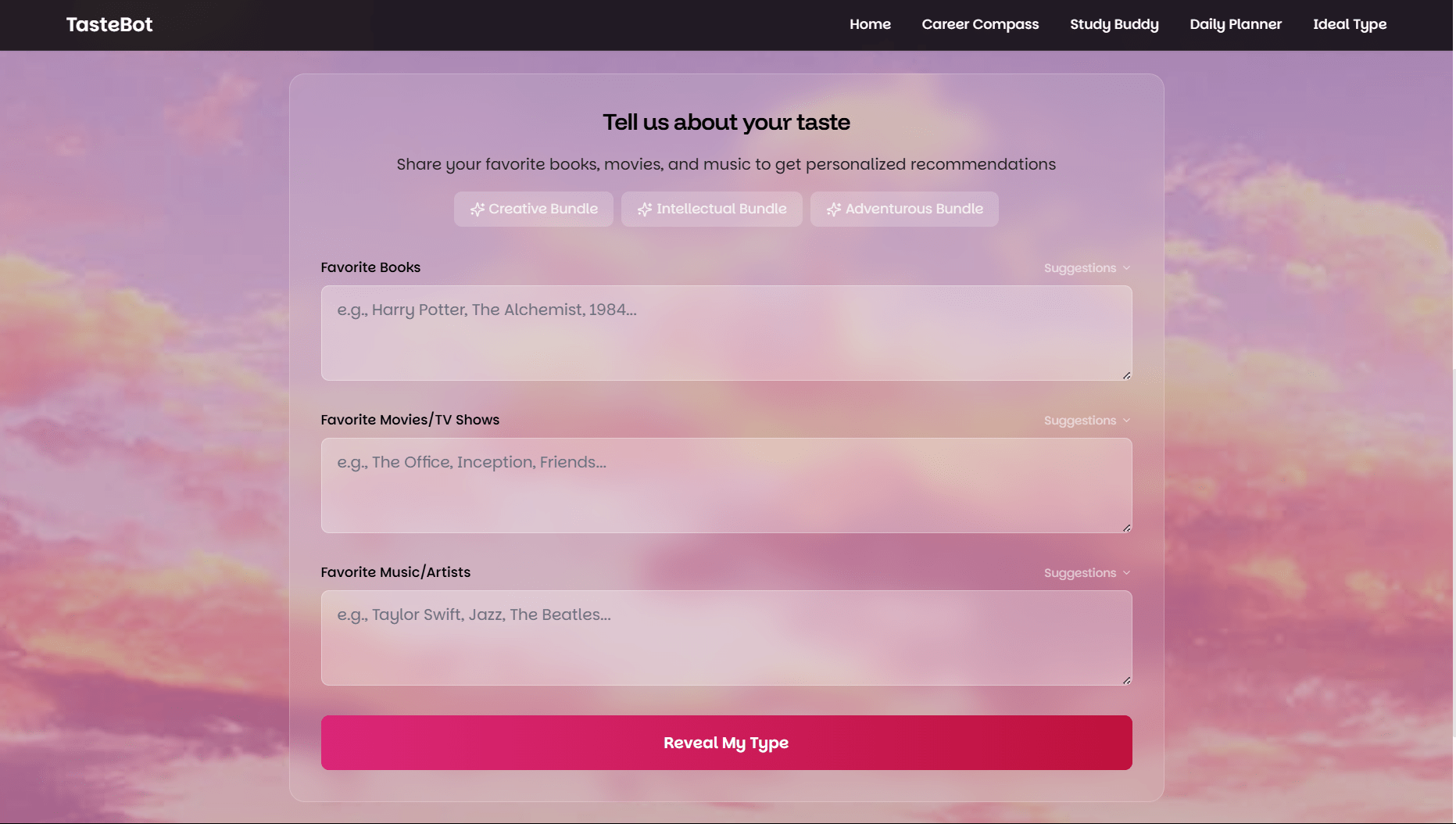
Ideal type finder input section
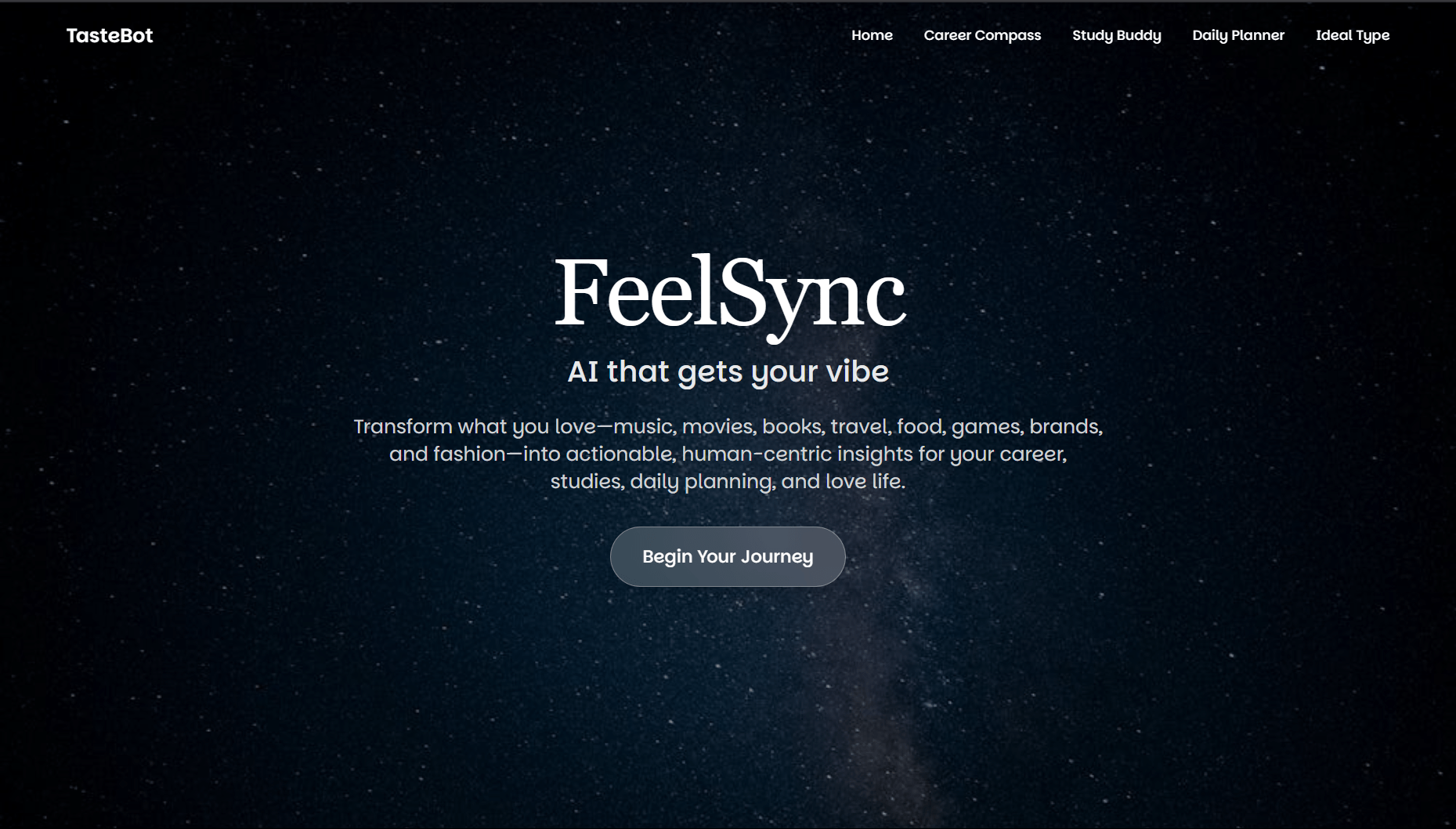


FeelSync
Inspiration
Since childhood, I often wished someone could just tell me what my ideal career was, what kind of person I was most compatible with, or even what to do today that aligned with my mood and personality. I’ve always been fascinated by how our preferences — in music, movies, books, and even fashion — say something deeper about who we are.
FeelSync was born from this curiosity. What if AI could take what you love... and reflect it back as real, actionable life guidance?
What it does
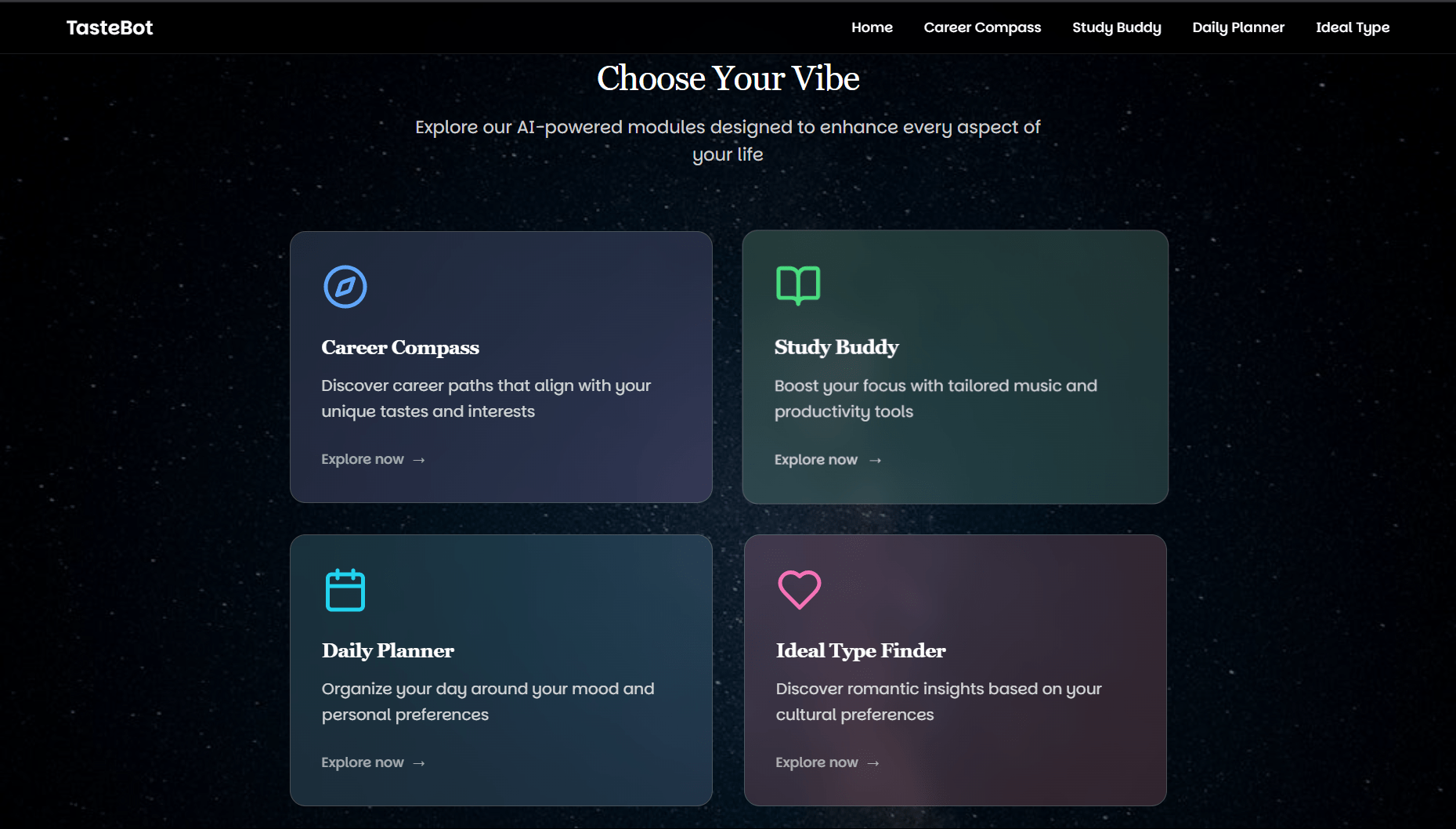
FeelSync is a taste-powered personal assistant that transforms your favorite cultural inputs (like songs, shows, and books) into:
- 🎓 Career recommendations that feel like you
- 🧠 Study music playlists & productivity suggestions based on your mood
- 📅 Personalized daily plans with quotes and tools to match your vibe
- 💘 A light personality-based ideal partner suggestion tool
You input your current likes, and FeelSync syncs them with your day, goals, and self.
How I built it
The stack and design choices include:
- Frontend: Next.js + React + TailwindCSS for a responsive and emotion-friendly UI
- APIs:
- Qloo API to analyze user taste and extract cultural vectors
- Gemini (Google AI) API to generate smart suggestions, explanations, and advice
- Backend Logic: Built and deployed using Lovable, which enabled:
- Prompt chaining & merging
- Response caching (to avoid repeated costs)
- Fallback flows when Gemini hits quota/errors
- UX Features:
- Autofill for fast testing and low-friction UX
- Personality-aware messages and mood-reflective outputs
Challenges I ran into
- Prompt budgeting: Gemini API usage burns fast — I had to optimize prompts for token efficiency and reduce credit usage while still generating rich outputs.
- Combining APIs: Translating Qloo's taste-based outputs into something Gemini could reason with required thoughtful prompt engineering.
- User boredom: Users don’t always want to type everything. Building autofill options that still gave meaningful results was tricky.
- Fallback reliability: Ensuring the app wouldn’t break when API quotas were hit — added custom fallback logic and cached prior suggestions.
Accomplishments that I am proud of
- Building the entire experience solo — from UI and logic to API integration and error handling.
- Designing an emotional, human-feeling AI assistant from something as abstract as taste.
- Creating real-world fallback and caching strategies under API constraints.
- Making the assistant feel like a friend, not just a chatbot.
What I learned
- Prompt design is product design — the way you structure a prompt shapes the entire user experience.
- Combining multiple APIs with different data types (numeric embeddings from Qloo vs. text from Gemini) requires creative translation logic.
- You don’t need to build big to build impact — just build for a need you’ve personally felt.
- Efficiency matters. Caching, chaining, and fallback planning saved resources and created smoother UX.
What's next for FeelSync
- ✨ Add personalization memory (past preferences stored locally)
- 📊 Visualize taste evolution over time
- 🎙️ Voice input and TTS output to make it more conversational
- 🧠 Add AI explanations (Why this career? Why this plan?) using Explainable AI principles
- 📱 Mobile-friendly version or app
- 🧩 Let users save, share, or revisit their synced recommendations
FeelSync isn't just an assistant — it's a mirror for your inner world, powered by your outer tastes. 💜
Built With
- auth
- bun
- deno
- edge-functions)
- eslint
- framer-motion
- gemini-api
- git
- github
- html5
- jamstack
- postcss
- qloo-api
- react.js
- rest-apis
- shadcn/ui
- supabase-(postgresql
- tailwind-css
- typescript
- vite

Log in or sign up for Devpost to join the conversation.