
Inspiration
We wanted to build a world where everyone can experience sound, even if they cannot hear. Many deaf or hard-of-hearing people miss critical warnings, a simple knock at the door, or a baby crying. We are computer science students, so we built Feel-IT: a smart, wearable device that turns specific, important sounds into labeled vibrations, letting the user feel and understand their surroundings.
What it does
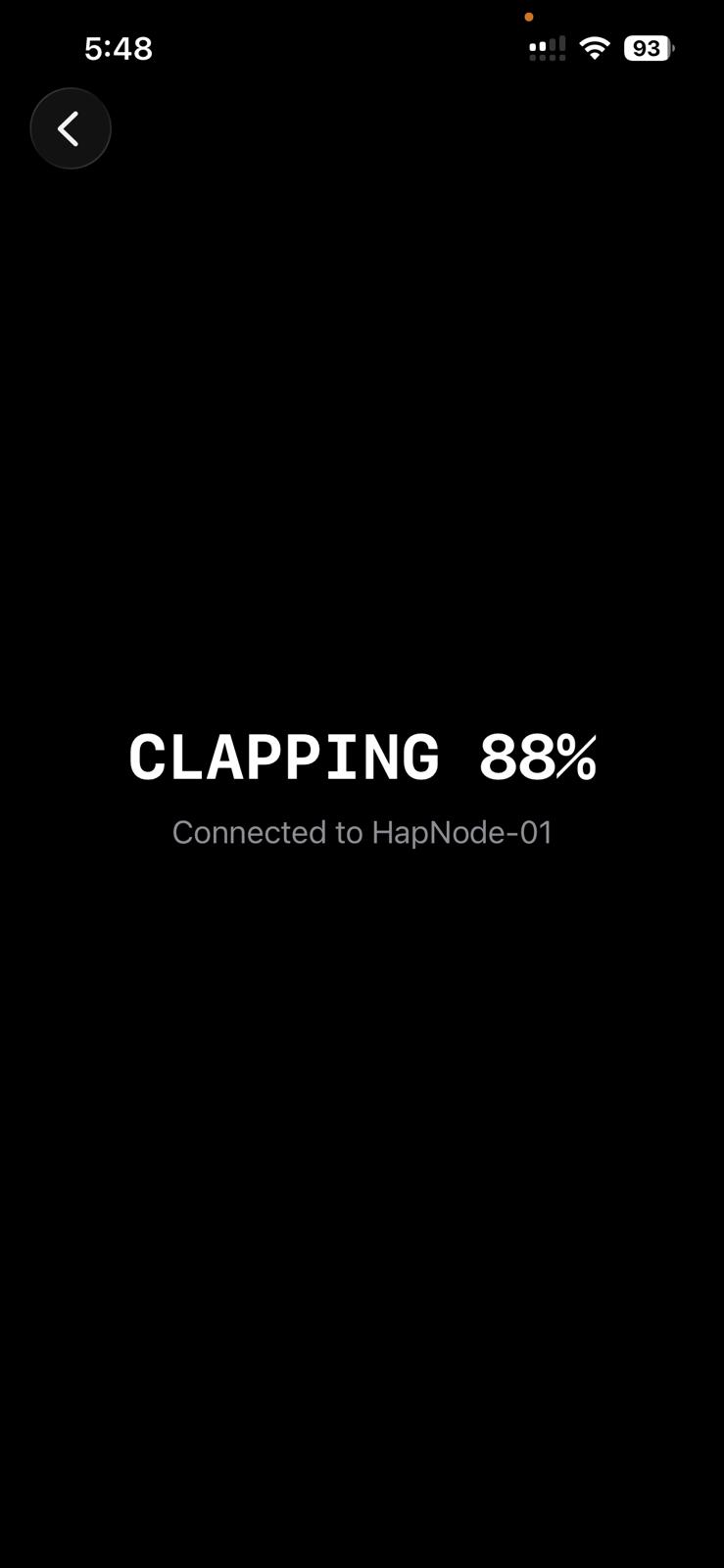
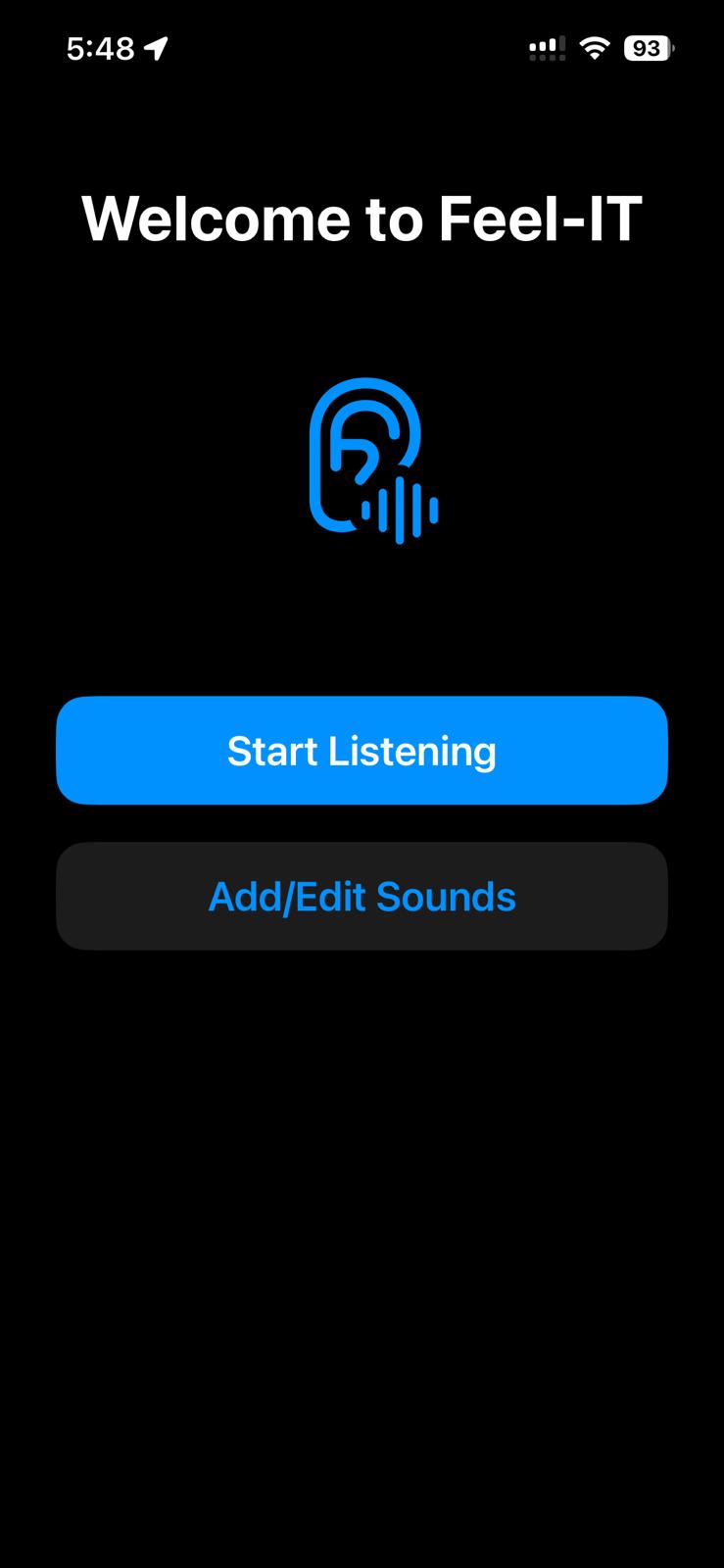
Feel-IT is a two-part system: an iPhone app "brain" and an ESP32 wristband "feeler."
- The iPhone app uses Apple's
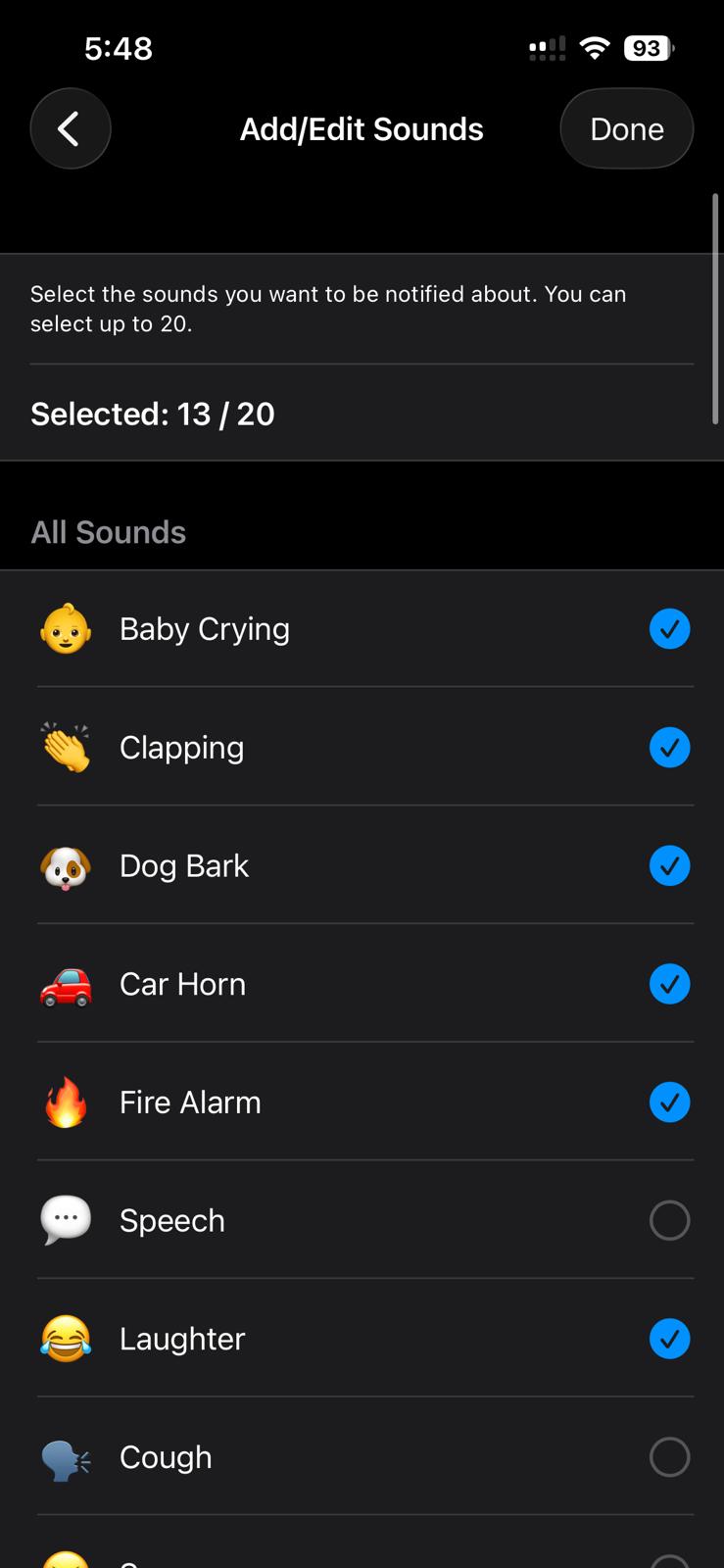
SoundAnalysismachine learning framework to listen for and classify over 100 sounds in real-time. - The user opens the app and selects only the sounds they care about (e.g., "Baby Crying," "Fire Alarm," "Doorbell") from a pre-defined list.
- When the app detects a selected sound with confidence $C > 50\%$, it sends the human-readable name (e.g.,
"Fire Alarm:99") via Bluetooth Low Energy. - The ESP32 band receives the text, displays it on the screen, and triggers a sharp, distinct "Triple Click" vibration using a professional DRV2605L haptic driver. It intelligently ignores all unselected sounds to prevent alert fatigue.
How we built it
- iOS App (Swift): We used
AVAudioEnginefor audio capture,SoundAnalysisfor ML classification,SwiftUIfor the sound selection UI, andCoreBluetoothto manage the BLE client. - ESP32 Wearable (C++): We used a LILYGO T-Display for the screen and CPU. We used the
Adafruit_DRV2605library to control the haptic driver over I2C. The C++ code runs aBLEDeviceserver that listens for incoming string data from the app.
Challenges we ran into
This was our first time with advanced BLE and system-level audio services.
- XPC Crash: Apple's
SoundAnalysisservice repeatedly crashed when the keyboard appeared! We fixed this by building a resilientSoundBridgethat gracefully handlesAVAudioSessioninterruptions. - Silent BLE Failure: Data wouldn't send. We learned BLE commands must run on the main thread. The fix was a single, crucial line:
DispatchQueue.main.async. - C++ Data Corruption: The ESP32 received garbage text. We fixed a C++ pointer bug (
ch->getValue().c_str()) by safely copying the data to a stable ArduinoStringbefore processing.
Accomplishments that we're proud of
- We built a fully functional, end-to-end accessibility device that connects an iPhone app to custom hardware.
- We successfully debugged and fixed complex, low-level bugs in C++, Swift, and BLE communication.
- We created an intelligent filter (the
SoundStore) that prevents "alert fatigue" and makes the device genuinely useful. - We integrated a professional haptic driver (DRV2605L) instead of just a simple buzzer.
What we learned
- Multithreading is critical: BLE operations must be on the main thread, while audio analysis must be on a background thread.
- State management is key: We learned to manage the ESP32's state (Ready vs. Listening) by sending commands from the iPhone.
- How to debug hardware: We diagnosed C++ type-casting errors, pointer bugs, and library-specific issues by reading serial logs and isolating problems.
- User Experience > Technology: Our best feature isn't detecting sounds; it's ignoring the ones the user doesn't care about.
What's next for Feel-IT
Our next step is to build a "Teach Mode" for custom sounds (like a specific microwave beep) and design a 3D-printed case to make it a true, everyday wearable.


Log in or sign up for Devpost to join the conversation.