-
-
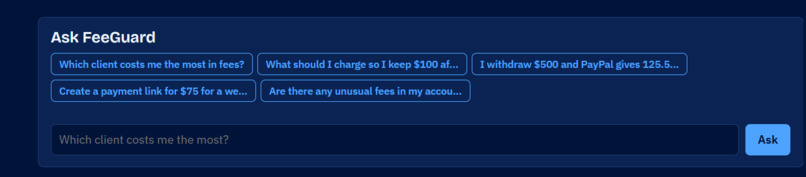
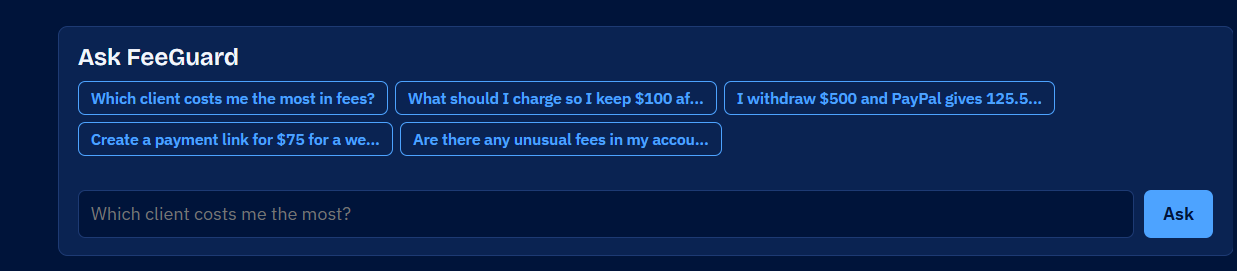
Ai Agent Interface
-
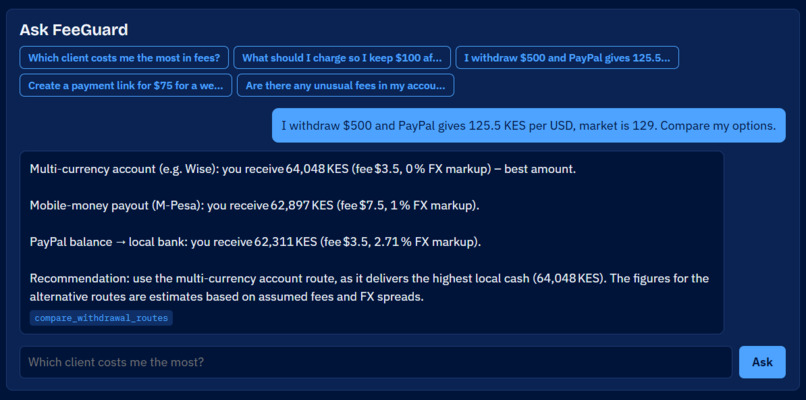
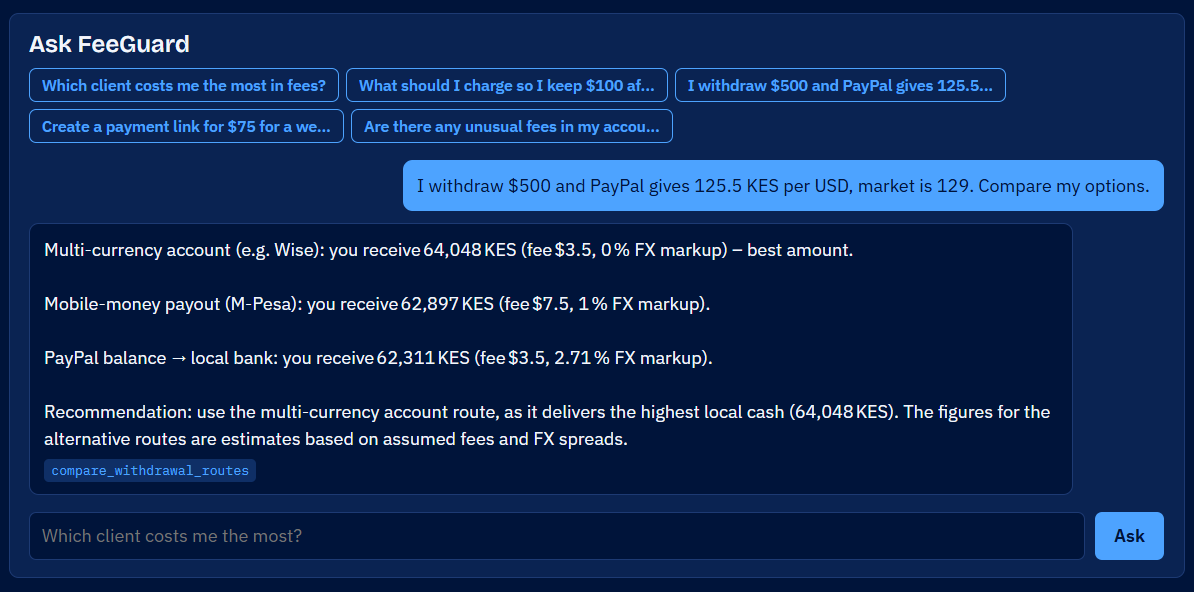
Ai Response
-
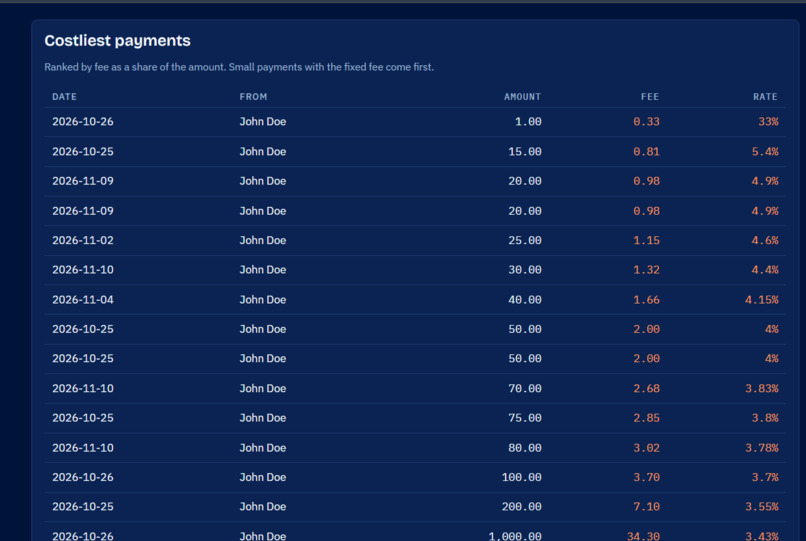
Costliest Transactions
-
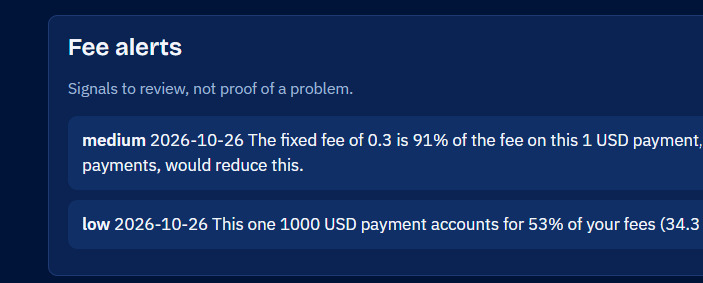
Fee Alerts
-
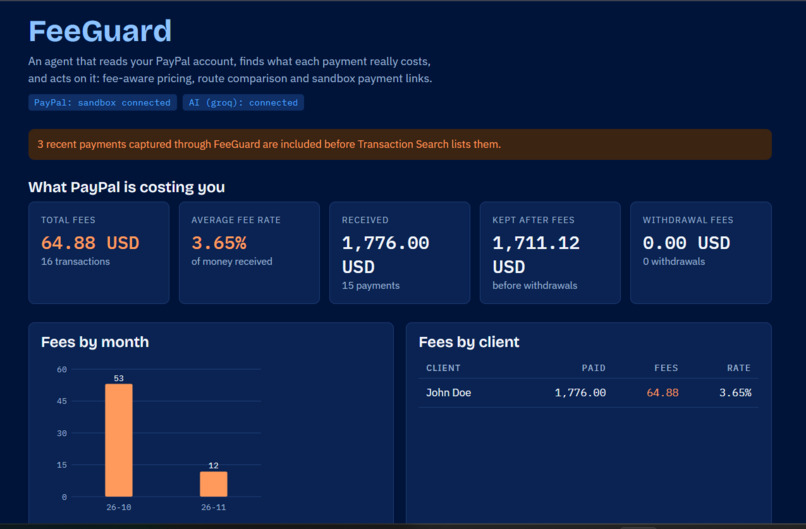
Main Dashboard
-
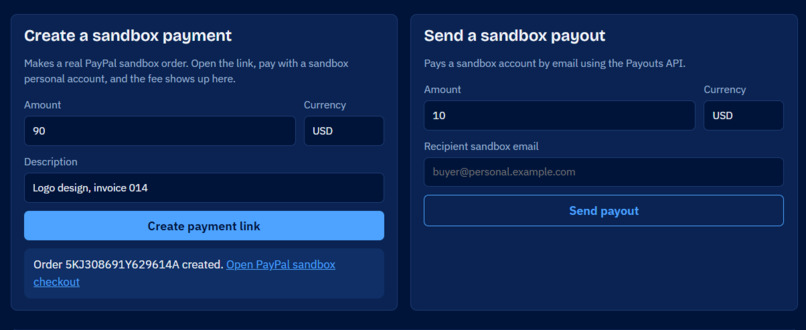
Payment Form
Inspiration
FeeGuard was inspired by a simple problem: receiving money does not always mean keeping all of it. Freelancers and online businesses often focus on the amount a client sends without fully understanding how much PayPal deducts in transaction fees and currency conversion costs.
I wanted to address this lack of financial transparency by building a tool that helps people understand what they actually earn, rather than just what they receive.
What I Built
FeeGuard is an AI-powered PayPal fee tracking and analysis platform. It connects to PayPal through OAuth and uses the Orders v2, Transaction Search and Payouts APIs.
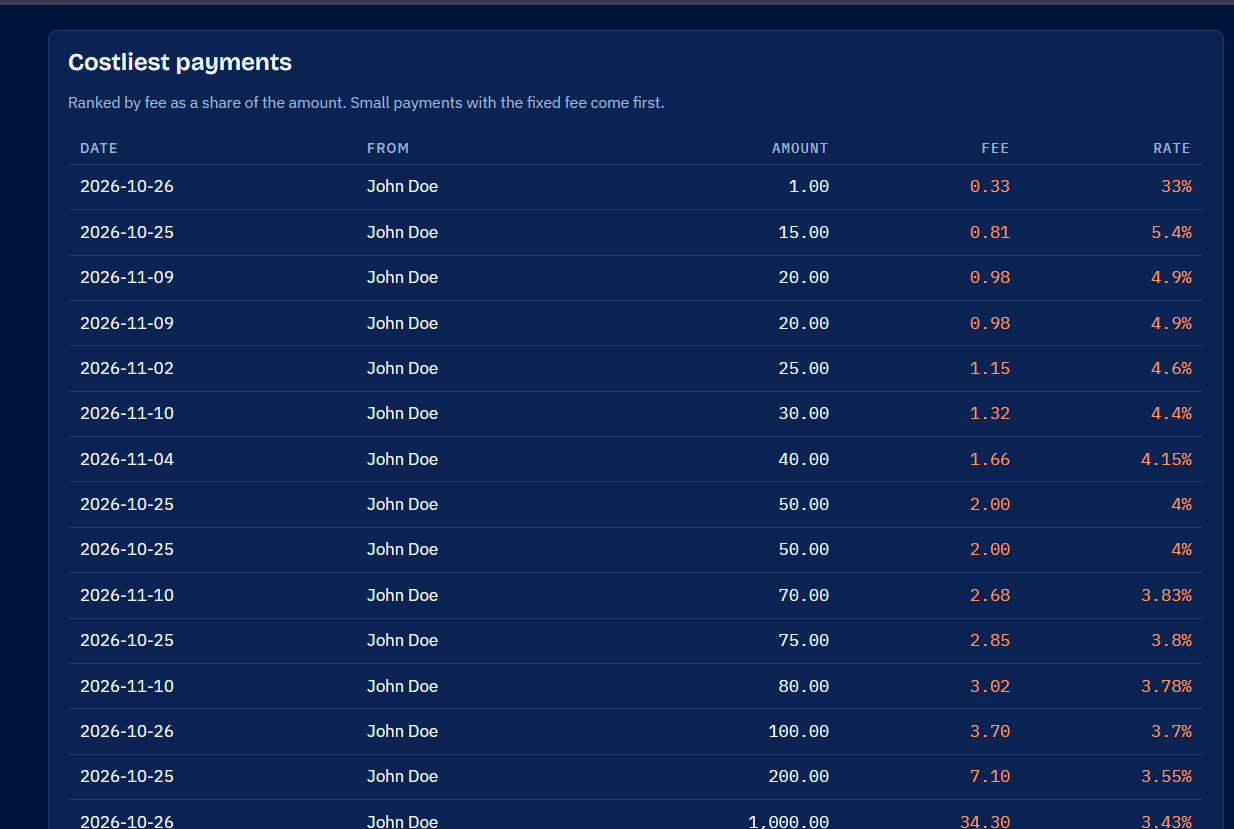
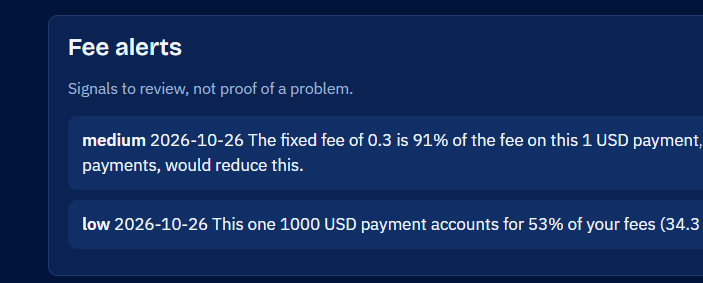
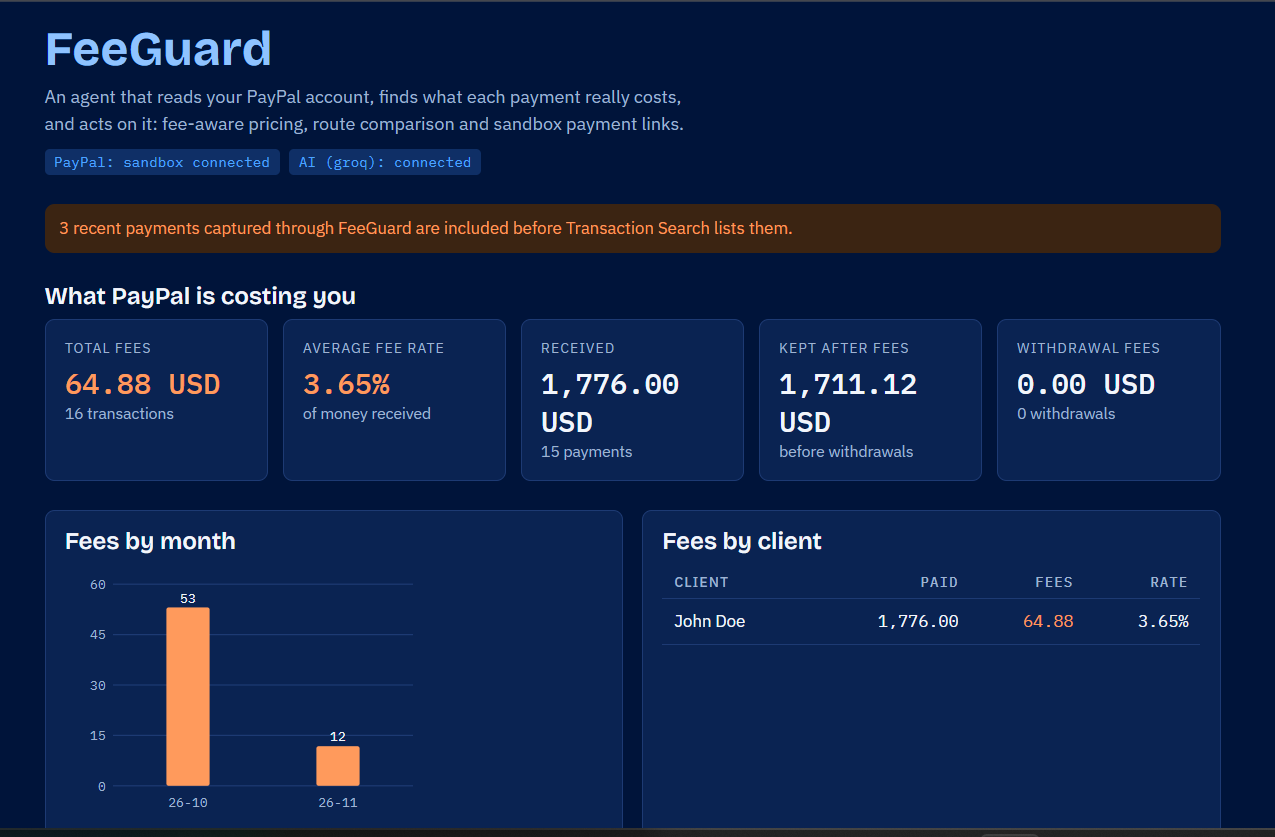
The dashboard displays total fees, average fee rates, monthly expenses, fees by client and the costliest transactions.
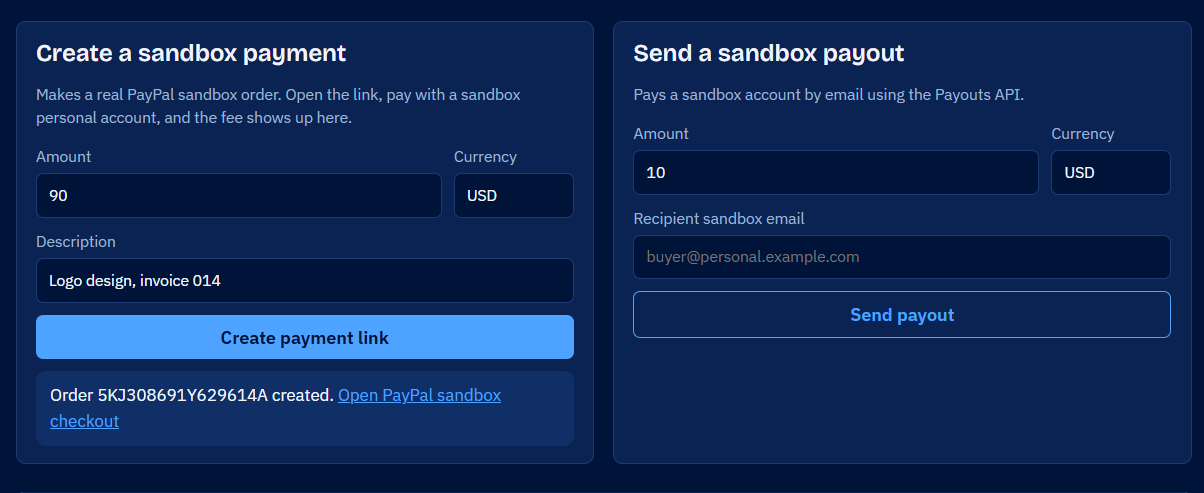
I also integrated an AI agent that uses five tools to help users analyse fees, calculate how much to charge to retain a target amount, compare withdrawal options and create PayPal sandbox payment links.
How I Built It
I built FeeGuard by integrating PayPal's sandbox APIs with an AI agent powered by Groq's GPT-OSS-120B model. I also made the AI provider configurable, allowing Gemini and Claude to work through the same tools.
One important design decision was ensuring that the AI never invents financial figures. Its system prompt requires it to retrieve figures through tool calls before answering numerical questions.
Completed payments are also saved locally so they appear on the dashboard immediately, even before PayPal's Transaction Search API makes them available.
Challenges Faced
One of my main challenges was working with PayPal sandbox data. Completed payments do not always appear immediately in Transaction Search, which can make dashboard figures appear incomplete. I addressed this by saving completed payments locally for immediate display.
Another challenge was making the AI agent reliable when handling financial information. I had to ensure that it used actual transaction data instead of generating estimates or guessing missing exchange rates.
Integrating multiple PayPal APIs and connecting them to an AI agent also required careful coordination.
What I Learned
Building FeeGuard strengthened my understanding of API integration, OAuth authentication, payment processing and AI function calling.
I also learned that building an AI-powered application involves more than connecting a language model. It requires designing reliable tools, validating data and ensuring that the AI's responses are grounded in actual information.
Most importantly, I learned how to turn a real-world financial problem into a practical technical solution.
FeeGuard's mission is simple: Know what you earn, not just what you receive.
Built With
- 2.0
- and
- anthropic
- api
- artificial-intelligence
- express.js
- gemini
- groq
- html
- javascript
- llms
- node.js
- oauth
- prioritise-paypal
