-
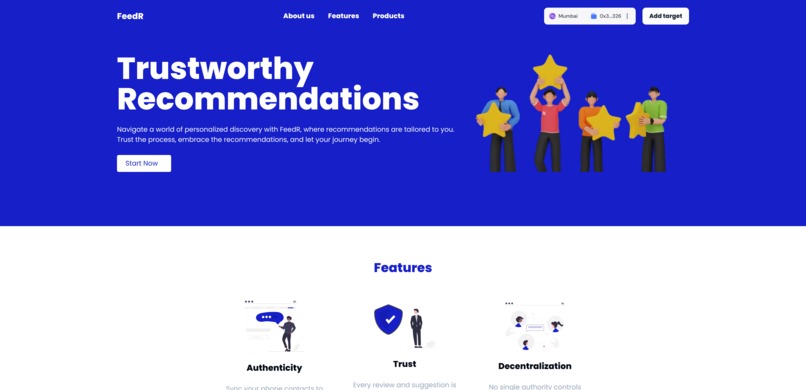
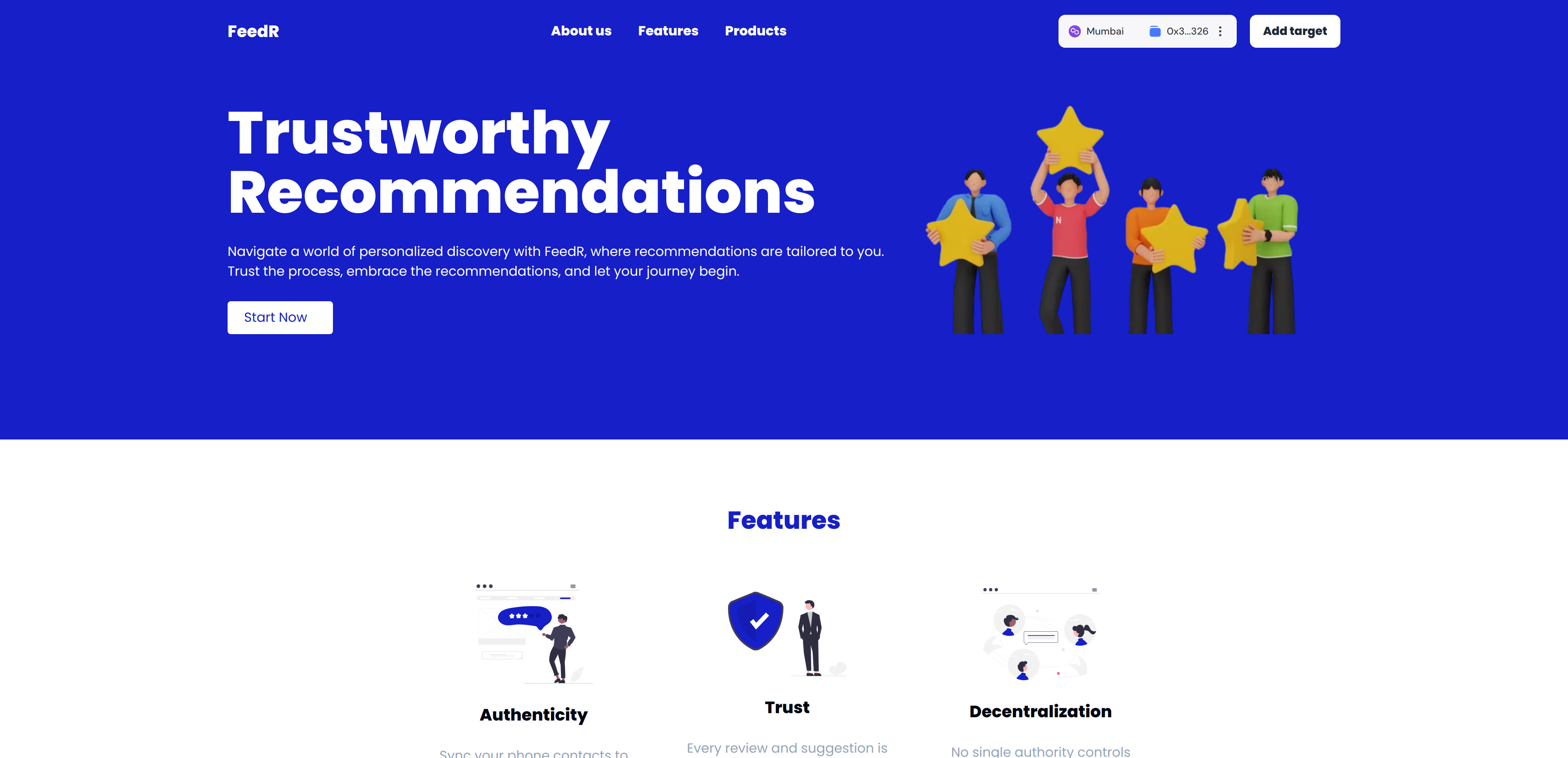
Landing page
-
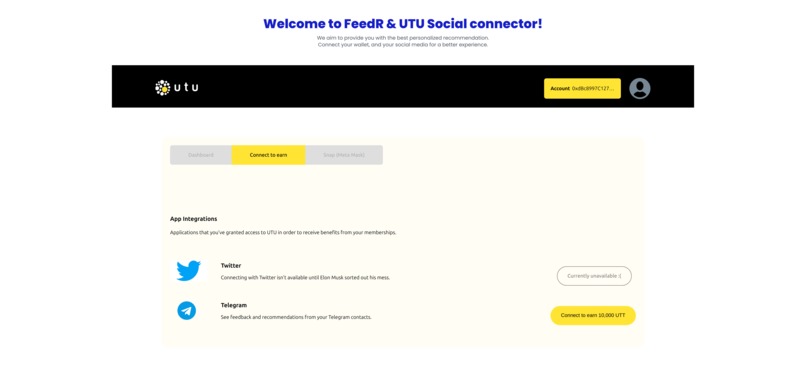
FeedR x UTU social connector
-
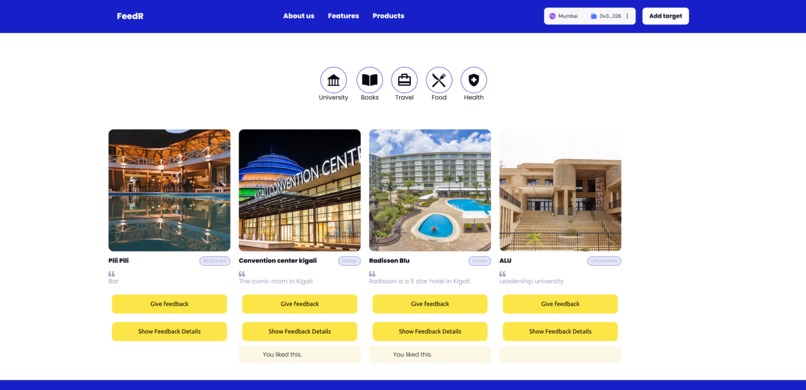
Home page
-
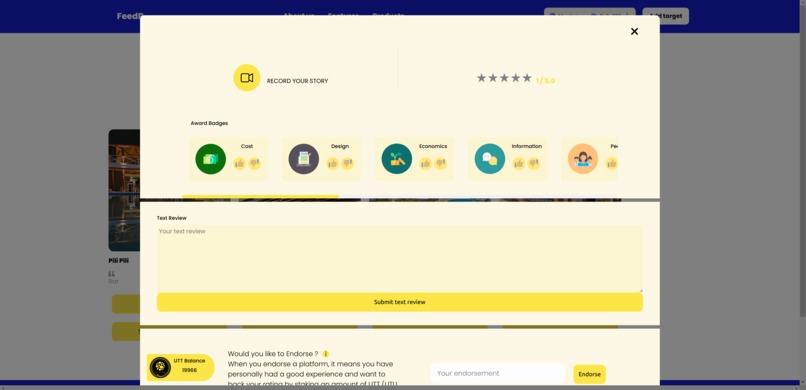
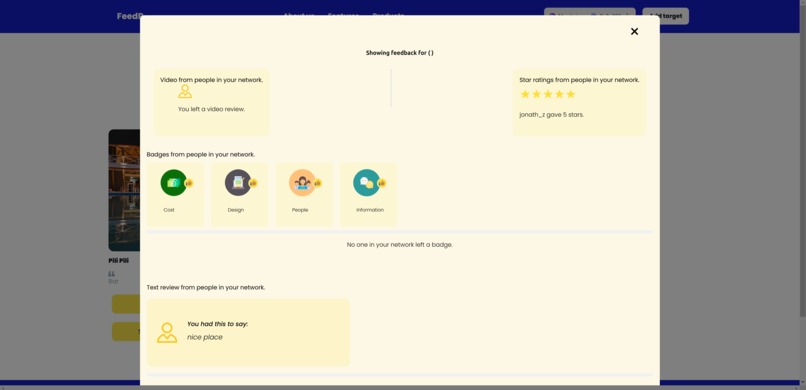
Show feedback modal
-
Give feedback modal
-
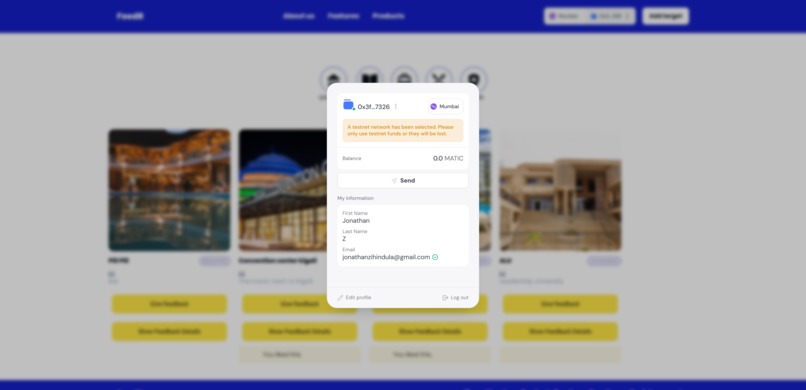
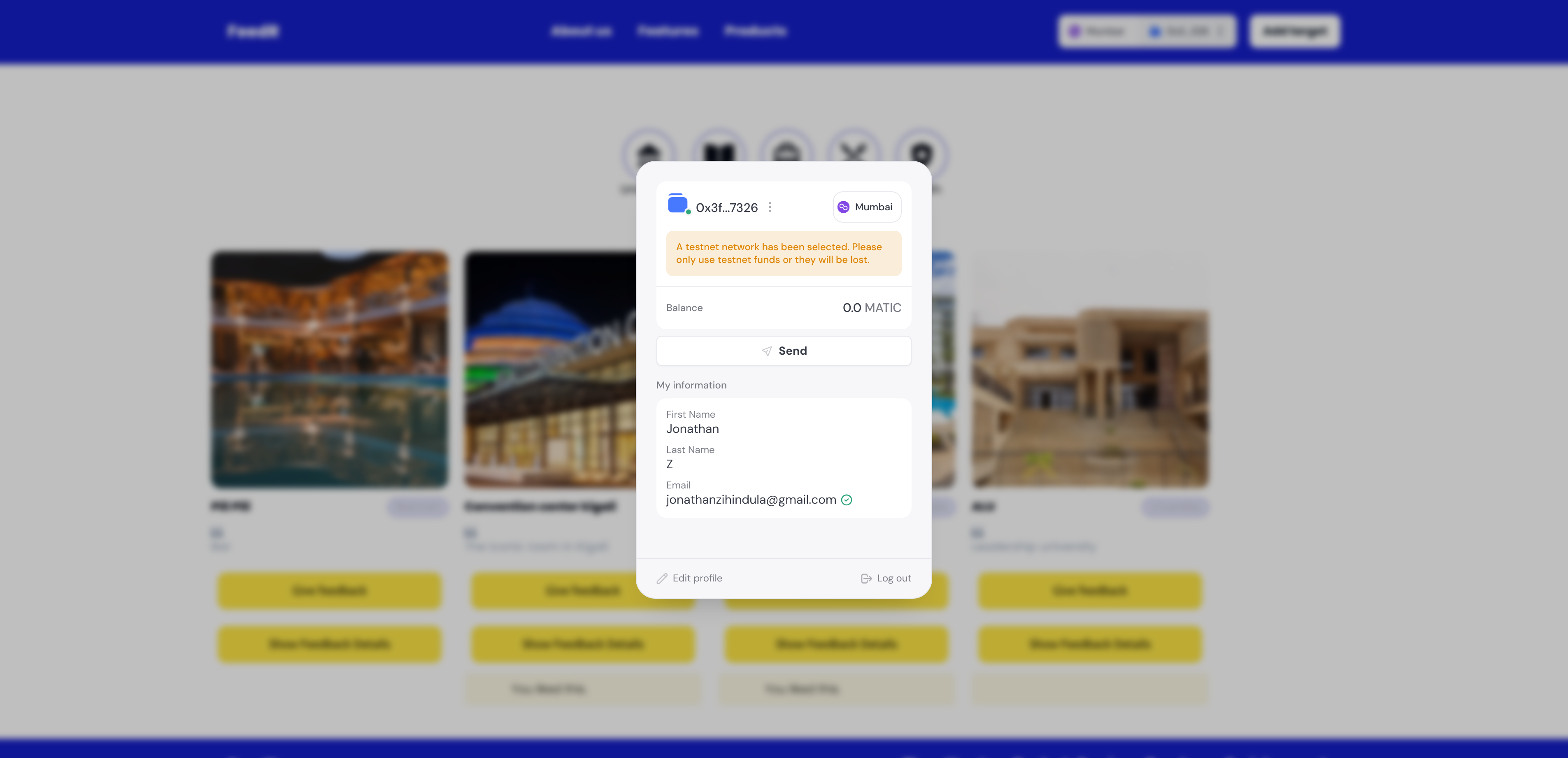
Smart wallet and profile
-
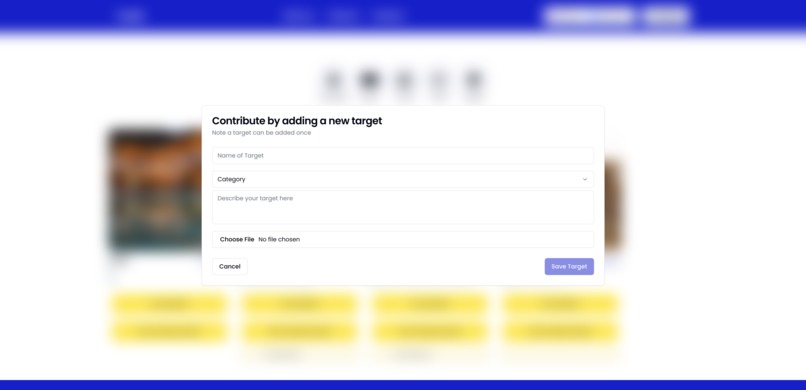
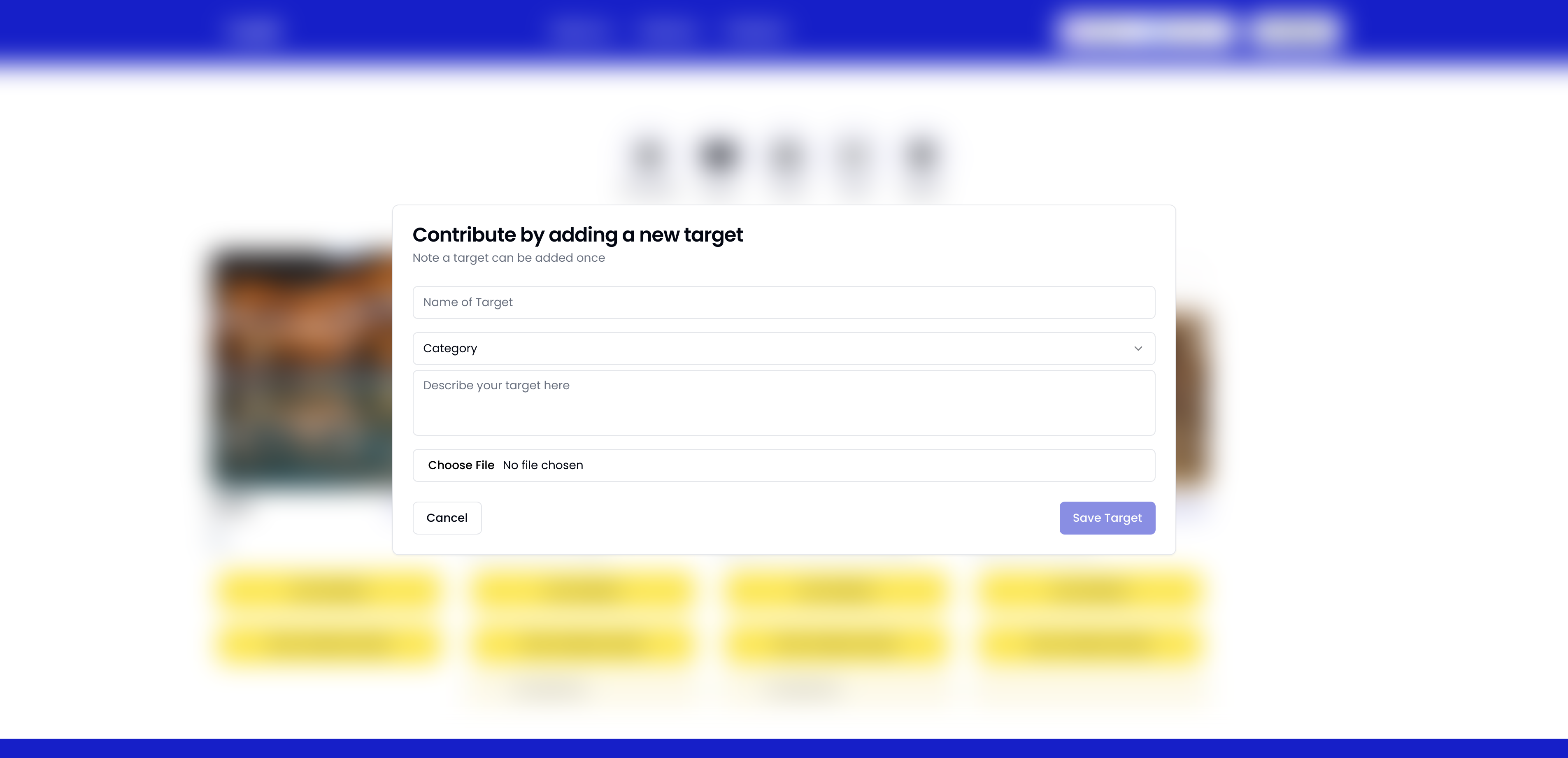
Contribute to the platform modal
Inspiration
The inspiration for our project stemmed from our personal experience of arriving in Rwanda as students. The challenges faced during the initial months, particularly in finding familiar things like food, events, and shopping, highlighted the limitations of existing internet recommendation engines despite the volume of data they are collecting. The frustration of receiving broad and inaccurate suggestions from major platforms led to the realization that there was a gap in catering to individual user needs.
The UTU protocol, a trust engine built on blockchain. Which is a game changer in the blockchain space, with its features and social connectors. For us, the technology met the solution: Trust, transparency, and immutability; recommendations; ranking. All in.
What it does
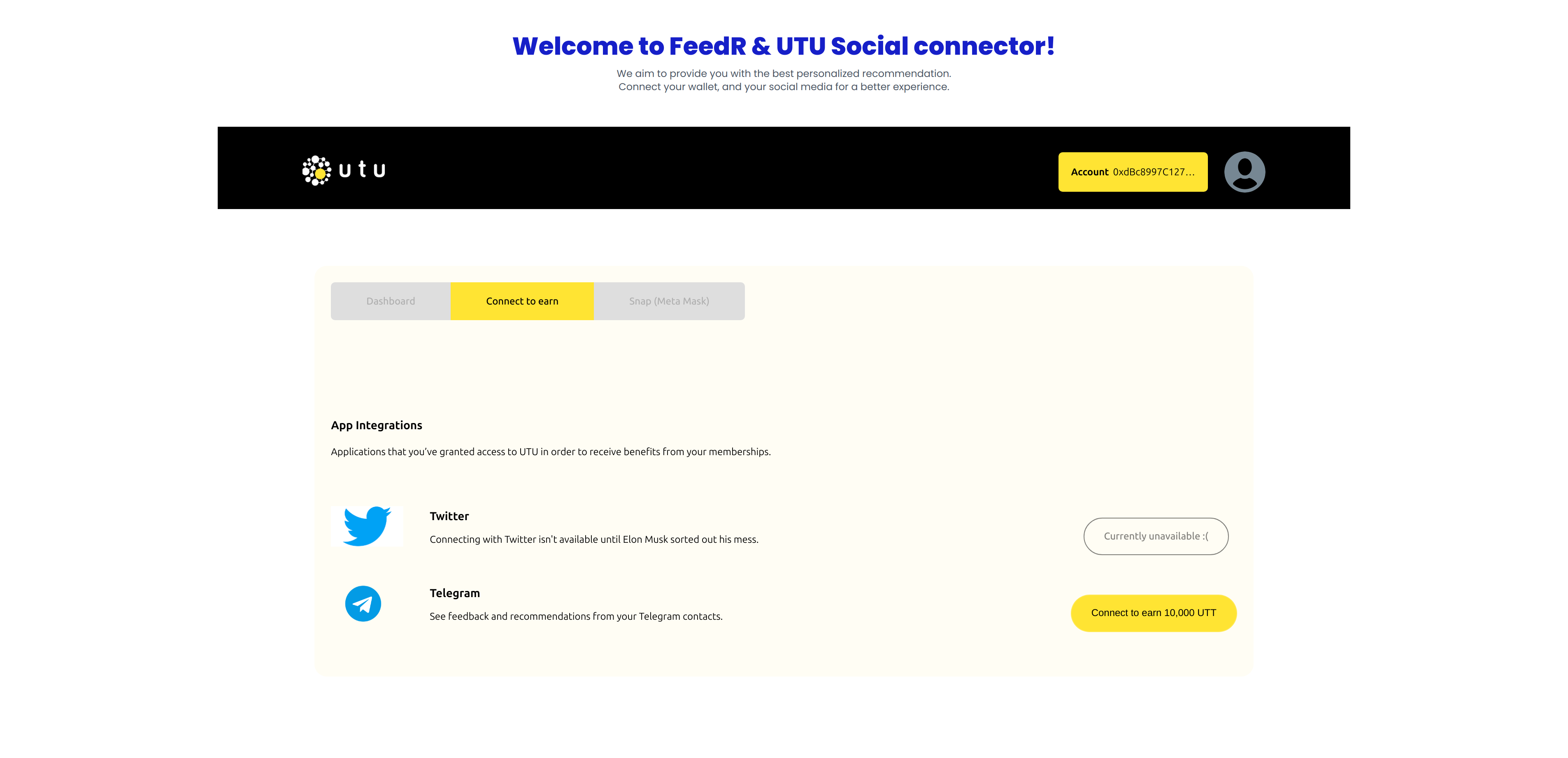
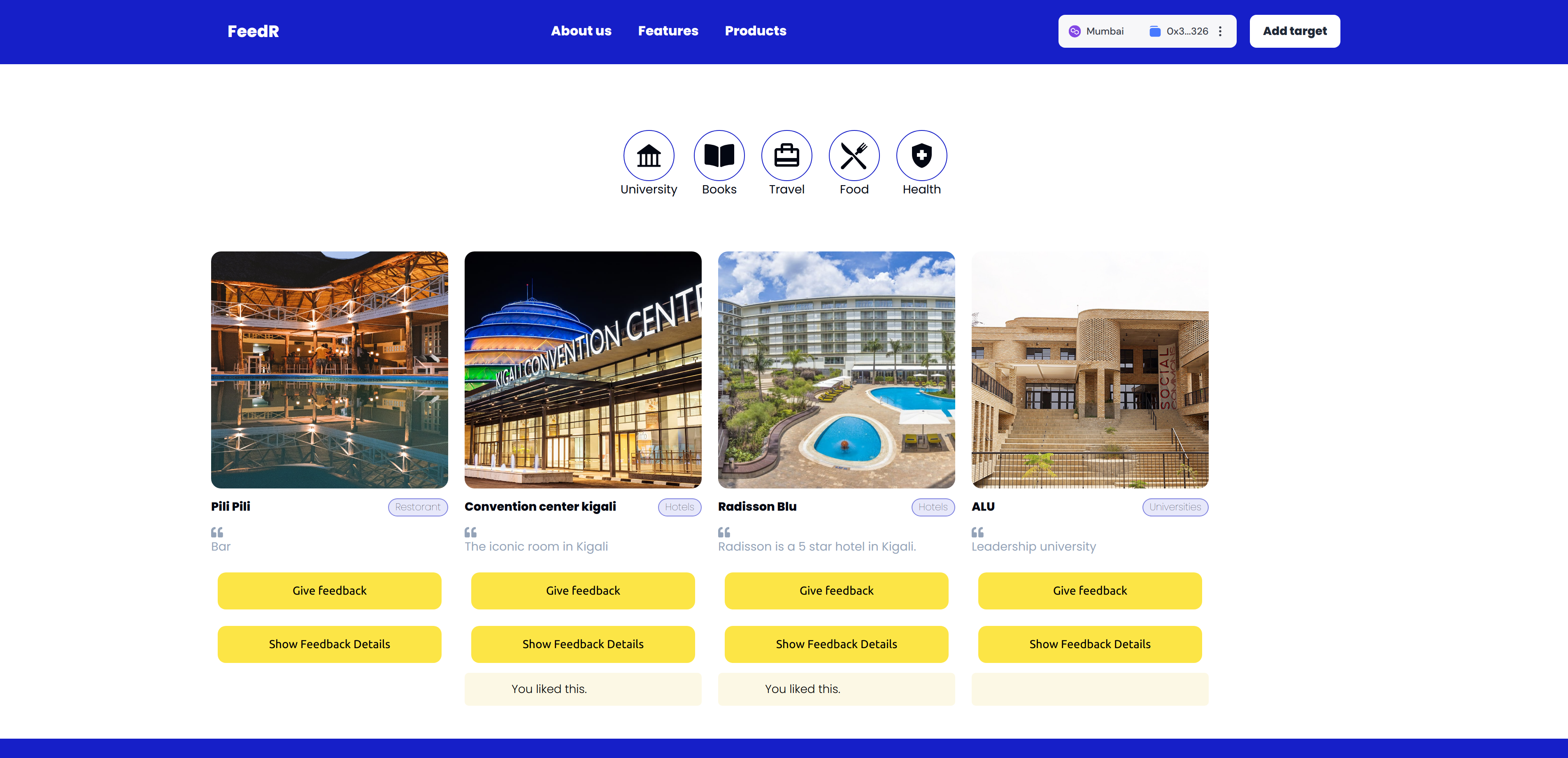
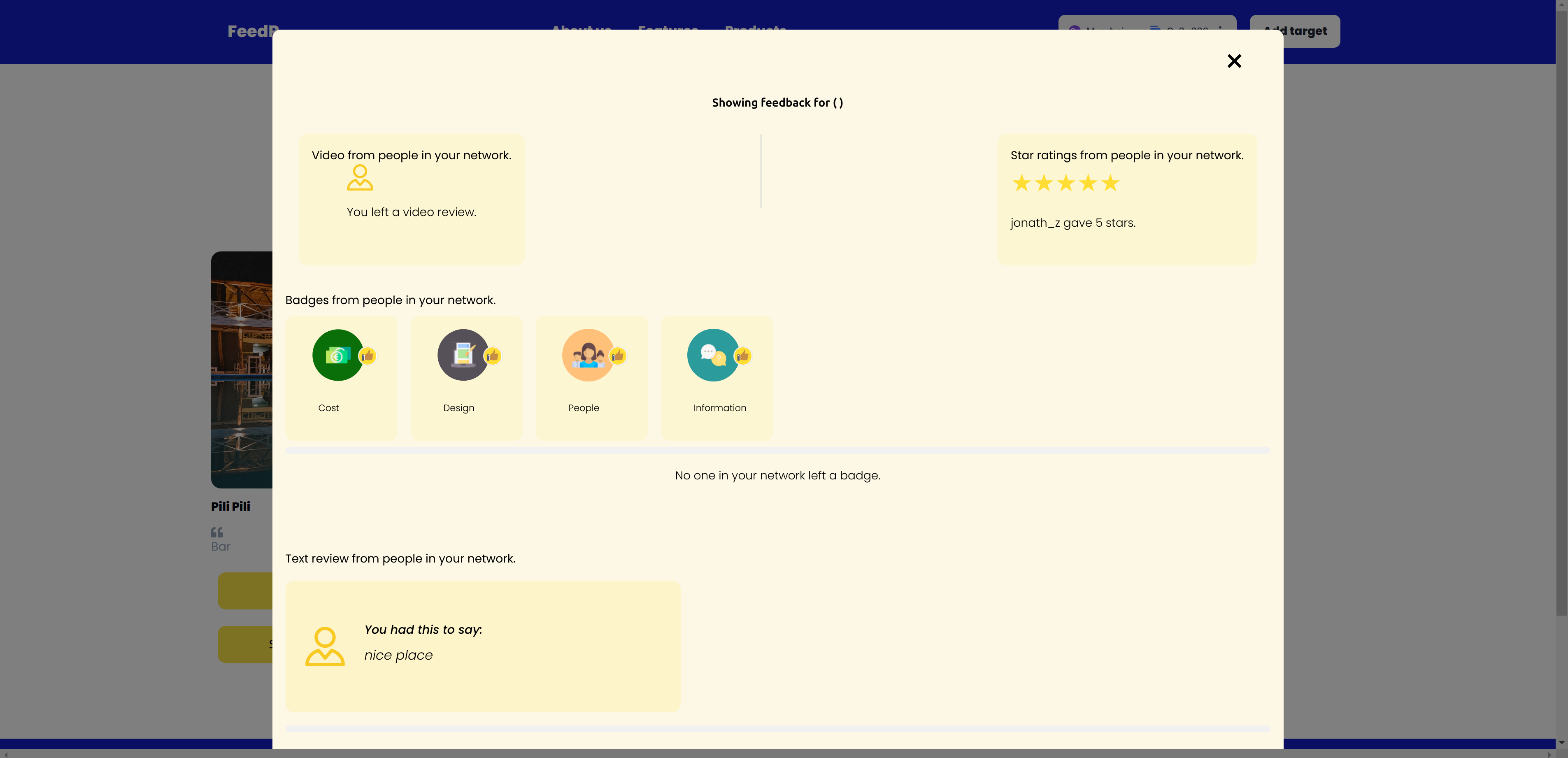
Our blockchain-based recommendation system addresses the shortcomings of traditional recommendation engines by providing personalized and accurate suggestions. Users can sync with their Telegram contacts, allowing them to access reviews posted by their contacts and other people on the platform regarding various experiences, products, or services. This social element enhances the reliability and relevance of recommendations, making the system more attuned to individual preferences.
Team
- Jonathan Zihindula
- Jack Mangosa
- David Mugisho
- Aganze Felicite
How we built it
The recommendation system is built on blockchain technology, ensuring transparency, security, and the immutability of data by integrating the UTU protocol. By leveraging their smart contracts, we establish a decentralized network where users can securely access and contribute to the recommendation database. The integration with Telegram contacts enables a social layer, enriching the recommendation algorithm with insights from users' personal networks.
Challenges we ran into
Time Constraints: Completing a blockchain-based recommendation system within the limited timeframe of a 4-day hackathon posed a significant challenge. The pressure to deliver a functional and polished product within this short duration required efficient project management and prioritization.
UTU API/SDK Limitations: When we integrated UTU, we encountered challenges as their API/SDK did not fully support some crucial features we aimed to include in our application. Issues such as the inability to sync up with the smart wallet created for the user using an email address, limitations in style customization, and other desired functionalities added complexity to our development process.
Feature Compatibility: Ensuring that the features we envisioned for our recommendation system were seamlessly integrated and compatible with the blockchain technology and UTU's infrastructure proved to be a balancing act. Adapting our initial vision to work within the existing constraints required strategic decision-making and creative problem-solving.
Accomplishments that we're proud of
Meeting the Tight Deadline: Successfully delivering a functional blockchain-based recommendation system within the challenging timeframe of a 4-day hackathon stands as a testament to the team's dedication, effective collaboration, and efficient project management.
Adaptation to API/SDK Limitations: Despite the limitations in the UTU API/SDK, we managed to build an application by adapting our features to work within the constraints. This showcases the team's flexibility and problem-solving skills in overcoming hurdles related to external dependencies.
What we learned
Time Management in Rapid Development: The experience of working under intense time pressure taught the team valuable lessons in time management and prioritization. This newfound skill in rapid development is applicable in various scenarios where quick iterations and adaptations are necessary.
Effective Handling of External APIs and SDKs: Dealing with the limitations of external APIs and SDKs, such as those of UTU, taught us the importance of thorough research and contingency planning. It highlighted the need for adaptability when integrating third-party tools into a project and finding creative solutions to overcome unforeseen challenges.
Dynamic lab SDK: It allows users to connect with an email address and generate a smart wallet for the email, which makes the onboarding process easier.
What's next for FeedR?
Expanded Platform Features: Introduce additional features such as personalized user profiles, advanced filtering options, and enhanced social integration to further enrich the user experience.
Geographic Expansion: Expand FeedR's reach to new regions, catering to diverse user bases and ensuring the platform becomes a go-to resource for local recommendations globally.
Collaborations and Partnerships: Forge strategic partnerships with local businesses, restaurants, and educational institutions to enhance the platform's offerings and provide exclusive benefits to FeedR users.
Enhanced Blockchain Integration: Optimize the integration with the UTU protocol and explore additional blockchain functionalities to further boost transparency, trust, and user engagement.
Mobile Application Development: Develop a dedicated mobile application for FeedR, enhancing accessibility and allowing users to discover recommendations on the go.
Monetization Strategies: Implement various monetization strategies, such as premium subscription tiers, business partnerships, and targeted advertisements, to ensure the sustainability and growth of the platform.
Data Analytics and Insights: Leverage data analytics to provide businesses with valuable insights into user preferences and trends, creating additional revenue streams and establishing FeedR as a valuable resource for market intelligence.
FeedR's post-MVP journey is dedicated to creating a comprehensive and sustainable platform that not only meets but exceeds user expectations, becoming a trusted companion in their exploration of local experiences.
Built With
- chadcn
- dynamic-lab
- firebase
- javascript
- react
- tailwindcss
- typescript
- utu-protocol
- vercel


Log in or sign up for Devpost to join the conversation.