FeedOne — Verified Digital Surplus Food Coordination
Inspiration
Across the world, food waste and hunger coexist at scale. While millions of people lack reliable access to meals, a significant portion of prepared food is discarded daily by institutions such as wedding halls, hostels, hotels, temples, and large events.
The challenge is not food availability—it is a failure of coordination, timing, and trust.
In real-world scenarios:
- Events often overestimate attendance, leaving large quantities of untouched food
- Hostels and cafeterias prepare fixed volumes despite fluctuating consumption
- Religious and community kitchens generate consistent daily surplus
Once discarded, this food wastes valuable resources such as water, energy, and labor, while also contributing to methane and CO₂ emissions in landfills.
Through observation and system-level analysis, three fundamental barriers were identified:
- Legal liability concerns — institutions fear responsibility if food causes harm
- Lack of real-time coordination — no structured system connects surplus with capable NGOs
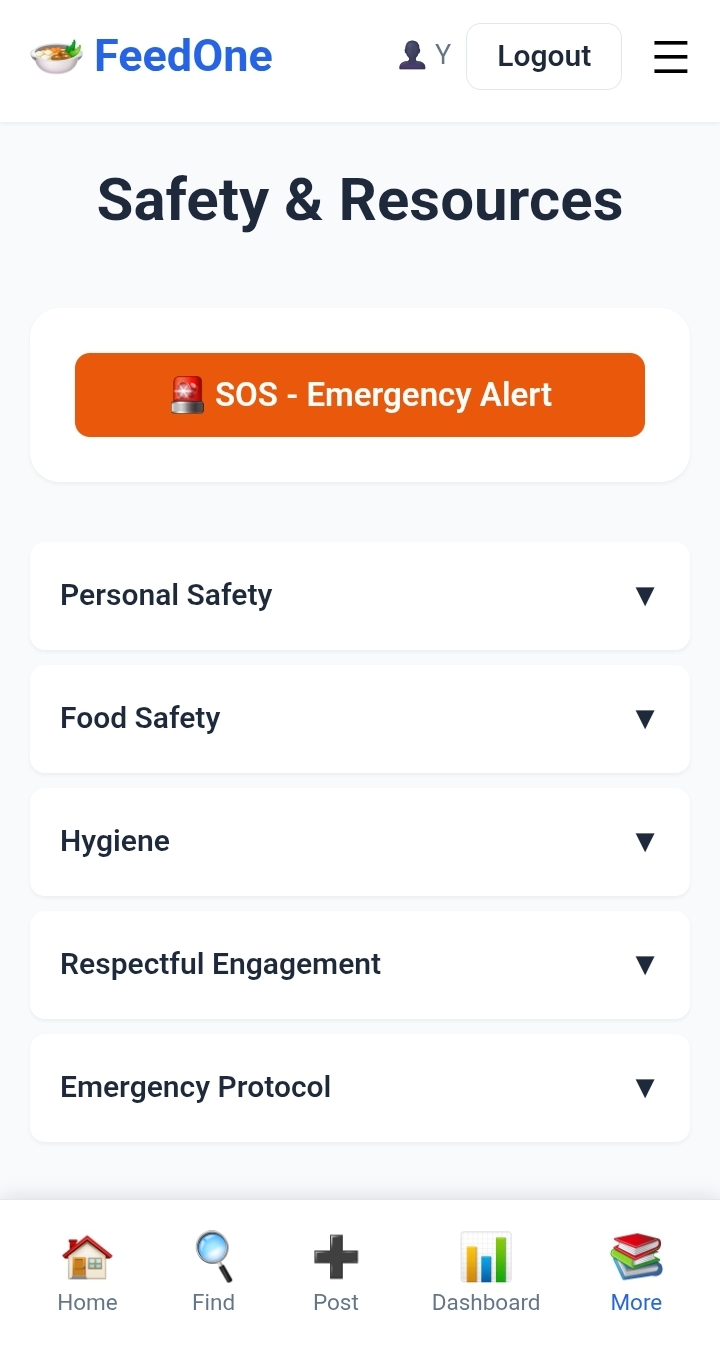
- Public safety risks — open distribution can lead to uncontrolled crowds and unsafe conditions
Because of these risks, the safest operational decision for institutions often becomes disposal.
FeedOne was inspired by a core realization: Food waste is not a supply problem—it is a coordination failure.
Instead of building another donation platform, FeedOne introduces a structured, safe, and verified digital coordination infrastructure that ensures surplus food fulfills its intended purpose before becoming waste.
What it does
FeedOne is a verified digital coordination infrastructure that enables safe, real-time redistribution of surplus food.
It operates as a closed, trust-based ecosystem connecting:
- Verified institutional food donors
- Registered NGOs with defined food handling capacity
The system ensures surplus food is identified, evaluated, matched, and transferred efficiently before it becomes unsafe or wasted.
Core capabilities include:
Verified ecosystem Ensures access is restricted to authenticated institutions and NGOs, building trust
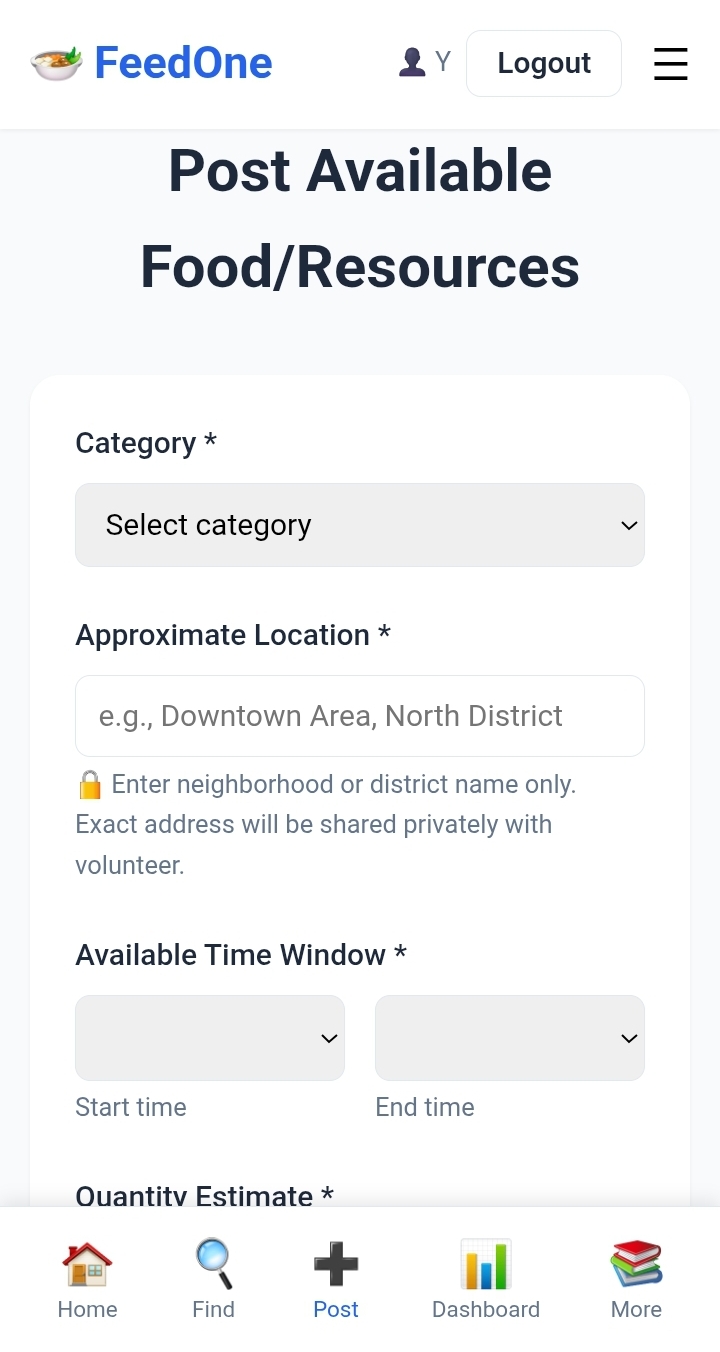
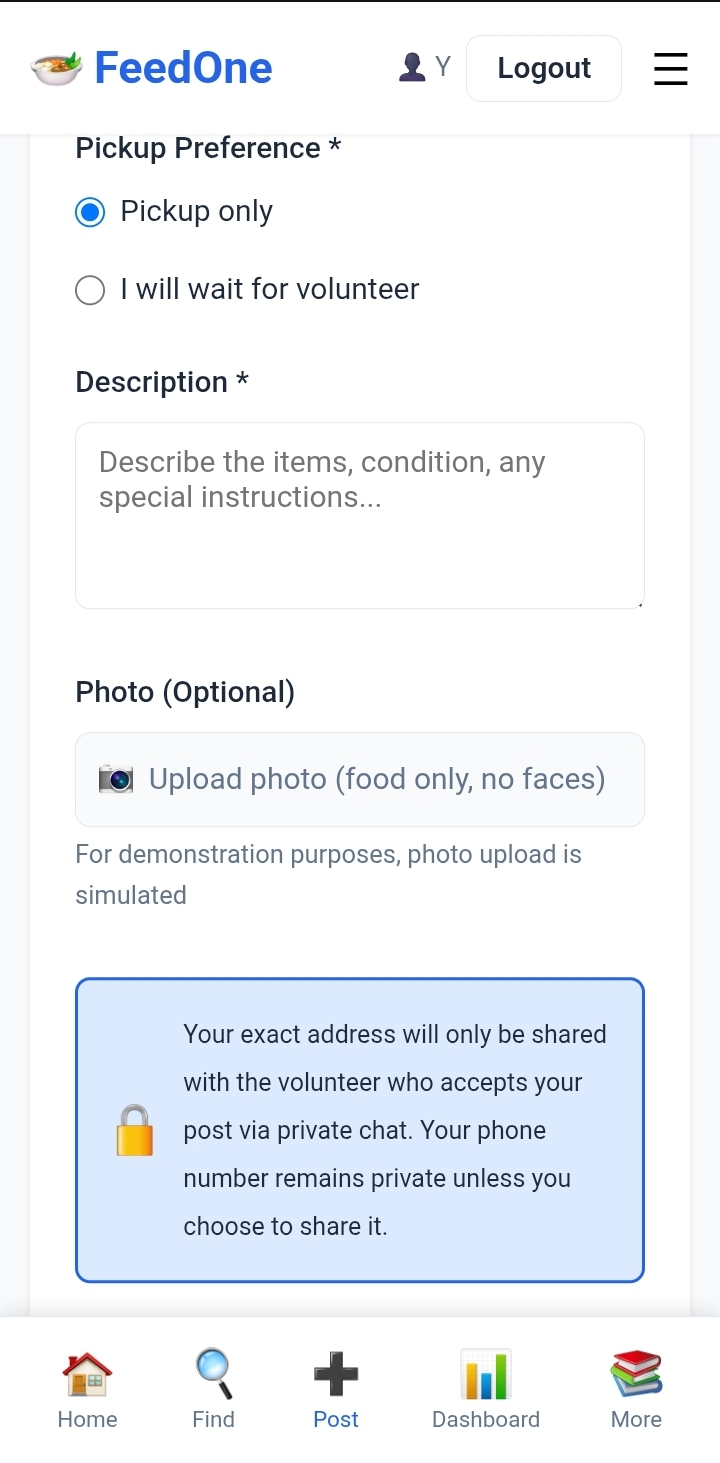
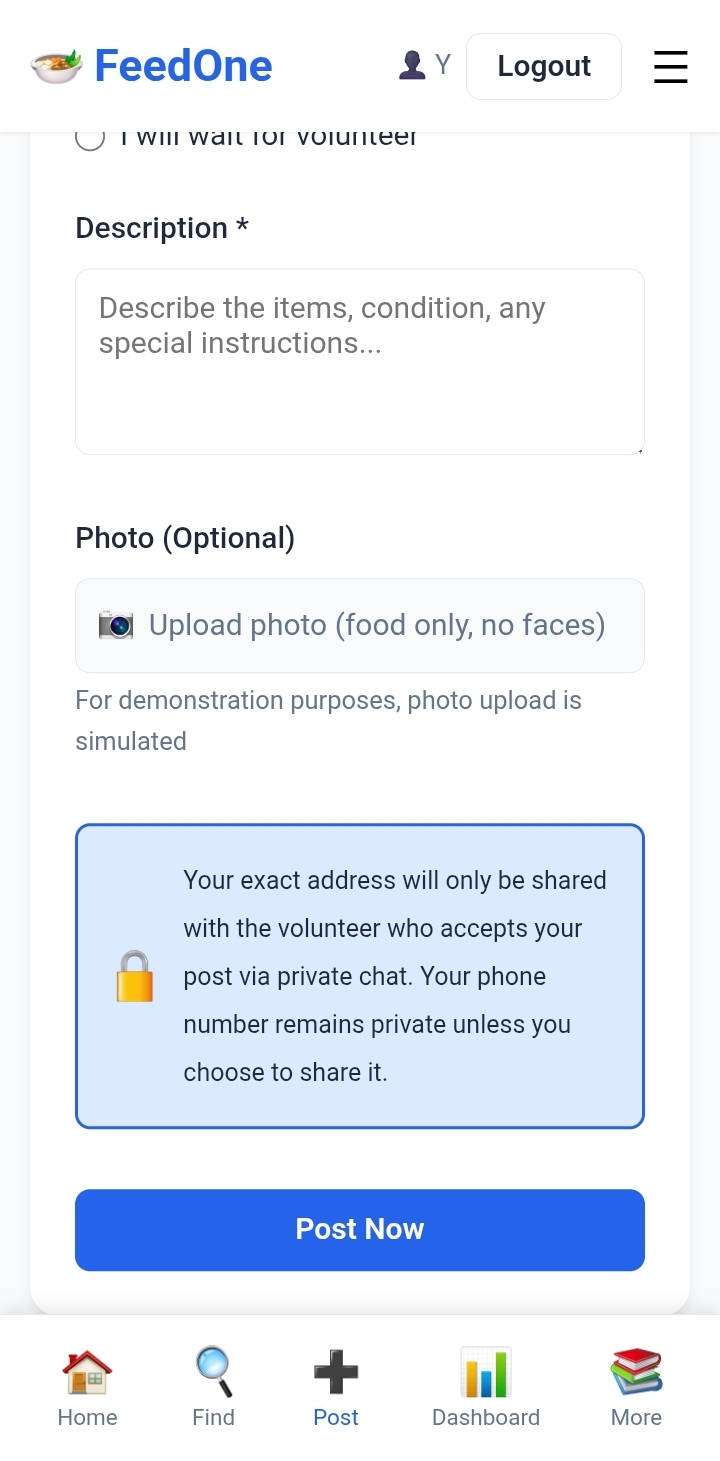
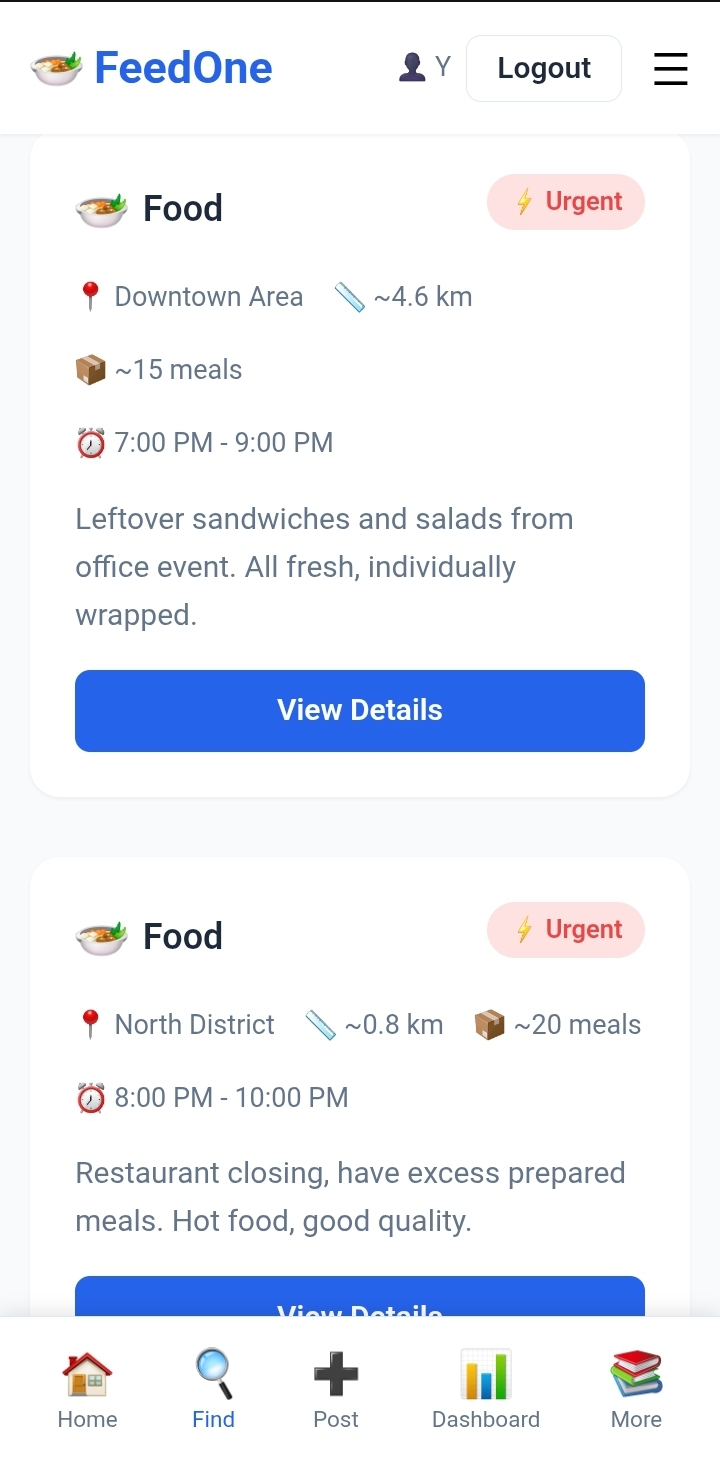
Structured surplus input Standardized data including food type, preparation time, quantity, storage conditions, and verification
Time-bound redistribution Auto-expiry logic enforces safe consumption windows
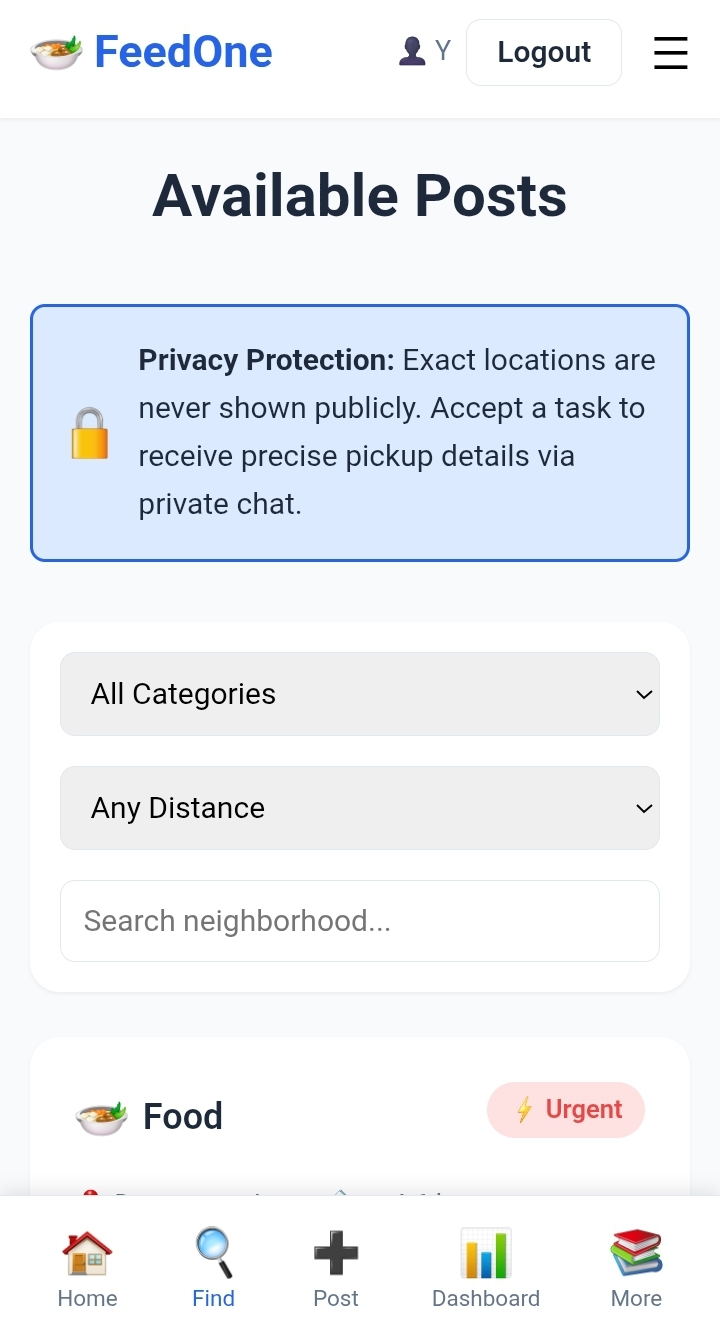
Smart NGO matching NGOs are notified based on proximity, capacity, and compatibility
Digital handover system Ensures accountability, traceability, and clear responsibility transfer
Impact-oriented design Enables measurement of food saved, meals served, and environmental impact
FeedOne transforms surplus food from unmanaged waste into a time-sensitive, structured resource.
How we built it
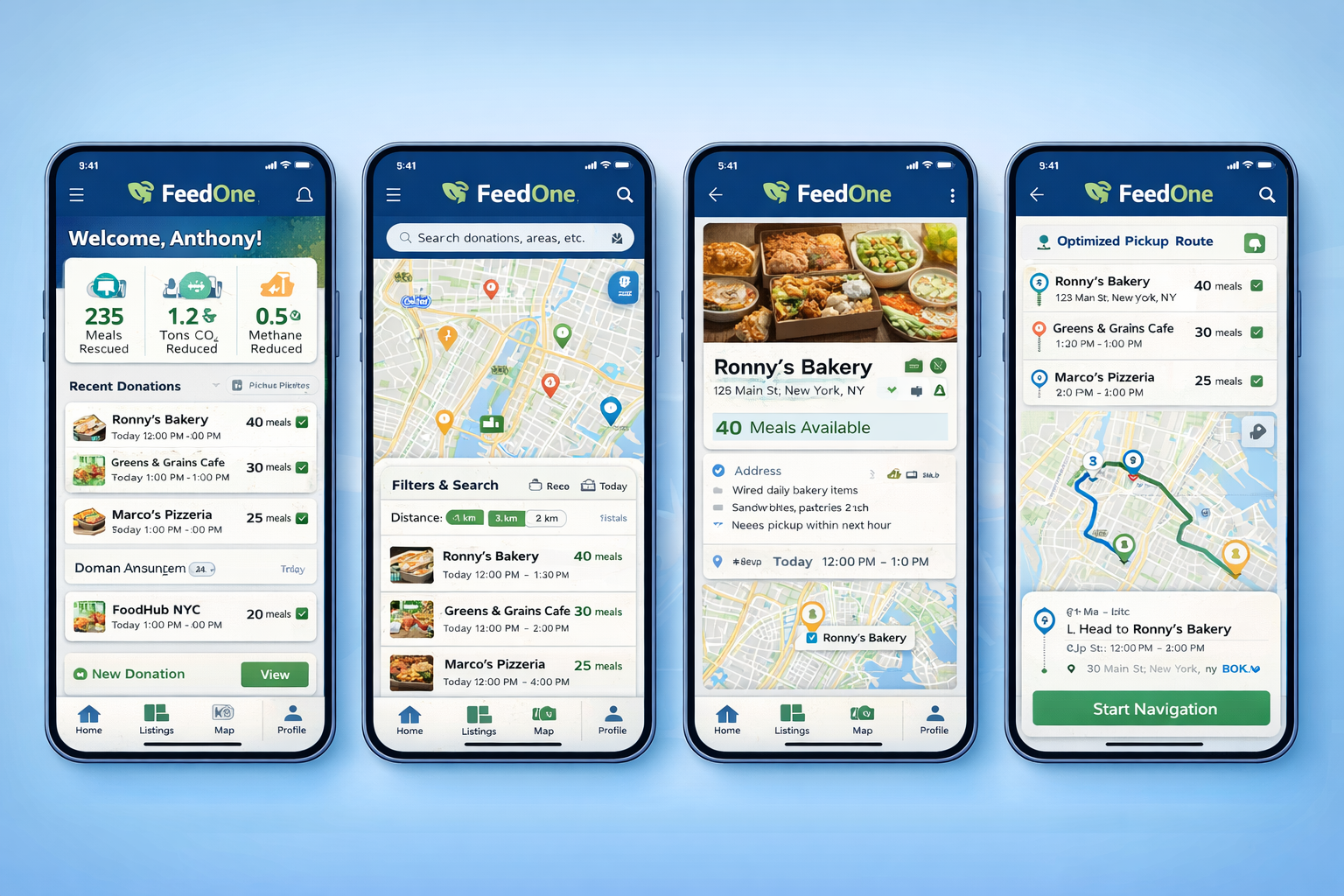
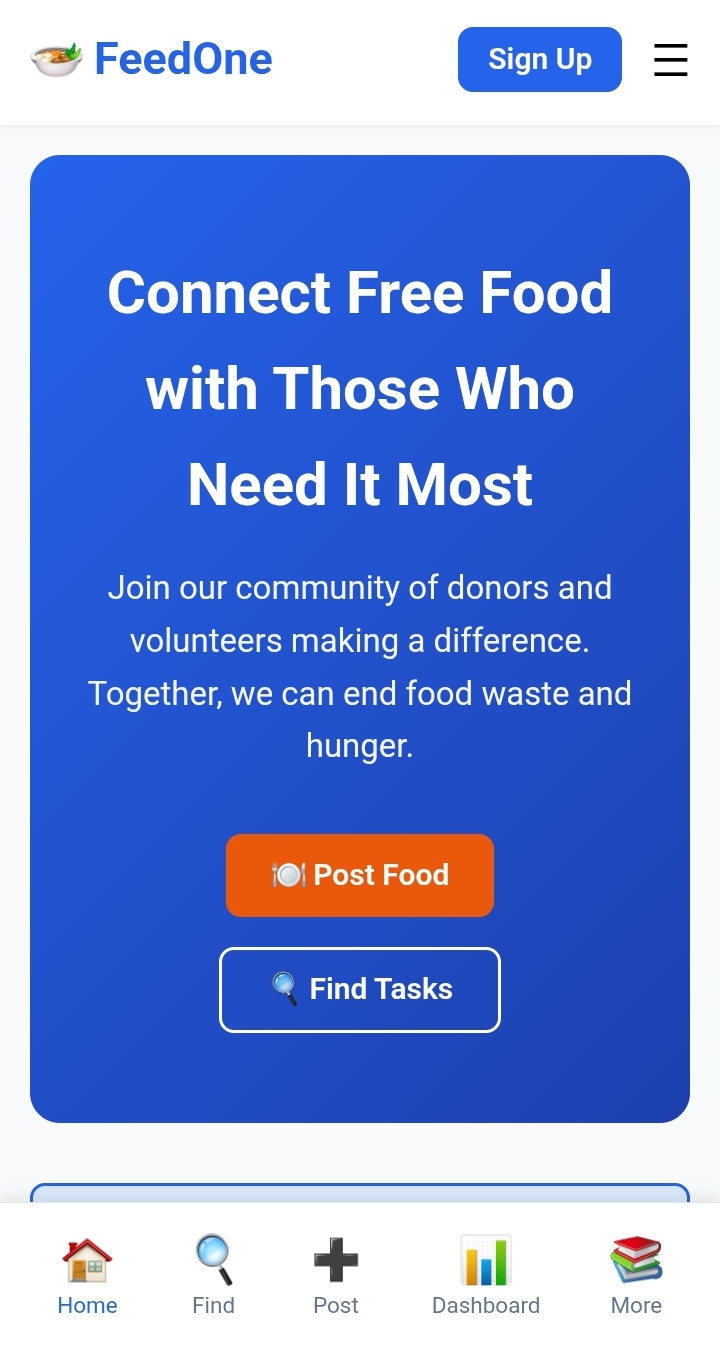
FeedOne was developed as a mobile-first frontend prototype designed to simulate a complete real-world coordination workflow.
Development stack:
- HTML
- CSS
- JavaScript
- GitHub (version control)
- Netlify (deployment)
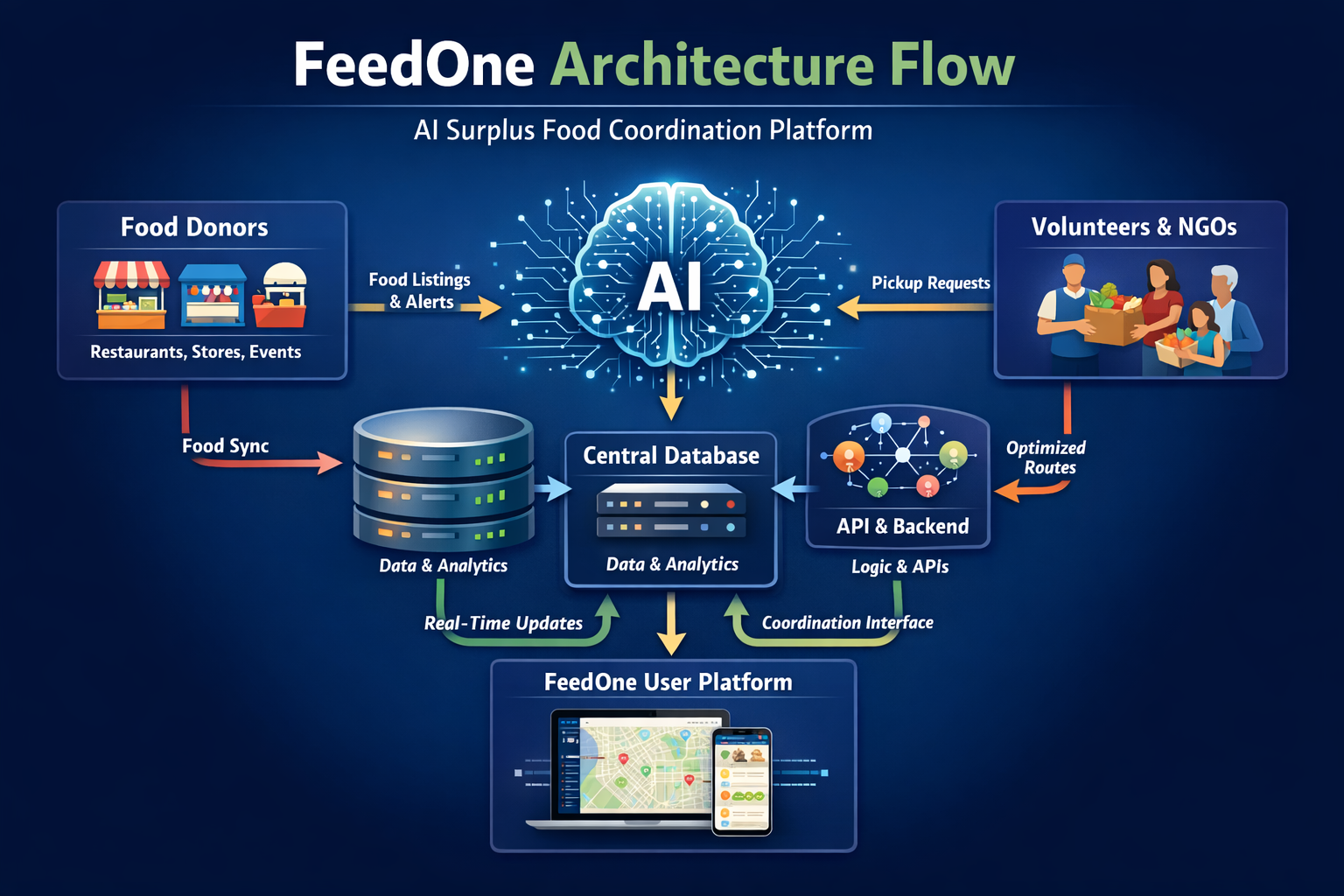
System architecture:
1.1. Interface Layer
- Donor interface for surplus posting
- NGO interface for receiving and managing requests
- Admin interface for monitoring coordination
1.2. Coordination Layer
- Workflow simulation for surplus listing
- Matching logic design
- Time-based validation and expiry handling
1.3. Data Layer (Simulated)
- Structured representation of food listings
- Pickup tracking and coordination flow
- Impact tracking concepts
The focus was on system accuracy, workflow realism, and scalability, rather than only visual presentation.
Challenges we ran into
Designing FeedOne required balancing simplicity with real-world applicability and operational constraints.
Key challenges included:
- Balancing speed, safety, and usability in a time-sensitive system
- Designing around legal liability concerns in a practical and scalable way
- Simulating real-world coordination without backend infrastructure
- Maintaining clarity in a multi-actor workflow (donor–NGO–system)
- Building entirely under mobile-only development constraints
- Ensuring the system remains scalable, structured, and policy-aligned
These challenges required thinking across technical, operational, and human dimensions.
Accomplishments that we're proud of
FeedOne represents a shift from application-level thinking to infrastructure-level design.
Key accomplishments include:
- Designed a complete coordination infrastructure, not just a basic application
- Built a working prototype simulating real-world surplus redistribution
- Introduced the Digital Handover mechanism to address trust and legal accountability
- Structured the system for time-sensitive and safety-critical operations
- Successfully developed and deployed under real resource constraints
- Created a solution aligned with measurable social and environmental impact
What we learned
This project reinforced the importance of building systems that align with real-world behavior and constraints.
Key learnings:
- Real-world impact requires system-level thinking, not just feature-level development
- Food waste is primarily a coordination problem, not a supply issue
- Trust, safety, and accountability are essential for adoption
- Constraints can drive clearer and more efficient design decisions
- Building impactful systems requires understanding both technology and human behavior
SDG Alignment and Impact
FeedOne directly contributes to key United Nations Sustainable Development Goals:
SDG 2: Zero Hunger Improves access to food by redirecting edible surplus to NGOs
SDG 12: Responsible Consumption and Production Reduces food waste through efficient utilization of surplus resources
SDG 13: Climate Action Prevents methane emissions by diverting food from landfills
Indirect contributions:
SDG 11: Sustainable Cities and Communities Improves urban resource efficiency through structured coordination
SDG 17: Partnerships for the Goals Enables collaboration between institutions, NGOs, and future government systems
FeedOne supports a transition toward efficient, sustainable, and data-driven food ecosystems.
What's next for FeedOne — Verified Digital Surplus Food Coordination
The next phase focuses on transforming the prototype into a real-world deployable system.
Planned steps:
- Develop a functional backend system for real-time coordination
- Launch a pilot with local institutions and NGOs
- Implement automated matching and notification systems
- Build impact analytics dashboards for tracking system performance
- Explore integration with municipal and smart city platforms
- Scale into a policy-ready, city-level coordination infrastructure
Final Statement
FeedOne is not just an application.
It is a structured coordination infrastructure designed to ensure that surplus food fulfills its purpose—feeding people—before it becomes waste.


Log in or sign up for Devpost to join the conversation.