Inspiration
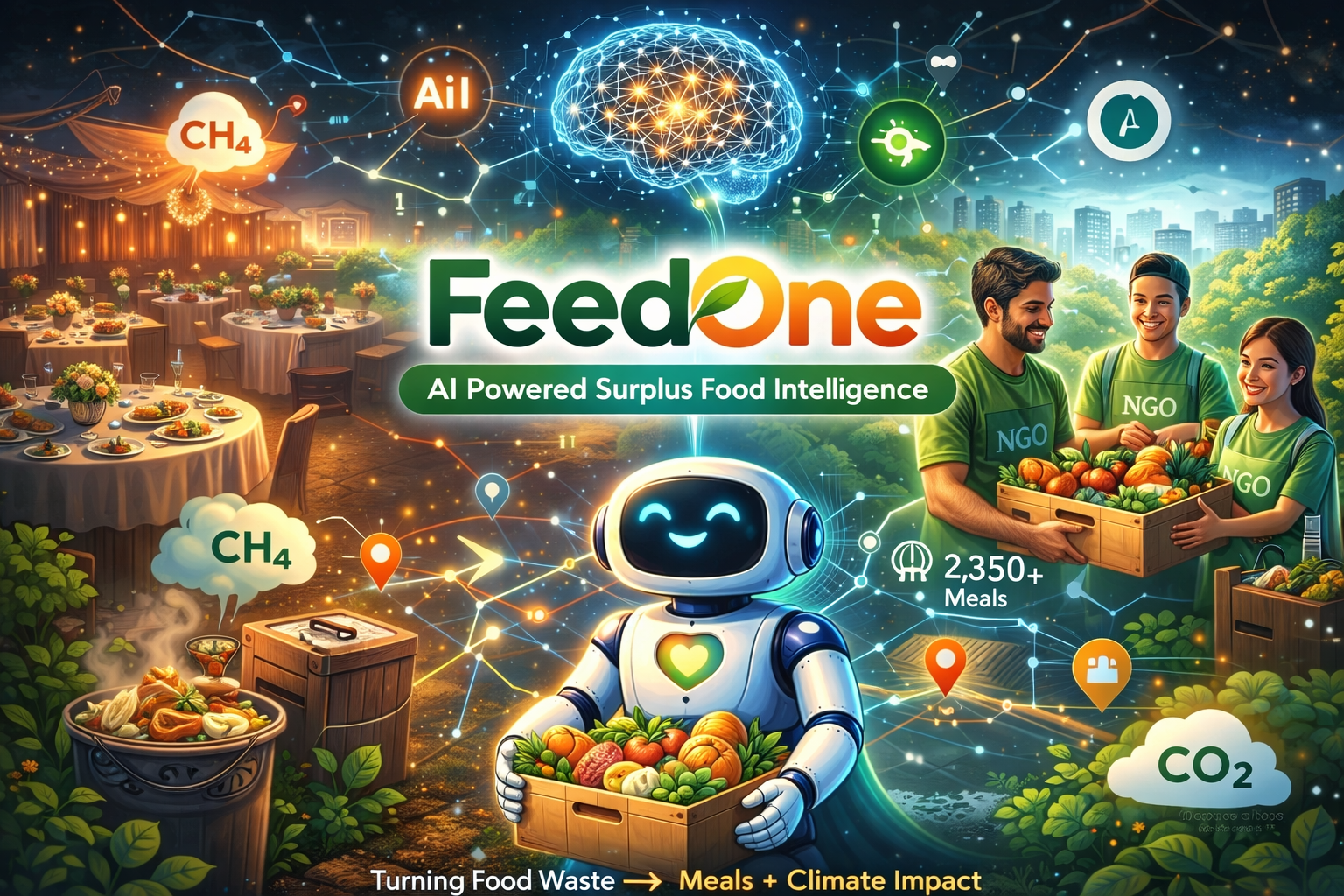
Around the world, millions of people struggle with hunger while large amounts of perfectly edible food are wasted every day by restaurants, events, and households. This waste not only increases hunger but also contributes to greenhouse gas emissions such as CO₂ and methane when food decomposes in landfills.
FeedOne was inspired by the idea that technology and AI can bridge the gap between surplus food and people in need. The goal is to create a coordinated platform that connects food donors, volunteers, and NGOs so that surplus food reaches the right place at the right time.
What it does
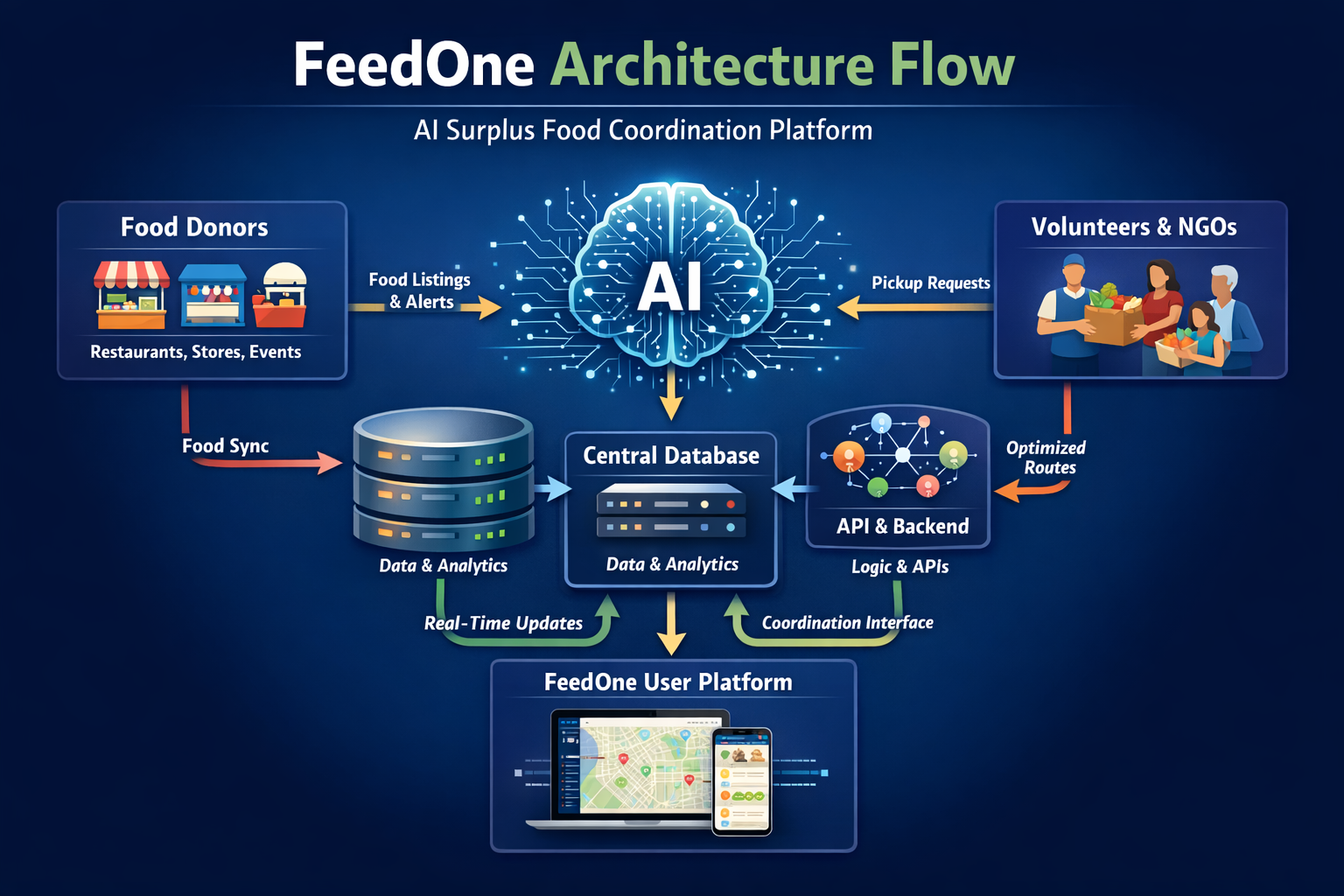
FeedOne is an AI-powered surplus food coordination platform designed to reduce food waste and fight hunger.
The platform allows:
- Food donors to quickly register surplus food
- Volunteers to receive pickup notifications
- NGOs to track incoming food support
- AI to optimize the coordination process
By efficiently redistributing surplus food, FeedOne helps reduce hunger while also lowering environmental impact caused by food waste, including CO₂ and methane emissions.
How we built it
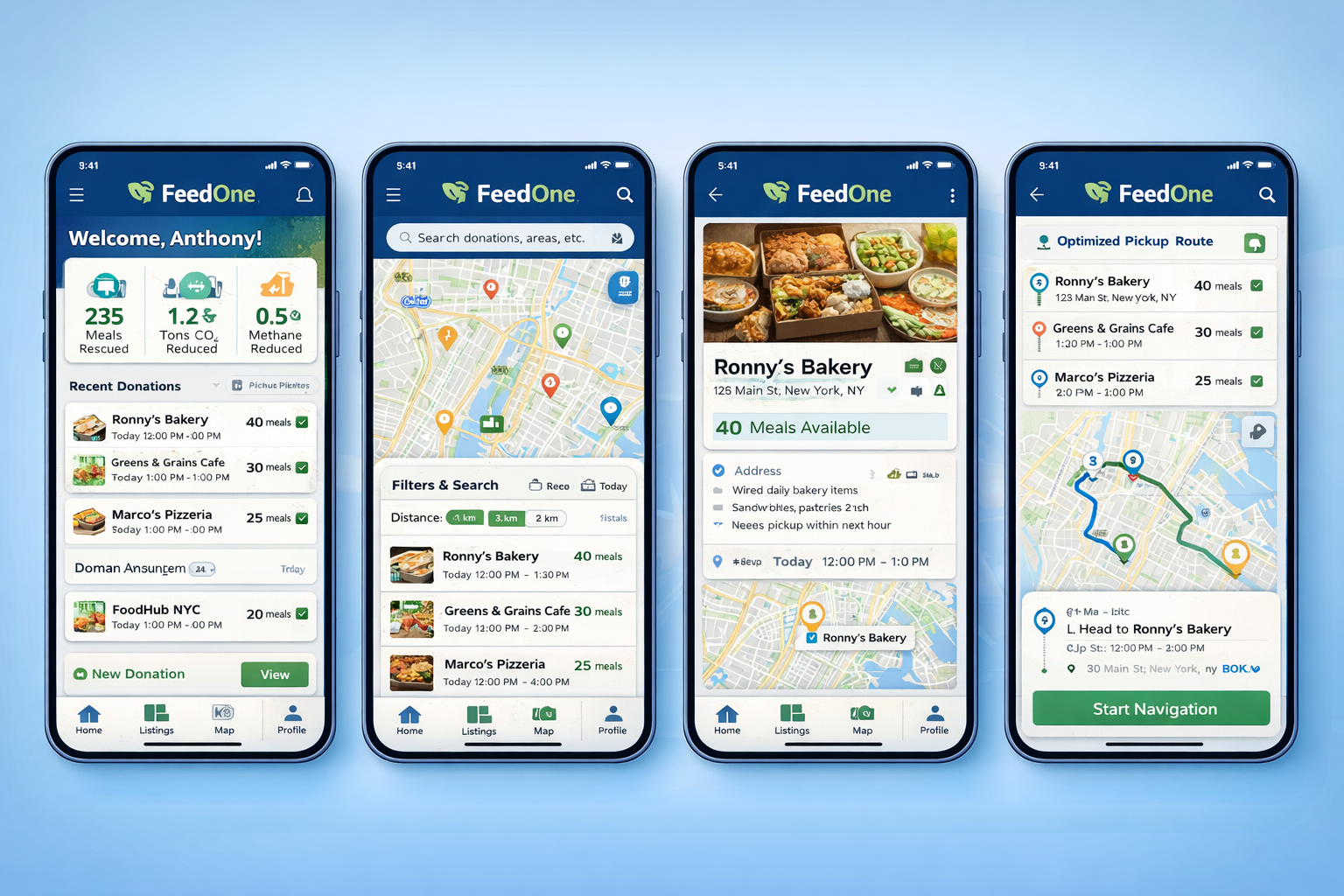
The FeedOne prototype was developed as a web-based system demonstrating the concept and workflow of the platform.
The system includes:
- A prototype interface for food donation registration
- Volunteer pickup coordination flow
- AI-based coordination concept
- Environmental impact awareness
The project was built using web technologies and deployed through GitHub Pages for easy public access and demonstration.
The workflow demonstrates how donors, volunteers, and NGOs can interact through a single coordinated platform.
Challenges we ran into
One of the main challenges was designing a system that clearly demonstrates the coordination flow between donors, volunteers, and NGOs in a simple prototype.
Another challenge was presenting the concept in a way that highlights both the social impact (reducing hunger) and environmental impact (reducing food waste emissions).
Creating a clear workflow and demonstration within a limited prototype environment required careful planning and iteration.
Accomplishments that we're proud of
We successfully created a working prototype that demonstrates how an AI-powered system can coordinate surplus food redistribution.
The project highlights the intersection of technology, social good, and environmental sustainability.
FeedOne shows how digital platforms can help reduce food waste while supporting communities in need.
What we learned
Through this project we learned how technology can be applied to real-world social problems.
We explored how platform-based coordination systems can improve logistics and efficiency in food redistribution.
We also gained experience in designing a user flow that balances usability, impact, and scalability.
What's next for FeedOne – AI Powered Surplus Food Coordination Platform
Future development of FeedOne would include:
- AI-based food matching and route optimization
- Real-time volunteer coordination
- NGO partnership integration
- Food safety tracking
- Impact analytics showing meals saved and emissions reduced
The long-term vision is to scale FeedOne into a global platform that helps reduce hunger, minimize food waste, and lower environmental impact.


Log in or sign up for Devpost to join the conversation.