-
-
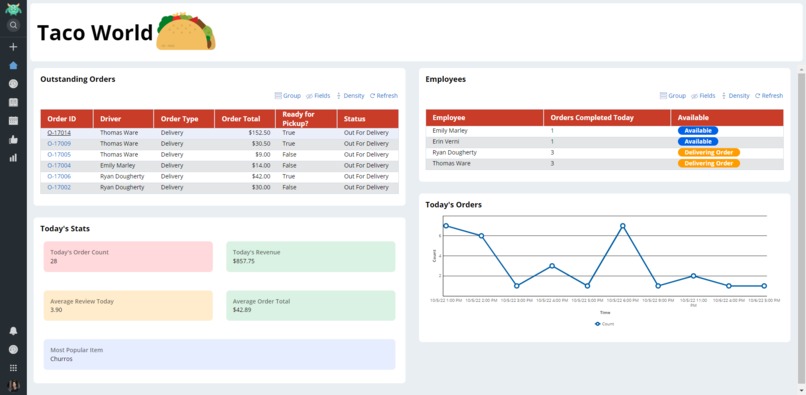
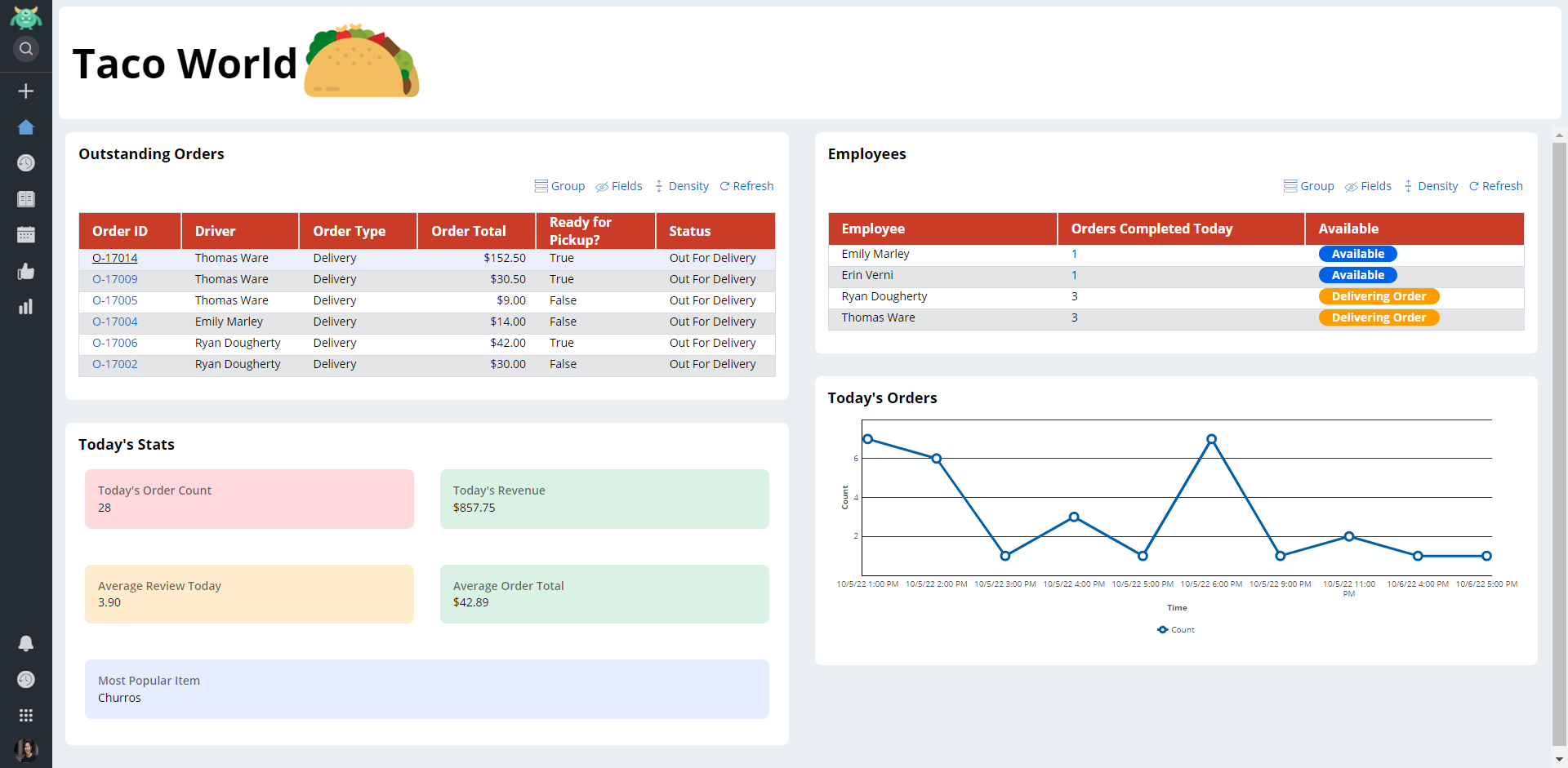
Dashboards for key performance indicators
-
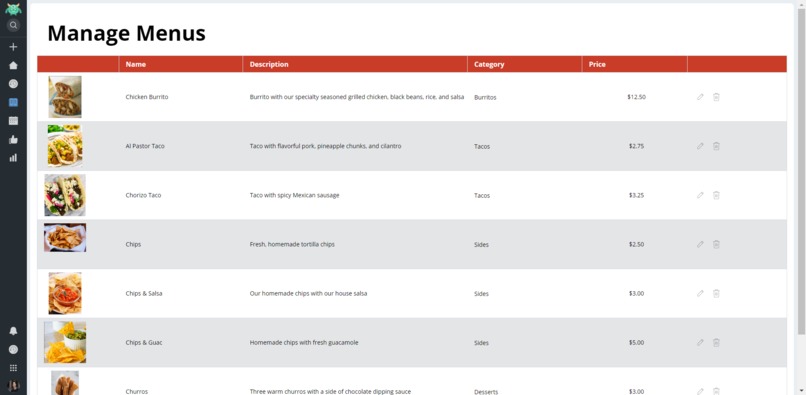
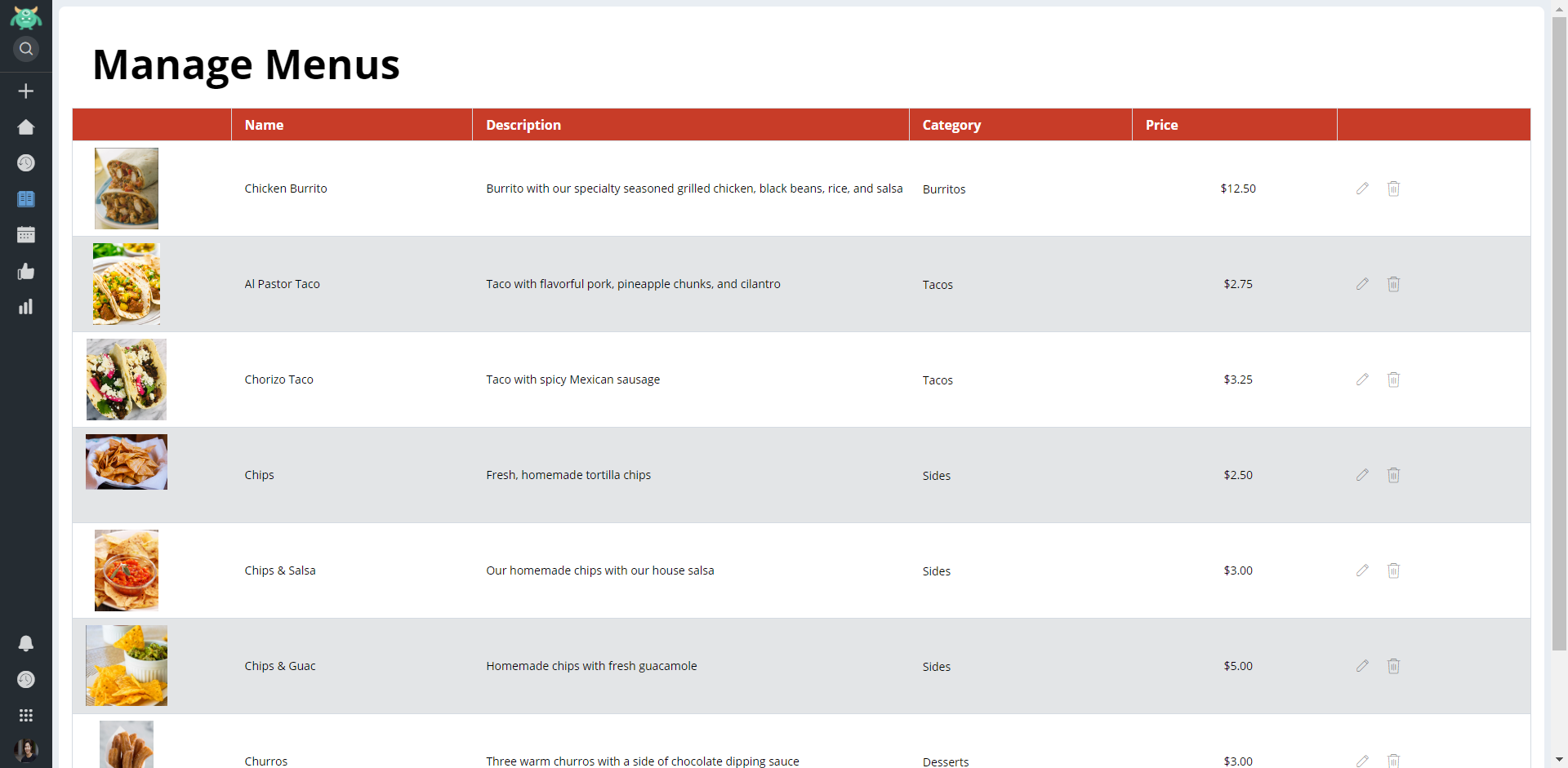
Simple menu management
-
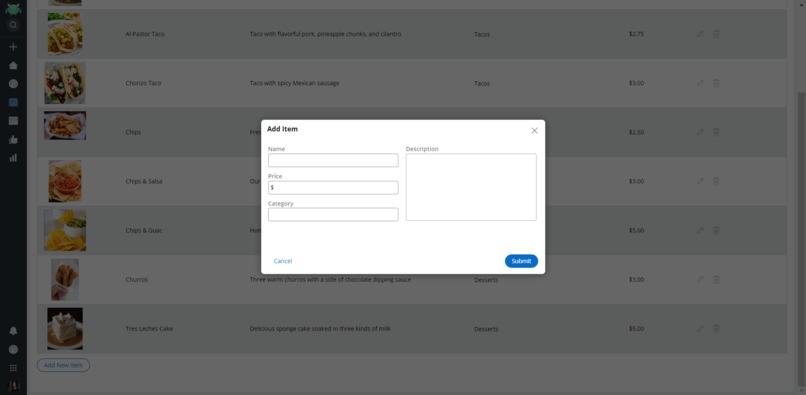
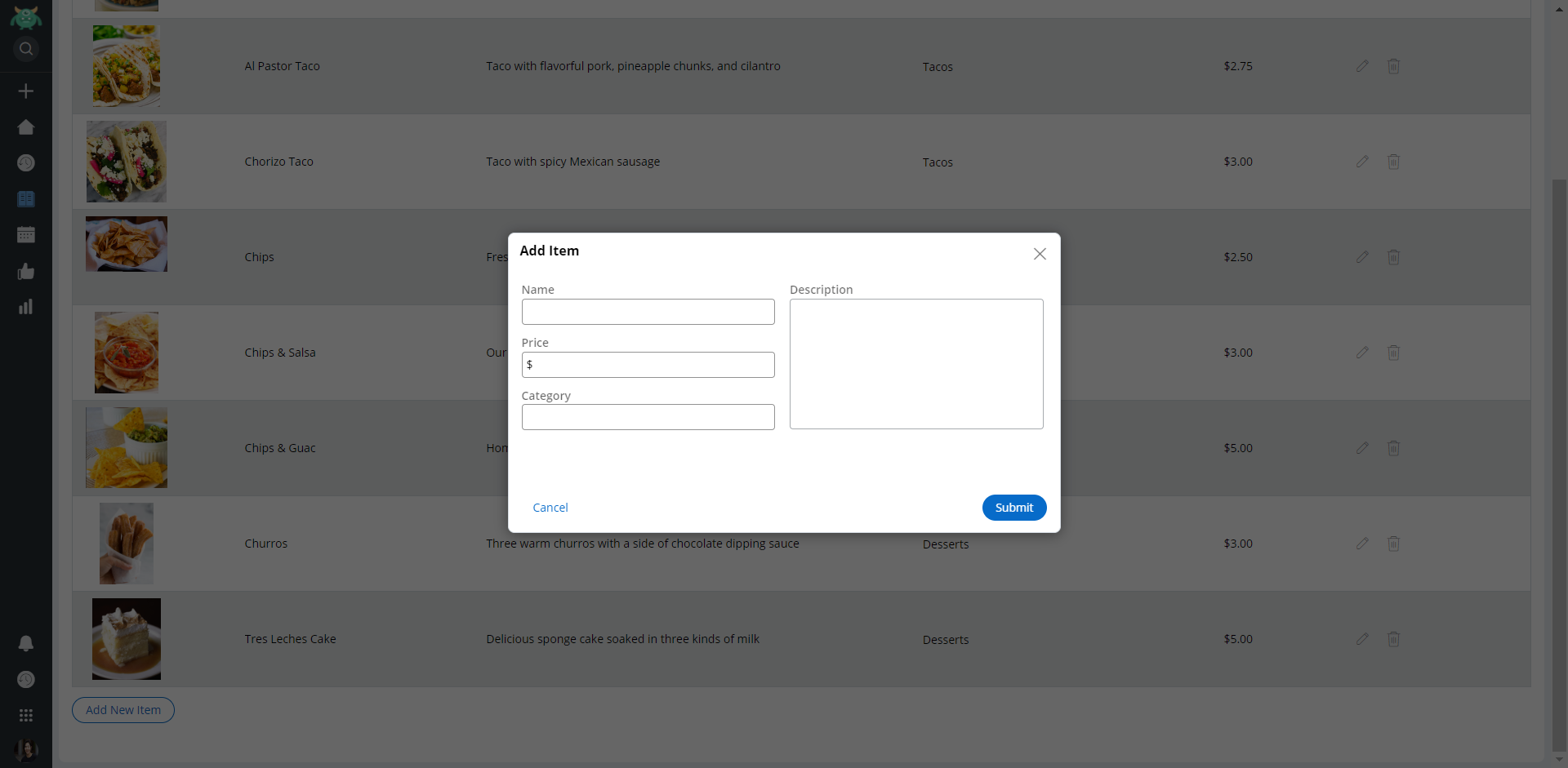
Add and edit menus with ease
-
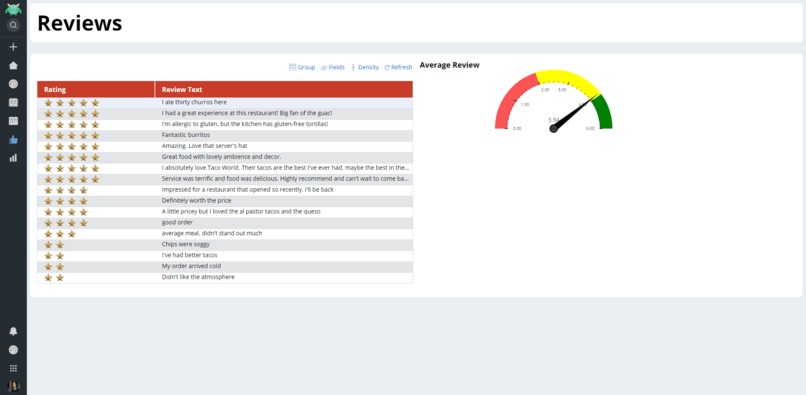
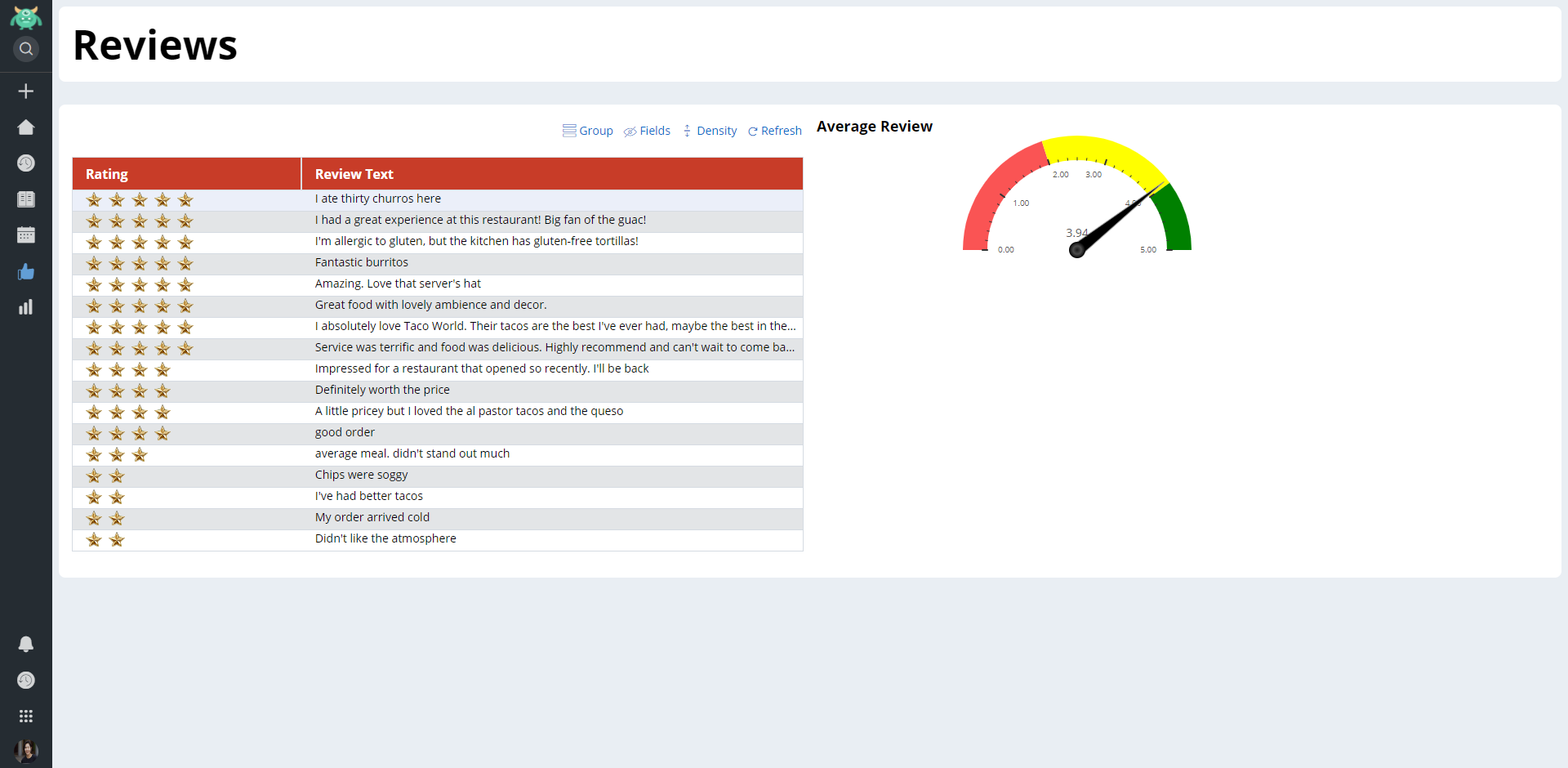
Keep track of customer reviews
-
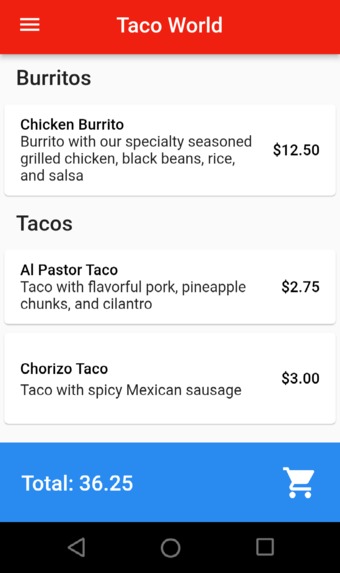
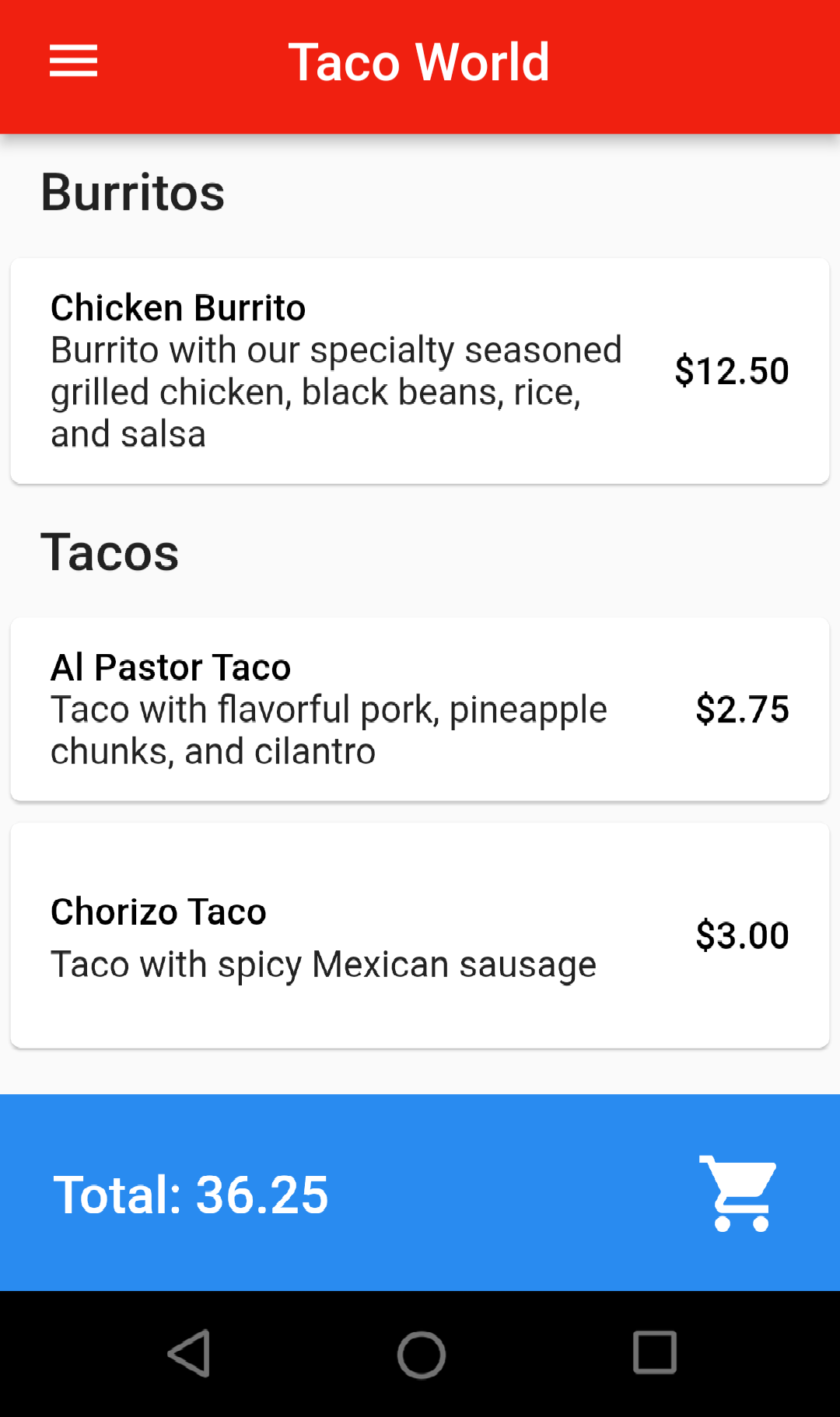
Browse the menu
-
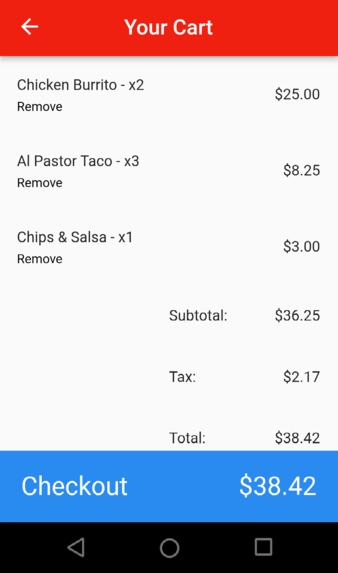
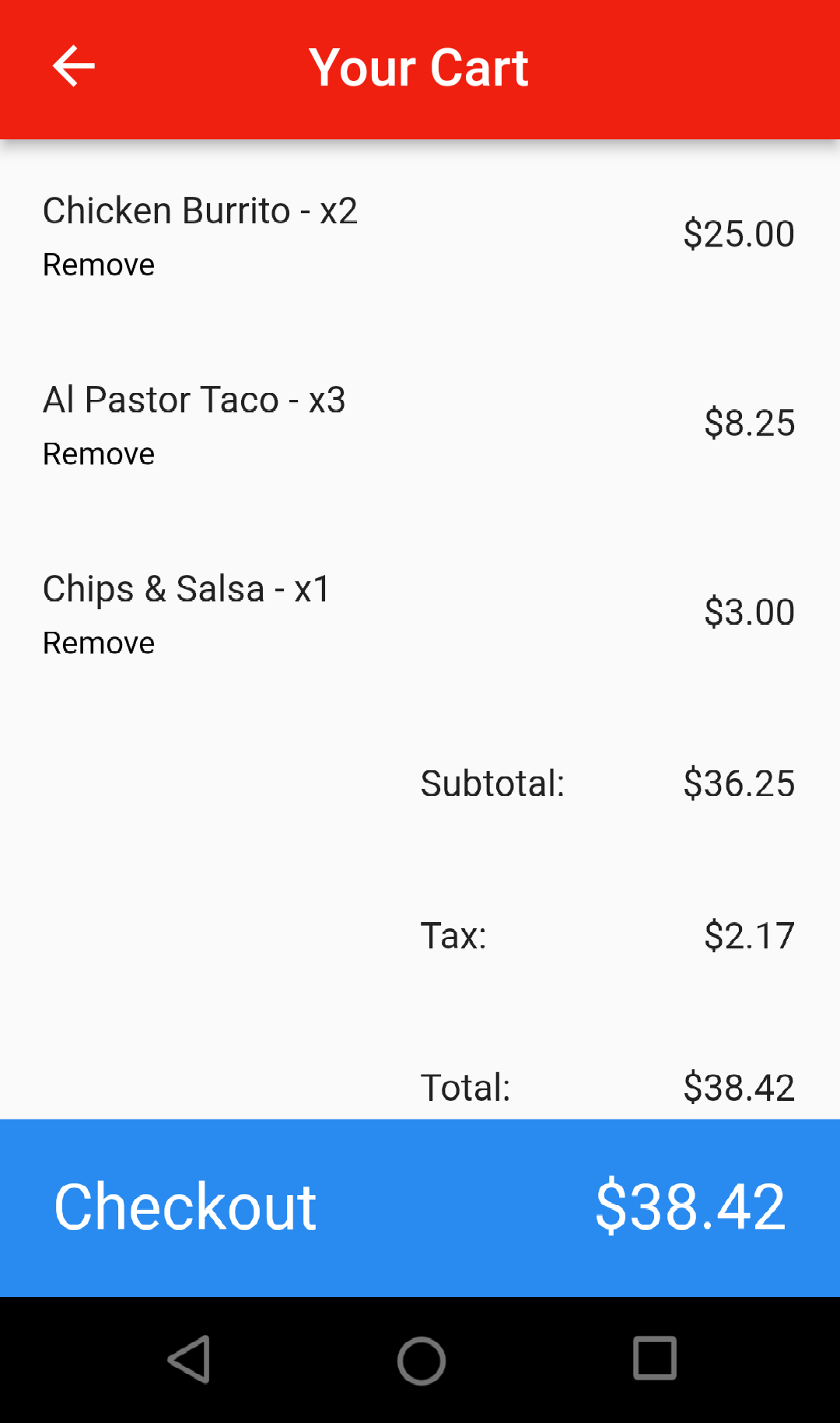
What's in your cart?
-
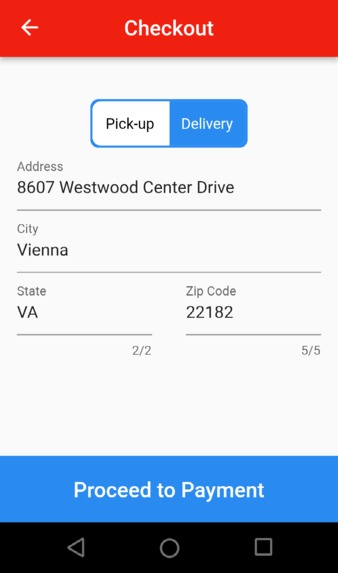
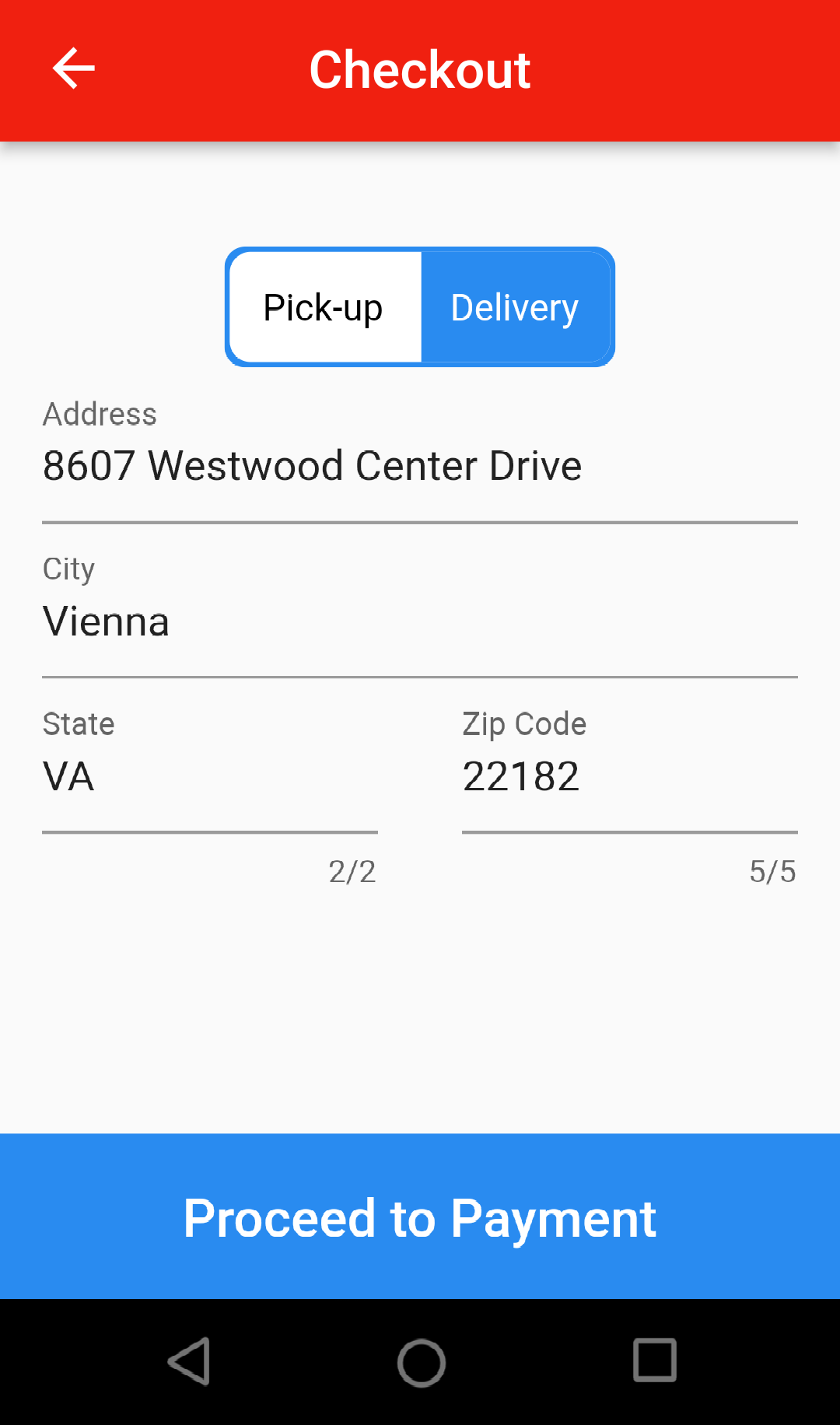
Pickup or Delivery?
-
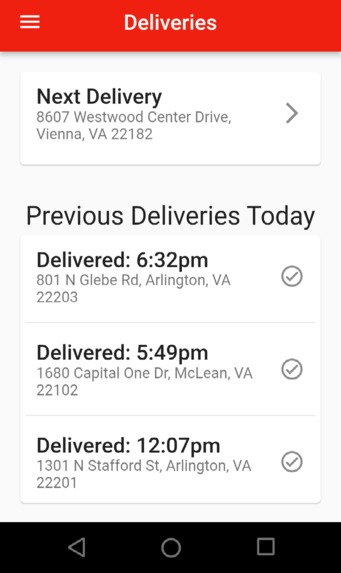
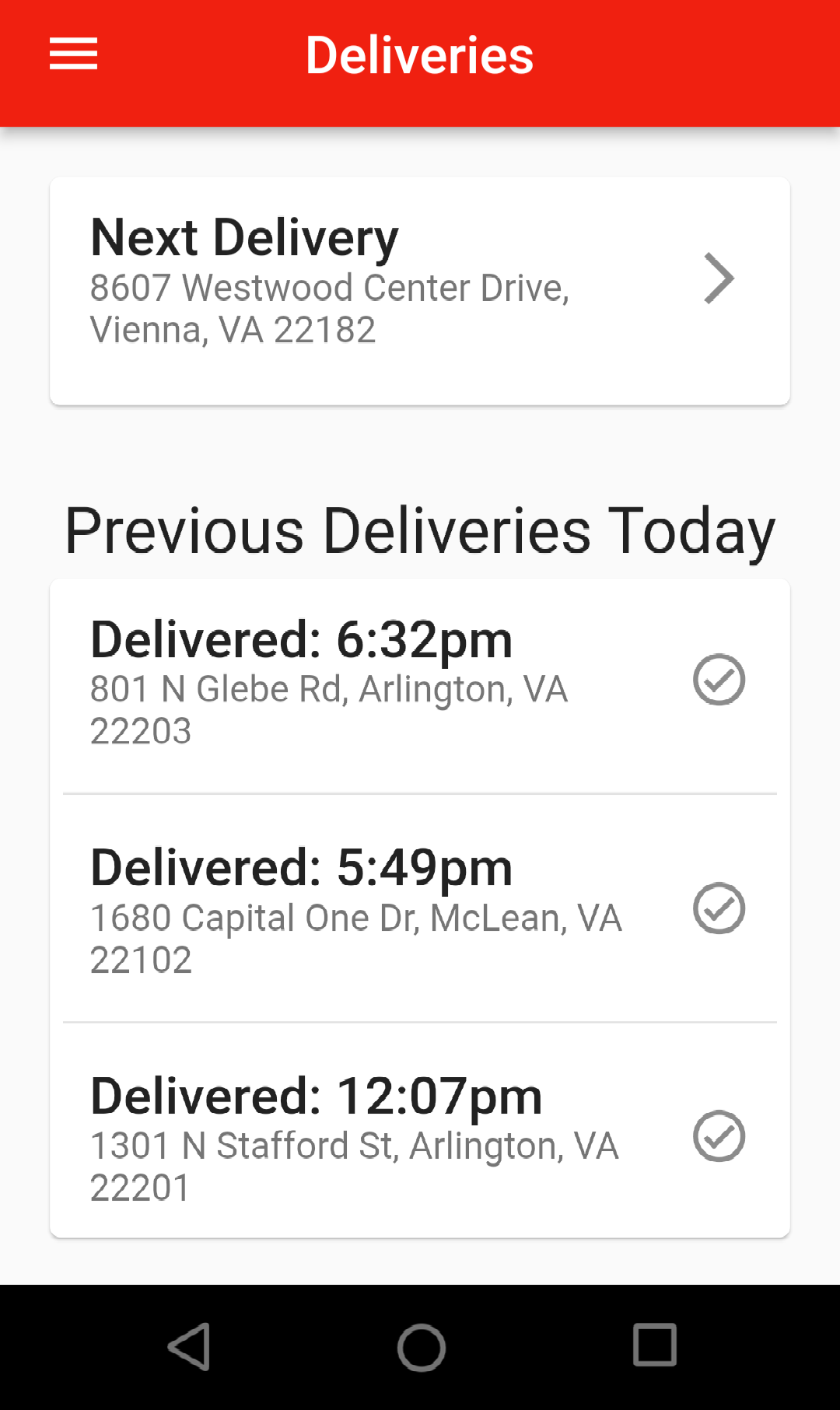
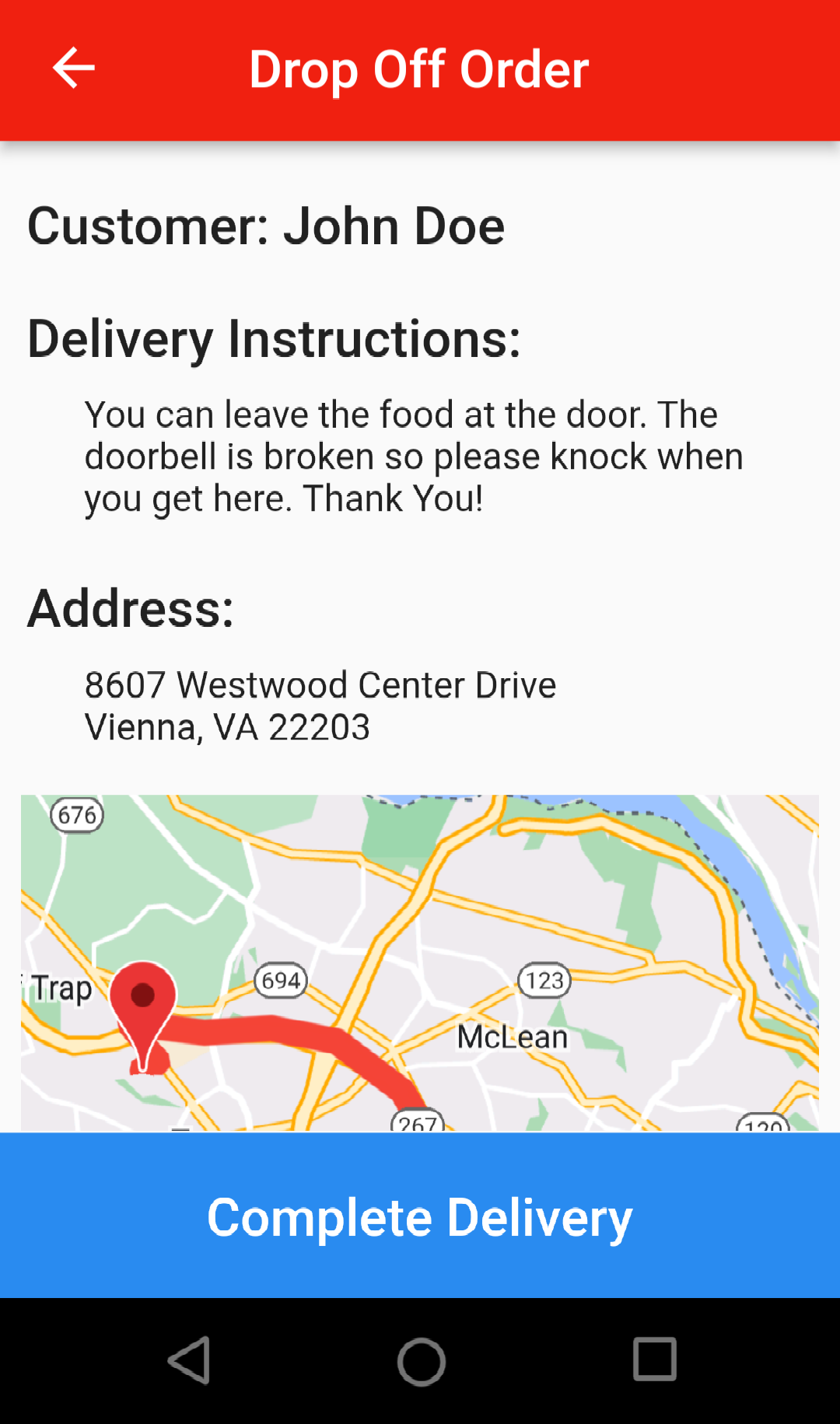
Drivers can manage all their work right in the app
-
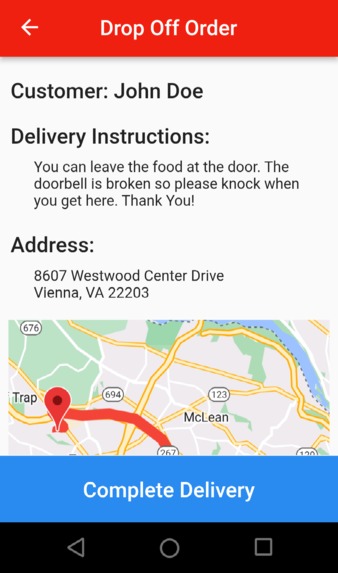
Google maps integration for directions
Inspiration
60% of Americans order takeout or delivery at least once a week.
31% of Americans use a third-party food delivery service at least twice a week.
In 2021, the online food delivery business generated $22.4 billion.
By 2029, it is project to be a $320 billion industry [1].
For consumers all over the world, the days of sitting in traffic to pick up takeout and waiting in long lines for food are over. From the car, the gym, or the couch, anyone can instantly place an order from their device and their meal will be delivered quickly. For restaurants, partnering with an online ordering application provides access to new customers which can lead to an increase in takeout orders and an overall increase in revenue. However, as we order tacos from our couches, free from traffic and stress, are the restaurants serving us gaining any of the benefits promised to them by large delivery companies? The answer is frustratingly, no.
Grubhub is the largest food delivery app in the United States. Restaurants that partner with Grubhub are charged a 15% - 30% marketing commission for each order placed. The higher the commission, the earlier in the list a user will see a restaurant when scrolling for a meal. If a restaurant chooses to use Grubhub drivers to deliver their food, an additional 10% commission is charged. And if a restaurant’s phone number is tracked by Grubhub, any orders placed over the phone are subject to commission. Finally, there is an order processing fee which is 3.05% + $.30 per order. These commissions make it extremely difficult to increase delivery revenue while partnering with a large online application.
Here is an example. Taco World works with Grubhub and they pay a 25% marketing commission and use Grubhub drivers. As the receipt below shows, for a $33.00 order, Grubhub will earn $13.01 in commission, leaving $19.99 for the restaurant. That’s 39.5% of the sale lost to commission; a staggering amount!
Most consumers are aware of the large cut major delivery companies are taking from restaurants. A recent study found that 70% of those surveyed would prefer to go directly through a restaurant rather than use delivery apps that take commission [2]. However, there are not enough alternatives available. And most restaurants don’t have the time or resources to develop their own applications from scratch.
Pega can change the food delivery landscape, enabling the small businesses that we rely on to thrive. Using the upcoming Pega Launchpad platform, any restaurant, big or small, can quickly get SaaS applications off the ground. Our application, FeedMe, is designed for easy implementation and maintenance using the latest Pega technology. Launchpad can help FeedMe scale up to provide value to more restaurants, more locations, and more customers.
What it does
FeedMe is Pega’s entrance into the food delivery space. As the name implies, it is straightforward. No hidden fees or commissions, no choices for restaurants between increasing visibility and mitigating cost. The mission of FeedMe is to empower small businesses to manage their own food delivery services while providing users the same convenience, strong user experience, customization options and top-quality service as any of the larger, less restaurant friendly, applications in the market.
FeedMe allows a single restaurant to seamlessly take online orders from customers, manage its menus, and track things like best-selling items, customer reviews, and average order preparation time. We streamline the process of making and taking an order from start to finish.
Remember our taco order? With Grubhub, Taco World lost $13.01 in commission for a $33.00 order. With FeedMe, there is no marketing commission and no delivery commission because restaurants market themselves and always use their own employees as drivers. The result is a 37% increase in revenue from the Grubhub order. The money stays with the restaurant, where it was earned.
How we built it
FeedMe is built on Pega 8.7.1 using the ThemeCosmos architecture. ThemeCosmos enables the application to deliver a traditional web portal as well as Flutter-based mobile portals. The user-centric design lets customers and drivers interact on the go, with native support for iOS and Android, while restaurant managers and employees can use the Cosmos-based web portal for reporting, scheduling, and menu changes. By taking advantage of Pega’s case management features, an Order case can be created, tracked, and resolved from each of these interfaces with ease.
FeedMe also leverages the DX API to integrate with Flutter. Flutter is Google’s portable UI toolkit that enables natively compiled applications for mobile, web, and desktop from a single codebase. In addition to its strong UI capabilities, Flutter’s high performance makes it an excellent choice for mobile applications. Almost all the time users are running many applications at the same time on their devices, making individual application performance important. With Flutter, there is no need for a middleware JavaScript engine, which competitors like React require. Instead, Flutter uses a binary messaging channel for bidirectional communication between the Dart (programming language for Flutter framework) and the native code. Flutter also offers an extensive library of built-in tools and APIs to access native UI components.
Challenges and Accomplishments
We started the hackathon with an ambitious design using unfamiliar technologies. With the limited time available for development, it was challenging to select the highest priority features that we wanted to build in this iteration and learn a new coding language – Flutter – at the same time. We’re proud of the way we were able to estimate levels of effort and prioritize accurately in order to produce the best result possible. The integration of Flutter using the DX API was one of our greatest accomplishments.
What's next for FeedMe
While designing FeedMe, there were many features we wanted to include but knew were out of scope for this hackathon. The architecture of the application is built to support future development to implement the following features:
Review Sentiment Analysis
Pega offers natural language processing models to analyze text samples, categorizing them into positive, neutral, or negative. These decisioning components are perfectly suited to tackle large datasets like customer reviews for a restaurant. We plan to implement robust reporting on sentiment scores for orders, allowing restaurants to make data-driven business decisions.
For example, if orders containing a certain menu item consistently have very positive reviews, a manager might decide to put that item on sale or add it to a promotional campaign. If orders placed at a certain time of day are usually negative, maybe the restaurant needs to staff more workers during that time. Pega’s sentiment analysis enables a deeper, more granular level of analysis than using only numerical ratings.
Employee Scheduling
Currently, FeedMe allows a restaurant visibility into where its drivers are going and which orders they’ve picked up. However, it is possible to expand this functionality greatly. Eventually, we plan to have integrated scheduling interfaces that both managers and employees can access.
Promotional Campaigns and Rewards
Delivery apps like GrubHub love to entice customers with sales and promotions for certain restaurants. However, for that sale to show up on the app, the restaurant must pay extra for marketing and compete with hundreds of other businesses.
FeedMe plans to implement reward programs, notifications, and a campaign management system so that restaurants can communicate clearly and directly with customers. A restaurant would be able to create a campaign, select which menu items it applies to, and notify participating customers, all from one central location.
References
[2] https://hospitalitytech.com/70-consumers-prefer-order-direct-restaurants-not-third-party-services


Log in or sign up for Devpost to join the conversation.