-
-
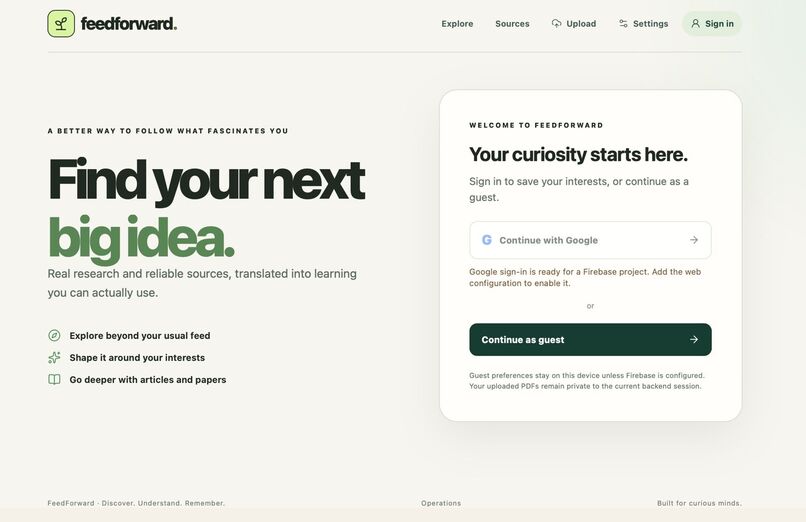
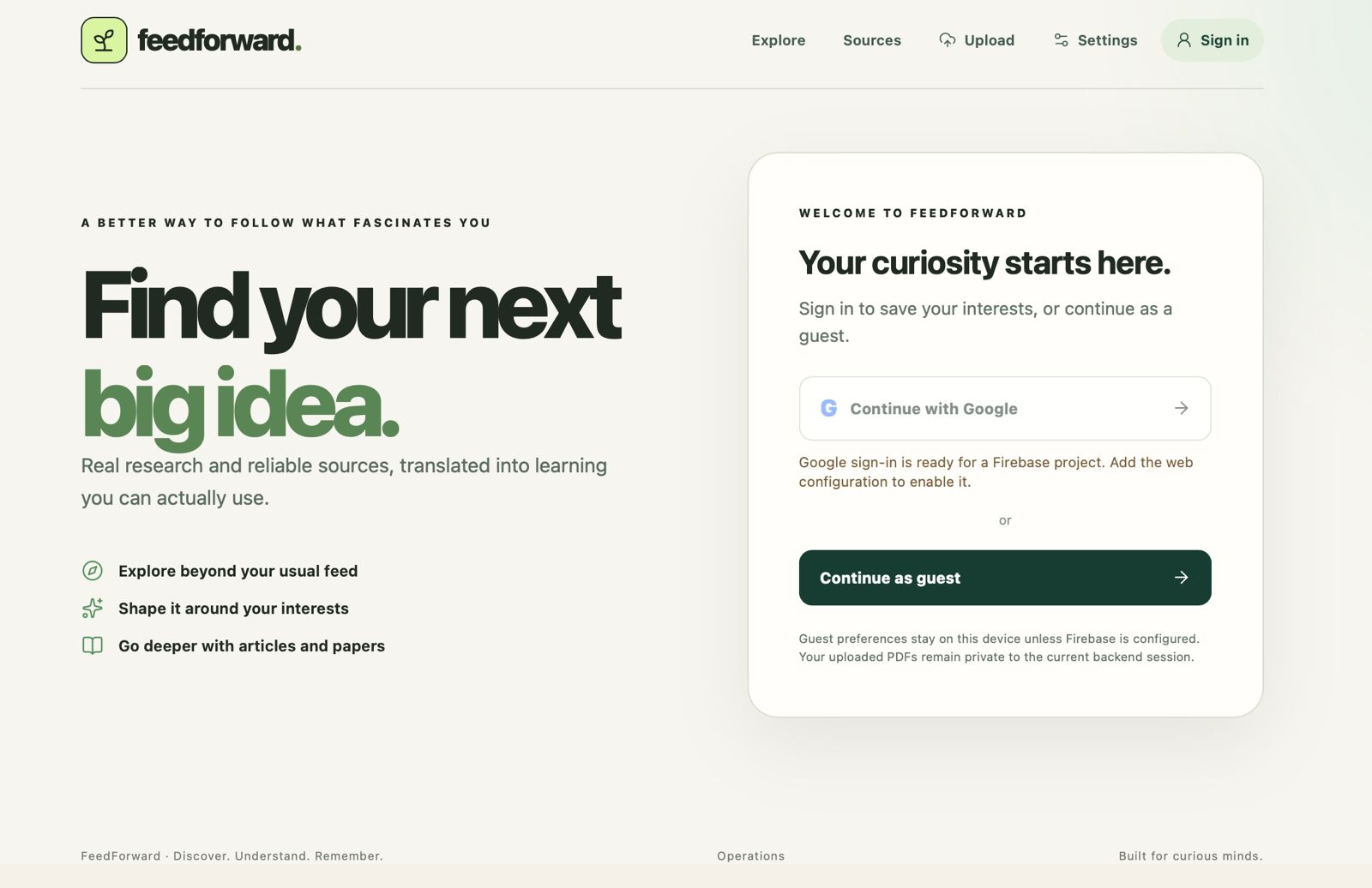
Welcome to FeedForward! Explore research, discover new ideas, and start learning as a guest or with Google sign-in.
-
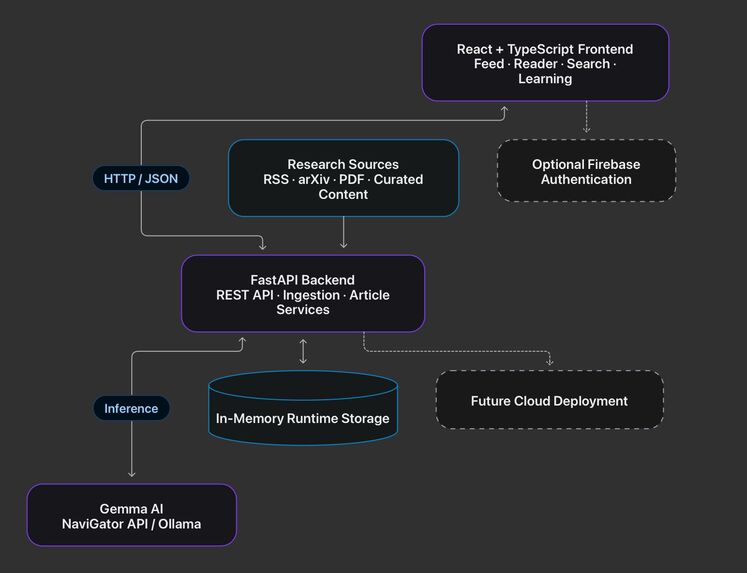
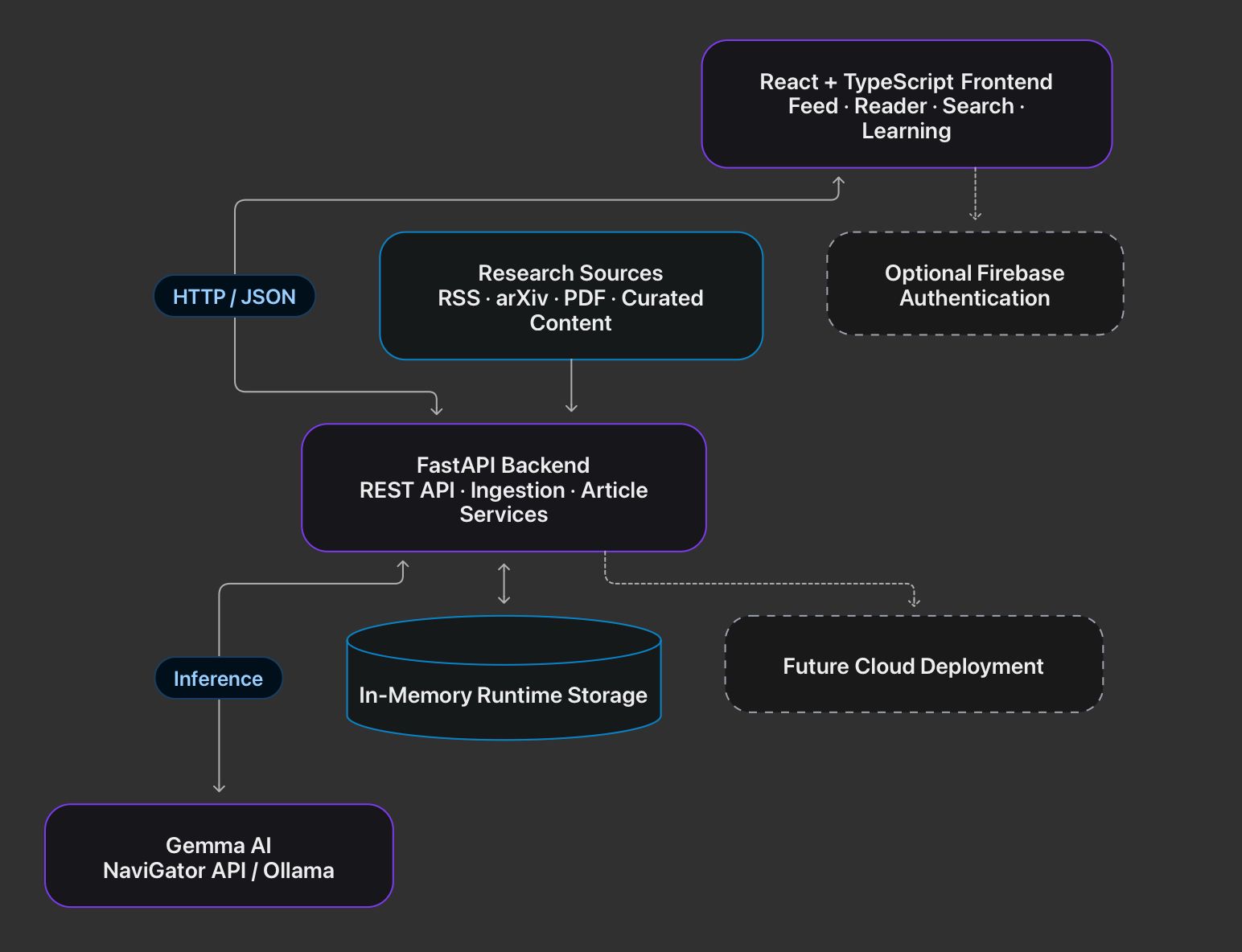
FeedForward's system architecture connects research sources, FastAPI, React, and AI-powered learning tools.
-
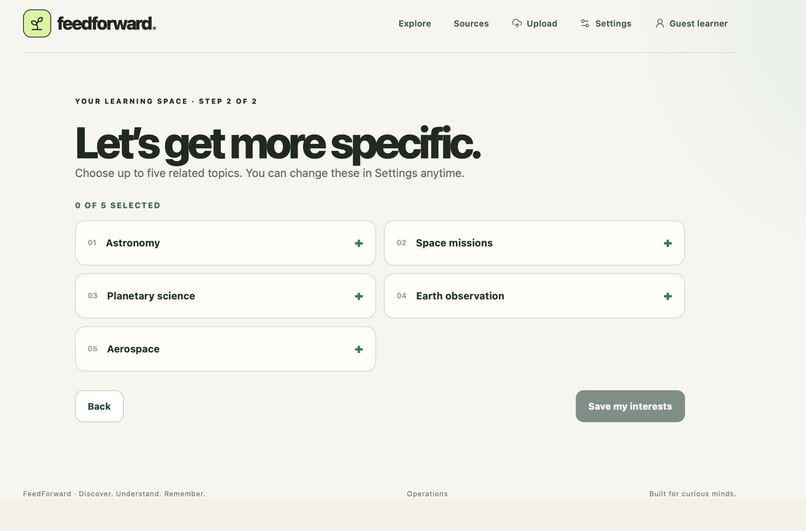
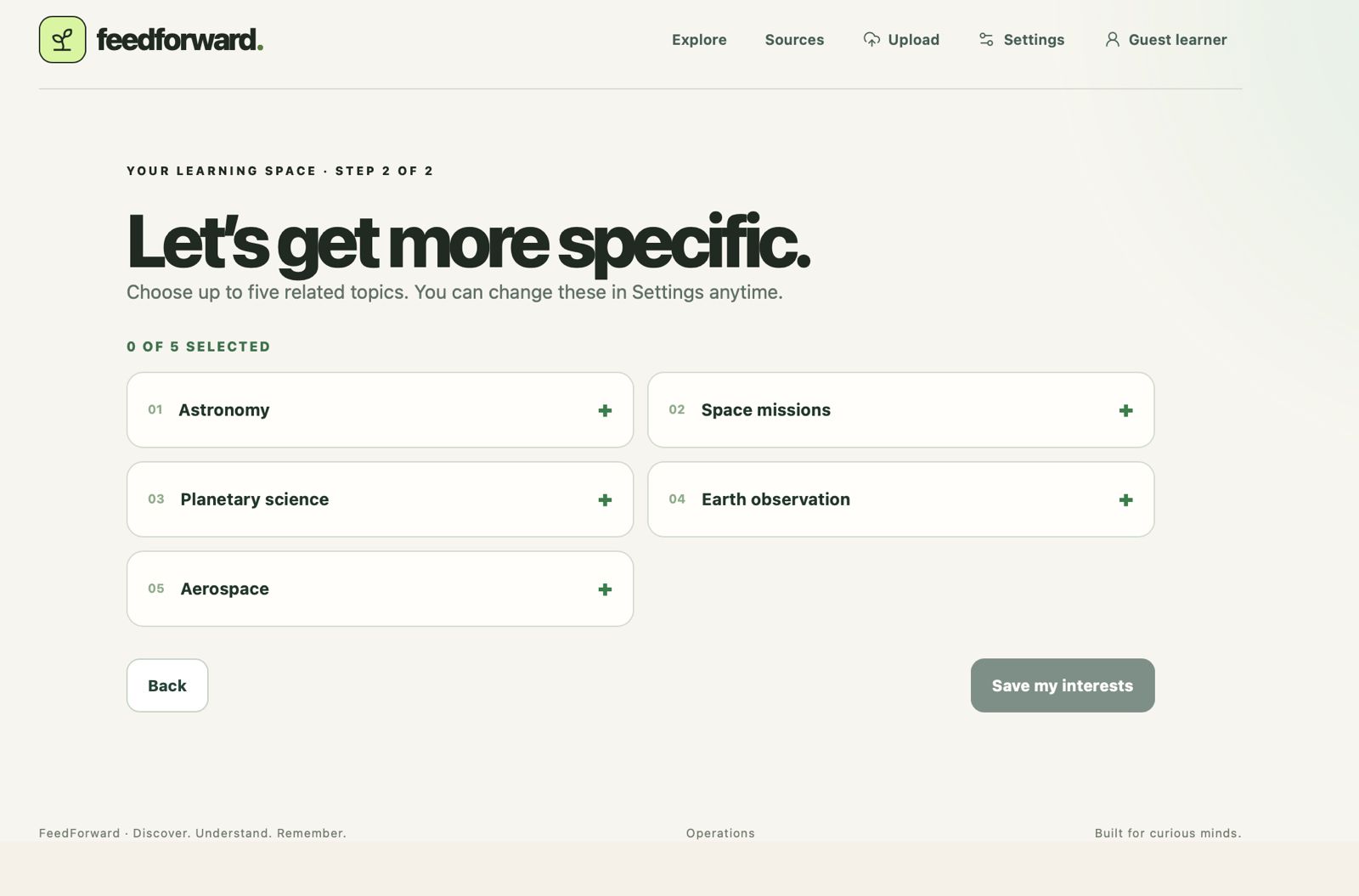
Get more specific! Select topics within your favorite fields to make your feed more relevant.
-
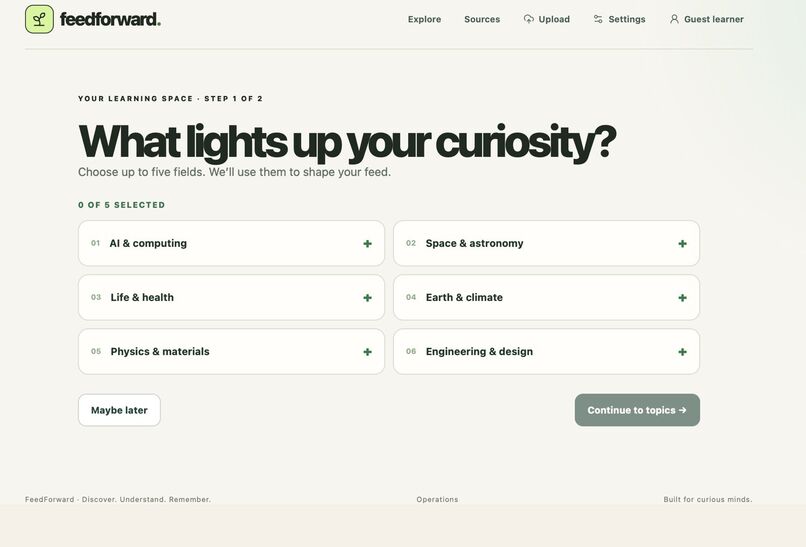
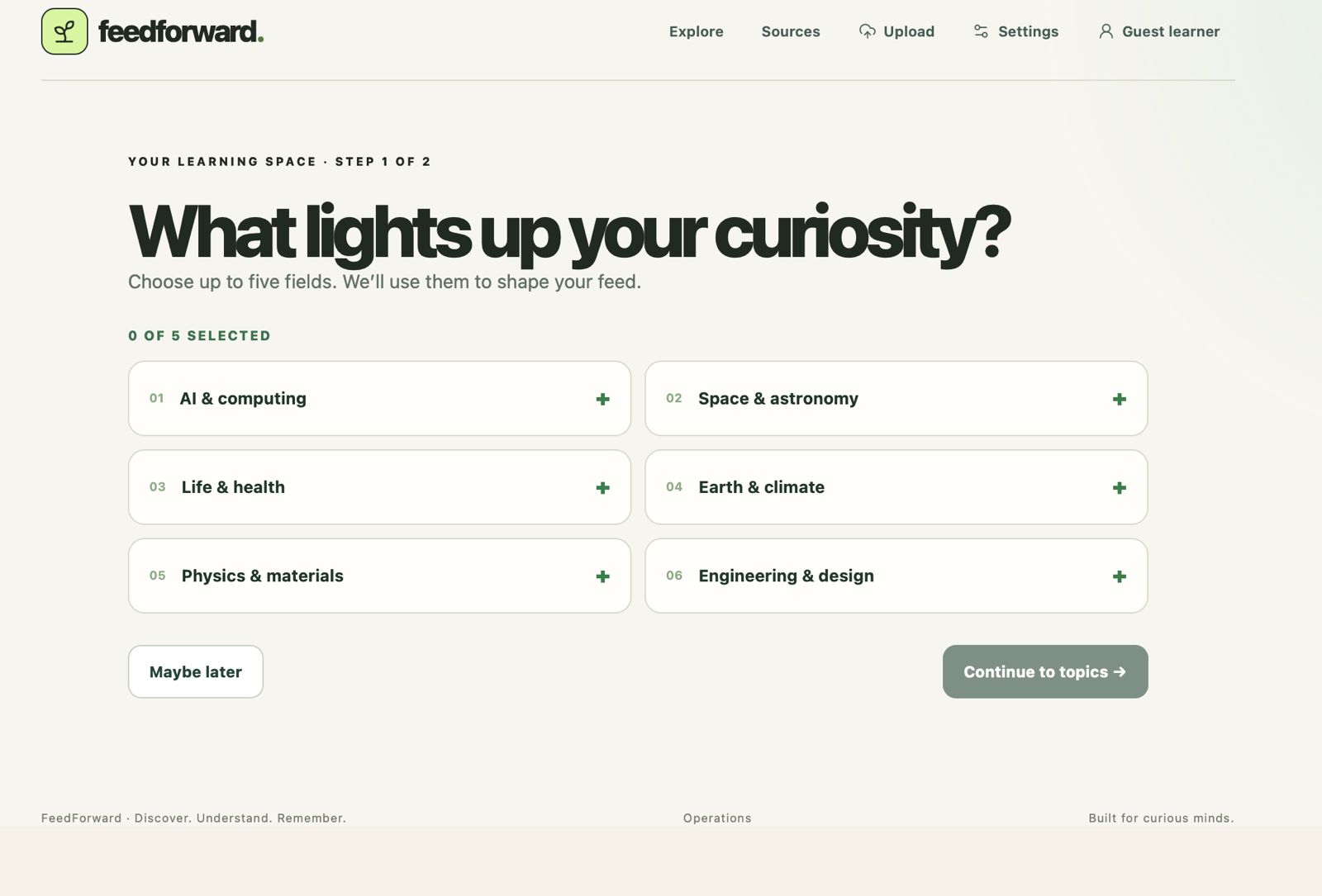
Choose the fields you're curious about to build a personalized learning experience.
-
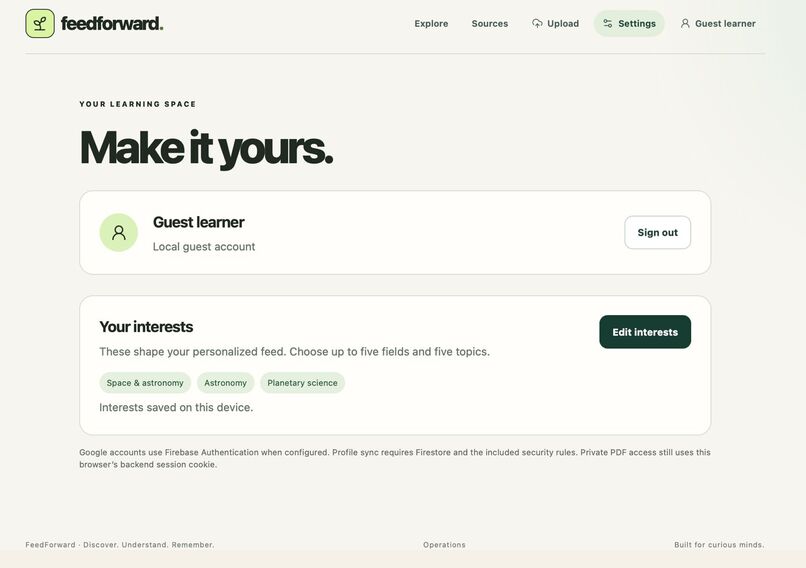
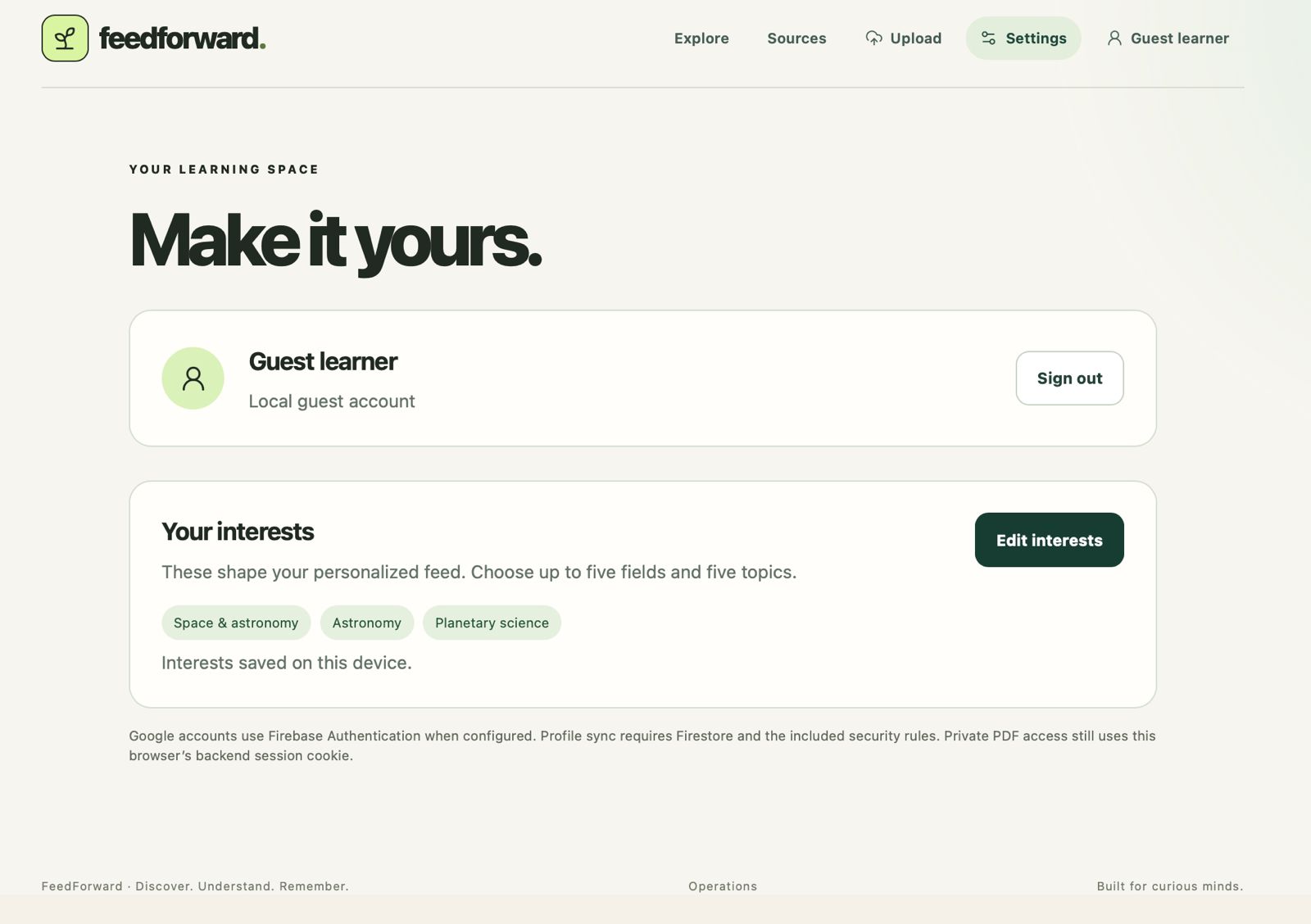
Your learning space, your interests. Manage your preferences and personalize what you discover.
-
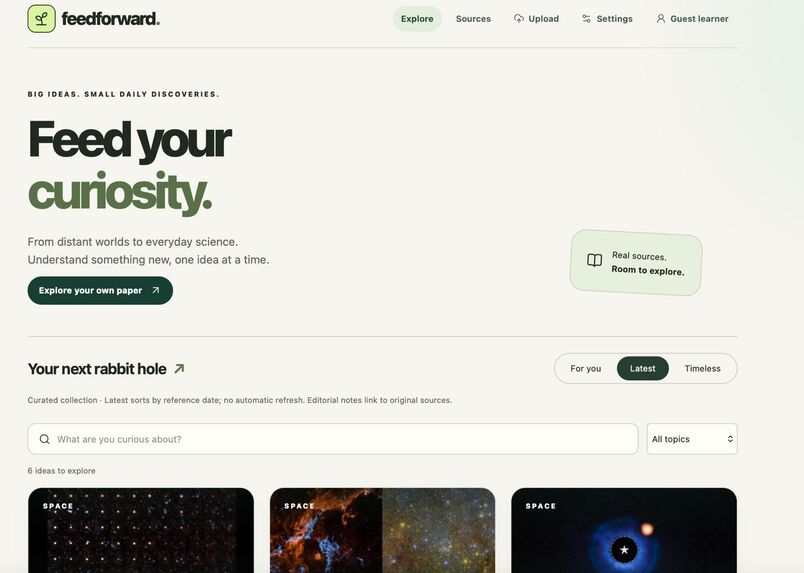
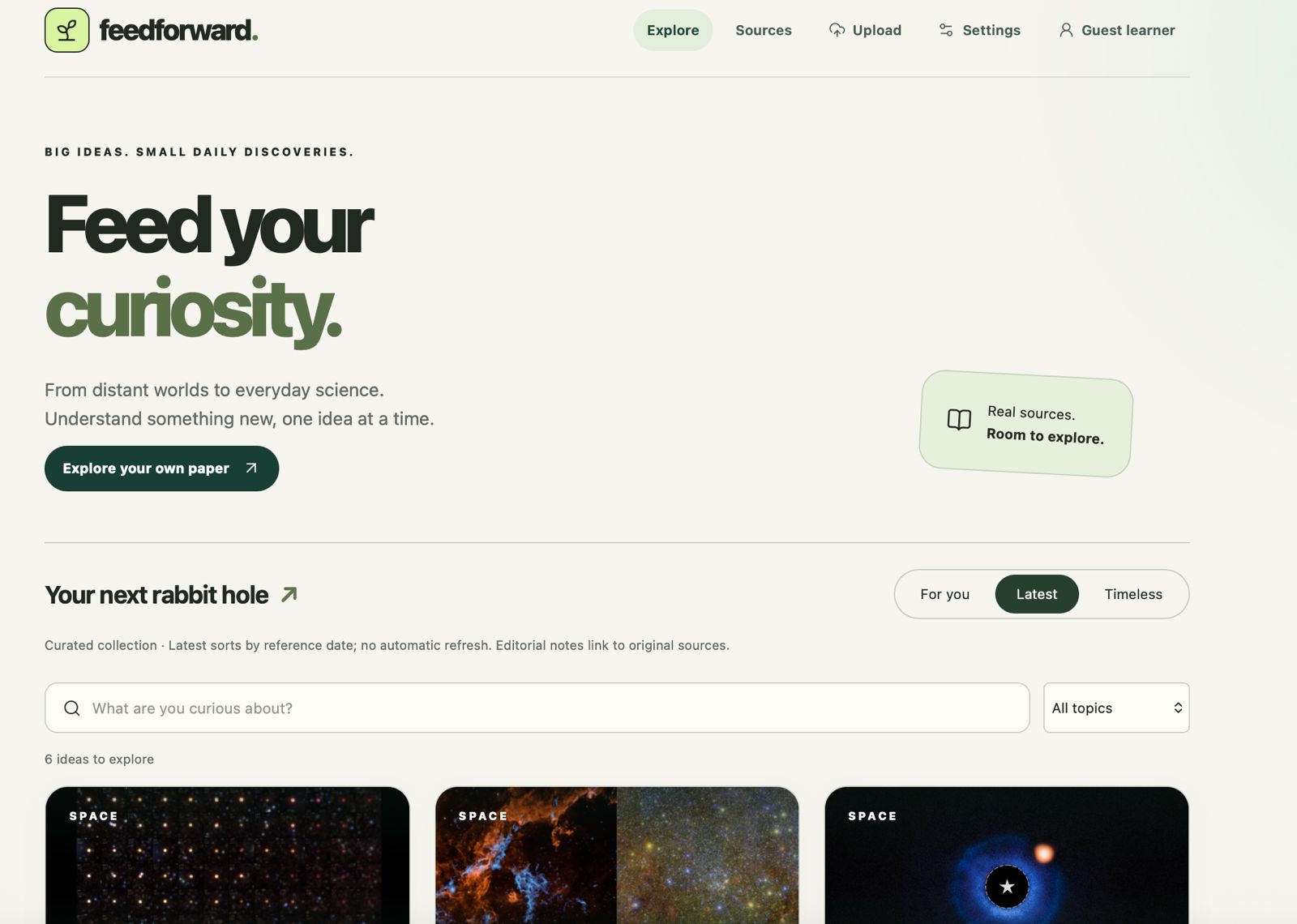
Explore research through a personalized feed, with search, topic filters, and the latest discoveries.
-
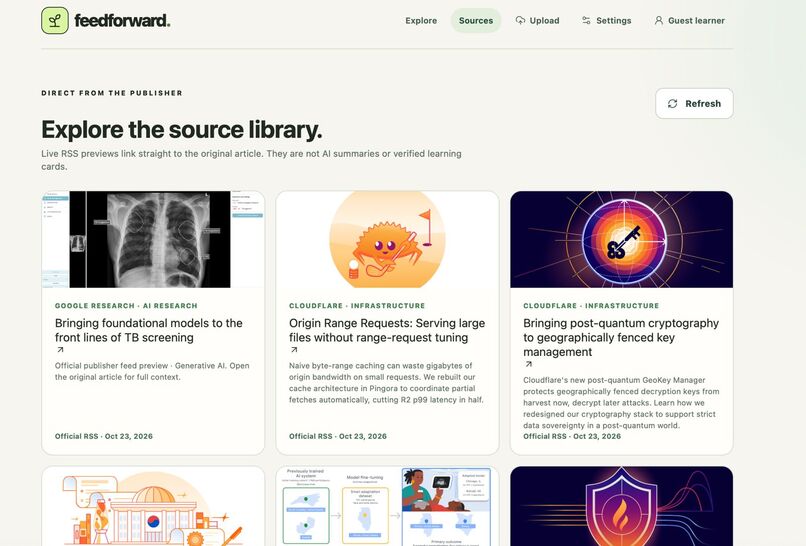
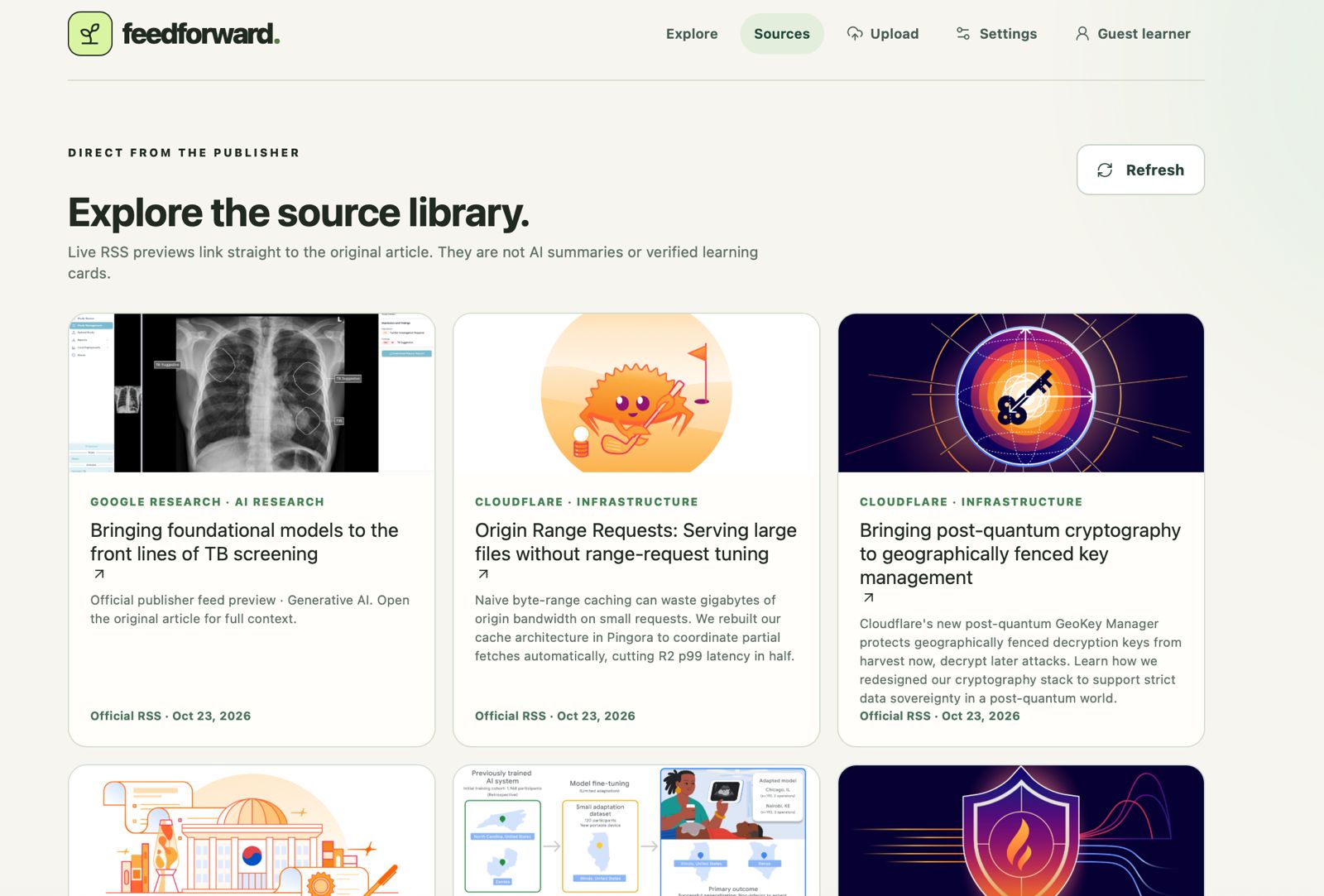
Browse updates directly from verified publisher RSS feeds, with links to the original articles.
-
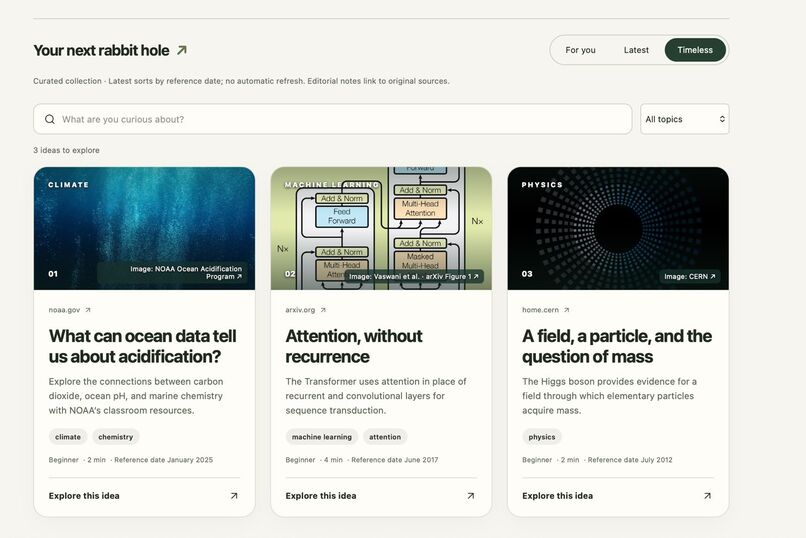
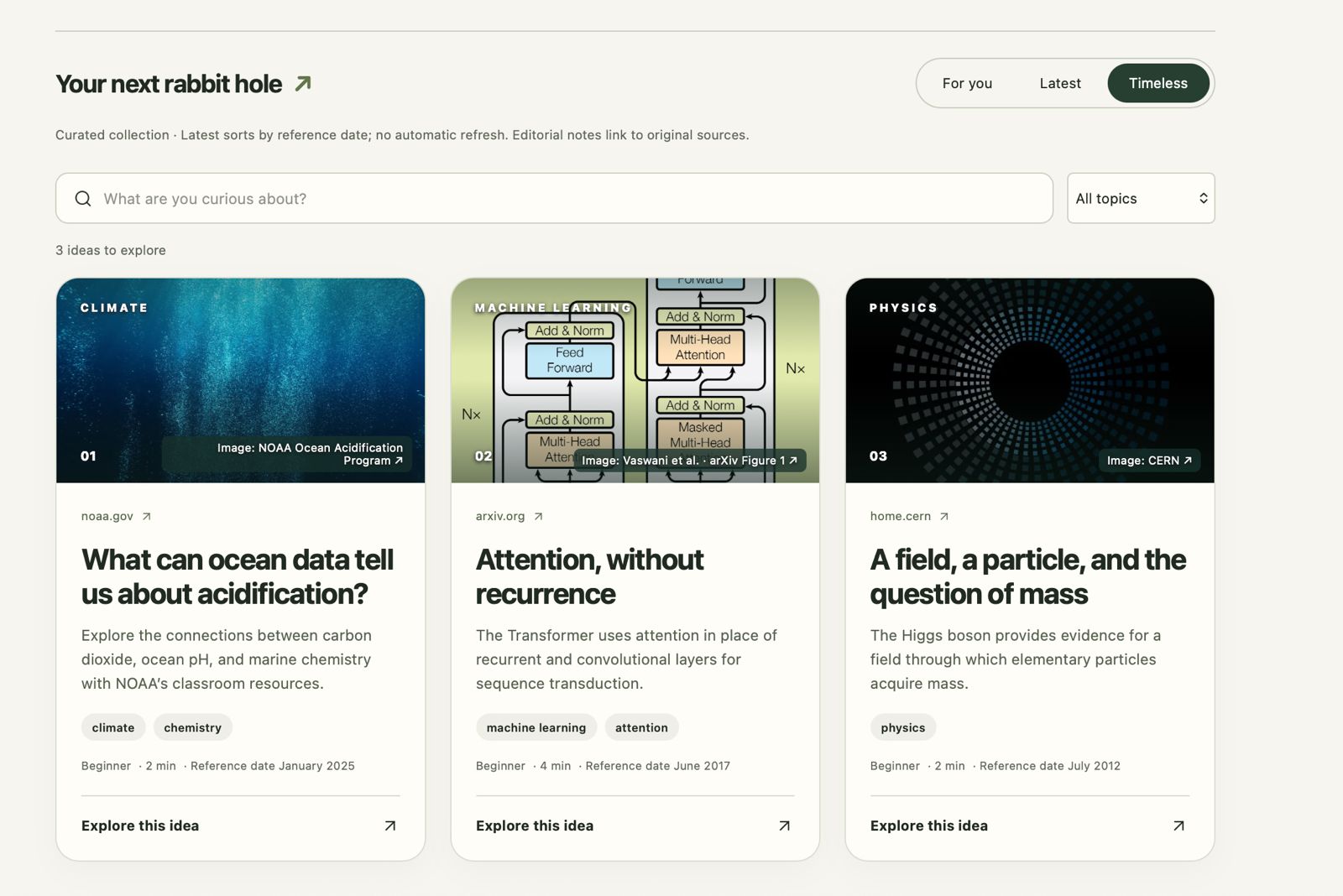
Go beyond what's new. Explore timeless research and foundational ideas that are still relevant today.
-
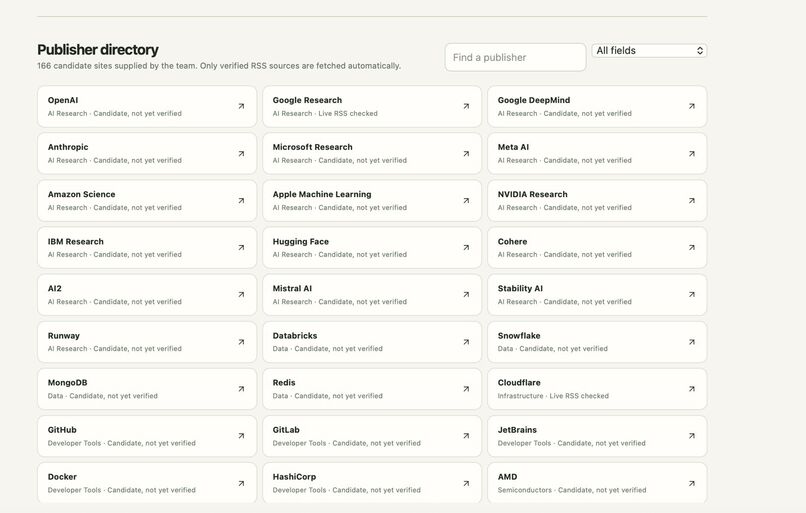
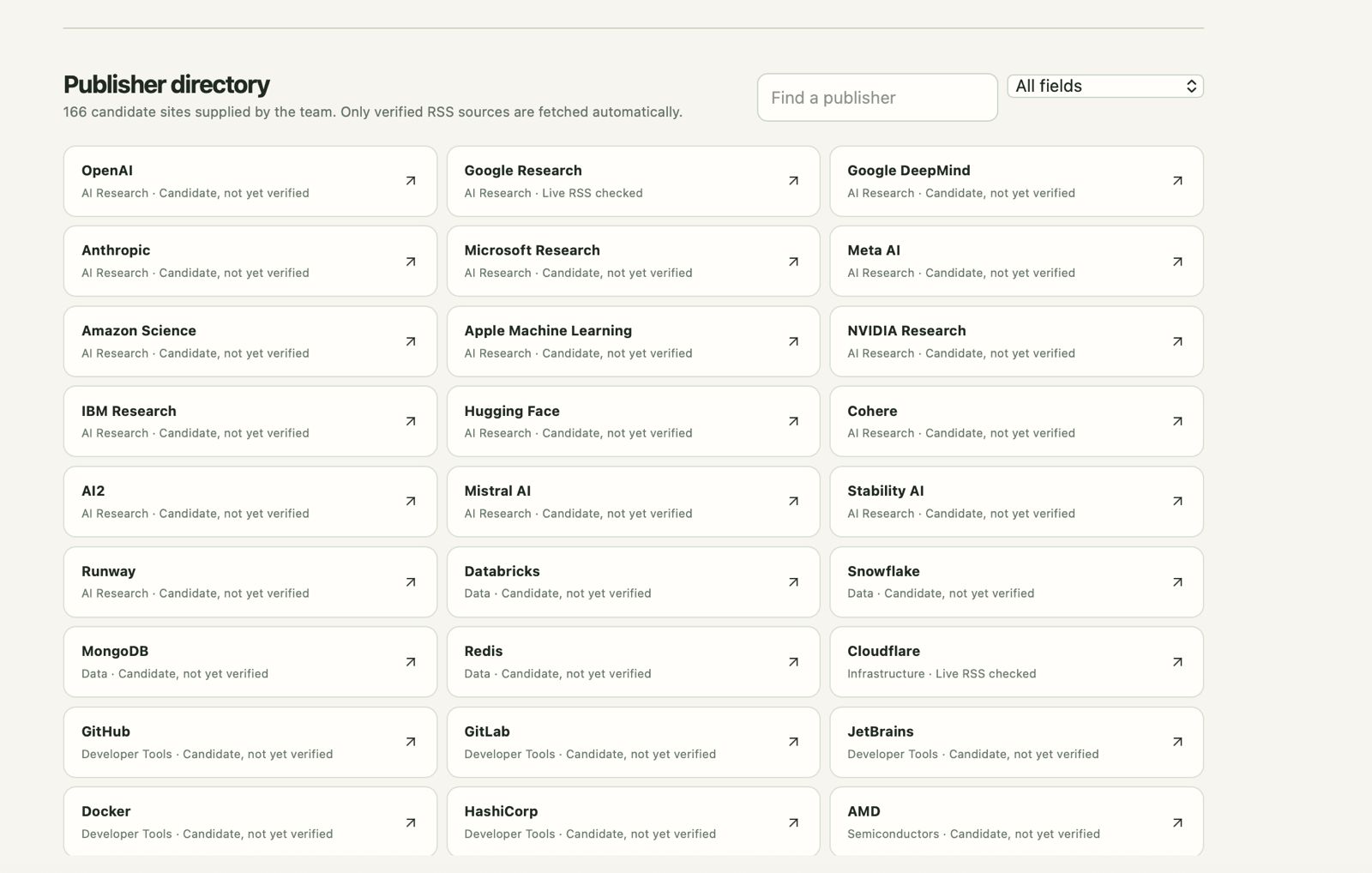
Discover research publishers in one place, with a searchable directory of 166 candidate sources.
-
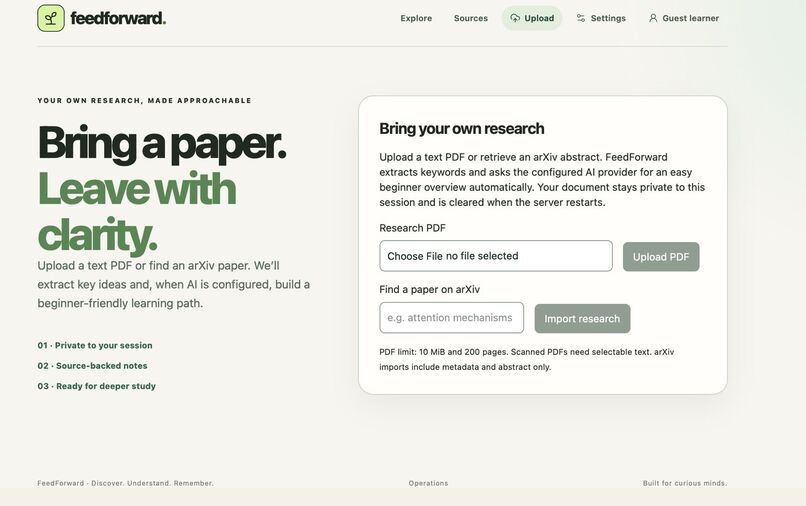
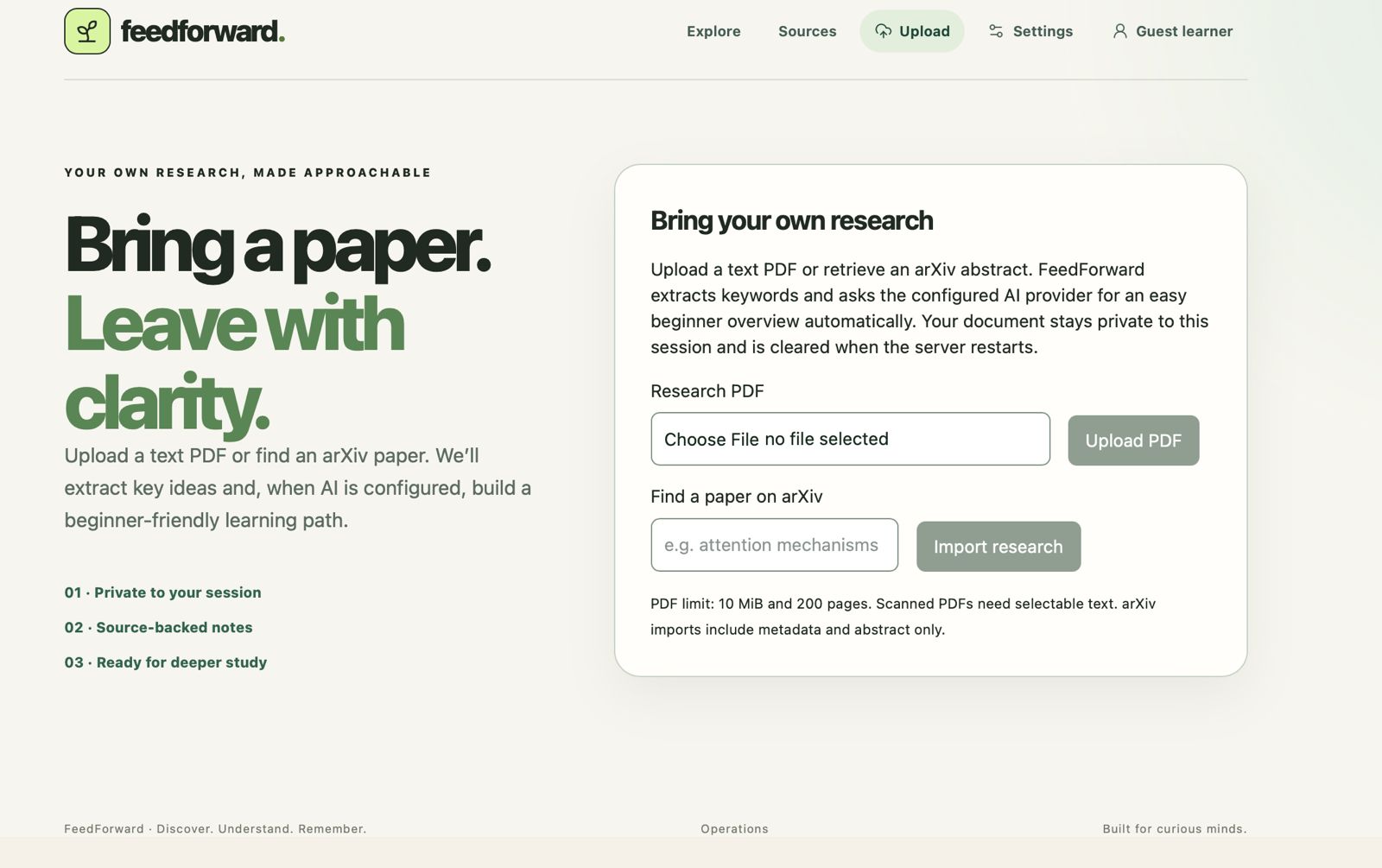
Bring your own research! Upload a PDF or import an arXiv abstract to start exploring complex ideas.
-
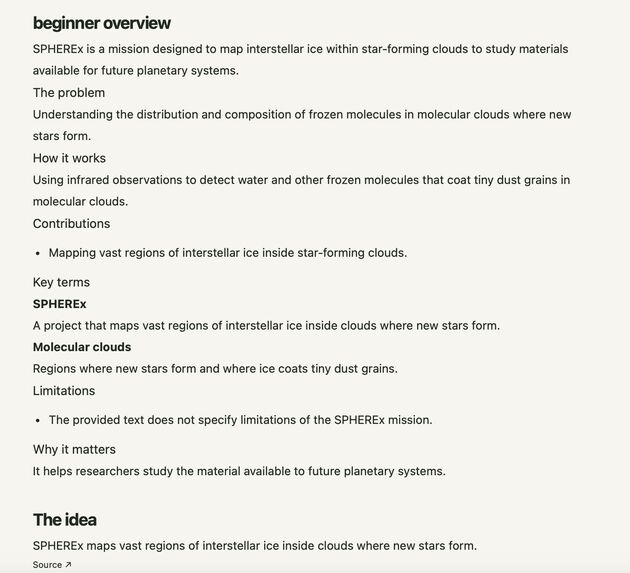
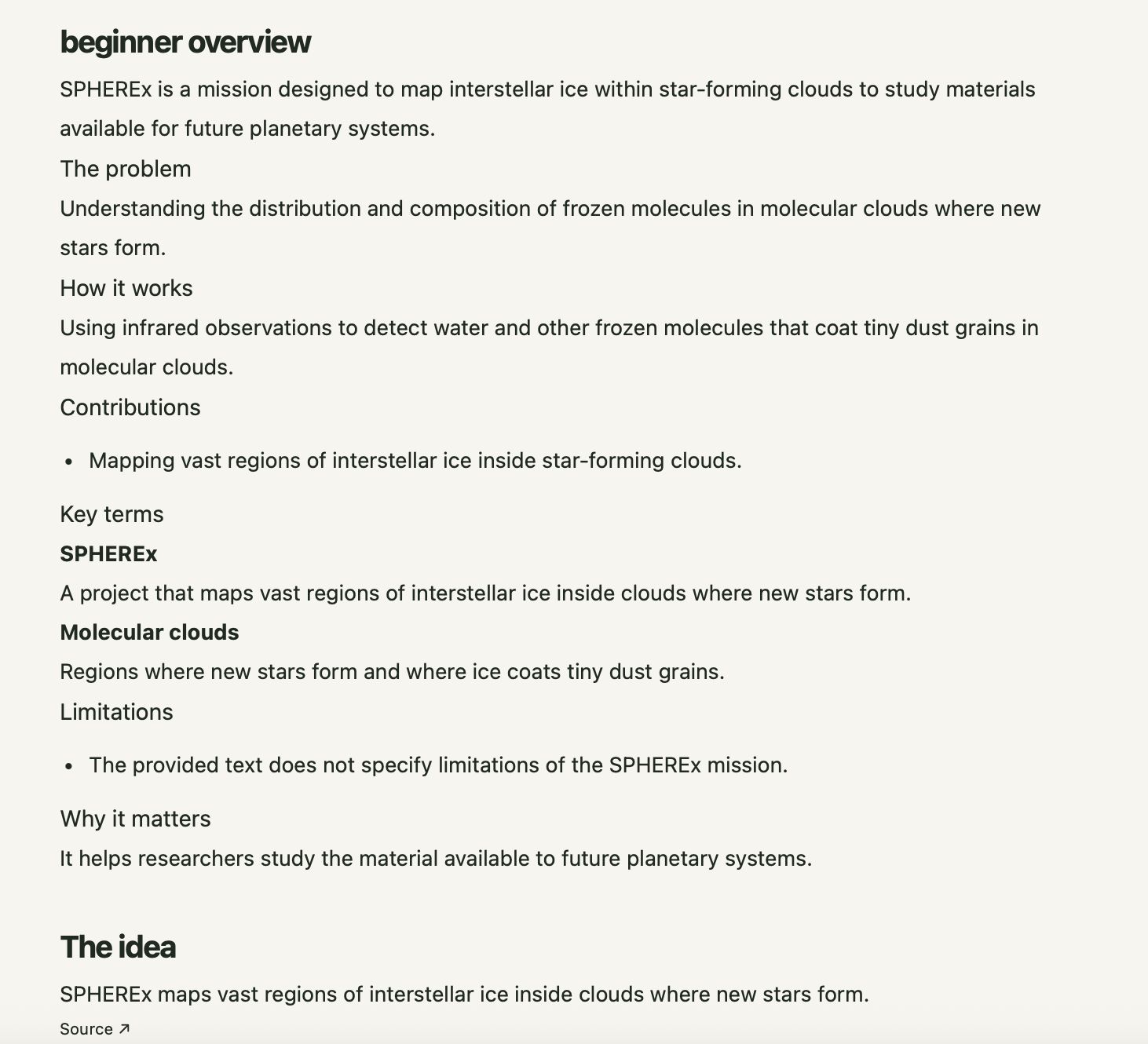
Understand research without the overwhelm, with beginner-friendly explanations, key terms, and source-backed notes.
-
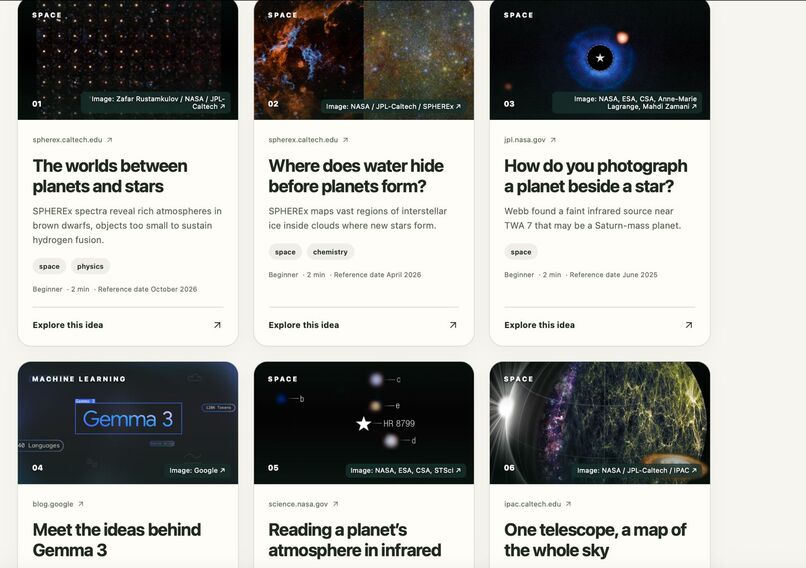
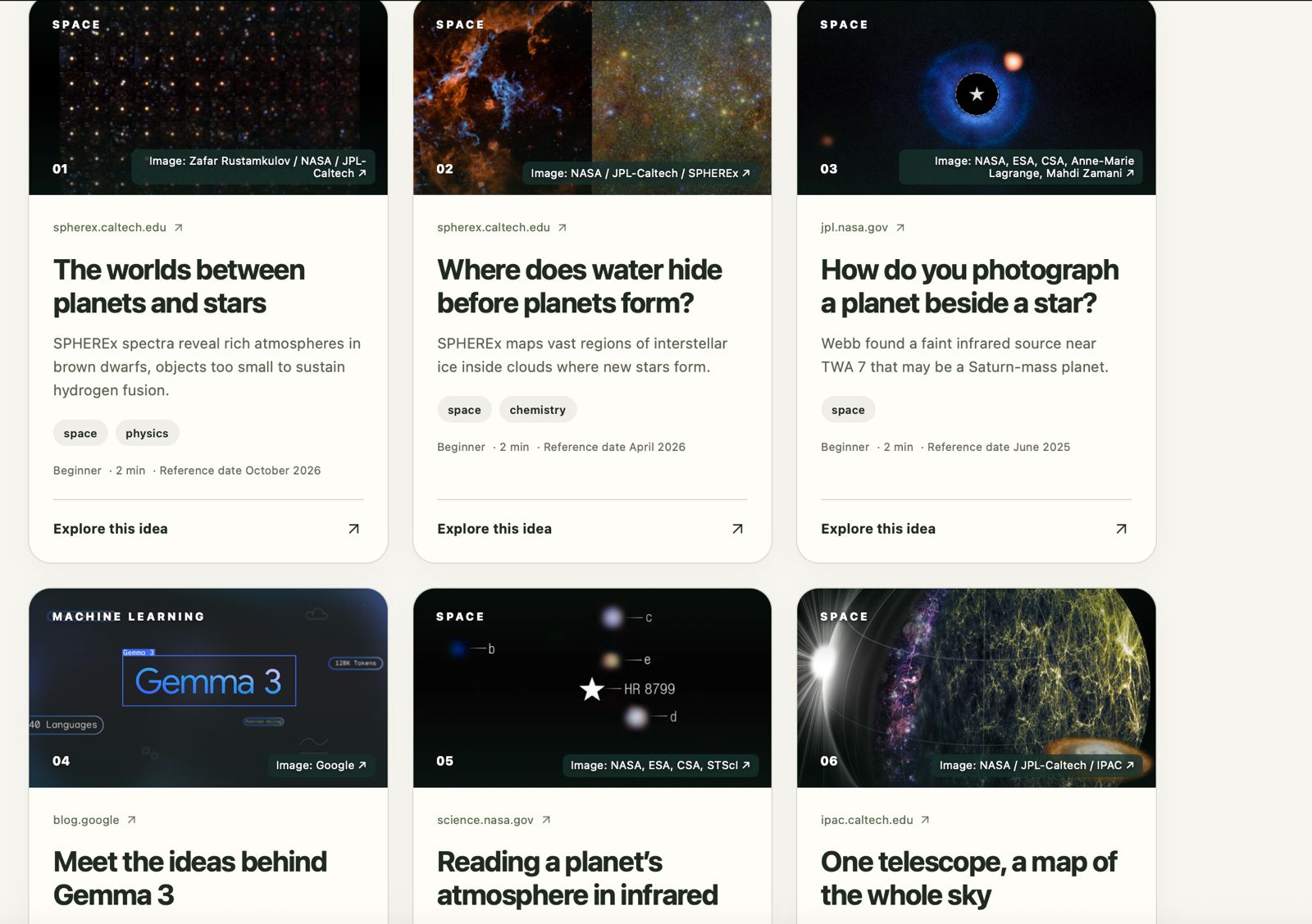
Research made scrollable! Discover interesting papers and breakthroughs through simple, visual cards.
Inspiration
AI is growing so fast, and honestly, keeping up with everything is becoming a task of its own.
As students interested in AI, we're constantly coming across new models, research papers, tools, and breakthroughs. Companies like Google, Microsoft, OpenAI, and Anthropic are always releasing something new, and there's so much interesting research happening that doesn't necessarily make it into mainstream news.
We realized that finding information isn't the only problem. Even when we find an interesting paper, understanding it takes time. And after spending hours reading something, how much of it do we actually remember?
That got us thinking: if Instagram makes it so easy to discover new content, why can't we have something similar for learning about AI?
But we didn't want to stop at just scrolling through updates. We wanted people to actually understand what they're discovering.
That's how FeedForward started, with one simple idea: Discover. Understand. Remember.
What it does
FeedForward is an AI-powered discovery and learning platform designed to make AI research and developments more accessible.
Users can explore a feed of curated AI research and updates, switch between recent developments and timeless research, and read explanations without immediately having to go through an entire technical paper.
But the learning doesn't stop there.
Users can upload their own research PDFs or import papers through arXiv. FeedForward then provides tools to help break down the material, including beginner-friendly explanations, interactive knowledge maps showing how different concepts connect, contextual AI chat, flashcards, and quizzes.
We also added interest-based recommendations, related reading suggestions, and a way to prepare study material for NotebookLM.
The goal is to make AI research feel less intimidating and more interactive, whether you're just getting started or already working in the field.
How we built it
We built FeedForward using React, TypeScript, Vite, and Tailwind CSS for the frontend, with Python and FastAPI handling the backend.
For the discovery experience, we created a responsive feed with curated research articles, source information, reading views, and interest-based ranking. We also integrated previews from verified official RSS feeds to help users discover publisher updates.
For the learning side, we built a pipeline that can extract text from uploaded PDFs using PyMuPDF, process research content, and generate structured learning material through supported AI model providers.
We integrated Ollama and built support for UF's NaviGator Gemma model API for AI-powered explanations, knowledge maps, questions, flashcards, and quizzes.
One of our favorite parts was building the interactive knowledge maps using React Flow. Instead of simply reading a list of concepts, users can explore how ideas connect, select individual nodes, and ask questions based on the surrounding context.
We also built the quiz and flashcard interfaces to make revision more engaging. Firebase integration was added for authentication and user preferences, alongside a local guest experience.
Throughout development, we focused on keeping the learning experience connected, from discovering a paper to understanding it and then testing what you've learned.
Challenges we ran into
One of the biggest challenges was deciding how to turn complicated research papers into something approachable without losing the important technical information.
We didn't want FeedForward to generate vague AI summaries that sound convincing but aren't necessarily accurate. Making explanations source-grounded, keeping track of citations, and validating generated content became an important part of our approach.
Another challenge was connecting multiple features into one smooth experience. PDF extraction, model-generated explanations, knowledge maps, chat, and quizzes all depend on each other, so we had to think carefully about how information moves through the system.
We also ran into challenges with model availability and external integrations. Some features could be tested locally, but verifying them against real hosted AI models required additional access and configuration.
And of course, working within a hackathon timeline meant constantly deciding what mattered most and what we could realistically build.
Accomplishments that we're proud of
We're really proud that we managed to turn a simple idea of an AI news feed into something much more meaningful within a hackathon.
What started as a way to keep up with AI updates became a platform where users can actually learn from what they discover.
One of our biggest accomplishments was bringing so many learning features together in one place. From uploading research papers and getting simpler explanations to exploring interactive knowledge maps, asking contextual questions, and revising through flashcards and quizzes, we wanted the entire experience to feel connected.
We're especially proud of the interactive knowledge maps. Seeing complex research concepts broken down into visual connections was exactly the kind of learning experience we had imagined when we started brainstorming.
Another thing we're happy about is that we didn't just focus on making the app look good. We also worked on source-backed explanations, citations, content validation, and testing to make the system more reliable.
And considering the time constraints of a hackathon, we're proud of how much we were able to build as a team.
More than anything, we're happy that we built something we would genuinely want to use ourselves as AI students and enthusiasts.
What we learned
One thing we realized while building FeedForward is that making information available isn't the same as making it understandable.
There's already so much AI content online. What people need is a better way to discover what's relevant, understand complex ideas, and retain what they've learned.
We also learned a lot about integrating frontend, backend, and AI components into one system. Building interactive visualizations, handling uploaded research documents, validating AI-generated content, and designing around unavailable external services pushed us to think beyond just getting a model to produce an answer.
Most importantly, we learned that AI can be much more useful when it supports the learning process instead of simply giving people more information.
What's next for FeedForward
There's still a lot we'd love to do with FeedForward.
We want to expand our verified research sources, make the discovery feed more dynamic, improve personalization, and strengthen our AI-powered learning features.
We also want to complete live model testing, connect cloud authentication and storage, and make the platform accessible beyond a local development environment.
Eventually, we'd love FeedForward to become a place students, researchers, developers, and AI enthusiasts can come back to regularly, not just to find out what's new, but to genuinely learn something.
Because keeping up with AI should be exciting, not exhausting.
Built With
- fastapi
- firebase
- gemma
- git
- github
- javascript
- node.js
- notebooklm
- ollama
- pydantic
- pymupdf
- pytest
- python
- react
- restapi
- rss
- tailwind
- typescript
- uf-navigator
- vite

Log in or sign up for Devpost to join the conversation.