-
-
Collaboration Catalyst Core Idea
Inspiration
In a world flooded with feedback tools and design critiques, we noticed a gap—collaboration often misses spontaneity, clarity, or actionable impact. That’s where Feedback Loop comes in. We imagined a system where creators and reviewers don’t just exchange comments—they engage in structured dialogue that inspires real improvement. The idea sparked during a late-night hackathon sprint when our team struggled to keep track of layers, timestamps, and scattered notes. We thought: what if the review system knew what you were working on and helped you focus?
What it does
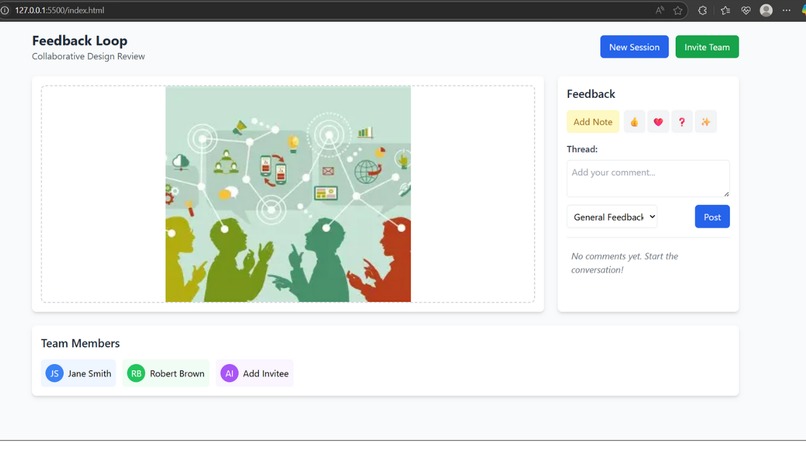
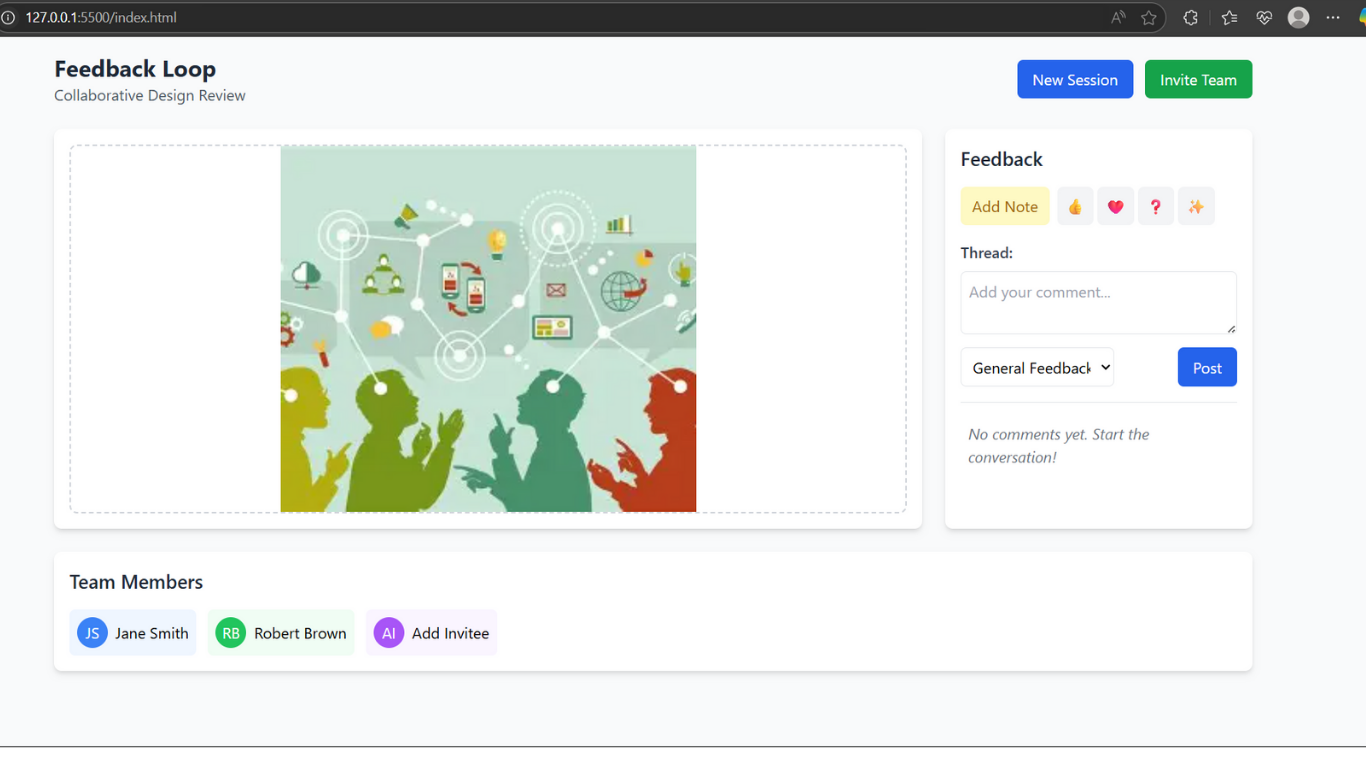
Feedback Loop is a collaborative review add-on that transforms how teams exchange design feedback. Instead of chasing down comments across emails, screenshots, or Slack threads, this tool brings real-time dialogue into the workspace—layer-tagged, timestamped, and fully interactive. Here’s what it enables: 🧠 Smart Review Sessions: Timed feedback blocks with context-aware sticky notes tied to specific elements in the design. 🔔 Notification System: Get alerts when feedback is due, approved, or requires revision, keeping reviewers and creators in sync. 📁 Layer Intelligence: Automatically detects active design layers so reviewers don’t have to guess what they’re commenting on. ✅ Approval Workflow: Reviewers can mark feedback as ‘resolved,’ ‘rejected,’ or ‘needs discussion,’ streamlining decision-making.
How we built it
⚛️ Frontend: Crafted using React Native, we created an intuitive UI with reusable components for sticky notes, layer tags, and timed review blocks. We used Enquirer.js to mock CLI-based control panels during early prototyping. 🔥 Backend & DB: Leveraged Firebase Firestore for storing review metadata—comments, timestamps, layer references—and implemented Cloud Functions to automate notification logic and workflow triggers. 🧠 ML Intelligence (Optional): Integrated Scikit-learn and XGBoost for generating design quality scores and accessibility tips based on visual and structural patterns. The model is lightweight and trained on curated UX datasets. 🗂️ Layer Detection: Developed a custom parser using JavaScript that listens for active layers within Adobe Express and attaches context to each comment dynamically. This helps prevent “review ambiguity.” 🔗 Approval Engine: Used simple status flags and conditional rules to manage approval states—‘resolved,’ ‘rejected,’ or ‘needs discussion’—which sync to the UI instantly. 📊 Analytics Panel: Added optional stats for reviewers—showing feedback density, approval trends, and most-reviewed layers—to help users optimize their review process over time.
Challenges we ran into
🔄 Layer Mapping Puzzles: Integrating real-time layer detection with external design tools turned out trickier than expected. We had to reverse-engineer UI states and simulate interactions using dummy data to test context accuracy. ⚡ Notification Chaos: Early versions bombarded users with redundant alerts. We refined the workflow logic using conditional Firebase triggers and smarter flagging to avoid alert fatigue. 🧪 ML Feature Scope Creep: Our initial vision for AI-powered feedback was overambitious. We had to prioritize lightweight scoring models and gradually trim down what was feasible in 48 hours. 🧰 Cross-Team Feedback: Getting accurate tester feedback from other hackathon teams meant demoing quickly and often—while simultaneously debugging bugs live. Chaotic but energizing! 📱 Mobile UI Glitches: On React Native, some layouts broke on lower-end phones. We fixed viewport scaling with better flexbox choices and dynamic resizing logic late into the final night.
Accomplishments that we're proud of
🚀 Built a Fully Functional Add-On in 48 Hours: From concept to implementation, our team developed a usable, intuitive review tool with cross-platform capabilities—showcasing speed and precision under time pressure.
What we learned
🔍 Power of Context in Feedback: We realized that feedback becomes exponentially more useful when it's tied to specific design layers and timestamps. That insight shaped how we approached UI clarity and comment relevance. ⚙️ Balancing Feature Scope: Hackathons push creativity—but also demand focus. We learned to trim our feature wishlist, prioritize core functionality, and leave room for modular upgrades later. 🛠️ Firebase & React Native Synergy: Working hands-on with real-time databases and dynamic interfaces gave us a deeper understanding of asynchronous data handling and cross-platform challenges. 🤖 Practical ML Integration: Our experience tuning lightweight scoring models taught us that AI doesn’t need to be overcomplicated to add value—it just needs smart training and tight UX alignment. 🌐 The Art of Team Agility: From rapid prototyping to live demos under pressure, we strengthened our collaborative flow—communicating clearly, failing fast, and iterating quickly.
What's next for Feedback Loop
🌍 Design Tool Integration: We plan to build native add-ons for platforms like Adobe Express, Figma, and Canva so reviewers can leave feedback directly in their design environments.
🧠 Advanced ML Suggestions: Expand our scoring engine to assess brand consistency, color harmony, and accessibility across multiple design components—fine-tuning ML outputs with user-driven feedback loops.
🧩 Team Collaboration Features: Add team profiles, reviewer roles, and version tracking so larger teams can coordinate and track iterations more effectively.
📱 Dedicated Mobile App: Launch a standalone mobile companion for feedback sessions on the go—with offline sync and push notifications to ensure nothing gets lost between meetings.
🔗 Neo4j Integration (Experimental): Explore modeling comment relationships and reviewer history using graph-based insights, giving teams smarter visibility into decision trees and feedback cycles.
Built With
- firebase
- firestore
- graph
- javascript
- react
- sdks

Log in or sign up for Devpost to join the conversation.