-
-

-
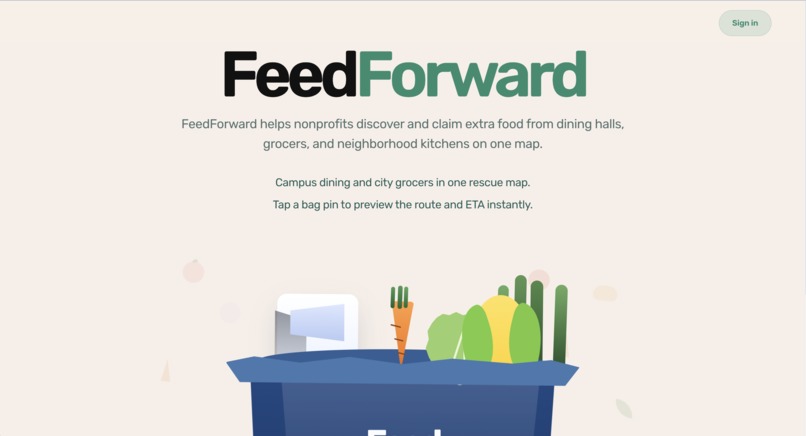
Home Page
-
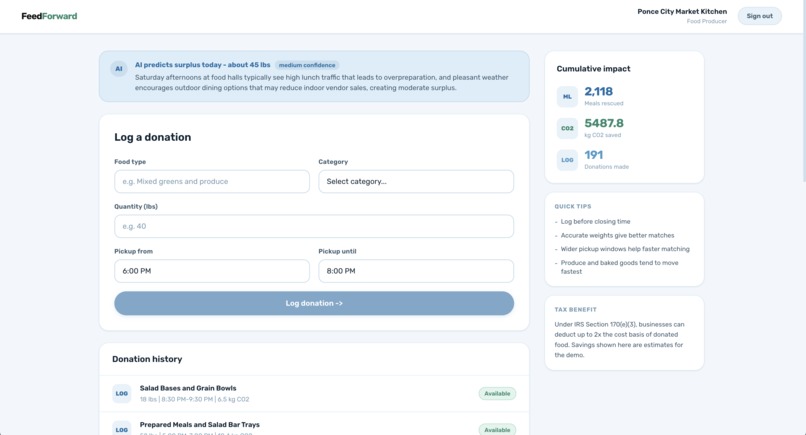
Provider Page
-
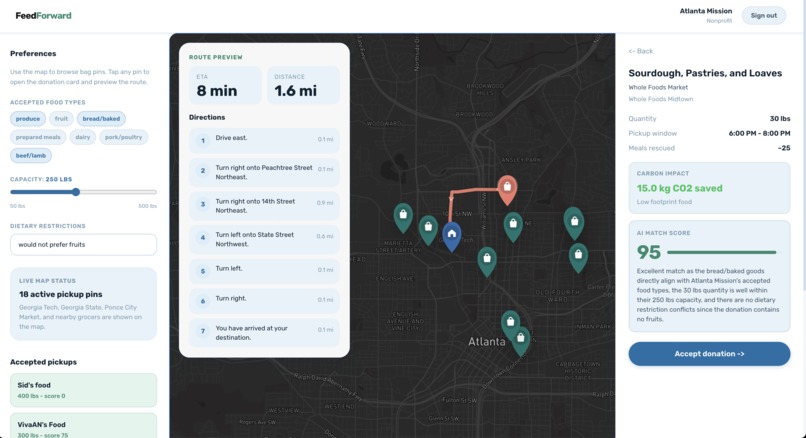
Nonprofit Page

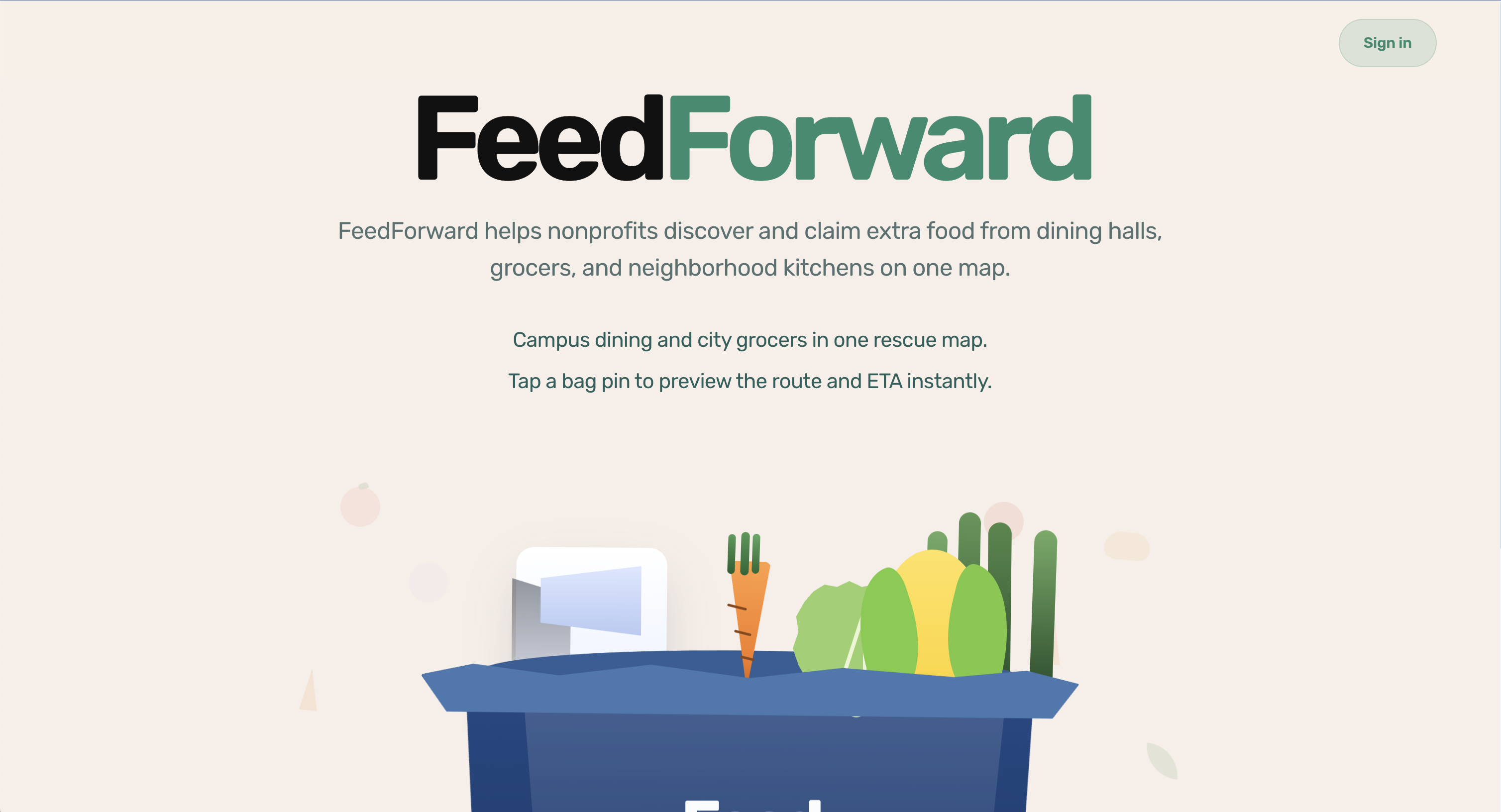
Inspiration
Atlanta throws away millions of pounds of food every year while 1 in 8 residents face food insecurity. We kept coming back to the same question: why is it so hard to connect a restaurant with leftover food to a shelter two miles away? The infrastructure to move food exists, the surplus exists, the need exists. What's missing is a real-time bridge between all three.
What it does
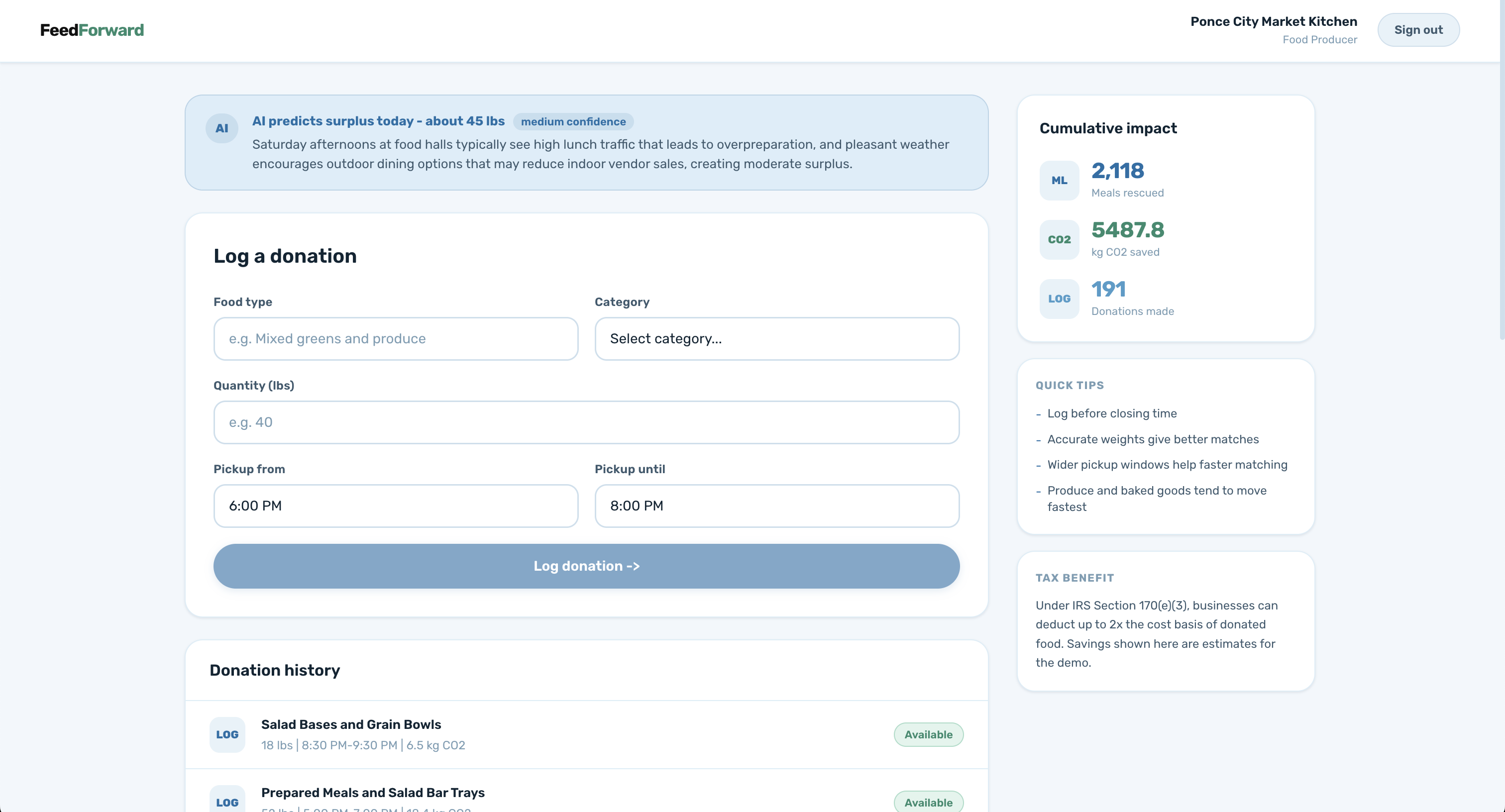
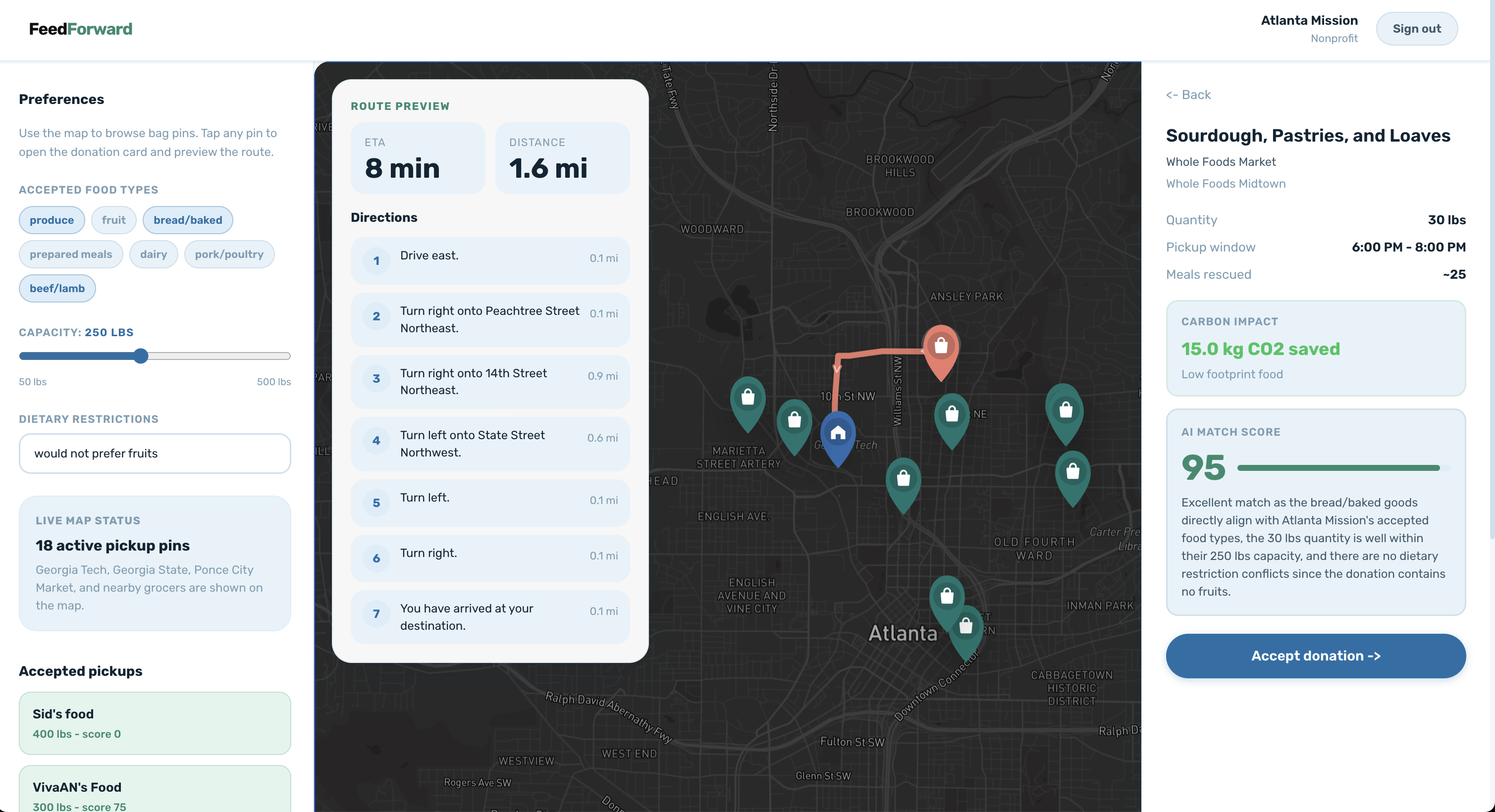
FeedForward lets food producers log surplus donations in under a minute and instantly surfaces them to nearby nonprofits on a live map. An AI scores each donation against the nonprofit's dietary restrictions, food preferences, and capacity, then explains the match in plain English. Once a nonprofit accepts, a real driving route renders on the map so the volunteer knows exactly where to go and how long it will take. Every donation also generates a verified carbon impact and tax deduction estimate for the producer. It creates a seamless experience that incentivizes and promotes producers to donates, and makes it extremely simple for nonprofits to receive these donations with minimal friction.
How we built it
We used Next.js 14 with server-side API routes to connect the frontend to Claude and external data sources. The matching and surplus prediction both run through the Anthropic API, with OpenWeatherMap providing live Atlanta weather context for the prediction model. The map is built on Mapbox GL with the Directions API powering real route calculations between donor and recipient locations. User data, donations, and matches are stored in Supabase, which also handles authentication and role-based access for producer and nonprofit accounts.
Challenges we ran into
Getting the AI match scoring to return meaningfully different results across donations with similar attributes took several prompt iterations. We also had to think carefully about what data the nonprofit side actually needs to see versus what clutters the experience. Designing the producer flow so that logging a donation feels fast and rewarding rather than like a compliance task was harder than expected.
Accomplishments that we're proud of
The real-time impact cards that update as a producer fills in the form turned out to be one of the most compelling parts of the product. Seeing the CO2 saved and tax deduction calculate live makes the value of donating feel tangible and immediate rather than abstract. We're also proud of how the map-first nonprofit experience came together, it communicates availability and urgency in a way that a list never could.
What we learned
Framing AI output for non-technical users matters as much as the accuracy of the output itself. A match score of 91 means nothing without a one-sentence explanation in plain language. We also learned that the financial incentive side of food donation is genuinely under-explained to producers, and surfacing the IRS deduction in context changed how the product felt entirely.
What's next for Feed Forward
The most important next step is replacing localStorage with a real database so donations and matches persist across sessions and users. From there, SMS or push notifications for producers when they likely have surplus would make the proactive nudge actually useful in practice. We also want to bring in real nonprofit and restaurant accounts across Atlanta to test whether the matching logic holds up against real-world dietary and capacity constraints.
Built With
- anthropic
- api
- mapbox
- next.js
- openweatherapi
- react
- supabase
- tailwind
- typescript

Log in or sign up for Devpost to join the conversation.