-
-
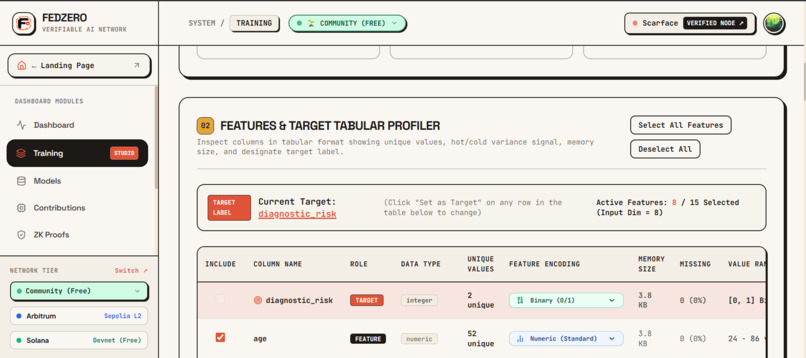
features page
-
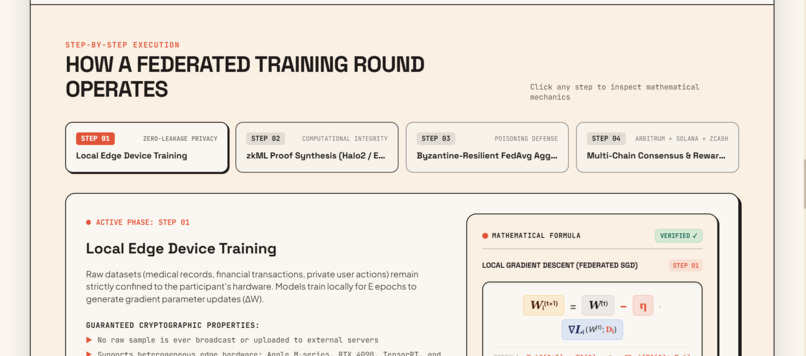
Fedrated learning
-
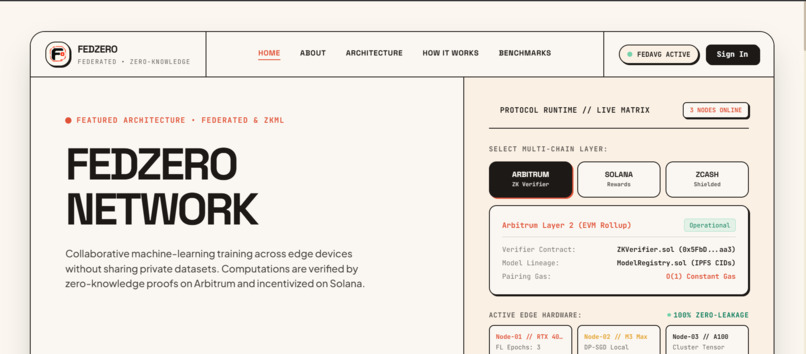
landing page
-
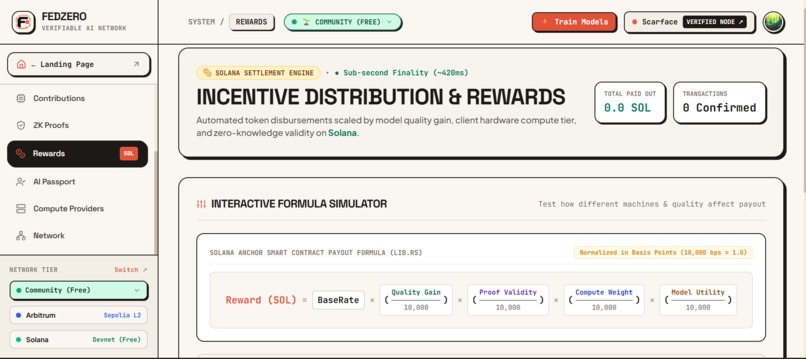
sol coins
-
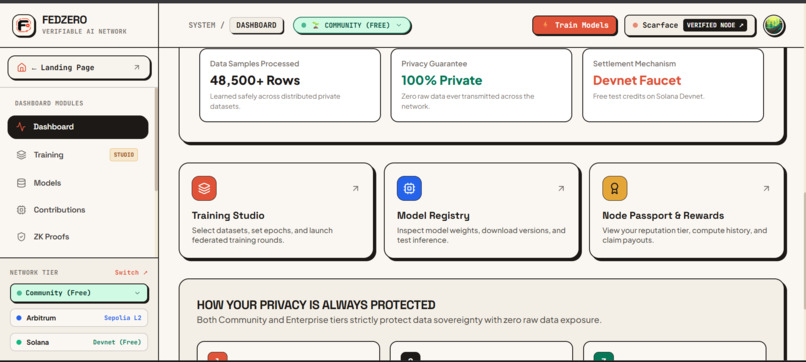
training page
-
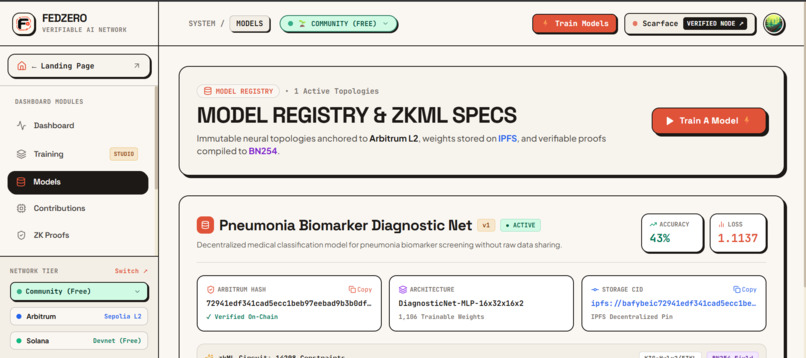
ZKML proof with machine record
-
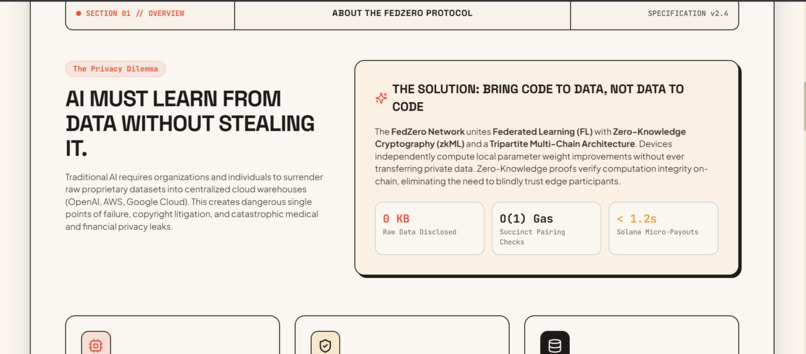
blockchain description
-
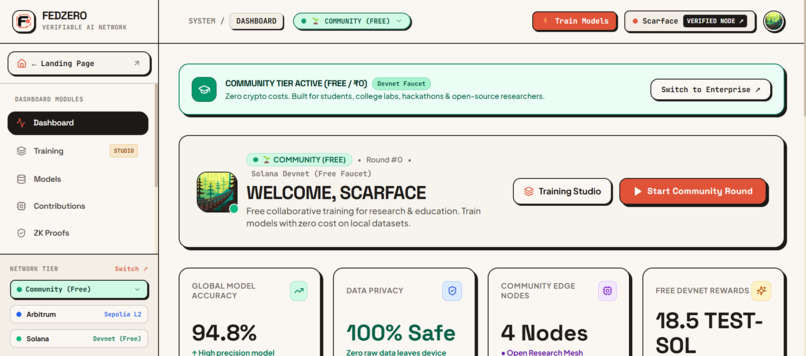
Host model dashnoard
-
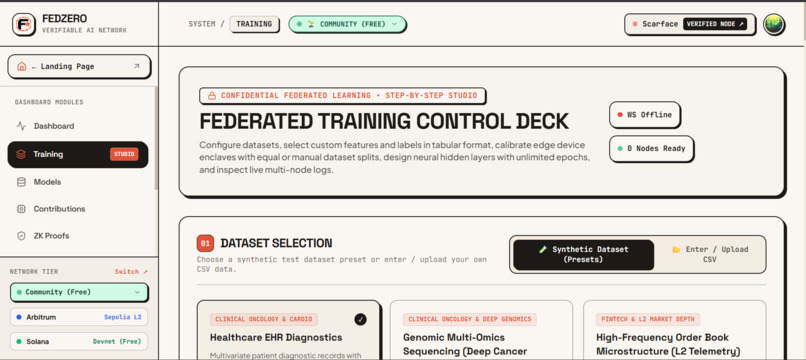
federated module
-
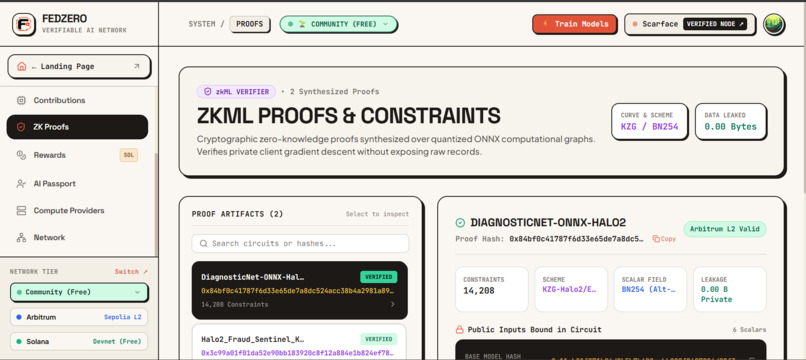
ZKML proof
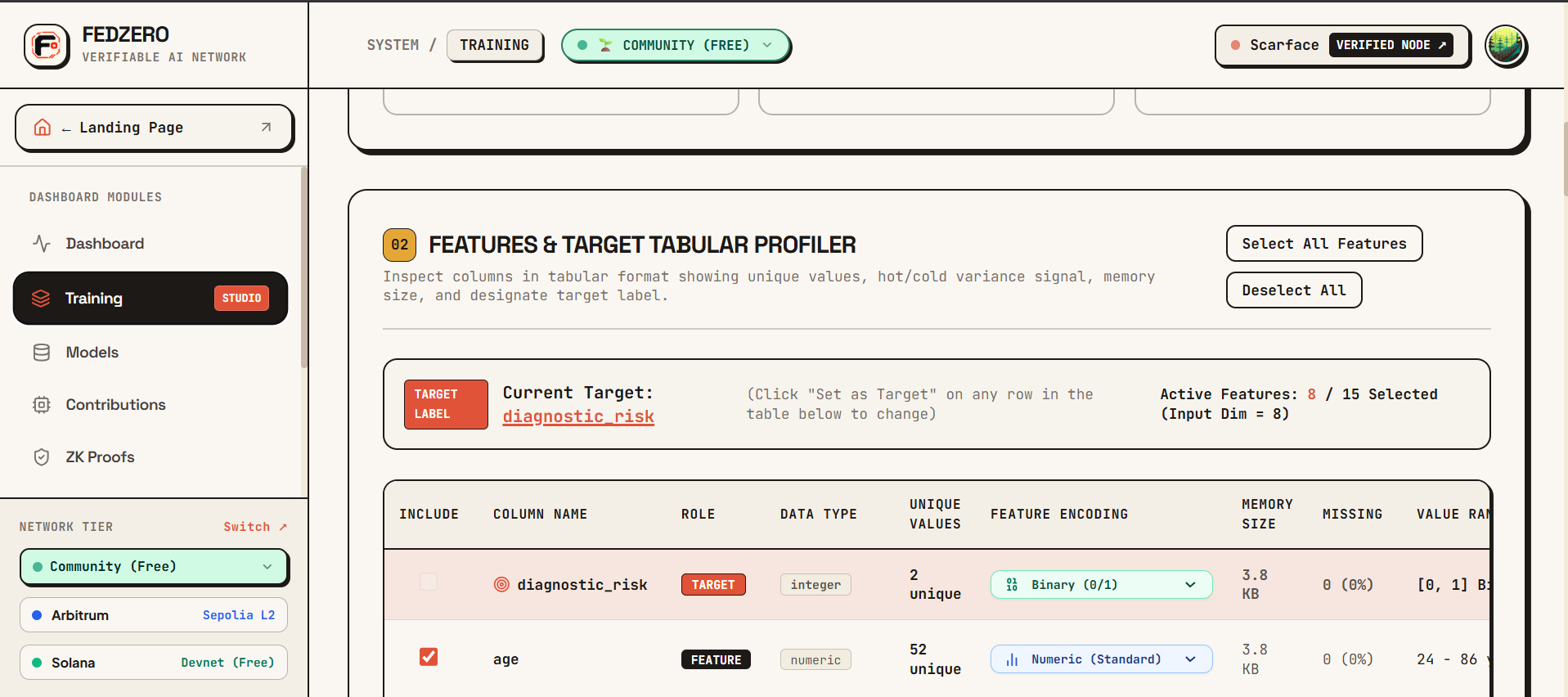
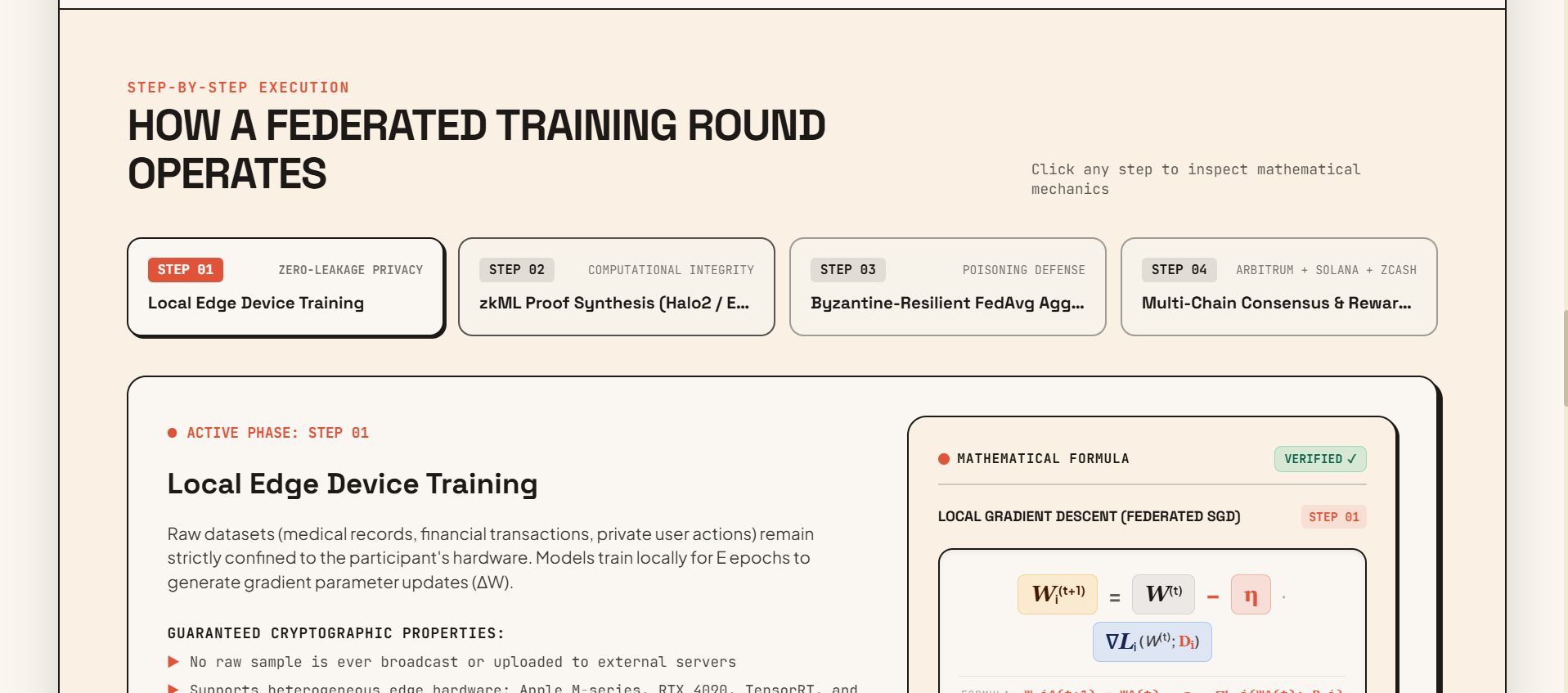
Inspiration
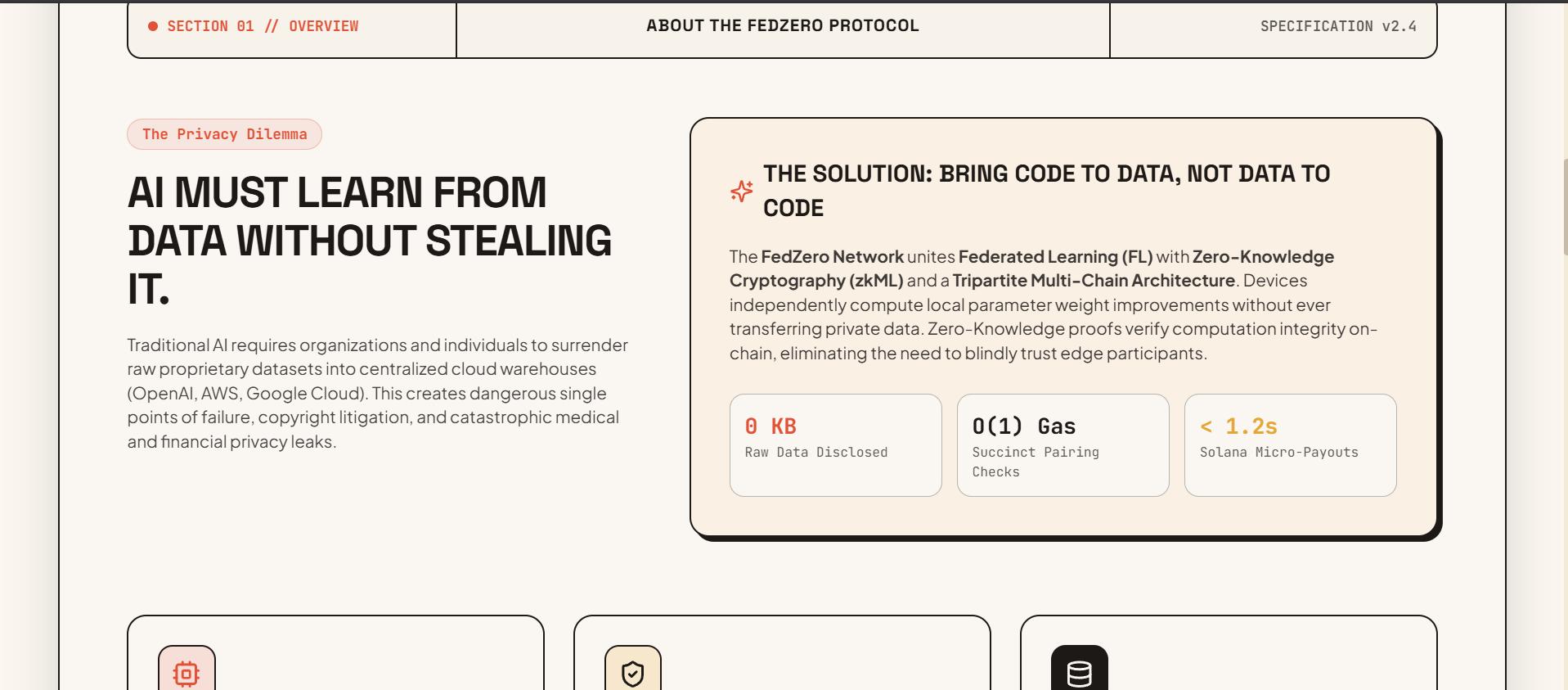
In domains like healthcare, genomics, and financial intelligence, the most valuable training data is trapped in strict regulatory silos (HIPAA, GDPR) and proprietary databases. Centralizing raw data into single cloud servers creates catastrophic privacy liability and single points of failure.
While Federated Learning allows collaborative training without sharing raw data, real-world edge data is unstructured and noisy—messy doctor notes, clinical case summaries, and raw transaction logs cannot directly feed numerical neural networks. Furthermore, traditional federated networks cannot prove whether a participating node honestly trained on valid data or submitted malicious, poisoned weights.
We built FedZero to solve both bottlenecks: coupling NVIDIA Nemotron open-source foundation models hosted on Nebius Token Factory for intelligent edge data processing and governance, with Zero-Knowledge Machine Learning (zkML) and dual-chain cryptographic settlement.
What it does
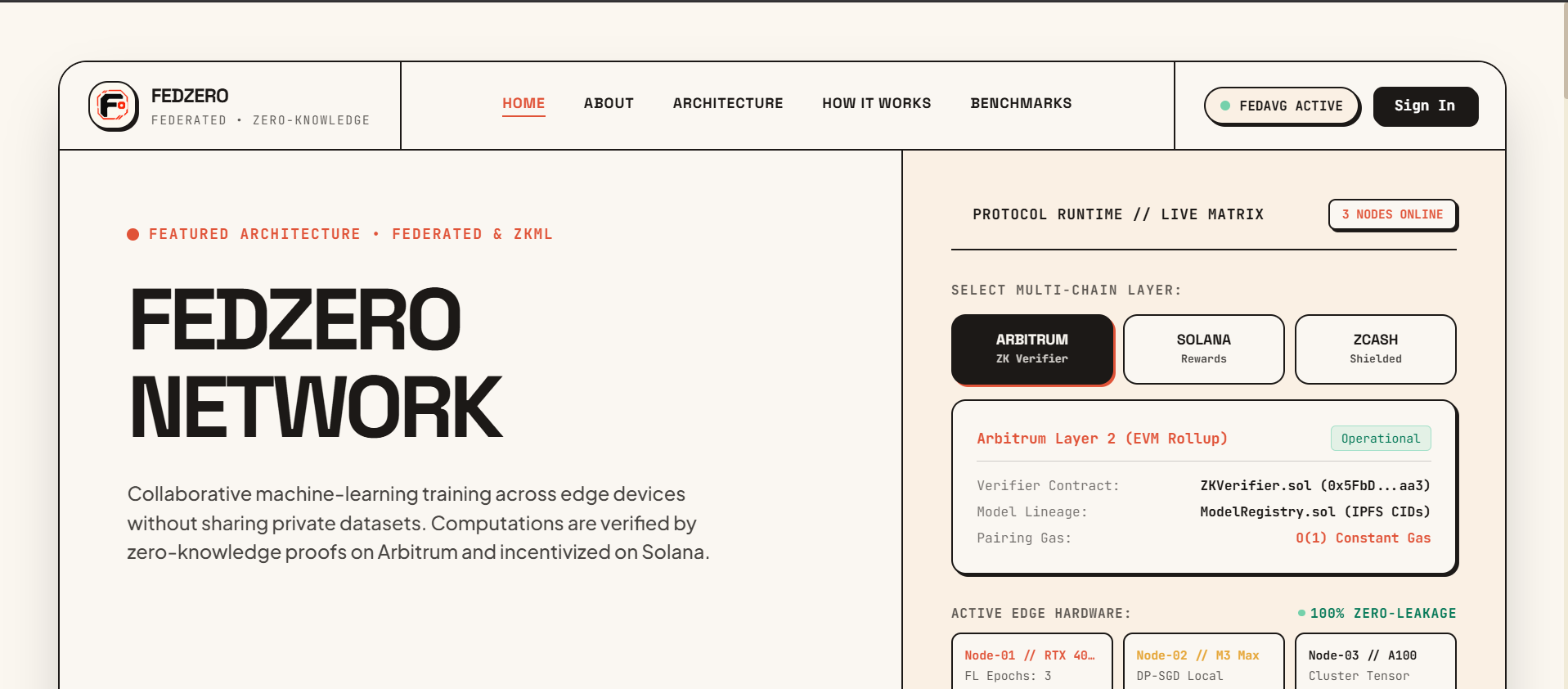
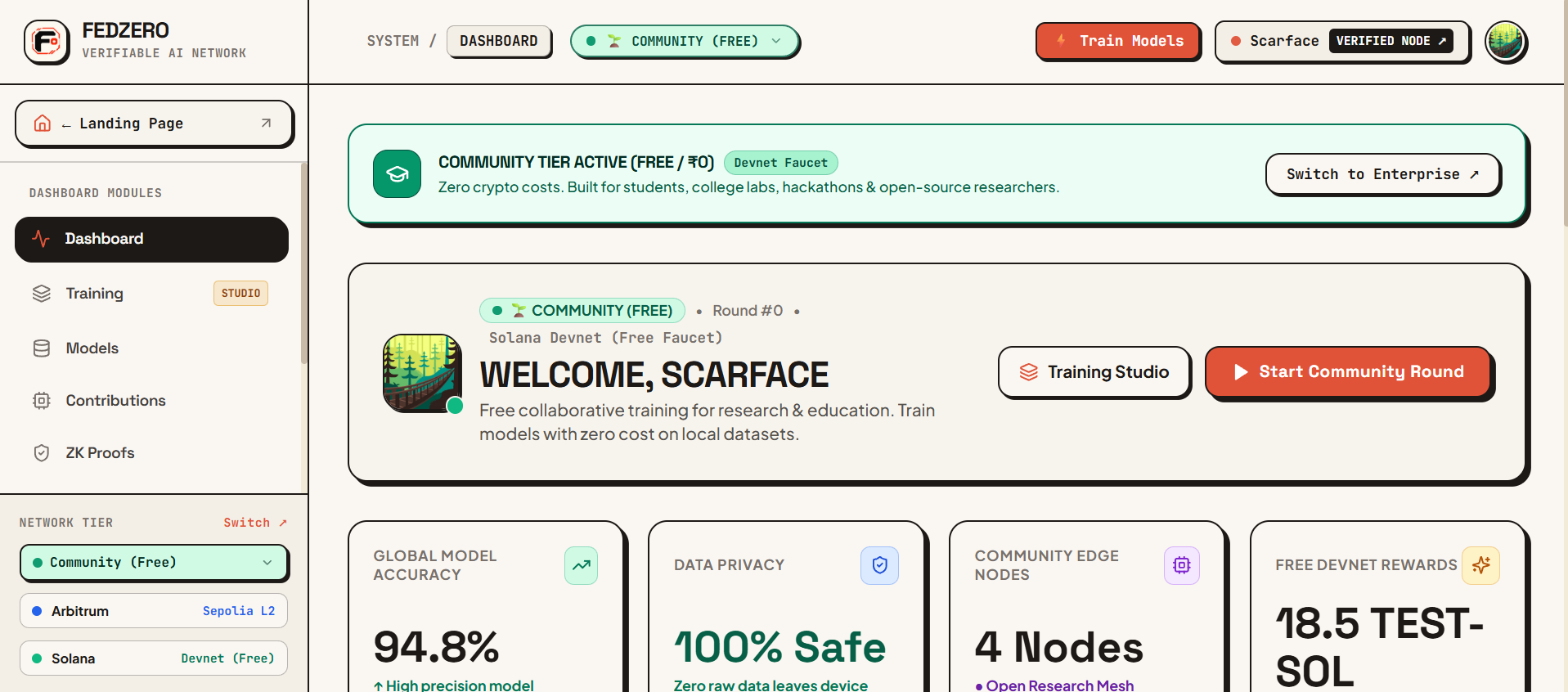
FedZero is a decentralized, verifiable federated learning framework where sensitive private data never leaves contributor devices:
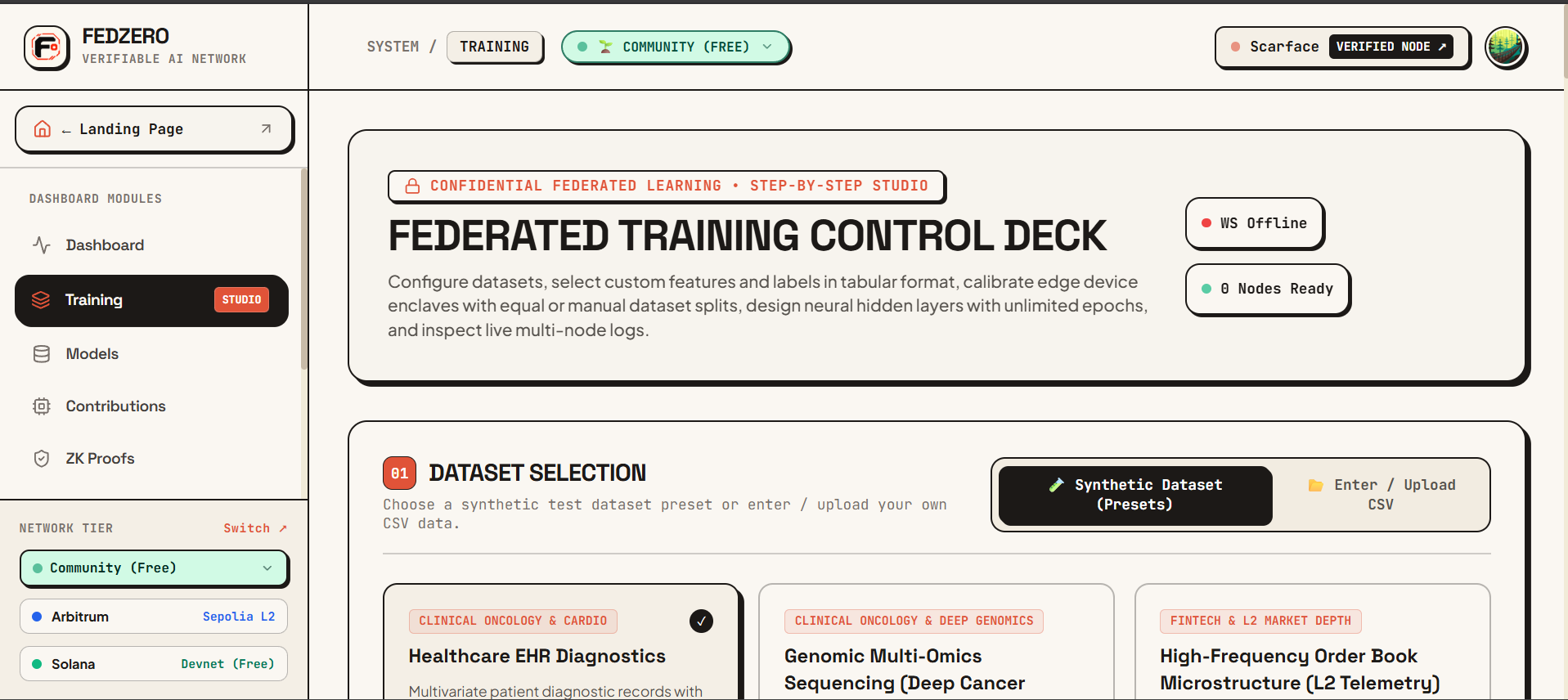
Intelligent Edge Data Processing with NVIDIA Nemotron: Raw, unstructured clinical case notes and logs enter the edge node daemon (fedzero_worker.py). Using nvidia/nemotron-3-nano and nvidia/nemotron-3-super served on Nebius Token Factory, the node scrubs all Protected Health Information (PHI/PII) and extracts standardized, normalized 16-dimensional biomarker feature tensors. Privacy-Preserving Local Training: The edge worker executes local Stochastic Gradient Descent (SGD) exclusively on the structured local tensors, computing weight update deltas ( Δ 𝑊 𝑖 ΔW i
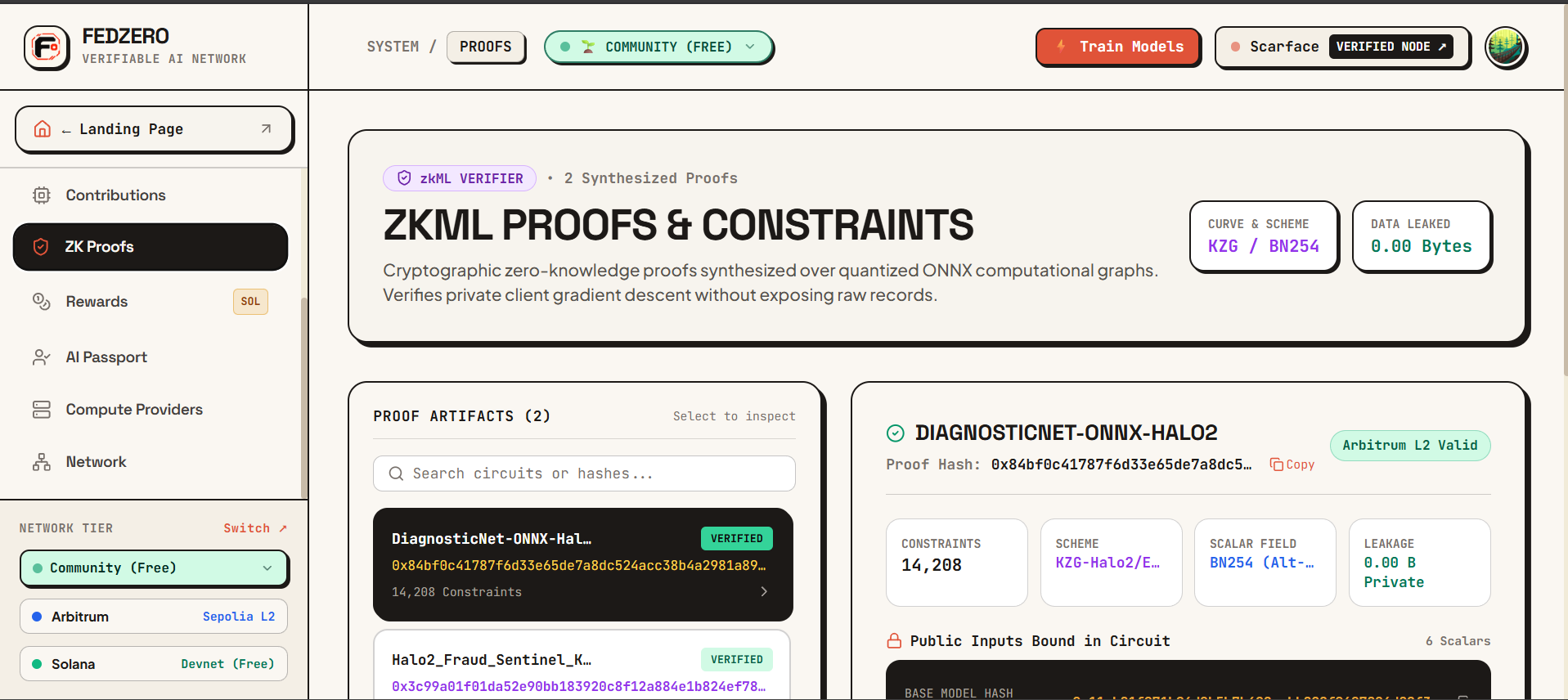
). Raw records are strictly quarantined on-premise. Zero-Knowledge Computational Integrity (zkML): The node generates a Halo2 / KZG zero-knowledge proof ( 𝜋 𝑖 π i
) with over 14,000 arithmetic constraints: Verify ( vk , 𝜋 𝑖 , 𝑥 ⃗ pub
)
1 ⟺ Δ 𝑊
𝑖
SGD ( 𝑊 0 , 𝐷 𝑖 , 𝜂 ) Verify(vk,π i
, x pub
)=1⟺ΔW i
=SGD(W 0
,D i
,η) This mathematically proves that local gradients followed exact backpropagation rules without revealing the underlying data. Byzantine Resilience & Nemotron-3-Ultra Audit: The central coordinator aggregates updates using outlier-resistant FedAvg (L2 norm clipping at 𝜏
clip
4.0 τ clip
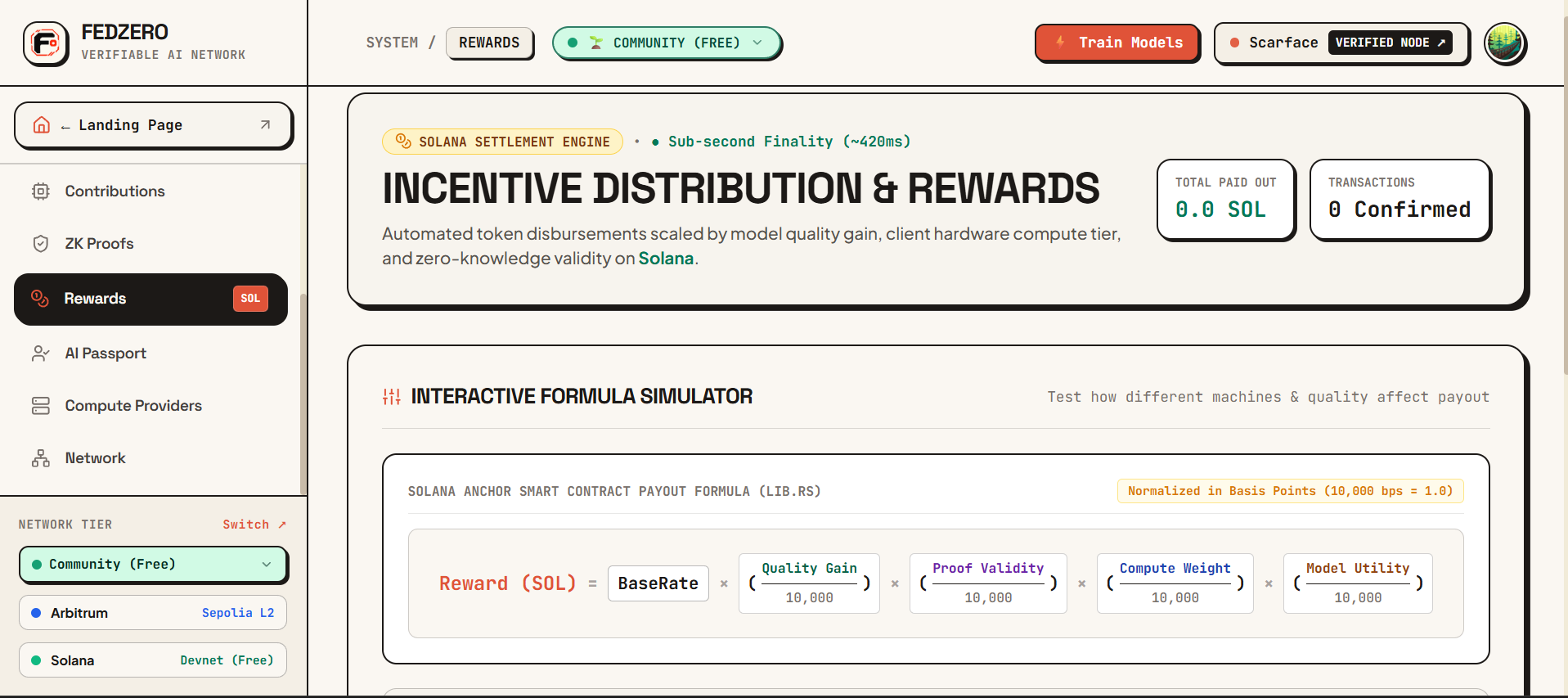
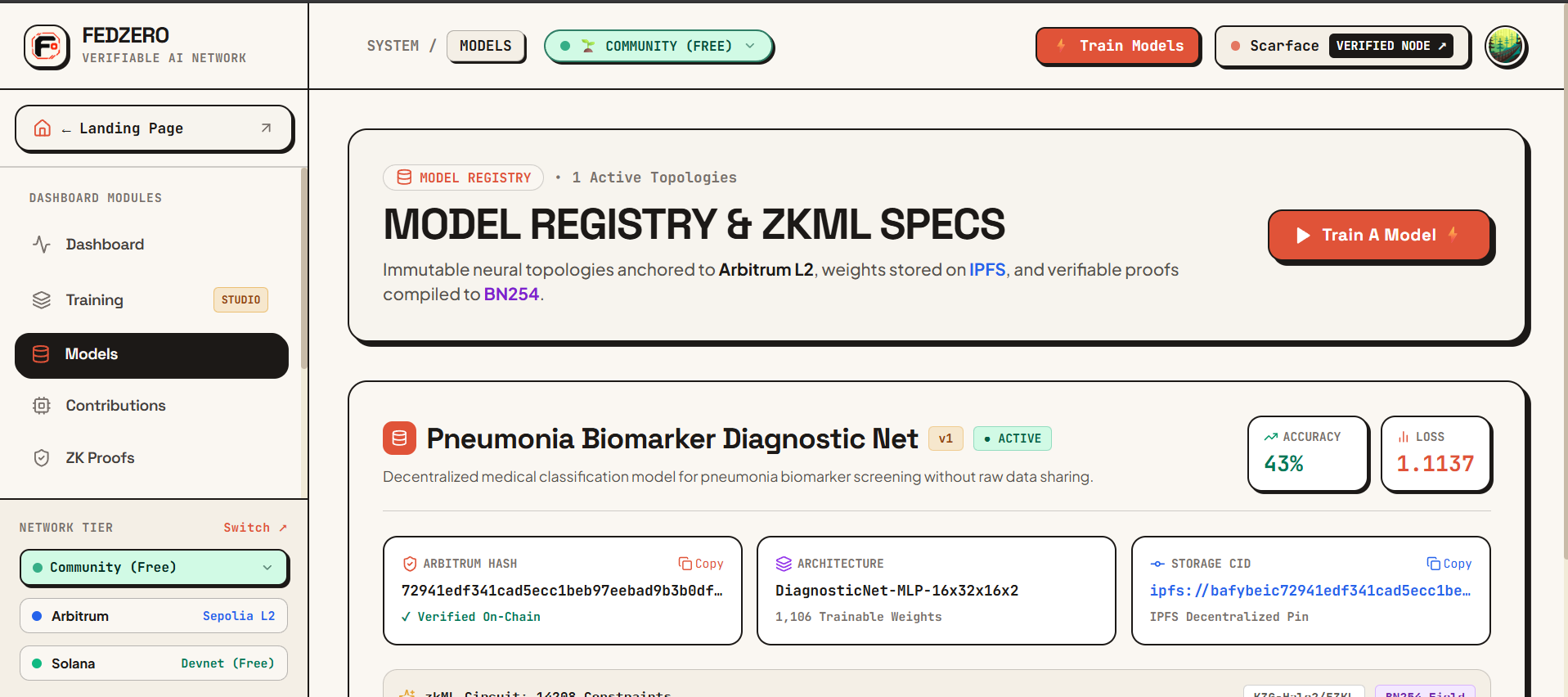
=4.0). When anomalous gradients are flagged, nvidia/nemotron-3-ultra on Nebius Token Factory performs automated causal reasoning to differentiate between legitimate domain variance and adversarial poisoning attacks. Multi-Chain Verification & Settlement: Arbitrum (EVM L2): ZKVerifier.sol validates SNARK pairing checks on-chain, while ModelRegistry.sol immutably tracks model version hashes and IPFS storage CIDs. Solana: The Anchor reward program executes dynamic micro-incentive disbursements based on gradient quality, hardware capacity, and verified proof scores.
How we built it
AI & Cloud Infrastructure: Powered by Nebius Token Factory (https://api.tokenfactory.us-central1.nebius.com/v1/), routing calls dynamically across NVIDIA open-source models: nvidia/nemotron-3-nano: Rapid, cost-effective edge extraction and schema formatting. nvidia/nemotron-3-super: Deep domain entity extraction from clinical narratives. nvidia/nemotron-3-ultra: High-level reasoning for Byzantine audits and consensus reports. Edge Worker Daemon (fedzero_worker.py): A cross-platform native Python daemon featuring automatic hardware detection (PyTorch CUDA GPU > NumPy CPU > Pure Python) and zero pip setup overhead. Backend & Relayer: FastAPI coordinator with asynchronous WebSocket broadcasting for live loss decay, accuracy curves, and node telemetry. Frontend App: Built on Next.js 14 App Router, Tailwind CSS, and interactive SVG pipeline studios. Cryptographic Engine: ONNX computational graph compilation with Halo2 / KZG pairing circuits. Challenges We Ran Into Structuring Edge Ingestion: Prompting foundation models to strictly output deterministic, normalized float arrays without conversational chatter required engineering robust JSON-schema constraints for Nemotron on Nebius Token Factory. Byzantine Outlier Separation: Distinguishing between non-I.I.D. client distribution skew and deliberate weight-poisoning attacks required combining geometric L2 norm thresholds with Nemotron 3 Ultra's semantic analysis. Zero-Dependency Edge Compatibility: Ensuring fedzero_worker.py could run out-of-the-box on resource-constrained edge machines without complex CUDA or pip setup issues while seamlessly calling Nebius cloud endpoints.
Challenges we ran into
Structuring Edge Ingestion: Prompting foundation models to strictly output deterministic, normalized float arrays without conversational chatter required engineering robust JSON-schema constraints for Nemotron on Nebius Token Factory. Byzantine Outlier Separation: Distinguishing between non-I.I.D. client distribution skew and deliberate weight-poisoning attacks required combining geometric L2 norm thresholds with Nemotron 3 Ultra's semantic analysis. Zero-Dependency Edge Compatibility: Ensuring fedzero_worker.py could run out-of-the-box on resource-constrained edge machines without complex CUDA or pip setup issues while seamlessly calling Nebius cloud endpoints.
Accomplishments that we're proud of
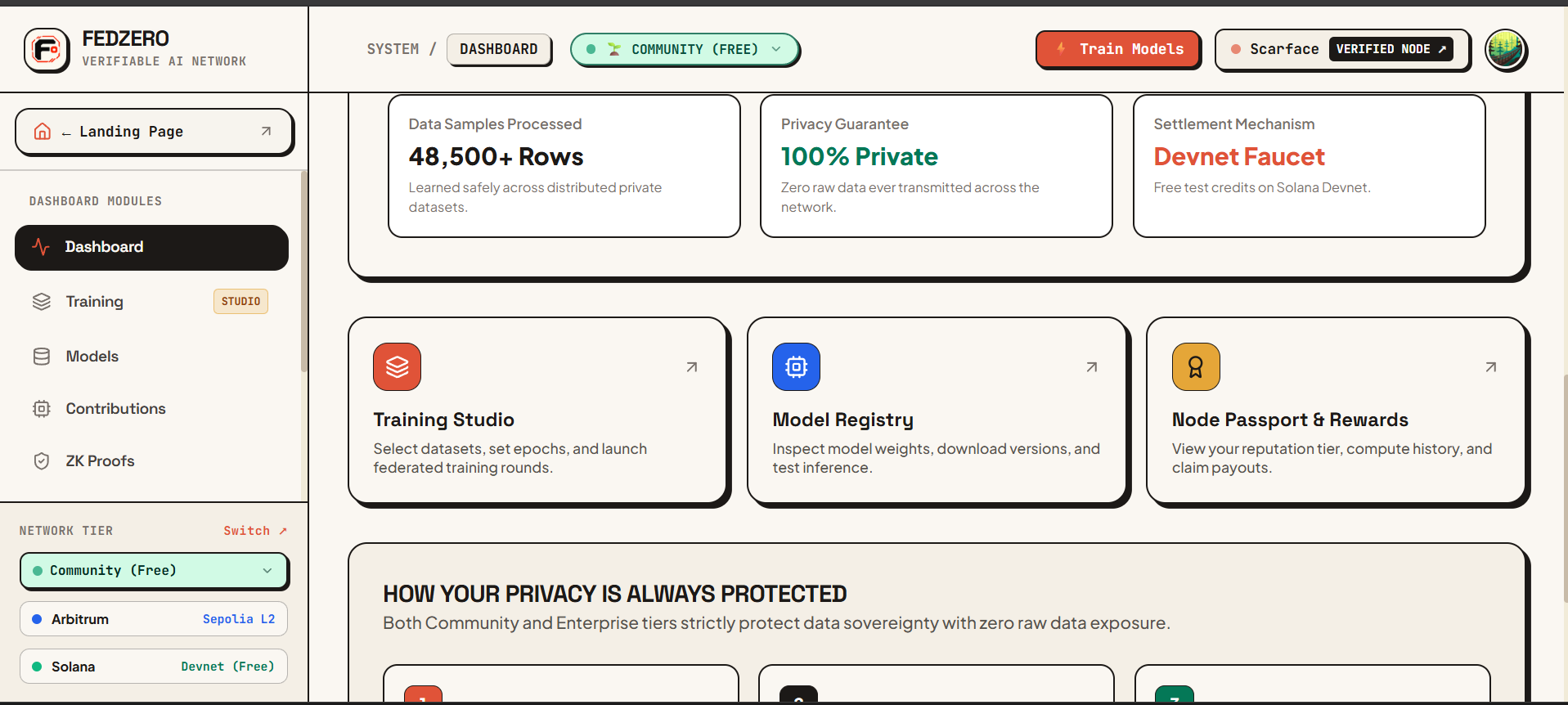
Zero raw data leakage: complete mathematical separation between private edge data and global model weights. Multi-tier NVIDIA model deployment on Nebius Token Factory: balancing latency and credit efficiency by delegating edge processing to nemotron-3-nano/super and deep governance reasoning to nemotron-3-ultra. Full end-to-end pipeline: from raw clinical text ingestion on physical laptops to on-chain zk-proof verification and Solana micro-rewards.
What we learned
Nebius Token Factory's speed & OpenAI API parity: Transitioning from local models to Nebius-hosted NVIDIA models reduced node deployment complexity from gigabytes of local weights to lightweight API calls with sub-second response times. Nemotron's Precision: NVIDIA Nemotron models exhibit exceptional fidelity in structured numerical extraction and clinical reasoning compared to general-purpose LLMs.
What's next for FedZero
Extending federated training to decentralized LoRA adapter fine-tuning for open-source NVIDIA foundation models directly across edge clusters. Deploying coordinator aggregation as a distributed Nebius Serverless Job for asynchronous, planetary-scale model training rounds. Adding native multi-modal support (DICOM medical imaging + pathology slides) processed through NVIDIA vision-language models on Nebius.
Built With
- arbitrum
- fastapi
- federated-learning
- nebius
- nebius-token-factory
- nemotron
- next.js
- nvidia-nemotron
- onnx
- python
- pytorch
- solana
- tailwindcss
- typescript
- websockets
- zero-knowledge-proofs
- zkml


Log in or sign up for Devpost to join the conversation.