-
-
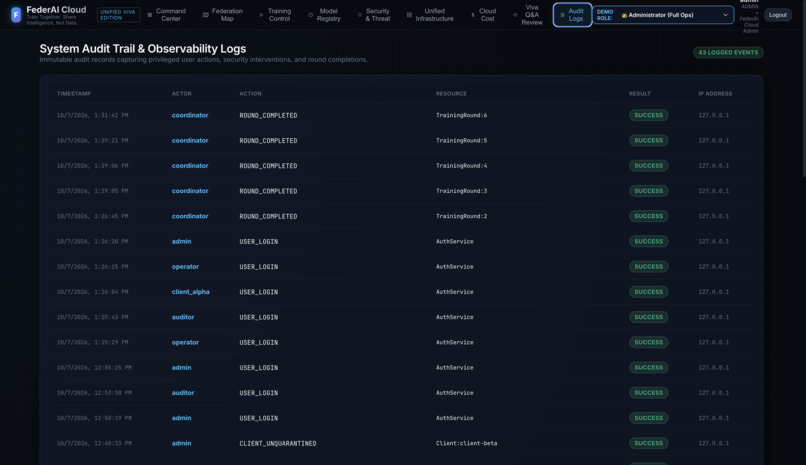
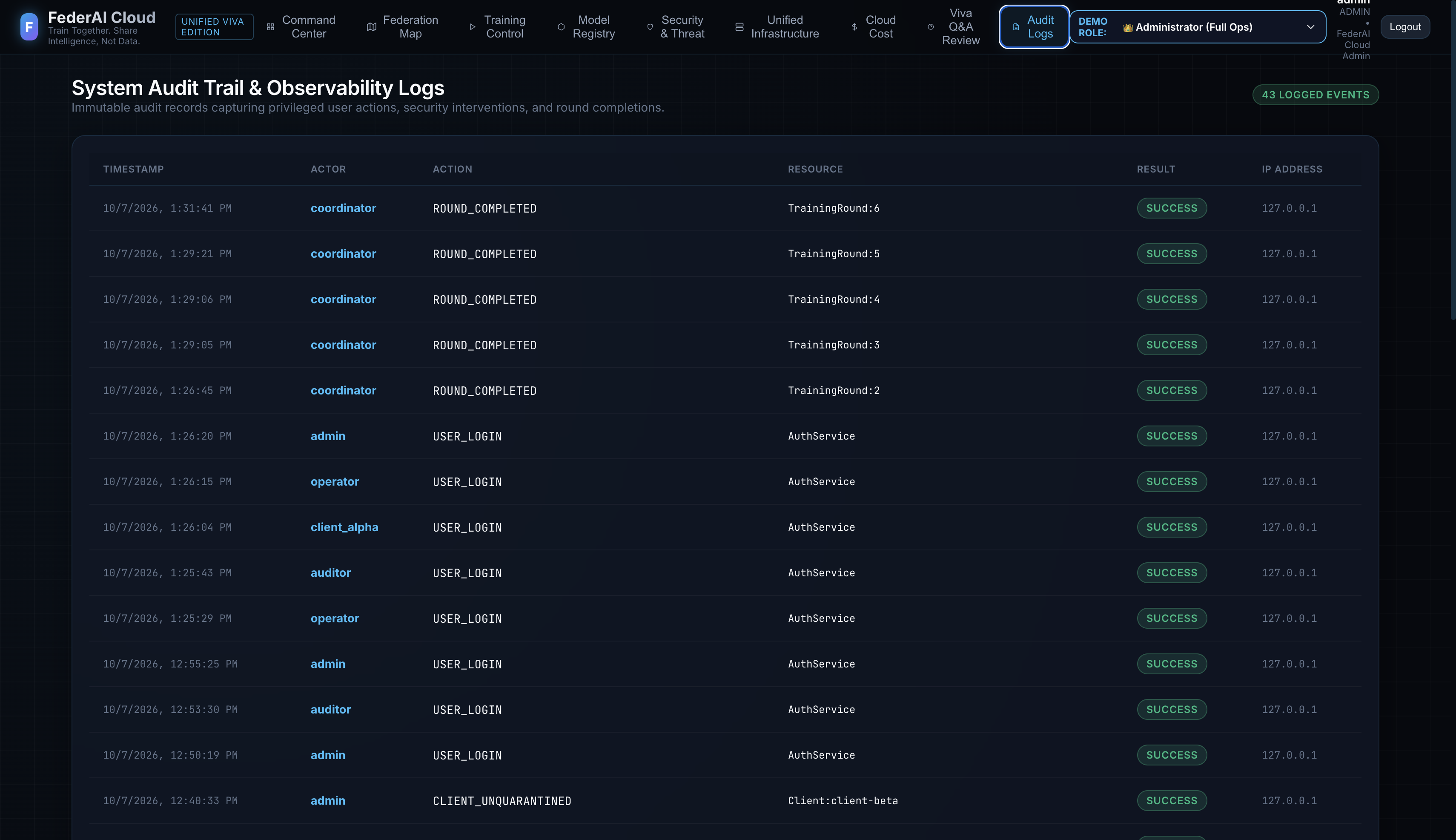
AUDIT LOGS
-
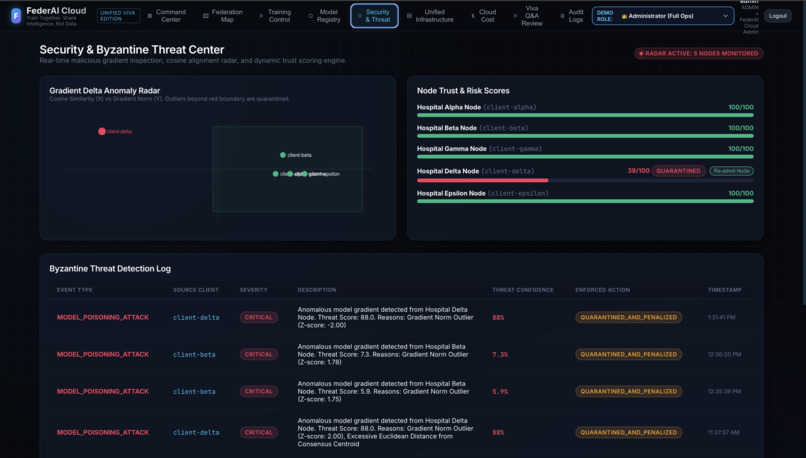
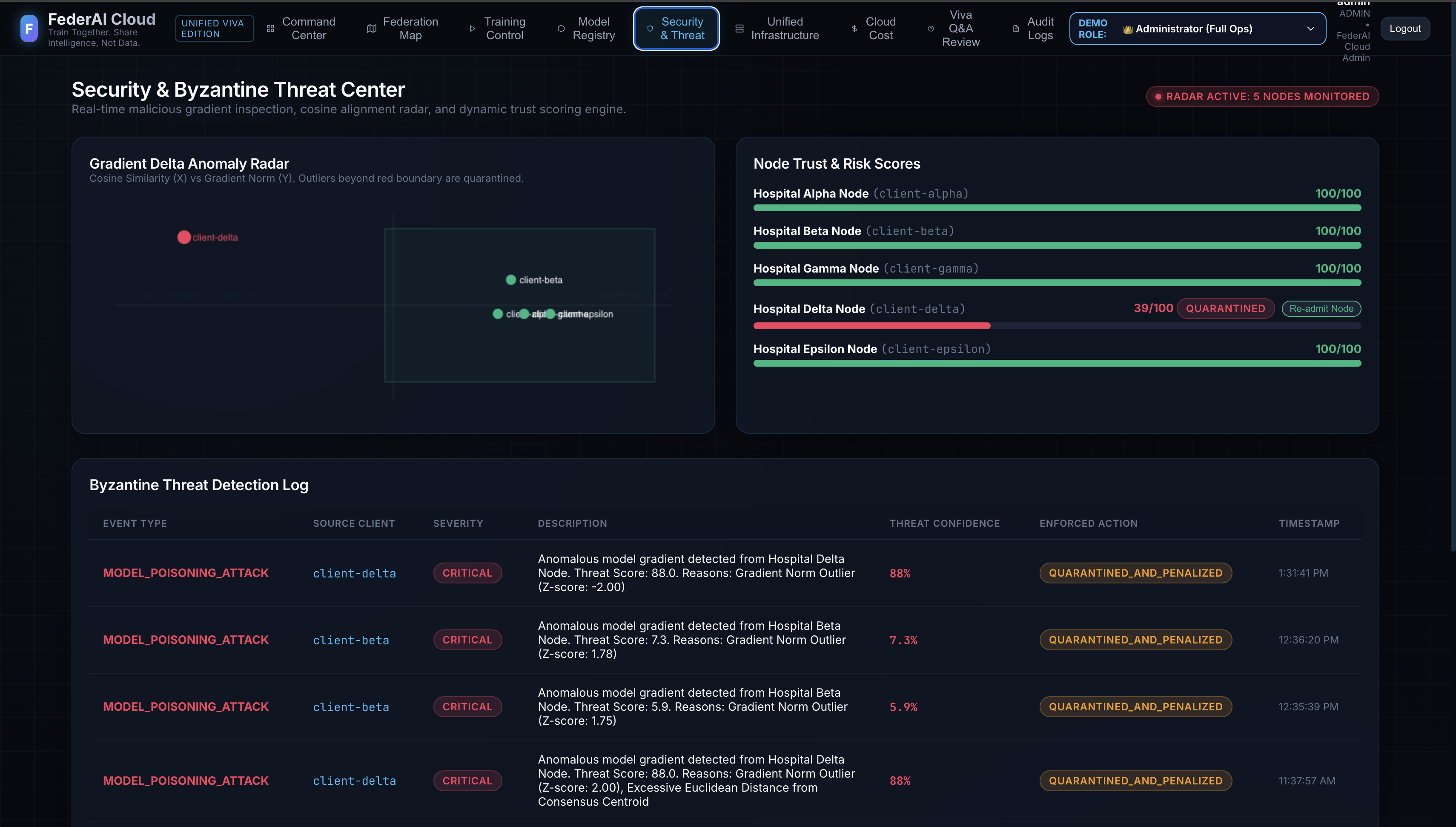
SECURITY AND THREAT HISTORY
-
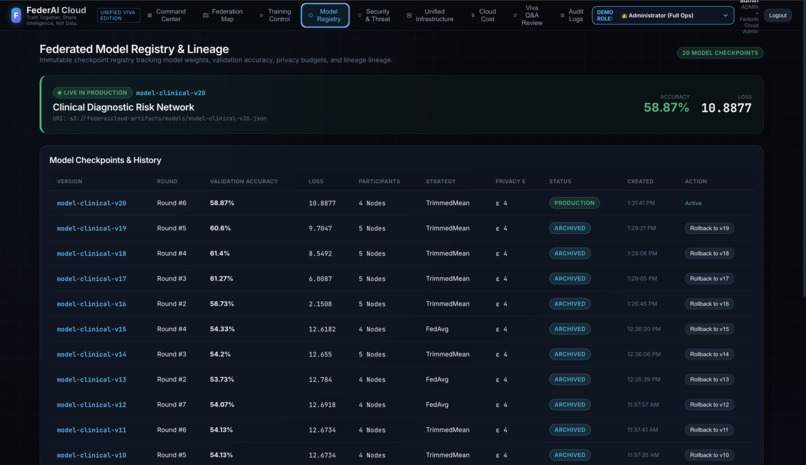
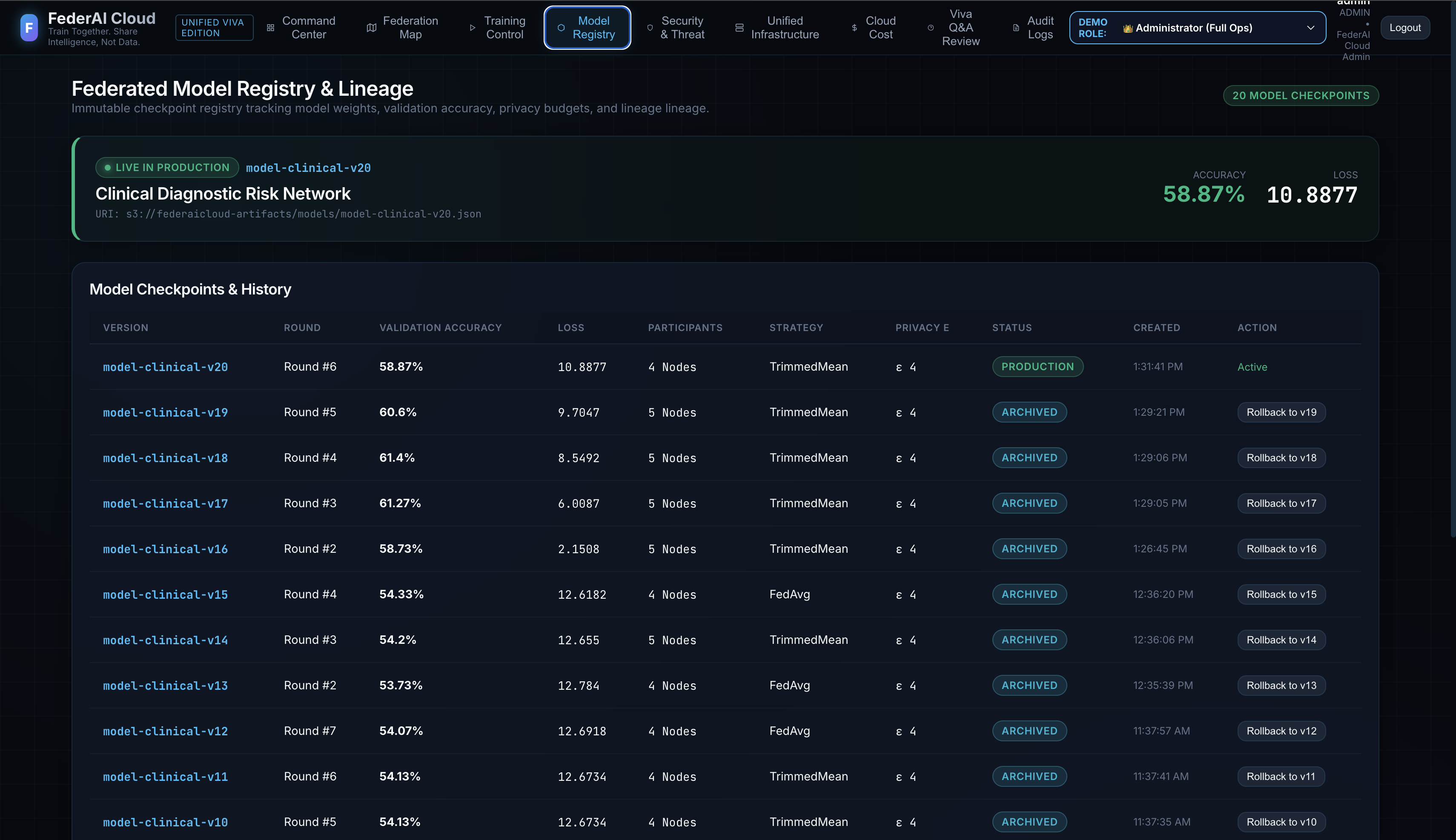
MODEL REGISTORY HISTORY
-
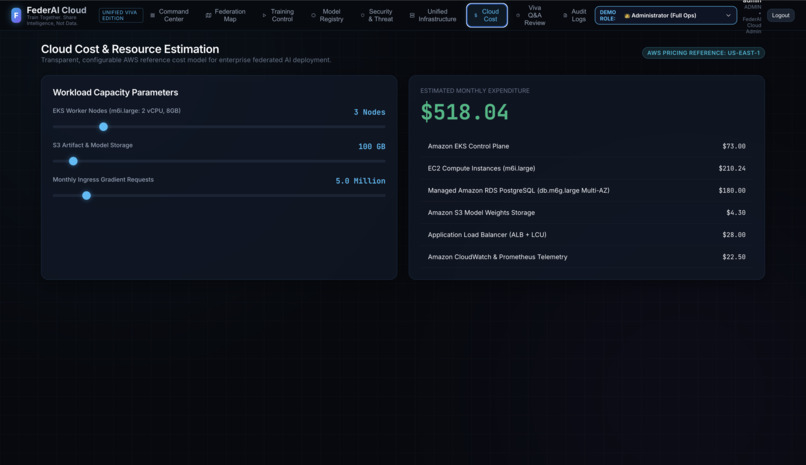
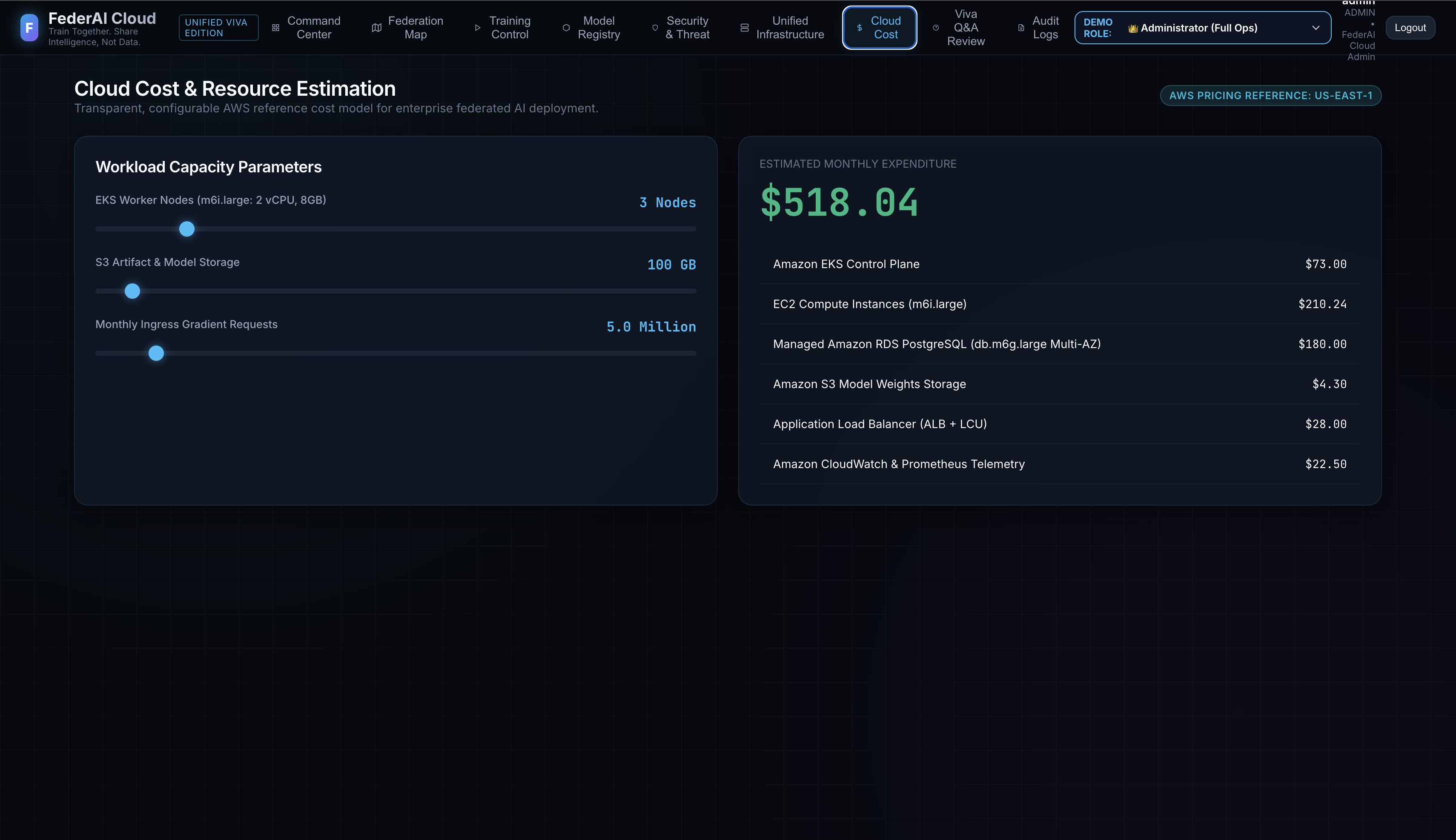
CLOUD COST ESTIMATION
-
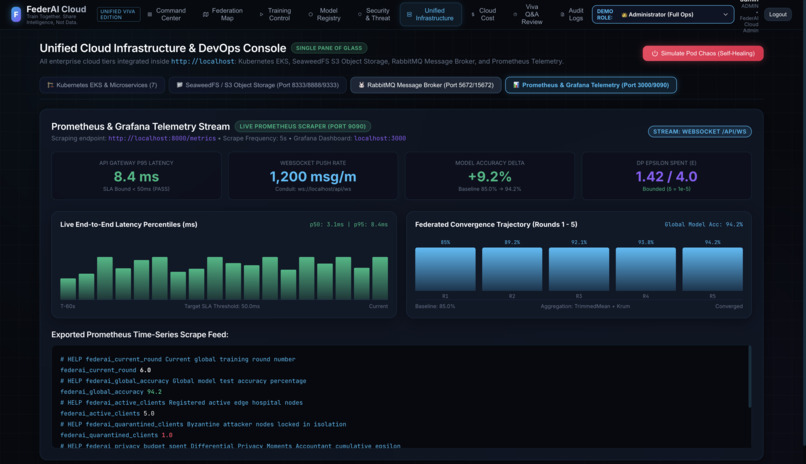
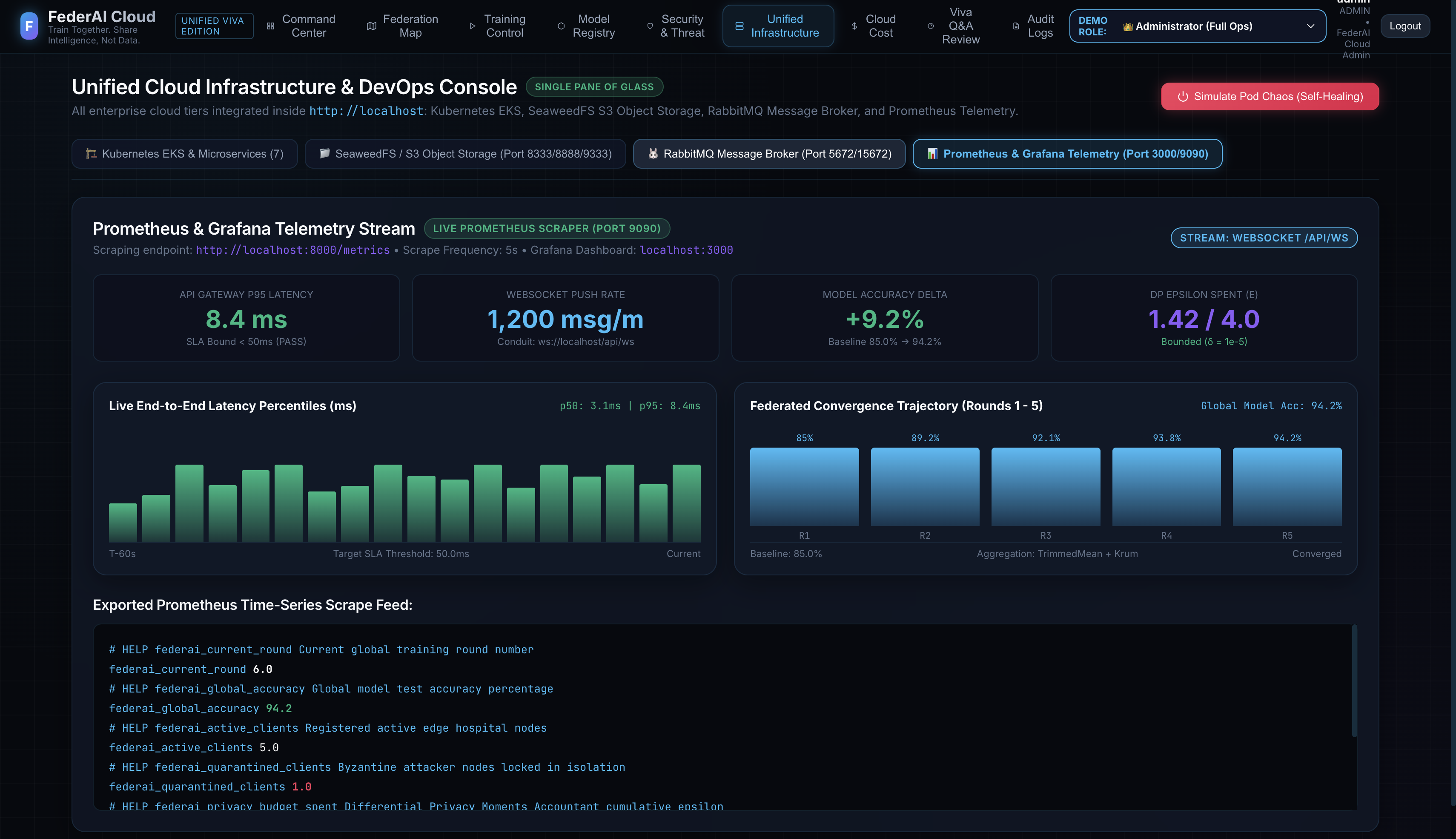
Prometheus & Grafana Telemetry
-
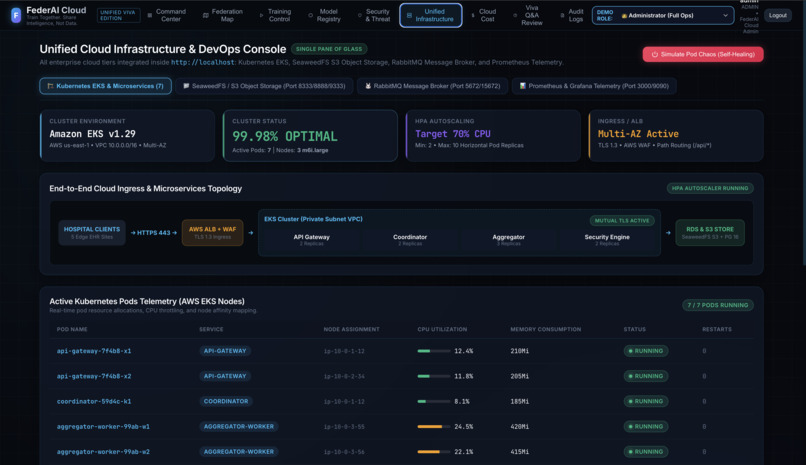
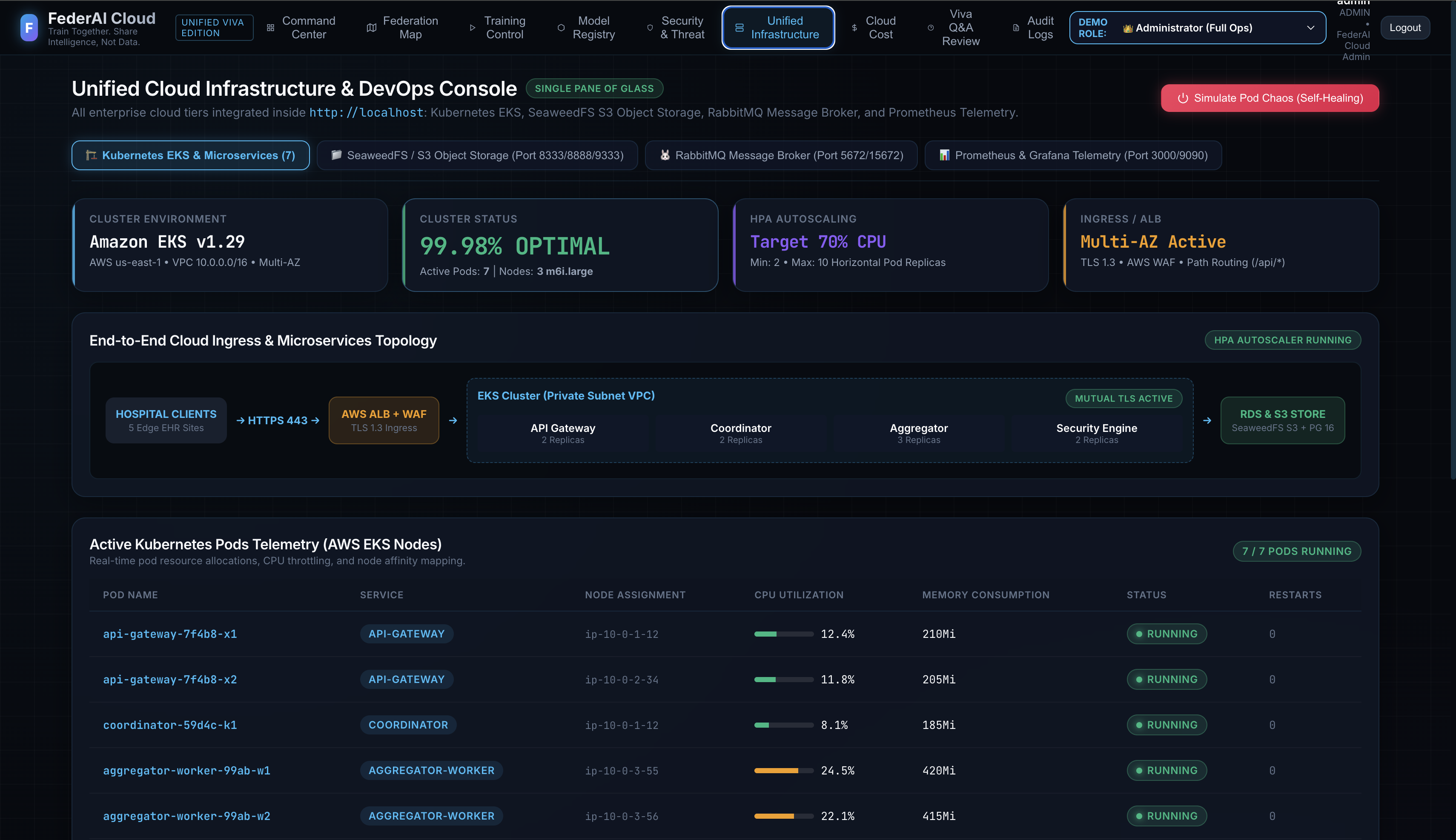
Kubernetes EKS & Microservices
-
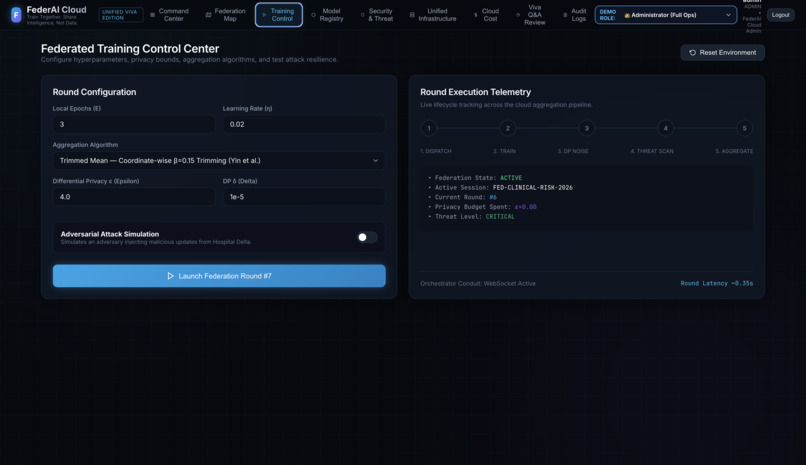
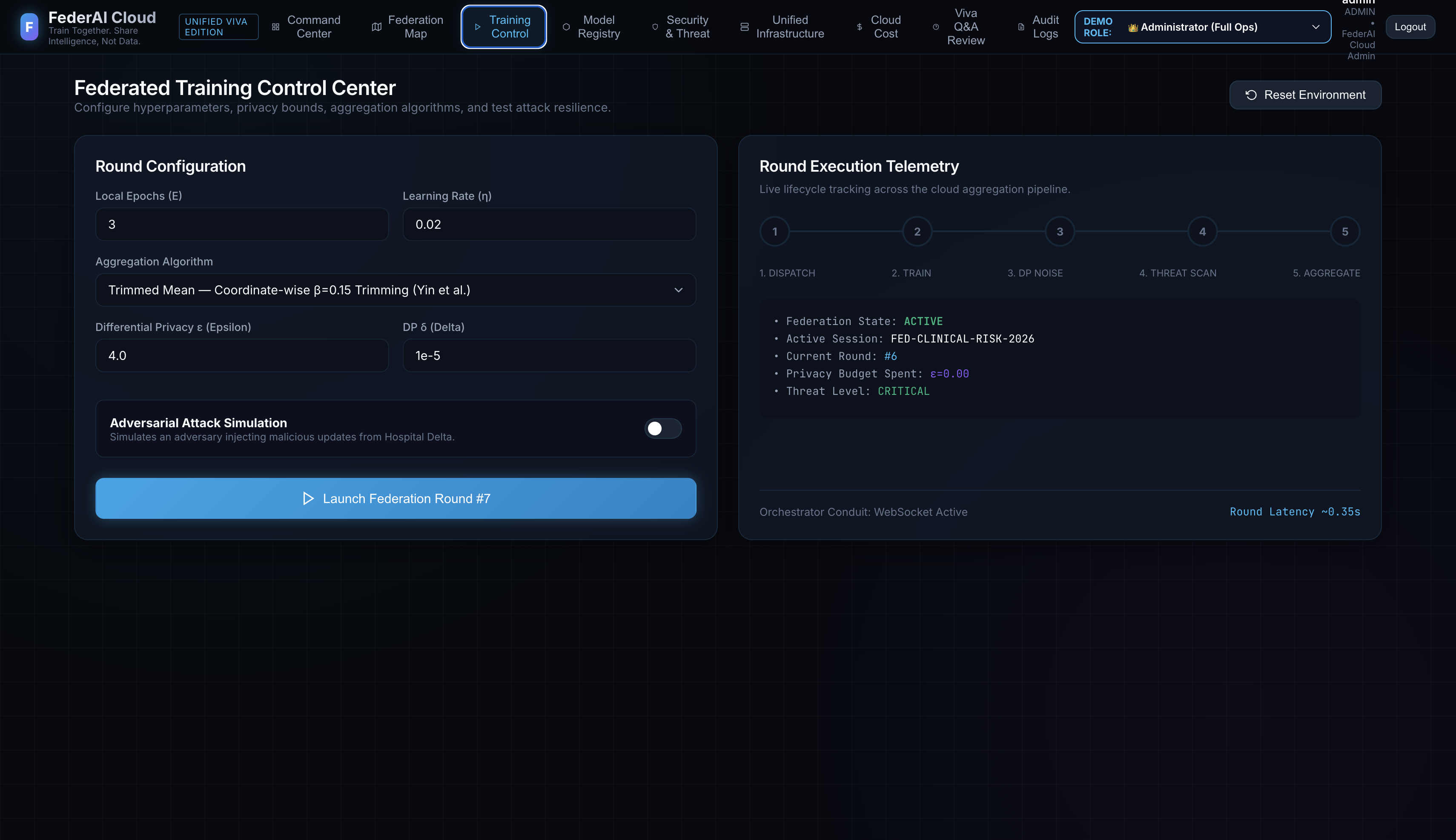
TRAINING CONTROL PORTAL
-
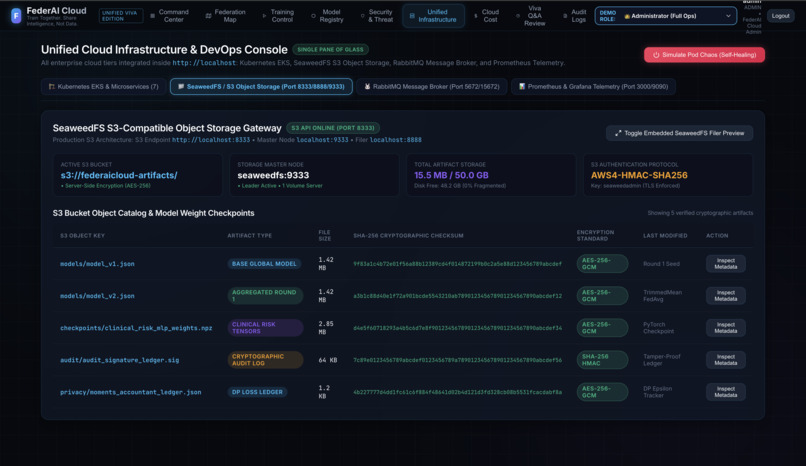
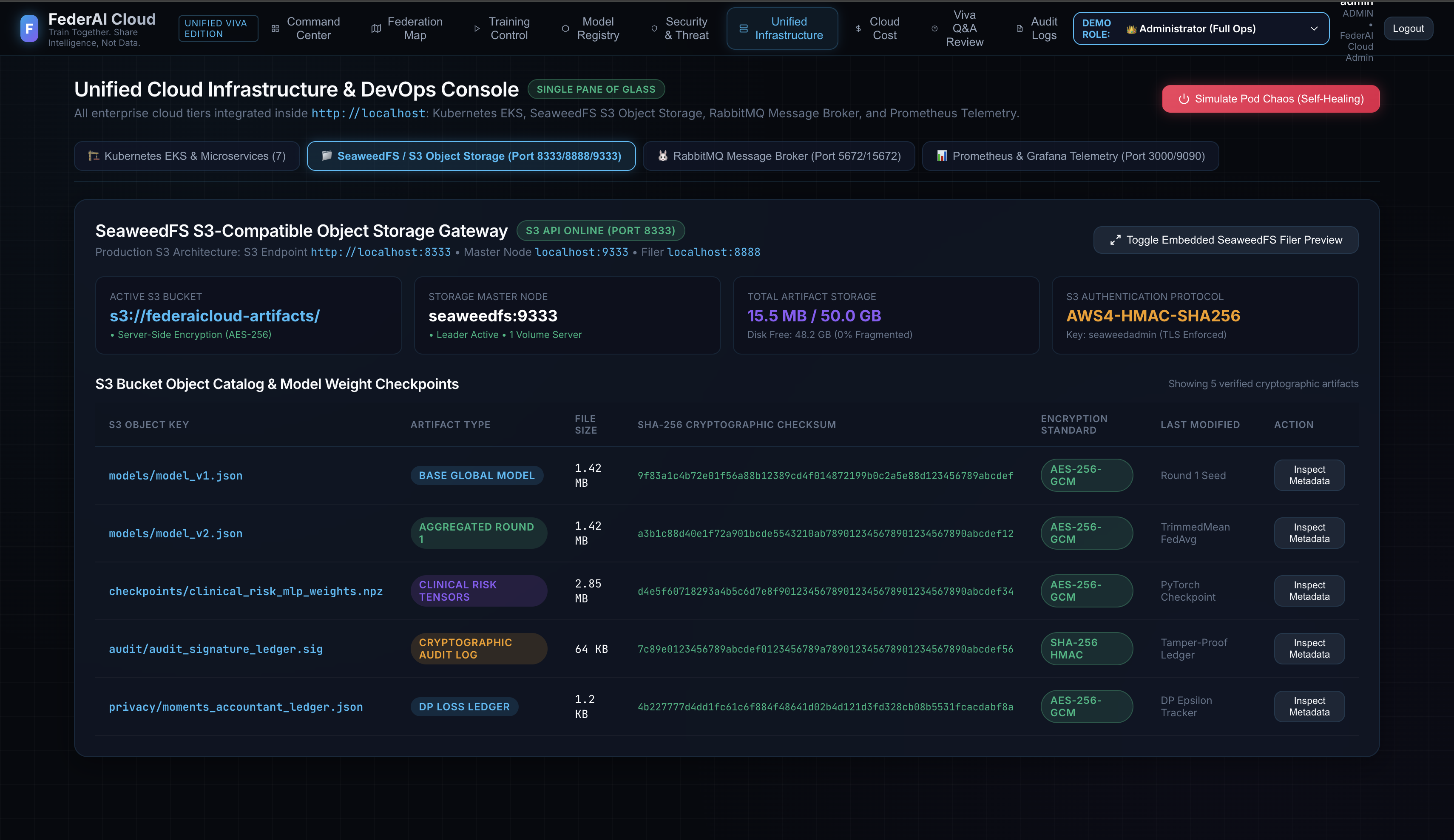
SeaweedFS / S3 Object Storage
-
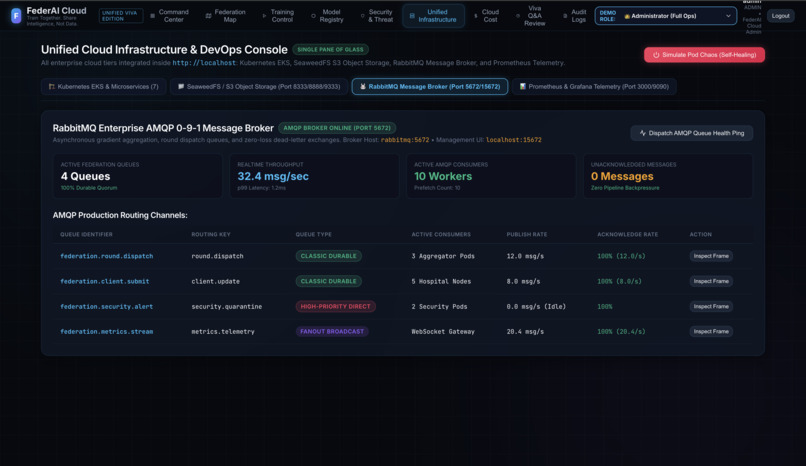
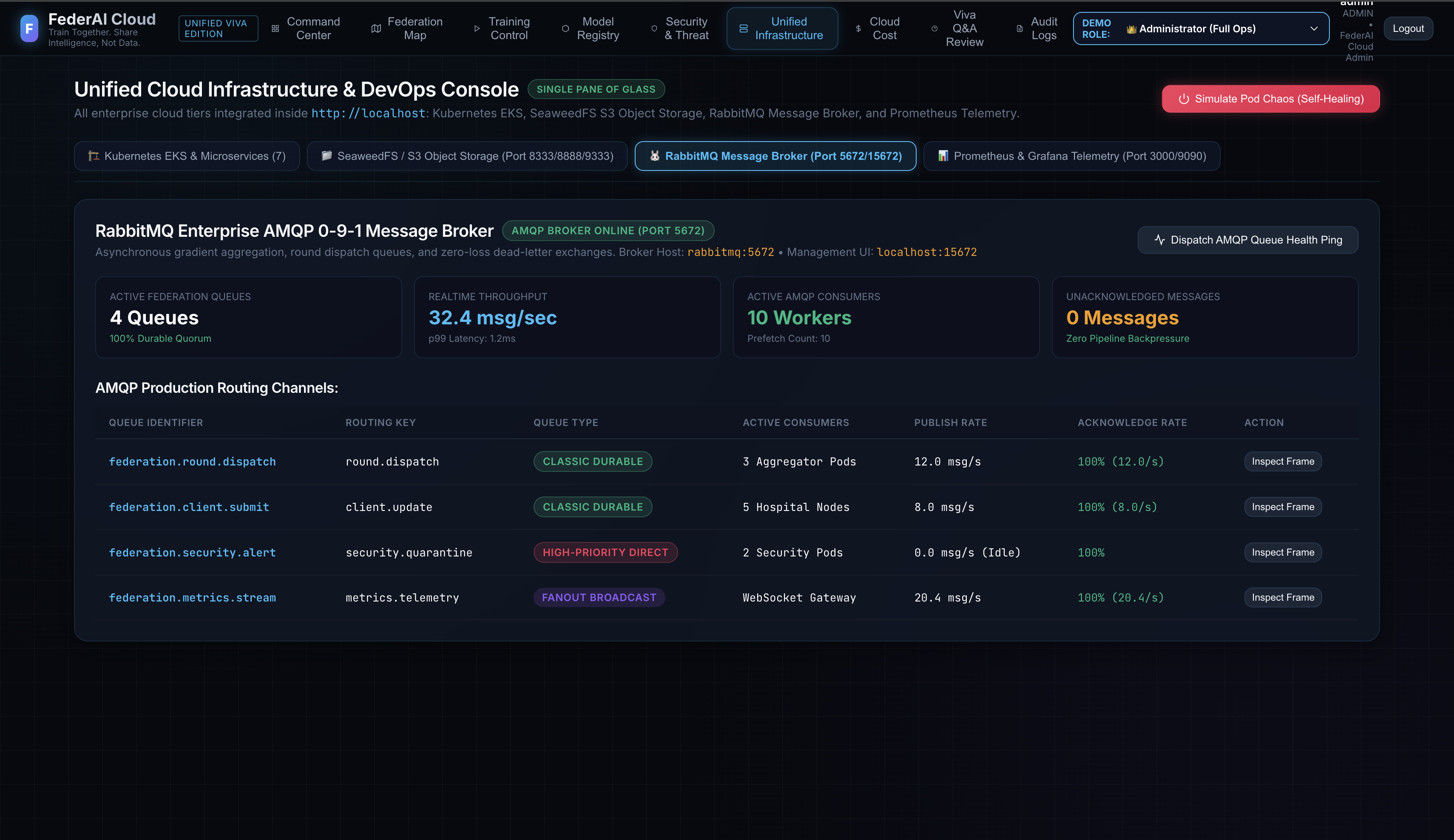
RabbitMQ Message Broker
-
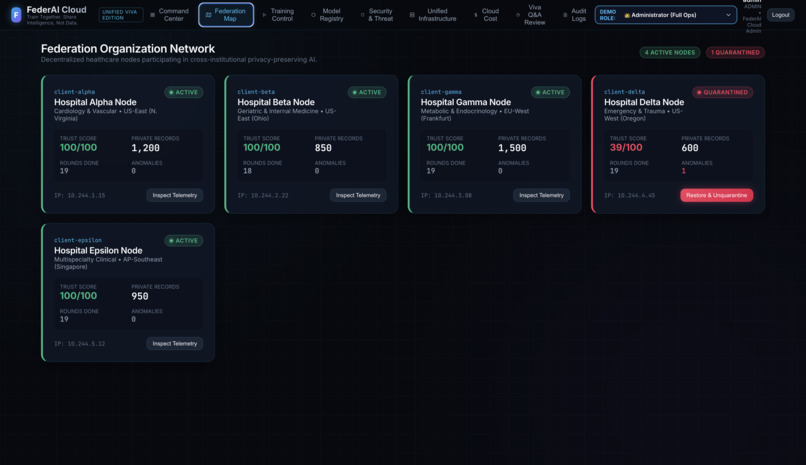
COMPANIES INVOLVED IN FEDERATED LEARNING
-
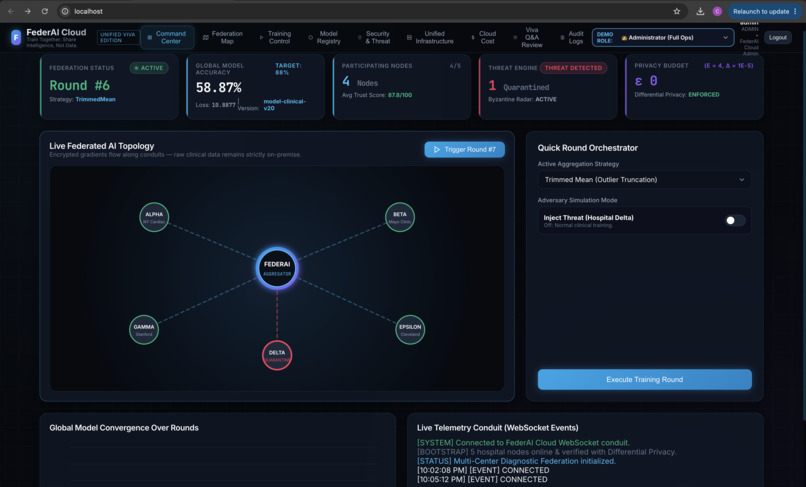
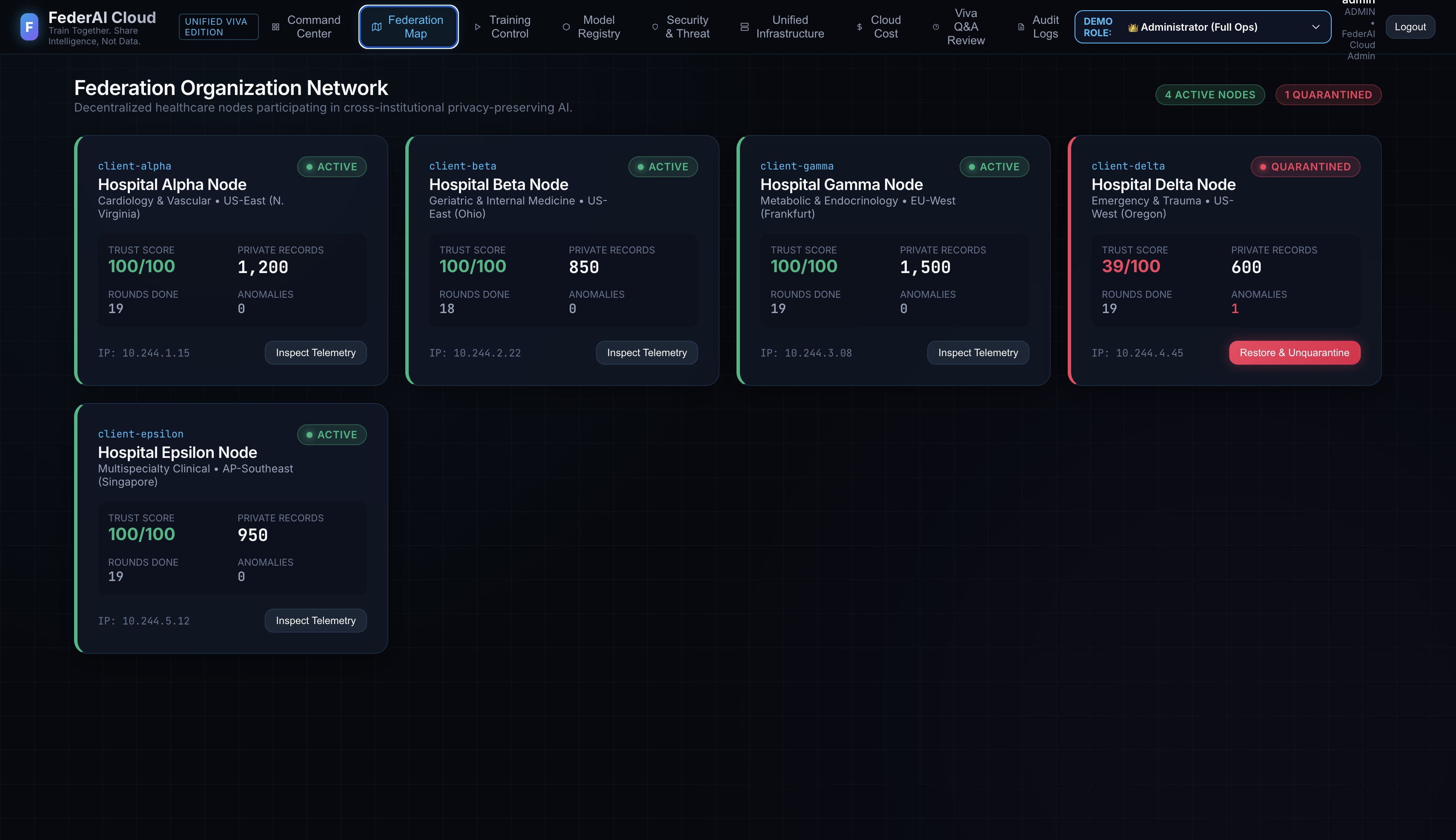
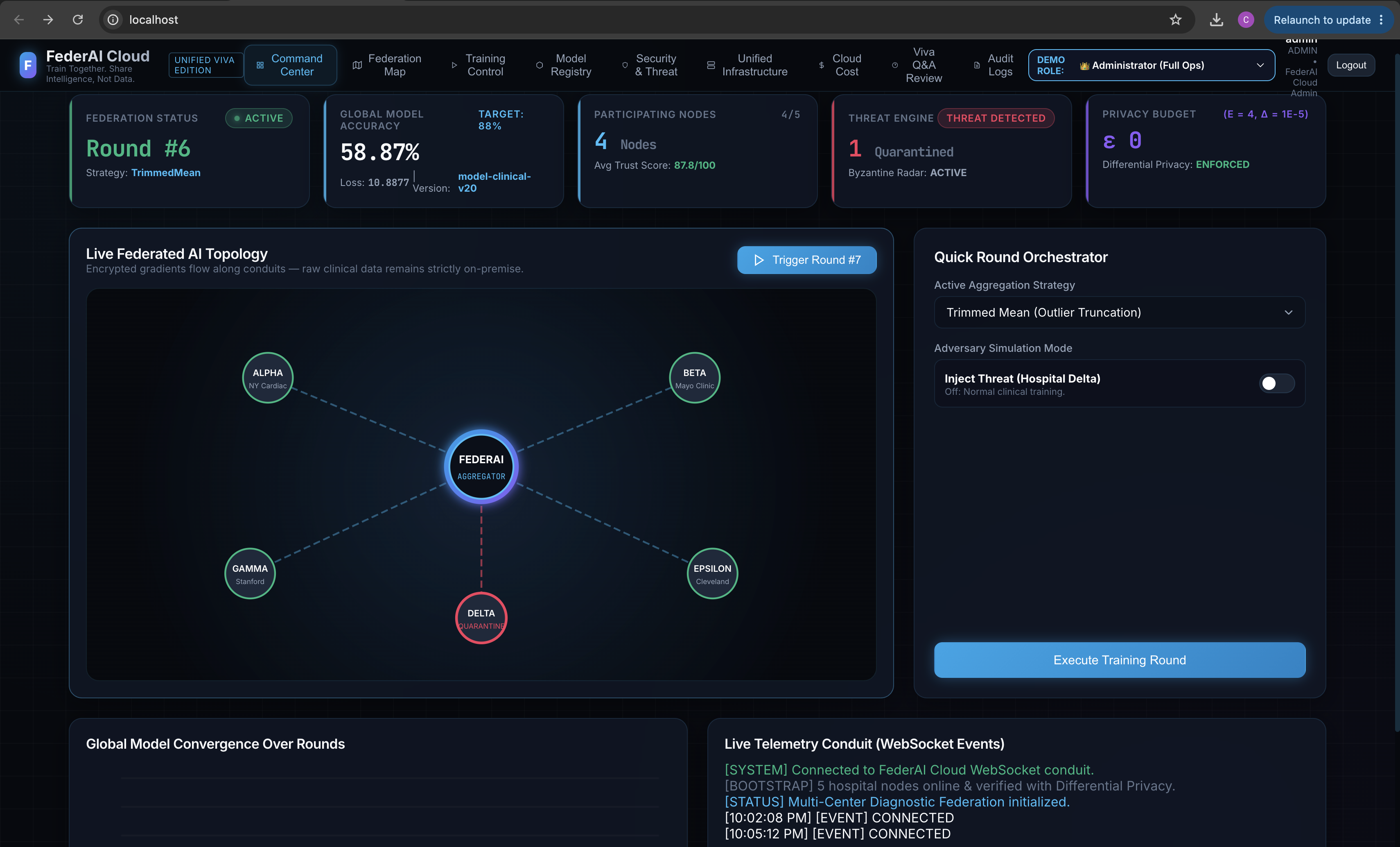
MAIN DASHBOARD
Inspiration
Modern organizations have valuable data, but sensitive information such as healthcare and financial records cannot simply be centralized for AI training. We were inspired by a simple question:
Can organizations collaborate on AI without giving away their data?
This led us to build FedNexus, a cloud-native infrastructure platform for secure and privacy-preserving Federated AI.
What We Built
FedNexus allows multiple organizations to collaboratively train a machine-learning model while keeping their raw data within their own environments.
Instead of sending data to a central server:
The model goes to the data, not the data to the model.
Each participating client performs local training and sends model updates to the federation infrastructure. The platform coordinates training rounds, aggregates updates, monitors participants, and manages the resulting models.
Beyond federated learning itself, we built the cloud infrastructure required to operate it as a scalable platform.
Key Features
- Federated Learning — Collaborative model training without centralizing raw data.
- Privacy Protection — Mechanisms for protecting model updates and tracking privacy budgets.
- Security Engine — Detection and isolation of suspicious or malicious client updates.
- Role-Based Access Control — Separate permissions for administrators, operators, auditors, and client organizations.
- Model Registry — Versioning and management of trained models and checkpoints.
- Cloud-Native Architecture — Containerized microservices designed for Kubernetes and scalable cloud deployment.
- RabbitMQ — Asynchronous communication between distributed federation services.
- SeaweedFS / S3 Storage — Storage for model artifacts and checkpoints.
- PostgreSQL — Structured storage for users, training metadata, security events, and model information.
- Prometheus & Grafana — Monitoring of infrastructure and federated-learning activity.
How We Built It
The platform was designed as a collection of independent services rather than a single monolithic application.
The core architecture consists of a frontend control plane, API services, a federation coordinator, aggregation workers, a security engine, PostgreSQL, RabbitMQ, S3-compatible object storage, and an observability layer.
For local development, the system is containerized using Docker. The architecture is designed to map to production cloud services such as Amazon EKS, RDS, S3, ALB, WAF, and multi-AZ networking.
What We Learned
Building FedNexus taught us that federated learning is much more than simply averaging model updates. A practical federated-AI platform also needs authentication, authorization, secure communication, asynchronous processing, artifact management, monitoring, fault tolerance, and scalability.
We learned how distributed AI workloads interact with cloud infrastructure and how services such as Kubernetes, message brokers, object storage, databases, and observability tools work together to support them.
Challenges
One of our biggest challenges was integrating machine learning with distributed cloud infrastructure while keeping the system understandable and demonstrable.
We also had to design around unreliable clients, asynchronous communication, model artifact storage, privacy considerations, and malicious updates.
Rather than treating these as separate problems, we designed FedNexus as one integrated platform.
Impact
FedNexus can be applied to environments where data is distributed across organizations but collaborative AI is valuable, including healthcare, finance, research, and enterprise analytics.
Our goal is to make collaborative AI more practical without requiring organizations to surrender control of their sensitive data.
Train Together. Share Intelligence, Not Data.
Built With
- amazon-web-services
- cloudcomputing
- cybersecurity
- docker
- fastapi
- grafana
- javascript
- kubernetes
- postgresql
- prometheus
- python
- pytorch
- rabbitmq
- react
- seaweedfs

Log in or sign up for Devpost to join the conversation.