-
-
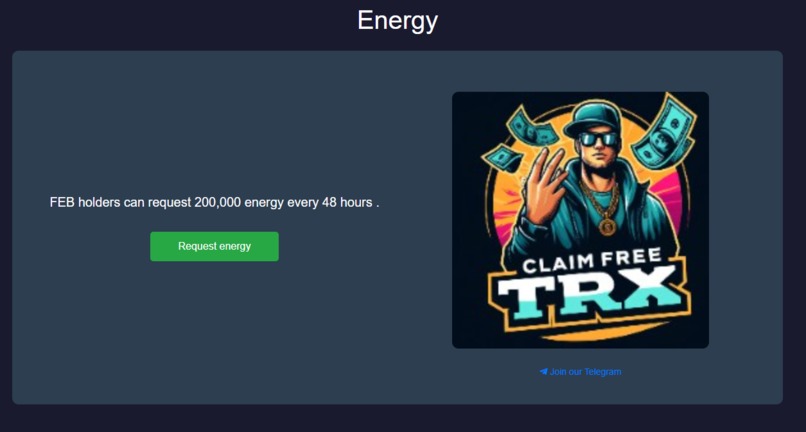
Request Energy
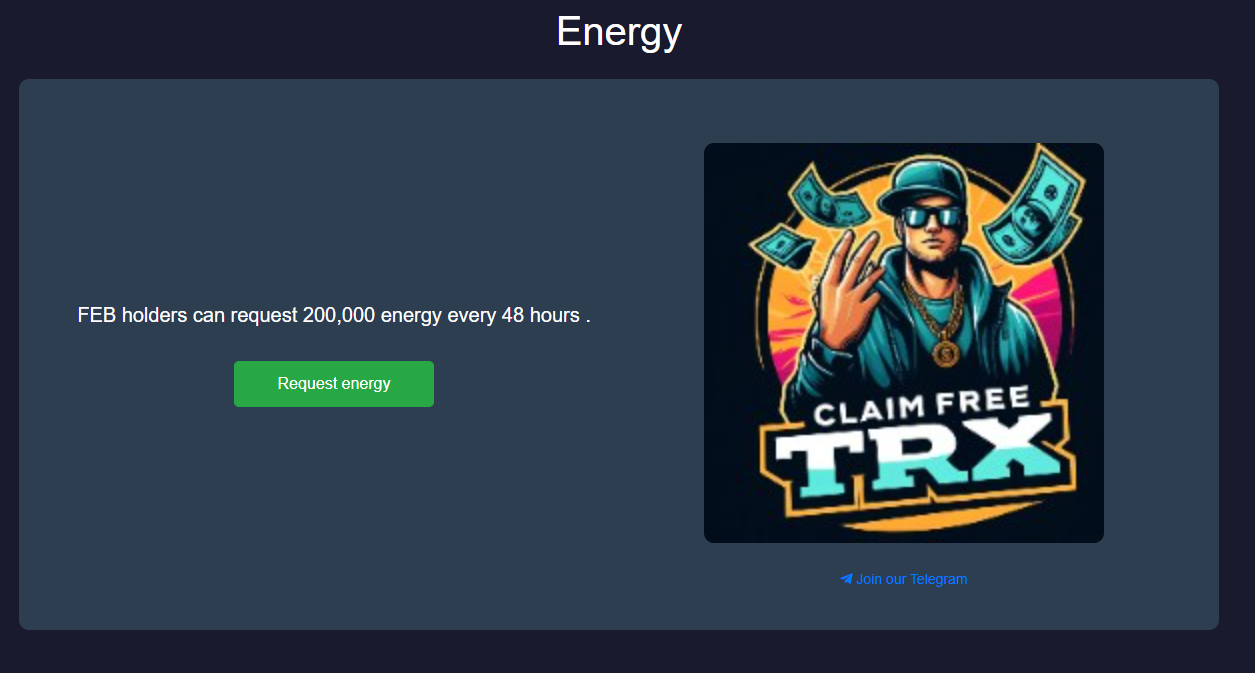
Inspiration
The need for affordable and accessible energy in the TRON ecosystem was the driving inspiration behind the FEB Badge. While energy is essential for running smart contracts and decentralized applications, acquiring it usually requires users to stake significant amounts of TRX. For many, this is not feasible, which can limit their ability to participate fully in the ecosystem. We saw an opportunity to create a solution that not only makes energy more accessible but also allows users to free up their staked TRX for other purposes.
What it does
The FEB Badge allows users to borrow 200,000 energy every 48 hours without needing to stake large amounts of TRX. This is an affordable alternative to staking approximately 16,000 TRX, as each badge costs just 5,000 TRX. After requesting energy, it is delegated to the user for 15 minutes, during which they can execute smart contracts and other tasks. Once the energy is undelegated, the user enters a 48-hour cooldown period before they can request energy again. Users can also resell their badges on the secondary market, creating a dynamic and liquid ecosystem around FEB Badge ownership.
How we built it
We built the FEB Badge using Serverless architecture and microservices for scalability and efficiency. The backend is powered by node.js and tronWeb.js for seamless interaction with the TRON blockchain. We used MongoDB to store badge and user data, ensuring high availability and scalability as the user base grows. The frontend was developed with JavaScript and HTML, ensuring a simple and user-friendly interface. Solidity was used to develop the smart contracts, adhering to the TRC20 standard for secure and efficient energy delegation.
Challenges we ran into
One major challenge was ensuring that the system could handle increased demand as the ecosystem grows. We had to design a platform that could provide consistent energy access while preventing users from monopolizing resources. Additionally, creating a limited supply of badges (100 in total) while ensuring value retention and scalability was a delicate balance. We also faced technical challenges in automating the delegation of energy and ensuring that users experienced no downtime or delays.
Accomplishments that we're proud of
We are proud to have created a system that provides affordable energy access to users who previously may not have been able to participate in energy-intensive activities on TRON. We successfully developed a product that frees up staked TRX, allowing users to use their assets elsewhere while still gaining access to energy. Additionally, the FEB Badge introduces a resale market, where users can set their own price for selling their badges, adding a new layer of liquidity to the system.
What we learned
Throughout this project, we gained a deeper understanding of TRON’s energy model and its limitations. We learned how crucial energy access is for the broader ecosystem and how important it is to provide alternative solutions for users who cannot stake large amounts of TRX. This project reinforced the importance of building with scalability in mind and ensuring that our solution can grow alongside the TRON network.
What's next for FEB Badge by CFT
Looking ahead, we plan to release the remaining batches of FEB Badges as demand grows within the ecosystem. We will also continue refining the platform based on user feedback to ensure a seamless experience for energy requests and badge resale. Additionally, we aim to expand our integration within the TRON ecosystem by offering more services and products that help users interact with TRON more efficiently. Our long-term vision is to continue building on TRON and contribute to the growth and sustainability of the entire ecosystem.
Built With
- html
- javascript
- microservices
- mongo-db
- node.js
- serverless
- solidity
- tronweb.js

Log in or sign up for Devpost to join the conversation.