
Inspiration
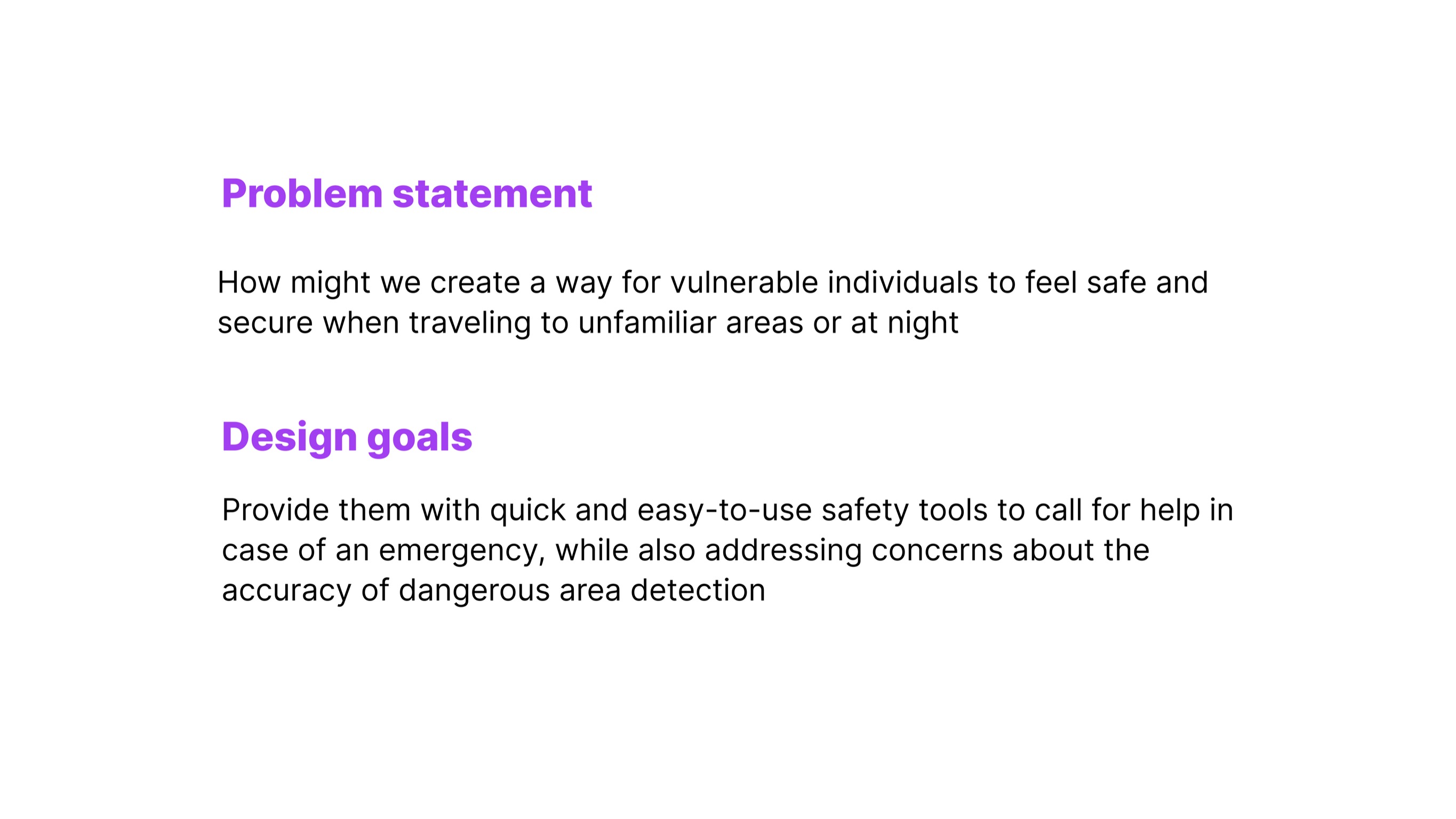
For vulnerable individuals travelling to unfamiliar areas or walking alone at night can be an anxiety-inducing experience. They may not feel comfortable contacting traditional emergency services such as 911 until it’s too late. This can lead to feelings of powerlessness and a sense of isolation. Ultimately it is our hope that anyone who uses the app feels empowered, prepared and fearless.
What it does
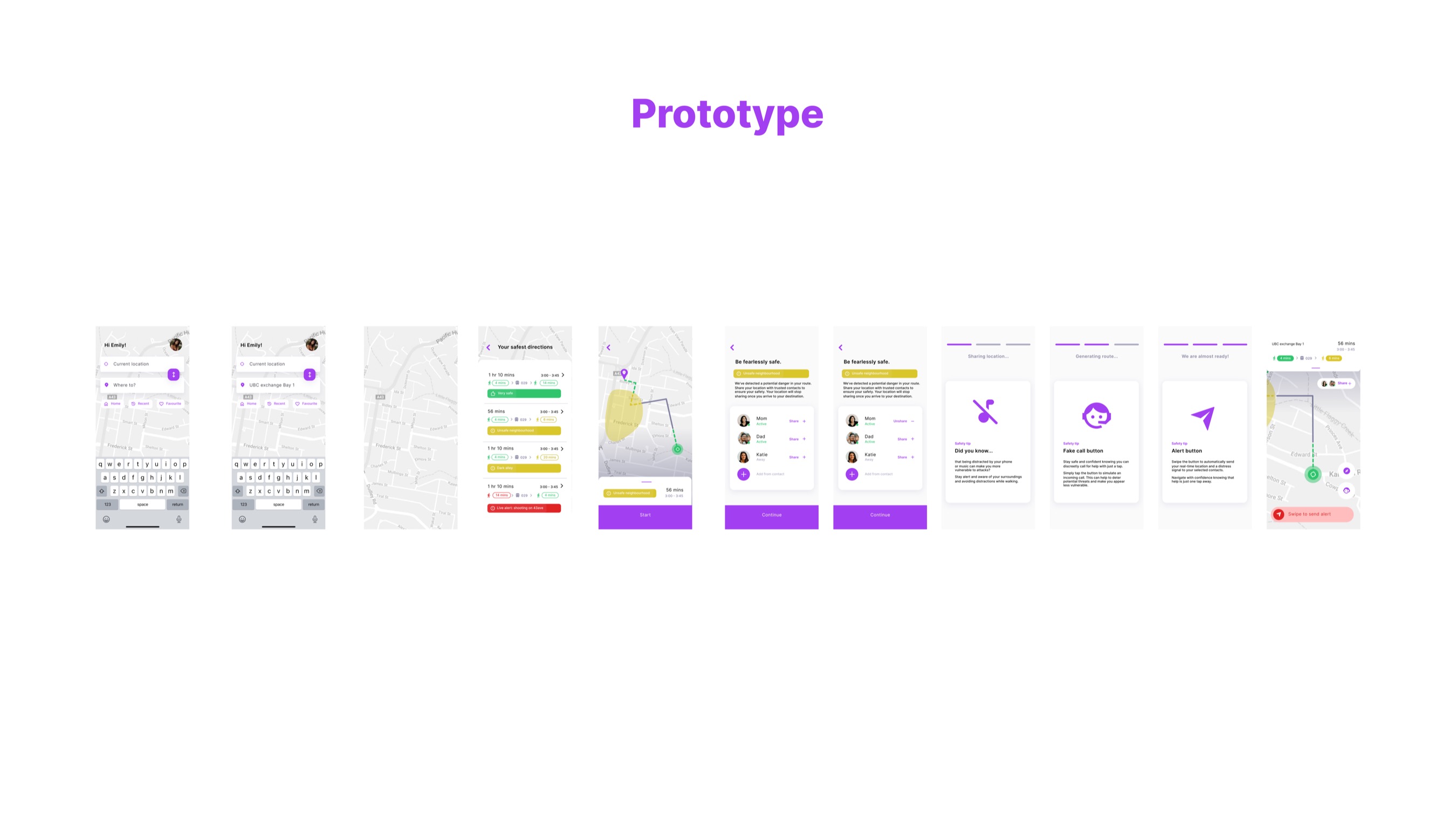
The mobile navigation app “Fearless” addresses this problem by providing a range of safety tools and resources, including fake call feature, alert button, and real time information on dangerous areas, empowering vulnerable individuals to take control of their safety and access the support when they need it most.
How we build it
Development:
-We built frontend using javascript and react. -For the backend to detect danger levels, we used a news web scraping api to search for latest news about the streets visited in the route then trained co:here api's toxicity detection to recognize words associated with potentially dangerous pedestrian routes to measure danger levels for each route.
Design process:
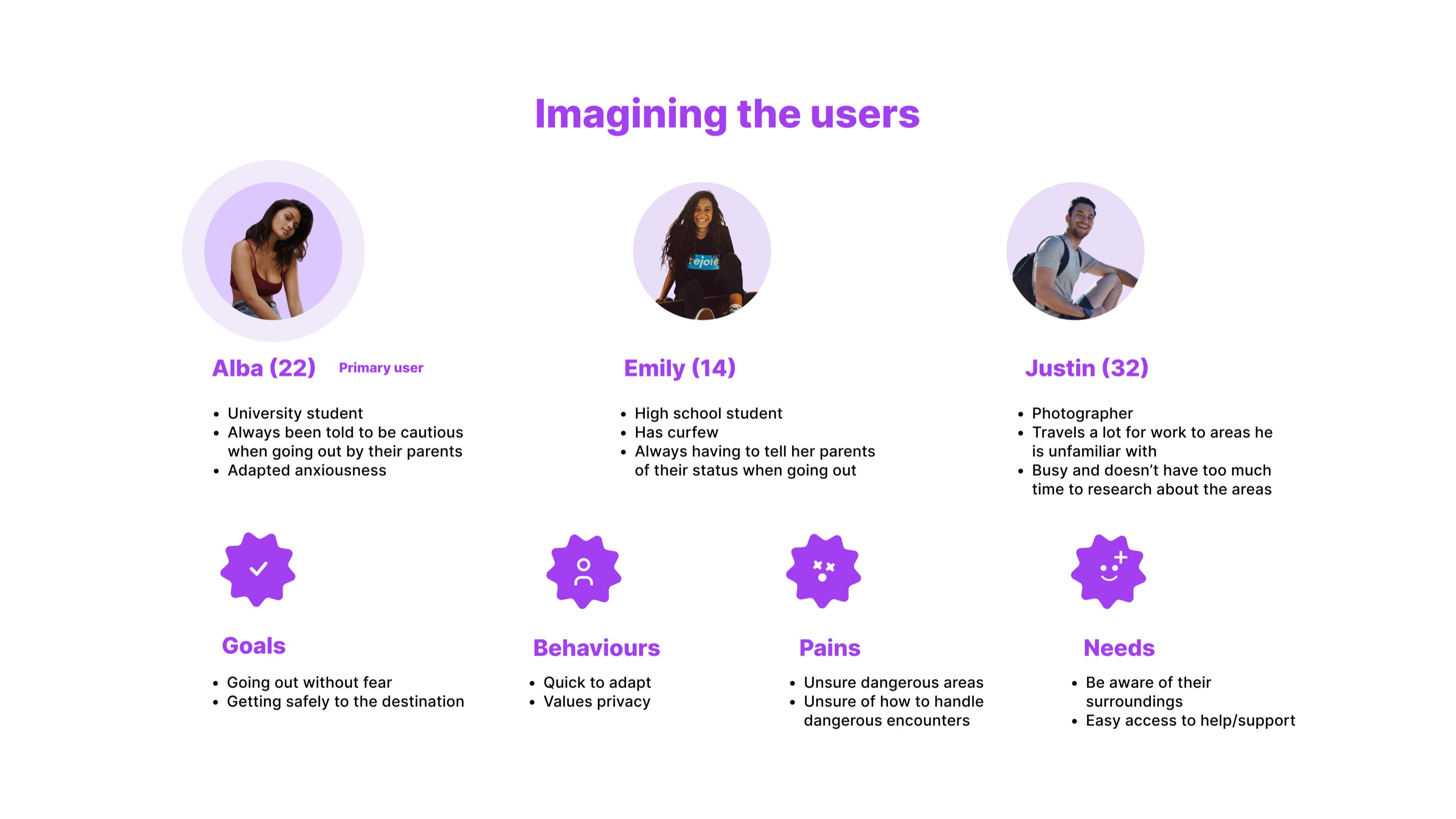
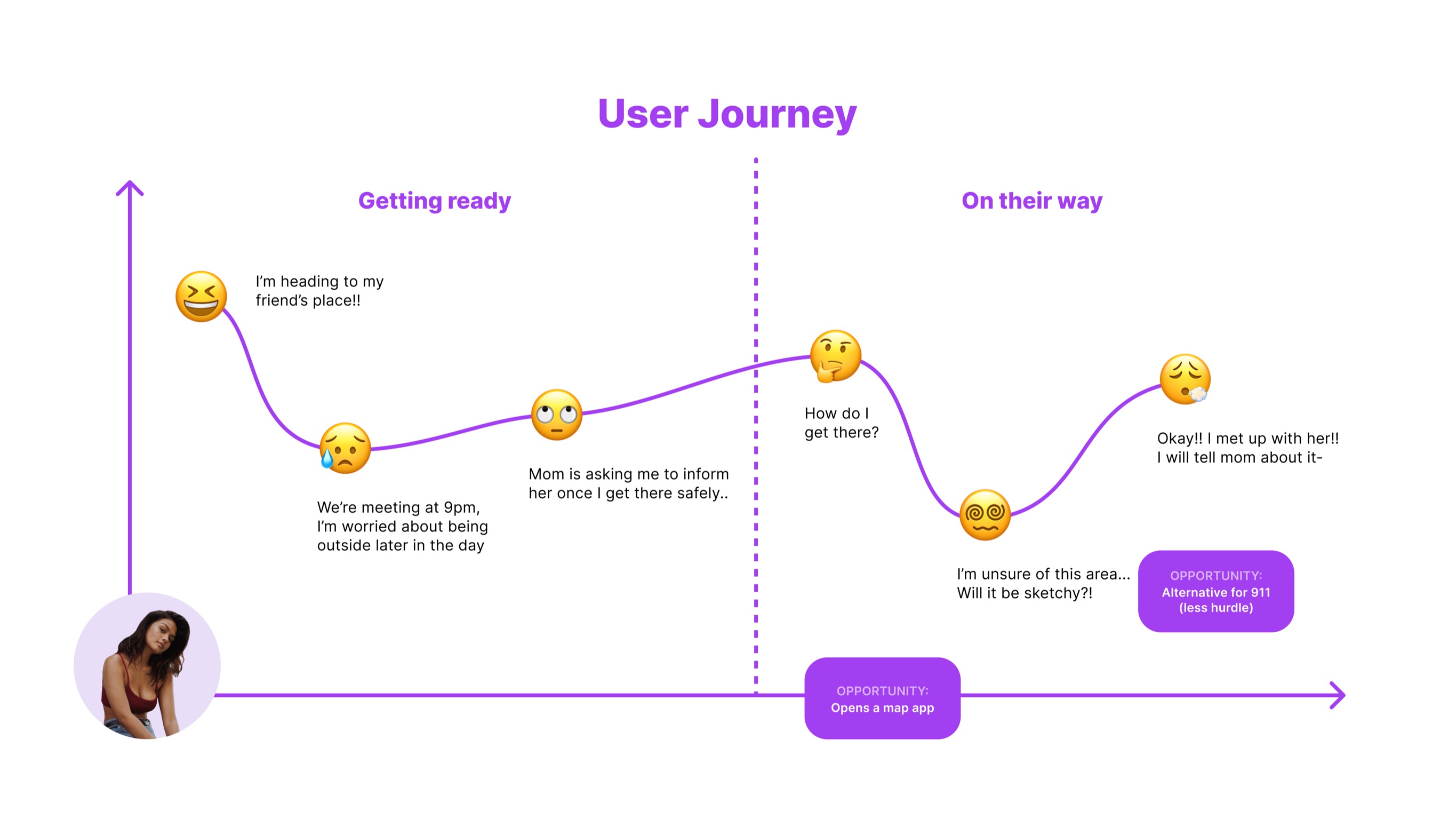
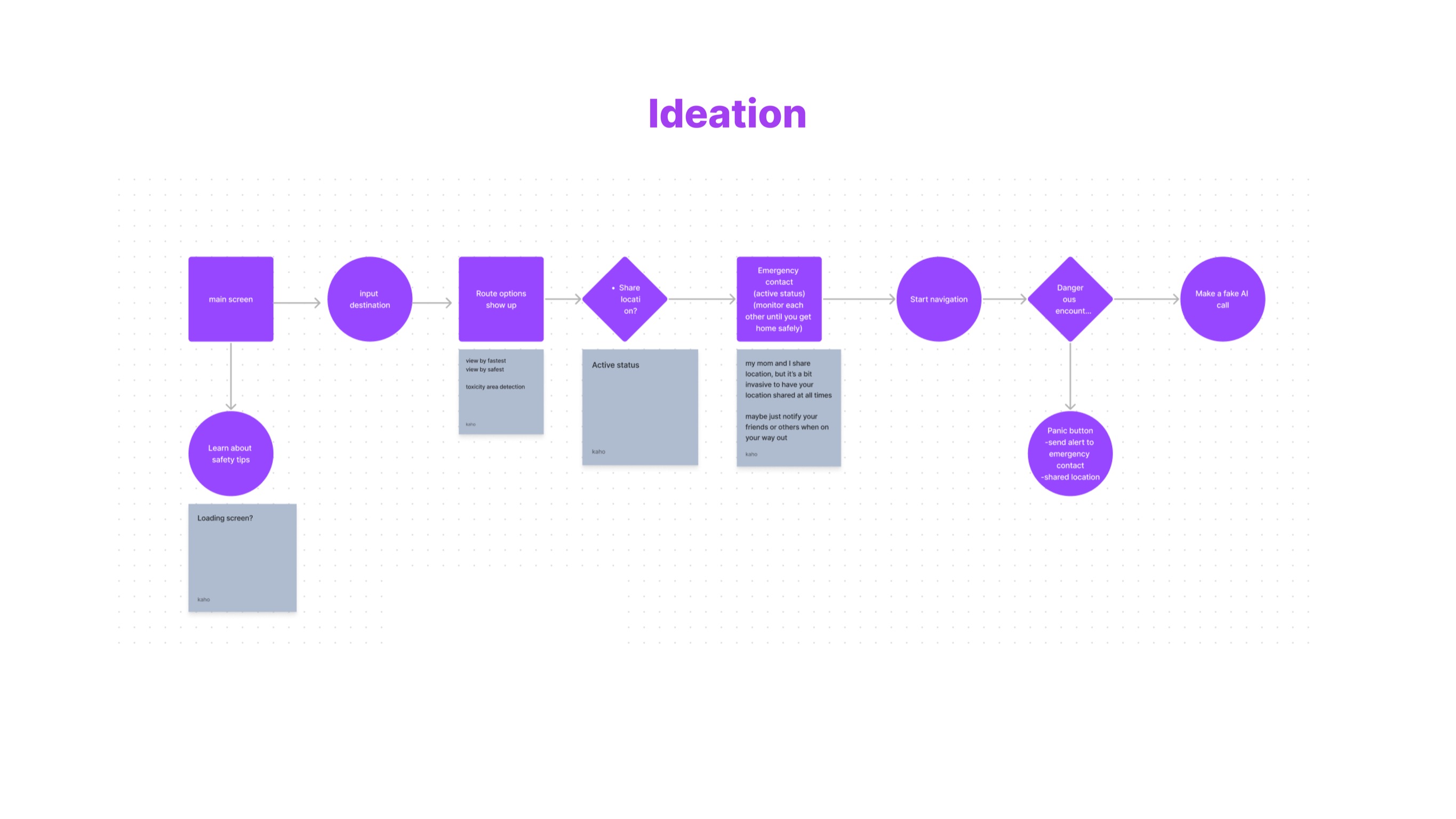
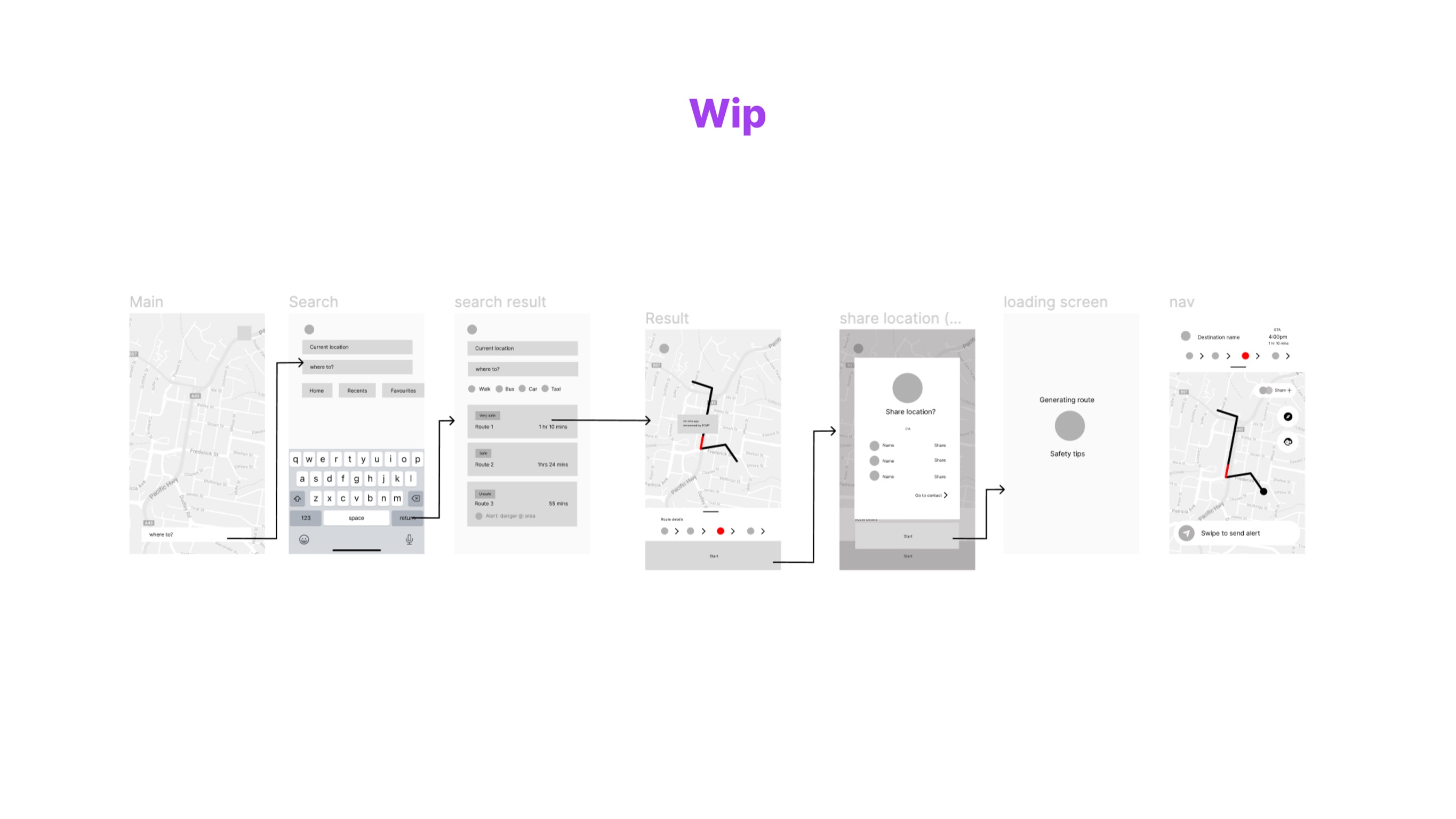
-We used user persona and user journey to empathize with user paint points and discover opportunities. -We used user flow understand the apps general feature -Lofi wireframe was used to allow dev team to get a head start on the front end. Hifi prototype was built out in the meantime.
Design decisions:
-Googles material design was referenced to ensure internal consistency within the app. -To establish open communication to users, visibility in status such as loading screen and active status were implemented -Every action is guaranteed with an undo button for users to have control and freedom.
Challenges we ran into
Generating multiples route results using google API.
Accomplishments that we're proud of
Having a demo-able project and learning new technologies we weren't familiar with. Making a project that we would want to use ourselves.
What we learned
How to take an idea, design a useful purpose and implement it + we learned new technologies like working with google maps api, co:here api, and collaborating on figma with ui/ux technicalities
What's next for Fearless
More training for the machine learning model, creating an alert system, having a live demo to use, using more factors in danger level detection such as dimly lit or secluded paths. We want to expand the navigation to not only walkable routes but transit as well.
Built With
- cohere-ai
- figma
- javascript
- news-api
- react


Log in or sign up for Devpost to join the conversation.