Inspiration
Fearless Draft changed draft prep. A champion picked in game 1 is gone for both teams for the rest of the series, so a coaching staff now has to know not only what an opponent likes, but what each of their players still has in game 3, 4 and 5, and whether our own plan survives. That work lives in VOD review and spreadsheets. We wanted Cloud9 Kia's staff to get those answers from the official match data, with the evidence on screen.
What it does
Pick an opponent, a period and a side.
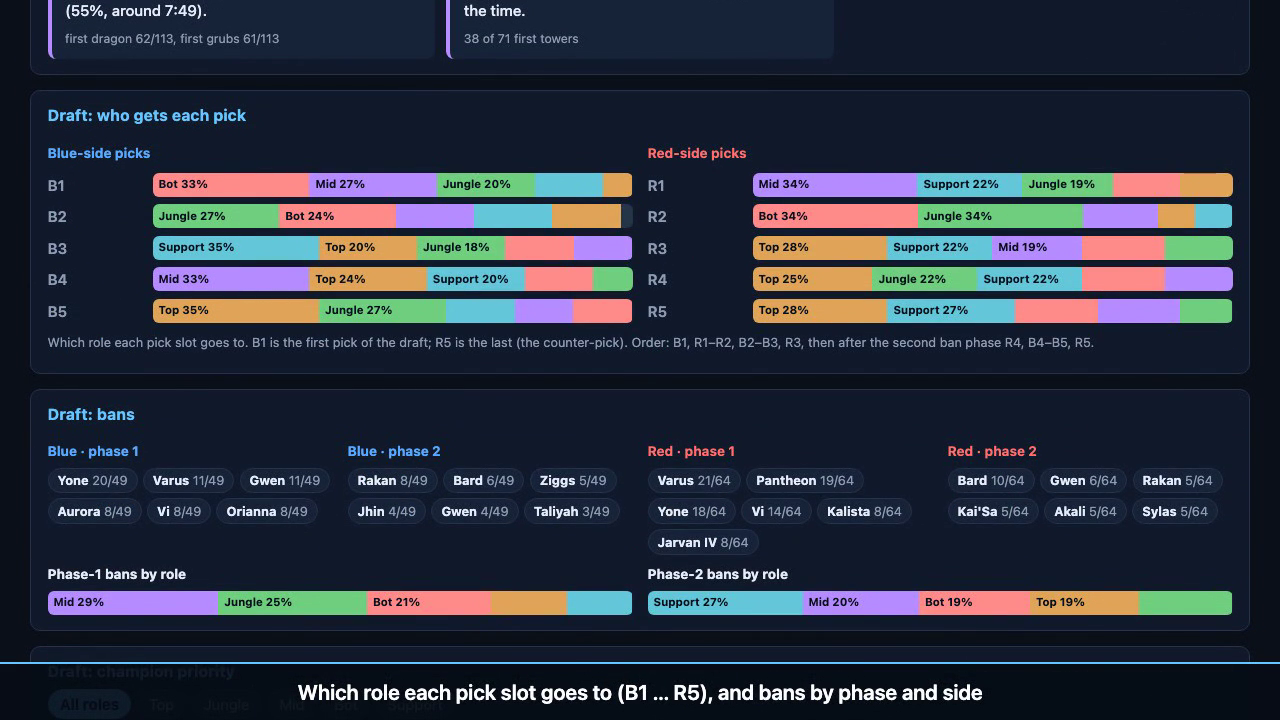
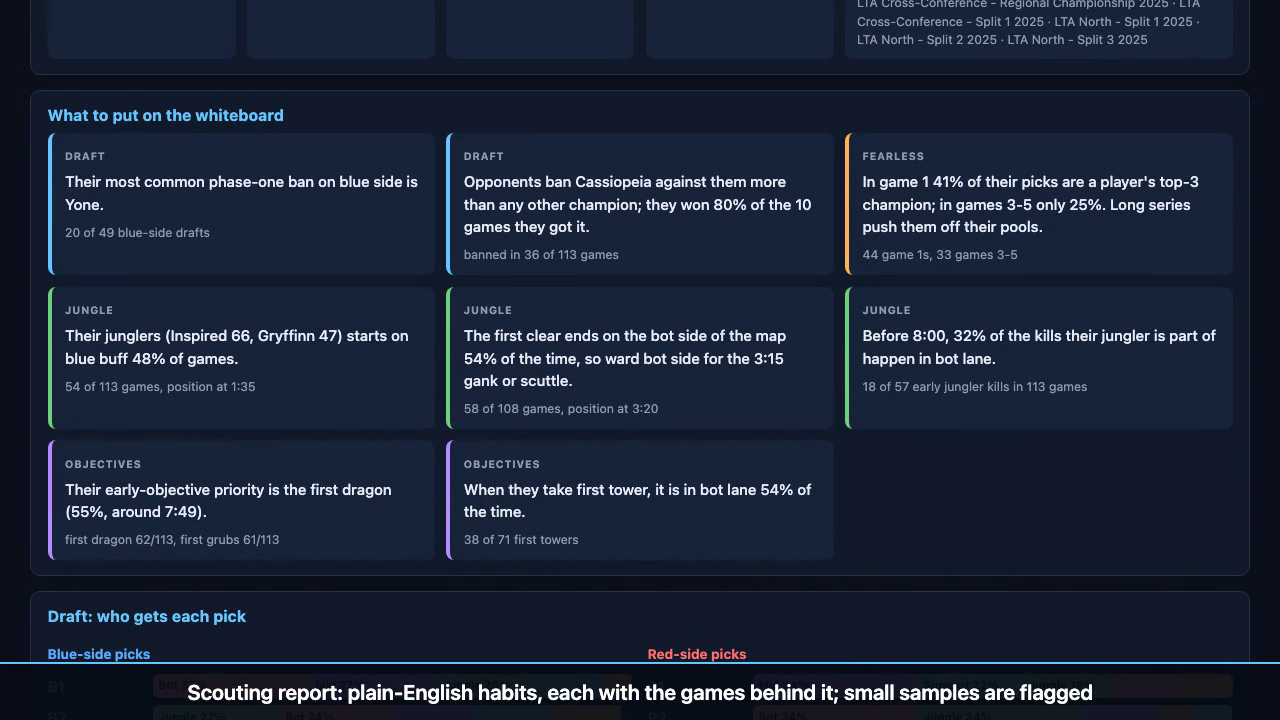
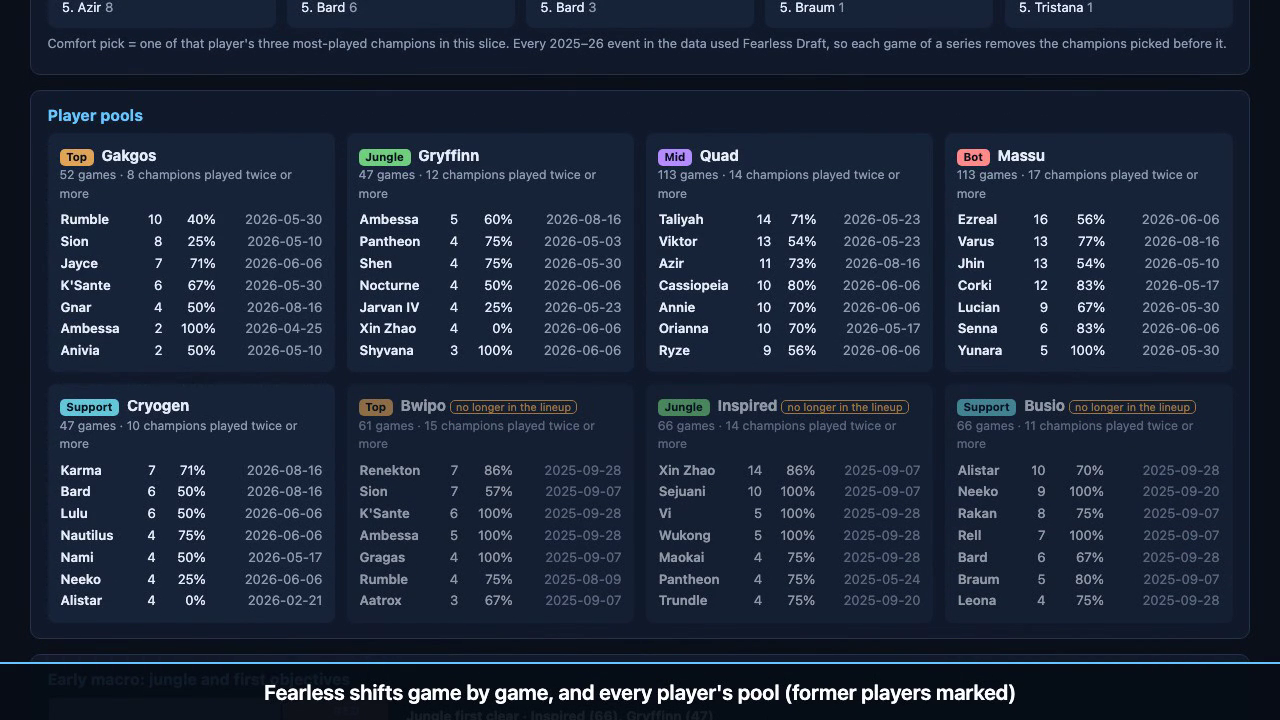
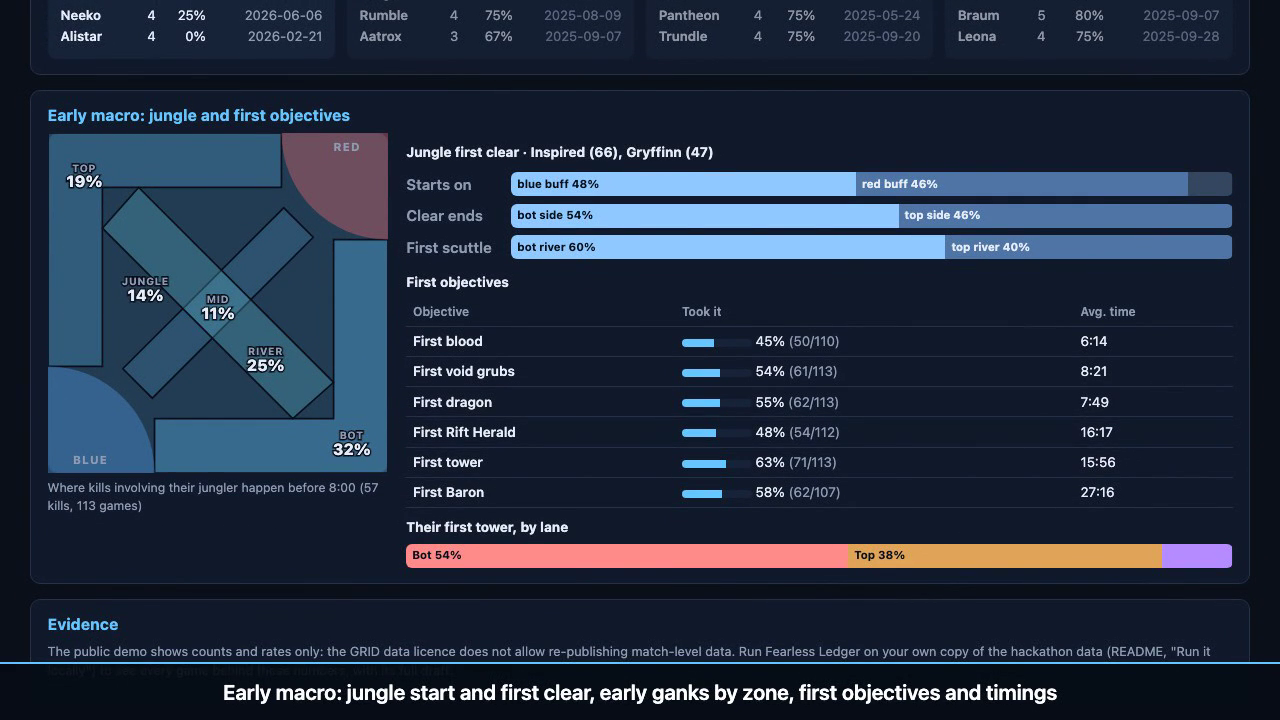
- Scouting report. A "whiteboard" of plain-English habits, each with the games behind it and a "small sample" flag (e.g. "Before 8:00, 32% of the kills their jungler is part of happen in bot lane: 18 of 57 early jungler kills"). The role taken in each pick slot from B1 to R5, bans by phase and side, a champion priority table, Fearless shifts by game number, every player's pool with win rate and last game (former players marked), and early macro: jungle start, end of the first clear, first scuttle, early ganks by zone on a schematic Rift, and first blood/grubs/dragon/herald/tower/Baron rates and timings.
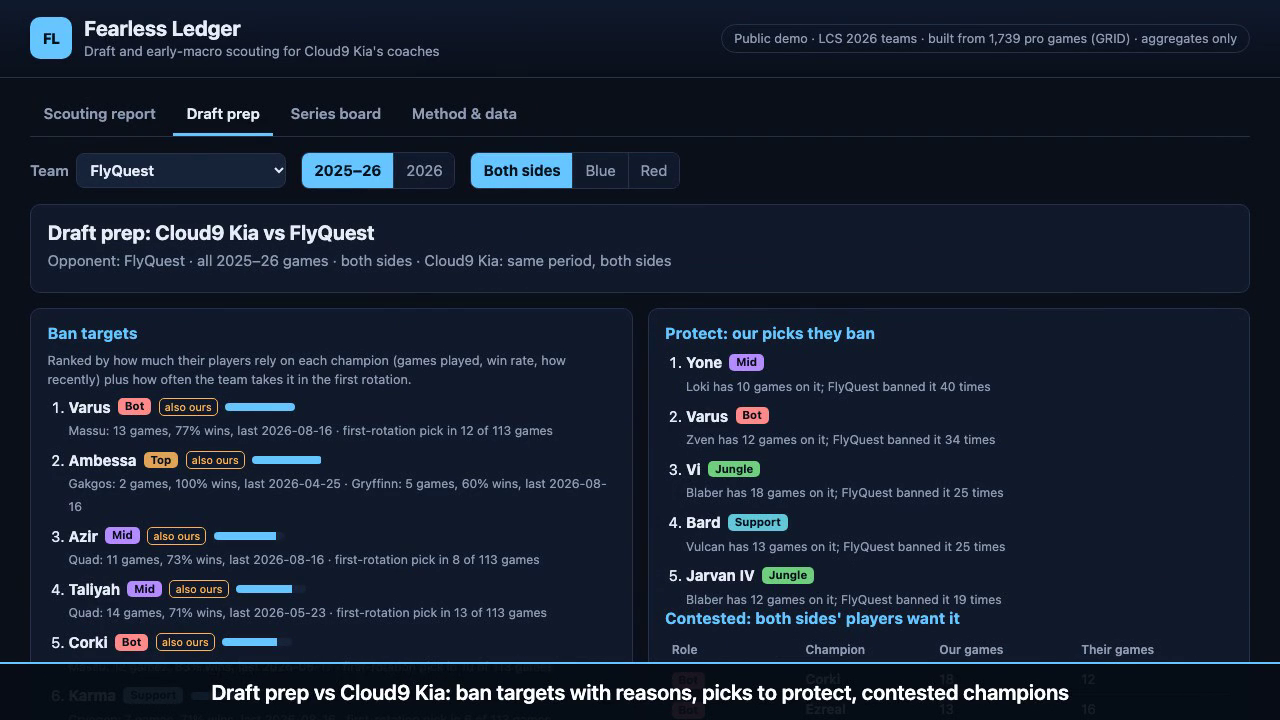
- Draft prep vs Cloud9 Kia. Ranked ban targets with the reason for each (player reliance: games, smoothed win rate, recency; plus first-rotation priority), our comfort picks they tend to ban, and champions both teams' players want.
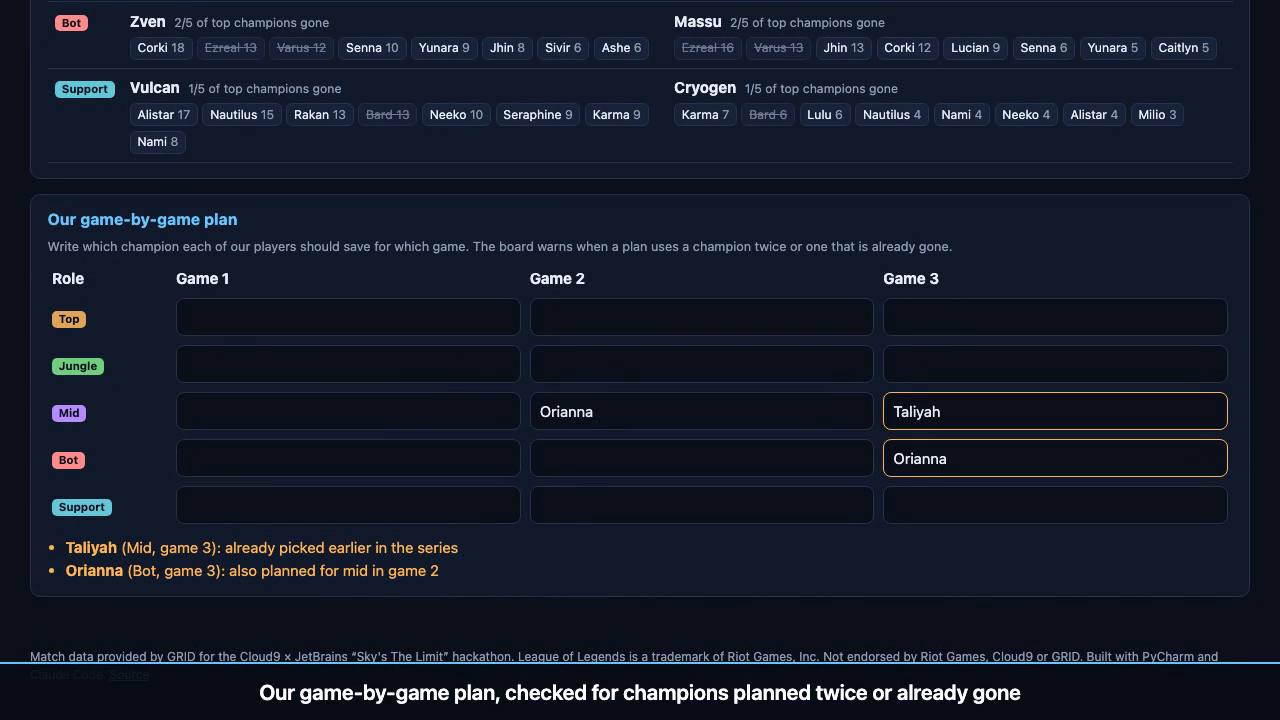
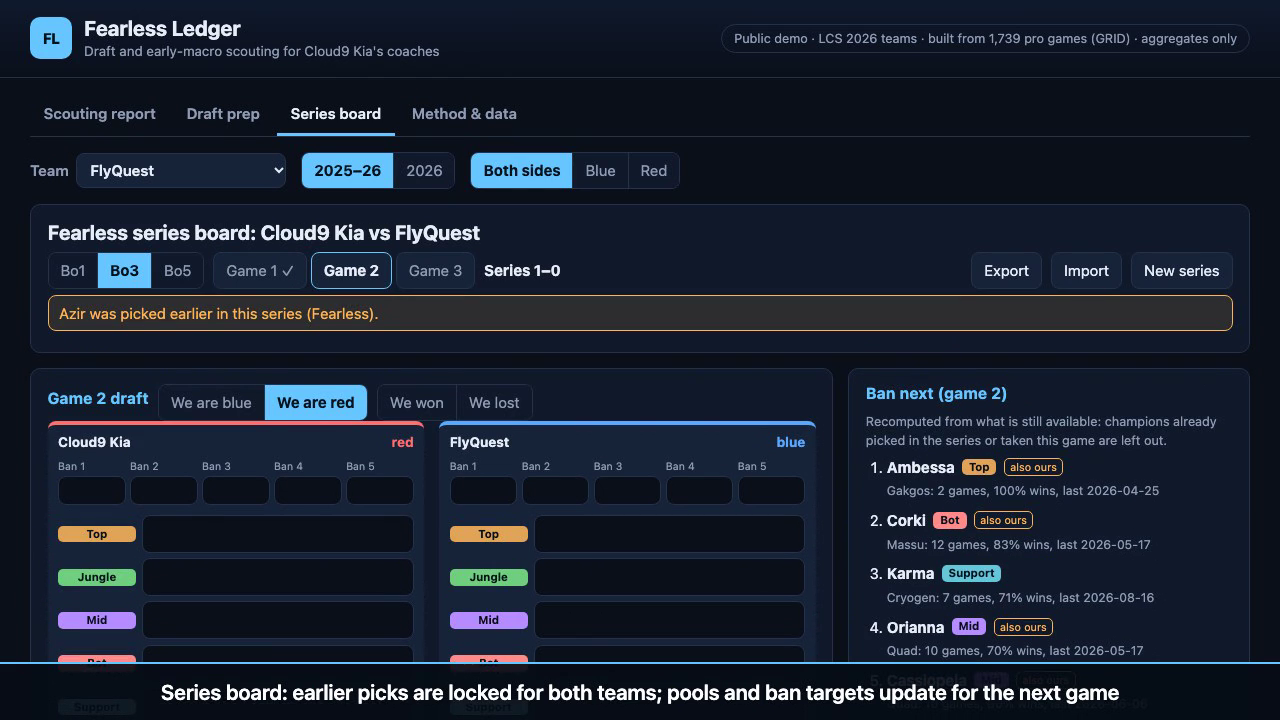
- Fearless series board. Record each game's draft live. Champions picked earlier are locked for both teams, each of the ten players' remaining pools update, ban targets are recomputed from what is still available, and Cloud9's game-by-game plan is checked for champions planned twice or already gone. Saved in the browser, exportable as a file.
- Self-scout Cloud9 Kia to see what opponents can read about us.
How we built it
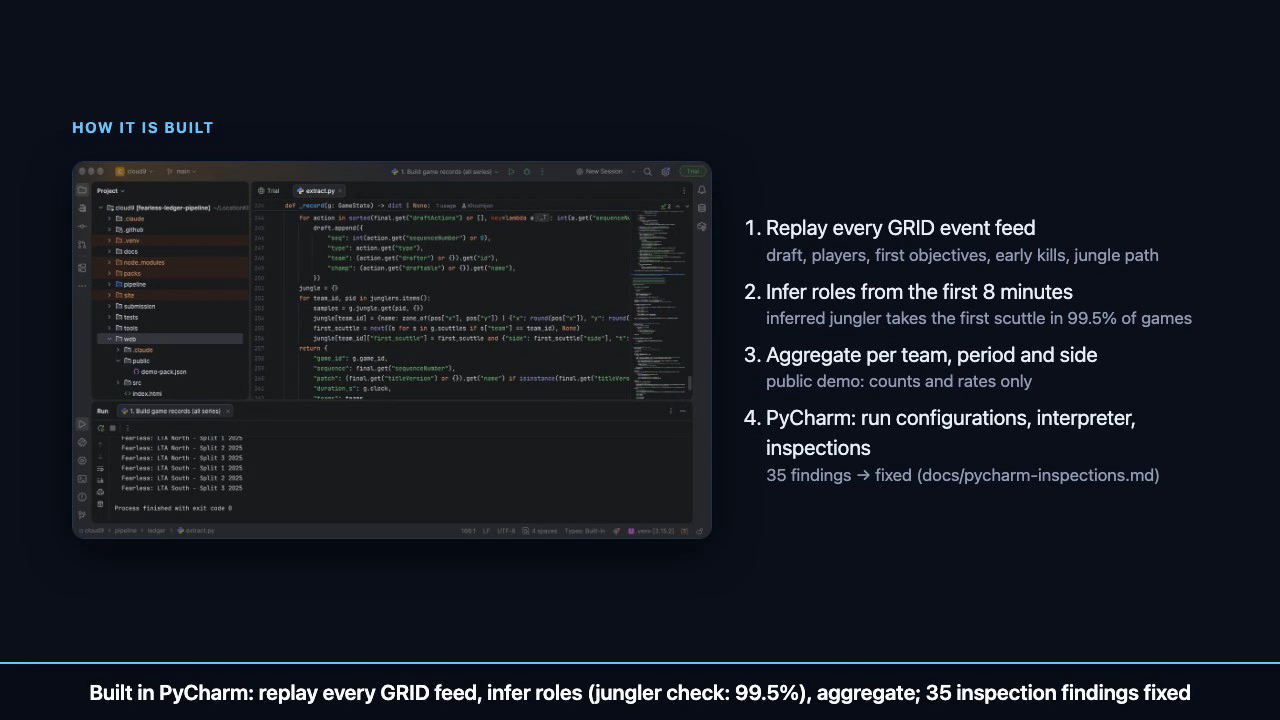
- A Python pipeline (standard library only) streams all 745 GRID series feeds and keeps, per game, the 20-step draft, players and champions, first objectives, every kill before 14:00 with its zone and assists, and each jungler's position at 1:35, 2:30 and 3:20.
- GRID records no roles and its player order is unreliable in 2025–26 feeds, so roles are inferred from the first eight minutes (camps, lane presence, gold at 10:00) and settled to each player's usual role. Check: the inferred jungler takes the first scuttle in 99.5% of 3,463 team-games.
- Aggregates per team, period and side become a scouting pack; the TypeScript app (no framework) renders it. 18 Python and 11 TypeScript tests run on invented data; GitHub Actions tests and deploys to GitHub Pages.
- JetBrains PyCharm 2026.3 is the pipeline's IDE: shared run configurations for every step (with
STL_DATA_DIRpointing at the local data clone), the project interpreter frompyproject.tomland a uv.venv, the full build run from the IDE, and PyCharm's inspections run headless with a shared profile: 35 findings (25 type errors from mixed-type tallies, a possibleNoneindex, a name shadowingmain()) fixed down to three deliberate wording notes. The.idea/folder is committed. - Built with Claude Code as the AI coding agent; see AI_SHOWCASE.md for the workflow and where checking the data corrected the AI.
Challenges we ran into
- Roles: the first assumption (GRID lists players in role order) held in early 2025 and failed in up to 70% of games later. Early lane swaps then put K'Sante "in bot lane" 55 times until roles were settled per player.
- Rosters change: the first ban suggestions against FlyQuest included players who had left a season earlier; suggestions now use only the current lineup.
- The data licence: the match data may not be redistributed, so the repository holds no data, derived files stay in a git-ignored folder, and the public demo shows aggregates only. The build refuses to publish a pack that contains game lists.
Accomplishments that we're proud of
Every number on screen comes from the official data and shows its sample size, and the Fearless board does the bookkeeping a staff currently does by hand during a series.
What we learned
Validate assumptions against the whole dataset, not one file; an IDE's inspections are a useful second reviewer for AI-written code.
What's next for Fearless Ledger
Patch weighting, champion-select timers on the board, and a printable one-page scouting sheet per opponent.
Built With
- claude-code
- esbuild
- github
- github-actions
- grid
- jetbrains
- node.js
- pycharm
- python
- typescript
