
Inspiration
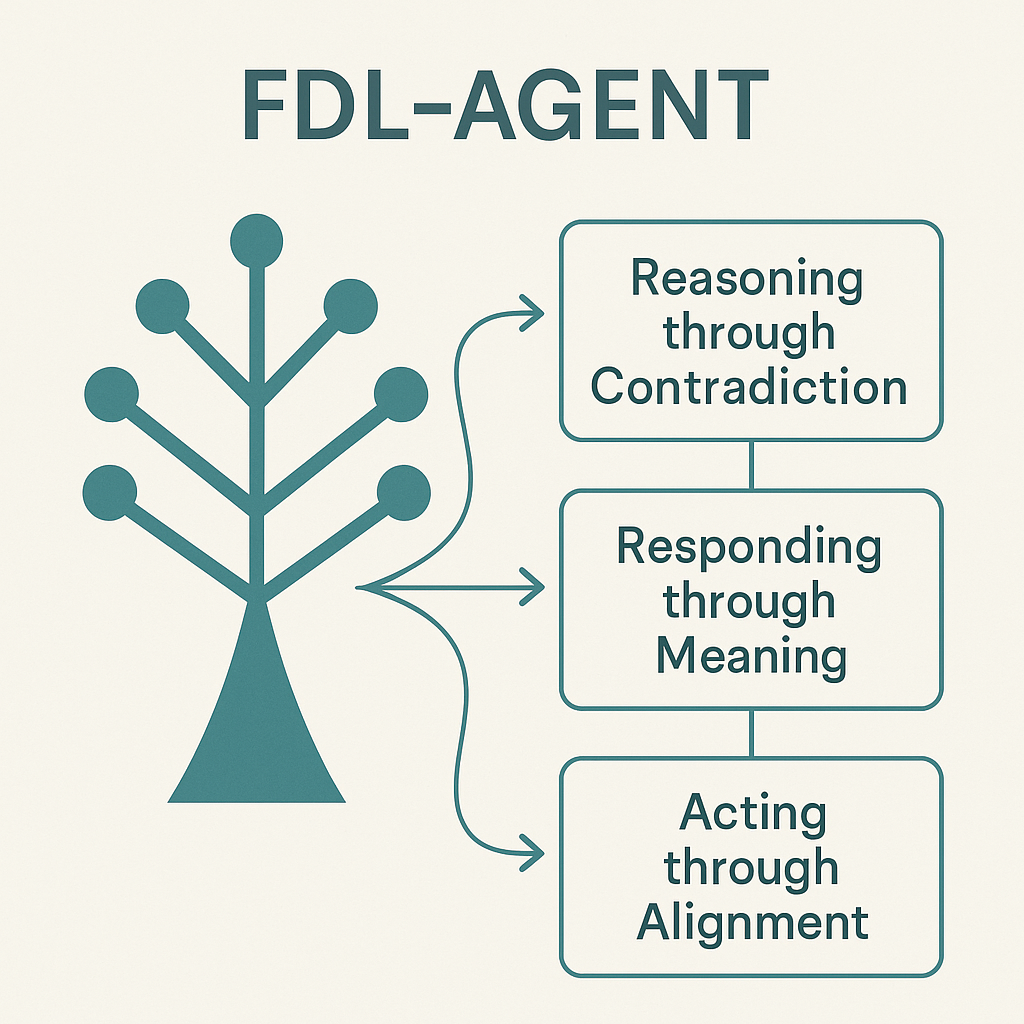
On‑device dialectical analysts for the open web: Thesis → Antithesis → Synthesis, privately, right in Chrome. Thesis. People drown in long, biased web texts and lose authorship signals. Antithesis. Cloud AI adds cost, latency and privacy risks; extensions today lack structured reasoning. Synthesis. Σ‑FDL Agents for Chrome use Chrome’s built‑in AI (Gemini Nano) to turn any page into a dialectical map: Thesis → Antithesis → Synthesis + contradictions + sources, fully on‑device. Add multilingual reading, proofread/rewrite, and optional hybrid cloud for heavy jobs. Result: faster sense‑making, preserved authorship cues, and exportable “FDL‑tokens” for downstream workflows.
What it does
FDL Overlay. One click overlays a side panel that extracts page text and renders: Thesis / Antithesis / Synthesis Key claims vs. contradictions (“RICO‑check”) Actionable summary (bullets; TL;DR) Authorship cues (bylines, dates) and inline quote capture Multilingual flow. Auto‑detect language → translate (on‑device) → keep original + translated in diff view. Clarity tools. Proofread / Writer / Rewriter buttons (concise, neutral, or satirical tone presets). Structured export. JSON Schema output; copy as Markdown; save as FDL‑token (.json) for Notion/GitHub. Hybrid mode (optional). If user opts‑in, escalate heavy tasks to Gemini API or Firebase AI Logic.
How we built it
Chrome Extension (MV3). Content script injects a lightweight side-panel; background service worker orchestrates Chrome Built-in AI. Built-in AI pipeline. Prompt API → JSON-constrained Thesis / Antithesis / Synthesis (+ contradictions, language). Summarizer API → TL;DR (bullets). Translator / Proofreader / Writer / Rewriter → clean multilingual flow (opt-in per action). Reader-grade extraction. Boilerplate removal, de-dup of repeated DOM blocks, safe text length windowing with chunk merge. Deterministic output. JSON Schema validation, defensive parsing, HTML sanitization, and Markdown export. Privacy-first defaults. No network calls by default; ephemeral in-tab cache only. Optional hybrid. User-toggled escalation for heavy pages (Gemini API / Firebase AI Logic), clearly labeled. DX. TypeScript, minimal toolchain, one-click load-unpacked; clear README and 3-min demo.
Challenges we ran into
Model availability & UX. Handling first-run model download and surfacing progress without confusing users. Token/window limits. Robust chunking + prioritization of main content; stable synthesis across segments. Schema-safe reasoning. Getting LLM to always return strict JSON (timeouts, malformed braces, edge languages). Boilerplate noise. Adapting extraction to wildly different page templates (news, blogs, docs, PDFs via viewers). Multilingual edge cases. Mixed-script pages, code-heavy posts, right-to-left snippets. Security & permissions. Minimal MV3 permissions, sanitizing injected UI, avoiding fragile DOM selectors.
Accomplishments that we're proud of
Fully on-device dialectical analysis that actually enforces structure, not just “another summary.” One-click sense-making: thesis/antithesis/synthesis in seconds + contradictions map (“RICO-check”) + TL;DR. Deterministic exports (JSON/Markdown) that slot directly into Notion/GitHub workflows as “FDL-tokens.” Privacy by design with a clear on/off hybrid switch and no silent calls. Demo that survives offline (we show it working with Wi-Fi turned off once the model is installed).
What we learned
Built-in AI is ready for real workflows when outputs are forced through schemas and guardrails. Dialectical framing reduces noise: users decide faster and argue less when both sides are surfaced explicitly. Trust ↑ with provenance cues (bylines, dates, quotes) and with local-only processing. Multilingual clarity matters: quick translate+proofread loops dramatically improve comprehension on non-native pages. Great UX is “boring”: clear affordances (Copy, Export, Validate) beat fancy prompts every time.
What's next for Σ‑FDL Agents for Chrome (NOVEYA)
Notion API push: direct write to an FDL Intake DB with field mapping + status transitions. Provenance anchors: optional SHA-256 for each export and registries/archives integration (user-controlled). Per-domain extractors: smarter readers for news/docs/forum engines; citation capture with source offsets. Accessibility & perf: keyboard-first panel, reduced layout thrash, lighter CSS/JS footprint. Preset packs: anti-distortion checks, civic-policy briefs, academic abstractor, satirical condenser. Community templates: open gallery of FDL-token exporters for Notion, GitHub, and static sites.
Built With
- api
- chrome-built-in-ai-?-prompt-api
- chrome-extension-(mv3)
- dom-extraction-(reader-mode)
- esbuild.-optional-/-hybrid:-google-ai-gemini-api
- firebase-cloud-functions-+-hosting
- markdown-export
- notion
- optional)
- pnpm
- proofreader;-json-schema-(ajv)
- rewriter
- summarizer-api
- translator
- typescript
- web-crypto-(sha-256
- writer

Log in or sign up for Devpost to join the conversation.