-
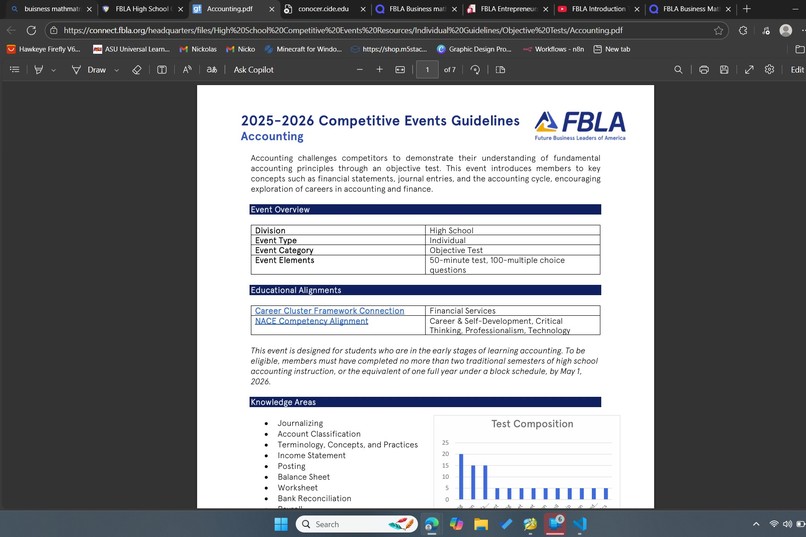
Before FBLACER no study tools or analytics
-
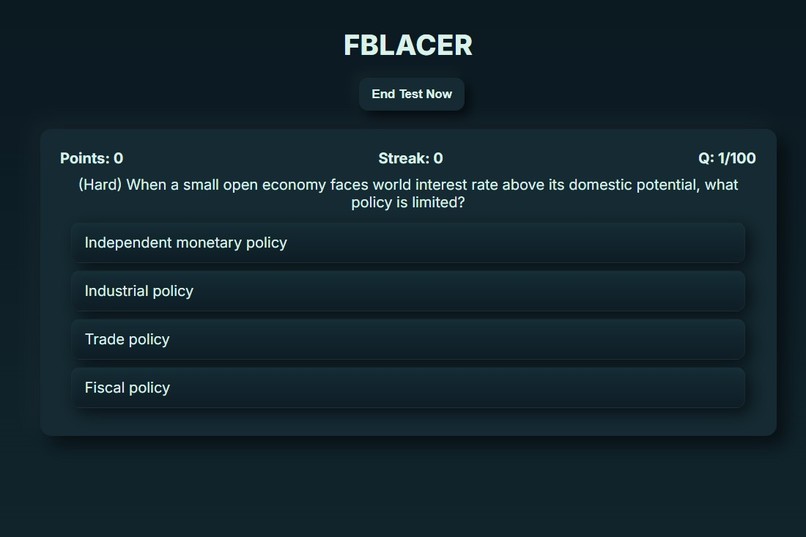
Dark mode for visually impaired / eye strain
-
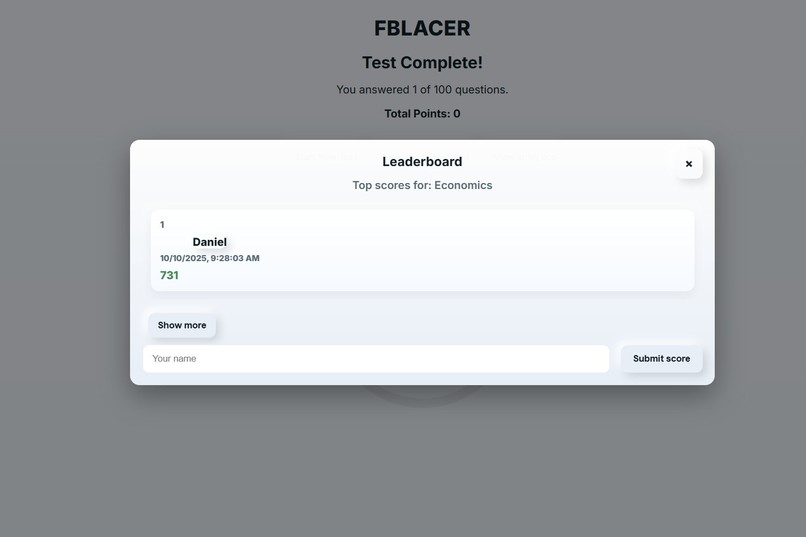
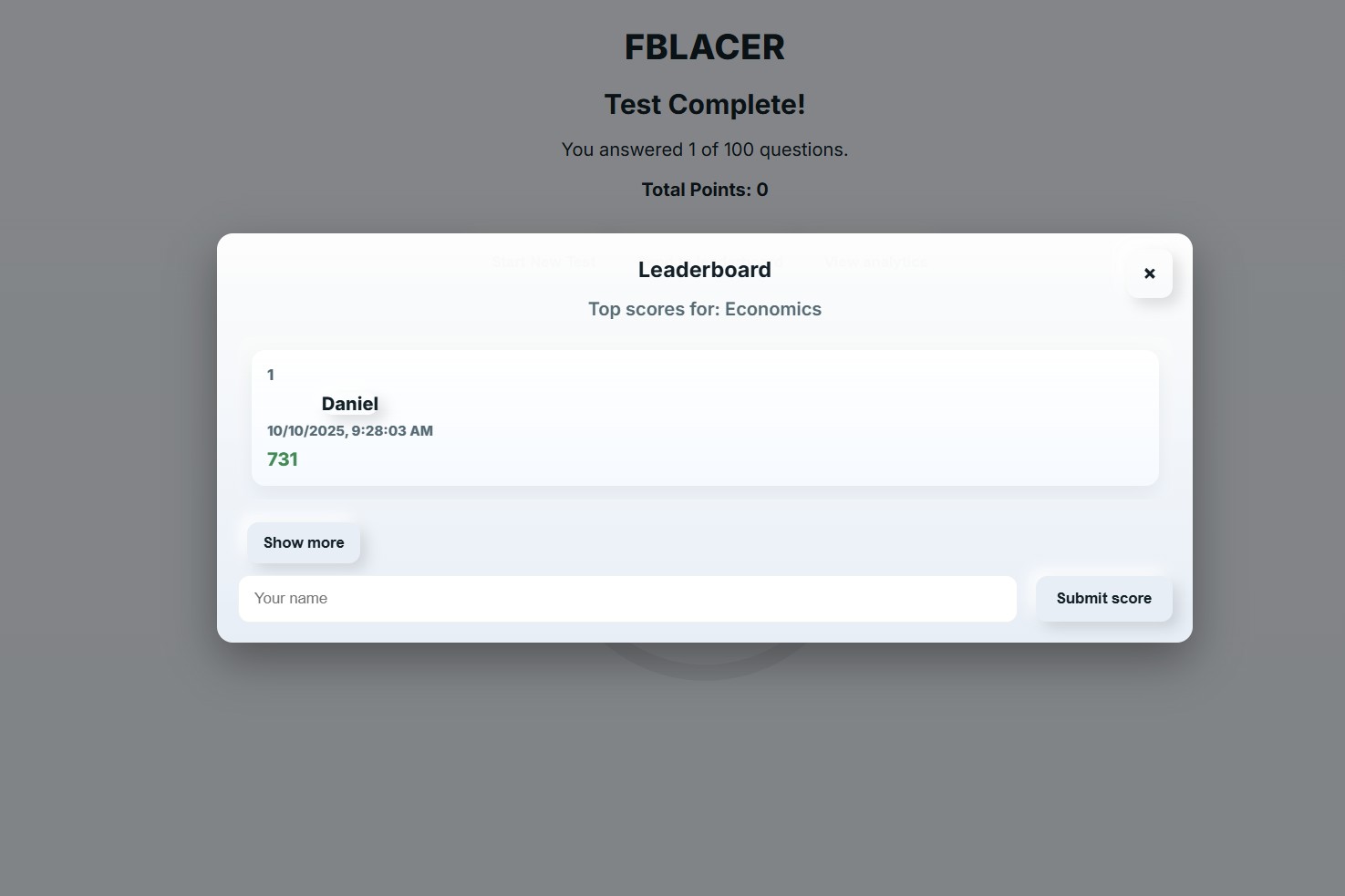
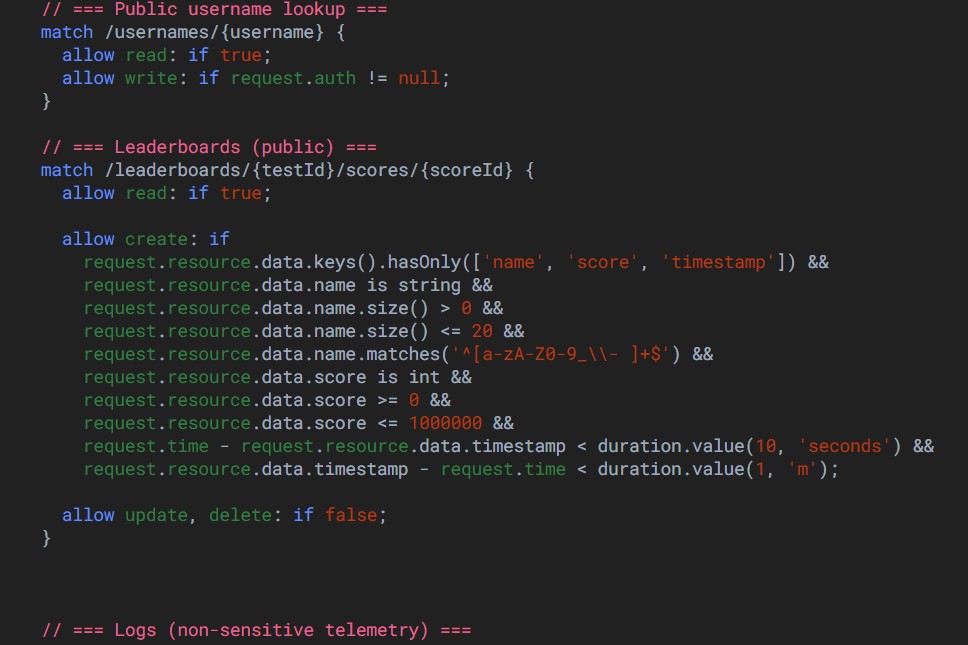
Public leaderboard with secure, rule-validated score submissions, no login required.
-
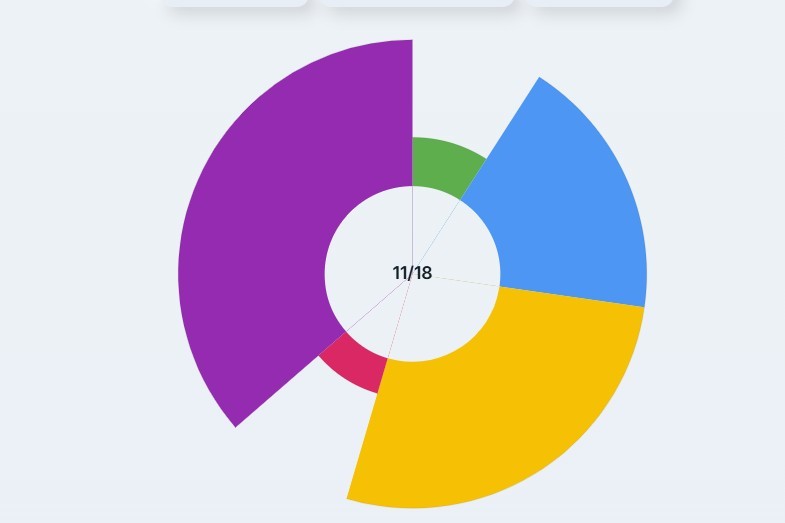
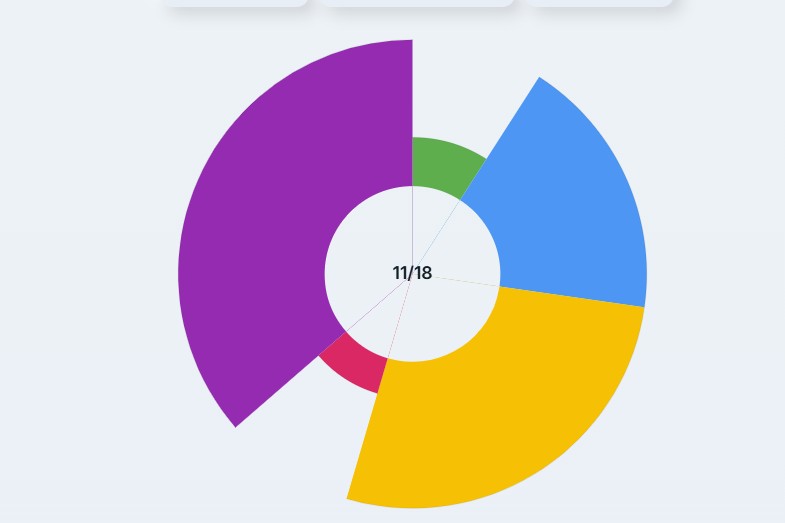
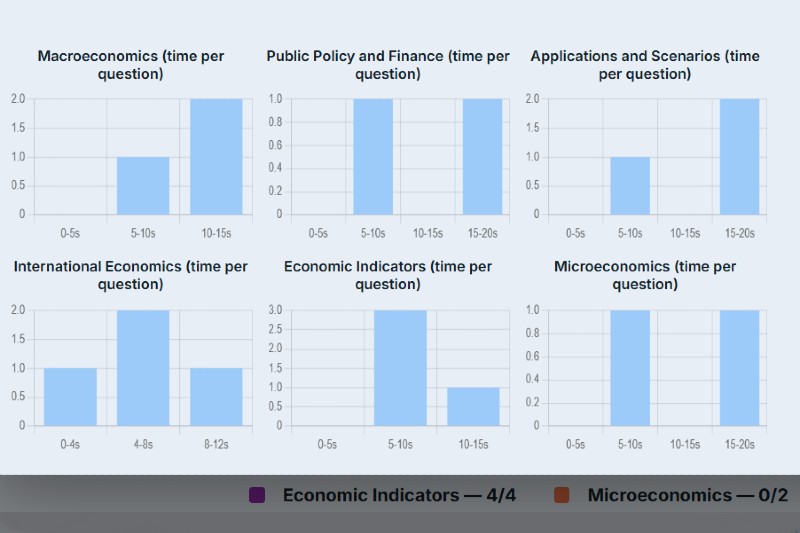
Instant analytics for anyone
-
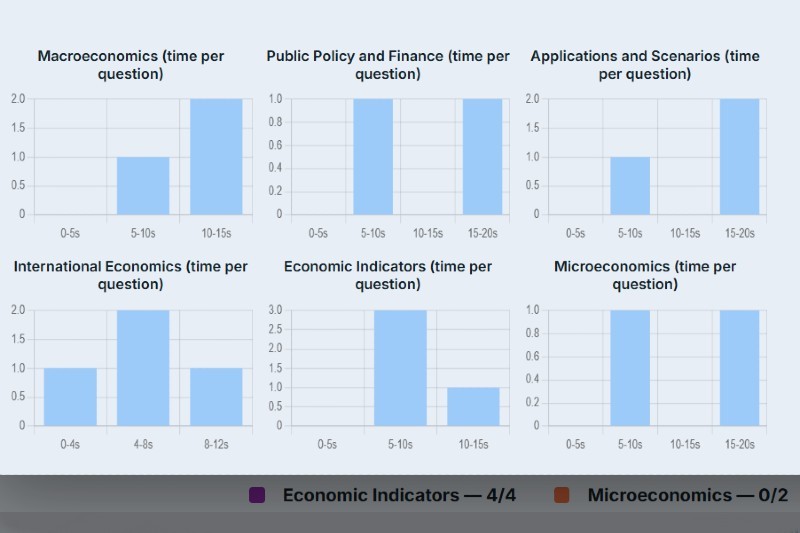
Turning studying into data, visualizing performance over time.
-
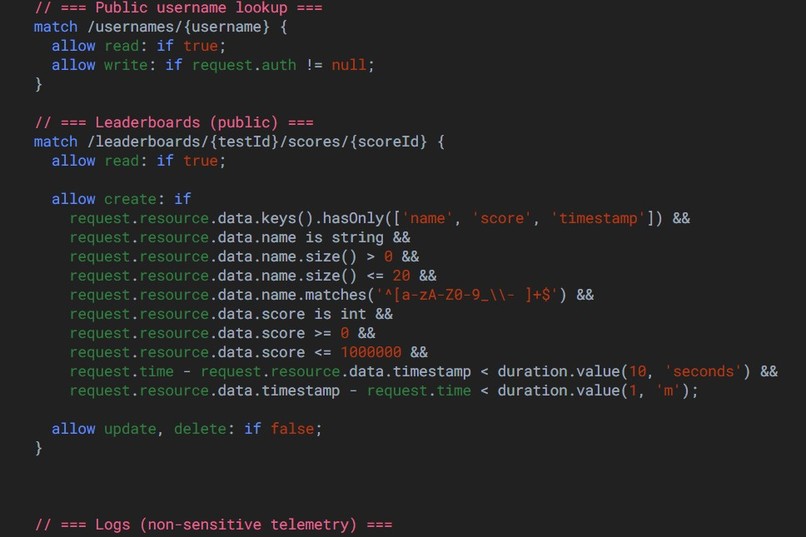
Security by constraint leaderboard writes allowed only if data satisfies mathematical invariants
-
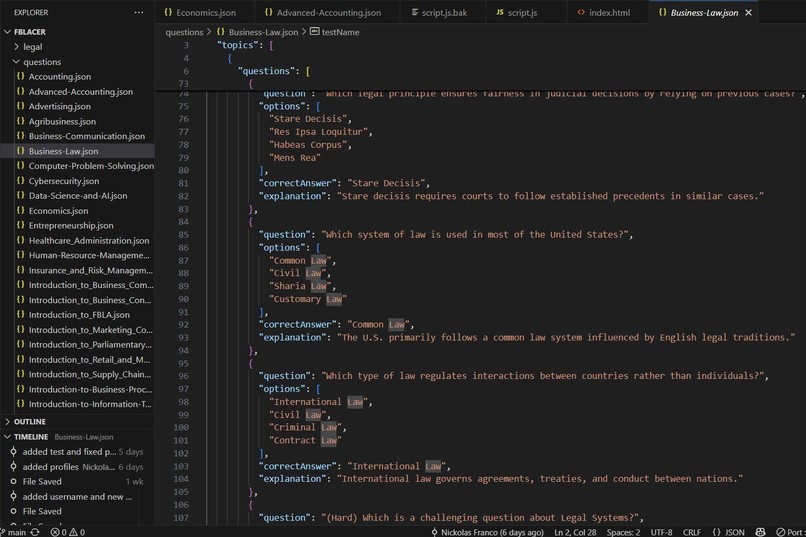
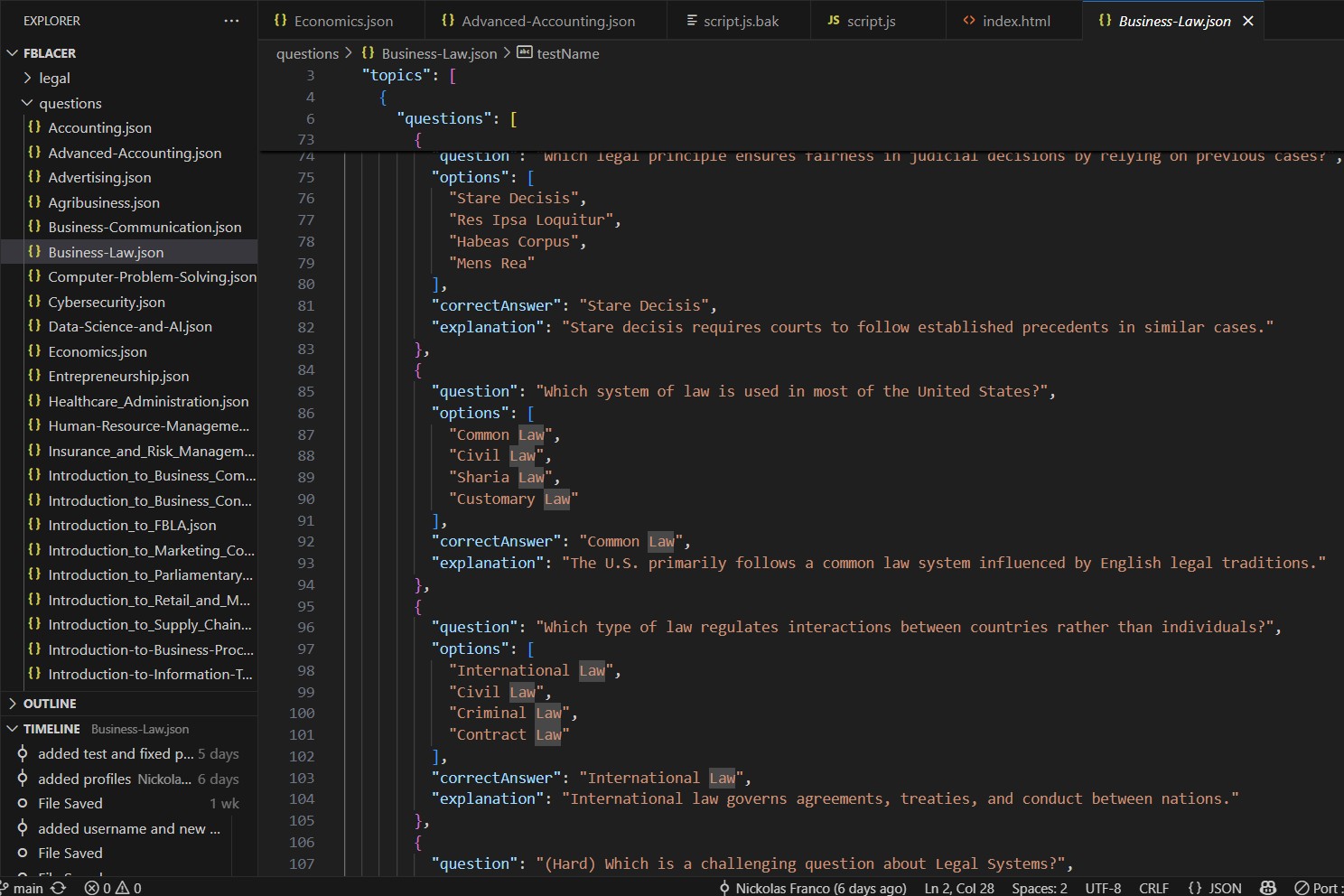
Simple JSON and folder structure adaptable to any test
💡 Inspiration
I watched someone in my FBLA chapter scrolling through Quizlet right before a competition, hoping last-minute cramming would be enough. There was no organized preparation system no progress tracking, no leaderboard, no sense of improvement. That moment made me realize that without a structured system, effort becomes guesswork.
FBLACER was born from that gap—not just to study, but to measure growth and engineer motivation.
🎯 What it does
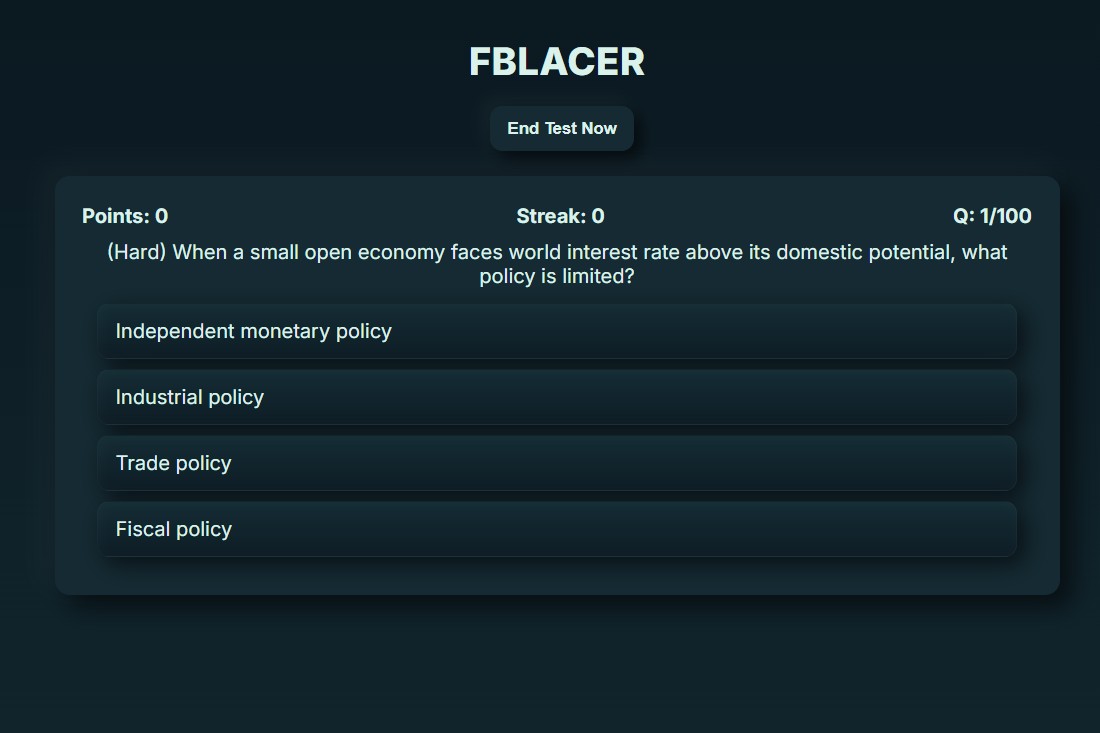
FBLACER is a minimalist competitive flashcard platform built for FBLA members. Users can:
- Study through a game-like flashcard interface
- Submit scores to a public leaderboard
- Track performance progression as data over time
- See structured analytics that turn studying into a measurable system
All of this runs on a static website, with data validation enforced purely through Firestore rules as a security and logic layer.
🛠️ How I built it
I decided to avoid heavy frameworks to keep it lean and resilient.
- Frontend: Vanilla JS, HTML, CSS
- Database: Firebase Firestore with mathematical validation rules
- Automation & Analytics: Google Apps Script + n8n
- Hosting: Firebase Hosting
- Security: Rate-limited, rule-based Firestore write validation + input sanitization
To allow unregistered users to still post valid leaderboard entries, I used mathematically enforced constraints directly in Firestore security rules, ensuring fairness without login friction.
⚠️ Challenges I ran into
- Designing a public leaderboard without allowing spam or vandalism
- Converting human behavior limits into logic-based Firestore rule constraints
- Debugging Firebase Auth inconsistencies across deployment environments
- Making the UI competitive without adding distracting UI complexity
- Ensuring the entire codebase could be public on GitHub without exposing vulnerabilities
🏆 Accomplishments I'm proud of
- Built a fully public leaderboard system that can't be abused, even without login
- Converted Firebase rules into something close to a formal verification system
- Members of my chapter now see their growth visualized as data, not just guesses
- Watching someone improve their score because they saw their name drop on the leaderboard was the moment it became more than just code
📚 What I learned
- Security is not something you “add later”—it’s embedded in architecture
- Firebase rules can be used almost like writing logical invariants
- A simple system, if designed with intention and constraints, can rival complex full-stack solutions
- Real engineering isn’t building features—it’s designing systems that change behavior
🚀 What's next for FBLACER
- Expanding analytics to generate personal improvement graphs over time
- Optional account linking to track long-term competitive metrics
- Opening API endpoints so other chapters nationwide can plug into the same leaderboard infrastructure
- Turning FBLACER into a template system for other student organizations to adopt competitive studying


Log in or sign up for Devpost to join the conversation.