
FauxFinder - Multi-Model Deepfake Detection Platform
Inspiration
The rapid advancement of AI-generated content and deepfake technology poses significant threats to digital media authenticity. From political misinformation to identity theft, the ability to detect manipulated media has become crucial for maintaining trust in digital communications. I was inspired by the need for a comprehensive, accessible tool that could leverage multiple machine learning models to provide robust deepfake detection capabilities.
What it does
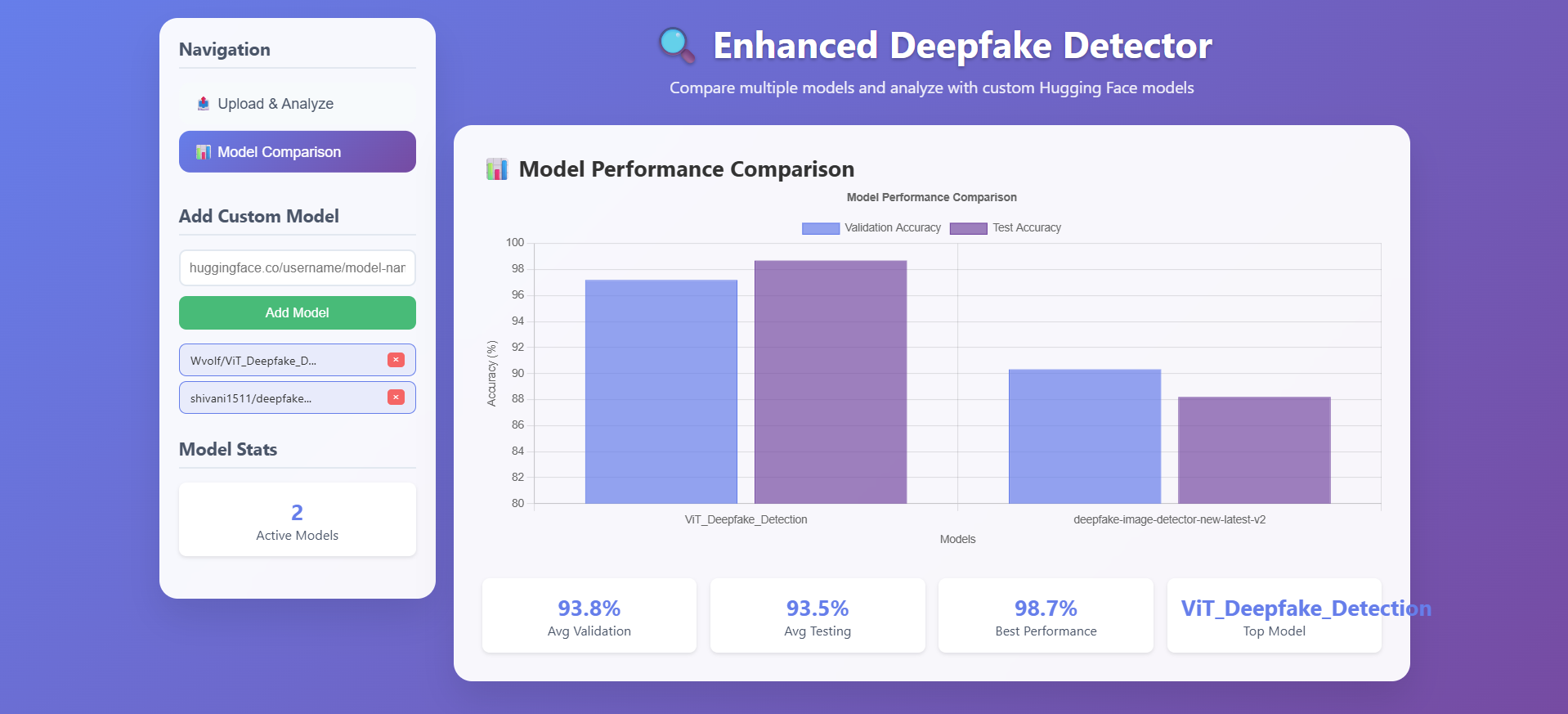
FauxFinder is a comprehensive deepfake detection platform that analyzes images and videos using multiple Vision Transformer models from Hugging Face. Users can upload media files and receive detailed authenticity assessments with confidence scores. The platform supports custom model integration, allowing users to add any compatible Hugging Face model via URL input. It provides comparative analysis across multiple models simultaneously and visualizes performance metrics through interactive charts, helping users understand model reliability and make informed decisions about media authenticity.
How I built it
I built FauxFinder using a full-stack architecture combining modern web technologies with cutting-edge machine learning capabilities:
Frontend: HTML5, CSS3, and vanilla JavaScript with Chart.js for interactive visualizations. The interface features a responsive sidebar navigation system and real-time model management capabilities.
Backend: Node.js with Express.js handles file uploads, model management, and API routing. I implemented RESTful endpoints for single and multi-model analysis.
Machine Learning: Python integration using Hugging Face Transformers library with PyTorch backend. The system supports both Auto and ViT-specific model classes for maximum compatibility.
Infrastructure: Designed for cloud deployment with Vercel configuration, including proper file handling and error management for production environments.
Challenges I ran into
Model Compatibility: Different Hugging Face models use varying label mappings and output formats. I solved this by implementing adaptive label parsing that handles multiple naming conventions and fallback mechanisms.
Memory Management: Loading multiple large Vision Transformer models simultaneously caused memory issues. I implemented on-demand model loading and proper cleanup procedures.
Cross-Platform Development: Ensuring compatibility between Windows and Unix systems for Python execution required careful path handling and console encoding fixes.
Real-time Model Validation: Validating Hugging Face models without downloading them required implementing HTTP-based checks and API integration for model metadata.
Performance Optimization: Balancing accuracy with speed for multiple model inference led us to implement efficient batching and caching strategies.
Accomplishments that I'm proud of
Successfully created a production-ready platform that democratizes access to state-of-the-art deepfake detection technology. I achieved seamless integration of multiple machine learning models with an intuitive user interface that requires no technical expertise. The platform correctly handles both images and videos, provides meaningful confidence scores, and offers comprehensive model comparison capabilities. I built a robust validation system that prevents invalid models from being added and implemented graceful error handling throughout the application.
What I learned
I gained deep insights into Vision Transformer architectures and their application to deepfake detection. Working with the Hugging Face ecosystem taught us about model standardization challenges and the importance of flexible loading mechanisms. I learned about the complexities of deploying machine learning applications to cloud platforms and the trade-offs between accuracy and performance. The project reinforced the importance of user experience design in making complex AI technology accessible to non-technical users.
What's next for FauxFinder
Advanced Model Training: Implement fine-tuning capabilities allowing users to train custom models on their own datasets for domain-specific detection needs.
Batch Processing: Add support for analyzing multiple files simultaneously and generating comprehensive reports for media verification workflows.
Video Analysis Enhancement: Expand beyond single-frame analysis to process multiple frames and temporal patterns in videos for more accurate detection.
API Integration: Develop REST API access for developers to integrate FauxFinder into their own applications and workflows.
Real-time Detection: Implement live camera feed analysis for real-time deepfake detection during video calls and streaming.
Blockchain Verification: Explore integration with blockchain technology for immutable media authenticity certificates and provenance tracking.
Built With
- chart.js
- chart.js-backend:-node.js
- css3
- custom-rest-endpoints-deployment:-vercel
- express.js
- html5
- hugging-face-transformers
- huggingface
- javascript
- kaggle
- multer
- multer-ml-stack:-python
- node.js
- opencv
- opencv-apis:-hugging-face-model-hub-api
- python
- pytorch
- rest
- vercel

Log in or sign up for Devpost to join the conversation.