Inspiration
We wanted to explore how AI could make traditional tarot reading more interactive and personalized. Tarot has always been symbolic and open to interpretation, and we saw an opportunity to combine that with generative AI to create a reflective, conversational experience. We also wanted to build something creative, mystical, and engaging for a hackathon project that blended storytelling, interface design, and AI.
What it does
FateDeck is an AI-powered tarot reading application with a built-in digital tarot deck. The app randomly deals users a three-card spread, allows them to ask a question, and uses AI to interpret the meaning of each card in the context of the user’s question. It also incorporates zodiac-based personality traits, strengths, and weaknesses to provide more personalized readings in an interactive chat-style experience.
How we built it
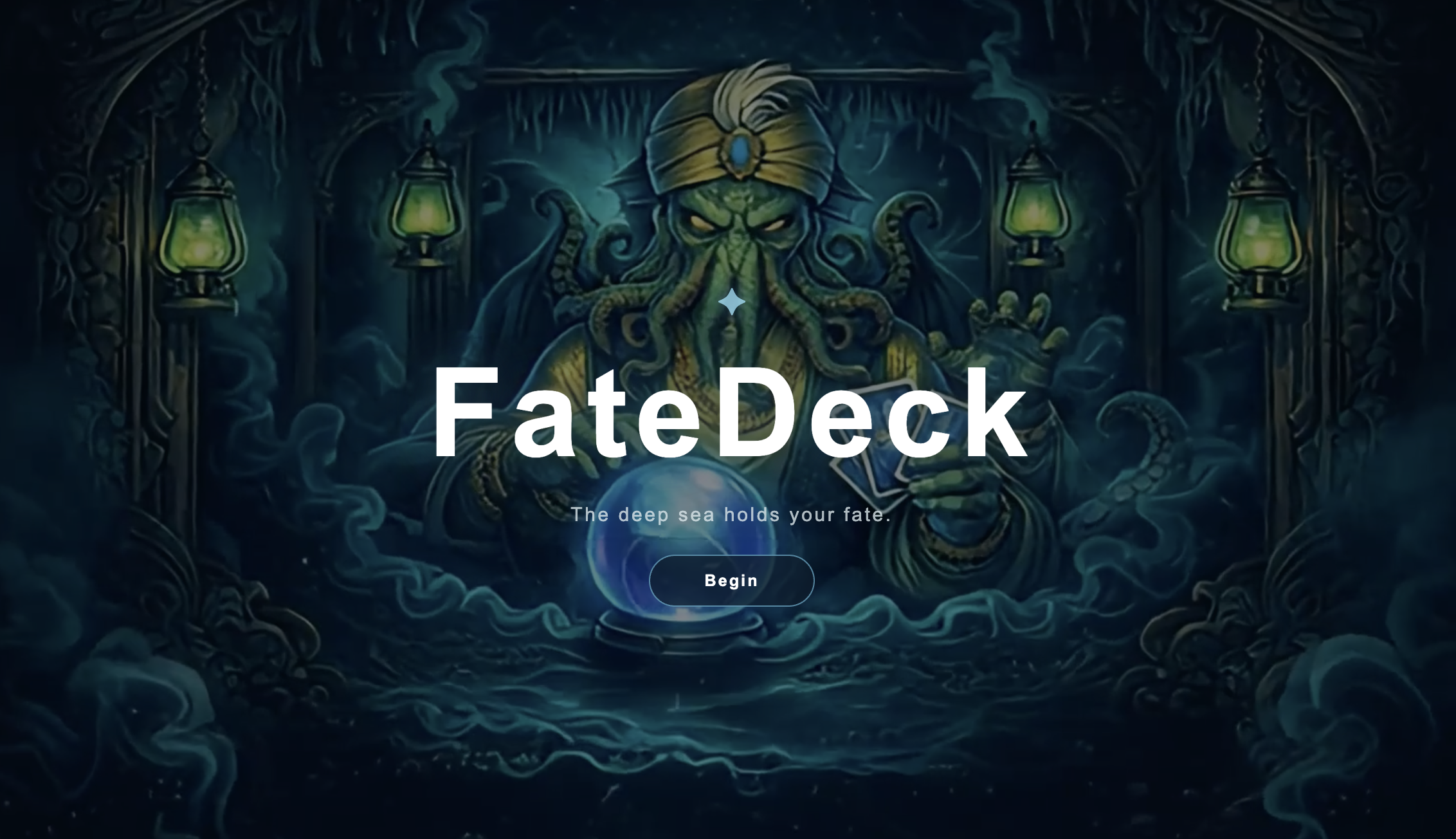
We built FateDeck using React for the frontend and designed an interactive tarot interface with animated card interactions, custom styling, and a conversational reading experience. We implemented randomized tarot card selection logic, hardcoded tarot card meanings and zodiac profiles, and integrated AI to generate dynamic interpretations based on both the drawn cards and the user’s question. We also focused heavily on UI/UX, including immersive visuals, deep-sea mystical themes, and interactive card exploration.
Challenges we ran into
One challenge was balancing structured tarot symbolism with AI-generated interpretation so the readings felt coherent rather than random. We also ran into challenges designing intuitive card interactions, managing state across the reading flow, and making the experience feel immersive while keeping the logic manageable within hackathon time constraints. Fine-tuning prompts so the AI responded in a believable “fortune teller” style was another major challenge.
Accomplishments that we're proud of
We’re proud that we built a working AI-powered tarot reader that combines randomness, symbolic reasoning, and personalized AI interpretation in one experience. We’re also proud of the interactive design, the custom themed interface, and turning a creative concept into a functioning prototype in a short amount of time. Most importantly, we created something playful, memorable, and technically unique.
What we learned
We learned a lot about combining rule-based systems (tarot meanings and zodiac traits) with generative AI to create more grounded outputs. We also learned how important prompt design is for shaping personality and consistency in AI responses. On the product side, we learned how much interactivity and storytelling can enhance user engagement.
What's next for FateDeck
Next, we want to expand FateDeck with more tarot spreads, richer card symbolism, persistent reading history, and adaptive AI agents with different fortune-telling personalities. We’d also like to add voice interaction, animated avatars, deeper astrological integrations, and eventually evolve FateDeck into a broader AI-powered mystical guidance platform.


Log in or sign up for Devpost to join the conversation.